Place
Medan
Indonesia Updated Apr 2026
The first thing that hits you in Medan is the smell of cardamom, diesel, and durian all fighting for air at the same crossroads. Indonesia’s fourth-largest city doesn’t ease you in—it grabs your wrist and pulls you through a street market where Tamil spice grinders, Batak butchers, and Hokkien pastry vendors work under the same corrugated roof. This is Medan, North Sumatra’s concrete orchestra of honking becak, mosque loudspeakers, and temple bells where nobody waits for permission to start the next verse.
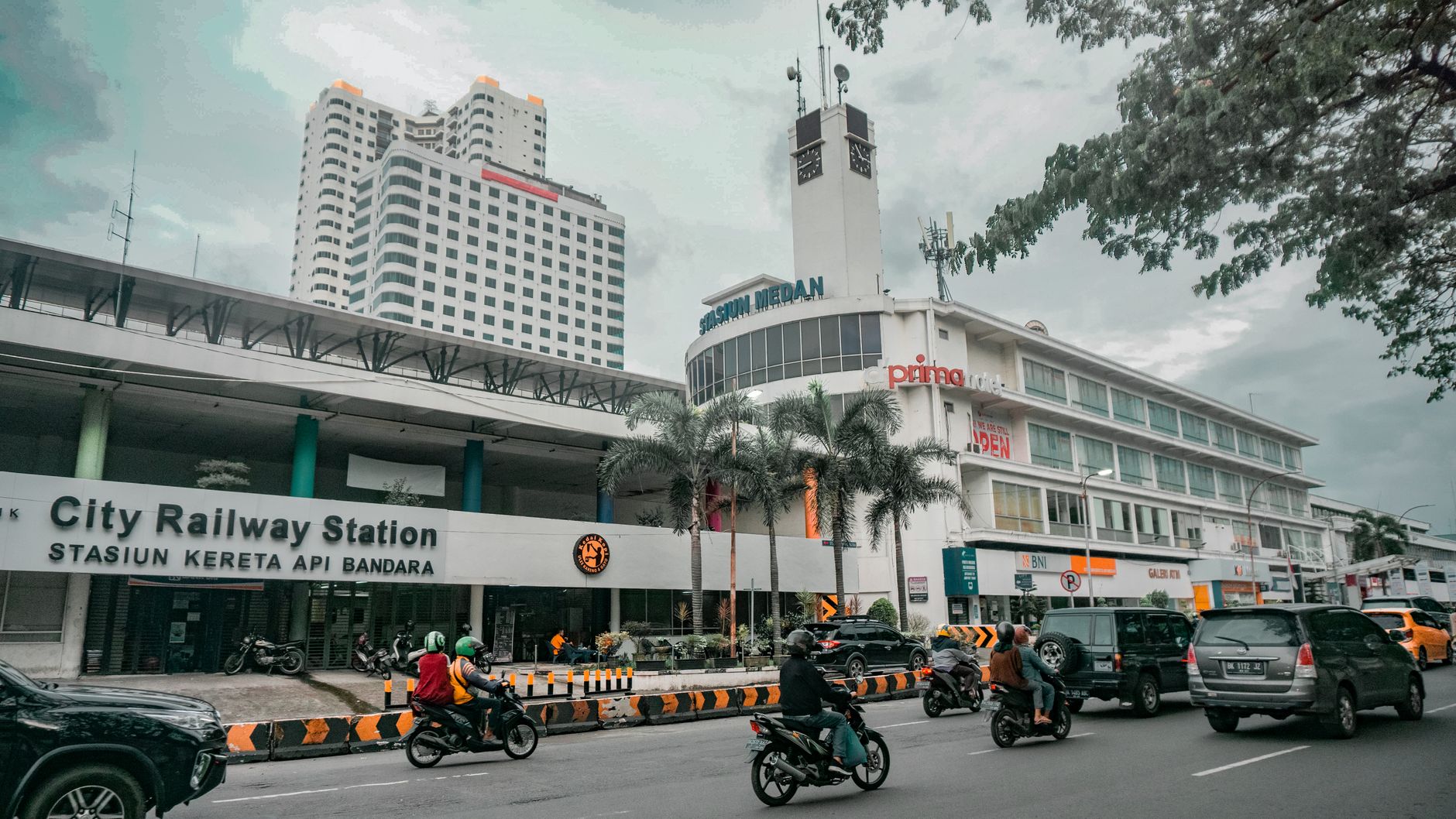 Photo: Nurul Hasanah / Pexels
- Attractions
- 15
- Audio
- 1 h 40 min
- Trip length
- 2-3 days
- Best season
- May–Oct (dry, durian harvest)
Why Medan
Built from cited sources · see the method · How we make our guides →
Colonial tobacco barons built the place on profits fat enough to bankroll Amsterdam, but they left the keys with everyone else. Chinese merchant houses wear Dutch tiles, the royal palace mixes Spanish tiles with Mughal arches, and the best curry comes from a 1923 Art-Deco café that used to insure rubber plantations. Walk a kilometer and you’ll cross six languages, three alphabets, and one railway line that still uses 1932 semaphore signals outside a station freshly repainted for Instagram.
The city keeps its best jokes private. A crocodile farm sits two blocks behind a dental college; a Buddhist pagoda copied from Yangon rises between car dealerships; and the night food stalls on Jalan Semarang serve a coconut-milk soup that predates refrigeration yet never spoils. You don’t come here for postcard perfection—you come because Medan refuses to choose between centuries, and the argument tastes better at 2 a.m. under a flickering neon sign that spells "durian" in three different spellings.
Sultan’s Palace in Technicolor
Maimoon Palace (1888) mixes Malay arches, Mughal domes and Spanish tiles under one yellow façade; inside you can rent royal Malay dress and sit on the 120-year-old golden throne. The ticket is Rp 15 000—less than a dollar to time-travel.Indonesia’s Unofficial Food Capital
Street stalls here perfected Bika Ambon (pandan-coconut sponge), coconut-rich Soto Medan and Montong durian so fragrant it’s banned from hotels. Locals say if you haven’t eaten at 02:00 on Kesawan Road you haven’t seen Medan.Block-Long Street Art & Shophouses
Kesawan’s 2025 facelift closed the street to traffic; at night Chinese-Tiong architecture glows under LED strips and the smell of kopi tubruk drifts from 1920s shopfronts. It’s a living museum where people still haggle over nutmeg.Orangutans Within Three Hours
Bukit Lawang’s rehabilitation station sits inside Gunung Leuser National Park—morning feeding platforms let you watch semi-wild red apes swing in over the Bohorok River. Medan is the only world city where you leave after breakfast and trek with orangutans before dinner.
Places to Visit
Not every monument, just the ones we'd walk you past ourselves.
-
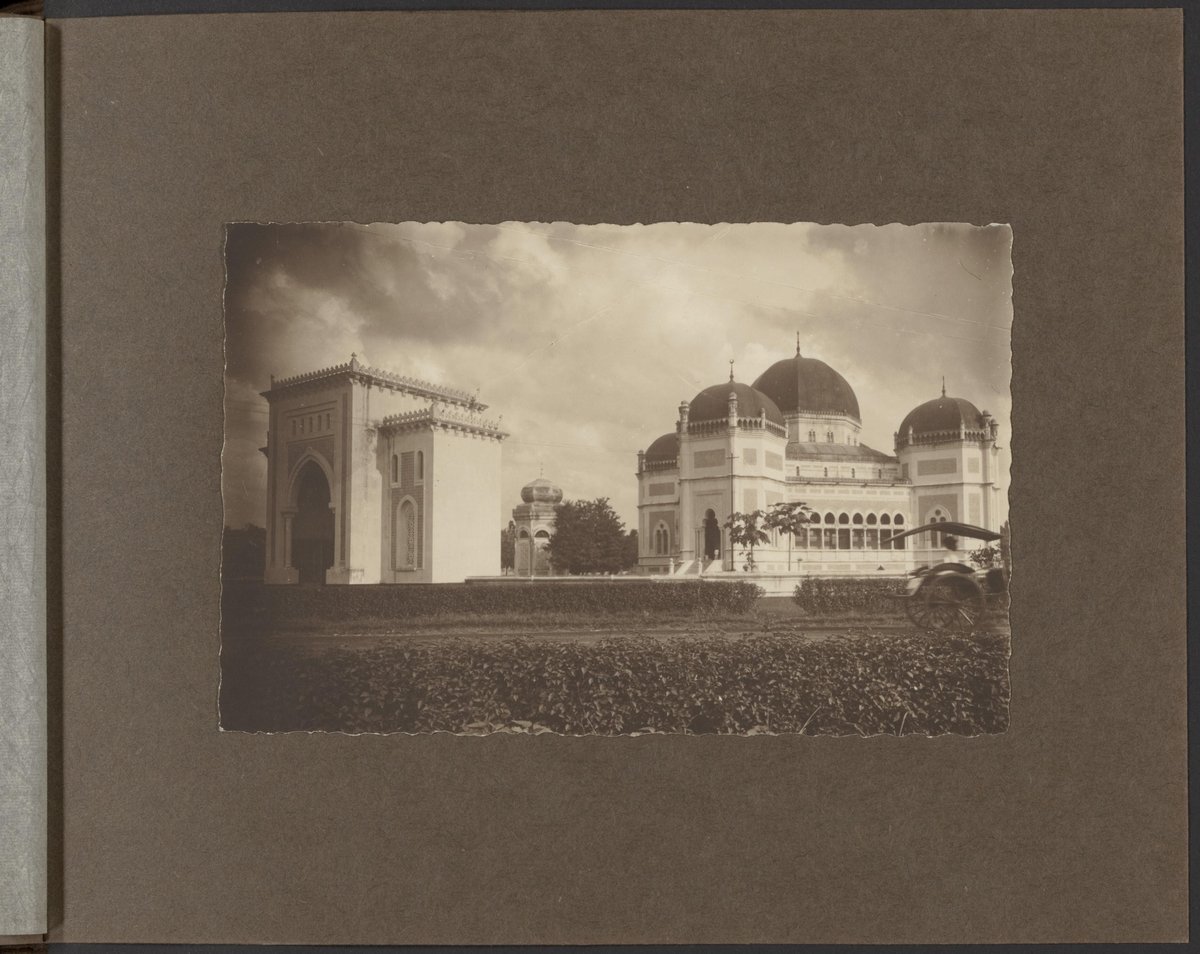
Great Mosque of Medan The Great Mosque of Medan, also known as Masjid Raya Al Mashun, stands as a magnificent emblem of Indonesia’s rich Islamic heritage and the multicultural…
-
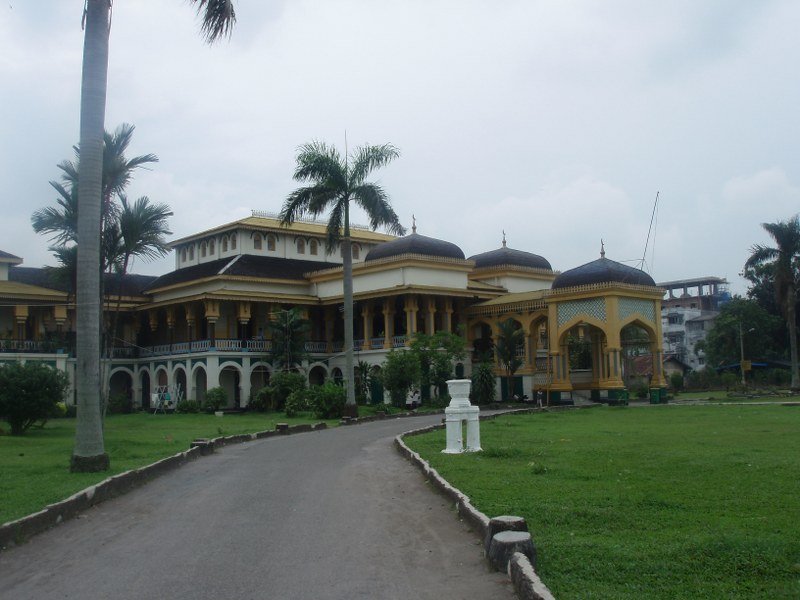
Maimun Palace Nestled in the vibrant heart of Medan, North Sumatra, Maimun Palace (Istana Maimun) stands as a distinguished emblem of Malay royalty and Indonesia’s rich…
-
Rahmat International Wildlife Museum & Gallery Nestled in the vibrant city of Medan, Indonesia, the Rahmat International Wildlife Museum and Gallery stands as a unique testament to the art of taxidermy and…
-
Vihara Gunung Timur Vihara Gunung Timur, the largest Taoist temple in Medan, Indonesia, is a significant cultural and religious landmark that draws visitors from around the world.

-
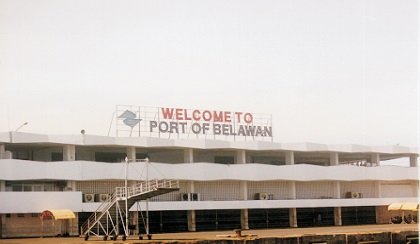
Port of Belawan Belawan Port, situated on the northeast coast of Sumatra near Medan, stands as Indonesia’s busiest seaport outside Java and a critical gateway to North…
- Maha Vihara Maitreya Maha Vihara Maitreya in Medan, Indonesia, is a prominent Buddhist temple that serves as a significant cultural and spiritual hub for the local and broader…
- Al-Osmani Mosque Nestled in Medan Labuhan, North Sumatra, the Al-Osmani Mosque, also known as Masjid Al-Osmani or Labuhan Mosque, stands as Medan’s oldest mosque and a living…
- Perjuangan Tni 45 Museum Laman Parkir Masjid Agung Medan is more than just a parking facility; it is an integral part of the historical and cultural landscape surrounding the Masjid…
- Indonesian Plantation Museum Welcome to the Museum Perkebunan Indonesia, a captivating institution located in the heart of Medan, North Sumatra.
Neighborhoods
Where to wander, by quarter — each with its own rhythm.
Kesawan
The old commercial spine still smells of star anise from 1890s spice godowns. Pedestrian lighting now shows off Chinese shophouse facades painted ox-blood red and jade green; at night the coffee shops project jazz onto the pavement and you can walk from a 1907 bank vault turned cocktail bar to a sidewalk stall frying martabak in 40 seconds.Kampung Madras
Tamil drums echo off sari shops at 6 a.m. when the flower vendors thread marigolds for Sri Mariamman Temple. The air is thick with ghee and clove cigarettes; banana-leaf restaurants serve roti canai flipped so thin you can read yesterday’s newspaper through it. Friday evenings turn the alleyways into open-air Bollywood dance floors powered by Bluetooth speakers balanced on parked scooters.Medan Kota (Old Town Core)
Colonial administrative quarter anchored by Maimoon Palace and the octagonal Grand Mosque. The palace lets you rent a Sultan’s costume for selfies, but the real show is outside: becak drivers napping under 120-year-old banyans while mosque loudspeakers compete with church bells from Graha Bunda Maria across the river. Lapangan Merdeka’s new stone fountains give office workers a place to eat durian without staining courthouse steps.Petisah
Wet-market universe where morning auctions decide the city’s durian price before the stock exchange opens. Behind the stalls, Tjong A Fie’s 1900 mansion opens its 35-room courtyard to visitors; two streets north, his brother’s quieter gallery displays Batak ulos textiles under slow-whirling ceiling fans that haven’t stopped since 1912.Cemara Asri
A planned suburb that grew its own pilgrimage circuit: Myanmar-style golden stupa in Taman Alam Lumbini reflects in lotus ponds while the Maha Vihara Maitreya temple gives Sunday sermons over PA systems loud enough to reach the adjacent bird park. Families cycle the boulevard eating grilled corn, then release sparrows for merit before heading to the hypermarket.Medan Baru
Medical-school district turned hip. Students spill out of Rahmat International Wildlife Museum clutching selfies with stuffed lions; across the street, third-generation coffee roasters pour Lintong beans into paper cups printed with Darwin quotes. Night cafés occupy 1950s doctor’s houses where ceiling hooks once held IV bags and now swing Edison bulbs.
Plan your trip
Before you go
- Getting There
- Kualanamu International Airport (KNO) opened 2013, 39 km east of downtown; 24-hour rail link (Kualanamu Airport Rail Link) reaches Medan Station in 30 min for Rp 100 000. Belmera Toll Road connects to Binjai and Tebing Tinggi; south-bound Trans-Sumatran Highway hits Berastagi in 2 hrs, Lake Toba in 3.5 hrs.
- Getting Around
- No metro—Medan runs on angkot (minivans) with fixed routes painted on the windshield; Rp 5 000 flat fare. Trans Mebidang bus rapid transit links Medan-Binjai with 18 stops; single ticket Rp 5 000. GrabBike and GoRide are legal and ubiquitous; 5 km ride costs ~Rp 18 000. Tourists rarely rent scooters—traffic is impatient and helmets get stolen.
- Climate & Best Time
- Equatorial, 26-32 °C year-round; humidity 75-85 %. Wet season Oct–Feb delivers afternoon downpours; Jan averages 260 mm rain. April–Sept is drier and preferred; June records only 90 mm. Whenever you come, carry a fold-up umbrella—clouds burst fast.
- Language & Currency
- Indonesian is official; older Chinese-Medanese speak Hokkien, Tamil Indians use their own dialect. English works in hotels but not in warungs—learn terima kasih (“thank you”). Cash rules: 100 000 Rp notes are king; BCA and Mandiri ATMs dispense up to 2.5 million per withdrawal.
From Pepper Fields to Cigarette Empire
How a riverside Karo village became Indonesia's tobacco capital
- c. 1200
Aru Kingdom Rises
Karo chiefs establish the Hindu-Buddhist Kingdom of Aru along the Deli River, building earthen forts and trading gold for Chinese porcelain. Their port at Kota Rentang handles pepper and camphor bound for Java and Malacca. The name 'Medan' first appears in palm-leaf charters as 'madan' – the place where wounds heal.
- c. 1590
Guru Patimpus Founds Kampung
Guru Patimpus Sembiring Pelawi, a Karo holy man, clears forest at the confluence of the Deli and Babura rivers. He lays out a circular village of 12 clans, each allotted plots for pepper vines. The settlement's double wooden palisade keeps tigers out and tax collectors guessing.
- 1612
Aceh Plants a Governor
Sultan Iskandar Muda of Aceh sends Admiral Gocah Pahlawan south with 400 musketeers to secure Deli's pepper trade. The admiral builds a stockade at Sungai Lalang and demands Kampung Medan send 50 piculs of pepper yearly as tribute. Medan's chiefs agree, trading sovereignty for Acehnese cannon.
- 1632
Deli Sultanate Born
Gocah Pahlawan marries the daughter of Datuk Sunggal and declares himself Sultan Deli, moving the capital from Aceh's shadow to Labuhan. The mosque at Kampung Medan fires its brass cannon 21 times. For the first time, Friday prayers are said in the sultan's name, not Aceh's.
- 1669
Deli Breaks Free
Tuangku Panglima Perunggit tears up the Acehnese treaty and moves the court upstream to safer ground. Kampung Medan celebrates by slaughtering seven water buffalo; the meat feeds the village for a week. Aceh never collects another ounce of Deli pepper.
- 1823
British Visitor Counts 200 Souls
John Anderson paddles up the Deli and finds Kampung Medan still a sleepy pepper hamlet. He measures the mosque at 12 by 8 meters, its walls built from Java granite looted centuries earlier. In his journal he writes: 'The Rajah lives in a plank house raised on posts; his entire revenue would not keep a Calcutta clerk in rice.'
Show the full timeline (19 moments)
- 1863
Dutchmen Lease 3,000 Hectares
Jacob Nienhuys and two partners sign a 20-year lease with Sultan Mahmud Al Rashid for land near Labuhan. They plant the first tobacco seedlings in March; by August the leaves are judged the finest wrapper tobacco ever seen in Amsterdam. Kampung Medan's elders watch from the riverbank as steamships replace dugout canoes.
- 1874
Nienhuys Moves HQ to Medan
Deli Maatschappij shifts its headquarters from malarial Labuhan to Kampung Medan Putri. Within months, sawmills roar, tin-roofed godowns rise, and Chinese carpenters outnumber Karo farmers. The village's name is shortened to 'Medan' on new Dutch maps; land prices triple in a year.
- 1886
Medan Becomes a City
Governor-General van Rees signs the gemeente charter, giving Medan a mayor, a council, and Dutch municipal law. Streets are laid out in a grid, each 20 meters wide to accommodate two ox-carts. The first streetlights—kerosene lamps on iron posts—are lit outside the newly built European Club.
- 1888–1891
Sultan Builds Yellow Palace
Sultan Ma'mun Al Rashid hires Italian architect Theodoor van Erp to mix Mughal domes with Spanish tiles and Malay gold leaf. The result is Istana Maimun, 30 rooms painted the color of ripe durian. Workers lay 2,000 copper tiles on the roof alone; each one cost the equivalent of a coolie's yearly wage.
- c. 1890
Tjong A Fie Arrives
22-year-old Tjong A Fie steps off the boat from Penang with a suitcase of capital and Hakka hustle. Within five years he owns half the shophouses in Kesawan, issues his own tin coinage, and finances the sultan's army. His mansion on Jalan Ahmad Yani will have 35 rooms, a Taoist altar, and European flushing toilets—first in Sumatra.
- 1906–1909
Great Mosque Rises
Sultan Ma'mun orders an octagonal mosque beside his palace, importing marble from Italy and chandeliers from Czechia. The mosque can hold 1,500 worshippers under a dome 30 meters high; its minarets are modeled on those in Hyderabad. When the first call to prayer echoes across the tobacco warehouses, Chinese clerks pause their abacuses to listen.
- 1922
Chairil Anwar Born
Indonesia's future poetic firebrand enters the world in a modest Karo-Batak house behind the railway line. His nurse will later recall the infant's 'wolf-cry' that drowned out the muezzin. By 1943 his poem 'Aku' will scandalize colonial censors and launch modern Indonesian literature.
- March 1942
Japanese Tanks Roll In
Imperial Guards cycle down Jalan Kesawan, rifles slung over handlebars. Dutch planters burn tobacco ledgers before retreating to Belawan. Within days the kempeitai requisition Tjong A Fie's mansion for a headquarters; its Art Deco ballroom becomes an interrogation center. The city's Chinese merchants are ordered to wear white armbands and bow to sentries.
- 17 August 1945
Revolution Reaches Medan
News of Sukarno's proclamation arrives via underground radio. Youth groups paint 'MERDEKA' on warehouse walls; Dutch planters barricade inside the European quarter. By October, street battles erupt between Indonesian republicans and returning Allied forces. The aroma of curing tobacco is replaced by gunpowder drifting over the Deli.
- 1947
Amir Sjarifuddin Leads Wartime Cabinet
Medan-born socialist Amir Sjarifuddin becomes Prime Minister of the revolutionary republic, broadcasting from Yogyakarta under Dutch siege. His cabinet meets in a railway tunnel; he smokes Deli tobacco between sessions. When captured by Dutch troops in December, he carries a pistol wrapped in a Karo cloth his mother embroidered.
- 1950
Medan Becomes Provincial Capital
The Republic unifies the patchwork of East Sumatra states; Medan is confirmed as capital of North Sumatra. Dutch street signs are replaced with Indonesian; Jalan Deli becomes Jalan Sisingamangaraja overnight. The sultan keeps his palace but loses his police force; the last Dutch mayor sails for Amsterdam on the SS Willem Ruys.
- 2013
Kualanamu Airport Opens
The last flight leaves fog-shrouded Polonia; thirty minutes later, Kualanamu's first Boeing 777 touches down on a runway built from compacted tobacco fields. The new terminal can handle 8 million passengers a year—triple Polonia's cramped limit. From the air, passengers spot rectangular shadows: the ghosts of vanished plantations.
- 2025
Merdeka Square Reborn
After decades as a bus parking lot, Lapangan Merdeka reopens with fountains, banyan avenues, and free Wi-Fi. Office workers eat nasi padang where British prisoners once exercised. At night, LED strips outline the old Dutch parade ground; teenagers film TikTok dances on the same cobblestones where Japanese boots once echoed.
Who lived here
-
Poet · 1922–1949
Chairil Anwar
Born here
He wrote the poem 'Aku' in Jakarta cafés, but the raw, self-willed voice that re-wrote Indonesian literature began on Medan’s noisy docks. Today the city’s bookshops still stock cheap editions whose pages smell like clove and diesel—exactly the mix that soaked his earliest lines.
-
Merchant & Kapitan Cina · 1860–1921
Tjong A Fie
Lived here 1890–1921
Arriving penniless from Guangdong, he financed irrigation, bridges, and half the shophouses on Kesawan Street, earning the right to adjudate both Chinese and Malay disputes. Stand inside his 35-room mansion at 5 pm and you’ll hear the call to prayer from Al-Mashun—built partly with his money, proof the city’s multicultural pact once worked.
-
Film Director · born 1976
Joko Anwar
Born here
He grew up on horror VHS in a Medan rental shop and now exports Indonesian ghosts to Netflix. Return to the shuttered cinema on Jl. Asia and you’ll see the same peeling art-deco façade that taught him dread is always local before it goes global.
-
Prime Minister of Indonesia · 1907–1948
Amir Sjarifuddin
Born here
He drafted the nation’s first press freedoms in a colonial Medan schoolroom, then led a cabinet while Dutch forces stormed back in 1947. The quiet intersection where his family house stood still floods during heavy rain—water refusing to forget borders drawn by tobacco planters.
-
Footballer · born 2000
Egy Maulana Vikri
Born here
Kids on Jl. Besar mimic his left-foot dribble between food carts, hoping to escape the city’s traffic-choked gravity. He made it to Poland’s top league; scouts now comb Medan’s afternoon futsal courts for the next wiry kid who learned control on cracked concrete.
Where to Eat
Where locals actually book dinner — not the tourist menus.
Insider tips
Small things that change how the city treats you.
Bring Cash
ATMs in Medan's old center run dry on weekends. Withdraw at the airport or mall kiosks before heading to Maimun Palace or Kesawan—museum tickets and street bakers only take rupiah.Eat Before 7 pm
Soto stalls in Kesawan roll up their mats when the last pot empties—usually around 7 pm. Show up by 6 pm to taste the coconut-rich Soto Medan and still make it to the night lights of Lapangan Merdeka.Use Kualanamu Railink
Skip the highway logjam: the airport railink reaches Medan Station in 30 minutes flat and costs Rp100,000. Trains run every 30 minutes until 11 pm, handier than fixed-price taxis.Palace Photo Fee
At Istana Maimun you’ll pay Rp10,000 entry plus Rp15,000 if you raise a camera inside the throne hall. Pay once; guards will stamp your ticket so you don’t get stopped twice.Visit Morning Mosques
Grand Mosque Al-Mashun opens at 4 am and stays cooler until 9 am. Slip in early to photograph the octagonal hall without tour groups; modest clothes are checked at the gate.Kampung Madras Walk
The Tamil quarter’s spice lanes are safe to wander but easy to miss—look for the garlanded arch at Jl. Teuku Umar. Go at 5 pm when vendors light charcoal for roti and the scent of cardamom drifts into the street.
Gallery
The city, as it actually looks.


Frequently asked
Is Medan worth visiting or just a stopover?
Medan is worth two full days. Between the sultan’s palace, Chinese-merchant mansions, and Kampung Madras, you get a living textbook of how tobacco money built a multicultural city. Use it as more than a springboard to Bukit Lawang or Lake Toba.
How many days do I need in Medan?
Two days lets you cover the heritage triangle—Maimun Palace, Great Mosque, Tjong A Fie Mansion—plus Kesawan food crawl and Kampung Madras. Add a third day if you want museums, crocodile farm, or Rahmat taxidermy gallery.
Is Medan safe for solo travelers?
Yes. Violent crime is rare, but snatch-theft happens on motorcycle. Keep bags on the curb-side, avoid flashy jewelry, and use Grab at night. Locals are quick to help if you look lost.
What is the cheapest way from Kualanamu Airport to downtown?
Damri airport bus costs Rp40,000 and drops at Amplas or Lapangan Merdeka, but takes 60–90 minutes depending on traffic. Railink train (Rp100,000) is faster and still cheaper than taxis that quote Rp200,000–250,000.
When is durian season in Medan?
Peak runs October–December. Head to Jl. Walikota for roadside stalls selling Montong durian; prices drop to Rp40,000 per kg in season. Hotels often ban the fruit in rooms, so finish it on the spot.
Do I need to cover up at the Great Mosque?
Yes. Long sleeves, long trousers, and a headscarf for women are mandatory; robes are lent free at the side entrance. Photography is allowed, but ask before pointing lenses at worshippers.
All Places to Visit.
16 places to discover
Place
Great Mosque of Medan
Place
Maimun Palace
Place
Rahmat International Wildlife Museum & Gallery
Place
Al-Osmani Mosque

Place
Vihara Gunung Timur
Place
Perjuangan Tni 45 Museum
Place
Indonesian Plantation Museum
Place
Port of Belawan

Place
Teladan Stadium
Place
Consulate-General of Japan, Medan
Place
Medan Area University
Place
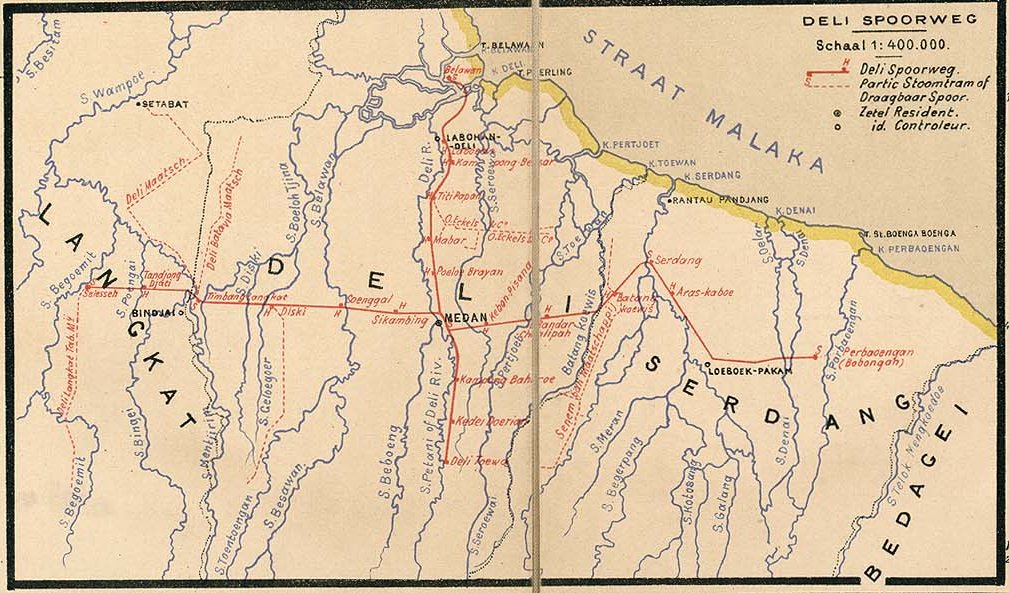
Medan Railway Station
Place
North Sumatra Press Struggle Museum
Place
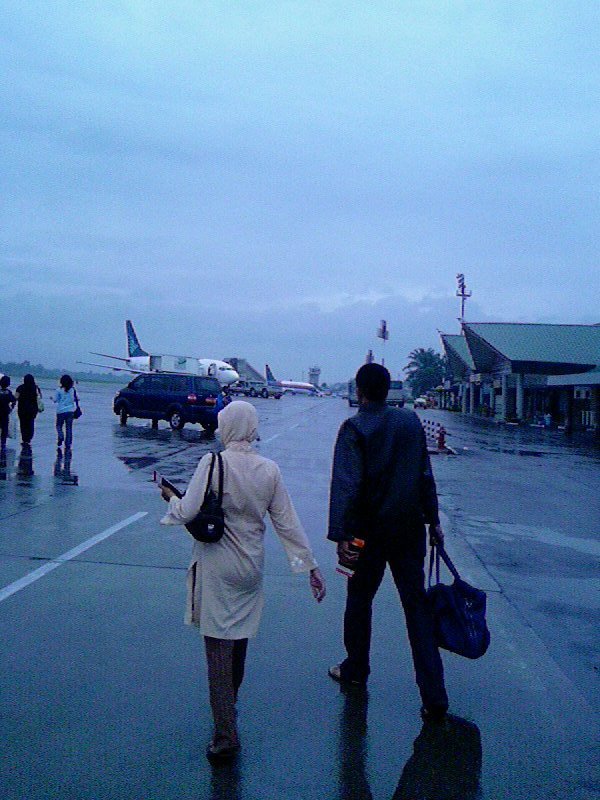
Soewondo Air Force Base
Place
State Islamic University of North Sumatra
Pick up where you left off
Saved and recently read places — kept on this device only.
Photo credits (12)
- Nurul Hasanah — Pexels License (https://www.pexels.com/license/) — Source: https://www.pexels.com/photo/6583407/
- Cagar Budaya Istana Maimun — Astari28 — CC BY-SA 4.0 (https://creativecommons.org/licenses/by-sa/4.0/) — Source: https://commons.wikimedia.org/wiki/File:Cagar_Budaya_Istana_Maimun.jpg
- Alat olahraga panjat di Taman Bunga — Sheira18 — CC BY 4.0 (https://creativecommons.org/licenses/by/4.0/) — Source: https://commons.wikimedia.org/wiki/File:Alat_olahraga_panjat_di_Taman_Bunga.jpg
- Corridor inside Kualanamu Airport — Sam Hidayat — CC BY-SA 4.0 (https://creativecommons.org/licenses/by-sa/4.0/) — Source: https://commons.wikimedia.org/wiki/File:Corridor_inside_Kualanamu_Airport.jpg
- 1980-10-12 Stan et Chris Marriage — Scotch Mist — CC BY-SA 4.0 (https://creativecommons.org/licenses/by-sa/4.0/) — Source: https://commons.wikimedia.org/wiki/File:1980-10-12_Stan_et_Chris_Marriage.jpg
- Bentor Medan — Astari28 — CC BY-SA 4.0 (https://creativecommons.org/licenses/by-sa/4.0/) — Source: https://commons.wikimedia.org/wiki/File:Bentor_Medan.jpg
- Cenderamata di istana Maimun — Astari28 — CC BY-SA 4.0 (https://creativecommons.org/licenses/by-sa/4.0/) — Source: https://commons.wikimedia.org/wiki/File:Cenderamata_di_istana_Maimun.jpg
- 1980-10-12 Stan et Chris Invite R — Scotch Mist — CC BY-SA 4.0 (https://creativecommons.org/licenses/by-sa/4.0/) — Source: https://commons.wikimedia.org/wiki/File:1980-10-12_Stan_et_Chris_Invite_R.jpg
- Batu prasasti Titi Gantung Medan — Nafisathallah — CC BY-SA 4.0 (https://creativecommons.org/licenses/by-sa/4.0/) — Source: https://commons.wikimedia.org/wiki/File:Batu_prasasti_Titi_Gantung_Medan.jpg
- Chinese New Year decor - Mall entrance in Medan — Gerald Waldo Luis — CC BY-SA 4.0 (https://creativecommons.org/licenses/by-sa/4.0/) — Source: https://commons.wikimedia.org/wiki/File:Chinese_New_Year_decor_-_Mall_entrance_in_Medan.jpg
- Delon Thamrin di Medan (2) — Lim Natee — CC BY 4.0 (https://creativecommons.org/licenses/by/4.0/) — Source: https://commons.wikimedia.org/wiki/File:Delon_Thamrin_di_Medan_(2).jpg
- Delon Thamrin di Medan — Lim Natee — CC BY 4.0 (https://creativecommons.org/licenses/by/4.0/) — Source: https://commons.wikimedia.org/wiki/File:Delon_Thamrin_di_Medan.jpg
Photos may have been resized or cropped.