
Origins and Historical Evolution of the Monument
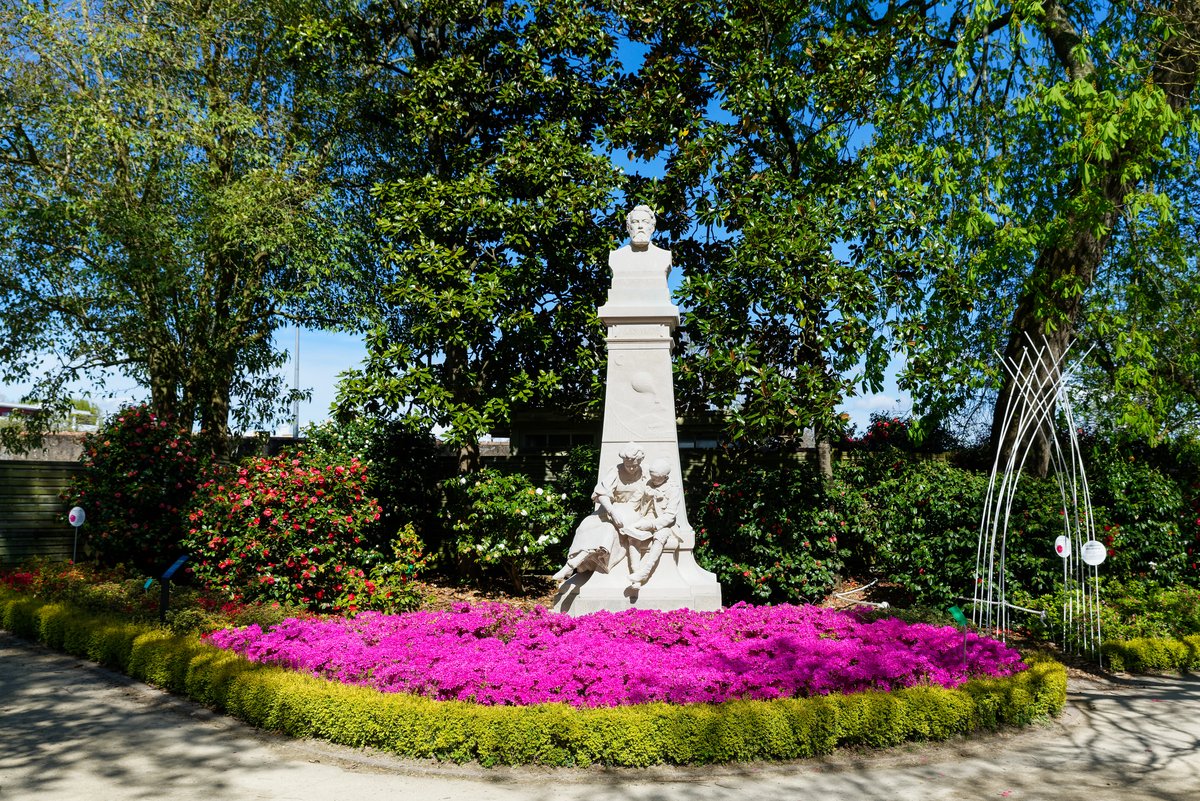
Jules Verne, born in Nantes in 1828, drew inspiration from his maritime surroundings, infusing his novels with the spirit of adventure and discovery so emblematic of the city (Best of France). Following Verne’s death in 1905, Nantes sought to honor its illustrious son by commissioning a public monument. Sculpted by Georges Bareau, the original bronze bust was unveiled in the Jardin des Plantes on May 29, 1910 (Nantes Autrefois).
The monument's history reflects the city’s resilience: during the German occupation in World War II, the bronze bust was melted down for the war effort. After the war, the monument was restored with a new stone bust by Jean Mazuet, ensuring Verne’s legacy continued to grace the city’s public spaces (Nantes Autrefois).
The monument’s location is significant—it stands in the Jardin des Plantes, a favorite childhood retreat for Verne, and is close to the Butte Sainte-Anne, offering sweeping views over the Loire. This placement reinforces the connection between Verne’s formative environment and the worlds he created.
Symbolism and Artistic Features
The Monument À Jules Verne is more than a commemorative sculpture—it is a visual storytelling device. At its base, two children read Verne’s works, surrounded by symbolic motifs: a crescent moon (a nod to "From the Earth to the Moon"), a hot air balloon ("Around the World in Eighty Days"), a train on a viaduct (evoking technological progress), a volcano, and a caravelle ship. These elements encapsulate the adventurous, scientific, and imaginative spirit of Verne’s literature.
The monument’s artistic design, with its allegorical figures and references, invites viewers to engage with Verne’s legacy and encourages the transmission of knowledge and imagination to future generations. The setting within the Jardin des Plantes further deepens the narrative, as the botanical garden’s exotic flora and tranquil ambiance mirror the lush landscapes of Verne’s novels (Best of France).
Cultural Significance in Nantes and Beyond
Jules Verne’s influence extends far beyond literature; he is a cultural icon who has inspired generations of readers, scientists, and explorers. The monument is a focal point for literary tourism and a symbol of Nantes’ openness to innovation and creativity. It is integrated into the city’s broader celebration of Verne, which includes the Musée Jules Verne, housing manuscripts, artifacts, and themed exhibits, and Les Machines de l’Île, an attraction featuring fantastical mechanical creatures inspired in part by Verne’s imagination (Best of France).
Nantes has embraced its identity as a city of imagination, with Verne as its emblematic figure—a status reinforced by major events, interactive installations, and the annual literary festivals that draw visitors from around the world.
Contemporary Perspectives and the Cité des Imaginaires
The monument remains relevant amid evolving cultural debates. In recent years, discussions have emerged about representation, diversity, and the more problematic aspects of Verne’s era, such as colonial attitudes present in some of his works (Actu.fr).
The upcoming Cité des Imaginaires, set to open in 2028, will house an expanded Jules Verne museum and serve as a center for creativity and inclusive dialogue. The project, with its transparent design and space for exhibitions and debates, aims to reinterpret Verne’s legacy for new generations.
Visiting the Monument: Hours, Access, and Tickets
Location
- Jardin des Plantes, Nantes (main monument)
- Butte Sainte-Anne nearby Another Verne monument and the Musée Jules Verne
Opening Hours
- Monument/Jardin des Plantes Daily, 8:00 AM – 8:00 PM (longer in summer)
- Musée Jules Verne Tuesday–Sunday, 10:00 AM – 6:00 PM; closed Mondays and public holidays (Musée Jules Verne official site)
Tickets and Admission
- Monument and Jardin des Plantes Free entry
- Musée Jules Verne Adults €7; reduced €5; free for under 18s
- Les Machines de l’Île Separate ticket required (Travel France Bucket List)
Accessibility
- The monument and garden paths are wheelchair accessible. Assistance dogs are welcome. The museum offers partial accessibility—contact in advance if you have mobility needs.
Travel Tips and Accessibility
- Getting There Use tram line 1 to Gare Maritime, or bus lines 11/23 to Place de la Bourse, then follow signs to Jardin des Plantes or Butte Sainte-Anne (Nomads Travel Guide).
- Parking Limited; public transport or cycling is recommended in Nantes’ bike-friendly environment.
- Weather The garden is open-air; prepare for sun or rain.
- Family-Friendly The monument and museum are suitable for children; Les Machines de l’Île is especially recommended for families.
- Guided Tours Offered by local operators and at the museum; check ahead for availability.
Nearby Attractions
- Musée Jules Verne Thematic rooms, manuscripts, and interactive exhibits; guided tours on weekends.
- Les Machines de l’Île Giant mechanical animals and creative workshops.
- Château des Ducs de Bretagne Medieval castle and Nantes History Museum.
- Jardin des Plantes Botanical garden with sculptures and themed flowerbeds.
- Trentemoult Village Colorful riverside neighborhood accessible by Navibus.
- Mémorial de l’Abolition de l’Esclavage Reflective site along Quai de la Fosse.
Frequently Asked Questions (FAQ)
Q: What are the visiting hours of the Monument À Jules Verne?
A: The monument is accessible during Jardin des Plantes opening hours, typically 8:00 AM – 8:00 PM daily.
Q: Is there an entrance fee?
A: No, both the monument and Jardin des Plantes are free to visit.
Q: Is the site wheelchair accessible?
A: Yes, with paved paths and accessible facilities.
Q: Are guided tours available?
A: Yes, through local tour operators and the museum.
Q: What other attractions are nearby?
A: Musée Jules Verne, Les Machines de l’Île, Château des Ducs de Bretagne, and Jardin des Plantes.