Historical Foundations of Karlovy Vary
Origins and Early Development
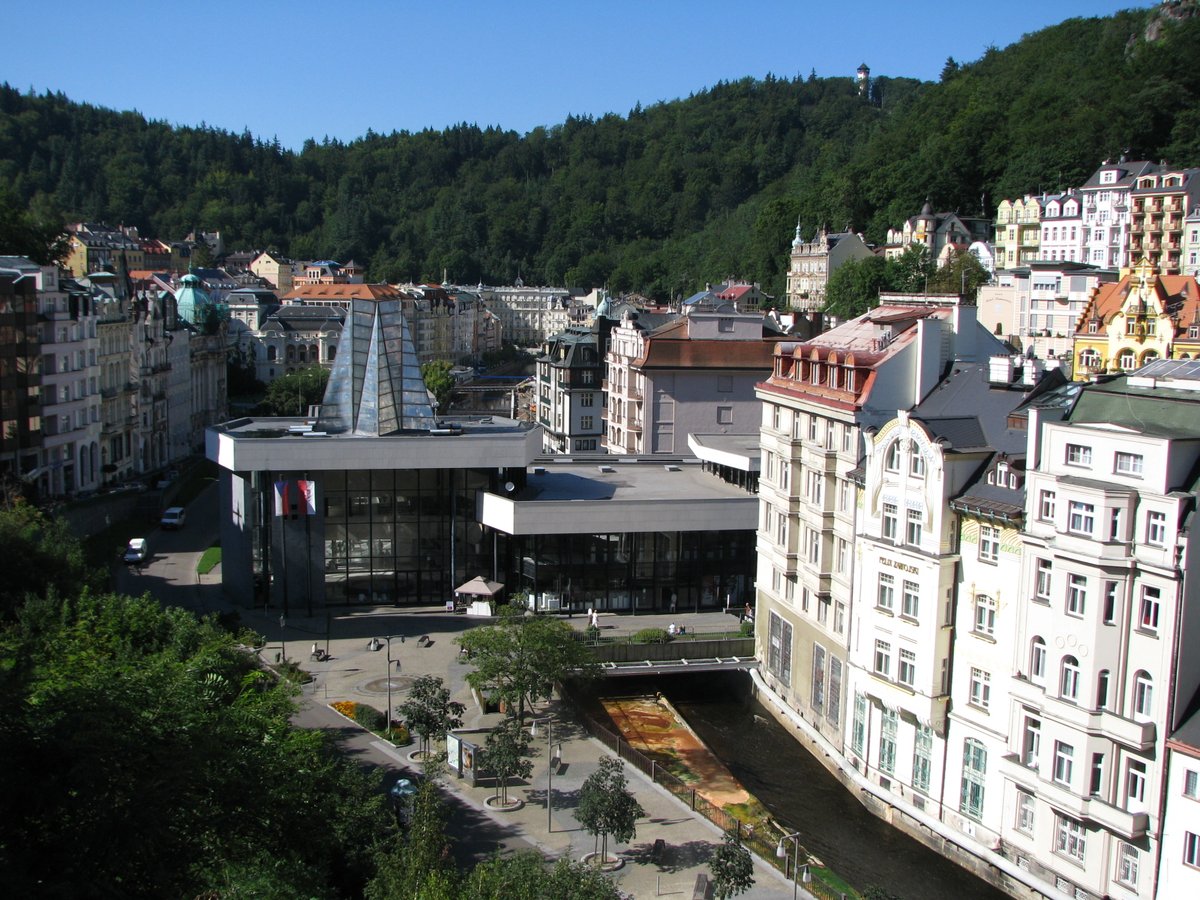
Founded by Emperor Charles IV in the 14th century, Karlovy Vary quickly gained fame for its healing hot springs (karlovy-vary.cz). Over the centuries, it became a cosmopolitan spa town, attracting visitors from across Europe. The economic prosperity brought by the spa industry necessitated the establishment of robust financial institutions, setting the stage for the construction of the Former Commercial Bank (a-karlovy-vary.com).
Economic Growth and the Rise of Banking
By the 18th and 19th centuries, Karlovy Vary was a hub for international spa tourism. The demand for financial services saw the rise of commercial banks, which offered currency exchange, credit, and investment opportunities. These institutions financed the construction of iconic buildings and supported local businesses, further integrating Karlovy Vary into European financial networks (academia.edu).
Architectural and Historical Significance of the Former Commercial Bank
Architectural Heritage
The Former Commercial Bank is a remarkable example of Viennese Secessionist Art Nouveau with Neo-Renaissance elements. The four-story building features geometric ornamentation, a prominent cornice with dentil detailing, and a triangular gable accentuating its verticality. Large segmental windows and shallow wall moldings contribute to its elegant façade (commons.wikimedia.org).
Constructed using reinforced concrete, the building represented a leap in early 20th-century architectural innovation. Its refined design and urban prominence embody the spirit of economic optimism prevalent in the Austro-Hungarian era.
Historical Background
Though local architect Alfred Bayer is officially credited with the design, stylistic evidence suggests collaboration with Viennese architects. Initially serving as the Österreichisch-Ungarische Bank, the building later became Komerční banka, maintaining its role as a financial hub for over a century.
The Bank’s Evolution Through Turbulent Times
Early 20th Century and World Wars
Before World War I, the bank managed substantial wealth generated by the spa industry. The world wars, however, led to economic disruptions and a decline in international visitors (a-karlovy-vary.com).
Communist Era and Revival
After World War II, the bank was nationalized under communist rule, altering its operations and clientele. The Velvet Revolution of 1989 and the return to a market economy revitalized the building and the surrounding district, with renewed interest in its architectural and historical value (karlovy-vary.cz).
Visiting the Former Commercial Bank: Practical Information
Location and Accessibility
- Address náměstí Republiky 1229/1, 360 01 Karlovy Vary, Czech Republic (Google Maps; Aroundus)
- Access Centrally located, pedestrian-friendly, near the main spa district and Teplá River. Local buses and the Karlovy VARY REGION CARD provide convenient access and discounts (Karlovy Vary Practical Information).
Visiting Hours and Tickets
- Exterior Viewing Accessible year-round from the street, with no entrance fee.
- Interior Access Generally closed to the public except during special events or guided tours. Confirm availability with the Tourist Information Centre.
- Guided Tours Can be booked through local tourism offices; may incur a small fee.
Visitor Amenities
- Accessibility The area is pedestrian-friendly and accessible to visitors with mobility needs. Ramps and elevators are available inside the building when open to the public.
- Language Czech is official, but English and German are commonly spoken in tourist areas.
- Photography The ornate façade is a popular subject; photography is allowed from the street, and interior photography depends on event policies.
Cultural and Economic Legacy
The Former Commercial Bank played a crucial role in Karlovy Vary’s economic growth by facilitating commerce, supporting the spa and tourism industry, and financing major urban projects such as the Grandhotel Pupp and Mill Colonnade (prague-guide.co.uk). As a major employer, it contributed to local social mobility and community cohesion (academia.edu; adventurebackpack.com).
Architecturally, the building is recognized as a cultural monument and is part of the UNESCO World Heritage-listed "Great Spa Towns of Europe" (whc.unesco.org). Its preservation highlights the city’s commitment to maintaining its historical and aesthetic legacy.
Plan Your Visit: Tips and Recommendations
- Combine Visits Explore the Former Commercial Bank alongside nearby attractions such as the Mill Colonnade, Market Colonnade, Hot Spring Colonnade, Grandhotel Pupp, and St. Mary Magdalene Church.
- Best Time to Visit The spa season (late spring to early autumn) offers vibrant festivals and cultural events (best-time.to).
- Check for Events Special exhibitions and guided tours may offer rare access to the bank’s interior.
- Use the Audiala App For interactive walking tours and up-to-date event information.
Frequently Asked Questions (FAQs)
Q: Is the Former Commercial Bank open to the public?
A: The exterior is always accessible; interior access is limited to special events or tours.
Q: Are there guided tours?
A: Yes, guided tours are available through local tourism offices and may include the bank during special events.
Q: Is the site accessible for visitors with disabilities?
A: Yes, the area is pedestrian-friendly, and the building has ramps and elevators during open events.
Q: Are there entrance fees?
A: No fees for viewing the exterior; special tours or events may require tickets.
Nearby Attractions
- Mill Colonnade Grand 19th-century colonnade with mineral springs (Salt in Our Hair).
- Market Colonnade Ornate wooden structure with Swiss-style carvings (The Tourist Checklist).
- Hot Spring Colonnade Home to the city’s main thermal geyser (Tripzaza).
- Diana Lookout Tower Panoramic city views accessible by funicular (Tripzaza).
- Becherovka Museum History and tasting of the famous herbal liqueur (Tripzaza).
- St. Mary Magdalene Church Baroque masterpiece with guided tours (Tourist Places Guide).
- Dvořák Park Serene green space near the spa district.
- Karlovy Vary Museum Exhibits on local history and spa culture (Karlovy Vary Museum).
- Grand Hotel Pupp Iconic historic hotel and café (Salt in Our Hair).
- International Film Festival World-renowned event held in early July (The Tourist Checklist).