Historical Background
Commissioning and Early History
After Queen Victoria's death in 1901, Leeds—like many British cities—sought to commemorate her reign with a public monument. A local committee swiftly raised nearly £8,000 through public subscription to fund the project (Yale Center for British Art). Celebrated sculptor Sir George Frampton was commissioned, assisted by architect Leonard Stokes. Their design was intended to honor the late monarch while underscoring Leeds' status as a civic and industrial powerhouse within the British Empire.
Design, Materials, and Symbolism
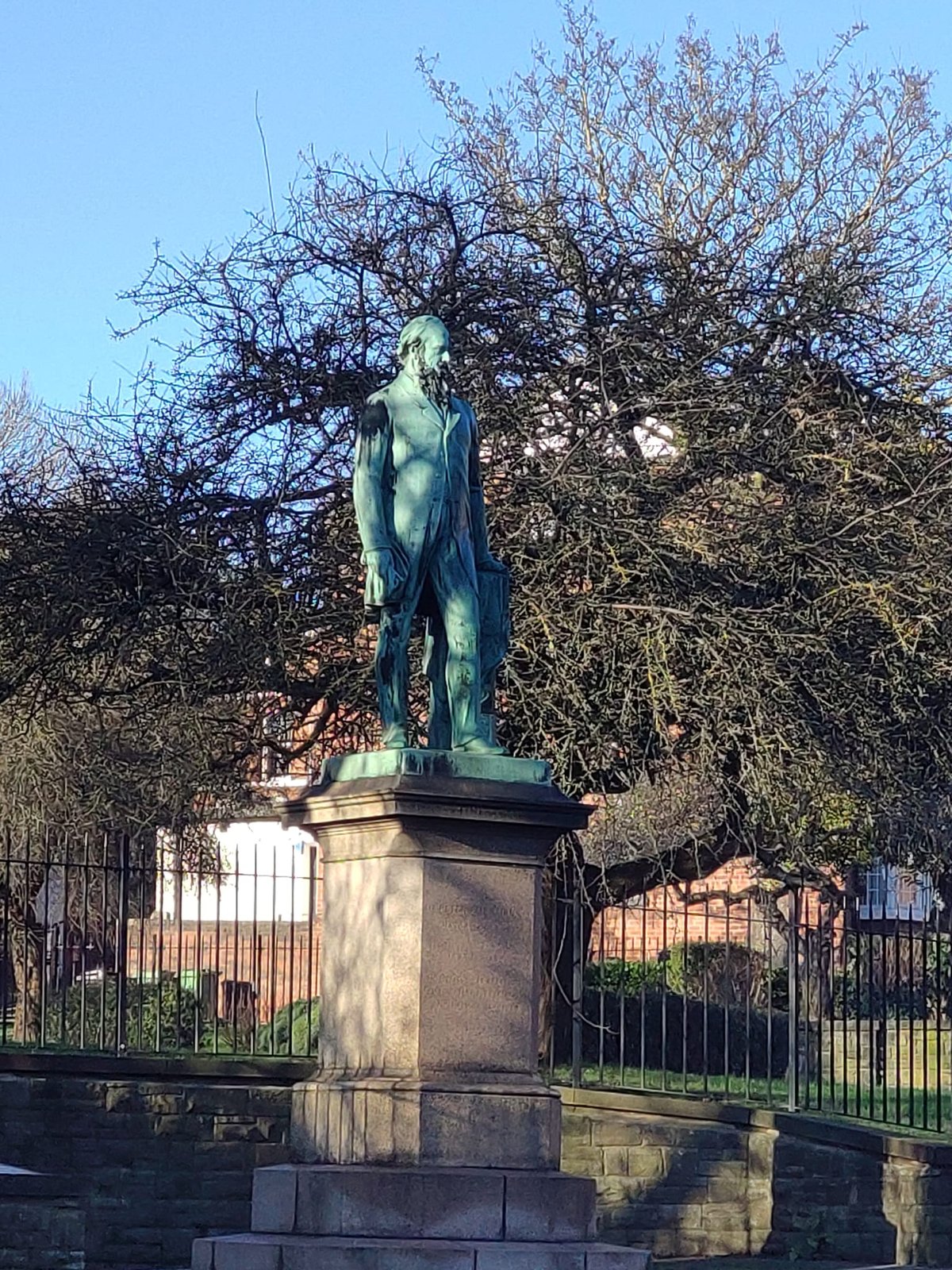
Frampton's memorial features a bronze figure of Queen Victoria seated with an orb and scepter, radiating authority and enlightenment (Wikipedia). Flanking the main sculpture are allegorical figures representing Peace and Industry, virtues closely tied to Leeds’ Victorian identity as a manufacturing center. The granite pedestal includes bronze plaques inscribed with “INDIA,” “AUSTRALIA,” “CANADA,” and “AFRICA,” connecting Leeds to the wider Empire. Local symbols—like the owl, emblematic of Leeds—are integrated alongside royal coats of arms, intertwining civic and imperial pride.
Relocation and Preservation
Originally unveiled in 1905 outside Leeds Town Hall, the memorial was moved to Woodhouse Moor in 1937 to accommodate urban development (Wikipedia). In 1976, it was granted Grade II* listed status, ensuring its conservation as a piece of national heritage.
Imperial Context and Changing Perspectives
The memorial encapsulates both the triumphs and controversies of the Victorian era. While it celebrates prosperity and progress, its imperial symbolism has prompted contemporary debate—especially following the 2020 Black Lives Matter protests, when the statue was vandalized and subsequently restored by local volunteers (Leeds Live). These events highlight the evolving dialogue around public monuments, colonialism, and historical memory.
Visiting the Memorial
Location and How to Get There
The Queen Victoria Memorial is situated in Woodhouse Moor—a large, central park just north of Leeds city centre.
- By Bus Multiple routes from the city centre stop near Woodhouse Moor.
- By Train Leeds railway station is about 1.5 miles away; buses and taxis connect the station to the park.
- By Car Limited street parking is available; public car parks are nearby in the city centre.
Visiting Hours and Admission
- Hours As an outdoor monument, the memorial is accessible 24/7. Daylight hours are recommended for the best experience.
- Tickets No tickets or admission fees are required.
Accessibility
Woodhouse Moor features paved paths and level terrain, making the memorial accessible to wheelchair users and visitors with limited mobility. Benches and open spaces provide rest areas.
Nearby Attractions
Complement your visit with nearby Leeds highlights:
- Leeds Town Hall
- Leeds City Museum
- The Corn Exchange
- Victoria Quarter shopping arcade (Victoria Quarter)
- Leeds Art Gallery
Special Events and Tours
The memorial is sometimes included in guided walking tours of Leeds’ Victorian landmarks. For upcoming tours, check the Leeds Official Tourism website. Woodhouse Moor also hosts seasonal festivals and civic events, offering added vibrancy during your visit.
Photographic Opportunities
Capture the memorial during golden hour for dramatic light on the bronze sculpture. The juxtaposition of the statue against Woodhouse Moor’s greenery creates compelling photographic compositions. Early mornings and late afternoons offer the best conditions for photography.
Frequently Asked Questions (FAQ)
Q: What are the opening hours?
A: The memorial is accessible any time, as it is located in a public park.
Q: Is there an entry fee or ticket required?
A: No, the memorial is free to visit and does not require tickets.
Q: Is the memorial wheelchair accessible?
A: Yes, paved paths in Woodhouse Moor ensure accessibility.
Q: Are guided tours available?
A: Yes, some local tour companies and the Leeds tourism office offer tours that include the memorial.
Q: What is the best time for photography?
A: Early morning or late afternoon for optimal lighting and fewer crowds.
Q: Are there other attractions nearby?
A: Yes, including Leeds Town Hall, the Corn Exchange, and Victoria Quarter.