Historical Background
Early Origins and Foundation
Wat Yai Chai Mongkhon’s site predates the city of Ayutthaya itself, with archaeological evidence indicating earlier Khmer religious structures. Officially established in 1357 CE by King Ramathibodee I (King U-Thong), the temple—originally named “Wat Pa Kaew”—served as a royal monastery and a center for meditation (Thaizer; Guide2Thailand). Its foundation was closely linked to the cremation of Prince Kaew, marking it as a sacred and auspicious locale from the outset.
King Naresuan and the Chai Mongkol Chedi
The temple’s prominence soared in the late 16th century under King Naresuan the Great. After his legendary victory over the Burmese in 1593, King Naresuan commissioned the construction of the monumental Chai Mongkol Chedi (meaning “Great Monastery of Auspicious Victory”). This 62-meter tall bell-shaped stupa became the temple’s symbol of triumph and merit, cementing its place as a spiritual and national monument (Guide2Thailand; Backpackers Bay).
Decline and Modern Restoration
Following the sacking of Ayutthaya in 1767, Wat Yai Chai Mongkhon was abandoned and fell into ruin. Restoration began in the mid-20th century, with the temple reestablished as an active monastery in 1957. Ongoing conservation efforts have preserved its architectural grandeur and spiritual vitality, allowing visitors to experience both its ancient and living traditions (Thaizer).
Architectural and Cultural Highlights
Central Chedi and Mandapas
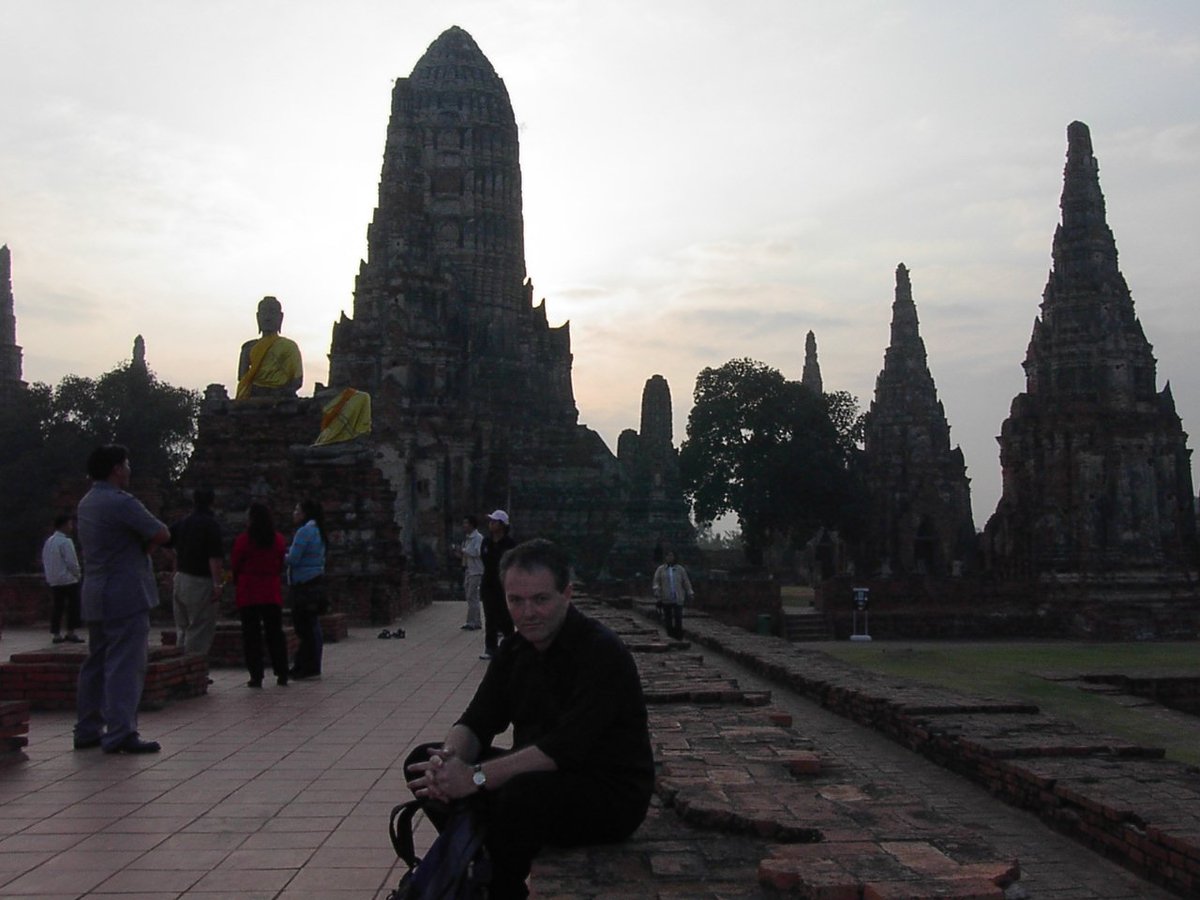
The towering Chai Mongkol Chedi dominates the temple complex, built atop an elevated square base and flanked by four smaller chedis. Visitors can climb the steep stairway to the terrace for panoramic views over Ayutthaya. The chedi’s design reflects Sri Lankan and Khmer influences, with its bell-shaped form and cosmological symbolism (northofknown.com; nomads-travel-guide.com).
Flanking the chedi are mandapas—brick pavilions enshrining large Buddha images. Many of these statues, seated in meditation, are draped in saffron cloths donated by devotees (renown-travel.com).
Buddha Galleries and the Reclining Buddha
Encircling the central platform, rows of Buddha statues in the subduing Mara posture (overcoming temptation) create a powerful visual rhythm. The open-air gallery, once roofed, enhances the contemplative atmosphere (thai-hub.com).
In the northeast corner stands the impressive reclining Buddha, restored in 1965 and draped in golden cloth. It is a focal point for offerings and meditation (ayutthaya-history.com).
Monastic Quarters and Site Layout
The temple grounds include active kuti (monks’ residences), a reconstructed ubosot (ordination hall), and the viharn (assembly hall) base. The site’s historical moat and baray reflect cosmological beliefs and Khmer influence (ayutthaya-history.com; paulmarina.com).
Symbolism and Artistic Influences
Wat Yai Chai Mongkhon’s architecture combines Ayutthaya, Khmer, and Sri Lankan traditions. The chedi’s monumental scale and form represent both spiritual ascent and royal power. Statues of King Naresuan and symbolic rooster figures reinforce the temple’s national significance (klook.com; holidify.com).
Visitor Information
Visiting Hours and Ticket Details
- Hours Open daily from 8:00 AM to 5:00 PM (Trip.com).
- Admission For most visitors, entrance is free, with donation boxes available for upkeep. Some sources note a nominal fee (20–50 THB) for non-Thai nationals; always confirm at the entrance (Guide2Thailand; Live the World).
Dress Code and Etiquette
- Wear modest clothing covering shoulders and knees.
- Remove shoes before entering temple buildings.
- Behave respectfully: avoid loud conversation, public displays of affection, and pointing feet at Buddha images.
- Donations and merit-making, such as lighting incense, are encouraged (Backpackers Bay).
Accessibility
- The temple grounds are mostly flat and wheelchair accessible, though the chedi’s stairs are steep and may not be suitable for all visitors.
- Contact the temple office or local tour operators for tailored accessibility support.
Guided Tours and Special Events
- Local guides offer in-depth tours on-site.
- Buddhist festivals, especially Visakha Bucha Day and Songkran, are celebrated with special ceremonies (Hanoi Voyage).
Getting There and Site Navigation
- Located at 40/8, Thanon Chedi-Wat Yai Chai Mong Khol, Khlong Suan Phlu Sub District, Amphoe Phra Nakhon Si Ayutthaya.
- Accessible via tuk-tuk, bicycle, or car from Ayutthaya city center; about 80 km north of Bangkok.
- Maps and signage in Thai and English are provided at the entrance (Live the World).
Best Times to Visit
- Ideal Season November–February (cool, dry, and less humid).
- Best Hours Early morning (8:00–10:00) for fewer crowds and optimal photography light.
- Avoid midday heat and the rainy season (June–October).
Practical Tips
- Bring water, sun protection, and comfortable shoes.
- Restrooms are near the entrance; vendors outside sell refreshments.
- Plan to visit nearby attractions like Wat Phra Si Sanphet and Ayutthaya Historical Park for a full-day itinerary (Live the World).
Frequently Asked Questions (FAQ)
Q: What are Wat Yai Chai Mongkhon’s opening hours?
A: Daily, 8:00 AM–5:00 PM.
Q: Is there an entrance fee?
A: Generally free, but some sources report a small fee for foreigners. Donations are welcomed.
Q: Is the temple wheelchair accessible?
A: Most of the grounds are accessible, but the chedi stairs are steep and not suitable for wheelchairs.
Q: Are guided tours available?
A: Yes, local guides can be hired at the site or in advance.
Q: What is the best time of day to visit?
A: Early morning for cooler temperatures and fewer visitors.
Explore More
- Ayutthaya Historical Park Guide
- Top Temples to Visit in Ayutthaya
- Thai Festivals and Cultural Events