Prehistoric
science
c. 250,000 BCE
Earliest Human Traces
Deep in the Observatory Cave, Homo erectus left stone tools and fires that still speak across a quarter-million years. The steep limestone cliffs offered shelter, vantage, and a reliable supply of seafood; Monaco’s human story began not with princes but with patient hunters watching the Mediterranean.
Antiquity
flight
c. 300 BCE
Greek Port of Monoikos
Phoenician and Greek sailors knew this sheltered anchorage as Monoikos, “the solitary house.” They built a small temple to Heracles and used the natural harbor for trade between Liguria and Massalia. The name Monaco is older than the Grimaldis by two millennia.
castle
50 BCE
Caesar Stops at Monaco
Julius Caesar’s fleet anchored here on his way to campaign in Gaul. The small Ligurian port already functioned as a Roman way-station on the Via Julia Augusta. What began as a modest harbor would later become one of the most expensive stretches of coastline on earth.
Late Antiquity
church
c. 303
Martyrdom of Saint Devote
A young Christian woman named Devote was tortured and killed in Corsica. Her body, placed in a boat with a dove, miraculously washed ashore at Monaco. The saint became the principality’s spiritual patron; her feast day still stops the Rock every January.
Genoese Period
castle
1215
Genoese Fortress Built
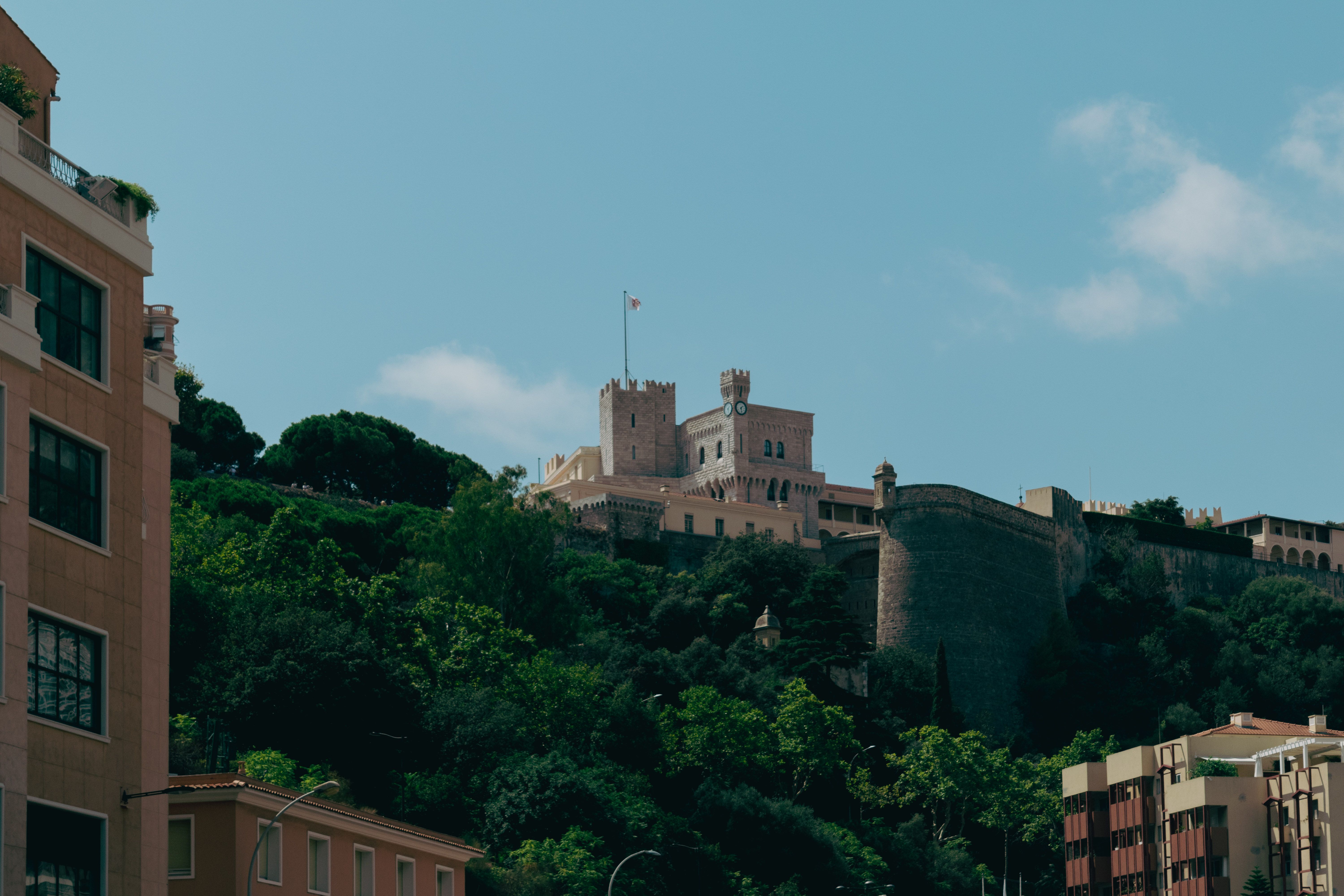
Genoese merchants and soldiers laid the first stones of a fortress on the Rock, four towers linked by thick curtain walls. They chose the site for its sheer cliffs and natural defensibility. That military outpost is today the Prince’s Palace — the oldest continuously inhabited palace in Europe.
Grimaldi Era
person
1297
François Grimaldi Seizes the Rock
On a freezing January night, François Grimaldi, disguised as a Franciscan monk, knocked on the fortress gate. Once inside, he and his men drew hidden swords and took the citadel in the name of the Guelph faction. The Grimaldi dynasty had begun its improbable 700-year reign.
person
1458
Lambert Unites the Lands
Lambert Grimaldi bound Monaco, Menton, and Roquebrune into a single loyal territory through a solemn oath with the people. He recovered lost towns, courted French and Savoyard alliances, and turned a precarious lordship into a coherent state. The Rock’s medieval foundations were laid.
Renaissance Conflicts
swords
1507
Siege by Genoa Repelled
For four months Genoa hurled everything it had against the Rock. On 19 March the Genoese assault on Fort Serravalle failed. Lucien Grimaldi and his small force, helped by French troops, held out. The victory confirmed Grimaldi independence and left the Rock in ruins that had to be entirely rebuilt.
Princely Consolidation
person
1612
Honoré II Becomes Prince
Honoré II formally adopted the title “Prince of Monaco,” elevating the family from lords to sovereign princes. He rebuilt the grim fortress into a genuine Renaissance palace, filled it with art, and created the ceremonial framework that still governs court life today.
gavel
1641
Treaty of Péronne
The Treaty of Péronne placed Monaco under French protection while explicitly recognizing its independence. This delicate legal formula — sovereignty guaranteed by a larger neighbor — would be repeated for centuries and remains the basis of Monaco’s unusual status.
Revolutionary & Napoleonic
swords
1793
French Revolution Annexes Monaco
French troops crossed the border in October 1792. By February 1793 the Principality was declared abolished, the Prince exiled, and the palace turned into a military hospital. The Grimaldi family lost everything; the Rock became simply the “Fortress of Hercules” for twenty years.
Restoration
gavel
1815
Restoration Under Sardinian Protection
After Napoleon’s defeat, the Congress of Vienna restored the Grimaldis but placed Monaco under the protection of the Kingdom of Sardinia. The tiny state survived, yet its territory and autonomy were now more fragile than ever.
Modern Reinvention
gavel
1861
Loss of Menton and Roquebrune
Charles III was forced to sell Menton and Roquebrune to France for four million francs. Overnight Monaco shrank from 150 km² to less than 2 km². The blow was devastating — yet it forced the family to reinvent their microscopic domain as a luxury resort.
factory
1863
Casino de Monte-Carlo Founded
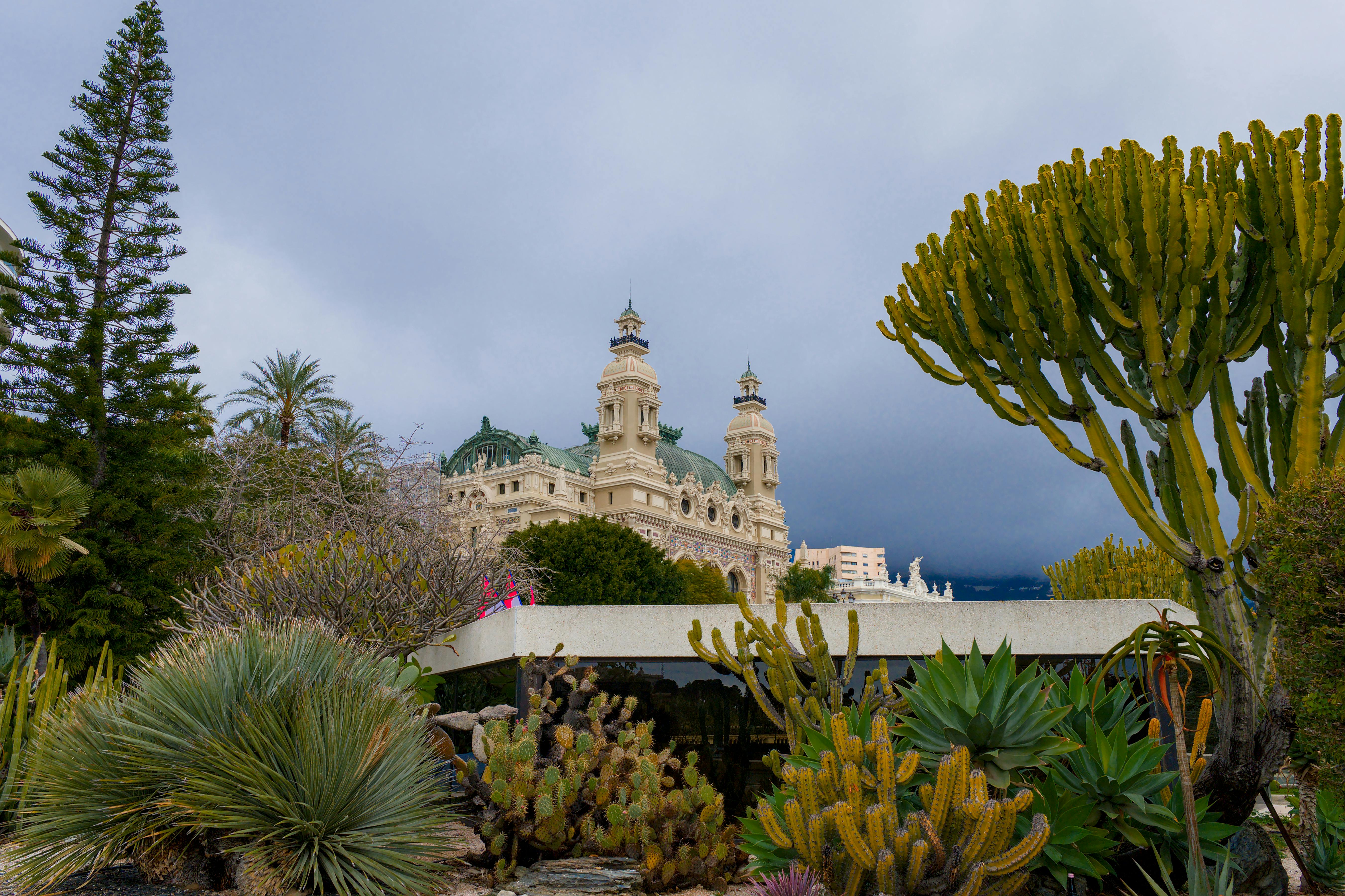
Charles III and François Blanc created the Société des Bains de Mer and opened a casino in the barren plateau above the Rock. Within years the new district was christened Monte-Carlo in the Prince’s honor. The casino saved Monaco from bankruptcy and created its modern identity.
Belle Époque & Science
science
1910
Oceanographic Museum Opens
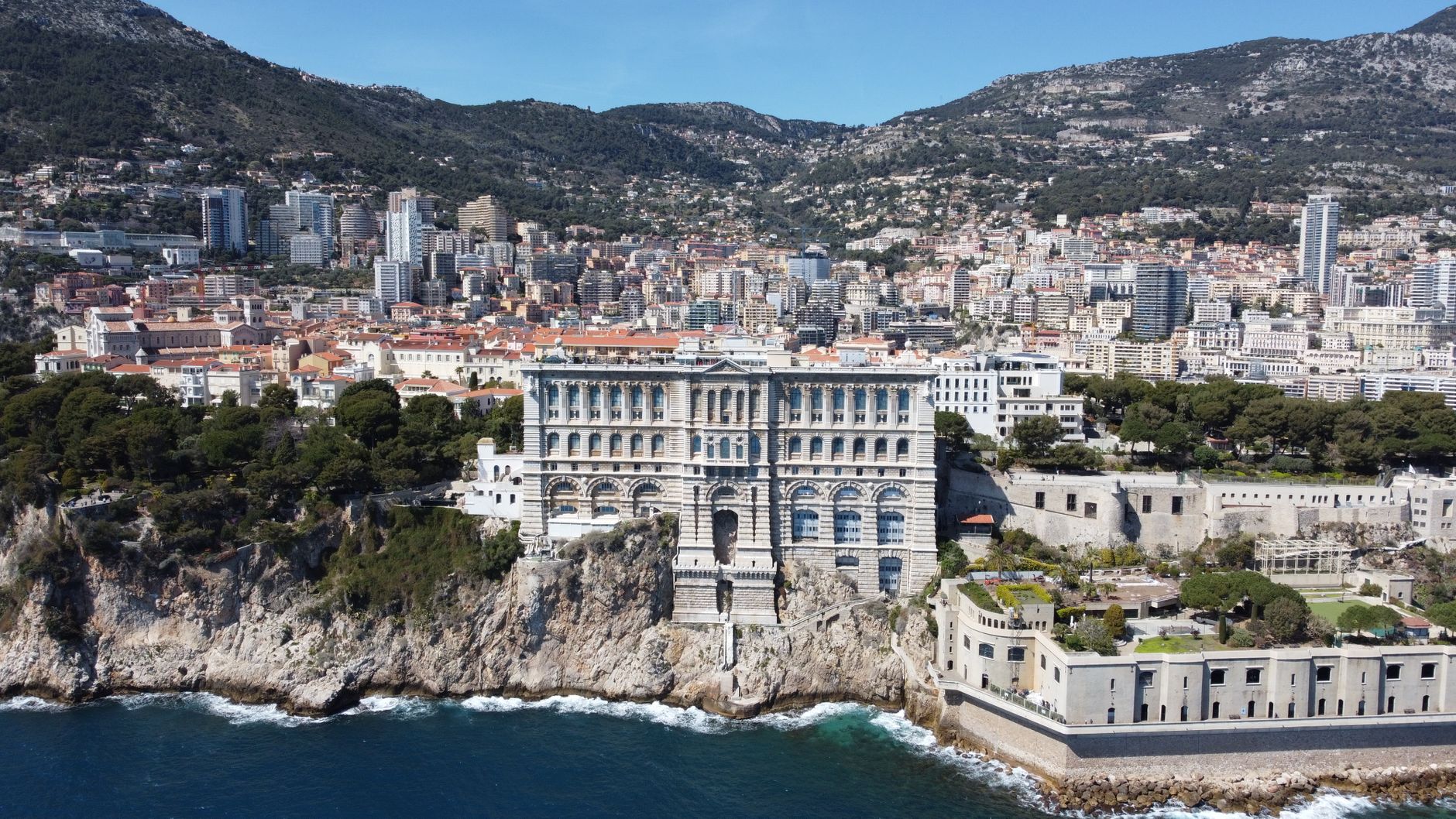
Prince Albert I, the “Scientist Prince,” inaugurated his cliffside temple to the sea on 29 March 1910. The museum housed specimens from his daring oceanographic expeditions. Jacques Cousteau would later direct it for thirty-one years, making Monaco a global center of marine science.
gavel
1911
First Constitution Granted
After street protests and pressure from Monegasque notables, Albert I reluctantly signed Monaco’s first constitution on 5 January 1911. The absolute monarchy became a constitutional one, though the Prince retained significant powers — a pattern that continues today.
World Wars
swords
1944
Liberation from Nazi Occupation
After Italian then German occupation, Monaco was liberated on 3 September 1944. Fort Antoine lay in ruins, the population traumatized. The Grimaldis returned to a changed world where old aristocratic Europe had largely vanished.
Modern Monaco
person
1956
Rainier Marries Grace Kelly
The fairy-tale wedding of Prince Rainier III and Hollywood star Grace Kelly transformed Monaco’s image overnight. What had been a faded gambling resort became the glittering capital of celebrity royalty. The world’s press never left.
gavel
1962
New Constitution After Crisis
A bitter dispute with France over taxes led to border controls and near-collapse of relations. Rainier responded with a new constitution in December 1962 that slightly curbed princely power while preserving core sovereignty. The crisis ultimately strengthened Monaco’s financial secrecy model.
public
1993
Joins the United Nations
After decades as an observer, Monaco became the 183rd full member of the United Nations on 28 May 1993. The tiny state had finally secured its place among the community of nations, a journey that began with a monk’s sword in 1297.
Contemporary Era
person
2005
Albert II Succeeds Rainier
On 6 April 2005 Prince Rainier III died after a 56-year reign that had turned Monaco into a modern state. His son Albert II immediately signaled a new emphasis on environmental causes and transparency, shifting the principality’s global image once again.
factory
2024
Mareterra District Opens
On 4 December 2024 the new eco-neighborhood of Mareterra was officially inaugurated, adding six hectares of reclaimed land. With its promenade, marina, and 40% green space, it represents Monaco’s latest audacious attempt to grow when there is literally no room left to grow.