An introduction.
Researched by the Audiala editorial team from historical records, architectural archives, and local expertise.
AA tax haven, an opera house, and a roulette room share the same address at Monte Carlo Casino in Monaco, Monaco. Visit because this is the building where glamour turns out to be policy: chandeliers, mirrored salons, and the cold arithmetic that financed a tiny state. Few places explain their city so completely. Fewer still smell faintly of perfume and old money while doing it.
From Place du Casino, the façade looks like pure Belle Époque theater, all carved stone and polished confidence. Then you learn the harder truth: records show the casino economy grew out of crisis, after Monaco lost much of its tax base in the mid-19th century and needed a new way to survive.
That makes the building more interesting than its legend. You come for Charles Garnier's gold leaf, the hush before a roulette spin, the late-afternoon light on the gardens; you stay because the Casino de Monte-Carlo reveals how modern Monaco was assembled, one wager at a time.
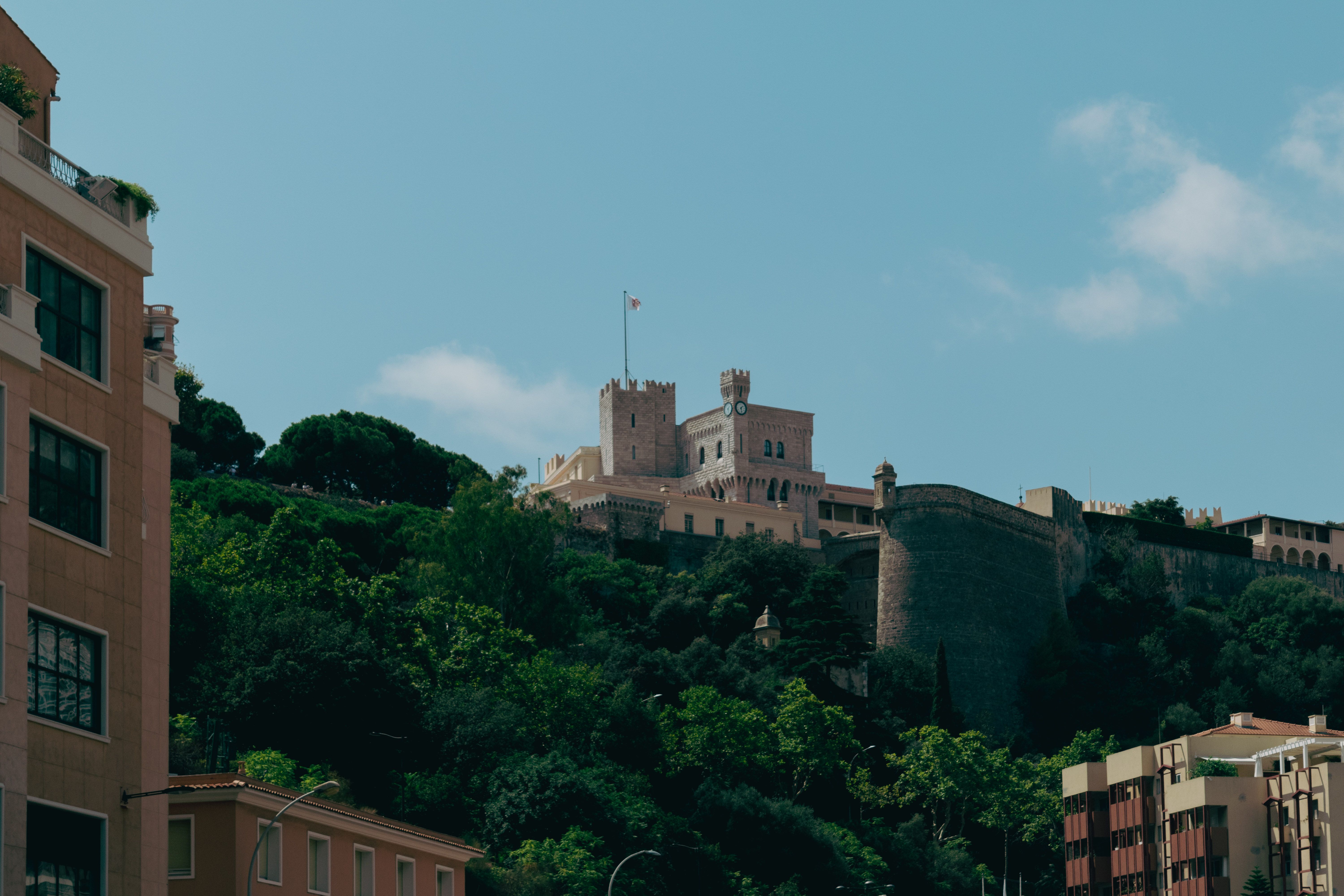
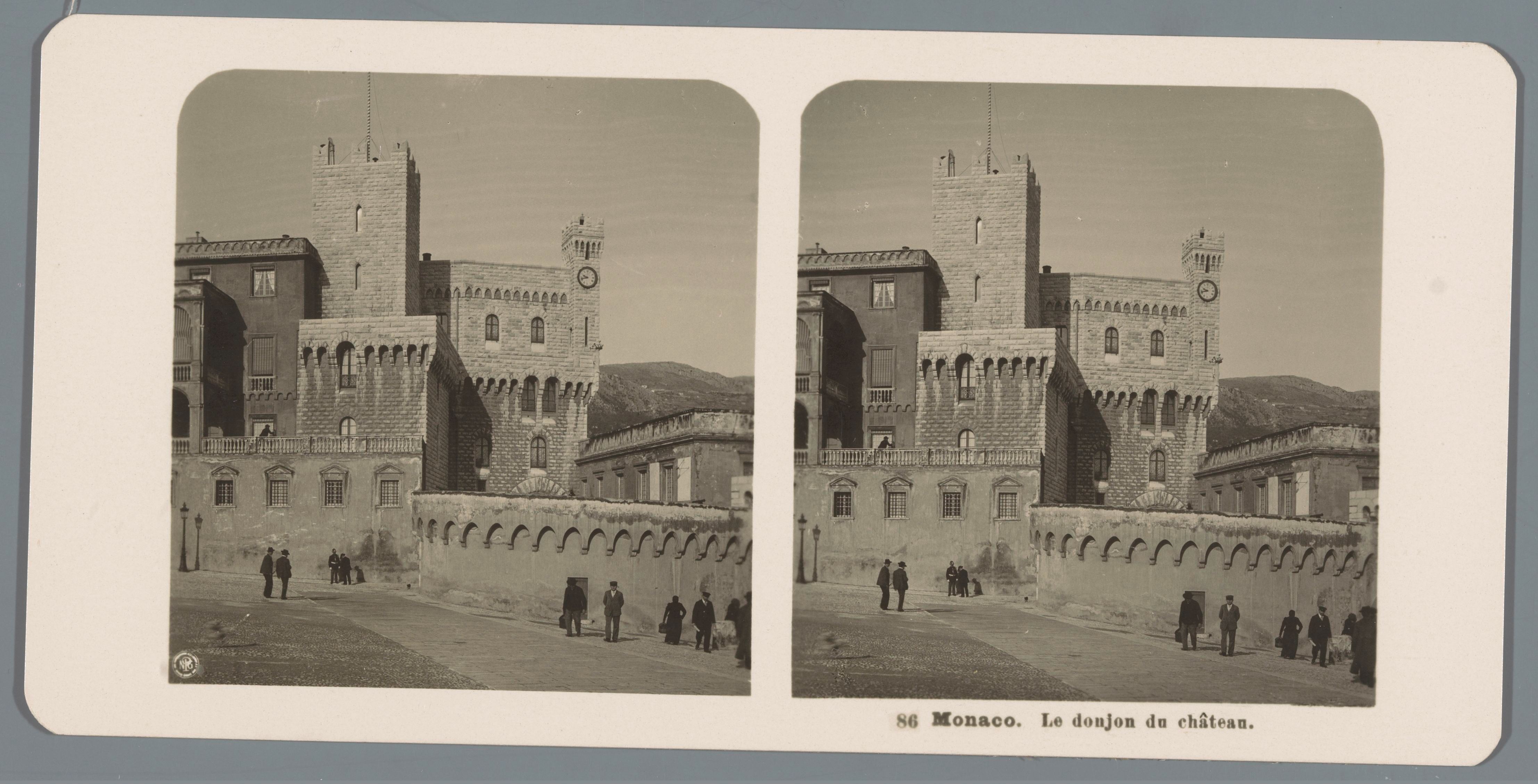
And the setting helps. A short climb away, the older sovereign world still lingers at the Princes Palace of Monaco; down here, on the former plateau of Les Spelugues, monarchy learned to market itself.
01 What to see.
The Atrium and Salle Europe
The first surprise is that the casino gives you a way in before it asks anything of you: the Atrium is open all day, free to enter, and that marble floor under your shoes is the one James Bond crossed in 1983. Look up before you do anything else. Daylight slips across polished stone, the air smells faintly of perfume and cold mineral dust, and the building makes its point through texture rather than noise.
Then the mood tightens. The official cultural visit runs from 10:00 to 13:00, last entry at 12:15, for 20 euros, and it carries you toward Salle Europe, where croupier calls, chips on felt, and live lounge music bounce under a glass canopy and eight Bohemian crystal chandeliers the size of small cars.
Salle Garnier
Most people come expecting roulette and leave thinking about an opera house. Salle Garnier opened on 25 January 1879, built by Charles Garnier of Paris Opéra fame, and its 517 seats make it feel intimate rather than imperial, more like a jewel box than a civic monument, with crimson velvet, gilded balconies, frescoed ceilings, and sea-facing windows that remind you the Mediterranean is only a few breaths away.
Sarah Bernhardt was the first star to perform here. You can feel why she would have liked it: the acoustics carry a whisper, chandeliers throw warm light across carved plaster, and the whole room has the slightly unreal air of a stage set that forgot to stop being beautiful once the audience went home.
From Boulingrins to Petite Afrique
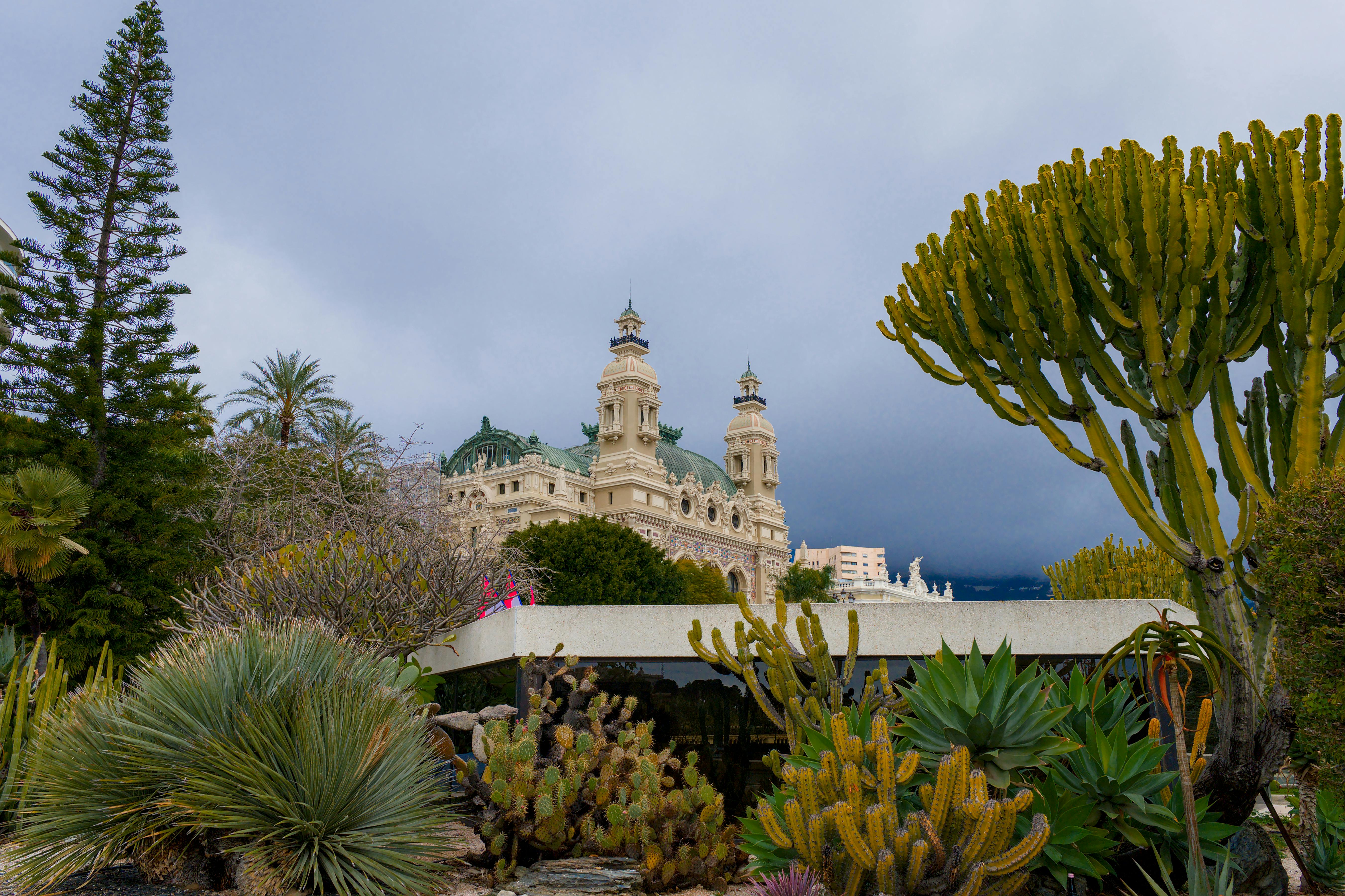
Skip the instinct to photograph the facade from the car drop-off and do this instead: start in the Jardins des Boulingrins, where the formal axis lines up the casino like a piece of theater scenery, then slip down into Jardin de la Petite Afrique, where the paths curve, the leaves turn tropical, and the building suddenly looks less like a monument than a fantasy built for sea light. The walk takes minutes. It changes the place.
That contrast is the secret of Monaco: ceremony above, softness below, money performing on the square while fountains and old ficus roots keep their own counsel just out of frame. If you can, end on a terrace near the casino and listen for the switch from traffic and cameras to water, birds, and the muffled clink of glass from inside.
02 In pictures.


Videos
Watch & Explore Monte Carlo Casino
You need €500,000 to live in Monaco 😱 #monaco #montecarlo #luxury #monacolife
10 Top Tourist Attractions in Monaco | Travel Video | Travel Guide | SKY Travel
Monaco's Most Luxurious Hidden Gems You Need to See
Plan and listen to Monte Carlo Casino with Audiala.
Audio guide in your pocket, itinerary in your browser. Built for the way you actually visit.
03 Visitor logistics.
The practical scaffolding for a good visit — kept short.
Getting There
The casino sits on Place du Casino at 43.7391605, 7.428023. From Monaco-Monte-Carlo station, count 9-11 minutes on foot, about 800-1000 meters uphill; bus lines 1, 5, and 6 stop at PLACE DU CASINO, and drivers should aim for Parking des Boulingrins just behind the square.
Opening Hours
As of 2026, cultural visits run daily from 10:00 to 13:00, with last entry at 12:15, and the gaming rooms open from 14:00. The Atrium stays open all day, while Café de la Rotonde is seasonal, open daily from April 4 to October 26, 12:00-18:00; gala events can occasionally restrict some rooms.
Time Needed
Give it 15-30 minutes if you only want the façade, gardens, and Atrium. A proper morning visit with the audio guide takes 45-75 minutes, while lunch, architecture, and a slower look at the rooms easily turns into 1.5-2.5 hours.
Accessibility
Place du Casino itself is manageable for wheelchair users, and Monaco works better than it looks thanks to its network of lifts, escalators, and travelators. The hard part is the slope from the station, so use lifts or a bus instead of forcing the climb; Le Salon Rose and Le Train Bleu are officially marked PMR accessible.
Cost & Tickets
As of 2026, the morning audio-guide visit costs €20 for adults and €15 for ages 13-17, while children 6-12 enter free. Gaming-room entry from 14:00 is also €20, and you will need a passport or EU national ID card if you plan to gamble; driving licences are not accepted.
05 Tips for visitors.
Small things that change the day.
Dress Smart
Gaming rooms enforce a real dress code, not a symbolic one: no shorts, sportswear, flip-flops, ripped jeans, sleeveless tops, or men's sandals. After 19:00, some rooms tighten the rules again, and men may need a jacket.
Morning Photos
Take your pictures during the morning visit window before the roulette tables wake up. Once gaming starts from 14:00, cameras and phones are barred in the gaming rooms, and SBM has also pushed back against filming guests around the entrance.
Mind The Square
The square feels polished and heavily watched, but the real risk here is luxury-targeted theft and the odd scam, not rough street crime. Keep your phone down around supercar arrivals, and if you park in Monaco, ignore stray QR codes on meters and use the official payment system only.
Eat Strategically
For the room itself, Café de la Rotonde is the quietest stop and Le Salon Rose is the classic mid-range move inside the casino. For better value, walk away from the gold leaf and head to La Condamine Market for barbagiuans, socca, and pissaladière; that contrast explains Monaco better than another overpriced coffee on the square.
Best Visit Slot
Weekday morning, around 10:00-11:30, is the cleanest way to see the painted ceilings and marble before the place turns into a theater of chips, jackets, and discreet tension. Light also falls better across the façade then, especially if you want the square before the car-spotters take over.
Pair It Well
Don't let the casino stand in for the whole principality. Combine it with the Princes Palace of Monaco or a wider walk through Monaco; the palace gives you state history, while the casino shows how that state paid its bills.
Where to Eat
Don't Leave Without Trying
Dining Tips
- check Best splurge: Le Louis XV
- check Best refined but slightly less formal: Pavyllon
- check Best lively dinner: Amazónico (not listed but mentioned in research)
- check Best classic terrace: Café de Paris
- check Best quick lunch: Mada One (not listed but mentioned in research)
- check Best pastry break: Cedric Grolet (not listed but mentioned in research)
- check Best local snack stop: Marché de la Condamine
Restaurant data powered by Google
04 A history of reinvention.
Where Monaco Bet on Itself
Monte Carlo Casino did not begin as an ornament. Records show the first casino ventures were part of a rescue plan after Monaco's finances were badly weakened by the loss of Menton and Roquebrune in 1848, and the present site only became the winning formula after earlier attempts elsewhere faltered.
The polished complex you see now came in layers. Documented dates place the first Casino des Spelugues on this plateau on 18 February 1863, the Societe des Bains de Mer concession on 2 April 1863, the district name Monte-Carlo in 1866, and the Garnier-led rebuilding in 1878-1879, when gambling, opera, hotels, and image fused into a single machine.
Francois Blanc and the Bet That Had to Work
Francois Blanc was not decorating a resort. He was trying to prove that Monaco could reinvent itself. Records show Prince Charles III granted the new Societe des Bains de Mer concession on 2 April 1863, handing Blanc the gambling monopoly and, with it, the burden of making an improbable economic model function on a rocky terrace above the sea.
What was at stake for Blanc was personal as well as financial. His reputation had been built in casino management elsewhere, and failure here would have meant more than a bad season: it would have exposed the principality's grand plan as fantasy. He understood the problem clearly enough to rename the mood before he renamed the map; according to Monaco's own historical retellings, the rough old name Spelugues had to give way to Monte-Carlo if aristocrats were ever going to arrive in silk instead of suspicion.
The turning point came when success made the first building too small for its own myth. After Blanc's death in 1877, records show Marie Blanc carried the project forward into the 1878-1879 reconstruction by Charles Garnier and Jules Dutrou, and on 25 January 1879 the Salle Garnier opened inside the casino complex. That was the moment the enterprise changed character. Monaco was no longer merely collecting wagers; it was staging itself.
Garnier's Gold and Gaslight
The House Watched Back
Listen to the full story in the app
The whole Monte Carlo Casino,
told well.
Audio guides for 1,100+ cities across 96 countries. History, stories, and local insight — offline ready.

06 Frequently asked.
The questions travellers send us most about Monte Carlo Casino.
Is Monte Carlo Casino worth visiting?
Yes, even if you never place a bet. The surprise is that the building matters less as a gambling hall than as the machine that financed modern Monaco: casino income helped Charles III abolish personal income tax in 1869, and the rooms still feel like a staged argument for glamour, from the marble atrium to the red-and-gold Salle Garnier.
How long do you need at Monte Carlo Casino?
Allow 1 to 2 hours for a satisfying visit. About 45 to 75 minutes works for the morning cultural visit, while 2 hours gives you time to linger in the atrium, look up at the painted ceilings, and step outside into the Boulingrins gardens where the facade lines up like a theater set.
How do I get to Monte Carlo Casino from Monaco?
From most central parts of Monaco, the easiest move is bus, taxi, or a short walk using the public lifts. From Monaco-Monte-Carlo station, expect roughly 9 to 11 minutes on foot uphill, about the length of a small neighborhood stroll, though the slope can feel longer than the map suggests.
What is the best time to visit Monte Carlo Casino?
Go on a weekday morning between 10:00 and 11:30. That is when the cultural visit runs, the rooms are easier to see before gaming starts at 14:00, and the light is kinder on the marble, stained glass, and casino gardens outside.
Can you visit Monte Carlo Casino for free?
Partly, yes. The atrium is open all day without a paid ticket, and you can also enter restaurants with a reservation, but the formal morning visit and the gaming rooms require paid admission.
What should I not miss at Monte Carlo Casino?
Do not miss the atrium floor, the Salle Garnier opera house, the Salles Touzet ceilings, and the view back from the Jardins des Boulingrins. Most people come chasing Bond, but the better detail is overhead: blocked oculi in Salle Europe, stained-glass light in the twin salons, and painted ceilings built to keep your eyes off the odds.
Verified, and shown.
Researched and written by the Audiala editorial team from historical records, architectural archives, and local expertise.
History of Monte-Carlo, district naming, and state context.
Background on Charles III and the creation of Monte-Carlo.
Official history of Monte-Carlo's founding and early development.
Source for Monaco's tax system and the 1869 income tax point.
Archival material on the first Casino des Spelugues.
Historic image and context for the Spelugues plateau in 1864.
Architecture, interior details, room history, and decorative program.
Source for the Salle Garnier inauguration and anniversary history.
Details on the opera chandelier and restoration history.
Background on the formal casino gardens and sightlines.
Context on figures such as Marie Blanc and Elsa Maxwell.
Architectural heritage references for casino rooms and later additions.
Early casino experiments before the Monte Carlo site succeeded.
Book-based historical framing and Basil Zaharoff discussion.
Local history overview of the casino's creation and growth.
Local reporting on Monte-Carlo's creation and date debates.
Reference overview of casino history and importance.
Reference for Zaharoff's later influence on the casino.
Survey of suicide legends and what can be documented.
Official overview, opening pattern, and visitor framing.
Address, GPS coordinates, hours, and contact details.
Admission fees, ID rules, age limits, and dress code.
Morning cultural visit hours, pricing, and atrium access.
Seasonal opening dates and use as a quiet pause inside the atrium.
Special-event use of the casino complex.
Background on gala evenings and event restrictions.
Casino Royal entry offer tied to afternoon tickets.
Official room booking and room overview.
Station access, lifts, and practical station services.
Routing estimate for walking time from the station.
Bus service details for Place du Casino and Monaco-Ville link.
Bus service details for Place du Casino.
Bus service details for Place du Casino.
Official bus-use guidance in Monaco.
Nearby parking reference for Place du Casino and Boulingrins.
Recent parking advice and nearest car park context.
Official Monaco parking system and live availability map.
General parking tariffs and first-hour-free rule.
Opening hours, accessibility, and terrace restaurant details.
Opening hours and accessibility for Train Bleu.
Public lifts, escalators, and walking terrain in Monaco.
Recent visitor patterns used cautiously for timing and photo practice.
Bars, lounge spaces, and hospitality inside the casino.
Hours and positioning of Cafe de Paris on the square.
Nearby cafe option and opening hours.
Nearby shopping and indoor food options.
Third-party luggage storage option near the station.
Room atmosphere, gaming, and bar details.
Evening dress code and room-specific entry conditions.
Slot room atmosphere and decorative details.
Visitor practicalities, local rules, and photography conventions.
Public atrium details and free-access threshold space.
Live-music and social atmosphere in Salle Europe.
French-language details on ceilings, oculi, Salon Rose, and decor.
Sea-facing terrace, mosaics, and room staging.
Bar details and terrace setting for Salle Blanche.
Twin salon details, ceiling date puzzle, and visitor access.
French-language room details and atmosphere.
Grand salon details and event use.
French-language confirmation of the atrium cafe.
Opera house architecture, seat count, and atmosphere.
Official opera venue presentation and cultural use.
Practical visitor information for opera performances.
Official guide to Boulingrins and Petite Afrique gardens.
Garden species, quiet corners, and plant heritage around the casino.
Venue-use details and architectural framing for the opera.
Terrasse Touzet viewpoint and refreshed visitor experience.
Seasonal live-music programming in Salle Europe.
Festival timing and Salle Garnier's cultural calendar.
Tourism office event listing for the jazz festival.
Virtual view of the casino spaces.
Square-side brasserie and local social framing.
French-language phrase 'Tout Monaco' and restaurant context.
Carré d'Or context and polished public image of the district.
Local perspective on the ban preventing Monegasques from gambling there.
Local reporting on the same ban and social context.
French-language cultural framing for the opera.
Recent local culture around Place du Casino as a public spectacle.
Local advice about timing, transport, and seeing more than the glossy core.
Local food contrast to the casino district.
Holiday programming in the casino complex.
Seasonal event use of the casino.
Example of society and charity use of the building.
2020 redesign and pedestrianized staging of the square.
Nearby landmark context in the casino district.
Nearby development and district context.
Recent local discussion touching safety and perceptions.
Recent safety issue near Place du Casino.
Recent scam warning relevant to drivers in Monaco.
Official market listing tied to local food advice.
Contemporary food note including the pastry Le Munegu.
English-language official history of Monte-Carlo's invention.
Short reference tying casino profits to tax abolition.
Reporting on the remade square and its postcard effect.
Recent works affecting access to the casino car park.
Recent privacy and filming reminder on SBM property.
Cultural programming showing the casino complex as a music venue.
Official reminder of ID requirements and entry rules.
Behavior rules, device restrictions, and room etiquette.
Rules for filming on SBM property around the casino.
French-language filming authorization terms.
Official Monaco filming authorization process.
Official drone authorization process in Monaco.
Government summary of drone regulations.
Updated scam warning for motorists in Monaco.
Food recommendations and pricing context near the casino.
Lunch-price context for nearby dining.
French-language price context for Salon Rose and other lunch spots.
Restaurant framing and practical dining context inside the casino.
Michelin reference for a nearby splurge restaurant.
Michelin reference for flagship fine dining near the casino.
Michelin reference for another nearby fine-dining option.
Last reviewed