Why Visit San Gimignano?
San Gimignano, known as the “Medieval Manhattan,” boasts an exceptional concentration of medieval towers and preserved architecture. It offers visitors an immersive journey into the heart of Tuscany’s past, combining art, history, and breathtaking panoramas. Whether you are a history buff, art enthusiast, or simply seeking authentic Tuscan charm, San Gimignano promises an unforgettable experience (historytools.org).
Historical Context and Architectural Significance
Medieval Origins and Urban Development
San Gimignano’s history stretches back to the Etruscan era, with its prominence growing in the Middle Ages as a key stop on the Via Francigena pilgrimage route. By the 12th and 13th centuries, it had become a thriving, self-governing commune with a population exceeding 10,000 (historytools.org). The competition among aristocratic families led to the construction of over 70 towers, 14 of which still grace the skyline today (unesco.cultura.gov.it).
The Age of the Towers and Civic Landmarks
The towers, built as symbols of family power, are the hallmark of San Gimignano’s unique cityscape. The Torre Grossa, completed in 1311 and standing at 54 meters, was commissioned by the city government as a symbol of communal authority. It remains the tallest and most iconic tower in town (historytools.org).
The Palazzo Comunale (Town Hall), constructed between 1288 and 1323, served as the seat of city government. Its Gothic architecture is complemented by richly frescoed interiors and an impressive art collection, now housed in the Pinacoteca. The Sala di Dante is particularly notable, commemorating Dante Alighieri’s visit in 1300 and featuring frescoes by Lippo Memmi (sangimignano.eu; itinerary.expert).
Socio-Political Decline and Preservation
San Gimignano’s prosperity waned after the Black Death in 1348 and its eventual submission to Florence in 1353. This decline, however, ensured the preservation of its medieval core, which remains largely intact to this day (unesco.cultura.gov.it).
Practical Visitor Information
Visiting Hours
- Palazzo Comunale, Pinacoteca & Torre Grossa
- April 1 – October 31 10:00–19:30 (last entry 19:00)
- November 1 – March 31 11:00–17:30 (last entry 17:00)
- January 1 12:30–17:30
- Closed December 25
(Musei Senesi)
Tickets and Prices
- Standard Ticket €10 (€11 with reservation)
- Reduced Ticket €8 (ages 6–17, groups, schools)
- San Gimignano Pass (All Museums) €15 (adults), €12 (ages 6–17); valid for 3 days
- Free Admission Children under 6, residents, those with disabilities, and specific professional categories
- Tickets available on-site or via the Musei Senesi website
Accessibility
- Physical Access The Palazzo Comunale and Pinacoteca have staircases and uneven floors; the Torre Grossa climb involves steep steps and is not suitable for those with limited mobility (Culture Activities).
- Facilities Restrooms are available; there is no dedicated cloakroom.
Travel Tips
- Best Times Weekdays and early mornings offer quieter experiences.
- Dress Wear comfortable shoes for uneven streets and tower climbs.
- Getting There No car access in the historic center. Use parking outside the city gates and walk in (Italy Heaven).
- Public Transport Buses connect San Gimignano with Siena and Florence via Poggibonsi.
Discovering the Palazzo Comunale and Pinacoteca
Palazzo Comunale: Civic Heart and Artistic Repository
The Palazzo Comunale is the historic seat of San Gimignano’s government and a prime example of late-medieval civic architecture. Its stone façade, arched windows, and central location in Piazza del Duomo reflect its importance (sangimignano.eu).
Sala di Dante
Named for Dante Alighieri’s historic visit, the Sala di Dante features fresco cycles by Azzo di Masetto and Lippo Memmi, including the prominent “Maestà.” These works illustrate civic virtues and the town’s religious devotion (itinerary.expert).
Pinacoteca: Tuscan Art Treasures
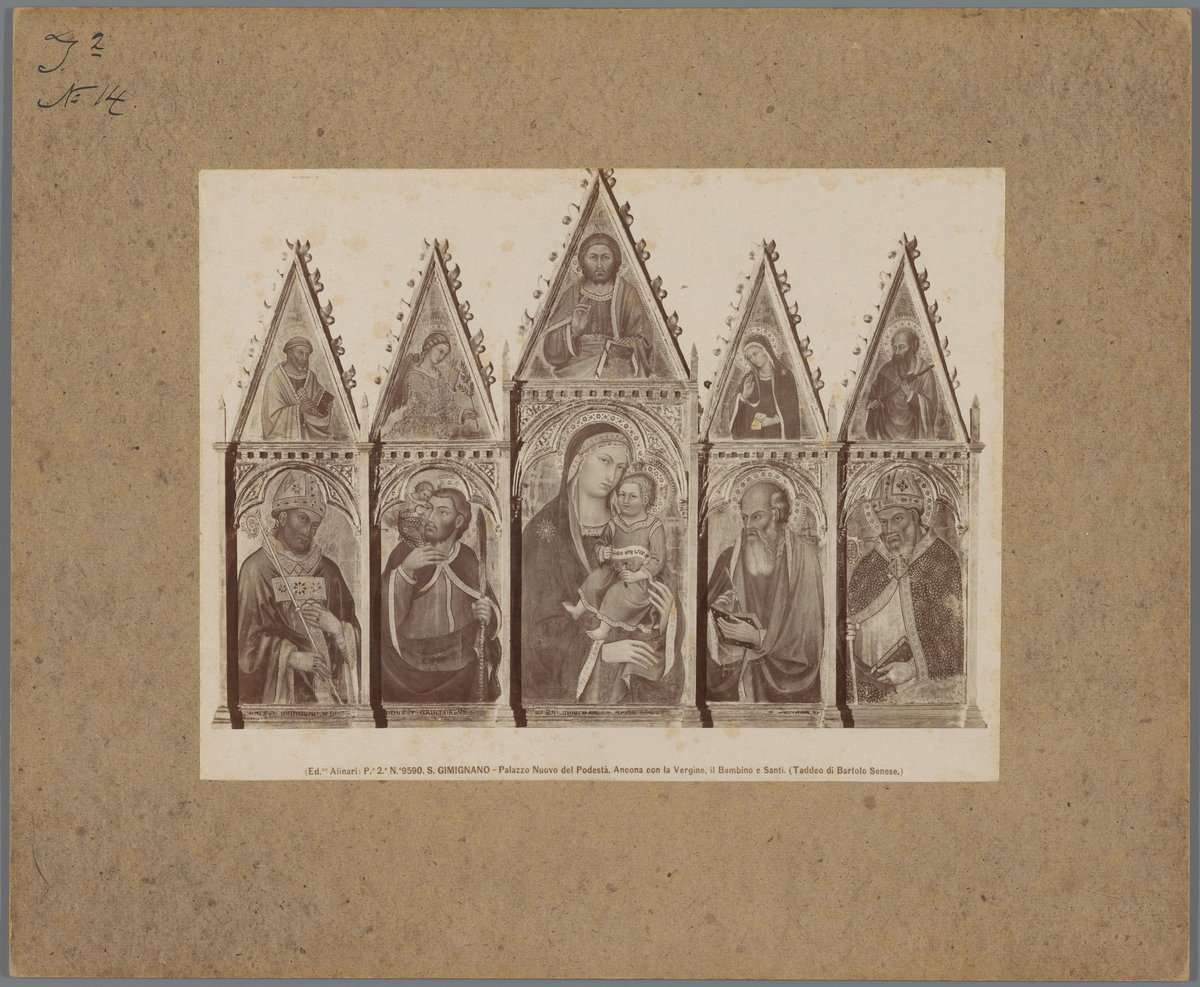
The Pinacoteca houses an outstanding collection of Tuscan painting from the 13th to 16th centuries, including works by:
- Coppo di Marcovaldo (wooden Crucifix)
- Azzo di Masetto, Memmo di Filippuccio, Rinaldo
- Lippo Memmi (notably the “Maestà”)
- Benozzo Gozzoli (“Madonna and Child with Angels and Saints”)
- Filippino Lippi (“Angel and the Virgin Annunciated”)
- Pinturicchio (“Assunta with Saints Gregory and Benedict”) (tuscanyplanet.com; sangimignano.com)
The collection traces the transition from Sienese lyricism to Florentine realism, with a focus on religious and civic themes.
Courtyard and Additional Features
The courtyard is adorned with podestà coats of arms and includes a 16th-century fresco by Sodoma and the town’s ancient bell (sangimignano.com).
Visiting Torre Grossa
Symbolism and Architectural Highlights
Torre Grossa is the tallest tower in San Gimignano, built in 1300 as a symbol of the communal government’s supremacy. Its robust Romanesque construction features both stone and brick, and its summit offers breathtaking 360° views of the town and Tuscan countryside (wikipedia; tourismattractions.net).
Climbing Torre Grossa: Visitor Experience
- Ascent Over 200 steep, narrow steps; suitable only for visitors in good physical condition.
- View Panoramic vistas of San Gimignano’s rooftops, vineyards, and rolling hills—ideal for photography.
- Entry Access via Palazzo Comunale; ticket includes the Civic Museum and Pinacoteca (sangimignano.com).
Tips for Visiting Torre Grossa
- Best Light Early morning or late afternoon for photos and fewer crowds.
- Footwear Essential to have comfortable shoes.
- Weather Check conditions for optimal visibility; summit can be windy.
Nearby Attractions and Amenities
- Collegiata di Santa Maria Assunta Famed for its frescoes, adjacent to Palazzo Comunale.
- Piazza della Cisterna Medieval square, lively cafés, and the renowned Gelateria Dondoli.
- Rocca di Montestaffoli Offers more panoramic views.
- Chianti Region Perfect for wine tours and scenic drives.
Events, Special Exhibitions, and Additional Services
- Festivals “Ferie delle Messi” (medieval fair) and “Nottilucente” (arts festival) often coincide with extended museum hours (San Gimignano Official Tourism).
- Guided Tours & Audio Guides Available in multiple languages; recommended for deeper understanding.
- Photography Allowed in most areas (no flash or tripods).
- Museum Shop Sells books, souvenirs, and local crafts.
Accessibility & Responsible Tourism
- Mobility Limited; upper floors and towers accessed by stairs only.
- Restrooms Available within museum complex.
- Sustainability Respect site rules, use marked paths, and support local businesses (Musei Senesi).
Frequently Asked Questions (FAQ)
Q: What are the opening hours for Palazzo Comunale and Torre Grossa?
A: April–October: 10:00–19:30; November–March: 11:00–17:30; closed December 25.
Q: Where can I buy tickets for Torre Grossa?
A: Tickets on-site or online via the Musei Senesi website.
Q: Is the Torre Grossa climb suitable for everyone?
A: The climb is steep and not recommended for visitors with mobility issues or vertigo.
Q: Are guided tours available?
A: Yes, in multiple languages; advance booking recommended.
Q: Is photography allowed?
A: Yes, non-flash photography is permitted; restrictions may apply in some rooms.
Internal and External Links
- Explore our Guide to San Gimignano Historical Sites
- Discover Top Attractions in Tuscany
- Learn about Medieval Towers of Italy