A 2,300-year-old stone sculpture sits in Patna, India, polished to a mirror finish that no modern laboratory has been able to reproduce. The Patna Museum — known to locals as Jadu Ghar, the House of Magic — holds this impossible object and thousands more from one of the ancient world's greatest cities, all inside a building that quietly refuses to look like anything the British Empire ever designed. Come for the Didarganj Yakshi; stay for the slow realization that the ground beneath your feet was once the center of the largest empire on Earth.
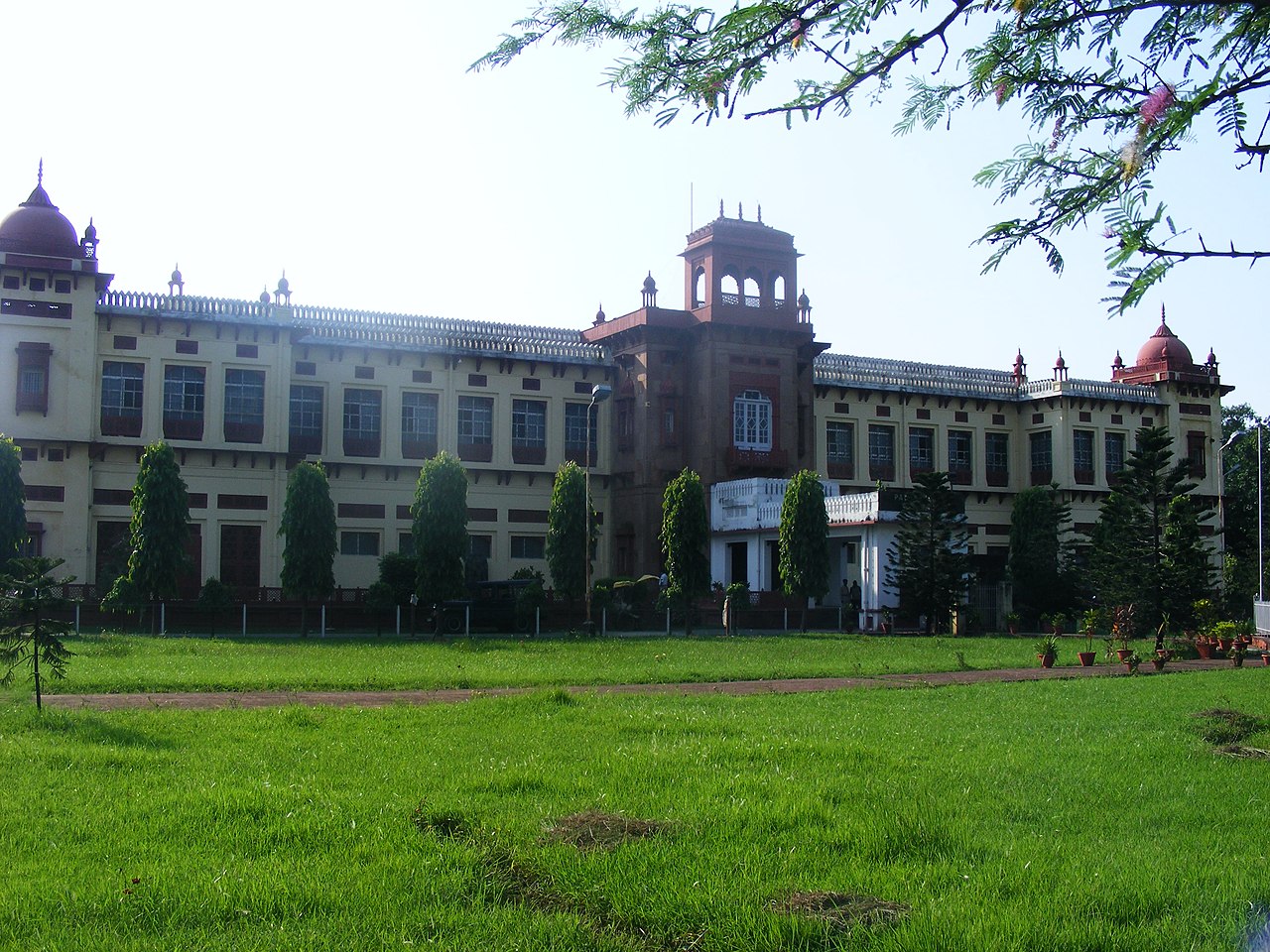
The museum opened in 1917, the same year its most celebrated artifact emerged from the mud of the Ganges riverbank. That coincidence gave the place a near-mythological origin story, and the collection has only grown stranger since: a fossilized tree trunk older than the dinosaurs, Buddhist bronzes from forgotten monasteries, Tibetan scroll paintings, and fragments of an 80-column palace hall that once rivaled anything in Persepolis. All of it crammed into an Indo-Saracenic building with Mughal arches and Rajput balconies on Buddha Marg.
Patna itself sits on layers of civilization stacked like geological strata — Mauryan, Gupta, Mughal, British — and the museum is where those layers become tangible. You can touch the same sandstone surface that an artisan polished during the reign of Emperor Ashoka. You can stand next to a petrified tree from an era when India was still welded to Africa as part of the supercontinent Gondwana. The scale of time in this building is almost absurd.
This is not a sleek, climate-controlled institution. The galleries are old-fashioned, the labels sometimes faded, the lighting uneven. That rawness is part of it. The Patna Museum feels less like a curated exhibition and more like a place where extraordinary objects have simply accumulated over a century, waiting for someone to notice what they mean.
Researched by the Audiala editorial team from historical records, architectural archives, and local expertise.
What to see
The Fossilized Tree Trunk
A tree that died 200 million years ago — before the first dinosaurs walked Bihar, before India was even part of Asia — lies on its side in the natural history hall, stretching 15 meters from root to crown. That's roughly the length of a city bus, turned to stone. The wood grain hasn't vanished; it has been replaced, cell by cell, with mineral matrix, so what you're looking at is a geological ghost: the exact shape of ancient bark and growth rings rendered in rock. Most visitors admire the length and walk on. Don't. Find the cross-section end and look closely. Concentric mineral bands mark the tree rings — each one a year of Jurassic rainfall, compressed into millimeters of stone. This specimen is cemented into the museum floor, which is why it stayed here when the star sculptures moved to the newer Bihar Museum down the road. The tree couldn't leave. The museum was built around it.
Buddhist Relics & Tibetan Thangkas
Patna Museum is one of the few secular institutions in India to hold sacred relics — ashes attributed to Gautama Buddha, displayed under glass in controlled lighting. The room has a different quality of silence than the rest of the building. Visitors lower their voices here without being asked, regardless of faith. A few galleries away, Tibetan thangkas acquired during colonial-era excavations across Bihar hang in their cases. These scroll paintings use mineral pigments — lapis lazuli blues, vermilion reds, flecks of actual gold — and the palette still burns after centuries. Get as close as the barrier allows. At arm's length, you'll see figures rendered in millimeter-scale brushwork that no photograph has ever properly captured. The thangkas and the relics share a quality: they reward stillness over speed.
The Building Itself: A Century Worn Into Stone
The museum opened in 1917, and its Mughal-Rajput architecture was a deliberate rebuke to the bland colonial institutional style of the British Raj. A central chattri rises above the roofline, flanked by four corner domes and punctuated by jharokha windows — projecting enclosed balconies that frame rectangles of garden light across dark gallery interiors. Step through the entrance colonnade on a summer afternoon, when Patna's heat sits above 40°C, and the temperature drops instantly. The thick stone walls and cool floors are not air-conditioning — they are eight decades of architectural common sense. Look down at the thresholds between gallery rooms. The stone is worn smooth and slightly concave in the center, polished by a century of feet. Press yours into the dip. Hundreds of thousands of Biharis have stood exactly where you're standing. Locals still call this place Jadu Ghar — the House of Magic. The name isn't marketing. It's affection, passed down through generations who came here as children and never quite got over it.
Plan your visit
Getting There
The museum sits on Buddha Marg, about 1 km from Gandhi Maidan — walkable in 12–15 minutes. From Patna Junction railway station, an auto-rickshaw covers the 3 km in 15–20 minutes; from the airport, a taxi takes 25–35 minutes for the 7 km ride. Ola and Uber work in Patna. Tell your driver "Jadu Ghar near High Court" — every rickshaw-wallah knows the name.
Opening Hours
As of 2026, the museum opens Tuesday through Sunday, 10:30 AM to 4:30 PM. Closed every Monday and on public holidays — and occasionally without warning for government events, so confirm before a special trip. No seasonal hour changes.
Time Needed
A focused highlights tour takes 1–1.5 hours. The new Ganga and Patali galleries (opened August 2024) add another hour if you linger with the projection shows. If you're combining with Bihar Museum 2 km away — and you should — budget a full half-day for both.
Accessibility
Wheelchair access is partial: ground-floor galleries and the outdoor fossil tree are reachable, but the upper floor requires stairs with no confirmed elevator. The older wings lack air conditioning — temperatures inside climb steeply after noon from March through October. The 2024 extension galleries are better equipped.
Tickets
As of 2026, Indian adults pay ₹15 and foreign visitors ₹250 — a steep gap that stings given the collection's post-transfer state. The Buddha Relics Gallery costs extra: ₹100 for Indians, ₹500 for foreigners. Camera tickets are ₹25. No online booking exists; cash only at the entrance counter. Children under 10 enter free.
Photo Gallery
A beautifully preserved 8th-century stone door-jamb from Udayagiri, Odisha, displayed in the outdoor gardens of the Patna Museum in India. · Photo Dharma from Penang, MalaysiaA view of the historic Patna Museum in Patna, India, showcasing its unique architectural style and well-maintained gardens. · Manoj_nav (talk) (Uploads)A close-up view of the highly detailed stone carvings preserved at the Patna Museum in India, showcasing exquisite ancient craftsmanship. · Photo Dharma from Penang, MalaysiaAn elevated view of the iconic Patna Museum in India, showcasing its unique Indo-Saracenic architectural design amidst a serene, tree-lined landscape. · Bishwajeet KumarThe historic Patna Museum in India, showcasing its distinctive architectural style amidst a serene and well-maintained garden landscape. · Kumar Ritu Raj17The Patna Museum in India showcases stunning colonial-style architecture surrounded by vibrant gardens and a historic cannon display. · Photo Dharma from Penang, Malaysiaपटना संग्रहालय का भव्य दृश्य, जो अपनी अनूठी वास्तुकला और ऐतिहासिक तोप के लिए प्रसिद्ध है। · User: (WT-shared) Manoj nav at wts wikivoyage
History
A Goddess in the River Mud
Bihar separated from Bengal as its own province in 1912, and the new government wanted a museum — a cultural institution that said this place has its own identity, its own past, its own claims on history. The building went up on Buddha Marg in Patna in a deliberate Indo-Saracenic style, all Mughal arches and jharokha balconies, a refusal to adopt the neoclassical columns the British used for courthouses and post offices. The Patna Museum opened in 1917, and within months, the Ganges handed it a gift that would define the collection for the next century.
The city beneath the museum is ancient beyond easy comprehension. Pataliputra — the Mauryan capital that preceded modern Patna — was described by the Greek ambassador Megasthenes around 300 BC as larger and grander than Persepolis, with an estimated 400,000 inhabitants at its peak. The Greek account was dismissed by European scholars for centuries as oriental exaggeration. The museum's collection is, among other things, the physical evidence that Megasthenes was telling the truth.
The turning point
The Yakshi, the Fishermen, and the Archaeologist Who Didn't Find Her
In 1917, near the Didarganj locality on the eastern bank of the Ganges, laborers or fishermen — the official record does not name them — spotted something gleaming in the eroded riverbank. What they pulled from the silt was a 1.63-meter sandstone figure of a woman holding a fly-whisk, her surface polished to a reflective sheen after roughly 2,200 years underground. According to local accounts, the fishermen believed the figure was a goddess and began to venerate her before colonial authorities intervened.
Dr. T. Bloch, Superintendent of the Archaeological Survey of India for the Bihar circle, had spent years excavating the Mauryan palace site at Kumrahar, two kilometers away, trying to prove that Pataliputra was real and not a Greek fantasy. He arranged the Yakshi's transfer to the newly opened museum. The irony cuts: Bloch spent his career digging for evidence of Mauryan civilization, and the single most celebrated Mauryan sculpture in India was found not by his team but by unnamed workers whose contribution went unrecorded. Their discovery became the museum's soul. Their names were never written down.
The Didarganj Yakshi is now considered by many art historians to be among the finest individual sculptures produced on the Indian subcontinent — comparable in technical mastery to classical Greek work. But she has not stayed put. In the 1980s and 1990s, the Yakshi was loaned to the National Museum in New Delhi and reportedly traveled to the United States for exhibition. Bihar politicians and cultural activists protested what they called an act of cultural dispossession — a poor state's greatest treasure shipped off for others to display. She was returned. The episode left a scar.
The 200-Million-Year-Old Witness
On the museum grounds sits a fossilized tree trunk approximately 15 meters long — older than the Himalayas, older than the Atlantic Ocean, older than flowering plants. The tree dates to the Triassic period, when the Indian subcontinent was still fused to Africa and Antarctica as part of the supercontinent Gondwana. Most visitors walk past it as a curiosity, a geological novelty. It is in fact evidence of India's origin story: the landmass that broke free, drifted north across an ocean, and collided with Asia hard enough to raise the highest mountains on Earth. The tree was alive before any of that began.
The New Museum Problem
In 2015, the Bihar government inaugurated the Bihar Museum — a gleaming modern complex designed by Tokyo's Maki and Associates — on adjacent grounds. The intent was modernization, but the result was a custody battle. Which institution holds the real Bihar heritage? The old Jadu Ghar with its uneven lighting and faded labels, or the new glass-and-steel structure with international design credentials? Proposals to transfer the Didarganj Yakshi to the new museum triggered fierce public debate. As of the most recent confirmed reports, the Yakshi remains in the old building. But the long-term arrangement is unresolved, and Patna's cultural politics continue to simmer around the question of where ancient treasures belong.
Tips for visitors
Flash Strictly Banned
Mobile photography is allowed with a ₹25 camera ticket, but flash is prohibited throughout — it damages artifacts. Tripods and professional video gear require a written permit from the museum director, which is expensive and bureaucratic. Some galleries, especially the Buddha Relic Casket display, ban photography entirely.
Go Early, Go Weekday
Arrive at 10:30 AM opening, especially October through March. The older wings have no AC, and by early afternoon the building traps heat like a kiln. Weekends bring school groups that fill the galleries with noise — weekday mornings give you the place nearly to yourself.
The Yakshi Has Moved
Every outdated guidebook lists the Didarganj Yakshi as Patna Museum's star exhibit. She was transferred to the newer Bihar Museum on Bailey Road, 2 km away. If you came for her — and she's worth the trip — head there instead. Combine both museums in a half-day; they tell different halves of the same story.
Litti Chokha Nearby
There's no café inside the museum. Walk or auto to DK Litti Corner on SP Verma Road (₹80–100 per person) for coal-grilled litti chokha — Bihar's defining dish and the correct post-museum meal. Khau Gali near Gandhi Maidan, a 10-minute walk, has dozens of street food stalls for ₹50–150.
Don't Skip the New Galleries
The Ganga Gallery and Patali Gallery, inaugurated in August 2024, are a genuine surprise — 10,000 square feet of projection shows, Madhubani art, and immersive models of ancient Pataliputra's fortifications under Ashoka. The dated entrance to the old building undersells what's now inside.
The Fossil Tree Alone Justifies Entry
A 53-foot fossilized tree trunk — longer than a bowling lane — sits in the museum compound, roughly 200 million years old. That predates flowering plants, birds, and most dinosaurs. At ₹15 entry, it may be the cheapest encounter with the Jurassic era anywhere on Earth.
Where to Eat
local_dining
Don't Leave Without Trying
Litti-Chokha — baked wheat balls filled with roasted gram flour (sattu), served with mashed vegetablesSattu Sharbat — refreshing gram flour drink, essential in Patna summersBihari Biryani — fragrant rice dish with meat, a regional variation of the classicGoalguppa (Pani Puri) — crispy hollow spheres filled with potatoes and chickpeas, served with tangy waterChikhalwali — traditional Bihari sweet preparationDalpuri — fried bread stuffed with spiced lentilsAloo Paratha — flatbread stuffed with spiced potatoes
SITARAM JI KA GOALGUPPA
quick bite
Street Food / Chaat€star4.8(5)directions_walk50m from Patna Museum
Order: The gol guppas are perfectly crispy with tangy, spiced water — this is where locals line up. Try the aloo versions filled with boiled potatoes and chickpeas.
Authentic street food institution right at the museum's doorstep. This is where Patna's food culture lives — no frills, just honest chaat that's been perfected over years.
Indian Cafe€€star4.6(55)directions_walkInside Patna Museum complex
Order: Light snacks and chai — ideal for a break mid-museum visit. Order whatever seasonal specials they have; the setting makes everything taste better.
Located inside the Patna Museum itself, making it the perfect pause point during your cultural exploration. Quiet, civilized, and you don't have to leave the grounds.
Grilled Meat / BBQ€€star4.6(157)directions_walk200m from Patna Museum
Order: Their tandoori chicken and grilled kebabs are the draw — smoky, charred, and properly spiced. The mutton seekh kebabs are exceptional if you eat meat.
This place has serious staying power with 157 reviews and consistent 4.6 rating. Locals trust it for honest grilling without pretension, and the late hours (until midnight) make it a solid dinner option.
Cafe / Waffles & Breakfast€€star5.0(6)directions_walk100m from Patna Museum
Order: Fresh waffles with toppings of your choice — crispy on the outside, fluffy inside. Pair with their coffee or a cold drink for a modern breakfast or afternoon break.
Perfect 5.0 rating and right on Vidyapati Marg near the museum. This is your best bet for a quick, contemporary bite if you want something lighter than heavy lunch.
checkMuseum cafeterias close early — plan your main meal before 9:30 PM or eat after.
checkStreet food like gol guppas is best eaten fresh and immediately; don't hesitate at busy stalls — high turnover means quality.
checkVidyapati Marg has the highest concentration of museum-adjacent eateries; everything listed is within walking distance.
checkCash is widely accepted, but major restaurants (BBQ Grills) take cards. Carry both.
checkLunch rush is typically 1–2 PM; visit earlier or after for a quieter experience.
checkVegetarian options are abundant in Patna; most restaurants clearly mark veg/non-veg items.
Food districts:Vidyapati Marg corridor — museum cluster with street food and casual diningChajju Bagh area — mixed casual restaurants and grills near Lady Stephenson HallLodipur — local residential area with authentic street food vendors
Restaurant data powered by Google
Frequently asked
Is Patna Museum worth visiting?
Yes — especially now that the 2024 Ganga and Patali galleries have opened, giving the old Jadu Ghar a second act. The 53-foot fossilized tree trunk (older than the dinosaurs by a comfortable margin) is cemented into the ground and can't be seen anywhere else, and the Rs 15 entry fee makes it one of the cheapest museum visits in India. Pair it with the Bihar Museum two kilometres away for the full picture of Bihar's ancient heritage.
How long do you need at Patna Museum?
Between one and three hours, depending on how you engage with the galleries. A focused walk through the highlights — fossil tree, Buddhist relics, Mauryan sculptures, and the new immersive Ganga Gallery — takes about 90 minutes. If you plan to visit the Bihar Museum on the same day, budget a full half-day for both.
What is the difference between Patna Museum and Bihar Museum?
They are separate institutions with different collections, two kilometres apart. Patna Museum (the 1917 'Jadu Ghar' on Buddha Marg) holds natural history, the fossilized tree, Buddhist relics, Tibetan thangkas, coins, and the new Ganga and Patali galleries. Bihar Museum (opened 2015, Bailey Road) now houses the Didarganj Yakshi and most pre-1764 artefacts — many guidebooks still list the Yakshi at Patna Museum, but she moved years ago.
What should I not miss at Patna Museum?
The 200-million-year-old fossilized tree trunk — look at the cross-section end where ancient tree rings are visible as concentric mineral bands, not just the length that most visitors photograph and walk past. The sacred relics of Gautama Buddha occupy a room that goes quiet regardless of how crowded the rest of the museum is. And the new Ganga Gallery, opened in August 2024, uses projection shows to narrate the Ganges' path through Bihar's seven cultural regions.
What is the best time to visit Patna Museum?
October through February, on a weekday morning before 11 AM. The older wings have no air conditioning, and Patna's summer temperatures regularly exceed 40°C — the thick stone walls help, but afternoons between April and June are punishing. School groups flood the museum on weekends, so weekday visits are noticeably calmer.
How do I get to Patna Museum from Patna Junction?
Patna Junction railway station is about 3 km away — a 15-to-20-minute auto-rickshaw ride depending on traffic. Ola and Uber operate in Patna. The museum sits on Buddha Marg near the High Court, and any auto driver will recognise 'Jadu Ghar' faster than 'Patna Museum.'
What is the entry fee for Patna Museum for foreigners?
Rs 250 for foreign adults, compared to Rs 15 for Indian visitors — a disparity that draws complaints on review sites. The Buddha Relics Gallery costs an additional Rs 500 for foreigners (Rs 100 for Indians). Camera tickets are Rs 25. Tickets are cash-only at the entrance counter; no online booking exists.
Why is Patna Museum called Jadu Ghar?
Jadu Ghar means 'House of Magic' in Hindi, and locals have used the name since the museum's early decades. The nickname reflects genuine folk wonder at objects that seem to defy explanation: a stone sculpture polished to a mirror finish 2,300 years ago using techniques modern science still can't fully reproduce, and a tree that turned to rock 200 million years ago. The name stuck, and older Patnaites use it almost exclusively.
Sources & attribution25
Researched and written by the Audiala editorial team from historical records, architectural archives, and local expertise. Last updated April 2026.
Bihar Virasat Blog — Local heritage blog documenting the folk stories around the Yakshi discovery
Archaeological Survey of India Annual Reports — D.B. Spooner and John Marshall's excavation reports for Kumrahar and Pataliputra, foundational to museum collections
Saved and recently read places — kept on this device only.
Photo credits (9)
Patna Museum, Patna, Bihar, India (2019) — Kumar Ritu Raj17 — CC BY-SA 4.0 (https://creativecommons.org/licenses/by-sa/4.0/) — Source: https://commons.wikimedia.org/wiki/File:Patna_Museum,_Patna,_Bihar,_India_(2019).jpg
Patna Museum colonnade — Hpgoa — CC BY-SA 2.0 (https://creativecommons.org/licenses/by-sa/2.0/) — Source: https://commons.wikimedia.org/wiki/File:Patna_Museum_colonnade.jpg
Patna Museum - General View (9221515542) — Photo Dharma from Penang, Malaysia — CC BY 2.0 (https://creativecommons.org/licenses/by/2.0/) — Source: https://commons.wikimedia.org/wiki/File:Patna_Museum_-_General_View_(9221515542).jpg
Patna Museum Inside view — Ayushraanjan — CC BY-SA 4.0 (https://creativecommons.org/licenses/by-sa/4.0/) — Source: https://commons.wikimedia.org/wiki/File:Patna_Museum_Inside_view.jpg
Patna Museum Lohanipur torso — Hpgoa — CC BY-SA 2.0 (https://creativecommons.org/licenses/by-sa/2.0/) — Source: https://commons.wikimedia.org/wiki/File:Patna_Museum_Lohanipur_torso.jpg
002 Brick Sculpture (9218736145) — Photo Dharma from Penang, Malaysia — CC BY 2.0 (https://creativecommons.org/licenses/by/2.0/) — Source: https://commons.wikimedia.org/wiki/File:002_Brick_Sculpture_(9218736145).jpg
003 Torana, 8c Udayagiri (9221507404) — Photo Dharma from Penang, Malaysia — CC BY 2.0 (https://creativecommons.org/licenses/by/2.0/) — Source: https://commons.wikimedia.org/wiki/File:003_Torana,_8c_Udayagiri_(9221507404).jpg
005 Torana Pillar, 8c Udayagiri (9221498076) — Photo Dharma from Penang, Malaysia — CC BY 2.0 (https://creativecommons.org/licenses/by/2.0/) — Source: https://commons.wikimedia.org/wiki/File:005_Torana_Pillar,_8c_Udayagiri_(9221498076).jpg
Patna Museum — Bishwajeet Kumar — CC BY-SA 3.0 (https://creativecommons.org/licenses/by-sa/3.0/) — Source: https://commons.wikimedia.org/wiki/File:Patna_Museum.jpg
Strictly necessary cookies keep the site working. Analytics (PostHog, Google Analytics) measures how each visitor uses our pages. Marketing loads YouTube videos and walking-route maps without a tap and lets Google Analytics set advertising cookies. We never sell your data. You can change this any time from the footer.
Analytics and marketing cookies are optional and only load if you agree. Details under Customize.
Privacy
Cookie preferences
Pick what you're okay with. You can change this any time from the footer.
Strictly necessary
Always on
Sign-in, language, navigation. Always on.
Product analytics
PostHog (EU) and Google Analytics record which pages you view and how you use them, under a random identifier stored in your browser. Helps us see which pages work and which need fixing. Google's ad personalisation stays off. No selling.
Marketing
Loads YouTube videos and the walking-route maps (OpenFreeMap) without a tap; without it, they load only when you tap them. If analytics is also on, Google Analytics may set advertising cookies. Ad personalisation stays off.