Place
Germany Updated Apr 2026
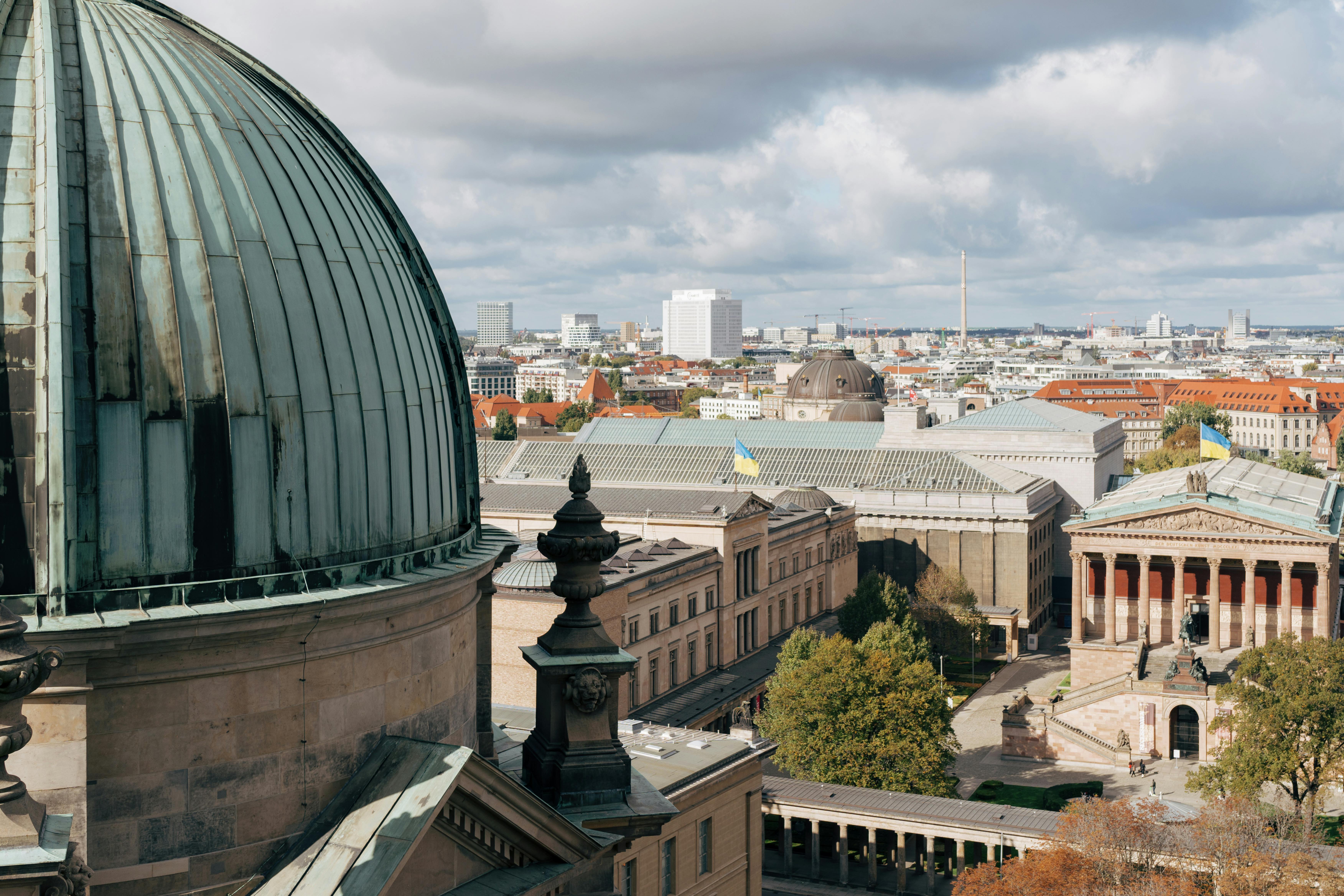
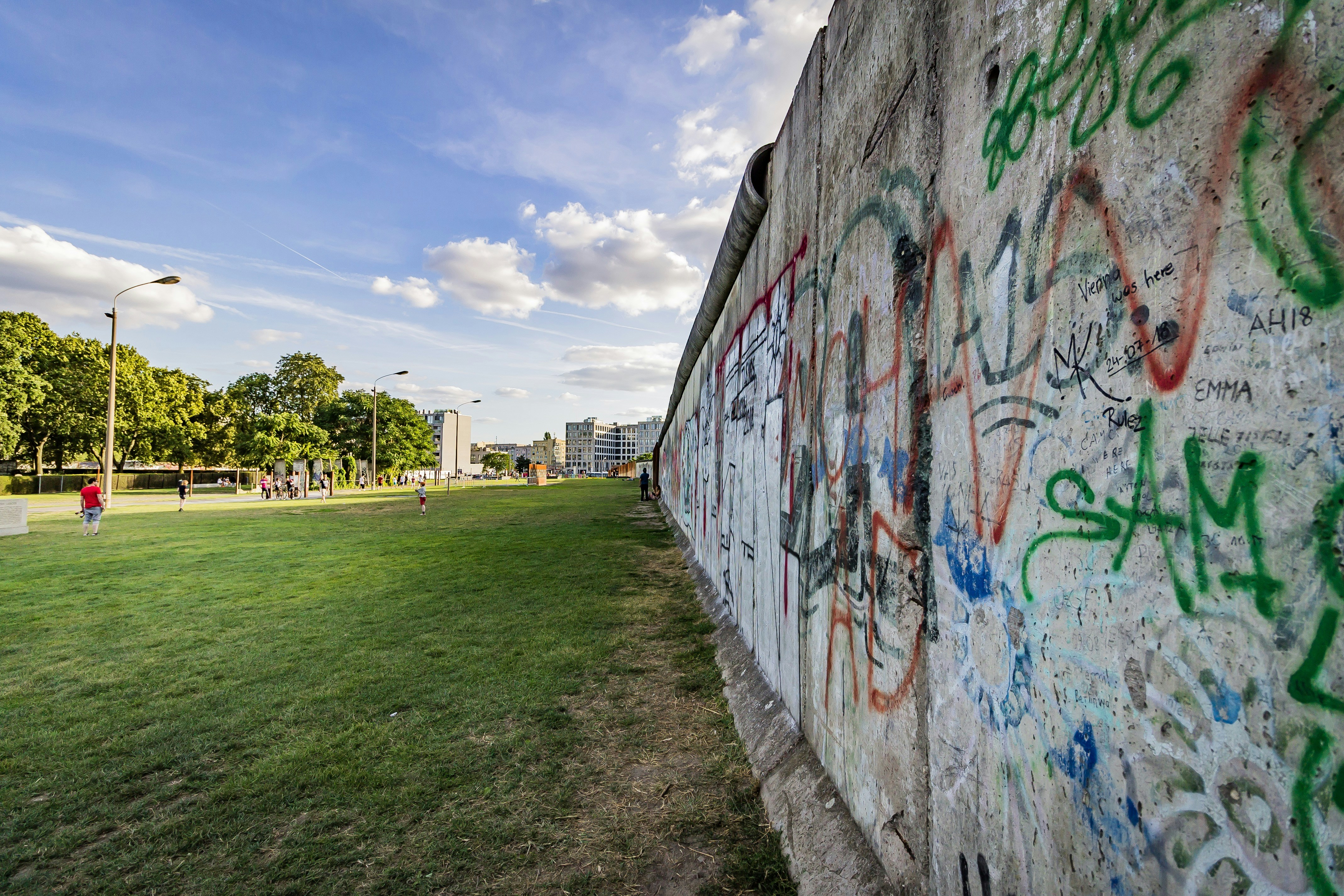
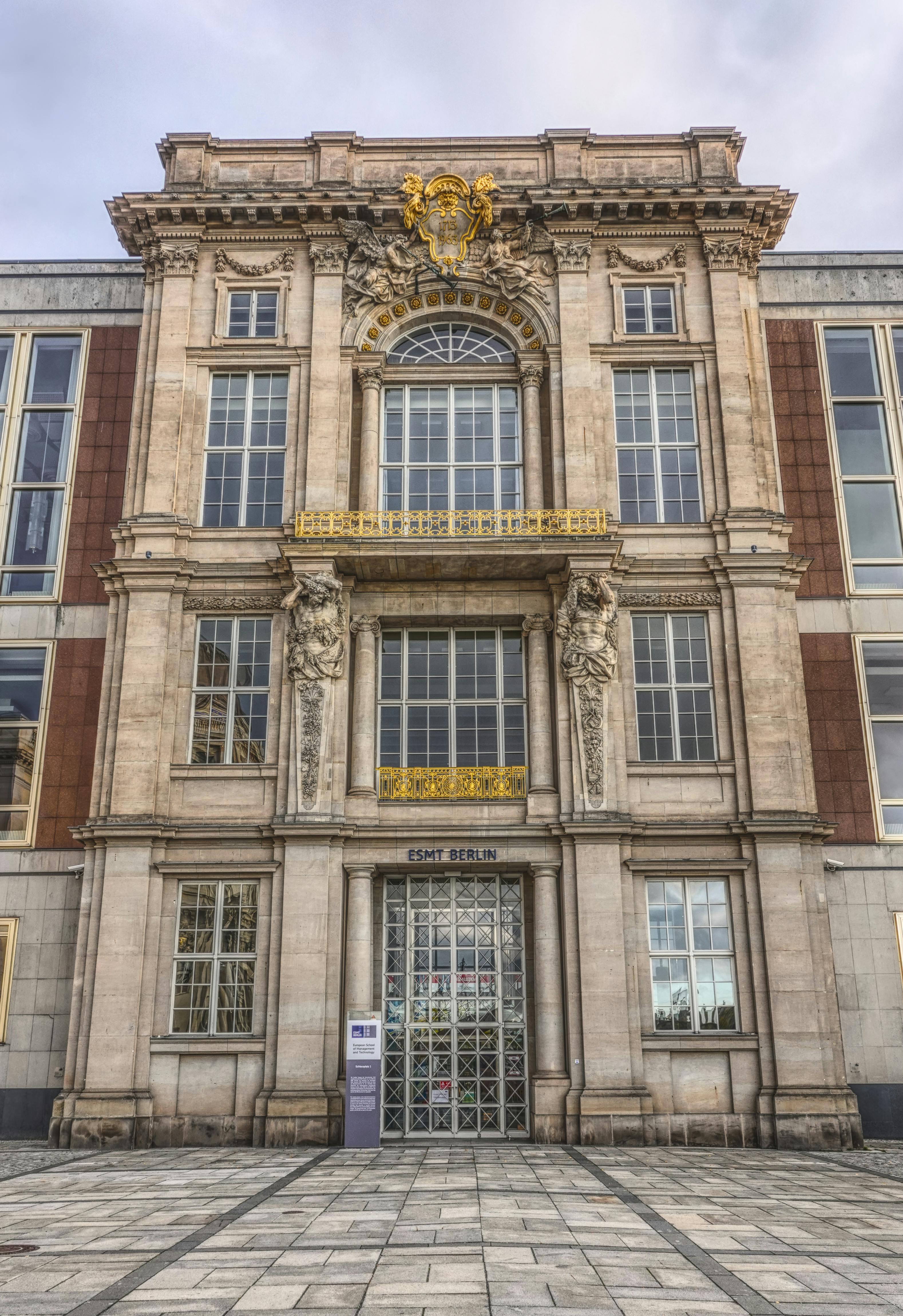
The first time you stand before the Brandenburg Gate at dusk, the smell of grilled currywurst drifts past while floodlights turn the stone columns amber. Berlin doesn't whisper its contradictions; it slams them right in front of you. This is a city that kept a strip of the Wall standing so artists could paint on the death strip, where a Prussian palace portal now sits embedded in a 1960s East German government building like an architectural hostage.
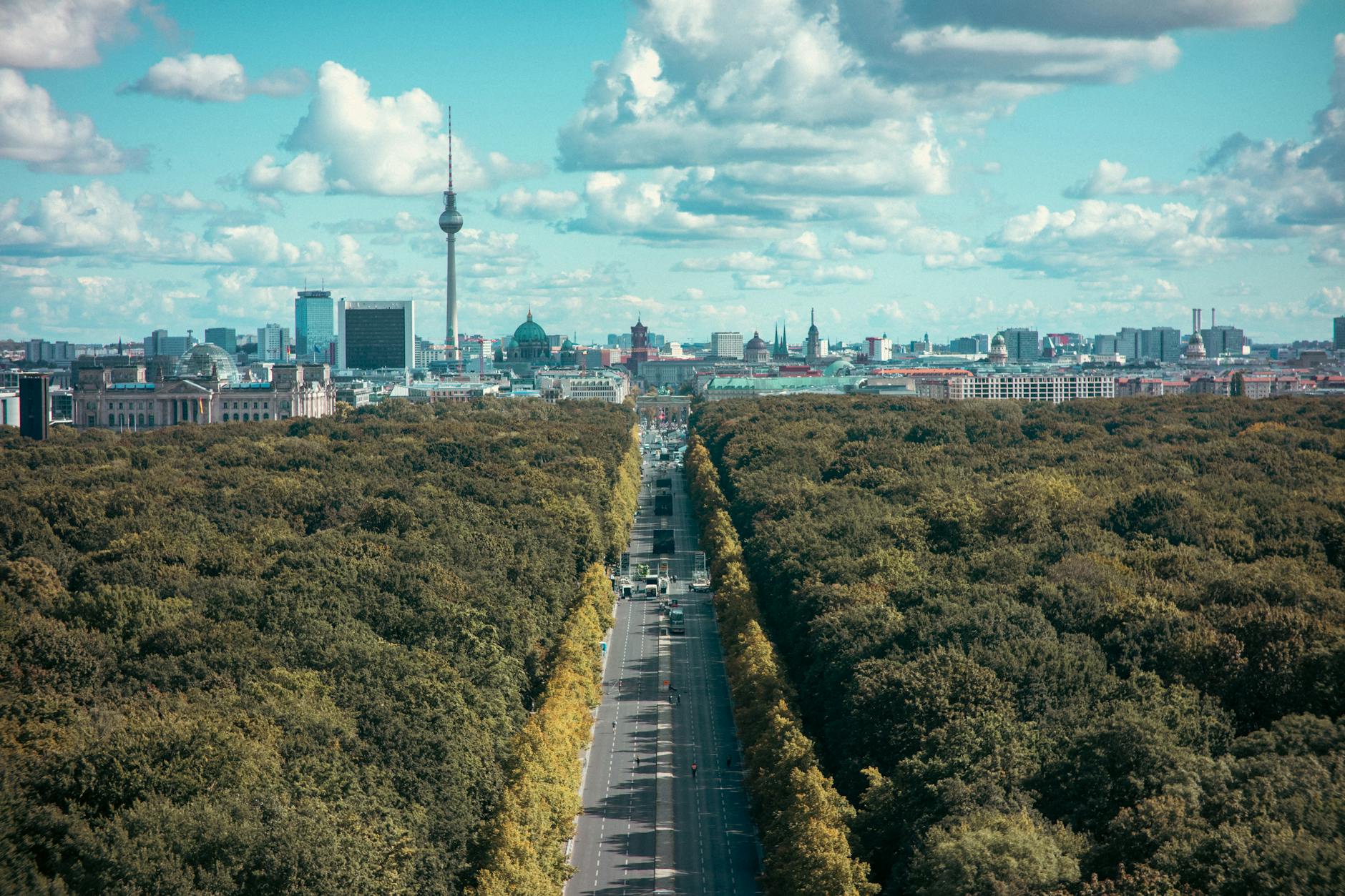 Photo: Ilkauri Scheer / Pexels
Built from cited sources · see the method · How we make our guides →
That tension between eras is everywhere. Walk down Bernauer Straße and the grass strip where the Wall once ran still feels colder than the surrounding pavement. The same light that once illuminated guard towers now falls through the glass dome of the Reichstag, where visitors spiral upward on a ramp designed by Norman Foster. Berlin doesn't smooth over its past. It leaves the seams showing on purpose.
Yet the city keeps rewriting itself faster than any guidebook can track. A former airport became Tempelhofer Feld, where kite-surfers now ride the same winds that once carried planes. In Neukölln and Wedding, Turkish grandmothers and young coders share the same sidewalks. The directness of Berliners can feel abrupt at first. Then you realize it's a form of respect. They don't waste your time with pleasantries they don't mean.
What changes you is how ordinary these layers become after a few days. One afternoon you're eating döner invented by Turkish immigrants in the 1970s. The next you're standing inside a brutalist housing block that Le Corbusier himself disowned. Suddenly the city's refusal to be picturesque starts to feel like the most honest thing in Europe.
Not every monument, just the ones we'd walk you past ourselves.




Where to wander, by quarter — each with its own rhythm.
Before you go
Curated from places in this city. Same price as official sites.


Prices shown are indicative — final pricing and availability are confirmed at checkout. Audiala may receive a commission from bookings made via these links.
From trading post to fractured capital and back
The first written mention of Cölln, a modest settlement on an island in the Spree. Berlin follows seven years later on the opposite bank. Two fishing towns connected by a wooden bridge suddenly find themselves on a major trade route. The smell of smoked fish and wet timber still clung to the air when merchants began arriving from the east.
Frederick I becomes Elector of Brandenburg. The family that would shape Berlin for the next five centuries plants its flag. They slowly turn two muddy river towns into a proper residence city. The decision still echoes in every Baroque façade you pass today.
Frederick III crowns himself King in Prussia inside Königsberg but makes Berlin the undisputed capital. The city swells with new palaces and soldiers. Overnight, Berlin stops being a provincial backwater and starts measuring itself against Vienna and Paris.
At age 28, Frederick II inherits the throne and immediately begins remaking Berlin in the image of Enlightenment reason. He builds the Royal Opera House, invites Voltaire, and turns the city into a flute-playing, French-speaking military camp. The tension between philosopher and warmonger still defines the place.
Carl Gotthard Langhans completes the sandstone gate after four years of work. The Quadriga on top faces east toward the city, not west as most tourists assume. For generations Prussians would march under it to war and, eventually, home again in defeat.
French troops parade beneath the Brandenburg Gate after crushing the Prussian army at Jena. Napoleon sleeps in the royal palace. The humiliation stings so deeply that Berliners spend the next seven years plotting revenge and reforming their entire state.
After victory over France, Bismarck declares the German Empire in Versailles. Berlin becomes its noisy, industrial heart. Within two decades the population explodes from 800,000 to nearly two million. The smell of coal smoke and the clatter of new railways replace the quiet of Frederick’s court.
The 14-year-old daughter of a Social Democrat moves to Berlin. She later settles in a working-class tenement on Weissenburger Straße and spends decades drawing the hunger, grief and quiet dignity of her neighbors. Her prints still feel like someone pressed their face against the glass of history.
Though the school itself is in Weimar, Berlin quickly becomes the movement’s spiritual capital. Architects and designers flood in, determined to rebuild society through clean lines and honest materials. You can still see their fingerprints on housing estates that feel shockingly modern a century later.
The young English writer rents rooms at Nollendorfstraße 17 in Schöneberg. From his window he watches the last wild years of Weimar Berlin: cabarets, cocaine, political street fights. The stories he later writes become the lens through which the world still imagines the city before darkness fell.
On 30 January, Hitler becomes Chancellor. By May, books are burning on Opernplatz. The city that once sheltered radicals and artists begins to empty of them. Many never return. The silence that follows still feels heavier in certain streets than others.
After 363 Allied bombing raids and the final Red Army assault, Berlin lies in ruins. An estimated 600,000 apartments destroyed. Trees in the Tiergarten are cut down for firewood the following winter. The smell of wet ash and unburied bodies lingers for months.
When the Soviets blockade West Berlin, Allied planes begin landing every three minutes at Tempelhof. For eleven months they deliver everything from coal to candy. Berliners call the planes “raisin bombers.” The sound of their engines becomes the sound of hope.
In the early hours of 13 August, barbed wire unrolls across the city. Concrete follows. Overnight, neighbors can no longer visit each other for coffee. The death strip, 150 meters wide in places, turns parts of Berlin into a lethal stage set. Families wave from opposite rooftops.
On 9 November, a flustered East German official accidentally announces that border restrictions are lifted. Thousands rush to the checkpoints. People dance on the Wall near Bornholmer Straße while guards look on, uncertain. The sound of chisels chipping concrete becomes the soundtrack of an entire continent changing.
Germany is formally reunified on 3 October. Berlin regains its status as capital two years later. The city suddenly has to stitch together two incompatible halves: one used to abundance, the other to shortages. The scars are still visible if you know where to look.
Peter Eisenman’s 2,711 concrete stelae are unveiled south of the Brandenburg Gate. Visitors wander through the undulating field in silence. There is no didactic panel telling you what to feel. The absence of instruction is precisely the point.
QR codes on statues of Lise Meitner and Käthe Kollwitz allow passers-by to hear the women speak in their own recorded voices. The technology feels strangely fitting in a city that has spent decades trying to make its ghosts audible again.
King of Prussia · 1712–1786
Ruled from Berlin and built Sanssouci Palace
He turned a provincial backwater into an Enlightenment capital, invited Voltaire for long philosophical dinners, and designed gardens where he could escape his own court. Today he would probably be horrified by the currywurst stands but delighted that Sanssouci still draws crowds who actually read his books.
Physicist · 1878–1968
Worked at Humboldt University in Berlin
She discovered nuclear fission on a walk in the Grunewald in 1938 while fleeing the Nazis. Berlin gave her both the laboratory that made her famous and the regime that drove her out. The small brass Stolperstein outside her old apartment still catches the afternoon light exactly where she once waited for the tram.
Artist · 1867–1945
Lived and worked in Berlin
Her prints of grieving mothers and starving children came from the working-class streets of Prenzlauer Berg she walked every day. After losing her son in the First World War she kept working while bombs fell around her studio in 1943. The city finally named a square after her—quiet, tree-lined, the opposite of the suffering she drew.
Playwright · 1898–1956
Lived on Chausseestraße in Mitte
He rehearsed his plays in a theatre 200 metres from where the Wall would later rise. The simple wooden chair in his study still faces the window where he watched rehearsals. If he returned now he would probably write a new play about the tourists taking selfies at his grave in Dorotheenstadt Cemetery.
Where locals actually book dinner — not the tourist menus.
Small things that change how the city treats you.
The city, as it actually looks.


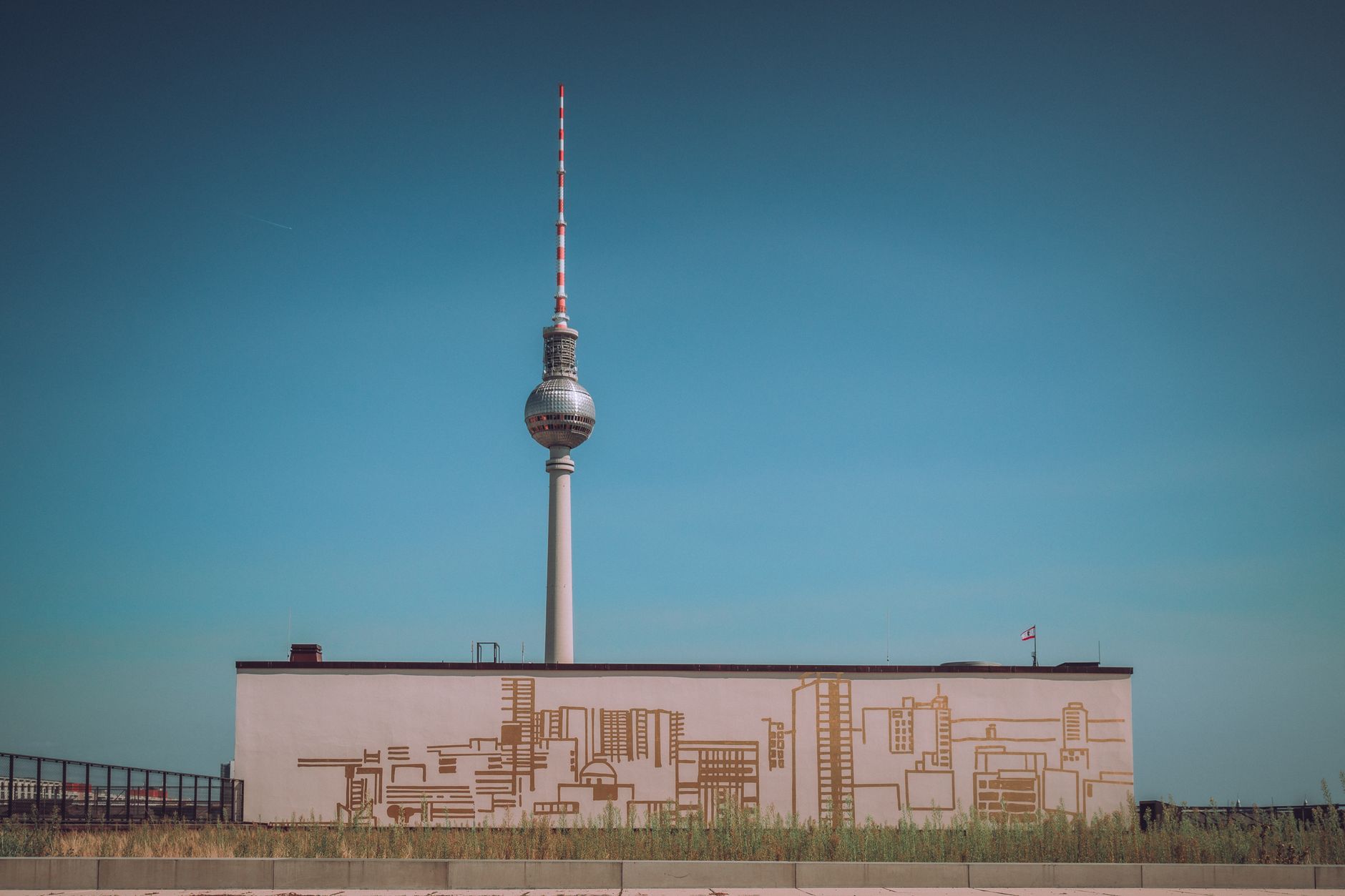
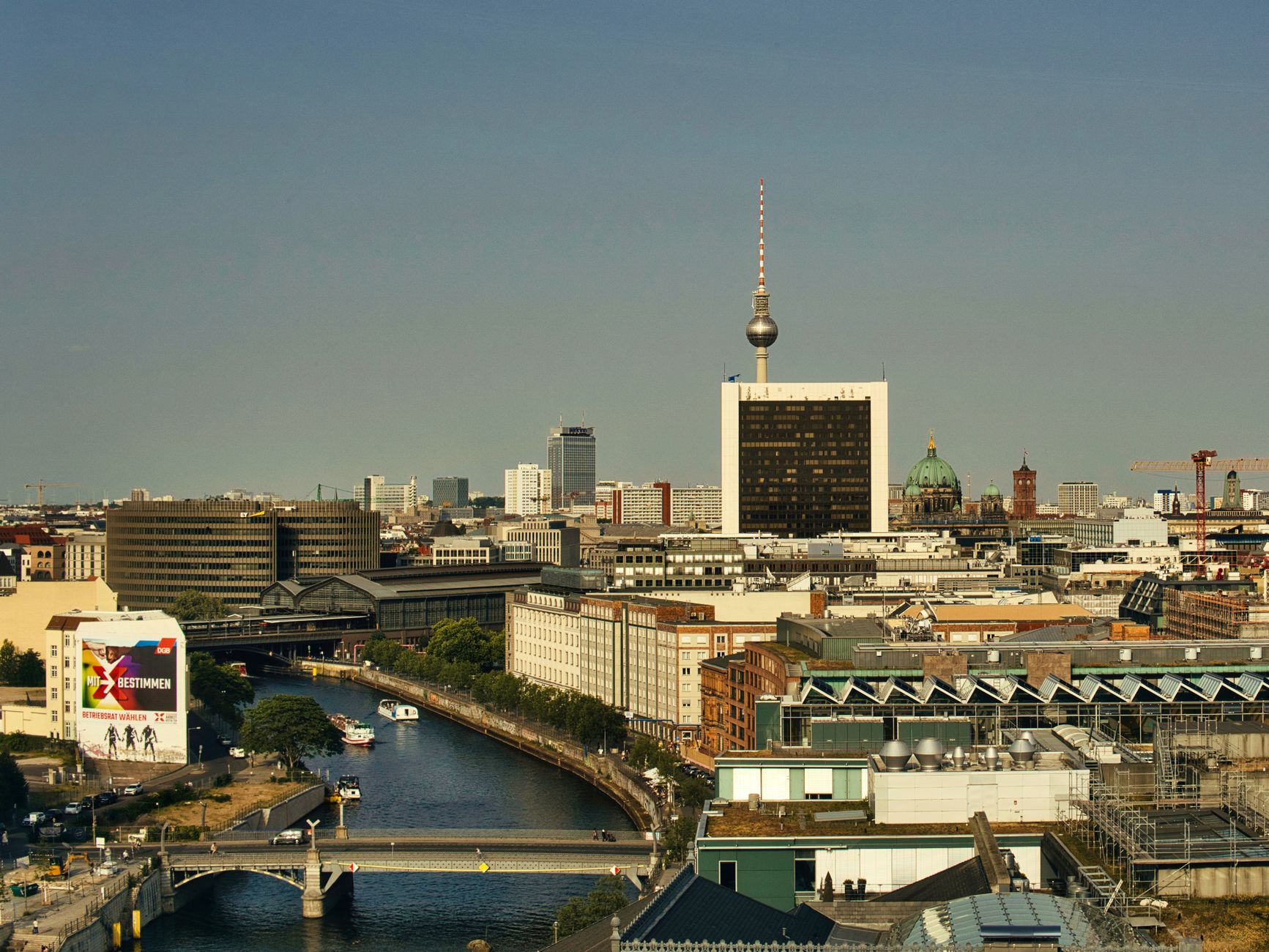

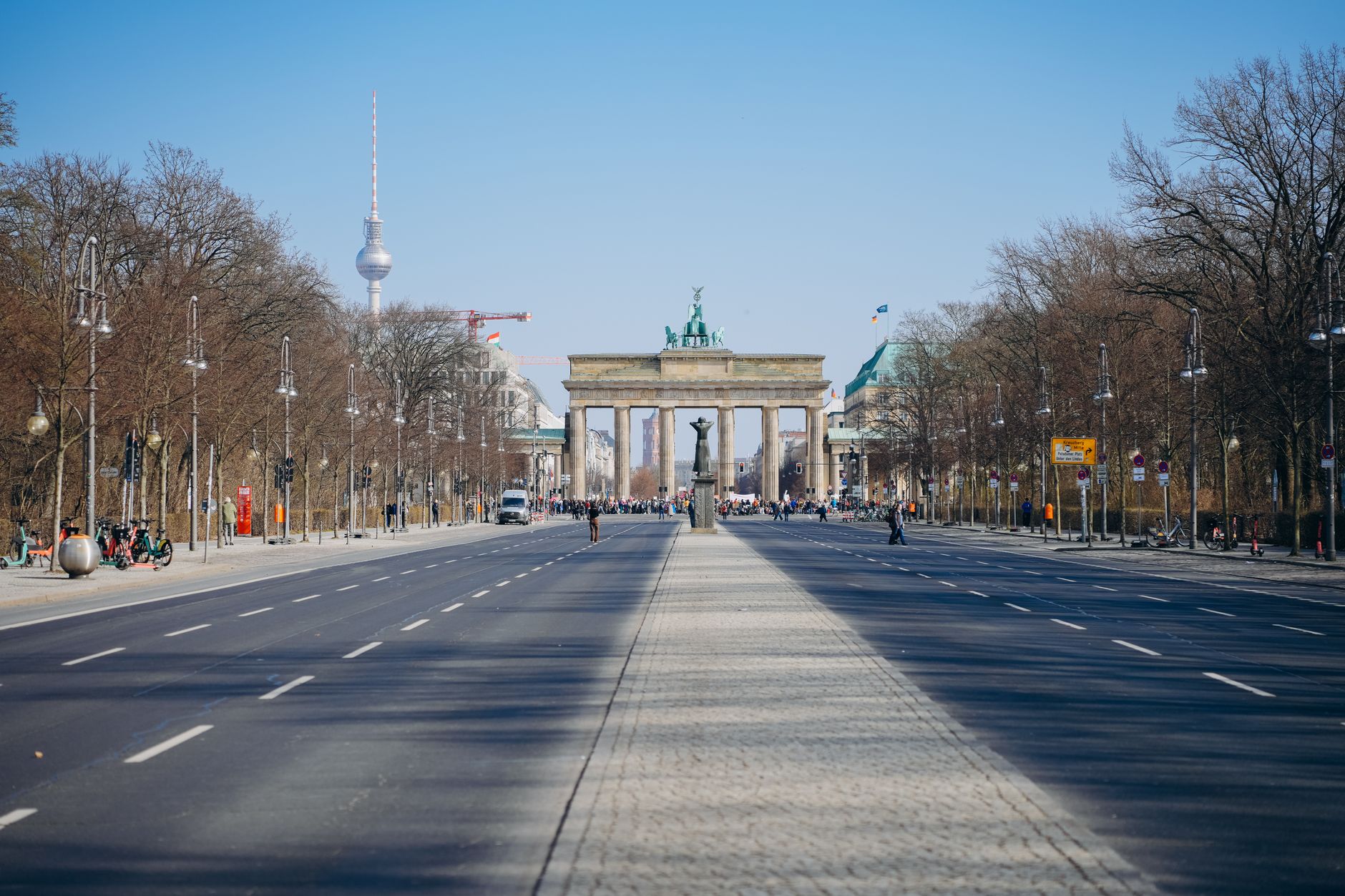
Yes. Berlin changes how you see 20th-century history. You can stand in the exact room where the Wall fell, eat a döner invented here in the 1970s, then dance in a former power station until sunrise. Few capitals pack so many conflicting eras into walkable distance.
Four full days is the minimum. Three lets you see the Brandenburg Gate, Museum Island and East Side Gallery but leaves no time for a neighbourhood like Neukölln or a subterranean tour with Berliner Unterwelten. Five days starts to feel civilised.
Yes, but watch your pockets. Pickpocketing spikes at Alexanderplatz, Hackescher Markt and on U7 and U8 trains. The shell-game operators on bridges are skilled; just keep walking. Violent crime against visitors is rare.
Buy an ABC ticket (€4.40). Take the FEX Airport Express or S9 directly to Hauptbahnhof or Alexanderplatz. The journey takes 25–35 minutes and runs every 20 minutes from the basement station under Terminal 1.
Yes if you plan to use public transport daily and visit paid sights. The 72-hour ABC version pays for itself after two Museum Island entries and unlimited travel from the airport.
Almost anything goes. Berlin is the only European capital where you can attend the opera in black jeans and still feel overdressed. Save the smart shoes for clubs with dress codes like Berghain.
22 places to discover





Saved and recently read places — kept on this device only.
Photos may have been resized or cropped.