Place
Bahrain Updated Apr 2026
Step into the Manama Souq and the air itself feels edible: cardamom, frankincense, frying dough, and the faint metallic tang of gold from a hundred open-fronted shops. This is the capital of Bahrain, where a 5,000-year-old Dilmun trading port has quietly morphed into a glass-and-steel Gulf city that still wakes up to the call to prayer and the slap of fresh tanoor bread on stone. The surprise is not that the old and new collide, but how gracefully they share the same narrow lanes.
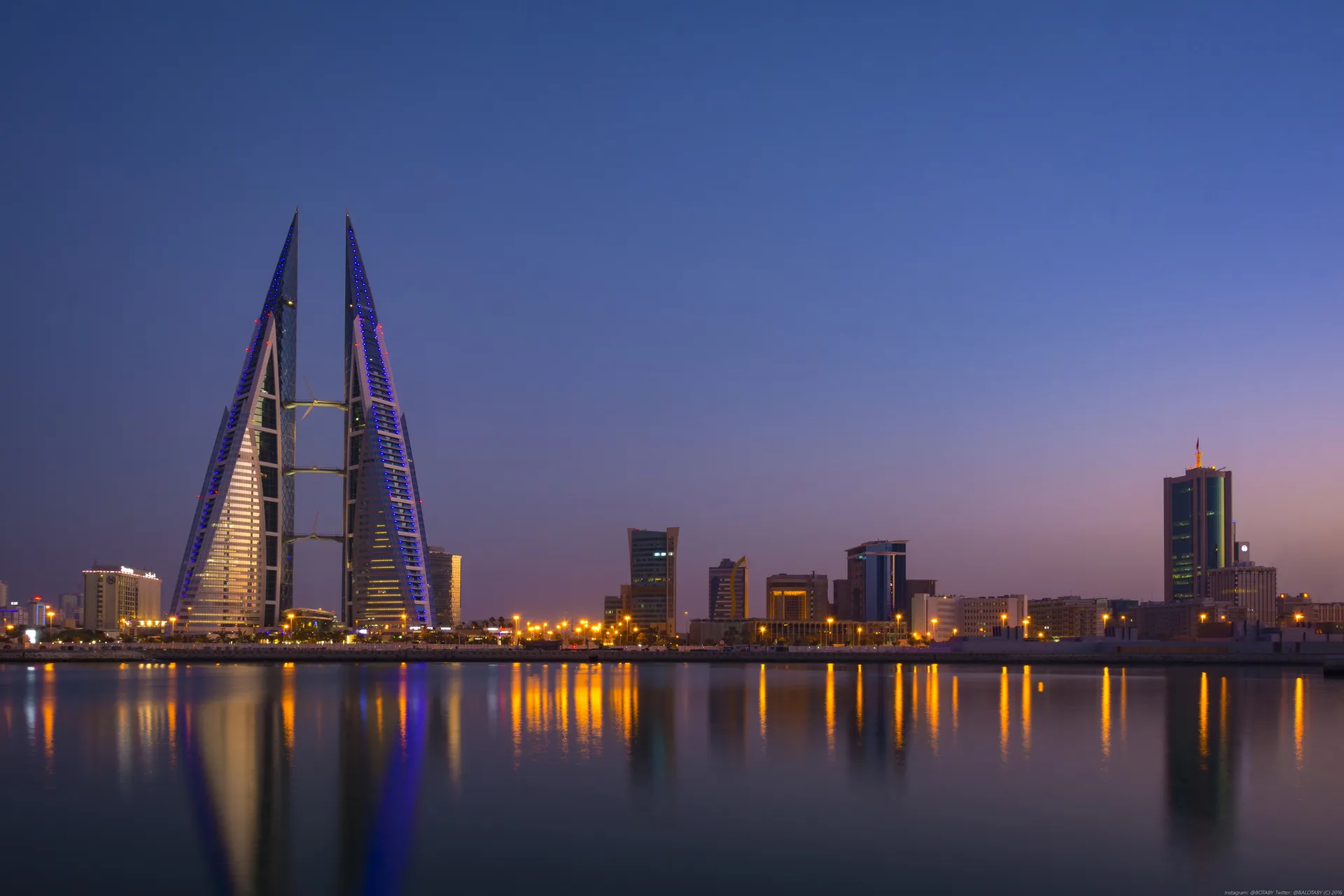 Photo: B.alotaby · CC BY-SA 4.0
Built from cited sources · see the method · How we make our guides →
Manama has always been a merchant city. Long before oil, its pearl divers, dhow captains, and Indian, Persian, and Arab traders created a genuinely cosmopolitan port where a Hindu temple from 1817 sits three minutes’ walk from the Al Fateh Grand Mosque. That layered past is still visible in the restored merchant houses of Muharraq, in the quiet calligraphy halls of Beit Al Quran, and in the scent of Bahraini halwa bubbling in copper pots behind Bab Al Bahrain.
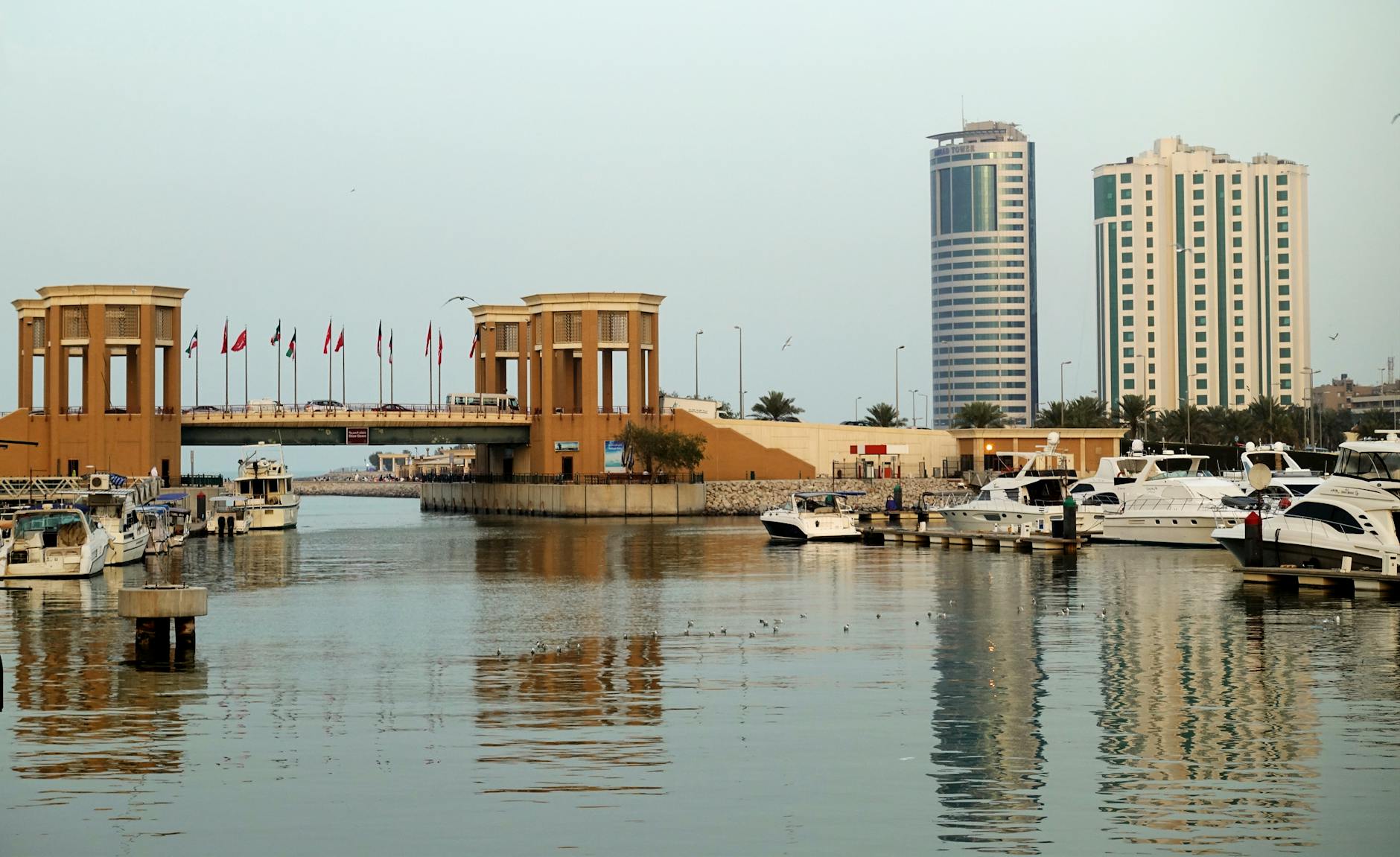
Yet the city refuses to live only in its history. The Bahrain World Trade Center spins its own wind turbines 240 metres above the bay, the National Theatre gleams like a giant golden pearl on the waterfront, and every evening the promenades of Bahrain Bay fill with families, expats, and teenagers on electric scooters. The contrast is the point: Manama is both the oldest continuously inhabited city in the Gulf and one of its most quietly progressive.
What ultimately moves you is the sense that everything here is still being negotiated. The same family that once sent ships for pearls now runs a shipping empire out of the Kanoo Building; the same alley that sold spices in the 1920s now serves espresso to artists walking between Al Riwaq and La Fontaine. Manama doesn’t just show you Bahrain. It lets you watch Bahrain deciding what it wants to become next.
Not every monument, just the ones we'd walk you past ourselves.

Where to wander, by quarter — each with its own rhythm.
Before you go
Curated from places in this city. Same price as official sites.


Prices shown are indicative — final pricing and availability are confirmed at checkout. Audiala may receive a commission from bookings made via these links.
From Dilmun harbour to Gulf capital, a city that keeps reinventing itself
Long before the name Manama existed, the nearby settlement at Qal’at al-Bahrain served as the beating heart of Dilmun, the legendary entrepôt linking Sumerian cities with the Indus Valley. Ships loaded with copper, ivory and carnelian docked here under the sharp Gulf sun. The memory of that ancient maritime wealth still echoes in Manama’s identity as a trading city four thousand years later.
Islamic chroniclers first mention Manama by name. Already a small port of fishermen, pearl divers and merchants, it sat quietly on the northeast coast of Bahrain. The smell of drying fish and frankincense hung over its narrow lanes. This modest settlement would later become the capital of an entire archipelago.
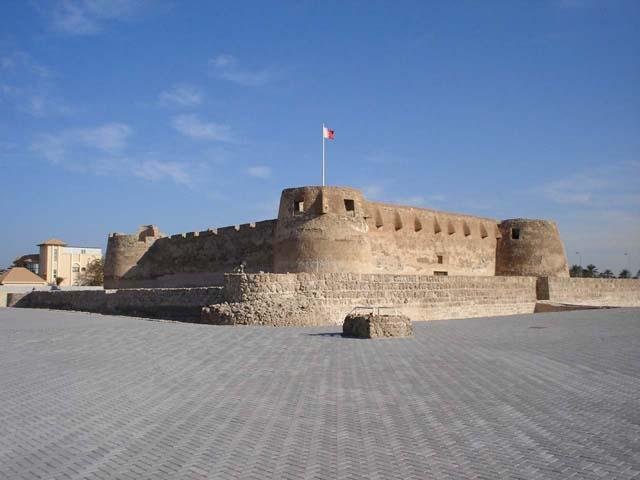
Portuguese forces seized Bahrain and turned Manama into one of their Gulf strongholds. They strengthened the fortress at Qal’at al-Bahrain and used the harbour to control the pearl trade. For eighty years the sound of Portuguese commands and cannon drills echoed where dhows once quietly unloaded spices.
Persian forces expelled the Portuguese and brought Manama under Safavid rule. The new masters introduced their administrative systems and Twelver Shia scholars. The city’s character subtly shifted from Iberian Catholicism back toward the Persianate Gulf world it had known before.
The Al Khalifa tribe from the mainland captured Bahrain after decades of regional conflict. They made Manama their political seat. From this moment the ruling family’s story and the city’s story became inseparable, a relationship that continues more than two centuries later.
Bahrain signed its first formal treaty with the British East India Company. Manama gradually became the administrative centre of British influence in the Gulf. The old souq lanes now heard English as often as Arabic, and the city’s fate became tied to imperial strategy.
Bahrain formally accepted British protected status. Manama’s customs house and port became the main gateway for goods and ideas entering the islands. The city’s merchants grew wealthy while slowly losing control over their own foreign policy.
Manama received its first postal facility, initially run as a branch of the Indian Post Office in Bombay. Letters from London, Bombay and Basra now arrived with regularity. The modest building marked the city’s deeper integration into global networks of empire and trade.
Manama established its municipality, widely regarded as the first in the Arab world. Streets were cleaned, markets regulated and basic urban services introduced. The old trading port was beginning its awkward transformation into a modern capital.
The invention of Japanese cultured pearls and the Great Depression destroyed Bahrain’s traditional pearling industry almost overnight. In Manama’s harbour the once-proud dhows sat idle. The city faced its first modern economic crisis and had to reinvent itself.
The discovery of petroleum in Bahrain changed Manama forever. What had been a sleepy port town of 15,000 suddenly became the centre of an oil economy. New concrete buildings rose beside old coral-stone houses, and the smell of petroleum began to mix with sea air.
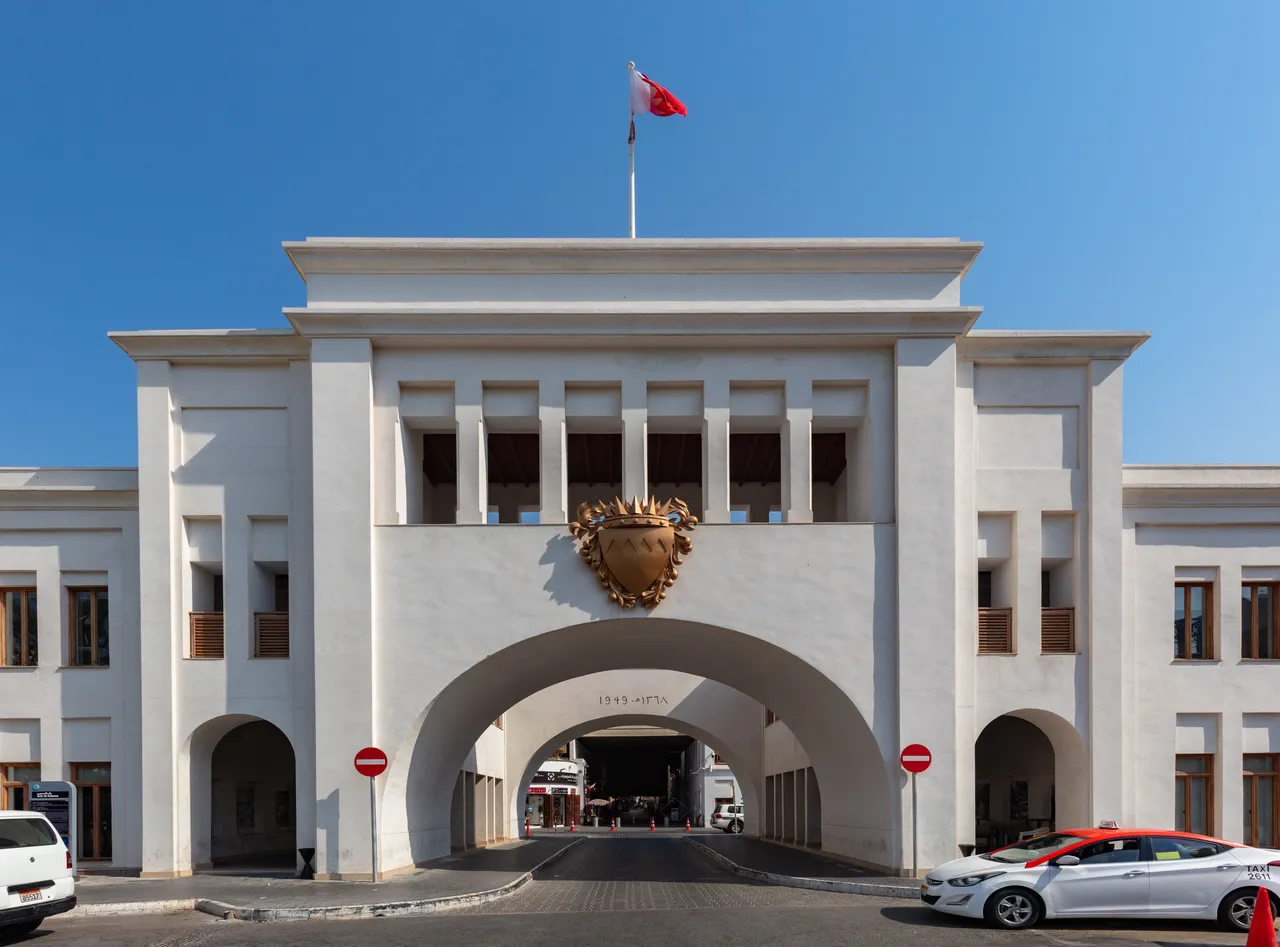
The ceremonial arch of Bab Al Bahrain was completed, designed with British adviser Charles Belgrave’s involvement. The landmark still stands today as the symbolic entrance to the old souq. Its arches frame a view that perfectly captures Manama’s layered identity.
The magazine Sawt al-Bahrain began publishing from Manama, becoming the voice of a new nationalist, anti-colonial generation. Writers met in cafés near the souq, arguing about independence while drinking endless cups of karak tea. The intellectual awakening that followed would shape Bahrain’s modern politics.
Manama was declared a free port, accelerating its role as a commercial hub. Goods flowed through its docks with fewer restrictions. The decision cemented the city’s reputation as one of the more open and cosmopolitan places in the Gulf.
Bahrain gained full independence from Britain. Manama officially became the capital of the new state. Flags went up across the city while the call to prayer still rang out from the old mosques. The weight of new nationhood settled on its streets.
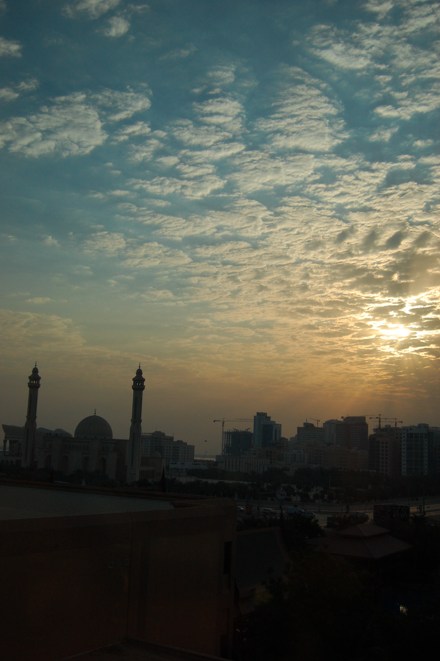
The enormous Al Fateh Grand Mosque was completed, its vast dome and minarets becoming one of Manama’s most visible landmarks. Built to accommodate thousands of worshippers, it symbolised both religious confidence and the state’s growing architectural ambition.
The Bahrain National Museum opened its doors on the waterfront, telling the story of 6,000 years of island history. Its Dilmun artefacts and pearl-diving exhibits gave Manama’s residents a new sense of their own deep past. The museum quickly became the city’s cultural anchor.
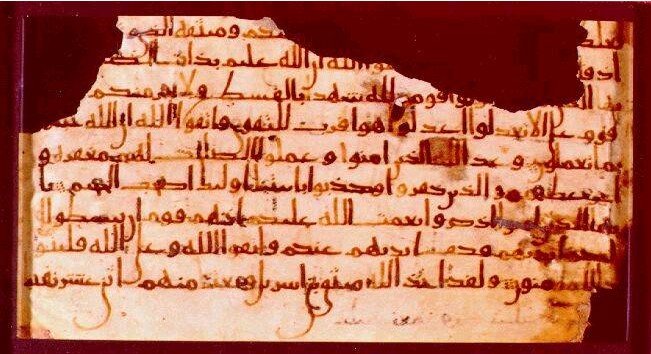
Beit Al Quran opened its doors, housing one of the finest collections of Quranic manuscripts and Islamic art in the Gulf. Its distinctive architecture and scholarly atmosphere made it a quiet intellectual refuge in the increasingly busy capital.
Bahrain adopted a new constitution and became a constitutional monarchy. Manama’s political landscape shifted once again. The city, long accustomed to balancing tradition and modernity, now had to navigate the tensions of a more open but still controlled political system.
The Bahrain World Trade Center was completed, the first skyscraper in the world to incorporate large wind turbines into its design. Its twin towers became an instant symbol of Manama’s ambition to blend sustainability with futuristic Gulf architecture.
Manama’s Pearl Roundabout became the focal point of the Arab Spring protests in Bahrain. For weeks the traffic circle pulsed with hope, anger and thousands of voices. Its eventual demolition left a physical and emotional scar on the city that remains visible today.
Manama was named Arab Capital of Culture. Restoration projects, art festivals and cultural events filled the city for a year. The old souq and new galleries briefly shared the same spotlight, reminding everyone that Manama still possessed both deep heritage and creative energy.
The beautifully restored Manama Post Office, located just behind Bab Al Bahrain, opened as a museum. Visitors can now stand where letters from across the empire once arrived, a small but evocative reminder of how Manama once connected the Gulf to the wider world.
Poet, playwright and lyricist Ali Al Shargawi was born in Manama. His work would later capture the city’s layered identity — its pearl divers and nationalists, its old souq and new ambitions. Few writers have articulated Manama’s soul as precisely as he has.
Poet Fawziyya al-Sindi was born in Manama. Her verses, often quietly defiant, would reflect the experiences of Bahraini women navigating tradition and modernity in the capital’s crowded streets and growing suburbs.
Future Bollywood star Jacqueline Fernandez entered the world in Manama. Raised in Bahrain before moving to India, she remains one of the most visible international faces to have grown up in the city’s multicultural environment.
Actress · born 1985
Born in Manama
Born and raised in Manama, Jacqueline attended school here before becoming a Bollywood star. The city’s mix of South Asian, Arab and Western communities shaped her cosmopolitan outlook. She still speaks warmly of her Bahraini childhood when interviewed.
Painter and cartoonist · born 1939
Born and raised in Manama
One of the founders of modern Gulf art, Abdullah Al Muharraqi spent his childhood wandering Manama’s old streets. His paintings captured the last decades of pearling life before oil changed everything. Walking the souq today, you can still sense the light and textures he painted.
Diplomat · born 1964
Born in Manama
Born in Manama, Houda Nonoo became Bahrain’s first Jewish ambassador and the first female Arab ambassador to the United States. Her path reflects the city’s surprisingly diverse communities. She still maintains strong ties to the small but historic Jewish community that has lived in Manama for generations.
Poet and writer · born 1975
Born in Manama
Manama-born poet Ali Al Jallawi grew up during turbulent times and later ran a research center here focused on minority communities. His work explores identity and belonging in the modern Gulf. The city’s layered history of traders, migrants and locals continues to fuel his writing.
Where locals actually book dinner — not the tourist menus.
Small things that change how the city treats you.
The city, as it actually looks.

Yes, if you want an authentic, compact Gulf capital that still has a working historic souq and strong cultural institutions. Manama rewards visitors who like contrasts: pearl-diving heritage lanes five minutes from glass-tower waterfronts, plus one of the region’s best national museums.
Two full days is enough for most visitors. Day one for the souq, Bab Al Bahrain, Bahrain National Museum and Beit Al Quran. Day two for Al Fateh Grand Mosque, Block 338 galleries and a waterfront evening in Bahrain Bay. Add a third day if you want Qal’at Al Bahrain.
Take bus A2, labelled the fastest route to Manama Bus Terminal. Taxis from Car Park B are metered but add a 2 BHD airport surcharge. Careem and Uber pick up at Arrivals Gate 1 and are usually quicker and cheaper.
Petty theft occurs in the souq but violent crime against visitors is rare. Current UK and US advisories cite regional tensions and recommend avoiding protests or military areas. Use normal big-city caution and check travel alerts before flying.
Cards are widely accepted in hotels, restaurants and malls, but small souq shops, taxis and street snacks still prefer cash. Carry 5–10 BHD notes and some fils coins. Many places also accept Saudi riyals.
Alcohol is available in licensed hotel bars, certain restaurants in Adliya and Block 338, and Juffair nightlife spots. It is not sold in regular supermarkets or unlicensed venues.
20 places to discover

Saved and recently read places — kept on this device only.
Photos may have been resized or cropped.