What the place is
The U.S. Embassy in Manama is a center for political, economic, cultural, and security cooperation between the United States and Bahrain. The partnership has continued since Bahrain’s independence in 1971. Located in the Zinj district, the embassy provides consular services by appointment and is near historical and cultural attractions.
The embassy does not offer general public tours. Only people with scheduled appointments for consular or visa services may enter. For current visitor requirements and local events, consult the official U.S. Embassy Bahrain website and resources from Bahrain’s cultural authorities and tourism boards.
History and diplomatic relations
Americans were present in Bahrain before formal diplomatic ties were established. In the late 1800s, Samuel Zwemer and his wife Amy arrived and set up a medical dispensary in Manama Souq. Their work helped combat smallpox and bubonic plague in 1903 (State Magazine). The American Mission Hospital, which remains operational, is a legacy of this work (U.S. Diplomacy Center). In the economic sphere, Standard Oil Company of California played a pivotal role in establishing Bahrain’s oil industry; the first oil discovery in the Gulf region occurred on the island in 1932 (State Magazine).
The United States recognized Bahrain’s independence on August 15, 1971 (U.S. Embassy Bahrain). The embassy in Manama was established on September 21, 1971, with John N. Gatch, Jr. as Chargé d’Affaires ad interim. The first resident ambassador, Joseph W. Twinam, arrived in 1974, and Bahrain opened its embassy in Washington, D.C. in 1977 (Wikipedia; shunculture.com).
The current embassy compound at Building 979, Road 3119, Block 331, in Zinj was dedicated on July 4, 1990 (Wikipedia). It was constructed to stringent U.S. Department of State security standards. The embassy is one of two principal American installations in Bahrain; the other is Naval Support Activity Bahrain, home to the U.S. Navy’s Fifth Fleet.
Bahrain is a Major Non-NATO Ally and has hosted the U.S. Navy’s Fifth Fleet since 1995. A Defense Cooperation Agreement, signed in 1991 and renewed in 2017, underpins the security partnership. The U.S.-Bahrain Free Trade Agreement has been active since 2006, and two-way trade exceeded $2 billion in 2021. The embassy supports high-level delegations, commercial advocacy, and human rights initiatives (shunculture.com; State Magazine).
The embassy works with the U.S. Navy’s Fifth Fleet and supports regional peace, counterterrorism, and multilateral initiatives, including the annual Manama Dialogue (shunculture.com; State Magazine).
The post employs over 70 U.S. direct hires, 105 locally employed staff, and more than 150 eligible family members. Approximately 40% of local staff are Bahraini; the rest come from other regional and Asian countries. Ambassador Steven C. Bondy leads the mission (State Magazine; Wikipedia).
What to see
Bahrain Fort (Qal'at al-Bahrain)
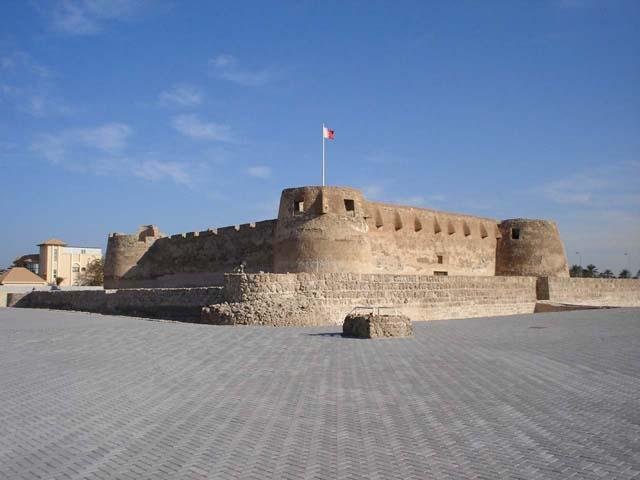
Qal'at al-Bahrain is a UNESCO World Heritage Site and archaeological landmark reflecting more than 4,000 years of Bahrain’s history. In the northern governorate, it was once the heart of the Dilmun civilization and later a Portuguese stronghold (UNESCO).
Visitors can explore the ruins, towers, and archaeological sites, and see artifacts and historical context at the on-site museum. Guided tours are available in English and Arabic. The site has a visitor center, restrooms, and a souvenir shop.
Bahrain National Museum
Established in 1988, the Bahrain National Museum displays artifacts from the Dilmun civilization and beyond, tracing Bahrain’s cultural evolution. Its exhibits include the Dilmun Gallery, with artifacts from ancient burial mounds and trade; pearl diving and maritime heritage; Islamic art and calligraphy; traditional crafts; and temporary exhibitions and events.
Cultural and social engagement
The embassy promotes cultural exchange through events including Ramadan Iftars, Bahraini National Day celebrations, and international potlucks (State Magazine). Mosques, churches, Hindu temples, and a synagogue are all within walking distance of one another in Manama Souq, reflecting Bahrain’s tradition of religious tolerance. The embassy also supports initiatives that foster interfaith understanding.
Practical visiting information
U.S. Embassy
Address:
U.S. Embassy Manama
Building 979, Road 3119, Block 331
Zinj District, Manama, Bahrain
- Consular hours Sunday–Thursday, 8:00 AM–4:00 PM.
- Appointments Required for all consular services. Book through the embassy website.
- Security Strict security protocols apply. Bring valid photo identification and arrive at least 30 minutes before your appointment.
- Contact Refer to the embassy’s official website for current details and updates.
Bahrain Fort
- Opening hours Daily, 8:00 AM–5:00 PM; closed Fridays from 12:00–2:00 PM for prayers.
- Tickets Adults 3 BHD; students and seniors 1 BHD; children under 12 free. Tickets are available on-site or through the Bahrain Authority for Culture and Antiquities.
- Address Qal'at al-Bahrain Fort, Northern Governorate.
- Directions and parking About 20 minutes by car from Manama. Free parking is available, and taxis are readily available.
- Accessibility Wheelchair accessible; contact the site in advance for assistance.
- Photography Allowed; drones require special permission.
Bahrain National Museum
- Opening hours Saturday–Thursday, 9:00 AM–6:00 PM; closed Fridays and public holidays.
- Admission Free.
- Location Shaikh Hamad Highway, Manama. The museum is accessible by taxi or car, with parking and wheelchair access.
- Guided tours Available upon request.
- Photography Permitted, though flash is not allowed in some areas.
- Facilities A gift shop sells souvenirs and books.
Tips
For a visit to Bahrain Fort, wear comfortable shoes and bring sun protection. Advance booking is recommended for guided tours in English or Arabic. Contact the site in advance if you need assistance with wheelchair access.
At the Bahrain National Museum, arriving early can help avoid crowds. For embassy visits, observe the security protocols and local customs, and check official resources for the latest information.
Nearby places
- Manama Souq A lively market with traditional crafts, spices, and textiles. It is also the setting for the dispensary established by Samuel and Amy Zwemer.
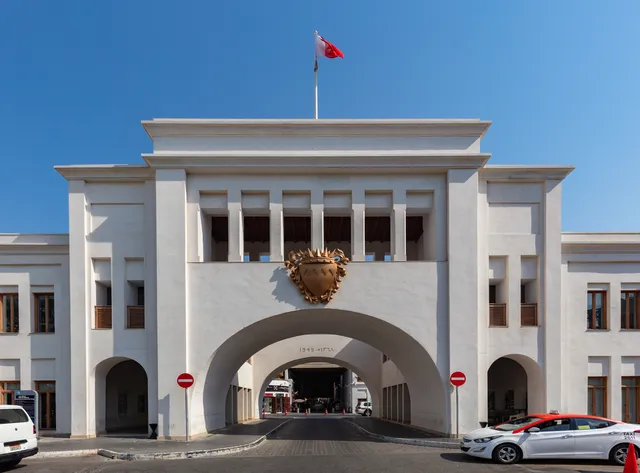
- Bahrain National Museum Exhibits cover millennia of Bahraini history. Nearby places include Bahrain Fort, Bab Al Bahrain, the historic gateway, and Bahrain Financial Harbour.
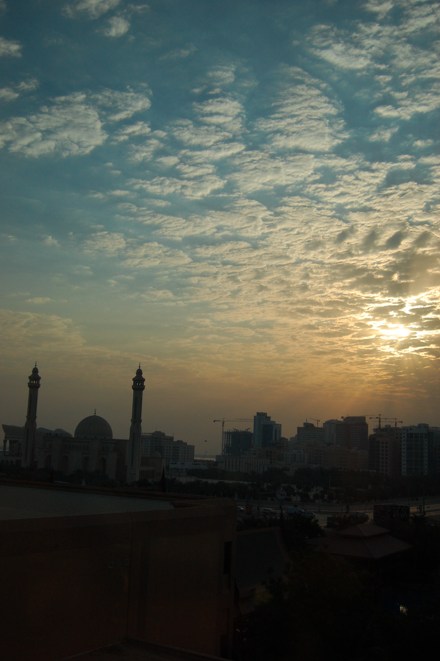
- Al Fateh Grand Mosque One of the world’s largest mosques, open to visitors of all faiths.
- American Mission Hospital A continuing symbol of U.S.-Bahrain humanitarian collaboration.
Bahrain Fort, the National Museum, Al Fateh Grand Mosque, and Manama Souq offer insight into Bahrain’s history and culture, complementing a visit to the embassy area.
Frequently asked questions
Can the public visit the U.S. Embassy?
No. Only individuals with scheduled appointments for consular or visa services are admitted.
What are the embassy’s hours?
Sunday–Thursday, 8:00 AM–4:00 PM, by appointment only.
Where is the embassy located?
Building 979, Road 3119, Block 331, Zinj District, Manama.
Are there nearby attractions?
Yes. Manama Souq, Bahrain National Museum, and Al Fateh Grand Mosque are within easy reach.