


Place
Saudi Arabia Updated Apr 2026
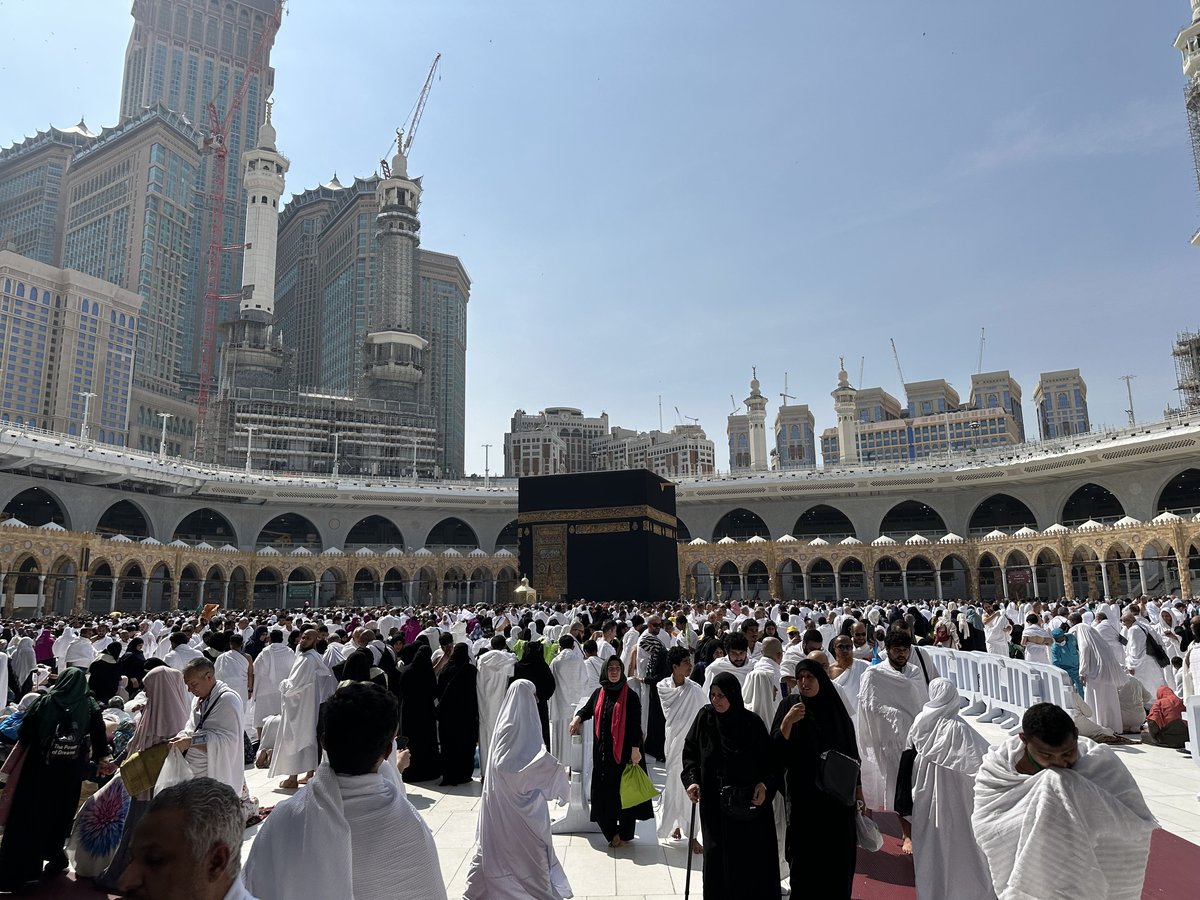
The marble under your feet is still cool at three in the morning, and the air carries a damp, cardamom-laced sweetness that tells you exactly where you are: Mecca, Saudi Arabia, the only city on earth where the world’s tallest clock tower looms over the planet’s largest open-air kitchen, and where pilgrims from Bukhara, Senegal and Jakarta share dates on plastic sheets outside a mosque that cost $15 billion to expand.
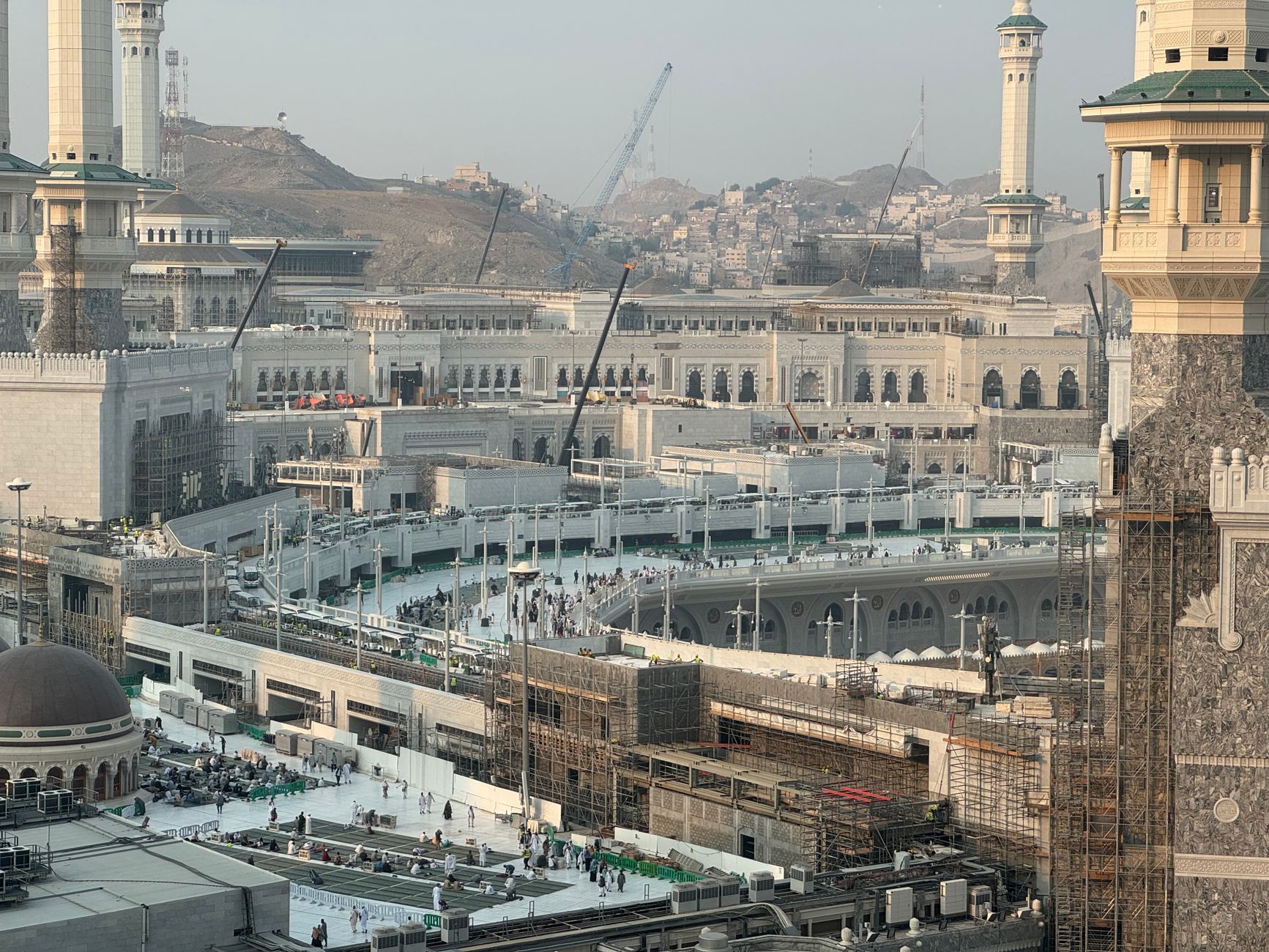 Photo: Earth Photart / Pexels
Built from cited sources · see the method · How we make our guides →
Mecca is closed to the unconverted — checkpoints on all approach roads remind you that this is not a tourist destination, but a sanctuary. That singular access restriction shapes everything: the streets are filled exclusively with believers who have travelled here to circle the Kaaba seven times, run between Safa and Marwah, and drink from a well that has never run dry. The result is a city that runs on a spiritual clock, not a commercial one, where the most coveted real estate is prayer space and the highest-density hour is 2 a.m., when the Mataaf is cool and the crowds are finally thin enough to touch the Black Stone without being crushed.
What surprises, though, is how deeply food and coffee have written themselves into that spiritual rhythm. Coffee entered the Muslim world through Mecca — Yemeni Sufis carried the bean here before it ever reached Istanbul or Cairo — and today’s qahwa Arabiyya, pale green with cardamom, still anchors every social encounter. A local friend will teach you the cup-shaking gesture to signal ‘enough’ after the obligatory three pours, and will warn you that refusing the first cup is ruder than showing up late. Behind the glittering Abraj Al-Bait mall, Aziziyah’s Yemeni mandi tents and Hijazi rice platters feed pilgrims for a fraction of the clock-tower prices; the real city eats at 11 p.m., after Isha, when mutabbaq stalls sizzle and the grills in Al-Haraa have been burning for three decades.
Vision 2030 has pumped billions into infrastructure — the Haramain high-speed train now slings you to Jeddah airport in fifty minutes for about 70 SAR — but entertainment deliberately stops at the city limits. There are no concerts, no cinemas, no mixed-gender music venues. The nightlife is the post-Isha Tawaf, the all-night souqs of Al-Kakiyyah, and the Ramadan all-nighters when the entire city becomes nocturnal and the Haram distributes free iftar to anyone who sits down. Taif’s rose farms and Jeddah’s Al-Balad are the designated playgrounds, just far enough away to preserve the hush that descends on the Grand Mosque when the imam recites the final surah of the night.
Not every monument, just the ones we'd walk you past ourselves.

Where to wander, by quarter — each with its own rhythm.
Before you go
From the founding of the Kaaba to the largest mosque expansion in history
Islamic tradition holds that the prophet Ibrahim and his son Ismail raised the first house of worship to the one God in the barren valley of Bakkah. The discovery of the Zamzam well by Hagar, after her desperate search between Safa and Marwah, drew the first settlers to this desert crossroads. No archaeological record confirms the legend, but for billions of Muslims, this moment marks Mecca's primordial purpose.
Qusayy, an ancestor of the Prophet, consolidated power, gathered the scattered Quraysh clans, and assumed custodianship of the Kaaba. He built the Dar al-Nadwa, the assembly hall where Meccan elders debated trade and war, transforming the settlement into a coherent political and commercial force. Under his clan, the city's influence rippled outward along the frankincense routes.
Khadija bint Khuwaylid was born into a wealthy Quraysh trading family and inherited a caravan empire that stretched from Yemen to Syria. Her business acumen and independent status made her one of Mecca's most respected figures long before she proposed marriage to her younger employee, Muhammad. The first convert to Islam, she spent her entire fortune supporting the nascent faith and died in Mecca, buried in Jannat al-Mu'alla.
Abraha, the Aksumite viceroy of Yemen, marched on Mecca with an army and war elephants, aiming to destroy the Kaaba and redirect pilgrimage to his own cathedral in Sana'a. Tradition says birds pelted the invaders with stones of baked clay, and the army disintegrated in disease. That same year, a boy named Muhammad was born into the Banu Hashim clan—an omen few noticed at the time.
Muhammad ibn Abdullah was born into the Quraysh's ruling Hashim clan, orphaned early, and grew up amid the caravan commerce of Mecca. He earned the nickname al-Amin—the trustworthy—long before the first words of the Quran would arrive in a cave three miles north of the city. His connection to Mecca would define the spiritual geography of nearly two billion people.
In the Cave of Hira on Jabal al-Nour, the archangel Gabriel commanded the 40-year-old Muhammad to read. The words that followed—'Read in the name of your Lord who created'—became the first verses of the Quran. This nocturnal encounter, just outside Mecca's valley, launched a faith that would reshape the city, the Arabian Peninsula, and the world.
After years of persecution by his own Quraysh kin, Muhammad and a handful of followers slipped out of Mecca under cover of darkness and fled to Yathrib, later Medina. He and Abu Bakr hid for three nights in the cave of Thawr as pursuers passed inches from the entrance. The Islamic calendar begins from this migration—Year 1 AH—and Mecca, for the first time, became a city the Prophet had to leave.
Muhammad returned to his birthplace at the head of 10,000 followers after the Quraysh breached the truce of Hudaybiyyah. The city surrendered almost without resistance. He rode to the Kaaba, circled it seven times on his camel, and ordered the destruction of the 360 idols housed inside, dedicating the precinct to the one God and transforming it into the exclusive sanctuary of Islam.
Muhammad performed his first and only Hajj as a Muslim, establishing the rites that would be followed for centuries: the circuits around the Kaaba, the running between Safa and Marwah, the standing at Arafat. On the plain of Arafat, he delivered his final sermon, declaring equality among believers and the sanctity of life and property. He returned to Medina and died three months later.
Caliph Uthman ibn Affan designated the Red Sea fishing village of Jeddah as the official port of Mecca, funneling Indian Ocean trade and sea-borne pilgrims toward the holy city. Timber, spices, textiles, and generations of travelers passed through Jeddah's coral-stone towers on their way to perform Umrah and Hajj. The decision cemented Mecca's connection to maritime networks stretching from Zanzibar to Malacca.
During the Second Fitna, Umayyad forces besieged Abd Allah ibn al-Zubayr, who had declared himself caliph from Mecca. Catapults hurled stones and flaming projectiles at the city; one struck the Kaaba's kiswah, setting the sacred structure ablaze. The Black Stone cracked from the heat. Ibn al-Zubayr rebuilt the Kaaba entirely, widening its foundations to include the Hijr Ismail.
Umayyad general al-Hajjaj ibn Yusuf laid a second, more devastating siege, cutting off food and water for months. Ibn al-Zubayr fought to the end and was killed near the Kaaba; his body was crucified on the city wall. The victorious Umayyads restored the Kaaba to its pre-Zubayr dimensions, erasing the architectural mark of the rebellion but leaving the political scar deep in Meccan memory.
The first Abbasid caliph, al-Saffah, ordered milestones, fire-signal stations, and fortified rest houses along the desert route from Iraq to Mecca. His successors poured state treasure into the Darb Zubaydah, a 1,400-kilometer pilgrimage road lined with wells, cisterns, and palaces. For the first time, a pilgrim could walk from Baghdad to Mecca without dying of thirst—a transformation as much political as hydraulic.
Zubaydah bint Ja'far, wife of Caliph Harun al-Rashid, financed a system of underground channels and surface aqueducts that brought spring water from the mountains directly to Mecca. Known as Ayn Zubaydah, the waterworks served the city for over a thousand years. Her name is still murmured by older Meccans when the Zamzam taps run slow.
Ismaili Qarmatian raiders under Abu Tahir al-Jannabi attacked during the Hajj, massacred an estimated 30,000 pilgrims in the Grand Mosque precinct, and ripped the Black Stone from the Kaaba's eastern corner. They hauled the sacred relic to their capital in Bahrain, where it would remain for 22 years. The theft sent shockwaves through the Islamic world and shattered Abbasid prestige.
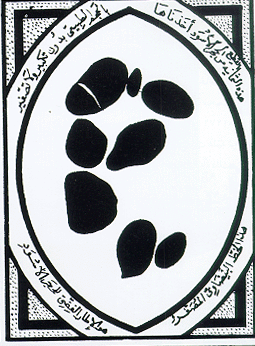
After two decades of political humiliation, the Abbasids paid a vast ransom and the Qarmatians returned the Black Stone to Mecca. It came back in pieces, reportedly broken during the sack, and was set into a silver frame that still holds its fragments. The event underscored a brutal truth: even the holiest objects could become bargaining chips in sectarian conflict.
Andalusian traveler Ibn Jubayr arrived for Hajj and left the most detailed description of medieval Mecca: the marble courtyard, the perfumed kiswah, the crush of pilgrims from Fez to Samarkand, the mu'adhdhin's voice rolling from the minarets at dawn. His travelogue became the gold standard for centuries of Hajj literature, capturing a city at the height of its cosmopolitan season.
The 21-year-old Moroccan Ibn Battuta reached Mecca after a grueling 18-month journey across North Africa, Egypt, and the Red Sea. The city, then under Mamluk suzerainty, dazzled him with its marble minbars, constant prayers, and the sheer multilingual chaos of the pilgrimage. He would return three more times, each visit layering new tales onto a career that spanned three decades and 120,000 kilometers.
After Selim I conquered Mamluk Egypt, the Sharif of Mecca surrendered the holy cities to the Ottoman sultan in a bloodless transfer. The Ottoman era brought imperial investment—aqueduct repairs, mosque renovations, and the annual mahmal caravan from Cairo bearing a new kiswah. But actual power remained in the hands of the Hashemite sharifs, who governed like client kings under a distant sultan.
A catastrophic flash flood swept through the Haram, inundating the Kaaba and weakening its walls. Sultan Murad IV ordered a complete reconstruction, completed in 1630, which produced the granite cube clad in black silk that pilgrims see today. After the waters receded, the Meccans rebuilt with a heightened awareness of where the mountain runoff might strike next.
The First Saudi State's Wahhabi army seized Mecca, banned what they deemed superstitious practices—tombs were leveled, saints' domes smashed—and enforced strict prayer attendance. The Ottoman sultan was powerless until Muhammad Ali Pasha of Egypt recaptured the holy city a decade later. This first Saudi occupation foreshadowed the puritanical stamp that would return in the 20th century.
British adventurer Richard Francis Burton, fluent in Arabic and a master of disguise, performed the Hajj as a Muslim pilgrim, recording every detail with an ethnographer's precision and a spy's nerve. His account—smuggled notes on the Kaaba's measurements, the slave markets, the fever wards—gave Europe its first unvarnished portrait of Mecca. The book made his reputation and enraged the colonial establishment.
Sharif Hussein bin Ali, the Hashemite ruler of Mecca, raised the banner of revolt against the Ottoman sultan, seizing the city with British-supplied rifles and T.E. Lawrence's strategic backing. The rebellion severed Mecca's four-century tie to Istanbul and briefly made the city the capital of an independent Kingdom of Hejaz. It was a moment of heady nationalism—and a prelude to the Saudi conquest that would swallow the kingdom nine years later.
After a year-long campaign, the Bedouin warriors of Abdulaziz Ibn Saud entered Mecca without a fight, the Hashemite defenders melting away. The conquest ended nearly a millennium of Hashemite rule over the holy city and brought it under the uncompromising Wahhabi doctrine that still governs Saudi Arabia. King Ali fled to Jeddah; the Kaaba now had a new guardian.
At dawn on the first day of the Islamic year 1400, several hundred armed militants led by Juhayman al-Otaybi seized the Haram, barricaded the gates, and declared the arrival of the Mahdi. For two weeks, the world's holiest mosque became an urban battlefield, with French GIGN advisors flown in to assist. The siege left 270 dead, shattered Saudi complacency, and launched an era of intensified religious conservatism.
For the first time in modern history, the Hajj shrank to a few thousand pilgrims—all residents of Saudi Arabia, masked and distanced, circling the Kaaba in eerily quiet solitude. The pandemic emptied the Haram for months, a silence not heard in thirteen centuries. It reminded the faithful that even the most resilient rituals are fragile.
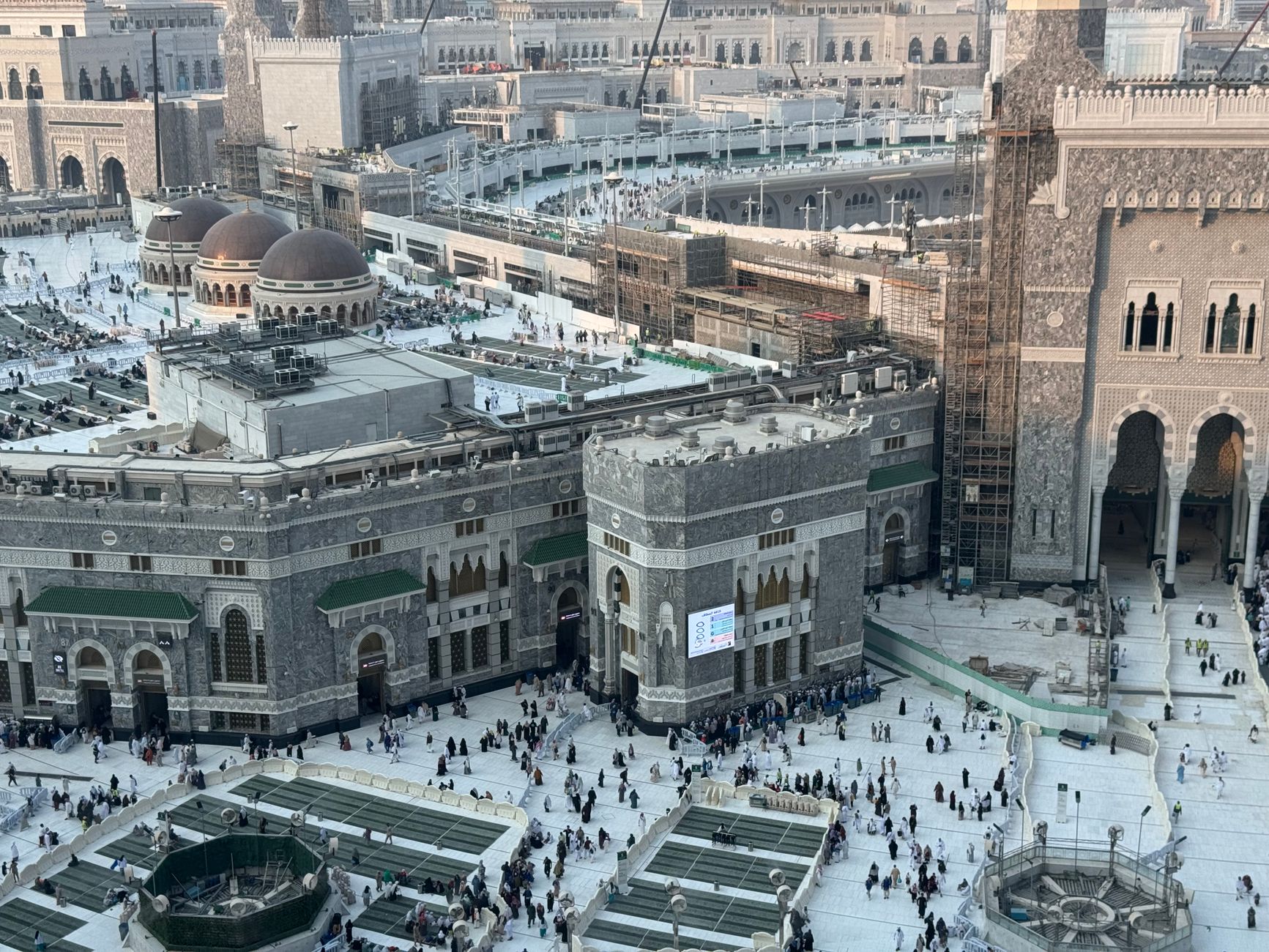
The Saudi Binladin Group completed the largest expansion in the Grand Mosque's history, costing a reported $15 billion and adding prayer zones for over 10,000 worshippers. The marble floors now stretch so far that golf carts shuttle the elderly between Safa and Marwah. Critics mourn the lost Ottoman-era arcades, but for pilgrims arriving by the million, the sheer scale is the point.
Prophet of Islam · c. 570 – 632 CE
Born in Mecca; received first revelation in the Cave of Hira just outside the city.
He walked these same jagged hills, a merchant orphan who returned from the cave of Hira with words that would reshape history. If he stood on Jabal al-Nour today, he would see a city grown beyond imagination, but the granite peak under his feet remains unchanged — the same silence before dawn, the same stars.
First wife of Prophet Muhammad; merchant · c. 555 – 619 CE
Born, lived, and died in Mecca; buried in Jannat al-Mu'alla cemetery.
A wealthy trader who proposed to a younger man, she ran caravan routes from a city that worshipped idols — and became the first person to believe in a new, singular God. Her grave in Jannat al-Mu'alla is a quiet sandstone marker outside the Haram's gold and marble. Without her fortune and unshakeable conviction, the early Muslim community might never have survived the Meccan persecution.
First muezzin of Islam · c. 580 – c. 640 CE
Enslaved in Mecca; tortured for converting to Islam; freed by Abu Bakr in the city.
An Ethiopian slave whose owner pinned him under a boulder under the Meccan sun, demanding he renounce his faith. His answer, repeated until Abu Bakr bought his freedom, was 'Ahad, Ahad' — 'One, One.' Later, his voice would call the faithful to prayer from the roof of the Kaaba itself. In a city built on tribal lineage, he proved that faith could transcend everything.
Pre-Islamic poet · c. 520 – 609 CE
His Mu'allaqa ode was hung on the Kaaba walls in Mecca.
One of the seven poets whose works were so revered they were suspended on the Kaaba's walls in golden letters. His verses describe the pilgrims' circuit around the black stone, the tribes gathering, the sacred months — a snapshot of Meccan life just before Islam swept through. He died one year before Muhammad's first revelation, never knowing the city he immortalized would soon abandon its idols.
Pre-Islamic court poet · c. 535 – c. 604 CE
His poetry was displayed on the Kaaba; he described pilgrims walking around the shrine.
Another Mu'allaqa poet whose lines graced the Kaaba, his work records the rituals of pre-Islamic pilgrimage — the circumambulation, the sacrifice, the gatherings — that Islam would later sanctify and transform. His poetry is both a witness to and a ghost of a Mecca that no longer exists.
Scholar of Qur'anic exegesis · c. 619 – 687 CE
Born in Mecca three years before the Hijra; founded a major school of tafsir there.
A cousin of the Prophet who grew up in the alleys near the Haram, he would become the greatest early interpreter of the Qur'an. The school he established in Mecca shaped how Muslims understand their scripture for centuries. Walk the learning circles near the mosque today, and you're tracing a tradition he started fourteen hundred years ago.
Custodian of the Kaaba; Prophet Mohammad's grandfather · c. 497 – 578 CE
Lived his entire life in Mecca; rediscovered the Zamzam Well according to tradition.
The grandfather who raised the orphaned Muhammad, he was the chief who dug out the buried Zamzam Well — the same water that still flows in the Haram's coolers. His grave in Jannat al-Mu'alla lies a few steps from Khadija's, a quiet reminder that the history of Mecca is woven through family lines that stretch back before recorded time.
Third Rashidun Caliph · c. 576 – 656 CE
Born in Mecca to the wealthy Banu Umayya clan; commissioned the canonical compilation of the Qur'an.
A Meccan aristocrat who became the third caliph, he standardized the Qur'anic text and sent copies to every province — ensuring the revelation Muhammad received in this city would be preserved word for word. The port of Jeddah became Mecca's official gateway under his rule, a role it still plays for millions of pilgrims each year.
Where locals actually book dinner — not the tourist menus.
Small things that change how the city treats you.
The city, as it actually looks.




No. Saudi law strictly prohibits non-Muslims from entering Mecca. Checkpoints on all approach roads enforce this, and violators face fines and deportation. Only Muslims are permitted inside the holy city.
For Umrah, 3–5 days lets you perform rituals, explore historical sites, and take a day trip to Jeddah or Ta'if. Hajj rites themselves take 5 days, but most pilgrims stay 1–2 weeks. Plan extra time if you want to climb Jabal al-Nour or visit both Miqat points.
The Haramain High-Speed Railway has a station inside King Abdulaziz International Airport (KAIA) and reaches Mecca in about 50 minutes. Tickets are bookable online. Uber, Careem, and pre-booked Umrah taxis offer door-to-door alternatives, though they are pricier and slower.
Getting close is extremely difficult due to relentless crowds. Injuries and crushing are common. The scholarly consensus allows pointing toward the stone from a distance, which is far safer and spiritually equivalent.
The scorching summer months (June–August) see the lowest hotel rates. For a better balance of price and comfort, target early November or late February — outside Ramadan, Hajj season, and extreme heat.
Modest dress is enforced inside the Haram. Men should cover shoulders and knees with loose clothing. Women wear an abaya and headscarf, with face and hands uncovered during prayer. For Umrah or Hajj, pilgrims don white ihram garments in two unstitched pieces (for men) before entering the sacred boundary.
The electric bus network, launched in 2026, covers the central district with 12 routes and a flat fare of SAR 4. Download the official app to see routes, stops, and real-time arrivals. Buses run frequently and connect major hotels to the Haram.
20 places to discover

Saved and recently read places — kept on this device only.
Photos may have been resized or cropped.