Most visitors to Peshawar head straight for the old city's Mughal-era gates and spice bazaars, which is exactly why the walking trail at Tatara Park catches them off guard. Spread across 20 acres in the Hayatabad district — an area roughly the size of fifteen football pitches — this modern park in Pakistan's northwestern frontier city offers something Peshawar's ancient quarters cannot: flat, shaded ground where you can move at your own pace without dodging traffic, hawkers, or history demanding your attention.
The walking trail loops around man-made lakes, past flower beds that smell sharply of marigold in autumn and jasmine in spring, and through stretches of lawn where local families spread blankets for evening picnics. It is not a wilderness hike. It is something rarer in Peshawar — a place designed for the simple act of putting one foot in front of the other.
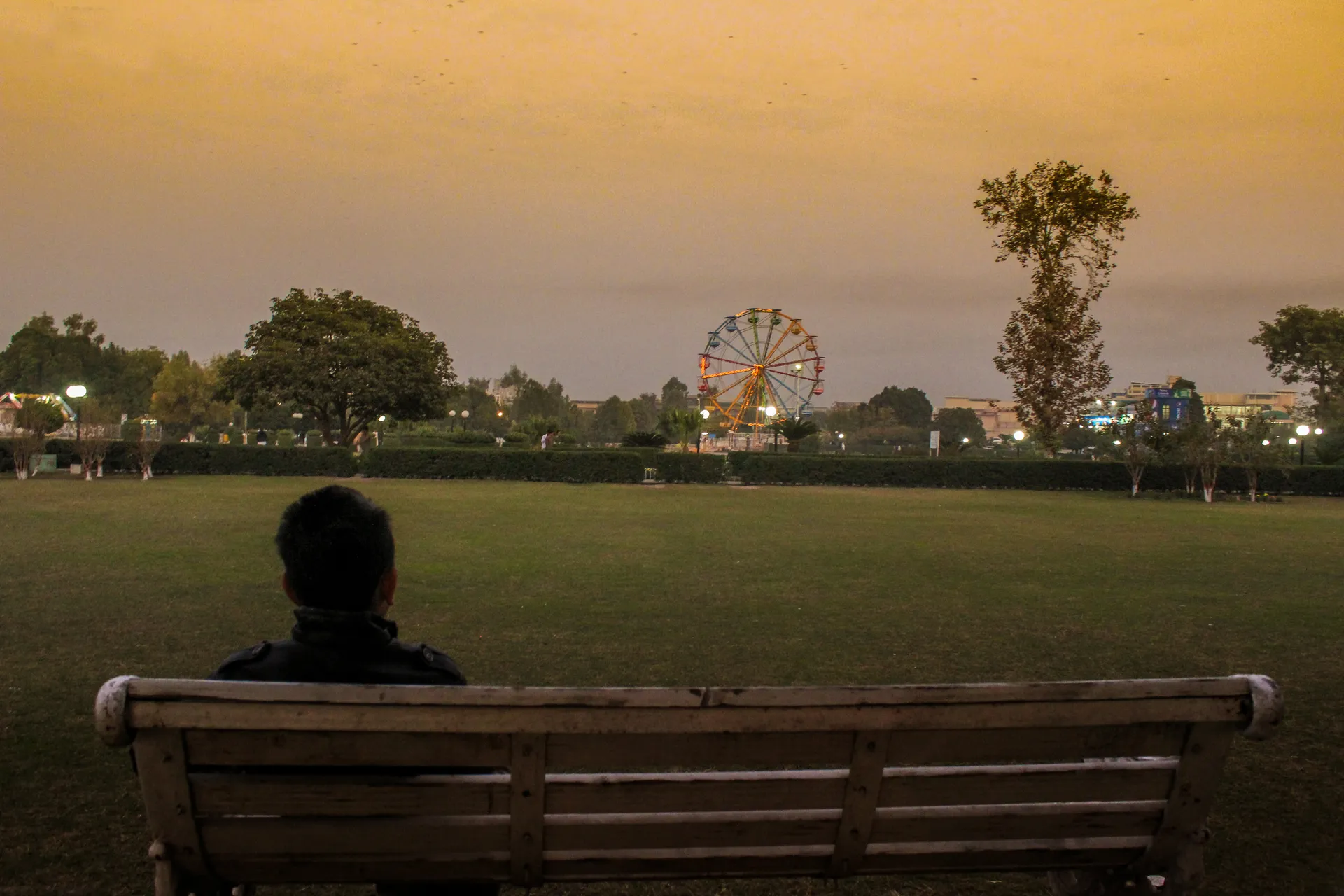
Locals call the park Bagh-e-Tatara, and they treat it less like a tourist attraction and more like a communal living room. By 6 AM, the track fills with joggers and speed-walkers. By late afternoon, the benches belong to grandparents watching children on see-saws. The amusement rides spin and clatter nearby, but the trail itself stays surprisingly calm — a corridor of green that feels a full neighbourhood away from the Ferris wheel's tinny speakers.
If you're passing through Peshawar and need to stretch your legs without a plan, this is where to do it. Entry is free. The air is better than downtown. And the people-watching alone is worth the rickshaw fare.
Researched by the Audiala editorial team from historical records, architectural archives, and local expertise.
Plan your visit
-
Getting There
- Tatara Park sits in Phase 4, Hayatabad — Peshawar's western residential grid. From central Peshawar, a taxi runs 300–600 PKR (roughly 15–25 minutes depending on traffic); a rickshaw costs 100–200 PKR but takes longer and rattles your fillings. Local buses and vans also serve the Hayatabad Phase 4 stop, from which the park entrance is a short walk.
-
Opening Hours
- As of 2026, the park opens daily from 8:00 AM to 10:00 PM, though some reports suggest the gates swing open as early as 6:00 AM for morning joggers. No seasonal closures are documented — it operates year-round. If you're coming specifically for the walking track at dawn, arrive by 6:30 AM and test your luck.
-
Time Needed
- A brisk lap of the walking track takes about 30–40 minutes. Add an hour if you want to linger by the man-made lakes, watch local football matches unfold on the lawns, or let children loose on the rides. Two hours covers the full park comfortably without rushing.
-
Cost & Tickets
- Entry to the park is free — no gate fee at all. Individual amusement rides (Ferris wheel, bumper cars, merry-go-round) charge separately per ride, payable in cash at each booth. Parking carries a small fee, so bring loose change in small PKR denominations.
History
From Village Settlement to Peshawar's Backyard
Before the jogging track and the bumper cars, this patch of Hayatabad was a village called Tatara-e-Ghazi Khan. The name survives in local memory and on a few old land records, though the village itself has been thoroughly erased by landscaping, concrete paths, and a 16-seat merry-go-round populated by fiberglass animals.
The transformation was deliberate and, by Peshawar standards, fast. In a city where some buildings have stood since the Kushan Empire, Tatara Park is barely old enough to vote.
The turning point
The Government Steps In: How a Provincial Decision Remade a Village
According to local accounts, the Khyber Pakhtunkhwa provincial government, under then-Chief Minister Akram Khan Durrani, assumed control of the Tatara-e-Ghazi Khan land around 2006 with a plan to convert it into a formal public recreation area. Durrani's administration was focused on infrastructure projects across the province, and the Hayatabad site — flat, accessible, and close to Peshawar's expanding western suburbs — fit the brief.
What had been open fields and scattered settlement became, over the following years, a 20-acre park with artificial lakes, paved walking paths, and enough amusement rides to keep children occupied for an afternoon. The speed of the conversion meant that little of the original village character survived. No heritage markers, no preserved structures. The park simply replaced what came before.
Whether that trade-off was worth it depends on whom you ask. For the tens of thousands of Peshawar families who now use the park weekly, the answer is obvious. For anyone curious about what Tatara-e-Ghazi Khan once looked like, the answer is silence — and a Ferris wheel where the old settlement used to stand.
The Name That Confuses Travellers
Search for "Tatara" in the context of Peshawar and you'll likely stumble across Tatara Peak, a rocky prominence in the Khyber Pass photographed by R.B. Holmes in 1920 and referenced in British colonial military records. The two have nothing in common beyond the name. Tatara Park is a flat, modern recreation ground in a suburban housing scheme; Tatara Peak is a mountainous lookout point roughly 50 kilometres to the west. Confusing them will earn you a long, unnecessary drive and some bewildered looks from your rickshaw driver.
The Quiet Rivalry with Bagh-e-Naran
Hayatabad residents tend to split their loyalty between Tatara Park and Bagh-e-Naran, another large park in the same district. The debate is low-stakes but persistent: Bagh-e-Naran partisans cite its older trees and quieter atmosphere, while Tatara loyalists point to the lake, the rides, and the better-maintained walking track. Many families simply visit both in a single evening, settling the argument by refusing to choose.
Where to Eat
local_dining
Don't Leave Without Trying
Chapli Kabab — minced meat patties mixed with traditional spices, shaped into circles, and fried
Shinwari Karahi — a KPK specialty; seek out the 'White Karahi' version
Kabuli Pulao — savory rice dish featuring meat, carrots, and raisins
Peshawari Naan — thick, flavorful bread often topped with sesame seeds
Sohbat — a traditional dish unique to the Peshawar region
Kahwa — traditional green tea, often served with a side of sweets or nuts
TATARA CAFETERIA
cafe
Cafe
€€
star
3.8
(4)
directions_walkOn-site at Tatara Park
Order: Light refreshments and traditional kahwa (green tea) — the perfect pit stop during your walk through the park.
Located directly at Tatara Park, this cafeteria is your most convenient option for a quick break without leaving the trail. It's where locals grab tea and snacks between their morning walks.
info
Dining Tips
-
check
The best time to visit Peshawar for dining and walking is November through April; avoid peak summer months (June–August) for comfort.
-
check
Peshawar's food scene is meat-centric and spice-rich — come hungry and ready for bold flavors.
-
check
Nawab Market in Hayatabad is a local food street worth exploring for authentic cuisine near Tatara Park.
-
check
Qissa Khwani Bazaar, while a drive from Tatara Park, is the historic heart of Peshawar's food scene, famous for traditional tea houses and rice vendors.
Food districts:
Hayatabad — a hub for both traditional Pashtun cuisine and modern dining, home to Tatara Park and surrounding restaurants
Nawab Market (Hayatabad) — a local food street excellent for exploring authentic local cuisine
Qissa Khwani Bazaar — Peshawar's historic food heart, famous for kahwa tea houses and traditional rice vendors
Restaurant data powered by Google