A moustached Shiva rising from a sacred pond is not what most people expect to find in Nepalgunj, Nepal. That surprise is the reason to come to Bageshwari Temple: this is a working shrine where legend, border-town devotion, and everyday ritual meet in one compact, unforgettable scene. You visit for the strange beauty of the water, the press of worshippers, and the sense that the temple is still being argued into meaning by the people who pray here.
Bageshwari Temple sits in the old quarter of Nepalgunj, where the city feels older than its traffic. Nepal Tourism Board identifies the presiding goddess as Bageshwari, the goddess of speech or voice, which gives the place a pleasing logic: bells ring, priests chant, pigeons scatter, and every sound seems to matter.
The pond shapes the whole experience. Light skims across the water, incense drifts from the shrines, and the central image of Junge Mahadev stands out with a moustache so unexpected it works like a jolt of cold water to the mind.
Come with patience, not a checklist. Bageshwari makes sense slowly, through reflections in the pond, through temple stories told with absolute confidence, and through the borderland mix of devotees arriving from Nepalgunj and nearby towns across the Indian frontier.
Researched by the Audiala editorial team from historical records, architectural archives, and local expertise.
What to see
Junge Mahadev in the Pond
Start with the image everyone talks about: the Shiva shrine standing in the middle of the sacred pond, marked by a full moustache that gives the god an unexpectedly local face. Reflected in the water, with ripples breaking the outline every few seconds, it feels less like a formal icon than a personality emerging from the surface.
The Main Shrine of Goddess Bageshwari
The main temple rewards close attention because it is alive with use rather than frozen for display. Watch the rhythm of offerings, hear the bells cut through the low murmur of prayer, and notice how the shrine's importance comes from the people pressing toward it, not from any grand claim of monumental scale.
The Ring of Smaller Shrines
Do not rush past the subsidiary shrines to Buddha, Ganesha, Hanuman, and Shiva. Together they tell you something honest about the place: Bageshwari is not a sealed single-deity compound but a broad devotional world, the kind of temple where belief collects in layers, like incense smoke caught under a roof beam.
Plan your visit
Getting There
Bageshwari Temple sits in old Nepalgunj, in the town center beside its sacred pond. From Nepalgunj Airport, about 6 kilometers north of the center, a taxi or auto-rickshaw usually takes 15 to 20 minutes; from central Nepalgunj, a cycle-rickshaw or short walk works better than a car once the streets tighten around the old quarter.
Opening Hours
As of 2026, the Nepal Tourism Board lists the temple as an active daily pilgrimage site but does not publish official posted opening hours on its page. Expect the complex to follow temple-day rhythms, with worship from early morning into the evening, and confirm the exact gate hours locally before you go.
Time Needed
Give it 20 to 30 minutes for a quick stop focused on the main shrine and the moustached Shiva rising from the pond. Set aside 45 to 60 minutes if you want to circle the water, pause for offerings, and visit the smaller shrines to Buddha, Ganesha, Hanuman, and Shiva without rushing.
Photo Gallery
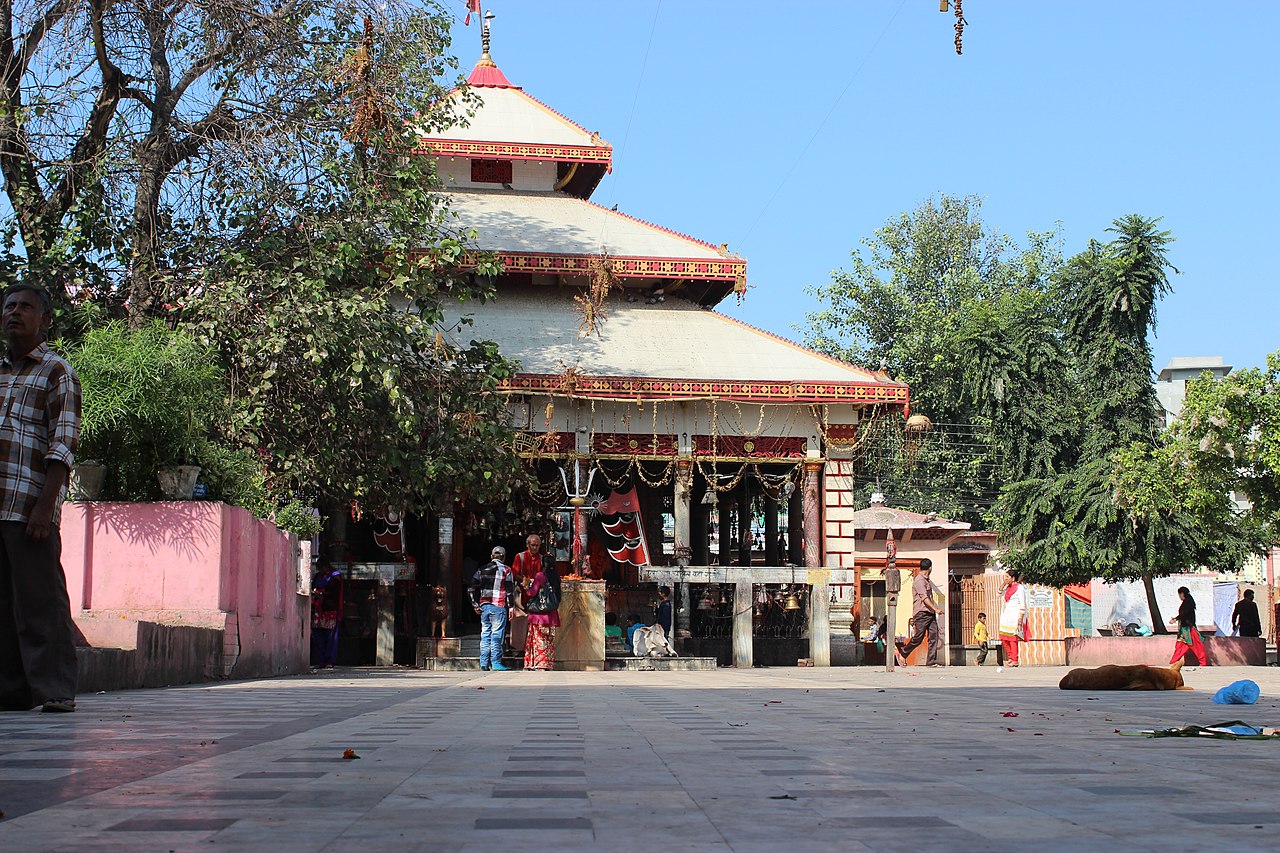
The historic Bageshwari Temple in Nepalgunj, Nepal, showcases traditional tiered architecture set within a peaceful, sunlit courtyard. · Raajiv Kilana ShresthaDevotees gather inside the sacred Bageshwari Temple in Nepalgunj, Nepal, to offer prayers before the ornate golden deity and silver shrine. · Ricky PartelVisitors gather around a prominent black Ganesha statue in the peaceful courtyard of the historic Bageshwari Temple in Nepalgunj, Nepal. · Ricky PartelA weathered stone lion statue stands guard at the historic Bageshwari Temple in Nepalgunj, Nepal, decorated with traditional offerings. · Bijay chaurasiaThe Bageshwari Temple in Nepalgunj is a prominent religious site known for its striking red architecture and traditional stone pillars. · Aradhya ShresthaAn ancient stone lion guardian stands watch at the historic Bageshwari Temple in Nepalgunj, Nepal, adorned with traditional floral offerings. · Bijay chaurasiaVisitors explore the courtyard of the historic Bageshwari Temple in Nepalgunj, a prominent religious site in Nepal known for its tiered roof architecture. · Ricky Partel
History
A Temple Built by Faith More Than Paper
Bageshwari Temple belongs to that large and unruly category of South Asian sacred places whose authority comes from belief before documentation. Official Nepali tourism sources confirm its standing as a major shrine in Nepalgunj and connect it to the Shakti tradition through the story that Sati's tongue fell here, but they do not offer the kind of clean founding date modern readers keep asking for.
That absence matters. The temple's past survives less as a neat archive than as layers of devotion: old-town worship, pilgrimage from the border region, and local memory attaching itself to the pond, the goddess, and the moustached Mahadev in the water.
The turning point
Padma Kumari Devi Singh and a Prayer That Became Local Legend
Local accounts preserve one story above the others. In 1926, according to temple lore rather than verified state record, an 11-year-old girl named Padma Kumari Devi Singh came to Bageshwari to pray, and the next day a marriage proposal arrived from the Rana household of Sardar Rudra Shumsher Jung Bahadur Rana.
The tale does not stop at romance. It turns the temple into an active force in the city's imagination, a place where prayer does not drift upward into abstraction but lands with startling speed, almost like a letter delivered by hand.
The reported marriage in 1930 remains unconfirmed in the material reviewed, so it belongs to the category of cherished local history rather than documented fact. But that is exactly why the story survives: it says what devotees want the temple to be, a shrine that listens.
The Older Story Beneath the City
Temple tradition places Bageshwari's origins in the medieval period, often around the 14th century, when Nath ascetics are said to have received a dream-command from the goddess and founded the shrine near a living samadhi site called Jiundo Samadhi. No archaeological record in the sources confirms that date, so the careful version is better: according to tradition, the temple was already old when Nepalgunj itself was still taking shape.
A Border Shrine, Not a Sealed Monument
Official descriptions from Nepal Tourism Board and Nepalgunj municipality present Bageshwari as one of the city's defining religious sites and an important pilgrimage stop for devotees from western Nepal and nearby Indian towns. That gives the temple a different kind of history from a royal palace or a ruined fort: its past is measured in repeated arrivals, in offerings, in feet on stone, in faith renewed one family at a time.
Tips for visitors
Start at Pond
Head to the pond edge first. The temple's strangest detail sits there: the moustached Mahadev shrine in the water, the image almost every visitor remembers after the incense smoke has faded.
Go Early
Early morning gives you cooler air, softer light on the pond, and a better chance to see the complex before the day's devotional traffic thickens. Late afternoon works too, but midday in Nepalgunj can feel heavy and flat.
Read the Room
This is a working shrine, not a sealed monument. If a puja is underway, step aside, keep your voice low, and let worshippers reach the sanctum first; the atmosphere matters as much as the architecture.
Do the Full Circuit
Don't stop at the main temple and leave. Walk the whole pond-side compound so you catch the smaller shrines as well; the mix of Buddha, Ganesha, Hanuman, and Shiva tells you more about local devotion than a single doorway can.
Use a Rickshaw
If you're staying in central Nepalgunj, take a cycle-rickshaw or auto-rickshaw for the last stretch instead of driving. Old-town access is easier that way, and you arrive at the temple at the pace the neighborhood makes sense.
Check Hours Locally
Don't rely on copied internet timings. As of 2026, official tourism pages describe the site but do not pin down daily opening and closing hours, so ask at your hotel or at the temple gate the same day.
Where to Eat
local_dining
Don't Leave Without Trying
Halwa puri — sweet semolina halwa with fried puri, a classic Nepalgunj breakfast that captures the borderland sweet-savory styleLucknow-style kabab paratha — Nepalgunj's proximity to India means this cross-border staple is done well here, spiced meat wrapped in flaky parathaStreet momo — compare hotel momo to street momo in Nepalgunj and you'll understand why the street version has its own following; fresh, simple, and cheapChaat — local snack vendors near the bazaar and temple areas sell regional variationsTemple-area street snacks — local delicacies sold by vendors in the bazaar, best experienced fresh and budget-friendly
Sn cafe(pure vegeterian)
local favorite
Pure Vegetarian Restaurant€€star5.0(3)directions_walkAdjacent to Bageshwari Temple
Order: Early-morning vegetarian breakfast fare — perfect timing if you're visiting the temple at dawn. Expect fresh, simple Nepali vegetarian dishes.
This is the closest thing to temple-area dining you'll find, literally steps from Bageshwari Temple. It's where locals grab breakfast before or after their temple visit, which means authentic, no-frills vegetarian food done right.
Order: Strong local chai or coffee — this is where Nepalgunj's regulars actually spend their mornings. Pair it with a light snack if they have it.
With 46 reviews and a 4.7 rating, this is the most established cafe in the area and the only one with real local credibility. Long opening hours mean you can hit it anytime, not just at temple hours.
Order: Masala chai — this is a proper tea house, the kind where you'll see locals lingering over cups and conversation. It opens early and stays open late, making it reliable for any time of day.
A genuine neighborhood tea spot with 14 reviews and solid 4.6 rating. The name itself ('Daru dai's tea shop') signals this is a known local haunt, not a tourist-facing cafe. Longest hours in the area mean you can grab tea whenever the mood strikes.
Order: Cafe standards — coffee, tea, light bites. The perfect 5.0 rating (though with only 5 reviews) suggests they do basics well without pretension.
A solid neighborhood cafe with a perfect rating on a quieter street. It's the kind of place that doesn't try too hard but gets the fundamentals right — good for an afternoon break if you're exploring the area.
checkTemple-area dining is early: Sn cafe opens at 7:00 AM and closes by 9:00 AM, so plan your temple visit breakfast accordingly.
checkStreet vendors near Bageshwari Temple and the bazaar are your best bet for authentic, budget-friendly local food immediately after temple visits.
checkNepalgunj's food scene reflects its borderland location — expect Indo-Nepali fusion, not pure Nepali cuisine. Embrace it.
checkCash is your friend here; most small cafes and street vendors don't take cards. Plan accordingly.
checkThe bazaar area is the heart of Nepalgunj's food culture — combine temple visits with bazaar exploration for the full local experience.
Food districts:Bageshwari Temple area — temple-adjacent street vendors and Sn cafe for early-morning vegetarian foodNepalgunj bazaar — the central market hub where you'll find halwa puri stalls, momo vendors, kabab paratha shops, and local snack standsGharbari Tole Rd — quieter cafe area with Neeta'z Cafe for a sit-down breakNew Rd — home to Daru dai ko chiya pasal, a proper local tea haunt
Restaurant data powered by Google
Frequently asked
Is Bageshwari Temple worth visiting?
Yes, especially if you want a working shrine rather than a polished monument. The image that stays with most visitors is Junge Mahadev, the moustached Shiva shrine standing in the middle of the sacred pond. Come for the temple, stay for the strange calm of water, bells, incense, and old-town devotion all in one frame.
How long do you need at Bageshwari Temple?
Most people need 30 to 60 minutes. That gives you enough time to walk the pond, see the main shrine, and pause at the smaller temples to Shiva, Hanuman, Ganesha, and Buddha. Stay longer during prayer hours if you want the place at full volume.
What is special about Bageshwari Temple?
The special feature is the moustached Shiva shrine in the pond, often called Junge Mahadev. It gives the complex its own personality, and visitor accounts mention it again and again because it looks less like a formal icon and more like a local deity with a face people remember.
What is the story of Bageshwari Temple in Nepalgunj?
Official tourism sources link the temple to the Swasthani Brata Katha tradition that Sati's tongue fell here, which makes it a Shakti-related pilgrimage place. According to temple tradition, the shrine's origins go back to the medieval period, but a firm founding date is not well documented in the sources reviewed. That mix of faith, legend, and border-town worship matters more here than a neat dynastic timeline.
Is Bageshwari Temple free to enter?
The reviewed sources do not give a confirmed ticket price, and the temple is generally treated as a public pilgrimage site. If you go, carry a little cash for offerings, shoes, or local donations. That's the practical expense most visitors are more likely to notice.
When is the best time to visit Bageshwari Temple?
Early morning or late afternoon is your best bet. The pond reflects the shrines better when the light softens, and the temple feels more alive when worship is underway. Midday heat in Nepalgunj can flatten the whole experience.
Sources & attribution11
Researched and written by the Audiala editorial team from historical records, architectural archives, and local expertise. Last updated April 2026.
Nepal Tourism Board - Bageshwari (Banke) — Official tourism overview identifying Bageshwari Temple as a major shrine in Nepalgunj beside a sacred pond, with the Sati tongue tradition.
Nepal Tourism Board - Bageshwari (Banke) English — English-language Nepal Tourism Board page describing the temple, its dedication to the Goddess of Speech or Voice, and its pilgrimage importance.
Tripadvisor - Bageshwori Temple — Visitor reports describing the temple atmosphere, cleanliness, active worship, and the unusual moustached Shiva shrine in the pond.
Wikipedia - Bageshwori Temple — Secondary summary used for local lore, the Padma Kumari Devi Singh story, and general notes on subsidiary shrines.
UNESCO World Heritage Centre - Nepal — Used to confirm that Bageshwari Temple is not on UNESCO's World Heritage List or Nepal's current Tentative List.
Strictly necessary cookies keep the site working. Analytics (PostHog, Google Analytics) measures how each visitor uses our pages. Marketing loads YouTube videos and walking-route maps without a tap and lets Google Analytics set advertising cookies. We never sell your data. You can change this any time from the footer.
Analytics and marketing cookies are optional and only load if you agree. Details under Customize.
Privacy
Cookie preferences
Pick what you're okay with. You can change this any time from the footer.
Strictly necessary
Always on
Sign-in, language, navigation. Always on.
Product analytics
PostHog (EU) and Google Analytics record which pages you view and how you use them, under a random identifier stored in your browser. Helps us see which pages work and which need fixing. Google's ad personalisation stays off. No selling.
Marketing
Loads YouTube videos and the walking-route maps (OpenFreeMap) without a tap; without it, they load only when you tap them. If analytics is also on, Google Analytics may set advertising cookies. Ad personalisation stays off.