


Place
Italy Updated Oct 2026
A bicycle bell rings across the moat, and a rider slips past the brick towers of a ducal castle: Ferrara still moves at a human pace inside walls built for power. In Ferrara, Italy, Renaissance grandeur shares the street with the smell of butter and sage on cappellacci di zucca.
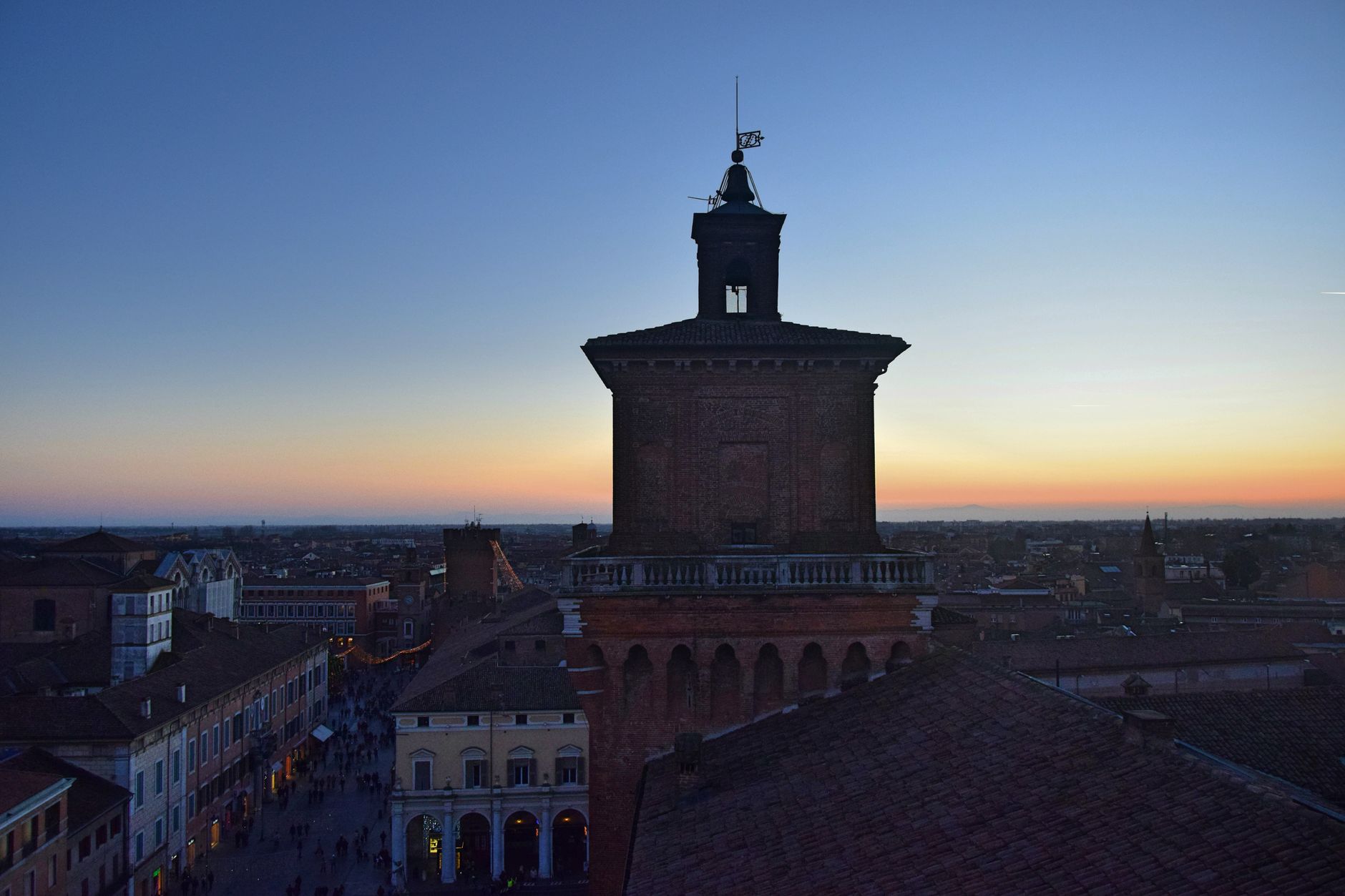 Photo: serena saponaro / Pexels
Built from cited sources · see the method · How we make our guides →
The Este dukes reshaped Ferrara in the late 15th century, extending the city north in a planned district of broad streets and handsome palaces. At the Quadrivio degli Angeli, sunlight shifts across the 8,500 faceted marble blocks of Palazzo dei Diamanti; inside Palazzo Schifanoia, the surviving frescoes of the Hall of the Months turn courtly life into a calendar.
Ferrara’s food keeps its own record of court and countryside. Try pumpkin-filled cappellacci with butter and sage, a crisp, many-pointed coppia Ferrarese, or the dark, spice-heavy salama da sugo spooned over potato purée.
The 9-kilometer ring of walls is still a place for a walk or a slow bike ride, not just a reminder of old defenses. Follow it past bastions and gardens, then return to the narrow lanes: Ferrara feels less like a museum than a city that learned to live comfortably inside its history.
Not every monument, just the ones we'd walk you past ourselves.
Where to wander, by quarter — each with its own rhythm.
Before you go
Curated from places in this city. Same price as official sites.


Prices shown are indicative — final pricing and availability are confirmed at checkout. Audiala may receive a commission from bookings made via these links.
From a Byzantine river stronghold to the planned Renaissance city
Long before Ferrara took shape, the Etruscan port of Spina connected the Po Delta to trade across the Adriatic. Its tombs, later found beneath the marshes, reveal how much of this history lay hidden under water and silt.
Ferrara began as a Byzantine defensive post on the north bank of the Po, facing the older religious settlement around San Giorgio on the south bank. The river was both a route and a boundary in a frontier contested by Byzantines and Lombards.
A document dated 753 is commonly cited as Ferrara’s first written appearance by name, in the period when Lombard forces took control from the Byzantine Exarchate of Ravenna. Frankish victories soon reshaped the region, and Ferrara passed into the orbit of the Papacy.
After the death of Matilda of Tuscany, Ferrara declared itself a free commune. Civic power now rested with local institutions and families, though factional rivalry would keep that freedom precarious.
Construction began on the Cathedral of San Giorgio, shifting Ferrara’s civic and religious center north of the Po. Its carved stone doorway and layered Romanesque and Gothic façade still show how generations added their own voice to the building.
A popular assembly proclaimed Obizzo II d’Este lord of Ferrara for life, establishing hereditary Este rule. The city’s communal institutions gave way to a court that would shape Ferrara’s politics, buildings, and artistic life for centuries.
After a tax revolt ended with the killing of the commissioner Tommaso da Tortona, Niccolò II d’Este commissioned a new fortress. Bartolino da Novara’s Castello Estense rose around the Lion’s Tower, its moat and drawbridges turning a warning to the city into Ferrara’s defining silhouette.
Alberto V d’Este founded the University of Ferrara with a charter from Pope Boniface IX. A studium in a court city offered more than lessons: it drew scholars into the orbit of a dynasty keen to make learning part of its authority.
Parisina Malatesta and her stepson Ugo d’Este were tried for adultery and executed on the orders of Niccolò III d’Este. The story attached to the castle’s underground rooms gives its defensive walls a more intimate, and darker, history.
Girolamo Savonarola was born in Ferrara, where he spent his early years before joining the Dominican order. His later preaching in Florence made him famous, but his story began in this courtly city, far from the bonfires with which his name is often associated.
Borso d’Este commissioned a fresco cycle for the Salone dei Mesi at Palazzo Schifanoia, where gods, zodiac signs, and scenes of court life unfold across the walls. The surviving panels turn a room into a painted calendar of power, with Borso presented as the steady center of Ferrara’s year.
Pope Paul II elevated Ferrara to a duchy and named Borso d’Este its first duke. The new title confirmed the family’s standing, while its court gave artists and writers reason to gather here.
War broke out between Ferrara and Venice over territory and the valuable salt trade. Venetian forces captured towns along the Po and besieged Ferrara itself, bringing the threat of battle close to the Este court.
The Treaty of Bagnolo ended the War of Ferrara, allowing the Este rulers to retain the city but forcing them to surrender the Polesine region around Rovigo to Venice. Ferrara survived the siege; its borders did not.
Ercole I d’Este commissioned architect Biagio Rossetti to expand Ferrara through the Addizione Erculea, with broad streets and a more deliberate urban plan. The same year, work began on Palazzo dei Diamanti, whose many pointed marble blocks catch light differently as you pass.
Lucrezia Borgia married Alfonso I d’Este and became duchess of Ferrara, joining a court that used ceremony, diplomacy, and art as instruments of rule. She built a literary circle here and became a patron in her own right, beyond the notorious reputation that followed her from Rome.
Ludovico Ariosto published the first edition of Orlando Furioso in Ferrara, where he served the Este court. He revised the poem for years, giving its knights, lovers, and wandering plots a home in the city’s world of courtly spectacle.
Torquato Tasso entered the service of the Este court, where he wrote for an audience steeped in poetry and performance. His pastoral play Aminta was staged in Ferrara in 1573; later, personal crises led to his confinement at the Hospital of Sant’Anna.
Strong shocks struck Ferrara on November 16 and 17, damaging palaces, churches, and public buildings across the city. Aftershocks continued for years, and the disaster altered the course of the Po, a reminder that even a carefully planned city answers to the ground beneath it.
When Alfonso II d’Este died without a legitimate heir, Pope Clement VIII claimed Ferrara for the Papal States. The Este family withdrew to Modena, and Ferrara lost the court that had commissioned its castles, palaces, and painted rooms.
Papal authorities confined Ferrara’s Jewish residents to a ghetto centered on Via Mazzini, Via Vignatagliata, and Via Vittoria. Gates shut at night, turning familiar streets into boundaries imposed by law.
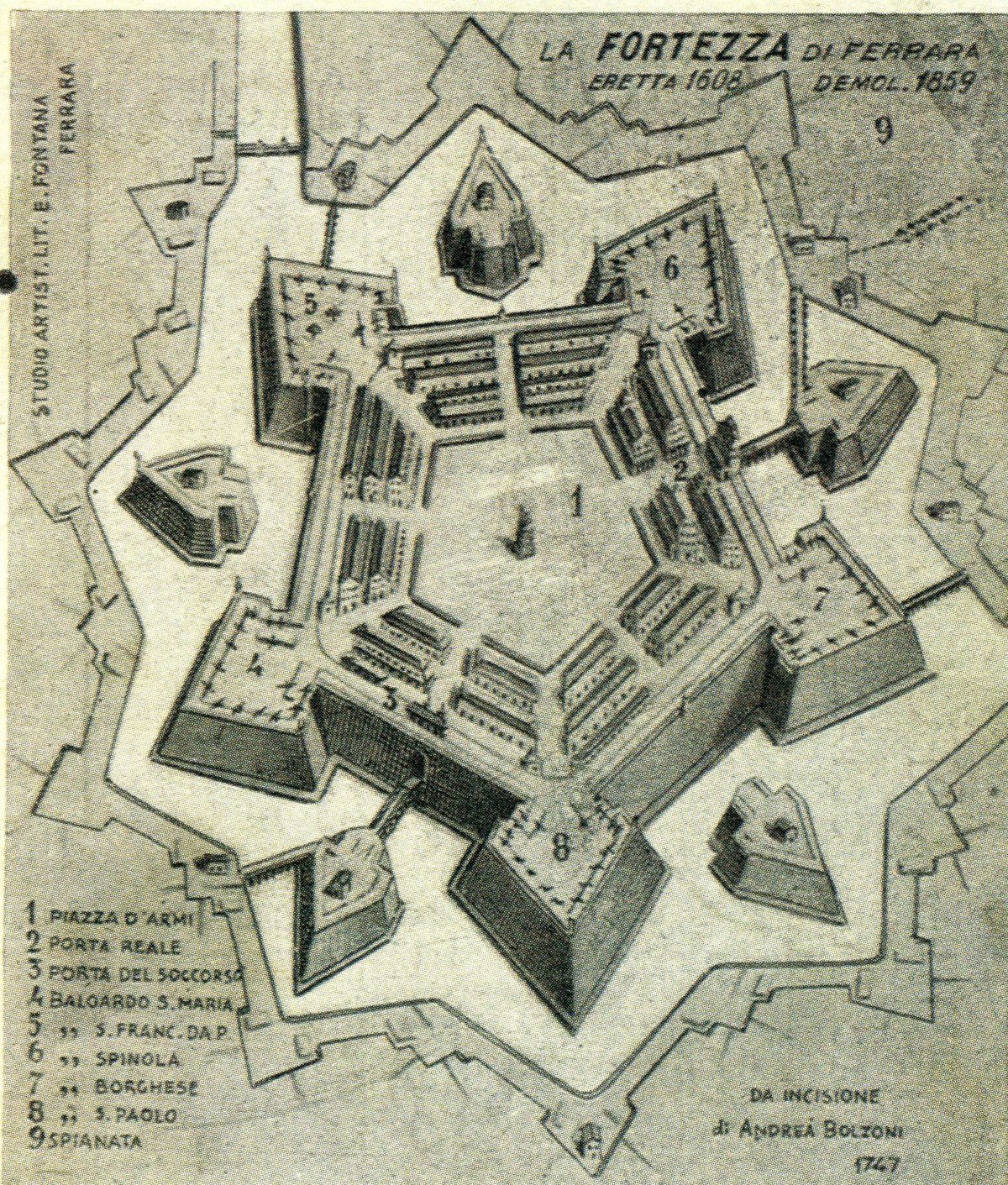
French Revolutionary troops entered Ferrara in June, ending the Papal Legation and bringing the city under a new political order. In the Napoleonic years that followed, the papal fortress was demolished, clearing part of the city’s southwestern defenses.
The settlement after Napoleon restored Ferrara to the Papal States, while allowing an Austrian garrison to remain. The city’s return to papal authority came with a reminder that decisions about its security were still made well beyond its walls.
A plebiscite in 1860 brought Ferrara into the Kingdom of Sardinia, soon to become the Kingdom of Italy. The railway reached the city in 1862, linking its fields, workshops, and brick streets more closely to the new national network.
During the First World War, artists including Giorgio de Chirico, Alberto Savinio, and Carlo Carrà were in Ferrara, where the city’s quiet squares and hard-edged architecture fed a new kind of painting. Their canvases made familiar streets feel strangely emptied, as if the buildings had outlasted the people meant to inhabit them.
On November 15, Fascist forces executed eleven people against the moat wall of Castello Estense after the killing of local Fascist official Igino Ghisellini. The castle’s brickwork became the setting for a political massacre, later remembered in the writing of Giorgio Bassani.
British Eighth Army forces and Italian partisan units entered Ferrara on April 24. The city emerged from occupation and bombing with deep losses, including the deportation of many members of its historic Jewish community.
UNESCO inscribed Ferrara as a World Heritage Site for its Renaissance urban plan and architecture. The designation was extended in 1999 to include the Po Delta and the Este family’s country villas, linking the city to the wider territory that sustained its court.
Two major earthquakes struck the Emilia region in May, damaging monuments in Ferrara, including the cathedral, Palazzo dei Diamanti, and Palazzo Schifanoia. Restoration brought scaffolding back to buildings whose stones had already endured the shocks of 1570.
The National Museum of Italian Judaism and the Shoah opened in Ferrara on the site of the former municipal prison. Its location gives the city’s long Jewish history a public home, including the story of the community shattered by deportations during the Holocaust.
Poet · 1544–1595
Worked at the Este court and was confined at Sant’Anna
At the Este court, Tasso found patrons for Aminta, staged on Ferrara’s island of Belvedere in 1573; later, conflict and distress led to his confinement at Sant’Anna. He might recognize the city’s enduring appetite for performance in its theaters and street festivals.
Poet · 1474–1533
Served at the Este court in Ferrara
Ariosto served the Este court while writing and revising Orlando Furioso, an epic that lets its knights wander far beyond the court that supported him. He might enjoy seeing Ferrara’s old streets still reward an aimless detour.
Astronomer · 1473–1543
Received a doctorate in canon law in Ferrara in 1503
Copernicus came to Ferrara to study canon law and received his doctorate here in 1503, long before his work altered the way people pictured the heavens. The city’s university life might feel familiar today; its brick streets, less so.
Dominican friar and preacher · 1452–1498
Born and raised in Ferrara
Savonarola began life in Ferrara before becoming the fiery preacher associated with Florence’s Bonfire of the Vanities. He might find the city’s preserved courtly splendor a pointed contrast to his later attacks on luxury.
Architect and urban planner · c. 1447–1516
Designed Ferrara’s Addizione Erculea
Working for Duke Ercole I d’Este, Rossetti shaped the Addizione Erculea, an ambitious Renaissance expansion that gave Ferrara room to grow beyond its older streets. He might be pleased that people still experience his plan on foot, rather than only as lines on a map.
Duchess and patron · 1480–1519
Duchess of Ferrara from 1502 until her death
Lucrezia arrived in Ferrara in 1502 as the bride of Alfonso I d’Este and made the city her home, building a literary and artistic circle at court. She might recognize the same palaces, but find the modern city’s bicycle traffic a very different procession.
Renaissance painter · c. 1436–1478
Born in Ferrara; painted frescoes at Palazzo Schifanoia
Born in Ferrara, del Cossa painted the March, April and May sections of Palazzo Schifanoia’s Salone dei Mesi, where gods, zodiac signs and court life share the walls. He might be surprised that visitors still slow down to read a calendar painted for a duke.
Where locals actually book dinner — not the tourist menus.
Small things that change how the city treats you.
The city, as it actually looks.
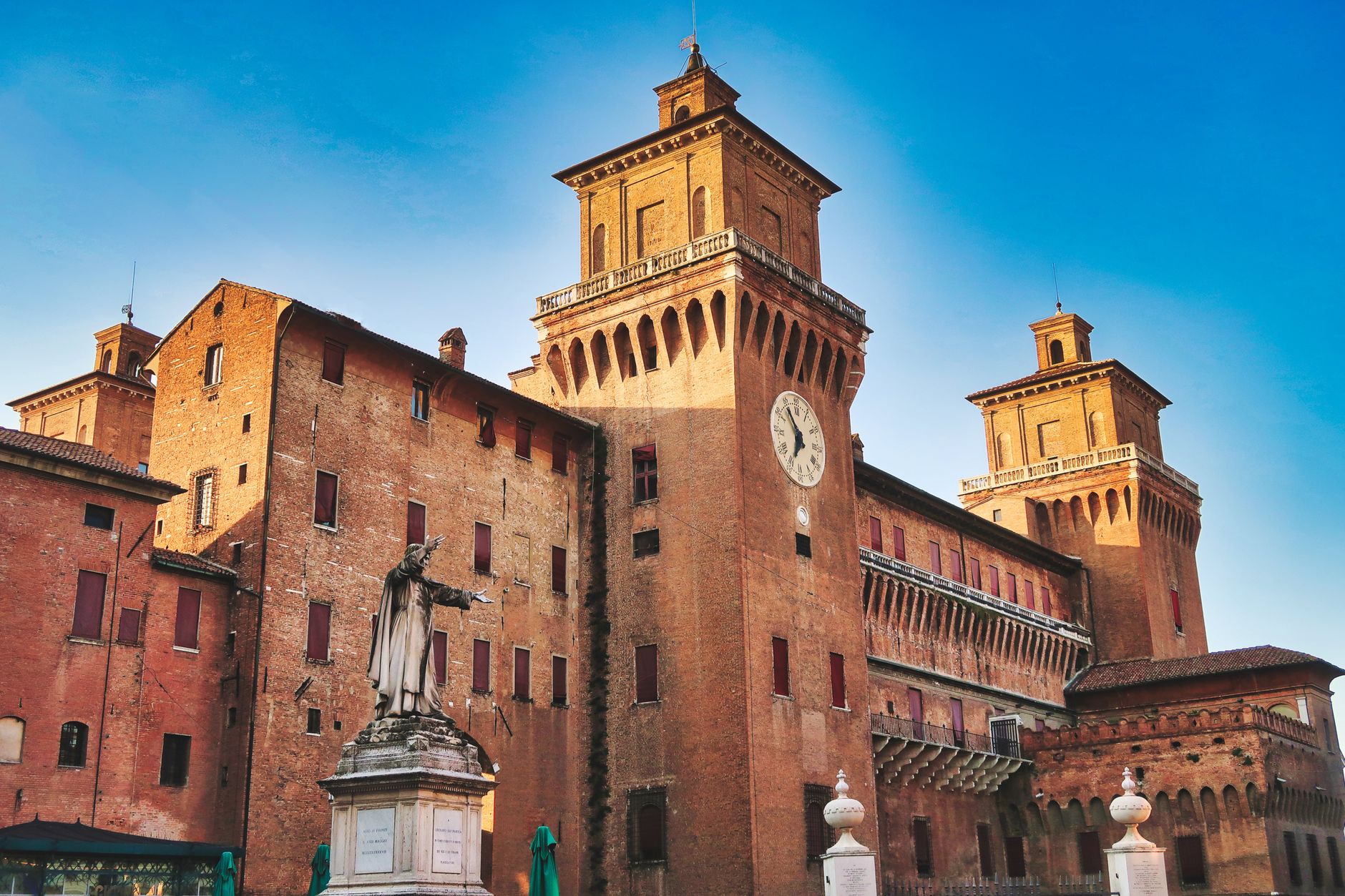

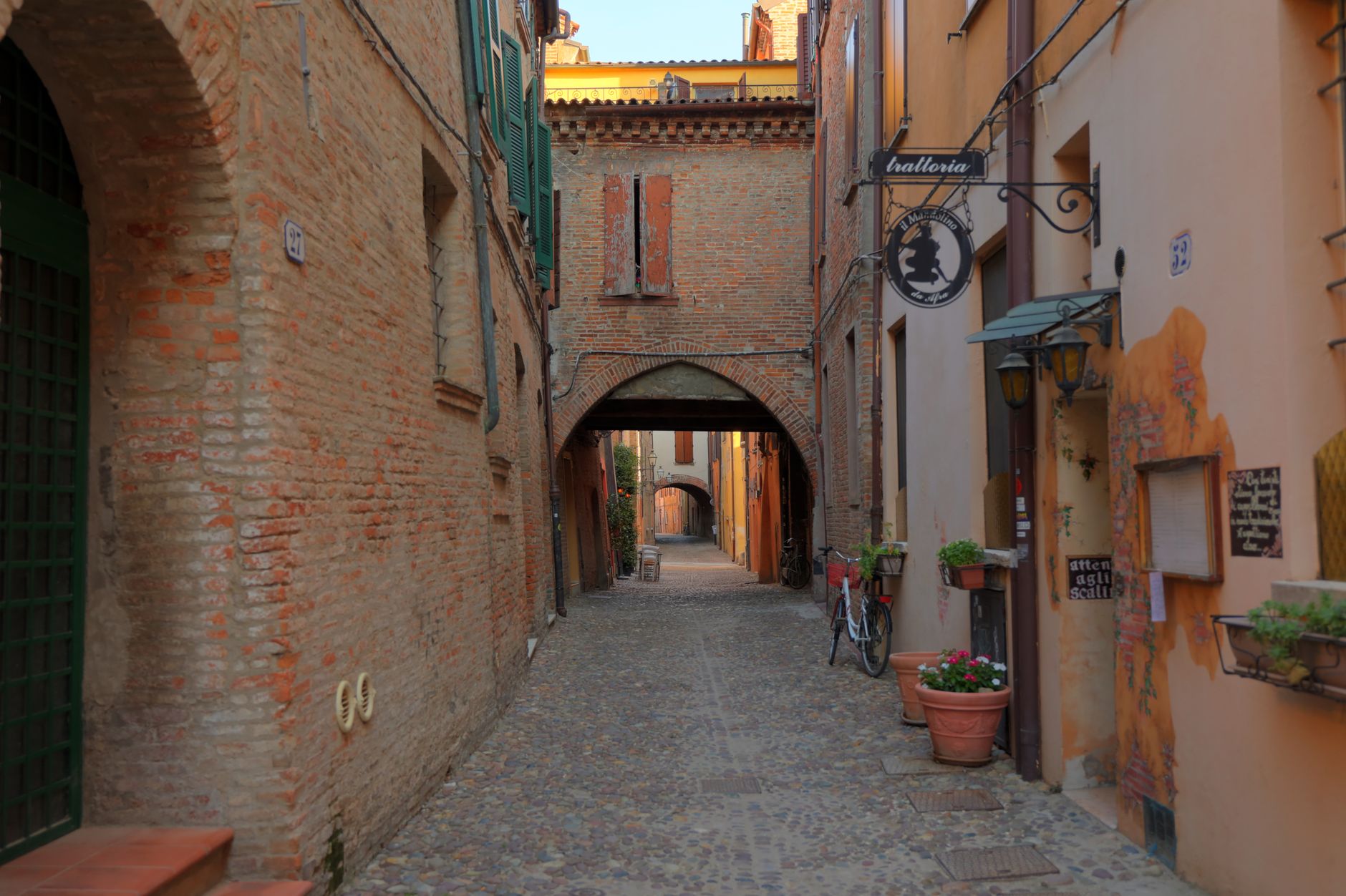

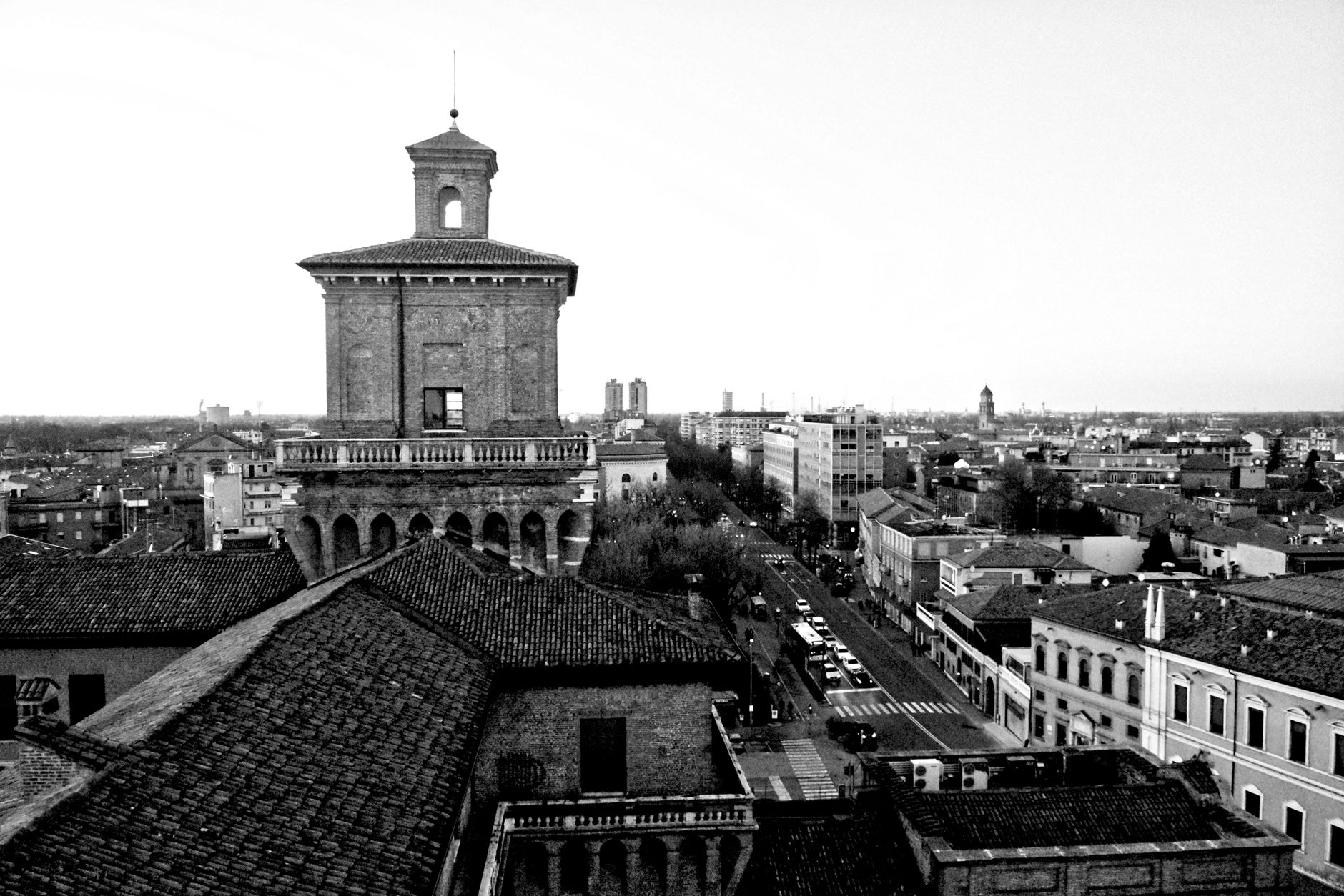
Yes, especially if Renaissance art and city planning interest you. The moated Castello Estense, Palazzo Schifanoia’s frescoes and the streets of the Addizione Erculea give the city a character distinct from larger Emilia-Romagna stops.
Plan on two full days for the castle, Palazzo dei Diamanti, Palazzo Schifanoia and a slow wander through the old center. Add another day for museums or a festival if you want time to linger over meals and the city walls.
The historic center works well on foot or by bicycle, a familiar part of daily life in Ferrara. Watch for riders as you walk, and check current local transport information if you need to travel beyond the center.
The research available here doesn’t establish a live safety rating for Ferrara, so check your government’s current Italy travel advice before departure. In the center, take ordinary precautions with valuables and watch for bicycles sharing the streets.
Meal prices vary by restaurant, and the available research doesn’t provide current menu totals. Check whether the bill includes a coperto, commonly around €1.50–€3; tipping isn’t expected, though rounding up is customary.
Late spring and early autumn bring major cultural events: the Palio is held on the last weekend of May, and the Internazionale journalism festival takes place in early autumn. The Buskers Festival usually falls in late August; verify dates before you travel.
39 places to discover


Saved and recently read places — kept on this device only.
Photos may have been resized or cropped.