


Place
Kerala
India Updated Apr 2026
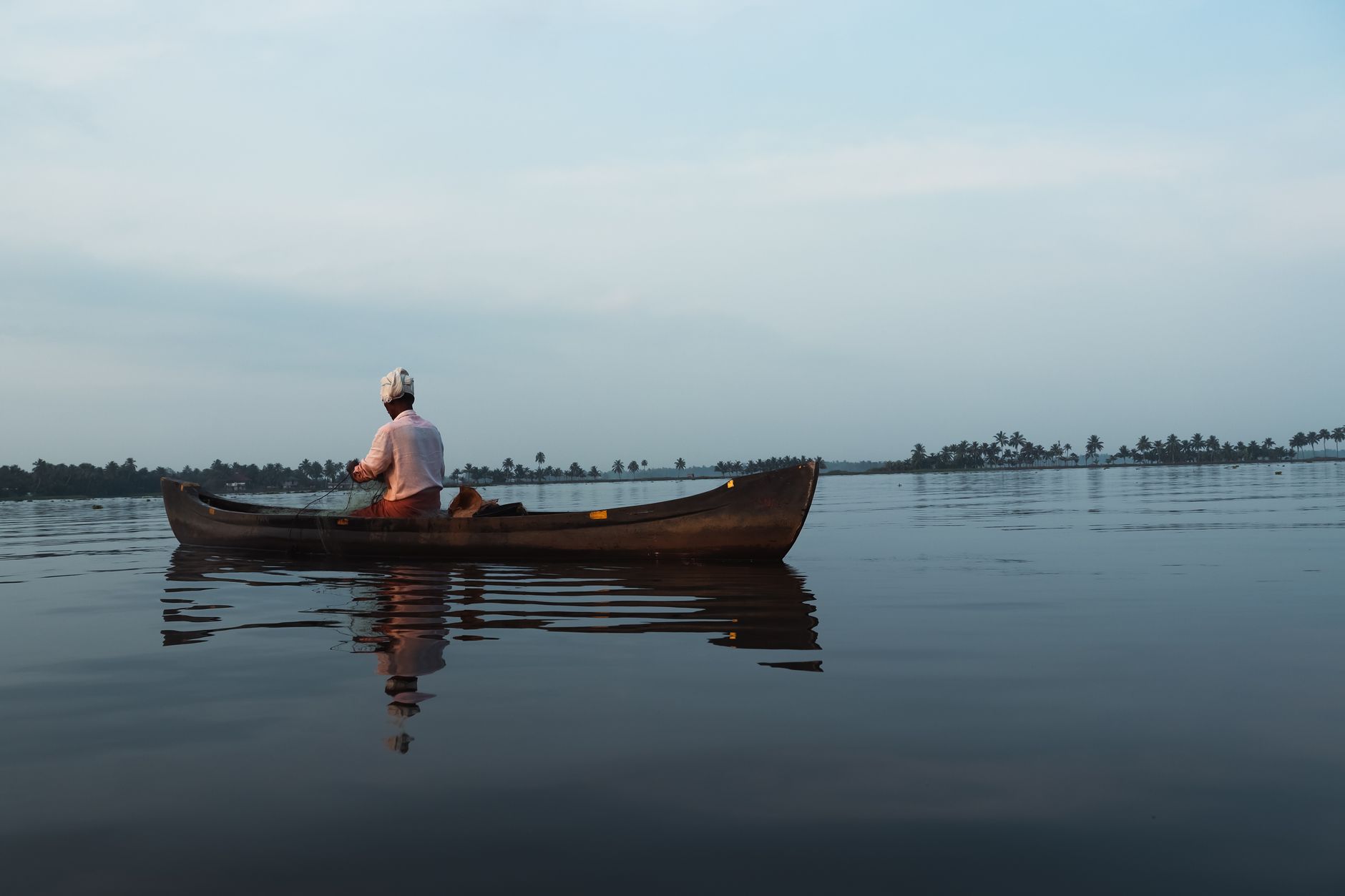
The first thing that hits you in Kerala is the smell of peppercorns drying on tarred sheets outside every other house on the back-road from Kochi airport. Then comes the light — a low, green-tinged glow that bounces off the coconut lagoons and makes even rental-car plastic look like jade. India’s south-western strip is a state, not a city, but it behaves like a chain of villages that forgot to end: one minute you’re in a traffic jam of scooters and temple elephants, the next you’re alone on a river where the only sound is a coir rope creaking through a wooden pulley.
 Photo: Jomin Thach / Pexels
- Attractions
- 42
- Audio
- 1 h 26 min
- Trip length
- 5 days
- Best season
- October–March
Why Kerala
Built from cited sources · see the method · How we make our guides →
Kerala shrinks distances. Drive three hours and the temperature drops ten degrees; the language mutates; the dominant religion changes; and the food jumps from coconut-milk mellow to chilli-hot enough to make your ears ring. One valley smells of cardamom, the next of fermented fish. The same road passes a 14th-century Jewish synagogue, a Portuguese pirate chapel, a palace built by a Dutch auctioneer, and a tea stall that claims to have invented the masala dosa in 1943.
What holds the mosaic together is water. Canals slice the coastal plain into 900 km of liquid lanes where school boats replace school buses. At dawn the backwaters turn into mirrors so perfect that houseboats seem to glide through sky, and you can’t tell whether the heron is fishing or admiring itself. In the hills the same water becomes waterfalls taller than Gothic spires, and every gorge carries the echo of a colonial engineer who swore the railway could never cross the Western Ghats.
The state keeps its best scenes for people willing to abandon the checklist. Skip the postcard lighthouse at Varkala and walk ten minutes south to the cliff edge where the 2025 UNESCO tentative listing begins — you’ll find fishermen mending nets under a rock that looks like a whale’s vertebra. Trade one night in a luxury backwater resort for a homestay on Munroe Island and you’ll eat duck roasted with cinnamon bark while your host explains how to read the tide by the sound of mangrove roots. Kerala rewards curiosity with surplus: an extra waterfall, another mural, a stronger cup of coffee, a longer story.
Backwaters Beyond Houseboats
Munroe Island's narrow canals fit exactly one canoe, so you hear the paddle drip and village radios echoing across the water. No diesel engines, no buffet tables—just coconut husk smoke and someone mending a net.Muziris Time-Layer
In the old Paravur synagogue, light falls through 14th-century blue glass onto Hebrew gravestones recycled as paving slabs. Outside, the same street sells pepper the Romans paid for in gold.Theyyam at Dawn
A man in 80 kg of coconut-frond headdress becomes a deity at 4:47 a.m. in Kannur's temple courtyard. The drumbeat shakes the laterite dust; no tickets, no barricades, just belief and fire.High-Ridge Tea
Above Munnar, the Top Station track cuts through silver-green bushes planted in 1886. Clouds roll at waist height; tea smells like pepper and eucalyptus when it rains.
Places to Visit
Not every monument, just the ones we'd walk you past ourselves.
-
Vypin Lighthouse Built in 1979 after Fort Kochi ran out of room for a taller beacon, Vypin Lighthouse surveys a shoreline where fishing boats, ferries, and port cranes meet.

-
Mangalam Dam Mangalam Dam, situated in the picturesque Palakkad district of Kerala, India, is a marvel of engineering and a vital agricultural resource.

-
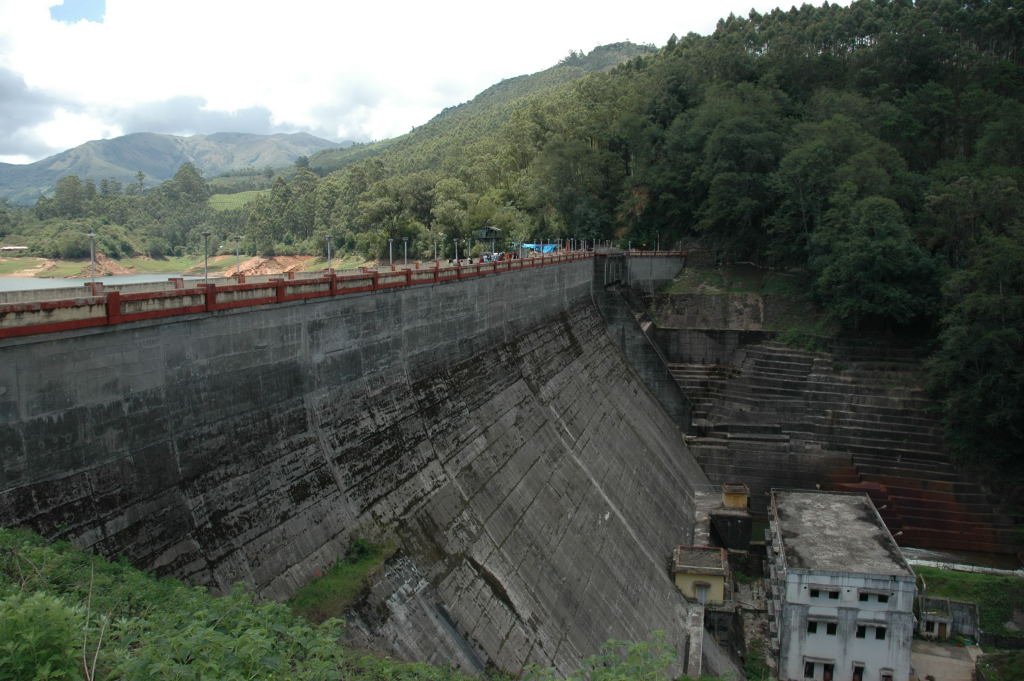
Mattupetty Dam Discover the captivating allure of Mattupetty Dam, nestled in the picturesque hills of Munnar, Kerala, India.
-
Poomala Dam Poomala Dam, nestled in the serene landscapes of Thrissur, Kerala, is a hidden gem that offers a blend of historical significance, natural beauty, and modern…

-
Thenmala Dam Nestled in the lush Kollam district of Kerala, India, Thenmala Dam stands as a remarkable blend of engineering prowess, ecological conservation, and cultural…

- Ernakulam Shiva Temple ## Introduction The Shiva Temple in Ernakulam, also known as the Ernakulathappan Temple, is a cornerstone of Kerala's rich spiritual and cultural heritage.
- Sree Sundareswara Temple Nestled in the heart of Kannur, Kerala, the Sree Sundareshwara Temple serves as a beacon of social reform and cultural heritage.
- Pandalam Valiya Koyikkal Kshethram Pandalam's royal family temple sends Ayyappa's sacred ornaments to Sabarimala each January, turning a quiet palace shrine into ritual history.
- Aruvikkara Dam The Aruvikkara Dam, located in the heart of Thiruvananthapuram, Kerala, is a marvel of engineering and a beacon of sustainable development.
Neighborhoods
Where to wander, by quarter — each with its own rhythm.
Fort Kochi & Mattancherry
Colonial grid meets fishing-village chaos. The streets smell of diesel, incense, and grilled squid; walls carry Biennale murals that change every two years. Come at 6 a.m. to watch Chinese nets dip like heron wings, then duck into Kashi Art Café for coffee strong enough to stain porcelain brown.Alleppey Canal Quarter
Narrow waterways no wider than a London bus. Women waist-deep in lotus fields wave as your canoe slides past; someone’s transistor radio plays 1980s Malayalam film songs. The houseboats look glamorous from shore, but the real menu is in the toddy shops: kappa, clam-meat fry, and coconut wine that tastes like sour cider.Munnar Tea Ridge
Altitude 1,600 m, temperature 18 °C, air that feels filtered through green silk. Tea bushes line up like regiments; pluckers in neon saris move faster than you can focus. Stay in a 1930s planter bungalow and wake to the smell of eucalyptus smoke drifting over estates first surveyed by a Scottish bachelor in 1878.Kozhikode SM Street
Two hundred metres of halwa steam and biryani breath. Paragon Restaurant serves goat so tender it leaves the bone before the spoon lands; next door, a 1940s halwa stall still measures sweets on brass scales. After dark the beach food street lights up: squid rings, charcoal-grilled prawns, and the sweet stink of banana fritters in coconut oil.Thiruvananthapuram Museum Belt
A 19-acre park lined with palaces turned galleries. Napier Museum’s 1885 teak-and-stucco shell holds bronze Krishna idols that smell of vetiver oil. Outside, Kanakakkunnu Palace hosts dusk concerts where the tabla echoes off marble so cold it makes bare feet ache.Kannur Theyyam Grounds
November to May the fields become open-air theatres at dawn. Drums start at 4 a.m.; by first light a man in a 40-foot red headdress is dancing through fire embers. The audience is half local, half bewildered tourists clutching coffee from steel tumblers too hot to hold.Varkala Cliff Strip
A 15-metre laterite cliff cleaved by sea air. Shops sell Tibetan silver and Israeli tahini; the sea below is warm enough to swim at midnight. Walk south past the souvenir stalls until the path narrows to goat track — that’s where the 2025 UNESCO listing begins, marked only by a fisherman's drying net.Beypore Shipyard
Wooden hulls the size of apartment blocks lie half-built on the sand. No nails, no blueprints — just generations of Moplah carpenters who still read timber grain like a newspaper. The smell is raw: teak shavings, marine diesel, and the peppery sweat of men who launch 400-ton dhows without a crane.
Plan your trip
Before you go
- Getting There
- Fly into Kochi (COK), Thiruvananthapuram (TRV), Kannur (CNN), or Calicut (CCJ). Kochi handles most long-haul traffic; it's 28 km north of Fort Kochi. Major rail hubs are Ernakulam Junction, Thiruvananthapuram Central, and Kozhikode. NH 66 coastal highway runs the full 560 km length of the state.
- Getting Around
- Kochi Metro is one 25-km line; fares ₹10–60. Kochi Water Metro launched 2025, 15 boat routes, passes sold at terminals. KSRTC buses link every district; private coaches run overnight to Bangalore and Chennai. No statewide tourist pass—pay per ride.
- Climate & Best Time
- Winter (Nov–Feb) is 23–32 °C with 20 mm rain. March–May climbs to 36 °C; coastal humidity hits 85 %. Monsoon June–September dumps 350–850 mm monthly; landslides close hill roads. Book December–January if you want dry days and Theyyam festivals.
- Safety
- Tourist police wear white caps; dial 100 or 112. Rip currents kill at Varkala and Kovalam April–June—red flags mean don't swim. Leeches appear on Western Ghats trails after rain; salt packets at tea stalls cost ₹2.
Where Pepper Changed the World
From prehistoric caves to communist ballot boxes, Kerala's coast rewrote global maps
- c. 6000 BCE
First Artists in Edakkal
Someone climbed 1,200 meters up Ambukuthi Hill and carved spirals, human figures, and what looks like a wheeled cart into the cave wall. The charcoal is gone but the grooves remain—Kerala's earliest signature, older than the pyramids.
- 3rd century BCE
Ashoka Names the Pepper Coast
The Mauryan emperor's rock edicts in north India list 'Keralaputra' among the southern lands paying tribute. For the first time in writing, Kerala exists—already famous for its black gold.
- c. 50 CE
Roman Ship Unloads at Muziris
A Mediterranean merchant steps onto the muddy banks of the Periyar, 10 km north of modern Kochi. His holds carry 120 tons of peppercorns worth their weight in silver. The smell—sharp, resinous, intoxicating—will follow him all the way back to Alexandria.
- c. 700 CE
Adi Shankara Born in Kalady
In a riverside Brahmin settlement east of modern Kochi, a boy who will argue God into abstraction takes his first breath. By 32 he'll have walked the subcontinent twice, founded four monasteries, and made Kerala the intellectual engine of Hindu philosophy.
- 825 CE
Kollam Calendar Begins
A council of merchants and astrologers on the Ashtamudi lake shore decide enough with the northern calendars—they'll start their own. Year zero begins; Kerala still marks temple festivals and land deeds by this count, 1,200 years later.
- 1341
The Flood that Moved the Port
The Periyar river changes course overnight. Muziris—once Rome's pepper supermarket—silts up. Five kilometers south, a new natural harbor forms. Locals call it Kochi; within a century it becomes the coast's busiest warehouse.
Show the full timeline (18 moments)
- 1498
Vasco da Gama Steps onto Kappad Beach
A barefoot Portuguese navigator wades through the May surf near Calicut. He's looking for 'Christians and spices' and finds both. The price he pays for a sack of pepper would buy a house in Lisbon. Europe's sea route to Asia—and Kerala's colonial centuries—begin here.
- 1503
Europe's First Asian Fort Rises in Kochi
Portuguese masons mix laterite and lime under monsoon skies. Fort Emmanuel's 18-meter walls stare inland at the Zamorin's armies. Inside: a church, a warehouse, and the uneasy knowledge that they are 9,000 km from home with only pepper for company.
- 1568
Paradesi Synagogue Opens in Mattancherry
White-jewelled floors from Canton, Belgian glass chandeliers, and Hebrew prayers echoing off teak beams. The building is a ledger of global trade: each tile paid for by another spice cargo.
- 1741
Travancore Defeats the Dutch at Colachel
Marthanda Varma's Nair soldiers capture 24 Dutch officers and 300 muskets on the black-sand beach near Kanyakumari. For the first time in India, an Asian power routs a European company. The VOC never recovers on the Malabar coast.
- 1853
Narayana Guru Born in Chempazhanthy
In a thatched hut outside Thiruvananthapuram, a future saint opens his eyes. He will tell Kerala that 'one caste, one religion, one god for man' is not heresy but common sense. Temples he consecrates will welcome dalits decades before the law catches up.
- 1924
The Flood That Drowned the Highlands
It rained for three weeks without pause. Munnar's tea bridges vanished; 1,000 people died. When the waters receded, the colonial railway was gone and a generation had learned to fear the monsoon as much as they loved it.
- 1936
Temple Doors Flung Open
At 5:30 a.m. on 12 November, Travancore's maharaja signs a one-page decree: any Hindu may enter any temple. Overnight, roads once closed to 'lower' castes become public. The proclamation travels faster than the morning bus; by dusk, dalit feet cross thresholds that had been forbidden for a millennium.
- 1 November 1956
Kerala Becomes Kerala
Radio news in three languages announces the birth of a state that never existed before. Malabar's cashew country, Cochin's port streets, and Travancore's rubber hills share a legislature for the first time. The map finally matches the identity people had claimed for centuries.
- 1957
First Communist Government Elected
Ballot boxes in village schools return a red majority. E. M. S. Namboodiripad, a bespectacled Brahmin who reads Marx in Malayalam, becomes chief minister. The world watches: revolution by vote, not gun, in a state where 60 percent still can't read.
- 1999
Cochin Airport Goes Solar
Where Vasco da Gama once bartered mirrors for cinnamon, photovoltaic panels now power the runway lights. The first airport in the world to run entirely on sunlight, built by a people's company rather than the state. Pepper still ships out; electrons come in.
- August 2018
The Deluge That Broke the Banks of Memory
One third of the state underwater. Dams opened for the first time in 40 years, releasing chocolate-brown torrents. Fishermen from Kollam drove their boats up national highways, saving strangers. When the water receded, the death toll stood at 480 but the idea of Kerala—mutual aid stronger than any government—had been reborn.
- 2024
Vizhinjam Mega-Port Receives First Mother Ship
A 400-meter container vessel slides into the new breakwater 20 km south of Thiruvananthapuram. The cranes—taller than the Padmanabhaswamy temple gopuram—unload 8,000 TEU in silence. After 500 years, Kerala is again a port that can swallow the world's cargo whole.
Who lived here
-
Philosopher · c. 700–750
Adi Shankara
Born in Kalady, Ernakulam district
He left this village at eight, walked the subcontinent debating monks, and returned only in memory. Today Kalady’s river ghats echo with Sanskrit recitals at dawn—schoolkids repeating the same verses he composed twelve centuries ago.
-
Painter · 1848–1906
Raja Ravi Varma
Born at Kilimanoor Palace, Thiruvananthapuram
He painted goddesses who looked like the women next door and mailed lithographs across India so bazaars sold Saraswati beside soap. The palace attic where he mixed European oils with temple pigments is still open—look for the cracked mango-wood palette he never threw away.
-
Novelist · 1908–1994
Vaikom Muhammad Basheer
Lived and wrote in Beypore, Kozhikode
He ran away from school, sold snacks on Mumbai footpaths, then came home to write love stories in Malayalam so plain they sound like gossip. Beypore’s old port still smells of tar and cashew; the tea shop where he gambled on snail races now sells his books beside banana fritters.
-
Athlete · born 1964
P. T. Usha
Born in Payyoli, Kozhikode district
They called her the Payyoli Express before Kerala had a railway worth the name. The clay school track where she barefoot-ran 400 m in 56 seconds is now a synthetic oval, but village boys still sprint barefoot at dusk trying to beat her ghost.
-
Playback singer · born 1940
K. J. Yesudas
Born in Fort Kochi
His voice drifts from temple loudspeakers at 4 am and from taxi radios at rush hour—one man bookmarking half a century of Kerala mornings. The narrow Fort Kochi lane where he first sang for church choir coins is now a biennale café strip, but the church bell still rings in the same key he learned at six.
Where to Eat
Where locals actually book dinner — not the tourist menus.
Insider tips
Small things that change how the city treats you.
Toddy Shop Lunch
Skip the polished houseboat buffet. Ask your driver to moor at Rajapuram Toddy Shop near Kavalam for kappa, fiery fish curry and duck roast with locals who’ve eaten here since 1952.Cliff Light, Varkala
The laterite cliffs turn molten red for exactly seven minutes after 5:45 pm in January. Set up on the southern helipad rocks; the paragliders frame the shot for you.Munnar Bypass
Vattavada valley, 20 km south of the tea crowds, sells strawberries by the crate and charges half the homestay rate. Morning jeep from Top Station costs ₹400 return.Fort Kochi After Dark
Gallery shut? Walk Princess Street at 9 pm when the Biennale projectors flicker on colonial walls for free and café owners bring stools onto the cobbles.Theyyam Season
North Malabar’s ritual trance runs November–March. Arrive Kannur the night before full moon; theyyam starts 4 am in village courtyards and no one charges entry.Rail & Backwater Combo
Book the 6:45 am Kollam–Alleppey passenger train (₹30, 1 h 20 min), then walk 400 m to the boat jetty for the 10:30 am public ferry through the canals (₹20, 2 h).
Gallery
The city, as it actually looks.


Watch
-
Clock Work Travel to Kerala 2026 | Kerala Tourist Places | Amazing History and Facts about Kerala |کیرلہ کی سیر
-
Resty Neha Vlogs Kerala 7 Nights & 8 Days Itinerary | Kochi, Munnar, Alleppey, Thekkady & Varkala | Resty Neha Vlogs
-
Hugh Abroad Uncovering Kerala’s Hidden Street Food 🇮🇳
-
Insider Food How 150,000 People Are Fed For Onam In Kerala, India | Big Batches | Insider Food
Frequently asked
Is Kerala worth visiting if I’ve already seen Goa’s beaches?
Yes—Kerala’s backwaters are a living grid of villages, not just coastline. You can breakfast on a houseboat, lunch in a toddy shop, then watch theyyam dancers trance out at dawn—none of which happens in Goa.
How many days do I need for a first-time Kerala trip?
Five full days: one for Fort Kochi’s art lanes, one for an overnight backwater loop between Kollam and Alleppey, two for Munnar’s tea trails and Vattavada farms, and a final morning in Kozhikode eating biryani at 7 am.
Do I need to book houseboats in advance?
Only if you insist on a premium single-bedroom boat. Otherwise turn up at Alappuzha or Kollam jetty before 10 am; dozens of owners wait with laminated rate cards—₹6 000 for an overnight AC boat fits four and includes dinner.
Is Kerala safe for solo female travellers?
Documented crime against tourists is low. Local buses have women-only seats, auto drivers use meters in Kochi and Trivandrum, and homestay owners along the backwaters text your boat number to family as routine.
What’s the cheapest way to move between regions?
State buses—Kerala SRTC runs Volvo-style “Super Deluxe” for ₹180 Kochi–Kozhikode (3 h) with reclining seats and phone chargers. Trains parallel the coast; advance booking opens 120 days out and 2S class is ₹65.
When is everything closed?
Dry days on major election results, plus every Sunday—toddy shops shut by law at 11 pm and bars stay closed. Plan your fiery fish-and-tapioca lunch for Saturday instead.
All Places to Visit.
9 places to discover


Pick up where you left off
Saved and recently read places — kept on this device only.
Photo credits (4)
- Jomin Thach — Pexels License (https://www.pexels.com/license/) — Source: https://www.pexels.com/photo/36874160/
- Ravi Roshan — Pexels License (https://www.pexels.com/license/) — Source: https://www.pexels.com/photo/20830783/
- Mohit Jain — Pexels License (https://www.pexels.com/license/) — Source: https://www.pexels.com/photo/15308719/
- Swastik Arora — Pexels License (https://www.pexels.com/license/) — Source: https://www.pexels.com/photo/19743480/
Photos may have been resized or cropped.