
Place
India Updated Apr 2026
The Brahmaputra swallows the morning sun like a copper coin, and for a moment the entire city holds its breath. Guwahati, India’s northeastern hinge, reveals itself in that flash of light: a working city where river dolphins surface beside commuter ferries, where tantric priests chant beside teenagers clutching bubble tea, where the scent of jasmine garlands mixes with diesel exhaust. This is not the India of postcards; it is the India that keeps moving.
 Photo: Tomal Bhattacharjee / Pexels
Built from cited sources · see the method · How we make our guides →
Walk uphill through the Kamakhya Temple’s Tuesday market and you’ll understand the city’s pulse. Vendors sell vermilion-dyed goats’ heads next to stalls offering iPhone cases, while pilgrims queue for prasad beside Dutch backpackers trying to decode the sign that bars entry to menstruating women. The temple’s priests will tell you—if you bring good biscuits—that the goddess bleeds every June, and when she does, the city’s hotels triple their rates and the river turns a darker amber.
Downriver, Peacock Island’s ferry costs ₹20 and takes seven minutes. Umananda Temple sits on the world’s smallest inhabited riverine island, 3.7 km west of the new riverfront promenade where couples now share ice cream under LED umbrellas. Between these two points—sacred hill and engineered embankment—Guwahati stretches like a tendon, connecting the Himalayas to the Bay of Bengal through a single muddy braid of water.
Evenings smell of fermented fish and woodsmoke in Paltan Bazaar, where Khasi women from Meghalaya sell wild pepper and conductors shout bus destinations in three languages. The city never learned to pose for photographs; it burps, argues, sells you a bus ticket, then offers you tea. That refusal to perform is precisely why you should stay longer than a layover.
Not every monument, just the ones we'd walk you past ourselves.

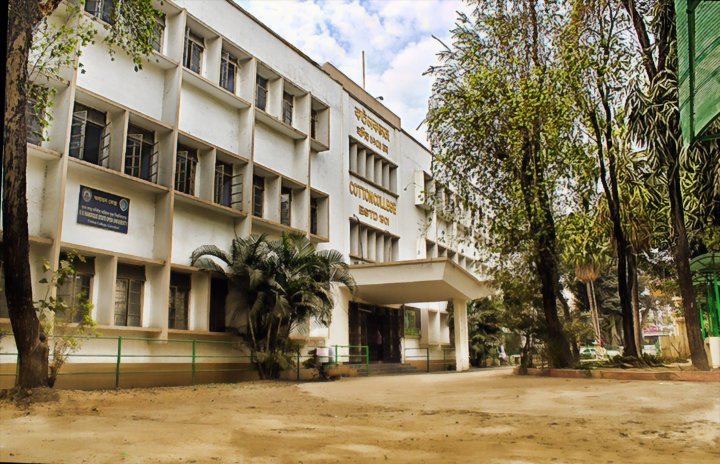
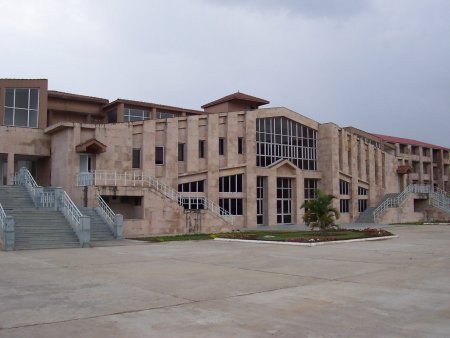

Where to wander, by quarter — each with its own rhythm.
Before you go
From ancient Kamrupa to India's gateway of the Northeast
The Varman dynasty establishes its capital in present-day Guwahati, making it the political heart of ancient Assam. Chinese pilgrim Xuanzang would later describe a prosperous city where Hindu and Buddhist traditions intertwined. The kingdom controlled the strategic Brahmaputra valley trade routes.
King Bhaskaravarman welcomes Harshavardhana to Guwahati, cementing the city's reputation as a center of learning and culture. The court hosted scholars from across India. Archaeological evidence from this period shows sophisticated urban planning and temple construction.
The original Kamakhya temple rises on Nilachal Hill, establishing Guwahati as a major Shakti pilgrimage site. The temple's tantric traditions attracted devotees from across the subcontinent. The current structure would replace it centuries later, but the sacred site remains unchanged.
The Ahoms conquer Guwahati, bringing Tai-Ahom administrative systems and military organization. They would rule for six centuries, making the city their western stronghold. The Ahom period fundamentally reshaped Assamese culture and identity.
Srimanta Sankardeva, the father of Assamese culture, establishes satras (Vaishnavite monasteries) around Guwahati. His neo-Vaishnavite movement swept through the Brahmaputra valley, transforming religious practice and artistic expression. The city became a center of his Bhakti reformation.
Emperor Jahangir's army besieges Guwahati but fails to breach Ahom defenses. The Ahom general Momai Tamuli Borbarua's guerrilla tactics forced the Mughals to retreat. This victory secured Ahom independence and established Guwahati as the western boundary of their kingdom.
Ahom king Rudra Singha makes Guwahati his temporary capital, building temples and administrative buildings. The city flourished as a center of art and architecture. His patronage attracted craftsmen from across the region, leaving a lasting architectural legacy.
Following the Treaty of Yandabo, the British absorb Assam and establish Guwahati as a district headquarters. They found the city 'a confused mass of huts' but strategically crucial. The British period would transform the region's economy and social structure.
The first train steams into Guwahati, connecting the isolated valley to Bengal and beyond. The railway station became a symbol of modernity and colonial power. Local accounts describe villagers traveling miles just to see the 'fire cart' breathe steam.
Nalinibala Devi, the 'Jewel of Assamese Literature,' is born in Guwahati. Her devotional poetry, inspired by Mira Bai, would become central to modern Assamese literature. She spent most of her creative life in the city that shaped her spiritual vision.
Bishnuprasad Rabha, the 'Culture Guru of Assam,' is born in Guwahati's Gorchuk area. A revolutionary, painter, musician, and actor, he embodied the Renaissance spirit of Assam. His multifaceted genius made him the region's most influential cultural figure.
Bhupen Hazarika, aged ten, moves to Guwahati with his family. The city's tea stalls and river ghats would echo with his first compositions. He would grow up to become India's most celebrated balladeer, giving voice to the Northeast's dreams and struggles.
India's independence finds Guwahati transformed from a sleepy colonial outpost to a potential regional capital. The city celebrated with processions down Fancy Bazaar and traditional Bihu dances. But the partition of Bengal would soon make it the gateway to a landlocked Northeast.
A magnitude 8.6 earthquake centered near Guwahati flattens much of the old city. Traditional Assamese houses on stilts survived better than British masonry buildings. The quake permanently altered the Brahmaputra's course and reshaped the region's geography.
Assam shifts its capital from Shillong to Dispur, making Guwahati the seat of government. Overnight, bureaucrats and politicians flooded the once-quiet university town. The move transformed Guwahati from a cultural center to the administrative heart of the Northeast.
Angaraag Mahanta, later known as Papon, is born in Guwahati to a musical dynasty. The city's folk traditions and modern sounds would blend in his innovative fusion music. He would carry Assamese folk to national audiences through Bollywood and television.
The new Saraighat Bridge finally connects Guwahati to India's railway network without the old meter-gauge bottleneck. The bridge, India's longest rail-cum-road span, reduced journey times by half. It symbolized the city's emergence as a modern transportation hub.
India's longest bridge, named after Guwahati's most famous son, opens across the Brahmaputra. The 9.15-kilometer span connects the city to eastern Assam, shrinking a four-hour journey to twenty minutes. It stands as both engineering marvel and cultural tribute.
Chief Minister Himanta Biswa Sarma inaugurates the Sati Radhika Shaanti Udyan riverfront, transforming Guwahati's relationship with the Brahmaputra. The 2.2-kilometer promenade features Assamese cultural motifs and LED installations. Evening crowds now gather where families once avoided the eroding banks.
Singer-composer · 1926–2011
Lived and worked here
He wrote ‘Bistirno Parore’ on the balcony of his Bharalumukh house, humming the Brahmaputra’s pulse into an anthem for every river in Assam. Today the city’s airport hums his songs at dawn, and the Kalakshetra museum keeps his old harmonium where you can still smell the camphor he used to clean it.
Novelist · 1942–2011
Born here
She turned the Kamakhya temple precinct into fiction, letting the smell of hibiscus and goat blood seep into pages that won India’s top literary prize. Walk the hill at twilight and you’ll recognise the widows she described still selling marigolds outside the shrine.
Folk-fusion singer · born 1977
Born here
Grew up singing Bihu songs in his father’s lap at Shilpgram amphitheatre; now sells out Bombay arenas but still tests new tracks on late-night drives along the Saraighat bridge, windows down, river wind mixing with electronic tanpura.
Cricketer · born 2001
Born here
Learnt his pull shot on the cement wicket behind Nehru Stadium, using a bat his mother couriered from Jaipur because Guwahati shops didn’t stock youth sizes. When he smashes IPL sixes the city’s paan-wallahs replay them on cracked smartphones, cheering as if the ball might land in the Brahmaputra.
Where locals actually book dinner — not the tourist menus.
Small things that change how the city treats you.
The city, as it actually looks.


Yes, if you treat it as the Northeast’s launchpad rather than a pretty hill station. One morning on the Brahmaputra, an afternoon in Kamakhya’s tantric shrine and a rhino day-trip to Pobitora give you stories you can’t collect anywhere else in India.
Two full days cover the city—temple at dawn, riverfront at sunset, Kalakshetra in between. Add a third day for Pobitora’s rhinos or a flight to Meghalaya/Arunachal.
Generally yes, but avoid Nilachal Hill after dark and empty ferries to Umananda. Stick to the main pilgrim path at Kamakhya and use app cabs post 9 pm.
A private taxi for the 30 km run is ₹2,200-2,600 including waiting time; shared tours from Paltan Bazar start at ₹650 per seat. Elephant safari tickets are ₹1,250 and sell out by 7 am.
Phase-1 opened 10 March 2026; Tuesday-Sunday 10 am-5 pm, ₹150 tickets on the gate. Allow three hours for the 3-D theatre and Assam-specific climate exhibits.
12 places to discover
Saved and recently read places — kept on this device only.
Photos may have been resized or cropped.