Chennai

India

Chennai

Chennai holds one of only three basilicas built over an apostle's tomb, the world's largest classical music festival, and 13 km of urban beach at its doorstep.

location_on 14 attractions
calendar_month Winter (November–February)
schedule 3–5 days

Introduction

The sound hits before the sight — a rhythmic clang of metal on metal as a street cook shreds layered parotta on a flat iron at ten o'clock at night, and suddenly the entire block smells of curry leaf and mustard seed. Chennai, India's gateway to the Dravidian south, is a city where the oldest Anglican church in Asia stands twenty minutes from a 7th-century Shiva temple, where a bone fragment of St. Thomas the Apostle rests in a crypt three kilometres from a cave where he allegedly hid two millennia ago, and where two thousand classical concerts happen in a single month because December here belongs to Carnatic music the way January belongs to snow in Helsinki.

What the city lacks in first-impression polish it repays in depth. The Government Museum in Egmore holds Chola bronze Natarajas that rank among the finest castings in human history — an 11th-century Ardhanarishvara, half-Shiva half-Parvati, that stops you mid-step. Fort St. George, built in 1644 by the East India Company, still functions as Tamil Nadu's state legislature, and inside its church Elihu Yale — yes, that Yale — signed his marriage register. Chennai has more Indo-Saracenic architecture per square kilometre than anywhere on earth: the High Court alone, red sandstone with Mughal domes and Gothic arches, is the second-largest court complex in the world after London's Inns of Court.

But Chennai's deepest currency is ritual. Mornings begin with filter coffee poured from a steel tumbler into a davara from a height that would alarm a barista, the 60/40 coffee-chicory blend leaving a telltale brown ring on the cup. Breakfast is idli judged by its fermented tang and the thinness of the sambar. The Margazhi music season, running from December into January, draws emigrant Tamils home from Silicon Valley and Singapore — not for beaches or monuments, but because the sabha canteen serves sambar rice between performances of ragas their grandmothers sang. This is a city that treats its food, its faith, and its classical arts with equal and uncompromising seriousness.

For visitors, the reward is access to a civilisation that never pauses to explain itself. The Royapuram fish market operates at 4 AM with barracuda and kingfish under pre-dawn light. The Theosophical Society campus in Adyar shelters what was once the world's second-largest banyan tree across 270 acres of riverbank silence. Mahabalipuram's Shore Temple, an hour south, faces the Bay of Bengal exactly as it did in 728 AD. Chennai doesn't seduce — it initiates.

Places to Visit

The Most Interesting Places in Chennai

Madras High Court

Madras High Court

Nestled in the historic George Town area of Chennai, the Madras High Court stands as an enduring symbol of India’s colonial judicial heritage and…

landscape

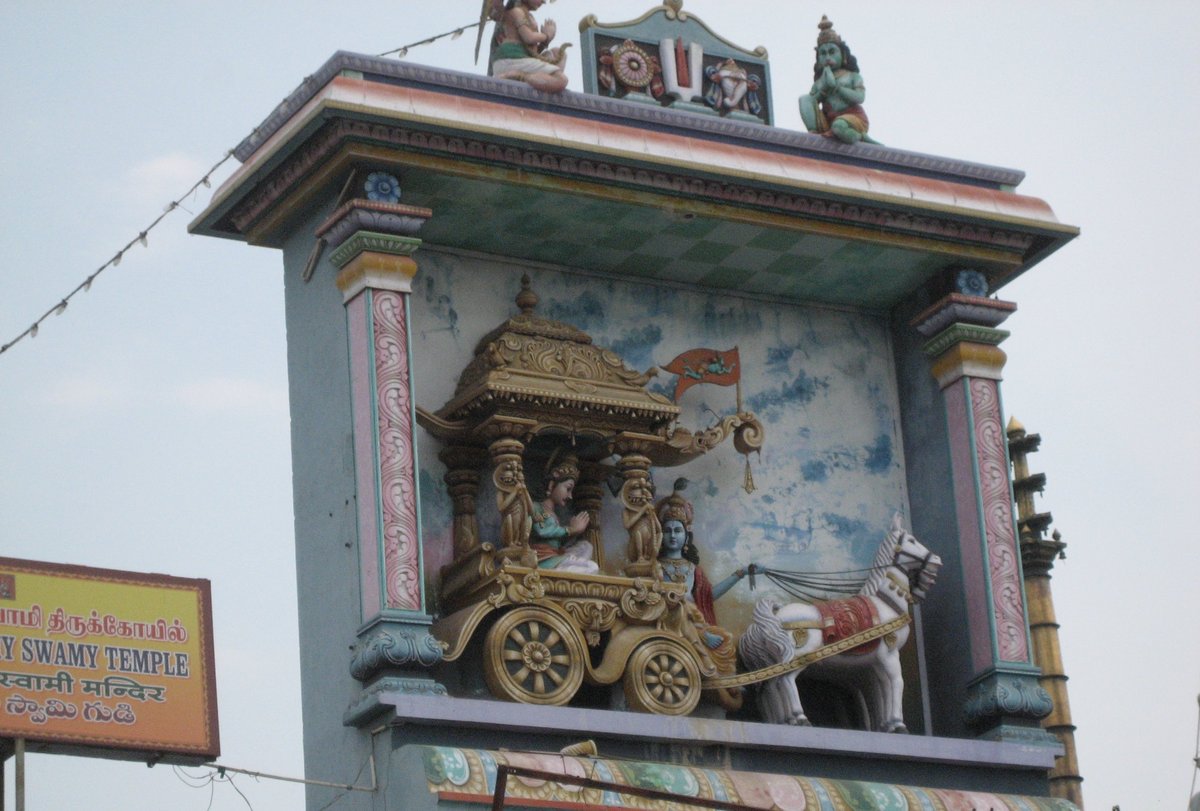
Vadapalani Andavar Temple

Vadapalani Andavar Temple, also known as Vadapalani Murugan Temple, stands as one of Chennai’s most cherished spiritual and cultural landmarks.

Parthasarathy Temple

Parthasarathy Temple

Sri Parthasarathy Koil, located in Chennai, India, is a significant historical and religious landmark that attracts thousands of visitors each year.

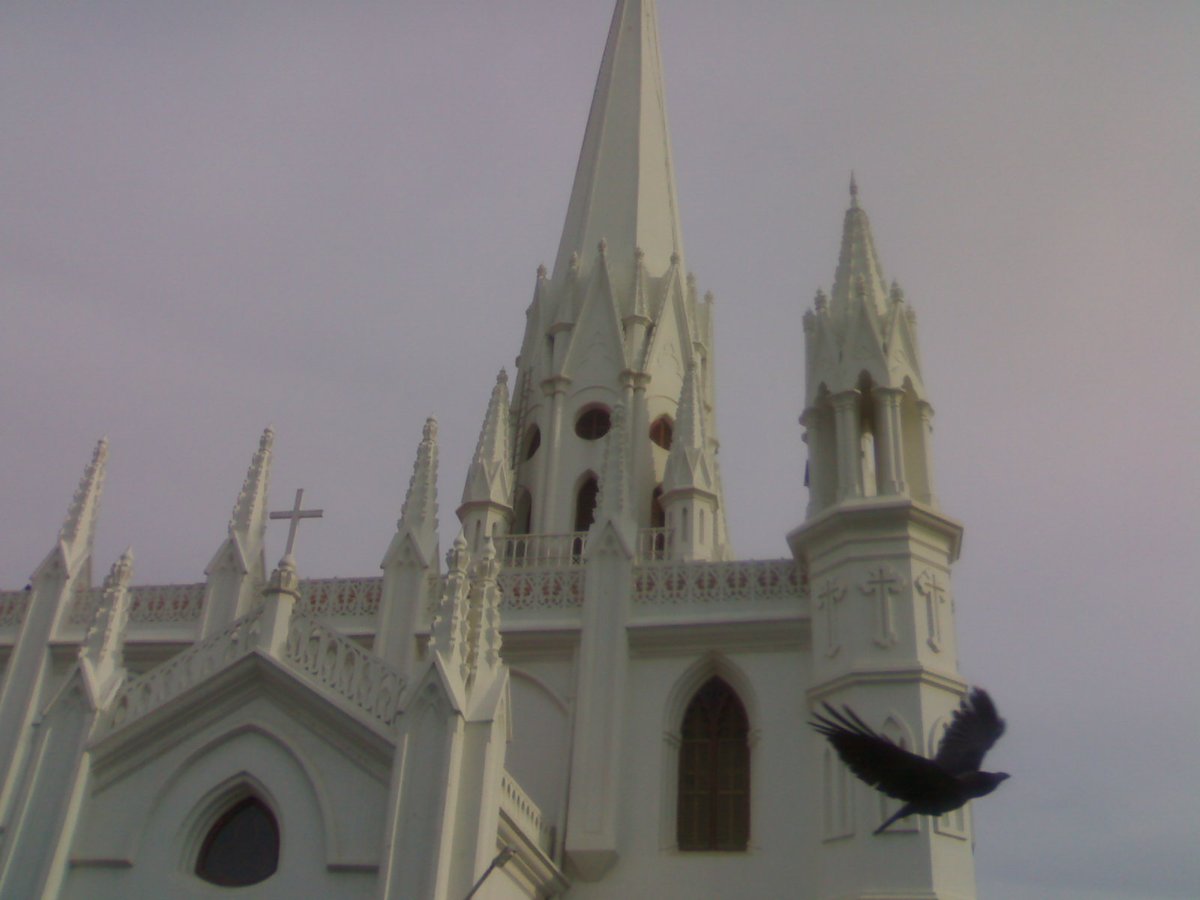
San Thome Basilica

San Thome Basilica

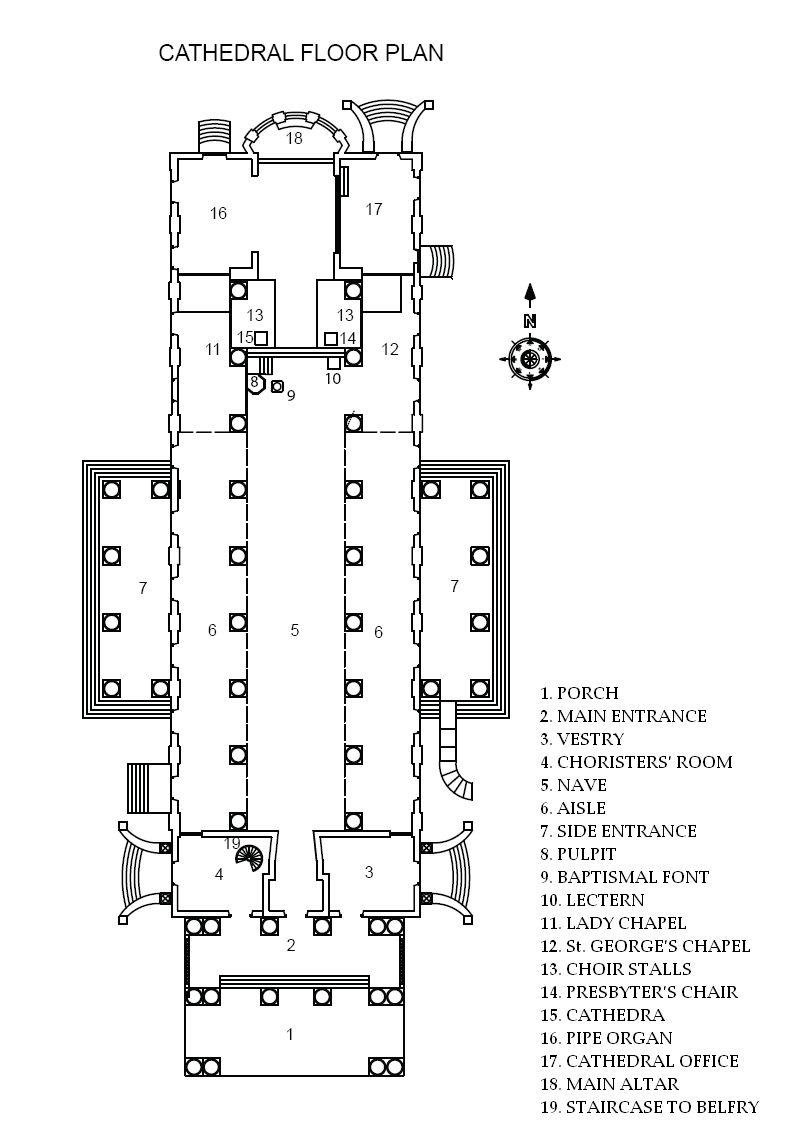
St. Thomas Cathedral Basilica in Chennai, India, stands as a remarkable blend of history, spirituality, and architectural splendor.

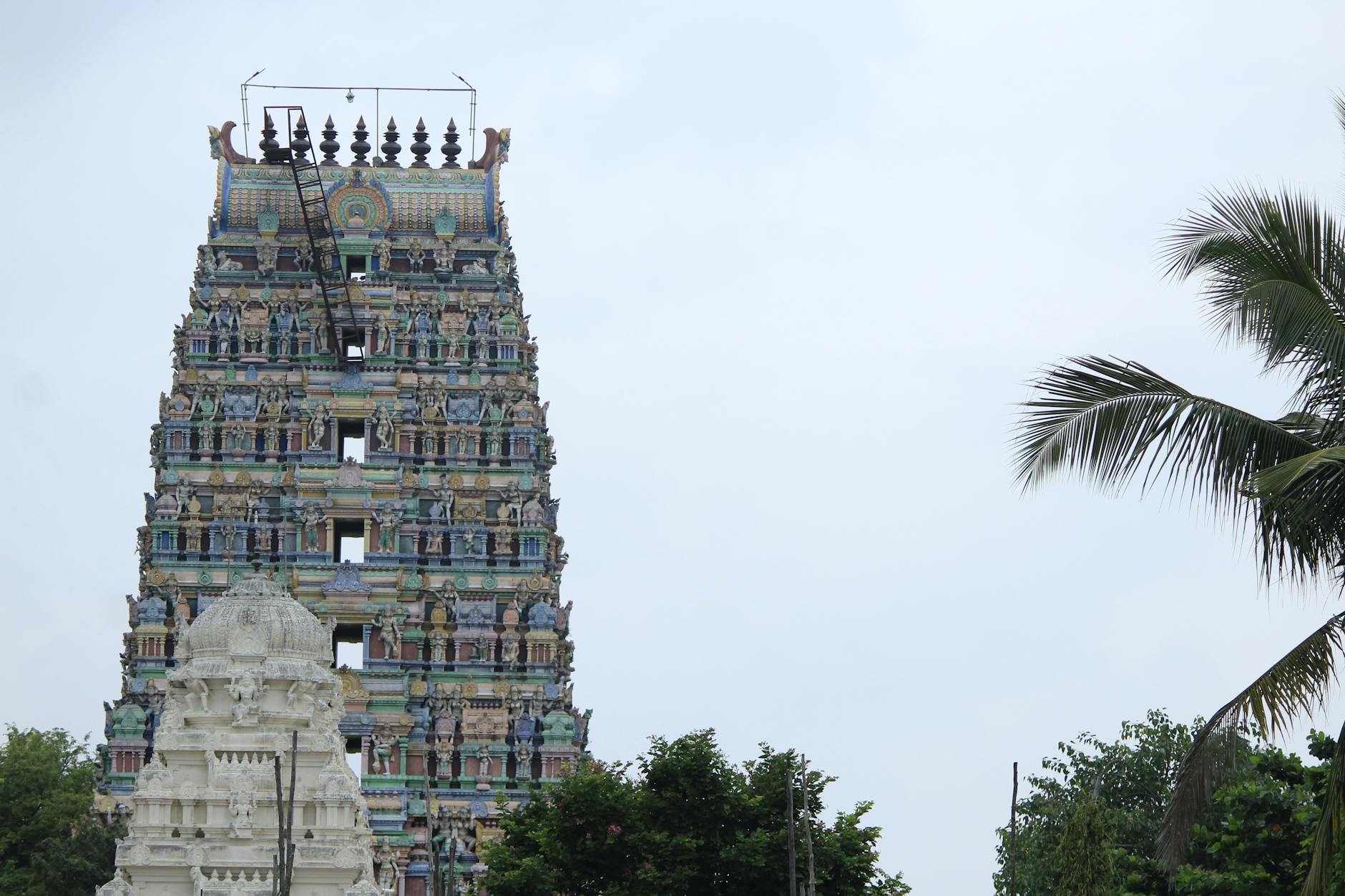
Marundeeswarar Temple

Marundeeswarar Temple

The Marudeeswarar Temple, located in Thiruvanmiyur, Chennai, is an architectural and cultural gem dedicated to Lord Shiva.

landscape

Indian Institute of Technology Madras

Delhi Avenue in Chennai is a microcosm of India's rich historical tapestry and cultural diversity.

Ashtalakshmi Kovil

Ashtalakshmi Kovil

Nestled along the scenic shores near Elliot's Beach in Besant Nagar, Chennai, the Ashtalakshmi Temple, also known as Ashtalakshmi Kovil, is a modern marvel of…

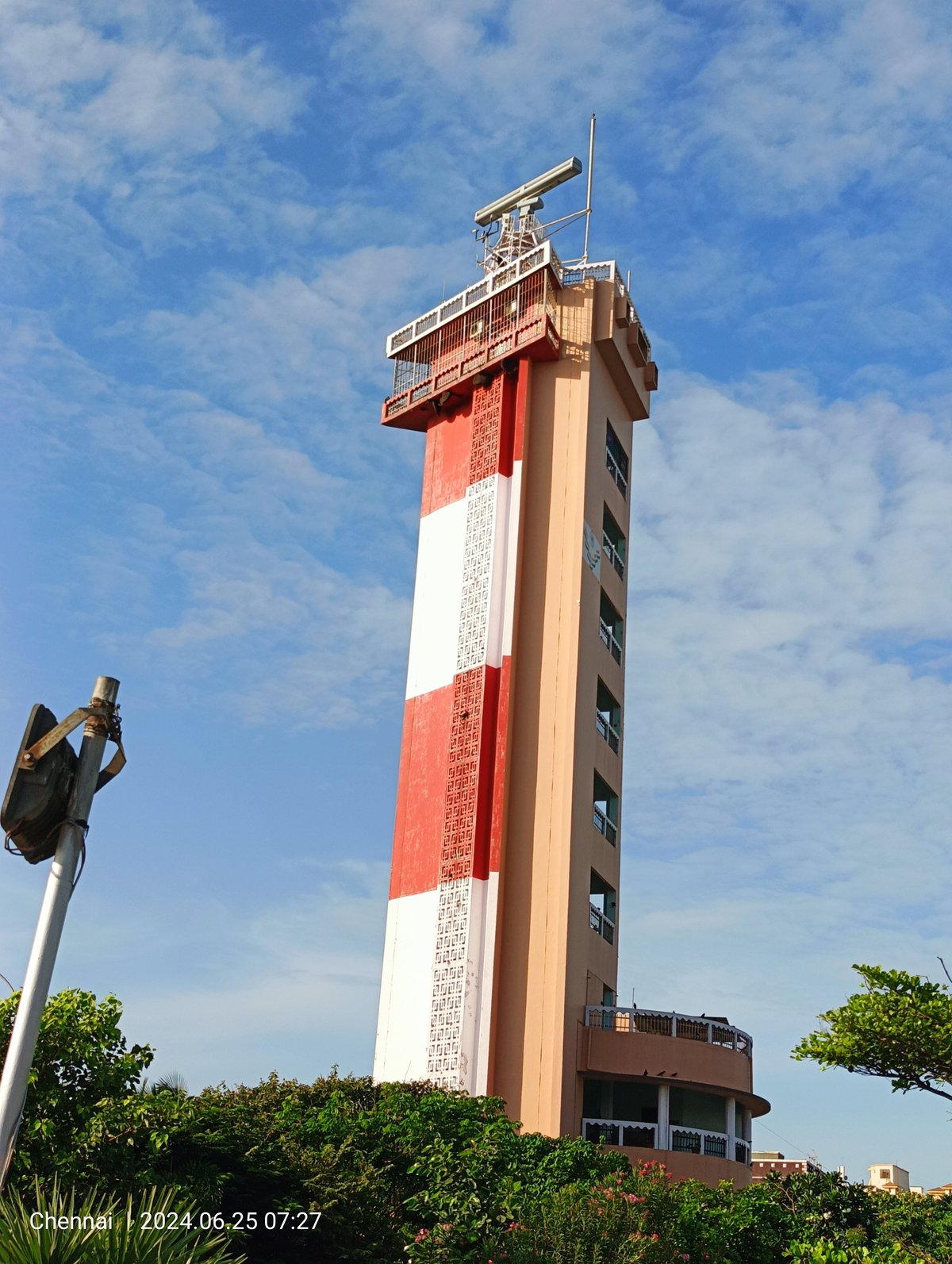
Chennai Lighthouse

Chennai Lighthouse

Kamarajar Salai, formerly known as South Beach Road, is a significant arterial road in Chennai, India, offering a unique blend of historical, cultural, and…

Guindy National Park

Guindy National Park

Children's Park, located in the vibrant city of Chennai within the Guindy National Park, is a renowned destination for families, nature enthusiasts, and…

Semmozhi Poonga

Semmozhi Poonga

Nestled in the bustling urban landscape of Chennai, Tamil Nadu, Semmozhi Poonga stands as a testament to the harmonious blend of natural beauty and cultural…

Government Museum, Chennai

Government Museum, Chennai

Chennai holds the largest collection of Roman antiquities outside Europe — and that's just one gallery in this 1851 museum housing priceless Chola bronzes.

Marina Beach

Marina Beach

Marina Beach, located along the Bay of Bengal in Chennai, India, is well-known for its extensive sandy shorelines and vibrant atmosphere.

What Makes This City Special

Living Dravidian Heritage

The 37-metre gopuram of Kapaleeshwarar Temple still draws thousands for evening puja, Chola bronze Natarajas in the Government Museum rank among the finest castings ever made, and Fort St. George — where the British East India Company first planted a flag in 1644 — doubles as a working state legislature. Chennai doesn't preserve its history in amber; it governs from it.

The Carnatic Music Capital

Every December, Chennai hosts over 2,000 Carnatic music and Bharatanatyam concerts across six weeks of the Margazhi season — the world's largest classical music festival by sheer volume. Most performances cost under ₹200 or nothing at all, and you can walk into nearly any sabha without a ticket.

Indo-Saracenic Architecture

Chennai holds the world's densest concentration of Indo-Saracenic buildings — a Victorian hybrid of Mughal domes, Rajput arches, and Gothic spires pioneered here by British architects. The Madras High Court, Egmore Station, and Senate House form a circuit that no other Indian city can match for this singular style.

Where South Indian Food Was Perfected

This is the city that gave the world Hotel Saravana Bhavan and invented Chicken 65. Filter coffee arrives in stainless steel tumblers at 6 AM, idli shops have multi-generational followings, and the Chettinad spice tradition fuels some of the most complex flavours in Indian cooking.

Historical Timeline

Where Apostles, Empires and Revolutions Met the Sea

Two thousand years from Mylapore's peacock-filled port to the Detroit of Asia

church
c. 52 CE

An Apostle Lands at Mylapore

According to tradition older than most European churches, St. Thomas the Apostle arrived on the Coromandel Coast around 52 CE, preaching in the port town of Mylapore — the 'City of Peacocks.' He would be martyred here two decades later on the small granite hill that still bears his name. Today his tomb lies beneath the San Thome Basilica, one of only three churches in the world built over an apostle's grave.

castle
c. 630 CE

Pallavas Build a Shore Temple

Under Narasimhavarman I — called 'Mamalla,' the great wrestler — the Pallava dynasty reached its zenith. From their capital at Kanchipuram, 75 kilometres inland, they transformed the coast south of Chennai into a canvas of carved granite: the Shore Temple, the Five Rathas, the great rock reliefs of Mamallapuram. The original Kapaleeshwarar Temple at Mylapore likely dates to this era, its gopuram rising above the fishing boats like a painted mountain.

public
985 CE

Chola Empire Absorbs the Coast

When Rajaraja Chola I took power, he inherited the old Pallava coastline and folded it into the most ambitious maritime empire India had ever seen. Mylapore's harbour served the trade routes that stretched to Southeast Asia. The Chola bronzes cast in workshops across the region — Nataraja mid-dance, Parvati in stillness — would become the finest metal sculptures the subcontinent ever produced. Many of them now sit in Chennai's Government Museum, silent witnesses to a vanished empire.

church
c. 1522

The Portuguese Arrive at São Tomé

Portuguese traders established a settlement at Mylapore, drawn by the tomb of St. Thomas and the cotton trade. They built churches, warehouses, and around 1560 did something the centuries of Hindu and Muslim rule had never done: they demolished the original Kapaleeshwarar Temple to make way for their cathedral. The temple was rebuilt at its current site, but the act left a scar in the city's memory that outlasted Portuguese power by centuries.

castle
1639

Francis Day Founds Madras

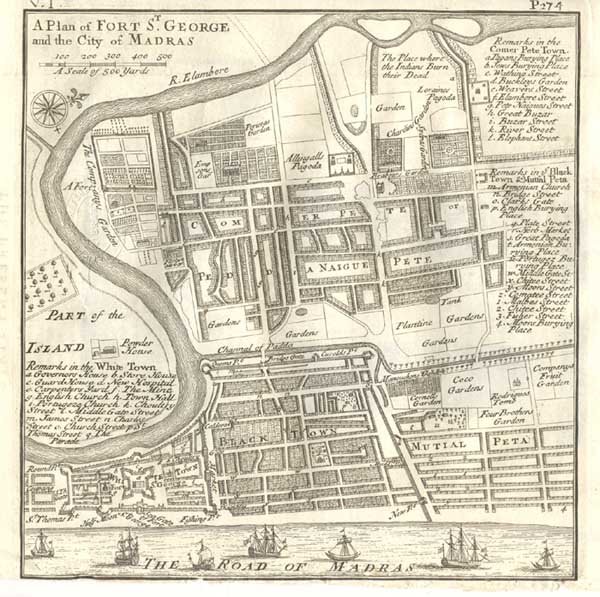
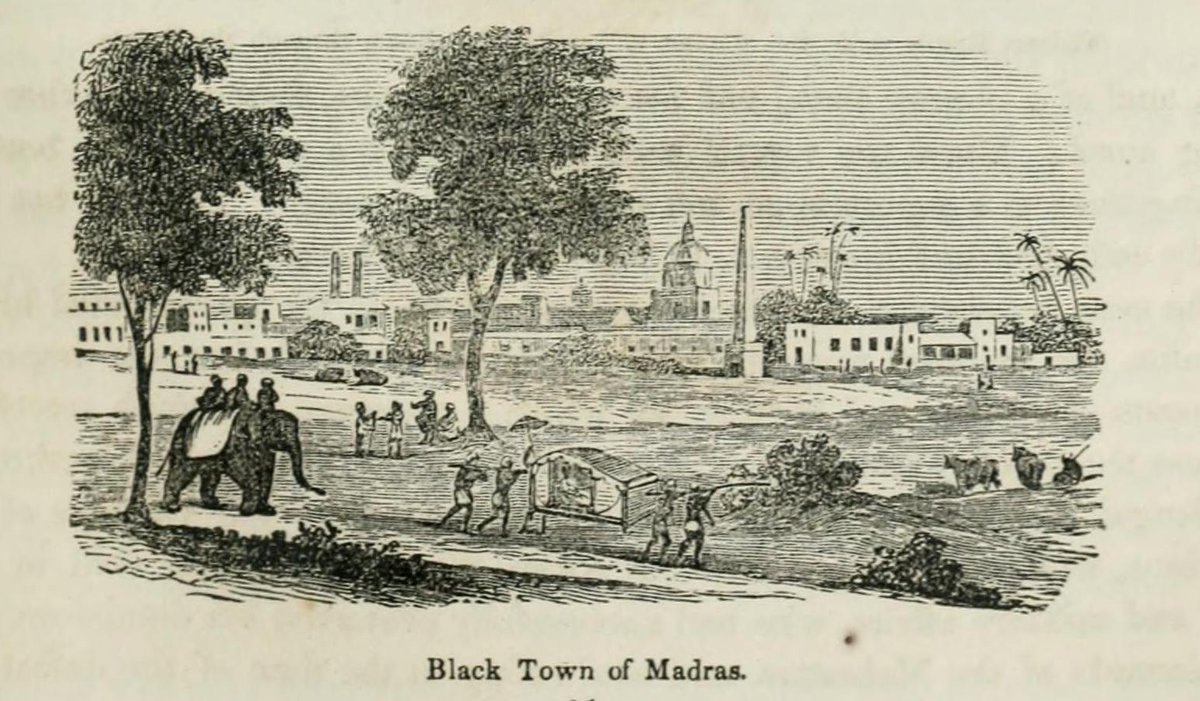
On August 22, 1639, a minor English East India Company agent named Francis Day talked a local Nayak chieftain, Damarla Venkatadri, into granting him a strip of sandy coastline just north of the Portuguese settlement. It was not a promising site — flat, exposed, with a treacherous surf. But Day began building Fort St. George the following year, and around its walls the settlement of Madraspatnam grew. The city's very name, Chennai, derives from Venkatadri's father, Chennappa Nayaka.

church
1680

St. Mary's Church Consecrated

Inside the walls of Fort St. George, the oldest Anglican church in India and the oldest surviving English building in Asia was consecrated. St. Mary's Church still stands — a plain, thick-walled structure built to withstand cannon fire as much as to hold services. Robert Clive was married here. Elihu Yale, whose fortune would endow a university in Connecticut, worshipped in these pews. The building smells of old stone and history.

swords
1746

The French Capture Fort St. George

On September 21, 1746, a French fleet under La Bourdonnais bombarded Fort St. George and took Madras in a few days. Among those who escaped the city, disguised and running through the night, was a twenty-one-year-old clerk named Robert Clive. The French held Madras for two years before returning it in exchange for Louisburg, a frozen fortress in Canada. Clive would return to reshape the subcontinent.

swords
1769

Hyder Ali Reaches the Gates

The ruler of Mysore, Hyder Ali, marched his cavalry to within sight of Fort St. George's walls, sending the city into panic. The British, unable to fight, signed the Treaty of Madras on his terms — a humiliation that burned in the Company's memory. His son Tipu Sultan would carry the threat further, and for thirty years the Mysore Wars were Madras's existential crisis. Only Tipu's death at Seringapatam in 1799 finally ended the nightmare.

factory
1856

South India's First Railway Opens

The first railway line in South India ran from Royapuram to Arcot, and the station at Royapuram — still standing — became the oldest surviving railway station in India. The locomotive's whistle announced a new era: cotton, spices, and passengers could now move at speeds unimaginable to the bullock-cart traders who had fed the city for two centuries. Madras was being wired into the industrial age.

local_fire_department
1876–1878

The Great Famine Kills Millions

The worst famine in the Madras Presidency's history killed an estimated 5.5 million people across South India. Grain rotted in warehouses while the colonial government, gripped by laissez-faire ideology under Viceroy Lytton, refused large-scale intervention. Photographs from the period — skeletal figures staring into the camera — became some of the first images to document famine for a global audience. The catastrophe radicalized a generation of Indians against British rule.

science
1887

Srinivasa Ramanujan Born

Born in Erode and schooled in Kumbakonam, Ramanujan arrived in Madras as a young man with no degree and notebooks full of theorems that would stun Cambridge. He worked as a clerk at the Madras Port Trust, scribbling formulas in ledger margins, before his famous letter to G. H. Hardy changed the history of mathematics. The city gave him nothing but a desk job; he gave the world infinite series, partition functions, and a legend.

swords
1914

SMS Emden Shells the Harbour

On September 22, 1914, the German light cruiser SMS Emden, commanded by the dashing Captain Karl von Müller, appeared out of the darkness and shelled Madras's oil storage tanks and harbour. It was the only naval bombardment of an Indian city during World War I. Fires burned along the waterfront; civilians fled inland. The raid lasted barely thirty minutes, but it shattered the assumption that the war was a distant European affair.

music_note
1916

M. S. Subbulakshmi Born in Madurai

She was born in Madurai but became inseparable from Madras, where she spent her entire adult life and transformed Carnatic music from a tradition of temple and court into a concert art that reached the United Nations General Assembly in 1966. Subbulakshmi's voice — deep, unhurried, mathematically precise — defined what devotional singing could sound like in the twentieth century. She became the first musician to receive the Bharat Ratna, India's highest civilian honour.

palette
1936

Rukmini Devi Founds Kalakshetra

On a sprawling campus at Adyar, near the Theosophical Society where she had grown up, Rukmini Devi Arundale opened Kalakshetra — the 'temple of art.' She took Bharatanatyam, a dance form that colonial moralists had nearly destroyed by associating it with temple devadasis, and reimagined it for the concert stage. It was an act of cultural rescue so complete that today Bharatanatyam is synonymous with classical Indian dance worldwide, and Kalakshetra remains its spiritual home.

gavel
1937–1940

Tamil Nadu Fights Hindi Imposition

When the Congress government made Hindi compulsory in Madras schools, something unprecedented happened: a mass movement erupted that was not about independence from the British but about Tamil identity within India. Two protesters — Natarajan and Arangasamy — were killed by police in February 1938. The agitation succeeded, Hindi was suspended, and the seeds of the Dravidian political revolution were planted. Tamil Nadu would never again accept linguistic subordination.

gavel
1947

Independence and a New Capital

On August 15, 1947, the British flag came down over Fort St. George for the last time after 308 years. Madras became the capital of Madras State in the new Republic of India. The fort that Francis Day had built as a trading post, that the French had captured and returned, that Hyder Ali had besieged and failed to take, now housed the Tamil Nadu Secretariat. The building's walls had seen every chapter of the colonial story.

gavel
1967

Dravidian Revolution Sweeps Power

The DMK, founded by the brilliant orator C. N. Annadurai, won the state elections and ended Congress rule in Tamil Nadu permanently — the first time Congress lost a major Indian state. The victory was fuelled by the 1965 anti-Hindi agitation, in which a student named Veerappan self-immolated and roughly 70 people died. Tamil Nadu's politics would never again follow the national pattern. When Annadurai died in 1969, his funeral on Marina Beach drew millions.

person
1969

Viswanathan Anand Born in Chennai

The boy who would become the first Asian undisputed World Chess Champion grew up in Chennai, learning the game from his mother. Anand won the world title five times between 2000 and 2012, and his success transformed Chennai into India's chess capital — a city that now produces grandmasters the way it produces software engineers. He never left. The quiet discipline of his game somehow mirrors the city itself: understated, relentless, deeper than it first appears.

local_fire_department
1991

Rajiv Gandhi Assassinated Nearby

At an election rally in Sriperumbudur, 40 kilometres from Madras, former Prime Minister Rajiv Gandhi was killed by an LTTE suicide bomber named Dhanu on May 21, 1991. It was one of the most consequential political assassinations in modern Indian history, and it happened in Chennai's orbit. The Sri Lankan Tamil conflict had deep roots in Tamil Nadu — hundreds of thousands of refugees had settled there — and the assassination severed those sympathies overnight.

music_note
1992

A. R. Rahman Composes Roja

A twenty-five-year-old Chennai musician named A. S. Dileep Kumar, who had rechristened himself A. R. Rahman, composed the soundtrack to Mani Ratnam's film Roja and changed Indian film music permanently. The score fused Carnatic melody with electronic production in ways nobody had attempted. Rahman went on to win two Academy Awards for Slumdog Millionaire, but he never left Chennai — founding his KM Music Conservatory in the city that had raised him.

gavel
1996

Madras Becomes Chennai

After 357 years as Madras, the city was officially renamed Chennai — part of a nationwide wave of shedding colonial-era names. The new name derived from Chennapatnam, the old settlement near Fort St. George, itself named after Chennappa Nayaka, the father of the chieftain who granted the English their first foothold. It was a circle closing: the city reclaiming the name of the man whose son had, perhaps unwittingly, set the whole colonial story in motion.

factory
1998

Hyundai Opens the Detroit of Asia

When Hyundai opened its plant at Sriperumbudur in 1998, it was the first move in a transformation that would make Chennai responsible for roughly 35 percent of India's automobile production. BMW, Renault-Nissan, and Daimler followed. Simultaneously, the Old Mahabalipuram Road filled with software campuses — Infosys, TCS, Cognizant — making Chennai India's third-largest IT exporter. The city that the British had built for cotton and indigo now ran on code and combustion engines.

local_fire_department
2004

The Tsunami Strikes Marina Beach

On the morning of December 26, 2004, the Indian Ocean tsunami — triggered by a 9.1-magnitude earthquake off Sumatra — hit Chennai's coastline without warning. The sea withdrew hundreds of metres from Marina Beach, then returned as a wall of water. Fishing communities at Besant Nagar and Thiruvanmiyur were devastated; hundreds died along the coast. The disaster reshaped Chennai's relationship with its seafront, leading to sea walls and coastal regulations that changed the city's edge forever.

local_fire_department
2015

The Great Flood Submerges the City

In November and December 2015, Chennai received over 1,000 millimetres of rain — nearly double the average — in a deluge that became the worst flooding in a century. The city was underwater for weeks. Over 500 people died and economic losses reached $3 billion. The cause was not just weather: decades of uncontrolled development had swallowed lakes, blocked drainage channels, and paved over the wetlands that once absorbed the monsoon. Chennai learned, violently, the cost of forgetting its geography.

schedule
Present Day

Notable Figures

Srinivasa Ramanujan

1887–1920 · Mathematician
Lived and worked in Madras

Ramanujan worked as a clerk at the Madras Port Trust on Harbour Road while quietly filling notebooks with theorems that would leave Cambridge professors speechless. It was from a Madras postal address that he wrote his famous 1913 letter to G.H. Hardy, beginning one of mathematics' most extraordinary partnerships. The city barely knew what it had housed; today a bust at the Institute of Mathematical Sciences stands as belated acknowledgement.

M.S. Subbulakshmi

1916–2004 · Carnatic Vocalist
Career based in Madras

She arrived in Madras as a teenager from Madurai and became the city's most beloved voice — the first musician ever invited to address the United Nations General Assembly, in 1966. Every December during Margazhi season, her recordings still drift from windows and sabha speakers as though she never left. To hear her Suprabhatam at dawn somewhere in Chennai is to understand why the city treats music as a form of prayer.

A.R. Rahman

born 1967 · Film Composer
Born and raised in Madras/Chennai

He grew up in Madras as Dileep Kumar, son of a film-score arranger, and built his first studio — Panchathan Record Inn — in the Kodambakkam neighbourhood at his own expense. That basement studio, where he composed the score for Roja at 26, set the sound of a generation; his Academy Award for Slumdog Millionaire in 2009 felt to Chennai less like a surprise than confirmation of something the city had long known.

Viswanathan Anand

born 1969 · Chess Champion
Grew up and lives in Chennai

Anand learned chess at his mother's knee in Chennai, became India's first grandmaster at 18, and went on to win the World Chess Championship five times. He still lives in the city, and local chess tournaments advertise themselves simply as 'Vishy's city.' For a generation of Chennai children, he made it seem obvious that a kid from South India could become the best in the world at something.

C.V. Raman

1888–1970 · Physicist
Held the Palit Chair at Presidency College, Madras

Raman ran his Nobel Prize-winning experiments at Presidency College, Madras, with equipment that embarrassed European laboratories in its modesty. The light-scattering phenomenon he discovered — photons changing wavelength as they pass through matter — earned him the Nobel Prize in Physics in 1930 and bears his name permanently. Walk the colonnaded corridors of Presidency College today and it's hard not to think about what was quietly being worked out here.

Rukmini Devi Arundale

1904–1986 · Dancer & Cultural Reformer
Founded Kalakshetra in Madras; career based here

She shocked Brahmin Madras in 1935 by performing Bharatanatyam on a public stage — a dance form then associated exclusively with devadasi temple artists and considered inappropriate for respectable women. Within a year she had founded Kalakshetra in Madras, transforming a stigmatized temple art into a revered form taught to the daughters of the educated elite. Without her intervention, Bharatanatyam might never have reached the international stages where it now belongs.

Balasaraswati

1918–1984 · Bharatanatyam Dancer
Born in Madras

Born into the devadasi tradition in Madras, she was performing by age seven and had mastered a full repertoire before fourteen — at precisely the moment when reformers were busy sanitizing the very art she embodied. Where Rukmini Devi reshaped Bharatanatyam for concert halls, Balasaraswati kept its devotional soul intact, taking it to Carnegie Hall without abandoning its roots. The two women never agreed, but together — in their disagreement — they made the form immortal.

Subrahmanyan Chandrasekhar

1910–1995 · Astrophysicist
Educated at Presidency College, Madras

As a 19-year-old student at Presidency College, Madras, Chandrasekhar worked out on the voyage to England what is now called the Chandrasekhar Limit — the maximum mass a white dwarf star can reach before collapsing into something stranger. The Nobel Prize arrived in 1983, more than fifty years after the calculation, partly because Arthur Eddington had publicly dismissed his findings as absurd. IIT Chennai now has a hall in his name; the irony of the delay is built into the dedication.

Practical Information

flight

Getting There

Chennai International Airport (MAA) has direct flights to Dubai, Singapore, London, and Frankfurt, plus hourly shuttles to Mumbai, Delhi, and Bengaluru. Two main railway stations serve the city: Chennai Central for long-distance trains north and west, and Chennai Egmore for southern routes to Madurai, Rameswaram, and Trivandrum. The East Coast Road (ECR) connects south to Mahabalipuram and Pondicherry; NH48 runs west to Bengaluru (~5 hours).

directions_transit

Getting Around

Chennai Metro Rail Line 1 runs from Wimco Nagar through Central and Egmore to the airport (~32 stations), with Phase 2 expansion underway as of 2026 — fares are ₹10–70 and a rechargeable Smart Card saves 10%. MTC buses cover the entire city but are impractical for visitors; use Ola or Rapido apps for auto-rickshaws at transparent pricing instead of negotiating street fares. A dedicated cycle track runs along Marina Beach's Kamarajar Salai, and YULU dockless e-bikes operate in southern neighbourhoods.

thermostat

Climate & Best Time

January and February are ideal — dry skies, highs around 29–31°C, and the tail end of the Music Season. March remains pleasant before the heat builds past 34°C. Avoid May–June entirely (38°C+ with punishing humidity) and be cautious in October–November, when the northeast monsoon dumps 300–350 mm monthly and streets flood. December is culturally peak season for Margazhi concerts but accommodation prices rise 30–50%.

translate

Language & Currency

Tamil is the language here — not Hindi, which is poorly understood and can cause offence given historical politics. English works well at hotels, restaurants, and tourist sites; auto drivers may need simple phrases. The Indian Rupee (₹) is king: UPI digital payments dominate locally, but foreign visitors should carry small notes (₹10–100) for autos and street food. HDFC and Axis Bank ATMs are most reliable for foreign cards.

shield

Safety

Chennai is one of India's safer major cities; the primary risk is petty theft in crowded areas like George Town and Koyambedu bus terminus. Avoid Marina Beach after 10 PM — deserted stretches are unlit. Swimming is officially prohibited at Marina due to lethal rip currents; wade at the shoreline only. The classic auto-rickshaw scam is claiming your hotel is closed to divert you to a commission property — always confirm directly with your hotel.

Where to Eat

local_dining

Don't Leave Without Trying

Mini idli with sambar — Murugan Idli Shop's signature: 16-20 tiny idlis dunked in a bowl of complex sambar, finished with ghee Ambur biryani — small-grain seeraga samba rice slow-cooked with mutton, mild and aromatic, nothing like Hyderabadi versions Chicken 65 — a Chennai invention: deep-fried chicken with curry leaves, red chilies, and yogurt marinade, now eaten across India Filter coffee (degree coffee) — brewed through a metal filter, mixed with chicory, poured in a tumbler and davara; the city's true obsession Chettinad chicken curry — heavily spiced with stone flower, kalpasi, dried chilies, and black pepper; layered and complex Kothu parotta — shredded flaky flatbread stir-fried on a griddle with egg, onion, and curry; street-food theatre Dosa — paper-thin, ghee-crisped, served with sambar and three chutneys; the plain ghee dosa at Saravana Bhavan is the city benchmark Rasam — peppery, tart, thin lentil broth; drunk from the bowl at the end of a thali meal or taken medicinally when unwell Sundal — boiled chickpeas tempered with mustard seeds and coconut, sold by vendors along Marina Beach at dusk Pongal — sweet (sakkarai pongal) or savoury (ven pongal with ghee and black pepper); the city's definitive breakfast comfort food

Welcome Hotel

local favorite
South Indian Traditional €€ star 4.3 (12929)

Order: The full South Indian meals at lunch — rice, sambar, rasam, kootu, and three curries landed on your plate without asking. The morning tiffin is equally serious; finish with their filter coffee.

Nearly 13,000 reviews don't lie — Welcome Hotel is one of Chennai's most enduring neighbourhood institutions. Three generations of Purasaivakkam residents have eaten here; it sets the baseline for what honest South Indian cooking should taste like.

schedule

Opening Hours

Welcome Hotel

Monday 6:15 AM – 10:00 PM
Tuesday 6:15 AM – 10:00 PM
Wednesday 6:15 AM – 10:00 PM
map Maps

Mathsya Egmore

local favorite
South Indian Seafood & Tiffin €€ star 4.2 (8815)

Order: Fish curry rice for a proper meal, or pull up a chair after midnight for a bowl of mutton soup — this is one of the few places in Egmore you can eat a real dinner at 2 AM.

Open until 2:30 AM and beloved by cabbies, night-shift workers, and anyone arriving on the late train into Egmore. The city has few restaurants this late with food this consistent; that's why 8,800+ people have reviewed it.

schedule

Opening Hours

Mathsya Egmore

Monday 7:00 AM – 2:30 AM
Tuesday 7:00 AM – 2:30 AM
Wednesday 7:00 AM – 2:30 AM
map Maps language Web

Namma Veedu Vasanta Bhavan

local favorite
South Indian Vegetarian €€ star 4.3 (4291)

Order: Come for breakfast — the rava dosa is crisp and lacey, the sambar is complex, and the coconut chutney is freshly ground. Pair with a tumbler of filter coffee and you've understood Chennai mornings.

Opens at 5 AM, making it the default stop for travellers rolling out of Egmore station bleary-eyed and hungry. Vasanta Bhavan is a trusted name across Tamil Nadu, and this branch earns its 4.3 stars on consistency alone.

schedule

Opening Hours

Namma Veedu Vasanta Bhavan

Monday 5:00 AM – 12:00 AM
Tuesday 5:00 AM – 12:00 AM
Wednesday 5:00 AM – 12:00 AM
map Maps language Web

Murugan Idli Shop

quick bite
South Indian Tiffin €€ star 4.0 (5619)

Order: The mini idli set — 16 to 20 thumb-sized idlis half-submerged in a bowl of sambar, finished at the table with a drizzle of ghee. Order the ghee pongal alongside if you're serious.

Murugan Idli Shop is the city's most iconic tiffin chain, and the mini idli has become a Chennai signature in its own right. Soft, pillowy, and impossibly light — it's the dish locals bring visitors to try first.

schedule

Opening Hours

Murugan Idli Shop

Monday 7:00 AM – 11:00 PM
Tuesday 7:00 AM – 11:00 PM
Wednesday 7:00 AM – 11:00 PM
map Maps language Web

Hotel Pandian

local favorite
South Indian & Multi-cuisine €€ star 4.1 (5533)

Order: The non-veg thali at lunch is the move — chicken curry, mutton gravy, papad, pickle, all for a price that makes no sense given the quality. The biryani in the evening holds its own.

Open around the clock and deeply woven into Egmore's fabric. Hotel Pandian is the kind of place that regulars treat like a second kitchen — reliable, affordable, and never closed when you need it.

schedule

Opening Hours

Hotel Pandian

Monday Open 24 hours
Tuesday Open 24 hours
Wednesday Open 24 hours
map Maps language Web

Saravana Bhavan - Purasaiwalkam

local favorite
South Indian Vegetarian €€ star 3.4 (3636)

Order: Ghee dosa with hotel sambar and tomato chutney — it's the benchmark against which every other ghee dosa in Tamil Nadu gets measured. Follow it with a rava kesari and filter coffee.

Saravana Bhavan turned South Indian vegetarian food into a global institution. This Purasaiwalkam branch is part of the original Chennai network — eating here is less about discovery and more about understanding what the entire chain is built on.

schedule

Opening Hours

Saravana Bhavan - Purasaiwalkam

Monday 6:00 AM – 10:30 PM
Tuesday 6:00 AM – 10:30 PM
Wednesday 6:00 AM – 10:30 PM
map Maps language Web

Hot Chips Veg Restaurant

quick bite
South Indian Vegetarian & Chaat €€ star 3.7 (2743)

Order: Their signature fried snacks and chaat — samosa, bhajia, and the house chips that give the chain its name. Come hungry and order everything on the counter.

Parry's Corner is Chennai's commercial and street-food heartland, and Hot Chips is the go-to pit stop for merchants and office workers who've been navigating George Town's chaos since morning.

schedule

Opening Hours

Hot Chips Veg Restaurant

Monday 7:30 AM – 10:30 PM
Tuesday 7:30 AM – 10:30 PM
Wednesday 7:30 AM – 10:30 PM
map Maps language Web

Karim Mess

local favorite
Muslim Tamil / Biryani €€ star 3.7 (1801)

Order: Mutton biryani — cooked in seeraga samba rice, the small-grain variety that absorbs spice without turning mushy. Pair with raita and a boiled egg. Skip lunch elsewhere if you're coming here.

This is the no-frills North Chennai mess experience in its purest form: metal trays, communal tables, a short menu executed with complete conviction. The biryani has the kind of depth you only get from decades of cooking in the same style.

schedule

Opening Hours

Karim Mess

Monday 11:00 AM – 10:00 PM
Tuesday 11:00 AM – 10:00 PM
Wednesday 11:00 AM – 10:00 PM
map Maps language Web

Cheers Bar

local favorite
Bar & South Indian Snacks €€ star 4.0 (1134)

Order: Cold beer with a plate of chicken 65 or pepper mushroom — the archetypal Chennai bar snack pairing. The 65 here is properly fried: crisp edges, fragrant with curry leaves and dried red chilies.

A 4.0 rating at a Chennai bar is genuinely hard to earn — the crowd is local and loyal, the prices honest, and the Chicken 65 is the reason half the room is there. A low-key Egmore classic.

schedule

Opening Hours

Cheers Bar

Monday 11:00 AM – 11:00 PM
Tuesday 11:00 AM – 11:00 PM
Wednesday 11:00 AM – 11:00 PM
map Maps language Web

Hotel Blue Diamond

local favorite
South Indian & Multi-cuisine €€ star 4.1 (716)

Order: The lunch thali — a proper spread of rice, sambar, rasam, two dry vegetable sides, and papad. Non-veg options are solid; the chicken gravy has the right balance of coconut and pepper.

A quietly excellent neighbourhood restaurant on the busy Poonamallee High Road corridor, consistently pulling a 4.1 on the strength of its kitchen. The kind of place regulars fiercely defend when visitors haven't heard of it.

schedule

Opening Hours

Hotel Blue Diamond

Monday 7:30 AM – 11:00 PM
Tuesday 7:30 AM – 11:00 PM
Wednesday 7:30 AM – 11:00 PM
map Maps

Adyar Ananda Bhavan - A2B

quick bite
South Indian Sweets & Tiffin €€ star 3.5 (1483)

Order: Box of Mysore pak or kaju katli to take away, and a quick idli-vada set with filter coffee before your train. The mithai counter is the main event — buy more than you think you need.

Positioned inside Chennai Central station, A2B is the last decent meal and the best last-minute sweet purchase before a journey. The sweets are made to the chain's long-standing standards — consistent, never cloying.

schedule

Opening Hours

Adyar Ananda Bhavan - A2B

Monday 7:00 AM – 11:00 PM
Tuesday 7:00 AM – 11:00 PM
Wednesday 7:00 AM – 11:00 PM
map Maps language Web
info

Dining Tips

  • check Lunch is the main meal — South Indian thali service runs from roughly noon to 2:30 PM and often sells out. Arrive before 1:30 PM at busy messes.
  • check Tiffin breakfast (6–10 AM) is a serious institution here, not a light snack. Many of the best kitchens — idli shops, Brahmin messes — are at their peak before 9 AM.
  • check Neighbourhood messes and street stalls are almost always cash-only. Keep ₹100–500 notes handy. Larger restaurants and chains accept cards and UPI.
  • check Tipping is not expected or required at local spots. At mid-range restaurants, rounding up the bill or leaving 5–10% is appreciated but entirely optional.
  • check Veg and non-veg restaurants are almost always separate establishments. Look for the green leaf symbol on signs for pure vegetarian kitchens.
  • check Filter coffee is ordered by default in South Indian restaurants — it arrives in a small stainless steel tumbler and davara (saucer). Don't ask for milk; it's already blended in.
  • check If you're eating a banana-leaf thali, eat with your right hand only — this is not a quirk, it's considered basic courtesy.
  • check Chennai runs hot. Outdoor and non-air-conditioned restaurants are perfectly normal and often better — don't equate AC with quality.
Food districts: Egmore — the city's railway district; 24-hour joints, biryani messes, and dependable South Indian tiffin houses within walking distance of the station Purasaiwakkam — dense with long-standing neighbourhood restaurants like Welcome Hotel; quieter than T. Nagar but arguably more authentic Mylapore — the cultural and culinary soul of old Chennai; filter coffee, Brahmin messes, temple street snacks, and the city's best early-morning eating T. Nagar — the Saravana Bhavan flagship territory; best for South Indian chains, fresh mithai shops, and chaat stalls that appear at dusk George Town / Parry's Corner — colonial-era commercial quarter; Muslim biryani messes, North Indian snack counters, and the kind of eating that happens standing at a counter Sowcarpet — Chennai's Gujarati and Marwari enclave; the best chaat, mithai, and farsan in the city, concentrated in a few narrow streets Nungambakkam / Alwarpet — the upscale dining corridor; Khader Nawaz Khan Road is lined with cafes, wine bars, and mid-to-fine-dining restaurants

Restaurant data powered by Google

Tips for Visitors

schedule
Tiffin Houses Close Early

Most standalone idli and tiffin shops shut by 10:30 AM and don't reopen until lunch. Plan breakfast before 9 AM or you'll find metal shutters where the sambar was.

directions_car
Skip the Auto-Rickshaw

Rickshaw drivers routinely quote double for obvious tourists. Use Ola or Uber instead — same cars, app-metered price, no negotiation needed.

waves
Don't Swim at Marina

Marina Beach's undertow is genuinely dangerous, with multiple drownings each year. Come for the sunrise, the bhaji stalls, and the kite-flyers — not the water.

checkroom
Cover Up at Temples

All major Hindu temples require removing footwear and covering shoulders and knees. Non-Hindus may be restricted from the inner sanctum at Kapaleeshwarar, but the gopuram courtyard is still worth the walk.

translate
Tamil First, Not Hindi

English works well in commercial areas, but don't assume Hindi — it's far less universal here than in North India. A few Tamil words (vanakkam for hello, nandri for thank you) get a genuine smile.

coffee
Order Filter Coffee Right

Ask for 'filter kaapi' at any tiffin house or darshini — it arrives in a stainless steel tumbler-davara set. Pour it back and forth between the two vessels to cool and froth it; never order it iced.

music_note
Time Your Visit for Margazhi

The December–January Margazhi season brings over 2,000 Carnatic classical concerts across 30+ halls, most costing under ₹500. Book accommodation well in advance — emigrant Tamils fly back specifically for this.

thermostat
Avoid the Summer Heat

March through June sees temperatures above 40°C with brutal humidity. If you must visit then, drink neer more (cold spiced buttermilk) at every tiffin stop — it works better than any isotonic drink.

Explore the city with a personal guide in your pocket

Your Personal Curator, in Your Pocket.

Audio guides for 1,100+ cities across 96 countries. History, stories, and local insight — offline ready.

smartphone

Audiala App

Available on iOS & Android

download Download Now

Join 50k+ Curators

Frequently Asked

Is Chennai worth visiting? add

Yes — it's one of India's most culturally substantial cities and still largely undiscovered by foreign tourists, which means the experience is genuinely unmediated. The combination of world-class Chola bronze sculpture at the Government Museum, a living 1,000-year Carnatic music tradition, 380-year-old colonial architecture, and some of the finest tiffin food on earth makes it rewarding for anyone willing to engage with it on its own terms.

How many days do you need in Chennai? add

Three to four days covers the essentials comfortably: Mylapore and Kapaleeshwarar Temple, the Government Museum's Bronze Gallery, Fort St. George, Marina Beach at dawn, and a wander through George Town. Add a day for Mahabalipuram (58 km south, UNESCO-listed), and a fifth if you're attending Margazhi concerts.

Is Chennai safe for tourists? add

Generally yes — petty crime is lower than most large Indian cities, and street harassment is less aggressive than in some North Indian tourist centers. The main friction is transport: auto-rickshaw drivers frequently quote inflated prices for obvious tourists, so use Ola or Uber as your default.

What is the best time to visit Chennai? add

November to February, when temperatures run 25–30°C and the northeast monsoon has cleared. December is the single best month: the weather is mild and the Margazhi classical music season fills the city's sabhas with 2,000+ concerts. Avoid March through June — Chennai becomes one of India's hottest urban environments, regularly hitting 40°C.

How do you get around Chennai? add

Ola and Uber are the most reliable options and work throughout the city. Chennai's Metro connects the airport to the city center and is clean and cheap. Auto-rickshaws are available everywhere but insist on the meter or fix a price before you get in — tourist quotes are typically double the going rate.

What food is Chennai famous for? add

Filter coffee (chicory-blended, served in a stainless steel tumbler-davara set, poured high to create froth) and idli-sambar are the city's identity foods. Chettinad cuisine — intensely aromatic curries built on spices like kalpasi (stone flower) — is Chennai's distinctive regional contribution. Kothu parotta, shredded flatbread stir-fried with egg and curry on a hot iron, is the street food you hear before you see: the metallic scraping rhythm is Chennai after 9 PM.

Is Chennai expensive for tourists? add

For food and local transport, it's among India's cheapest major cities. A full South Indian breakfast — idli, vada, sambar, filter coffee — costs ₹60–150 at a local tiffin house. Margazhi concert tickets run ₹50–500 and many performances are free. Hotel rooms range from ₹1,500 (budget guesthouses) to ₹8,000+ (business hotels), with prices spiking in December–January.

Sources

  • verified Government Museum Chennai — Official source for the Bronze Gallery, Amaravati Buddhist sculpture collection, and museum history dating to 1851
  • verified San Thome Basilica — Official basilica site; details on the St. Thomas apostolic tomb designation, the crypt relic, and the 16th-century Portuguese museum
  • verified Tamil Nadu Museum (Fort St. George) — Fort Museum exhibits including Clive of India artifacts, St. Mary's Church registers, and colonial-era numismatics
  • verified Wikipedia — Chennai — Foundational reference for history, demographics, architecture, and cultural institutions including the Margazhi season and Indo-Saracenic buildings

Last reviewed:

All Places to Visit

70 places to discover
Madras High Court

Madras High Court

photo_camera

Vadapalani Andavar Temple

Parthasarathy Temple

Parthasarathy Temple

San Thome Basilica

San Thome Basilica

Marundeeswarar Temple

Marundeeswarar Temple

photo_camera

Indian Institute of Technology Madras

Ashtalakshmi Kovil

Ashtalakshmi Kovil

Chennai Lighthouse

Chennai Lighthouse

Guindy National Park

Guindy National Park

Semmozhi Poonga

Semmozhi Poonga

Government Museum, Chennai star Top Rated

Government Museum, Chennai

Marina Beach

Marina Beach

Edward Elliot'S Beach

Edward Elliot'S Beach

Armenian Church, Chennai

Armenian Church, Chennai

St. George'S Cathedral

St. George'S Cathedral

Chennai Rail Museum

Chennai Rail Museum

St. Mary'S Church, Chennai

St. Mary'S Church, Chennai

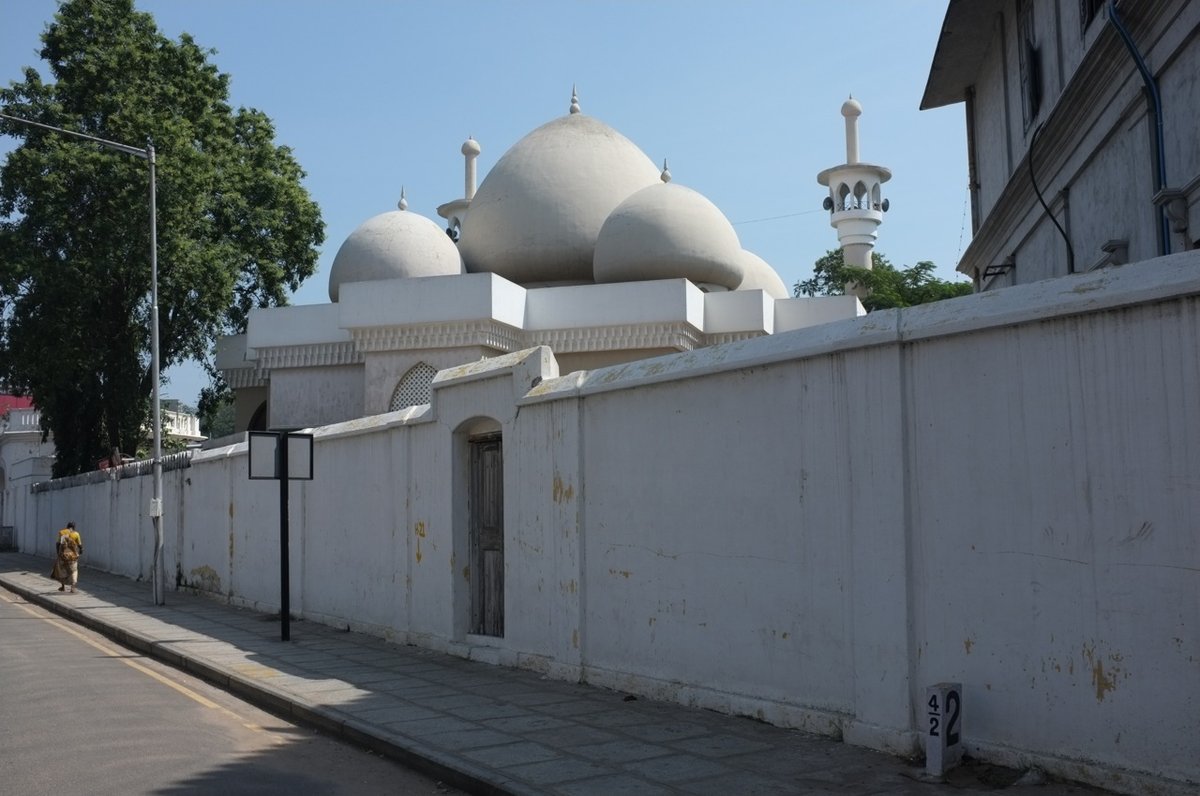
Triplicane Big Mosque star Top Rated

Triplicane Big Mosque

Mgr and Jayalalitha Memorial star Top Rated

Mgr and Jayalalitha Memorial

St. Andrew'S Church, Chennai

St. Andrew'S Church, Chennai

Thousand Lights Mosque

Thousand Lights Mosque

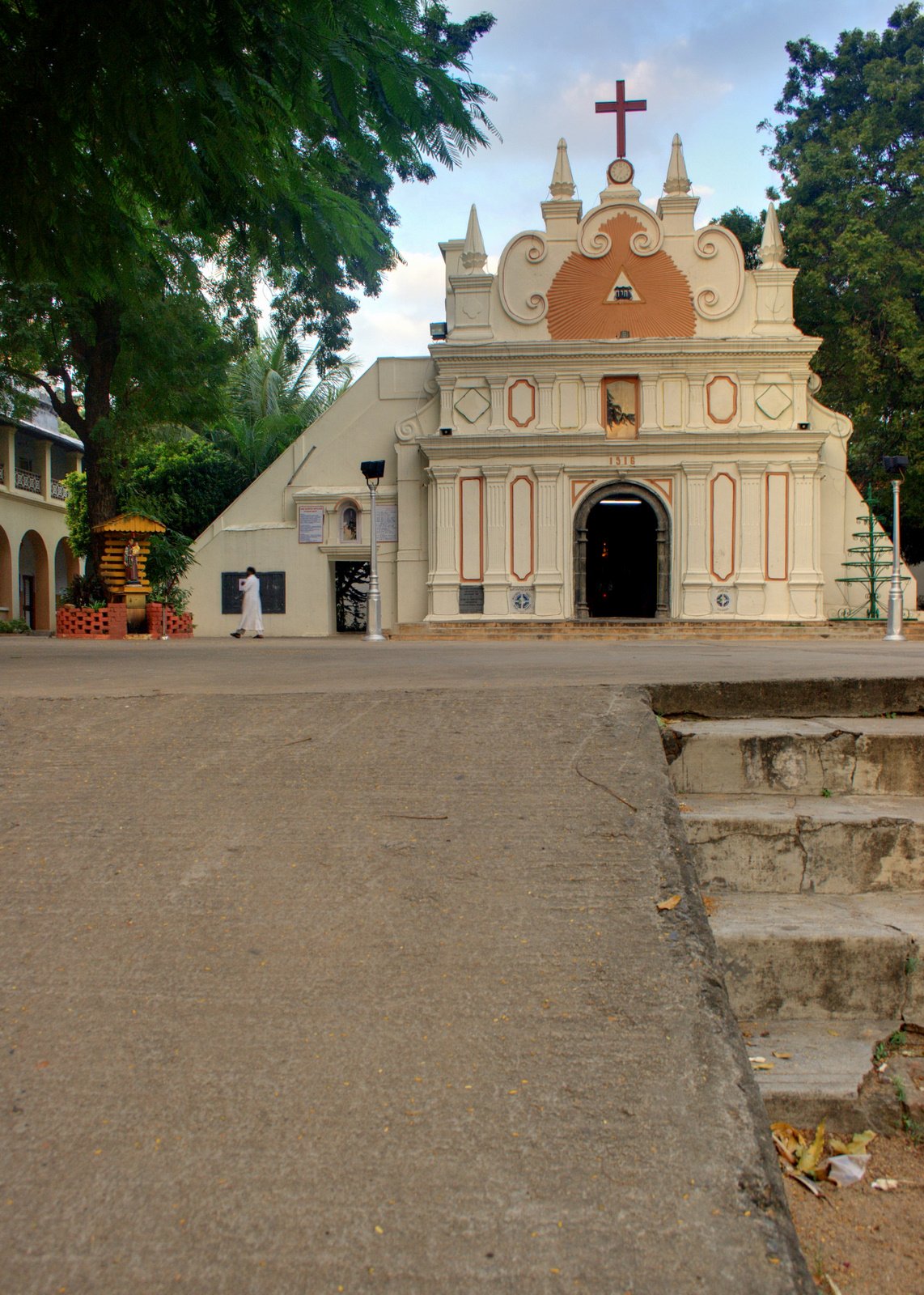
Church of Our Lady of Light, Chennai

Church of Our Lady of Light, Chennai

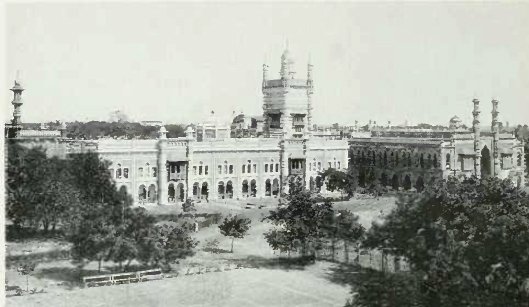
Chepauk Palace

Chepauk Palace

photo_camera

May Day Park

Anna Memorial

Anna Memorial

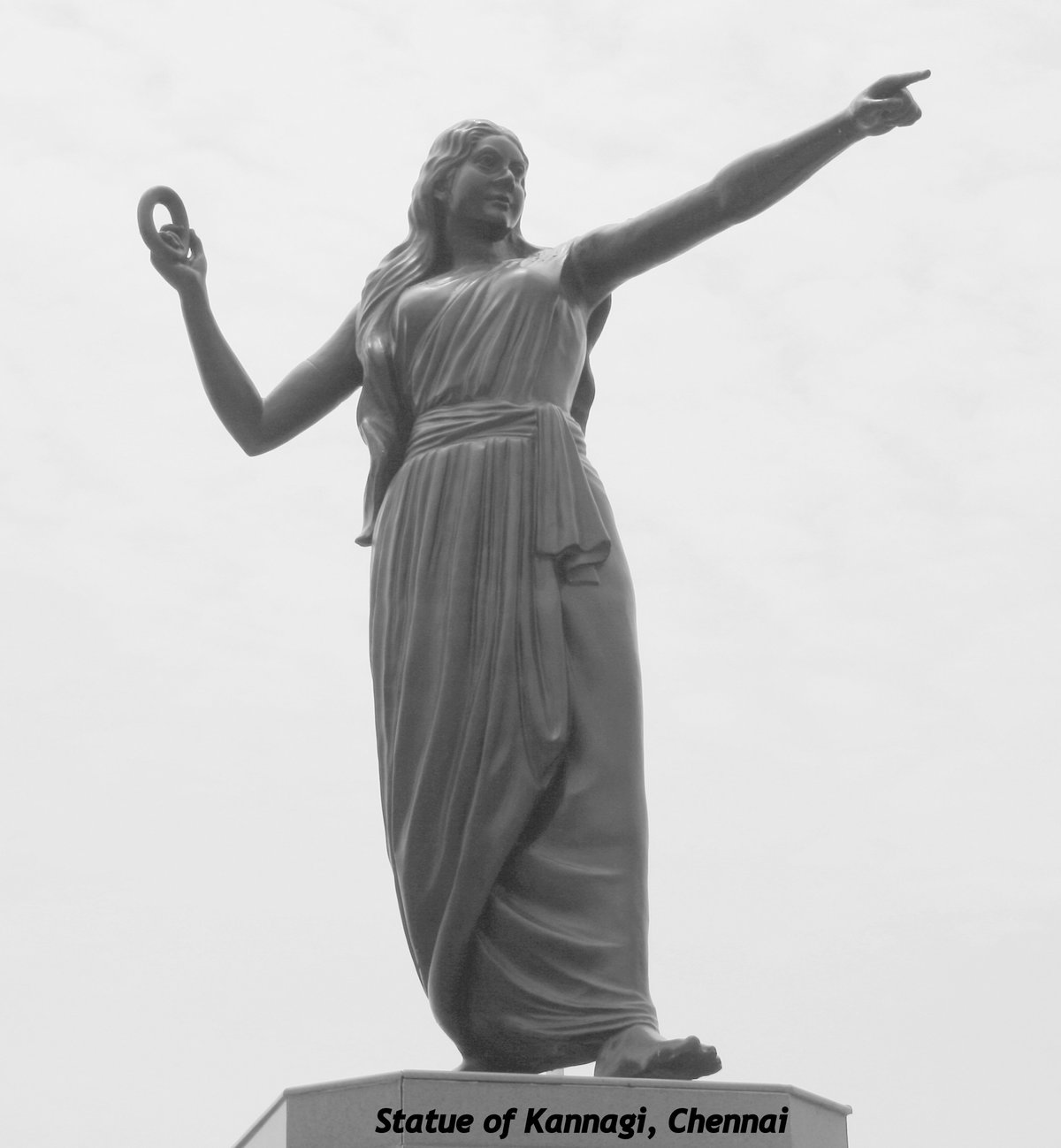
Kannagi Statue

Kannagi Statue

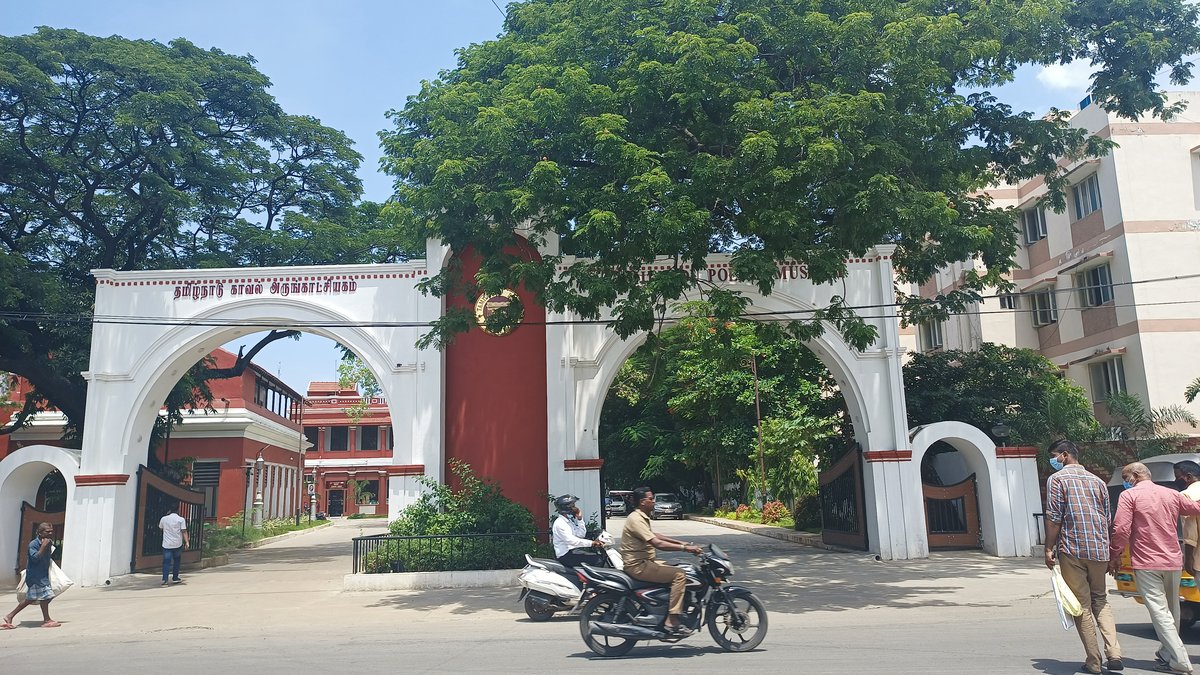
Tamil Nadu Police Museum

Tamil Nadu Police Museum

photo_camera

Saint Patrick'S Cathedral, Chennai

photo_camera

Periamet Mosque

photo_camera

Bahram Jung Mosque

photo_camera

Hafiz Ahmad Khan Mosque

photo_camera

Dharma Kidangu Mosque

photo_camera

Casa Verona'S Mosque

Victoria Public Hall star Top Rated

Victoria Public Hall

photo_camera

Tholkappia Poonga

Birla Planetarium

Birla Planetarium

photo_camera

Madras War Cemetery

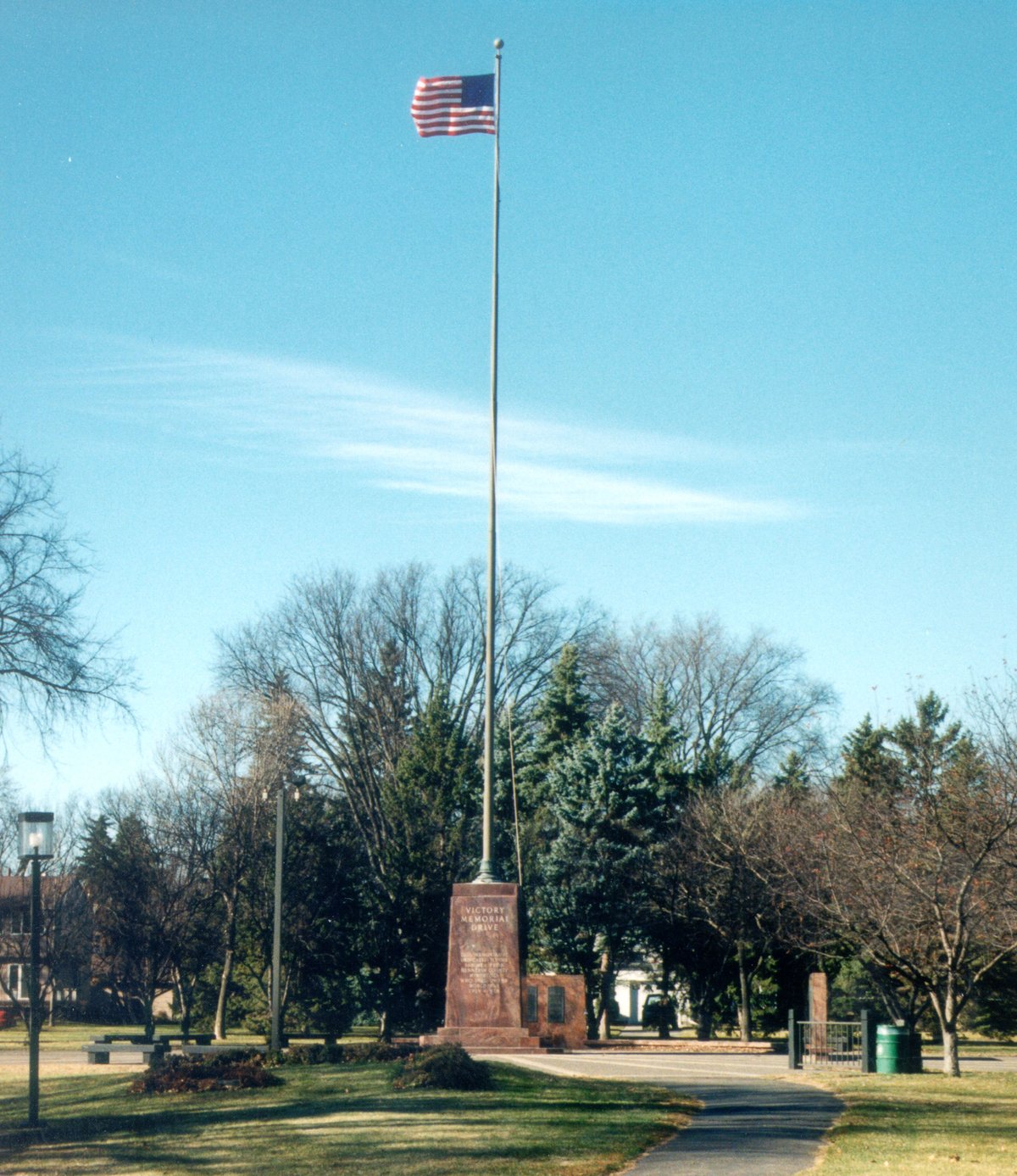
Victory War Memorial

Victory War Memorial

University of Madras

University of Madras

Fort St. George

Fort St. George

photo_camera

M. A. Chidambaram Stadium

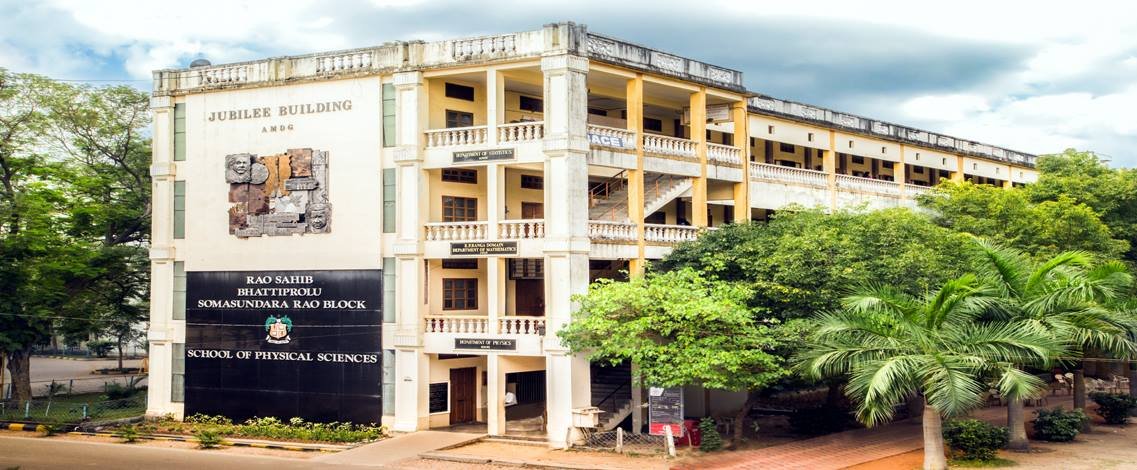
Loyola College

Loyola College

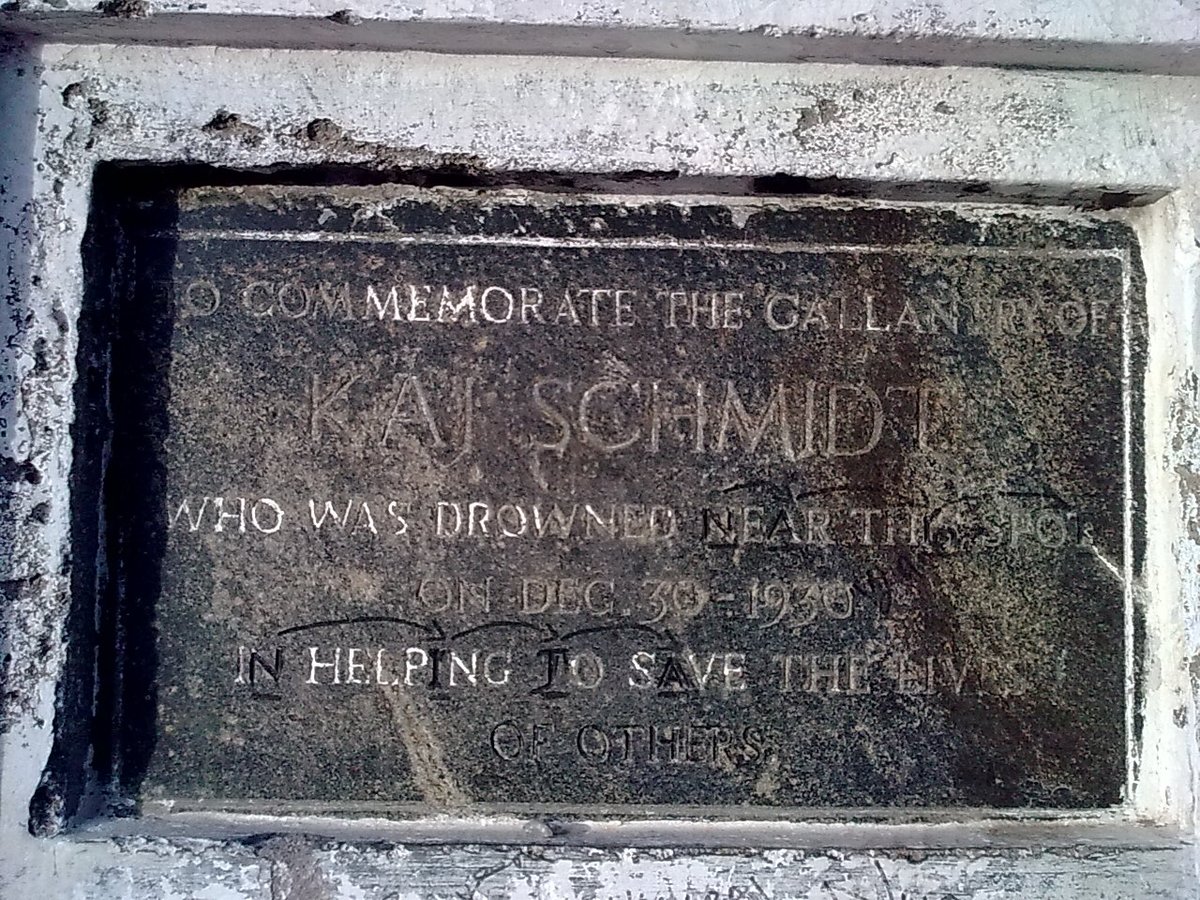
Karl Schmidt Memorial

Karl Schmidt Memorial

George Town

George Town

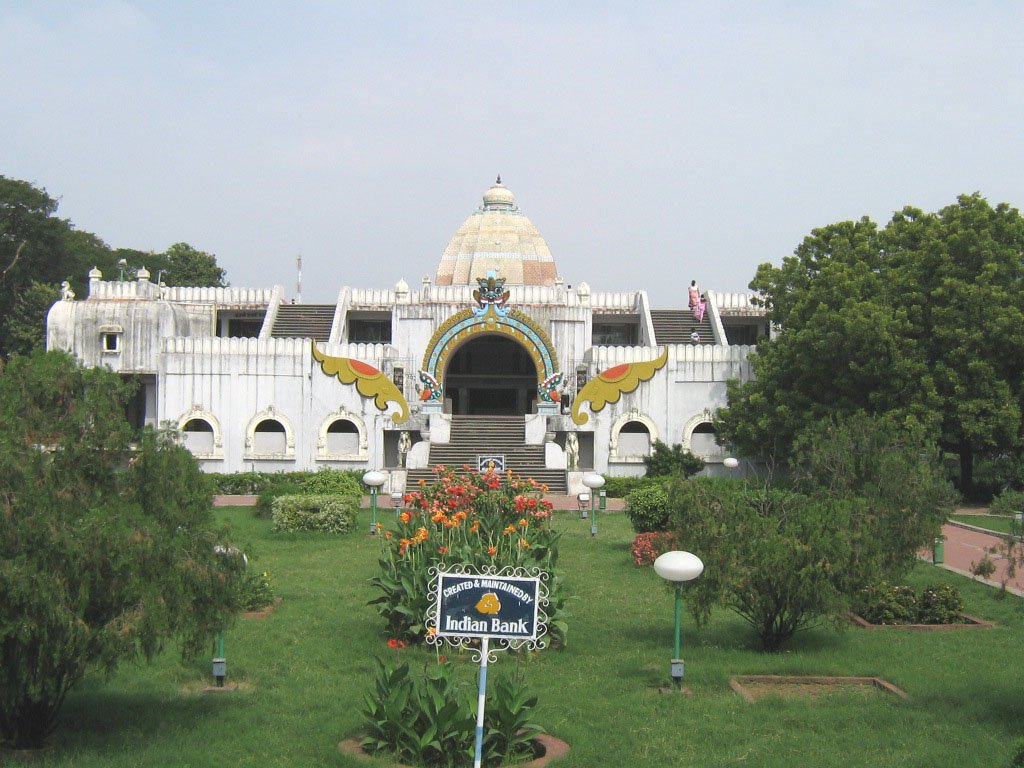
Valluvar Kottam

Valluvar Kottam

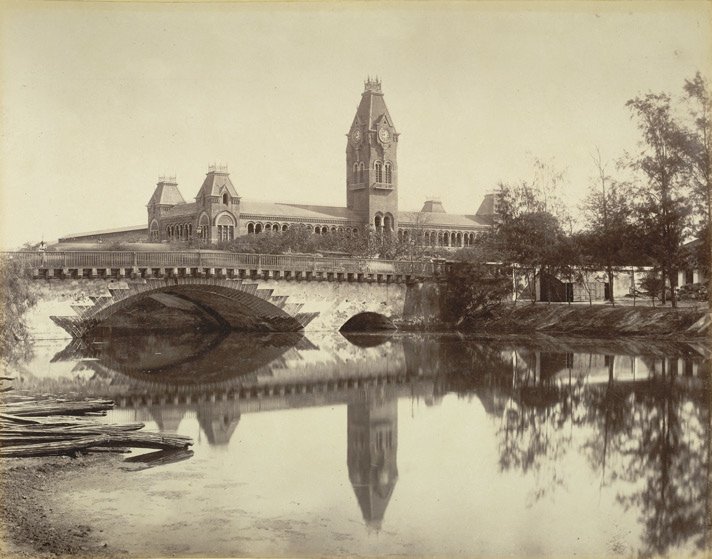
Chennai Central Railway Station

Chennai Central Railway Station

Madras Observatory

Madras Observatory

Sathyabama University

Sathyabama University

Ripon Building

Ripon Building

photo_camera

Vivekanandar Illam

photo_camera

Sdat Tennis Stadium

photo_camera

British Deputy High Commission Chennai

photo_camera

Dash N Splash

Chennai Lighthouses

Chennai Lighthouses

General Post Office, Chennai

General Post Office, Chennai

Senate House

Senate House

Equestrian Statue of Thomas Munro

Equestrian Statue of Thomas Munro

Triumph of Labour

Triumph of Labour

World Trade Center Chennai

World Trade Center Chennai

Amir Mahal star Top Rated

Amir Mahal

photo_camera

Bharat Insurance Building

photo_camera

Raintree Hotel, St Mary'S Road

photo_camera

The Raintree Hotel Anna Salai

photo_camera

Chennai Port Trust Centenary Building

Anna Centenary Library

Anna Centenary Library

photo_camera

Taipei Economic and Cultural Center in Chennai

Royapuram Railway Station

Royapuram Railway Station

photo_camera

Southern Railway Headquarters

photo_camera

Egmore Eye Hospital

Madras Music Academy star Top Rated

Madras Music Academy