
Place
France Updated Oct 2026
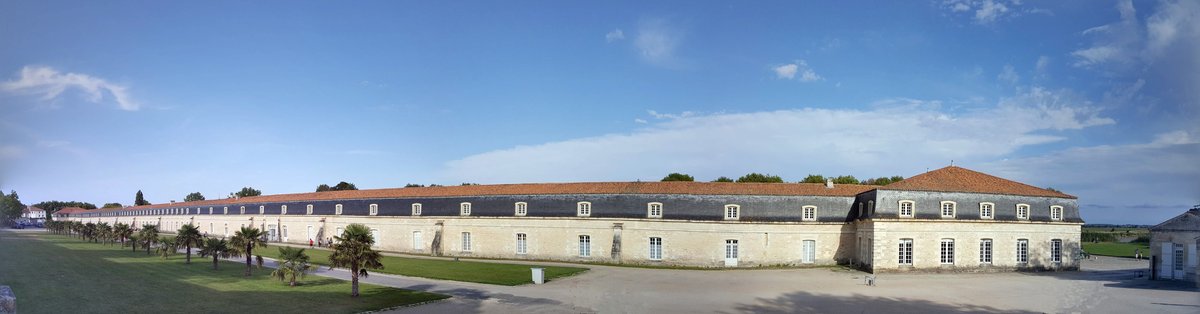
Along the Charente, Rochefort, France, keeps an unlikely monument to its naval past: the Corderie Royale, a 374-metre rope factory whose long brick façade seems to pull the riverbank taut. Louis XIV founded the town as a naval arsenal in 1666, giving it a precise grid and a purpose that still shapes its streets. Today, rope-making demonstrations and the slow glide of a transporter bridge make that history feel close at hand.
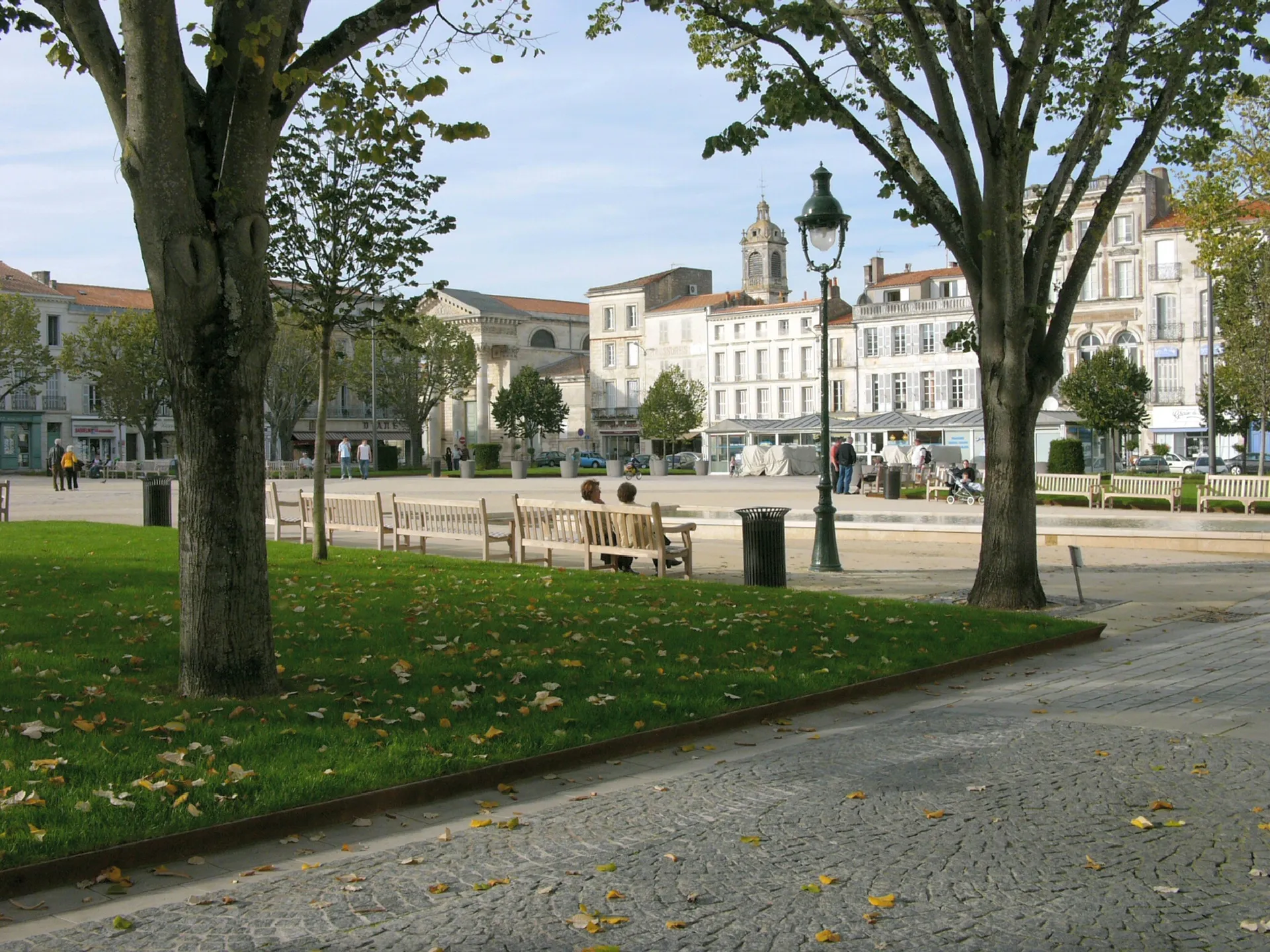 Photo: Patrick Despoix · CC BY-SA 3.0
Built from cited sources · see the method · How we make our guides →
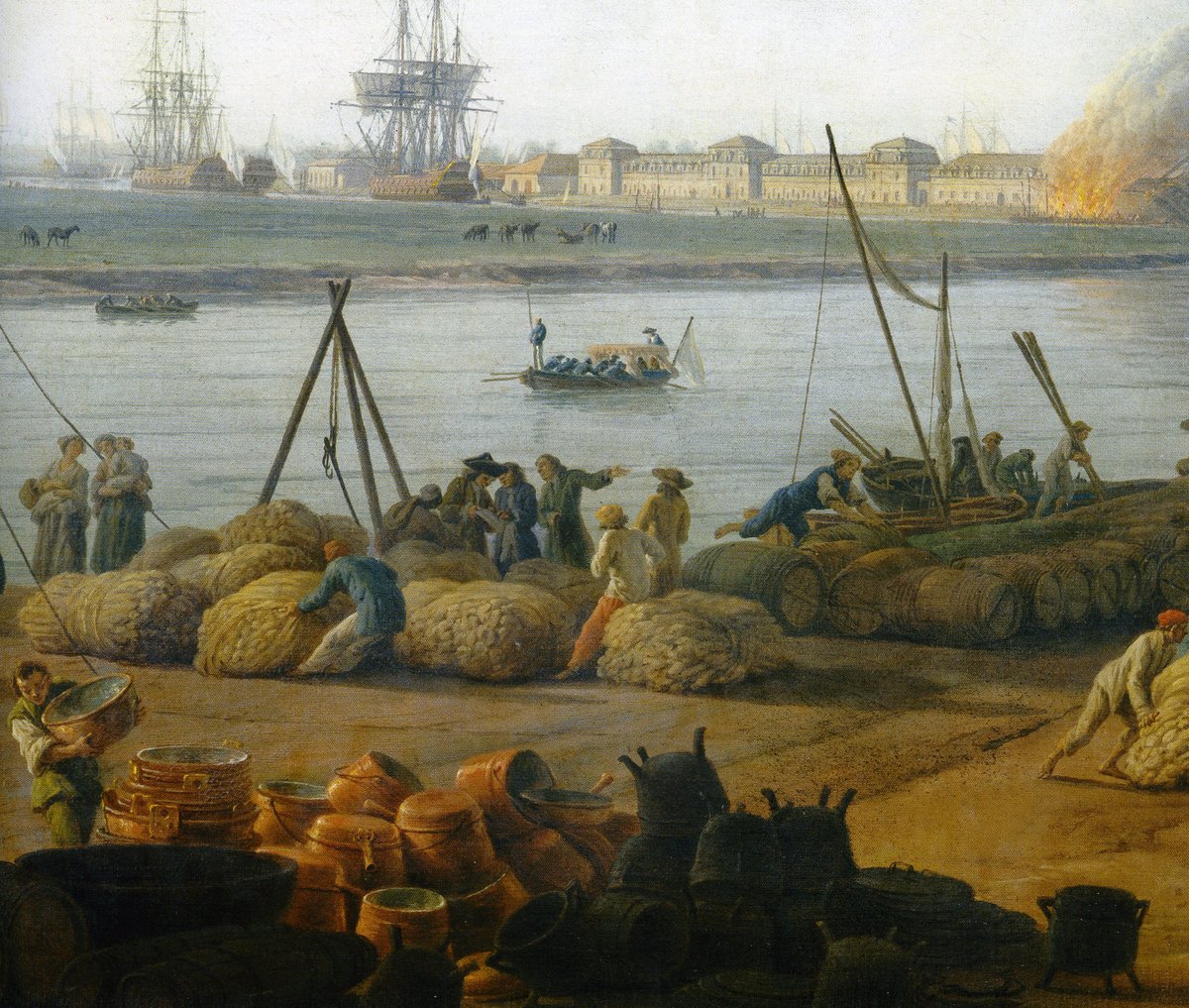
The old dockyard, now grouped under the name Arsenal des Mers, is the city’s defining quarter. At the Corderie, once built on an oak raft over marshland, the Centre International de la Mer brings rope-making and knot-tying within earshot; nearby, the Hermione’s dry dock and workshops tell the story of the frigate replica built here from 1997 to 2015.
Rochefort’s orderly façades conceal some wonderfully unruly interiors. The recently reopened Maison de Pierre Loti, the naval officer and novelist’s former home, shifts from a modest street front into rooms inspired by voyages, including a Turkish mosque and a Chinese pagoda; the former Naval Medical School, founded in 1722, preserves a library of 25,000 volumes and a cabinet of medical curiosities.
At Place Colbert, café tables gather around the fountain where Jacques Demy filmed Les Demoiselles de Rochefort in 1966; the market nearby brings oysters, melons, and Charentais cheeses into the morning streets. Farther along the river, the 1900 Martrou transporter bridge carries pedestrians and cyclists in a suspended gondola. Rochefort was designed to send ships out to sea, yet its most revealing stories are still found on shore.
Not every monument, just the ones we'd walk you past ourselves.
Where to wander, by quarter — each with its own rhythm.
Before you go
From a marshland stronghold to a living archive of French naval history
A reference usually dated to 1085 names Roccafortis, though this early mention is not firmly established. The name suggests a fortified place on a limestone rise above the Charente marshes, centuries before royal planners laid straight streets here.
By the 13th century, Rochefort had a small rural lordship and a fishing community gathered around Notre-Dame, now called the Vieille Paroisse. The settlement was modest; the royal dockyards that would redraw it were still far in the future.
The oldest tower of the Hôtel de Cheusses manor is generally dated to the early 17th century, when the estate belonged to the lords of Cheusses. Its stonework survives as a reminder that Rochefort had a life before the king’s shipbuilders arrived.
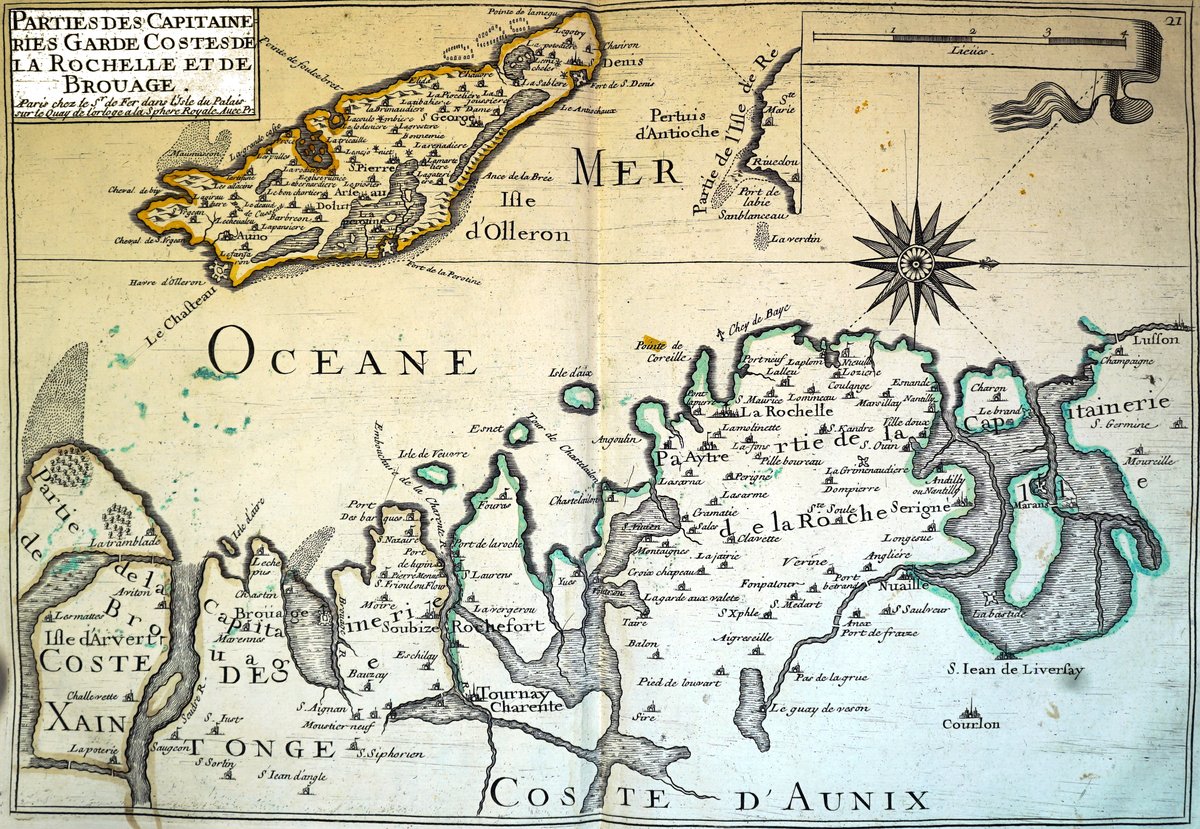
Louis XIV and his minister Jean-Baptiste Colbert needed a powerful Atlantic naval base, and they chose Rochefort for the shelter of a bend in the Charente. Set inland from the open sea, the site offered protection from bombardment—though its marshes would bring their own dangers.
Rochefort was founded as a royal town beside the new Arsenal du Ponant, with engineers François Blondel and Louis Nicolas de Clerville laying out its ordered grid. Work began on the Corderie Royale, a 374-meter rope factory built on an oak raft over marshy ground.
Jean-Baptiste Colbert made Rochefort part of Louis XIV’s effort to rebuild French sea power, backing the arsenal and the new town that served it. His plans gave the city its purpose: ships, rope, timber, and thousands of workers gathered beside the river.
Construction began on the Vieille Forme, a stone-masonry dry dock directed by François Le Vau and described as the first of its kind in France. A ship could now be hauled clear of the water for repairs, an engineering advance that helped turn Rochefort into a working naval machine.
Michel Bégon became intendant of the Marine at Rochefort and held the post until 1710. He oversaw the shift from rough timber buildings toward a more orderly city of pale stone; the begonia later took its name from this patron of botany.
Rochefort began building fortified ramparts around its growing naval town. They marked a boundary between the arsenal city and the surrounding marshes, while the damp ground continued to make disease a persistent danger for workers and recruits.
In March, the frigate L’Hermione left Rochefort carrying the Marquis de Lafayette to America, where he sought French support for the American Revolution. The ship was built in these yards; its departure turned the arsenal’s timber and labor into a vessel bound for a revolution overseas.
The Revolution confined 829 nonjuring priests aboard prison ships off Rochefort, including the Deux-Associés and the Washington. Typhus and starvation killed more than 500 before the ordeal ended; the crowded hulks became a place of religious persecution and human loss.
On April 11–13, British forces attacked the French fleet anchored in the Basque Roads, at the mouth of the Charente, using fireships. The assault damaged French vessels and exposed the vulnerability of the naval base Rochefort had been built to protect.
After Waterloo, Napoleon reached Rochefort on July 3 hoping to escape to America. He went on to nearby Île d’Aix and surrendered to Captain Frederick Maitland aboard HMS Bellerophon on July 15, beginning his final exile.
Architect Auguste Giral designed the Porte du Soleil, the monumental entrance to the arsenal. Its stone arch gave the working dockyard a ceremonial face, framing a site otherwise measured in hulls, ropes, and military schedules.
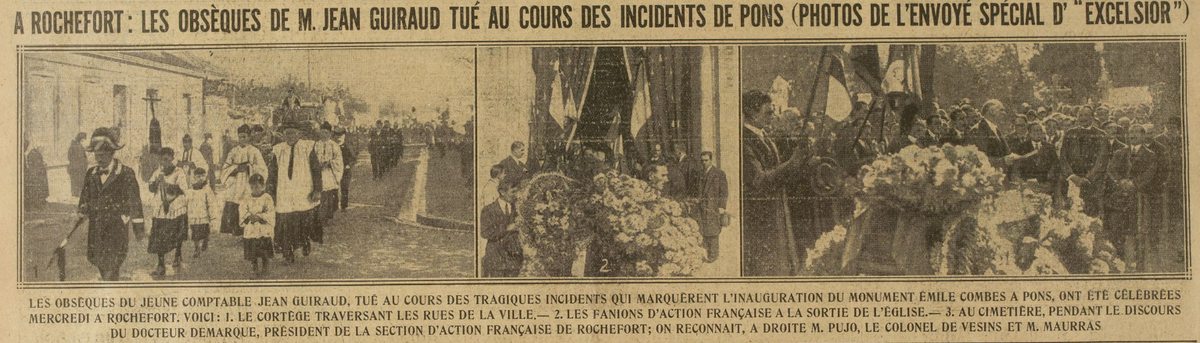
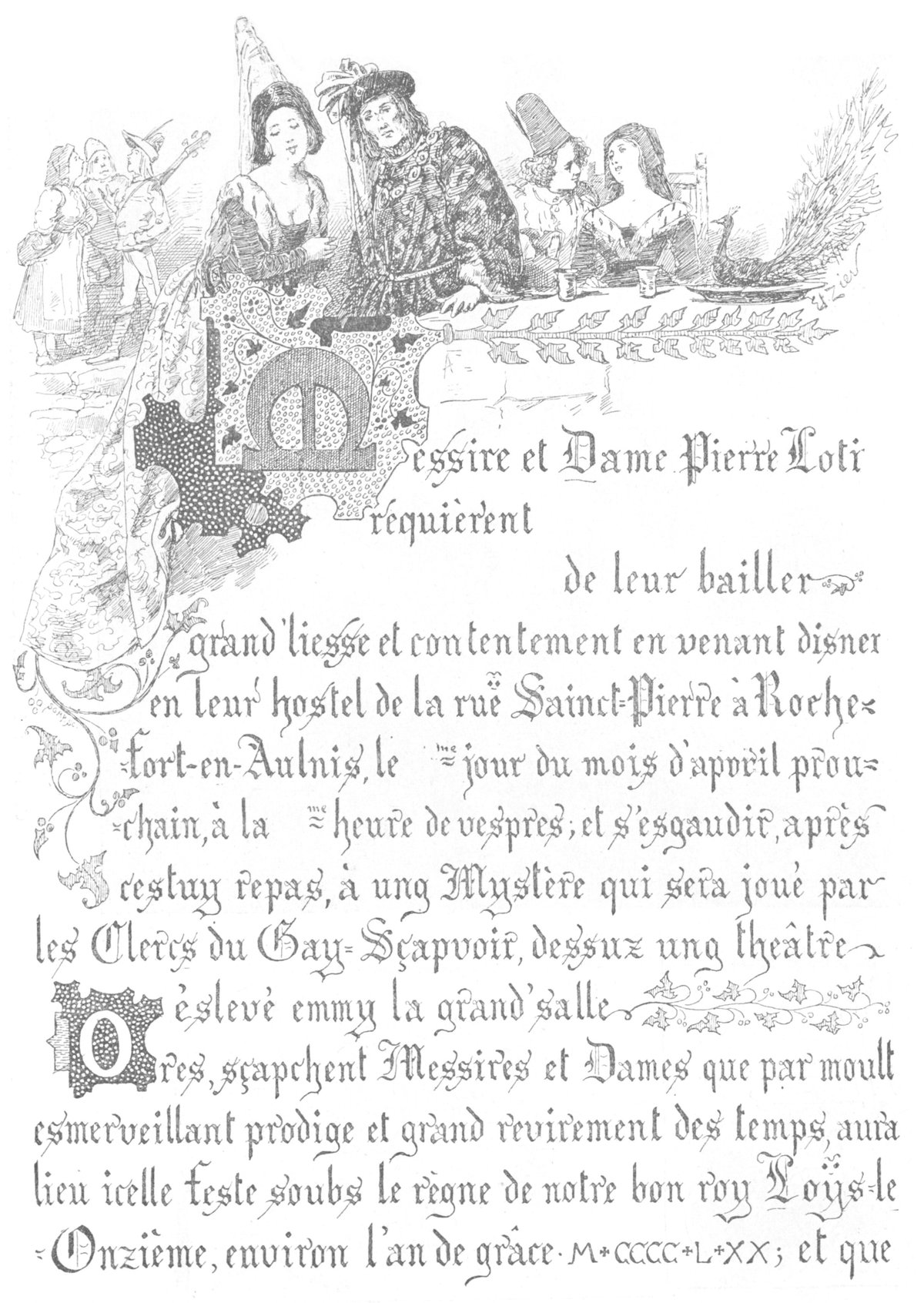
Julien Viaud, later known as the writer Pierre Loti, was born in Rochefort at 141 rue Saint-Pierre, now rue Pierre Loti. He later filled his family home with rooms inspired by his naval travels, turning a local house into an unusually personal record of the wider world.
After decades of construction, Fort Boyard was completed in the outer roadstead to defend the approaches to Rochefort. Its low stone mass sits between Île d’Aix and Île d’Oléron, a reminder of how seriously the French state guarded the route to its arsenal.
Ferdinand Arnodin’s transporter bridge opened on July 29, carrying passengers across the Charente in a suspended gondola while leaving the river clear for tall-masted ships. Its solution was both practical and elegant: the crossing moved, but the channel stayed open.
Engineer Ferdinand Arnodin brought his expertise in metal cables and suspended bridges to Rochefort’s crossing at Martrou. The structure became one of his best-known works, and its gondola still makes the engineering feel close enough to touch.
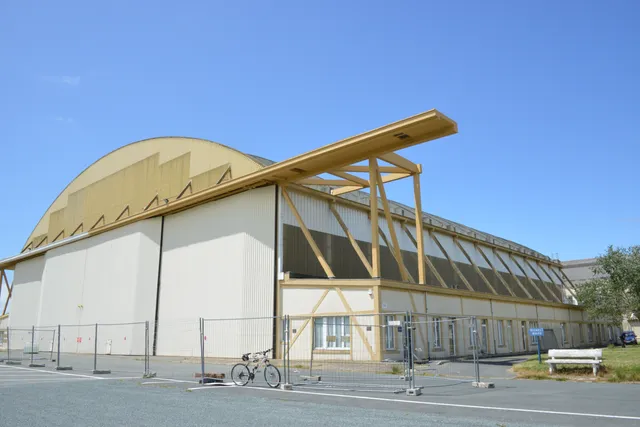
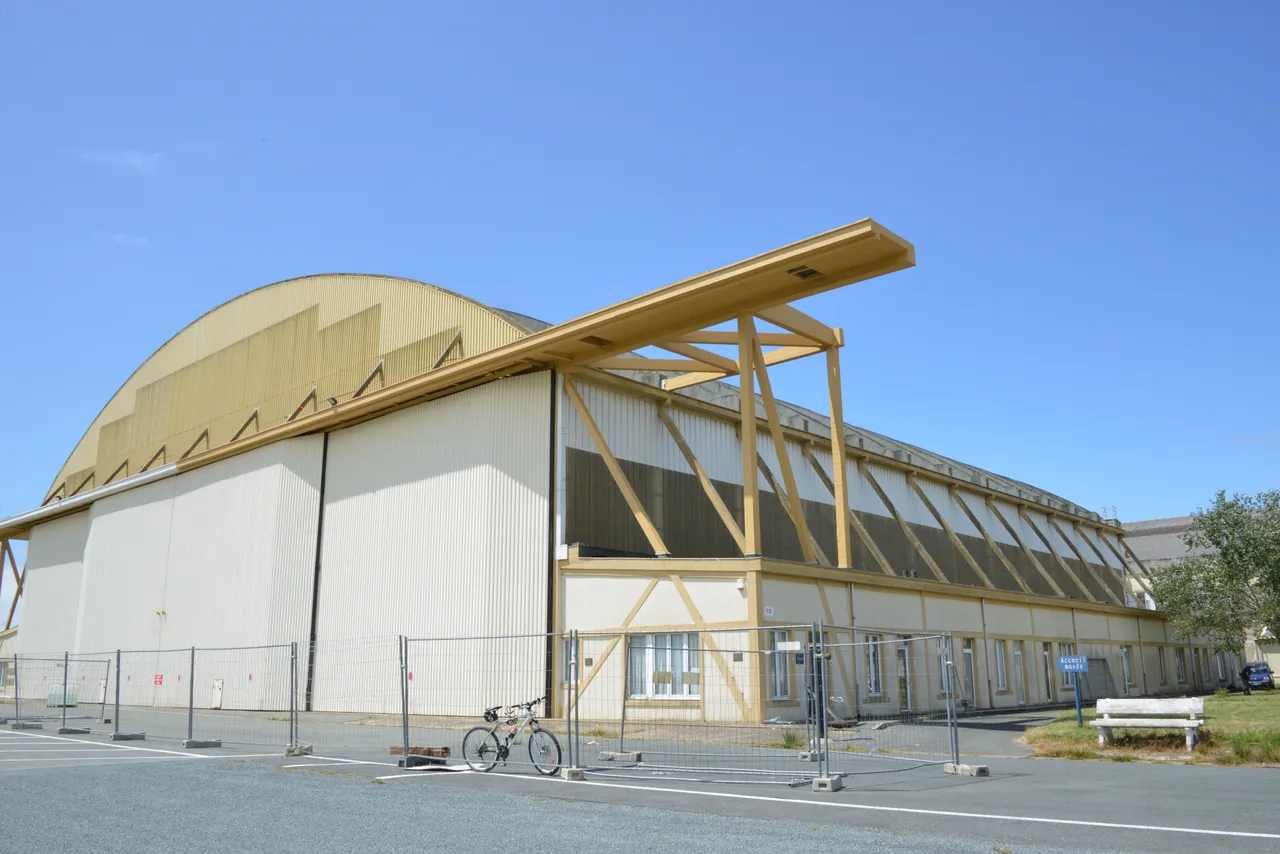
Rochefort established a naval airship station and aviation training school during the First World War. The city’s military identity was expanding beyond the water: the sky above the river now belonged to naval crews as well.
The naval arsenal closed after more than 260 years and over 500 warships, as silting in the Charente and the needs of larger modern vessels weakened Rochefort’s role. The maritime prefecture moved away in 1927, leaving the city to reckon with what happened when its main employer vanished.
Rochefort dismantled its remaining 17th-century ramparts, opening the old center to the suburbs beyond. The walls had once guarded an arsenal; now their removal made room for a city no longer defined by its military perimeter.
German forces occupied Rochefort during the Second World War, and retreating troops set fire to the Corderie Royale and naval installations in August. The city was liberated on September 12, but the blackened rope factory stood as evidence of what retreat could leave behind.
Jacques Demy filmed his musical Les Demoiselles de Rochefort in the city, using Place Colbert and other familiar streets as part of its bright, carefully composed world. The film made Rochefort itself part of the story, rather than a backdrop that could be exchanged for another town.
Director Jacques Demy chose Rochefort for Les Demoiselles de Rochefort, drawn to its regular streets and the open geometry of Place Colbert. His film joined the city’s naval inheritance to a new kind of public memory: one carried by songs, color, and cinema.
The Martrou transporter bridge ceased regular service for motor traffic as newer road crossings took over. Its industrial purpose faded, but the iron structure remained over the river, too distinctive to mistake for an ordinary bridge.
A state-backed renewal program began repairing historic housing, restoring the ruined Corderie Royale, and clearing silt from the old harbor basins. The former arsenal was becoming a place to interpret and reuse, rather than a military site waiting to disappear.
Shipwrights began building a full-scale replica of the 18th-century frigate in Rochefort’s historic dry docks. The project took 17 years, with traditional craft and modern safety standards meeting over oak frames, iron fittings, and hand-worked rigging.
The rebuilt L’Hermione made its transatlantic voyage from France to the United States, retracing the route associated with Lafayette’s 1780 passage. A ship once made to carry an alliance now carried the memory of the dockyard that built its original.
After a four-year restoration, the Martrou transporter bridge reopened to pedestrians and cyclists. Its gondola again crosses the Charente, and the old structure has found a new purpose without losing the reason it was built: to span the river and leave the channel clear.
Novelist and naval officer · 1850–1923
Born in Rochefort; transformed his family home
Born in Rochefort as Julien Viaud, Loti spent decades turning his family home into a sequence of theatrical rooms filled with objects from his naval travels. The plain street exterior still guards that private world; he might recognize the city’s old dockyard, but not the crowds coming to see his rooms.
King of France · 1638–1715
Established Rochefort as a royal naval port in 1666
In 1666, Louis XIV backed the creation of Rochefort as an Atlantic naval port, giving the town its reason for being. The long, disciplined lines of the arsenal still carry the imprint of a king who wanted maritime power built in stone and timber.
Minister of State · 1619–1683
Directed the creation of Rochefort’s naval arsenal
Colbert helped shape Rochefort into a working royal dockyard, with the Corderie Royale built to supply warships with rigging. He might be surprised to find visitors lingering where ropes once served the fleet, but the riverfront still makes his practical ambition legible.
Emperor of the French · 1769–1821
Reached Rochefort in July 1815 before surrendering to the British
After his second abdication, Napoleon arrived in Rochefort on July 3, 1815, hoping to sail for America; instead, he surrendered to the British near Île d’Aix. The town was a last threshold between France and escape, a history that feels far away from its quiet squares until you follow the route toward the water.
Film director · 1931–1990
Filmed Les Demoiselles de Rochefort in the city in 1967
Demy brought Catherine Deneuve, Françoise Dorléac and Gene Kelly to Rochefort to film his 1967 musical, turning Place Colbert into part of its choreography. Today the square’s stone façades still frame the movie trail, though ordinary café life has replaced the dancing.
Where locals actually book dinner — not the tourist menus.
Small things that change how the city treats you.
The city, as it actually looks.


Yes, if maritime history, unusual engineering and literary interiors appeal to you. The 374-metre Corderie Royale, the Martrou transporter bridge and Pierre Loti’s restored house give the town a character quite different from a standard Atlantic seaside stop.
Allow 2 days for Rochefort’s main museums, the naval arsenal and the town centre. Add another day for an excursion to Île d’Aix or a boat trip near Fort Boyard.
Rochefort is known for the royal naval arsenal founded in 1666 and the 374-metre Corderie Royale built to make rigging for warships. The town is also associated with novelist Pierre Loti and Jacques Demy’s 1967 musical Les Demoiselles de Rochefort.
The train journey takes about 20 minutes, according to local travel information. Check current train times before you go, since schedules can change.
Published approximate fares are €2.10 one way and €3.20 for a return crossing. The suspended gondola carries pedestrians and cyclists; check the official bridge site for current fares and operating details.
The local sources consulted here do not provide Rochefort-specific crime figures, so they cannot support a data-based safety rating. Take normal care of valuables and check your government’s latest France travel advice before departure.
Yes. Visits require advance online booking and are conducted in small groups of 10, so reserve a place before travelling to Rochefort.
16 places to discover

Saved and recently read places — kept on this device only.
Photos may have been resized or cropped.