Introduction
The first thing that hits you in कोणार्क is the sound of the sea breathing through stone. Thirty-metre-high wheels carved in the 13th century still cast shadows sharp enough to tell time, and every groove hums with the same salt wind that once carried Odissi bells across the dance hall. This is Bhart’s coast at its most theatrical: a ruined sun temple that behaves like a sundial, a beach where sculptors turn sand into temporary myth, and a town that only truly wakes up during festival week when floodlights replace the missing tower.
Most visitors arrive, photograph the chariot, and leave before the heat peaks. Stay until the light softens and you’ll see what the guides skip: river otters in the Kushabhadra estuary, potters firing diyas behind the craft stalls, and the way the stone horses seem to lean into the breeze at exactly 5.47 pm. Konark is a single-lane settlement that punches far above its weight because every December the government hauls in a stage, an orchestra pit and 3,000 folding chairs, turning an archaeological zone into an open-air theatre.
Between festivals the town reverts to a drowsy pilgrimage-service economy. Cycle-rickshaw drivers nap in the shade of banyans whose roots grip old sculpture fragments; widows sell papaya slices dusted with black salt; and the only bar sits inside a beach resort that closes at ten. The real neighbourhood map is temporal, not spatial: morning is for the fishing boats at Chandrabhaga, afternoon for the museum’s broken apsaras, dusk for the light-and-sound show that finally gives the missing sanctum a voice.
सूर्य मंदिर कोणार्क 🛕|| Puri to konark bus journey || konark sun temple vlog || Heritage और History
Nomad DK vlogPlaces to Visit
The Most Interesting Places in कोणार्क
What Makes This City Special
Sun Temple’s Living Wheels
Stand under 3.7 m stone wheels carved to work as sundials: the shadow tells time to the minute. The entire 13th-century chariot-temple was engineered as a cosmic clock.
Dance Festival in the Ruins
Every December the collapsed natya-mandira becomes an open-air stage for Odissi dancers. Floodlights pick out erotic friezes behind the performers; the stone seems to move with them.
Dawn at Chandrabhaga
Local fishermen still launch catamarans where the temple’s lost sanctum once lined up with the horizon. Sunrise hits the Bay of Bengal first, then bounces gold onto the chariot wheels.
Historical Timeline
Where Stone Chased the Sun Across the Bay
From leper-prince legends to laser-light chariots, Konark keeps rewriting its own ruins.
Ashoka’s War Reshapes Coast
Kalinga’s blood-soaked beaches after Ashoka’s invasion turn the region Buddhist, but the shoreline that will one day host Konark already hums with salt traders. The carnage is 60 km north, yet the memory of red tides drifts south on monsoon winds.
Ptolemy Pins Kannagara
Alexandrian cartographers mark Kannagara on parchment—probably this very spit of land—where Odia sailors swap rice for Roman wine. The name vanishes from later maps, but the anchorage stays; amphora shards still wash up after storms.
First Sun Shrine Rises
A modest brick-and-laterite temple to Surya goes up beside the Chandrabhaga creek. Fisherfolk leave turmeric and conch shells at the doorway; the walls are barely waist-high, yet priests already insist sunrise here can cure skin disease.
King Narasimha I Born
The boy who will bankroll Konark’s cosmic chariot enters the world in Cuttack’s stone palace. His lullabies are war drums; by twelve he’s riding elephants, by twenty he’ll sack Bengal and bring back architects as spoils.
Victory Sparks Megaproject
After torching Gauda, Narasimhadeva I vows a temple grander than any defeat. Surveyors pace the dunes, measuring shadows at equinox. Quarrymen at Kuruma feel the first bite of chisels into chlorite; the stone screams all the way to the coast.
Sun Idol Sees First Dawn
Magha Shukla Saptami: 1,200 artisans watch as a 3-ton chlorite Surya is hauled 68 m skyward. Conch shells drown the surf; dawn light strikes the idol’s face, then flashes off 24 copper-clad wheels. The temple is already rumor made granite.
Copper Plates Record Repairs
Narasimha IV’s accountants tally 46 kg of gold leaf for re-gilding the chariot’s hubcaps. Pilgrims still pour in; the tower stands proud, its shadow reaching the beach like a sundial that tells century-time.
Chaitanya Dances Here
The Bengal reformer detours from Puri, clapping conch-shell beats that echo off erotic friezes. Local boys mimic his steps; the first seed of Konark’s dance legacy is planted amid stone apsaras who have been frozen mid-spin for two centuries.
Kalapahad Breaks the Spire
Afghan cavalry thunder down the marine drive, toppling the 68 m tower in a cloud of laterite dust. They hack the Sun god’s face, melt the copper horses, leave the chariot wheel-less. Overnight Konark becomes a cautionary tale carved in rubble.
Abul Fazl Still Stares
The Mughal chronicler notes ‘a wonder the equal of which does not exist’—even roofless, the temple makes him swallow his ink. His praise keeps Konark on parchment if not on prayer mats.
Idol Smuggled to Puri
Under cover of monsoon, Khurda porters drag the surviving Sun image 35 km north to Jagannath’s precinct. Konark’s sanctum is now only sky; pigeons nest where priests once stood.
British Marines Measure Ruin
East India surveyors sketch fallen architraves and label them ‘Hindoo Cyclopean.’ They recommend propping the jagamohana with sand—an emergency fix that will last 122 years and turn the hall into a gigantic hourglass.
Last Vault Crumbles
A thunderclap at dusk; the final section of the tower’s spine folds inward. Goatherds describe a plume of red dust taller than the lighthouse at False Point. After this, even ghosts prefer the beach.
Engineers Fill Hall with Sand
British engineers pour 2,000 ton of river sand through holes bored in the ceiling, turning the dance hall into a static bunker. The temple survives, but its voice—once ringing with cymbals—goes muffled for a century.
Gangadhar Pradhan Born
In a nearby fishing hamlet, the boy who will resurrect Konark’s heartbeat first hears Odissi bells from traveling performers. By 1986 he’ll stage the inaugural dance festival inside the Natya Mandir, making stone dancers partner living ones.
UNESCO Flags the Chariot
World Heritage status arrives like a passport stamp no one applied for but everyone wanted. Suddenly the ASI has budgets, guards, even a ticket booth. Konark trades pilgrims for package tours, but the stones don’t complain—they’ve waited six centuries for this encore.
Sand Artists Claim Beach
Chandrabhaga hosts India’s first International Sand Art Festival; artists carve 6 m-high Suryas that sunset will erase. For once the temple is not the temporary one—its granite outlasts every ephemeral replica on the tide line.
Sand Pumped Back Out
ASI reverses 1903: vacuum hoses suck grains from the jagamohana while drones map cracks. Engineers debate carbon-fiber braces versus traditional lime; the temple holds its breath, learning to stand without the weight that saved it.
Laser Chariot Relaunches
Rs 6 crore of light paint the ruins nightly—horses gallop across stone, wheels rotate in neon. Three hundred plastic chairs fill with phone-lit faces; the same cliffs that once echoed conch shells now thump with sub-woofers. Konark is again a time machine, just with a different power source.
Notable Figures
Narasimhadeva I
died 1264 · Eastern Ganga kingHe ordered 1,200 masons to freeze sunrise in stone. If he walked the site today he’d probably smile at the missing tower—his monument finally looks like the ruin he wanted poets to mourn.
Photo Gallery
Explore कोणार्क in Pictures
A group of friends posing in front of the ancient, intricately carved stone walls at the historic site of कोणार्क, Bhart.
Sujitkumar 288 · cc by-sa 3.0
Exquisite stone relief sculptures adorn the exterior walls of the historic Sun Temple in कोणार्क, Bhart.
Benjamín Preciado · cc by-sa 3.0
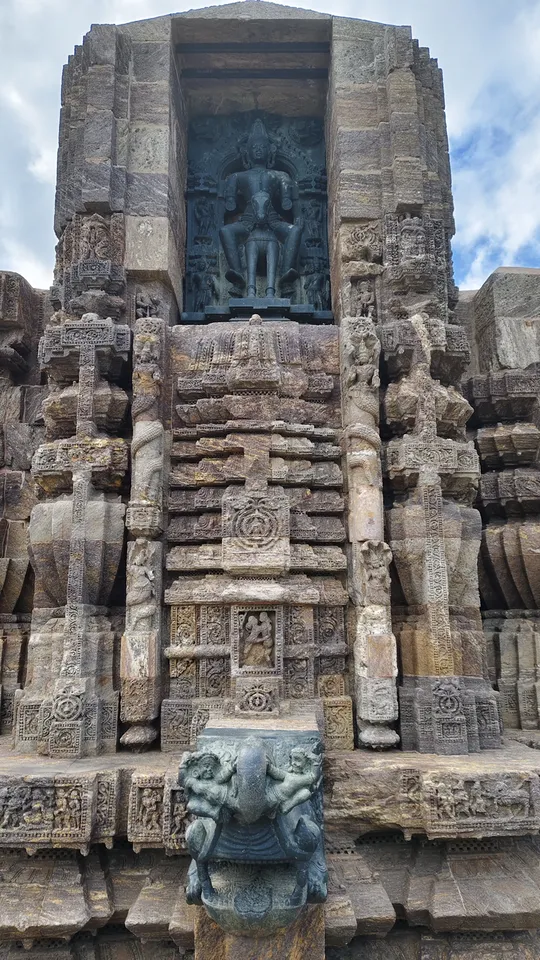
The intricately carved stone facade of the historic Sun Temple in कोणार्क, Bhart, showcases exquisite ancient craftsmanship and religious iconography.
Aliva Sahoo · cc by-sa 4.0
A local vendor displays intricate miniature stone replicas of the famous कोणार्क Sun Temple architecture in Bhart.
Saminathan Suresh · cc by-sa 3.0
The ancient stone architecture of the Konark Sun Temple in Bhart comes alive at night with a spectacular light and sound projection show.
Government of Odisha · cc by 4.0
A bustling market stall in कोणार्क, Bhart, showcases a variety of locally crafted bags, hats, and souvenirs under a rustic canopy.
Kritzolina · cc by-sa 4.0
The majestic Sun Temple in कोणार्क, Bhart, showcases exquisite ancient stone craftsmanship and ongoing preservation efforts.
Mohitfusion · cc by-sa 4.0
A colorful display of traditional Indian handicrafts, featuring intricate wooden wheel replicas inspired by the Konark Sun Temple and stone kitchenware.
Dev Jadiya · cc by 4.0
Videos
Watch & Explore कोणार्क
26 interesting facts about Sun Temple Konark | सूर्य मंदिर के 26 रहस्य
Puri to Konark – Most Beautiful Coastal Road 😍
Konark sun temple puri odisha complete tour guide l Surya mandir konark l budget trip konark l
Practical Information
Getting There
Fly into Biju Patnaik International Airport, Bhubaneswar (BBI), 60 km away. The closest railhead is Puri (PRR), 35 km south; NH-316 coastal highway links both to Konark in under 90 minutes by taxi or Ama Bus.
Getting Around
No metro or tram: Konark is a single-street town. Ama Bus connects Bhubaneswar-Puri-Konark for ₹5–₹50 per ride; day passes ₹40–₹180. Hire auto-rickshaws for Chandrabhaga beach (₹200 return) or cycle the 8 km marine-drive loop—bikes available from Eco Retreat tents Dec-Feb.
Climate & Best Time
Winters (Nov–Feb) are 17–27 °C and dry—peak season. March–May climbs to 32 °C before the June–September monsoon dumps 250 mm monthly. Come November for the Konark Festival or February for the Dance & Music Festival; sea is calmest then.
Safety
Rip currents at Chandrabhaga kill every year—swim only when lifeguards are present (red-yellow flags). Night road transfers from Bhubaneswar carry higher crash risk; pre-book OTDC or hotel cars and avoid 2 a.m. buses.
Where to Eat
Don't Leave Without Trying
SURIYA SUPERMARKET & BAKERY
quick biteOrder: Fresh baked goods, pastries, and coffee — this is Konark's most-reviewed spot for a reason. Grab a warm pastry and espresso before heading to the temple.
With 81 reviews and a perfect 5-star rating, Suriya is the local go-to for breakfast and snacks. The website suggests an active online ordering system, making it genuinely convenient in a small town.
SAHOO DAHI BARA
local favoriteOrder: Dahi bara — the namesake dish of lentil fritters in yogurt sauce. This is authentic Odiya street food, best eaten fresh in the morning (7 AM–3 PM).
Located steps from the Sun Temple, this is where locals actually eat. Dahi bara is a classic Odiya comfort dish, and this spot serves it the way it's meant to be — simple, tangy, and perfect for a quick breakfast or snack.
KONARK TEA TIME
cafeOrder: Tea and light snacks — the name says it all. A straightforward, no-frills spot for chai and a quick bite.
Small and intimate, this is the kind of place where you sit with locals and get the real Konark vibe. Perfect for a pre-temple chai or an afternoon break.
Nature's Cafe
cafeOrder: Coffee, tea, and light breakfast items. A reliable spot with extended hours (7 AM–10 PM most days).
Positioned on Ring Road with longer operating hours than most Konark cafes, Nature's Cafe is ideal if you're arriving early or staying late. The setting is calm and accessible.
Konark Bakery
quick biteOrder: Fresh bread, cakes, and pastries. Open long hours (8 AM–11 PM), so you can grab something sweet after a temple visit.
This bakery stays open later than most Konark spots, making it a solid fallback for dinner-time snacks or dessert. The proximity to the temple and hotels makes it convenient for travelers.
MAA TARINI TIFFIN CENTRE
local favoriteOrder: Tiffin items — breakfast specials and light lunch fare typical of Odiya tiffin centers. Think idli, dosa, or local rice-based dishes.
A genuine local spot near Yatri Nivas (a pilgrimage guesthouse), this is where visiting devotees and locals eat. Tiffin centers are the backbone of Odiya breakfast culture.
MATRUSHAKTI CHICKEN CENTER
local favoriteOrder: Chicken curry or fried chicken — straightforward, honest cooking. If you want meat, this is a local spot that does it well.
Located on the main Konark-Puri Road, this is a no-nonsense chicken shop where locals grab lunch or dinner. It's the kind of place tourists often miss, but it's where real food happens.
MAA BHAGABATI DAHI BARA
local favoriteOrder: Dahi bara — the iconic Odiya snack of spiced lentil fritters in tangy yogurt sauce. A perfect, light breakfast or afternoon bite.
Another dahi bara specialist on Ring Road, this spot is tucked near Vip Lodge and is genuinely local. It's the kind of place you'd eat at if you lived here, not a tourist trap.
Dining Tips
- check Most small Konark eateries do not have posted opening hours — call ahead or ask your hotel for current times, especially for lunch and dinner service.
- check Cash is king in Konark; many local spots do not accept cards. Bring rupees.
- check Temple-side restaurants (near Konark Medical Square) are convenient but often crowded mid-morning. Early or late visits are quieter.
- check Ring Road has the highest concentration of eating spots — it's the informal food hub.
- check Dahi bara and tiffin items are breakfast/early-lunch specialties; many shops close by 3 PM.
Restaurant data powered by Google
Tips for Visitors
Sunrise over wheels
Reach the temple at 6 am; the first light hits the 24 stone chariot wheels and turns them into working sundials. Tripods are allowed, but guards will ask you to stay off the plinth.
Skip midday heat
The sandstone radiates heat after 11 am. Tour the ASI museum at noon instead, then lunch under the banyan at Kamat Court before heading to Chandrabhaga for a 4 pm swim.
Sweet detour
Driving back to Puri? Stop at Nimapara (20 km) for hot chhena jhili from Arta Bandhu—crisp edges, molten centre, gone by 3 pm.
Marine-drive loop
Hire a scooter in Puri and do the 30 km coastal loop: Ramachandi river mouth, Balukhand deer sanctuary, then Konark for the 7 pm light-and-sound show (revamped in Nov 2025).
Festival window
December 1–5 the Konark Festival packs the open-air stage with Odissi dancers; hotel prices jump 40 %. Book rooms in October or stay in Puri and day-trip.
Explore the city with a personal guide in your pocket
Your Personal Curator, in Your Pocket.
Audio guides for 1,100+ cities across 96 countries. History, stories, and local insight — offline ready.
Audiala App
Available on iOS & Android
Join 50k+ Curators
Frequently Asked
Is कोणार्क worth visiting if I’ve already seen Khajuraho? add
Yes. Konark swaps Khajuraho’s vertical temples for a horizontal stone chariot that once rolled across the sky. The erotic panels are here too, but the real thrill is reading the 24 wheels as medieval clocks while salt wind drifts in from the Bay of Bengal.
How many days do I need in कोणार्क? add
One full day covers the temple, museum, Chandrabhaga sunset and the new light show. Add a second day if you want to scooter the marine drive, bird-spot in Balukhand sanctuary and still make the February dance festival.
Can I use public transport from Bhubaneswar airport? add
Take the airport bus to Master Canteen, then Ama Bus route 311 to Puri (₹60, 90 min). From Puri bus stand hop on any Konark-bound minibus (₹40, 60 min). Total cost under ₹120, journey time 3.5 hrs including waits.
Is the Sun Temple wheelchair-friendly? add
The Archaeological Survey has added a ramp up to the dance platform and rubber matting around the wheels. Gravel paths inside the compound remain bumpy; bring a companion for the final 30 m to the main sanctum base.
What does the revamped light-and-sound show cost? add
₹100 for Indians, ₹250 for foreigners, 7 pm–7:40 pm daily in Hindi, English and Odia. The ₹6 crore upgrade (Nov 2025) includes 128-channel surround sound; arrive 20 min early for the limited concrete seating.
Sources
- verified UNESCO World Heritage Centre – Sun Temple, Konarak — Official dossier on architectural layout, conservation status and subsidiary shrines (Mayadevi, Vaishnava).
- verified CRUT Ama Bus route & fare sheet 2026 — Live fares, pass prices and timetable for Bhubaneswar–Puri–Konark public buses.
- verified Deccan Chronicle on Konark light-and-sound relaunch — Details of the November 2025 upgrade: budget, seating capacity and multilingual narration.
Last reviewed: