Industrial Heartbeat
Durgapur's steel plant, built with British assistance in 1955, still defines the city's rhythm. Take a guided tour and feel the heat from blast furnaces that forged modern India.
The air in Durgapur, India, tastes of iron and jaggery. Smoke from the steel plant's cooling towers drifts over a city whose true pride is a sweet, golden-brown dumpling called langcha. This is a place built on a mid-century industrial dream, where the hum of machinery harmonizes with the chants of evening aarti.
DThe air in Durgapur, India, tastes of iron and jaggery. Smoke from the steel plant's cooling towers drifts over a city whose true pride is a sweet, golden-brown dumpling called langcha. This is a place built on a mid-century industrial dream, where the hum of machinery harmonizes with the chants of evening aarti.
Founded in the late 1950s under the vision of Chief Minister Bidhan Chandra Roy, Durgapur was conceived as the ‘Ruhr of India.’ It was a deliberate act of will, a planned city of blast furnaces and broad avenues meant to anchor the state's economy. The UK-assisted Durgapur Steel Plant, commissioned in 1955, still defines the skyline and the rhythm of life for thousands.
But steel is only half the story. The city’s Bengali soul emerges during Durga Puja, when over 200 pandals transform its geometry. The celebrations are more intimate than Kolkata's, with dhunuchi dances and street theater spilling from the temporary temples. Come October, the Damodar River banks glow with the ghats of Chhath Puja, a testament to the North Indian migrants who helped build the plant.
What makes this place worth slowing down for.
Durgapur's steel plant, built with British assistance in 1955, still defines the city's rhythm. Take a guided tour and feel the heat from blast furnaces that forged modern India.
Bhabani Pathak's Tilla is an archaeological mound where you can spot birds and practice yoga at dawn. At sunset, walk the Durgapur Barrage as the Damodar River turns copper.
Skip Kolkata's crowds. The city's 200+ Durga Puja pandals are smaller, letting you smell the incense and watch dhunuchi dancers up close. The celebration feels like a neighborhood festival.
Not every monument, just the ones we'd walk you past ourselves.
Where to wander, by quarter — each with its own rhythm.
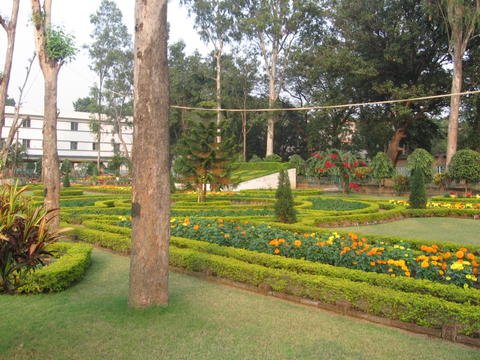
This is the original company town, a 40-square-kilometer planned universe for steel plant employees. It feels like a time capsule of mid-century optimism, with its own schools, hospital, and parks. The air is quieter here, the streets wider. It’s a self-contained world built around the rhythm of the shift change.
The commercial and civic heart beats here. You’ll find Junction Mall, government offices, and most of the city's hotels. It’s functional, modern, and where Durgapur presents its public face. The energy is transactional, a contrast to the residential calm of the townships.
Come here hungry. This residential area is the epicenter of Durgapur’s street food scene. The smell of kathi rolls on the griddle and the tang of tamarind from phuchka stalls fills the evening air. It’s also home to the prominent Ram Temple, its white spires visible above the rooftops.
Forget the steel. This is the neighborhood for sugar and tradition. Its lanes are lined with sweet shops that are local institutions, each claiming the definitive recipe for langcha and sitabhog. The vibe is older, more organic than the planned sectors. This is where Durgapur’s Bengali culinary pride is most palpable.
Organized chaos radiates from the railway station. This is a hub of constant motion, of taxi wallahs and hurried commuters. The food is quick, cheap, and brilliant: steaming ghugni chaat, crispy telebhaja, and flaky mughlai parathas. It’s loud, layered, and utterly alive.
These older neighborhoods retain the bazaar character that predates the steel plant. Narrow lanes, small shops, and a sense of continuous habitation. You won’t find many tourist sights here. You’ll find the city’s bedrock—the daily commerce and community that was here before the planners arrived.
The people who shaped the city — and were shaped by it.
As Chief Minister, Roy envisioned Durgapur in the late 1950s as a planned industrial hub to drive West Bengal's economy. He would likely view today's city with a clinician's eye, assessing how his prescription for growth has aged amidst the soot and sweetshops.
Where locals actually book dinner — not the tourist menus.
Small things that change how the city treats you.
For authentic local sweets, head to the sweet shops in Benachity. This is where you'll find the city's pride, the dense langcha and delicate sitabhog, made for generations.
Plan a trip around Durga Puja (September/October) to see Durgapur's more intimate side. The 200+ pandals are less crowded than Kolkata's, and many serve food and host performances within the pandal grounds.
Book a guided tour of the Durgapur Steel Plant in advance. It's a surprisingly organized look at India's industrial backbone, a legacy of 1950s British collaboration.
Use the Kazi Nazrul Islam Airport (RDP) in Andal, about 30 minutes from the city centre. It's far more convenient than travelling from Kolkata's main airport.
Ask a local driver about Garh Jungle. It's a quiet, dense forest hiding the ruins of an ancient fort and small Shiva and Kali temples, away from the industrial bustle.
The DSP Township is a self-contained city within the city. It has its own parks, schools, and markets, offering a glimpse into a planned, mid-century industrial community.
The city, as it actually looks.
A contemplative moment captured in Durgapur, India, featuring a local youth perched on a wall beneath a fruit-laden mango tree.
Archisman Kundu
A digital sign at Durgapur Govt College in India displays real-time noise levels, temperature, and humidity to promote a quiet campus environment.
Arijit Kisku
A visual overview of Durgapur, India, showcasing its modern transportation hubs, urban development, and cultural landmarks.
খাঁ শুভেন্দু
The stage at the National Institute of Technology in Durgapur, India, during the Aarohan 2013 annual techno-management festival.
Hasanthdayala
The iconic Durgapur Steel City monument stands as a proud landmark in the industrial heart of West Bengal, India.
Anand Prakash
A peaceful, tree-lined road in Durgapur, India, capturing the blend of natural greenery and local infrastructure.
sanjeew singh
A field researcher performs water quality analysis in Durgapur, India, documenting environmental data near an industrial site.
Evgeniya Soldatova
A prominent concrete water tower rises above the residential landscape of Durgapur, India.
sanjeew singh
Runners of all ages participate in the Jai Balaji Group Durgapur 10K 2023 race, held on a bright morning in Durgapur, India.
Sportiz India
The UCO Bank Zonal Office in Durgapur, India, showcasing its unique architectural lattice facade and busy street-level banking facilities.
ARI
Young students in vibrant traditional attire perform a coordinated dance during an outdoor school event in Durgapur, India.
Pic courtesy DSP PR
A view of Durgapur, India.
The original uploader was P.K.Niyogi at English Wikipedia.
Yes, if you're interested in India's industrial history and authentic, smaller-scale Bengali culture. It's not a typical tourist destination, which is its appeal. You get the steel plant's monumental scale alongside quiet forest temples and neighbourhood Durga Pujas that feel more like community events.
Two to three days is ideal. One day for the steel plant and Bhabani Pathak's Tilla, another for Deul Park and the Barrage, and a third to explore the local neighbourhoods like Benachity for sweets and Station More for street food.
Visit from October to March, when the weather is cooler and drier. October specifically lets you experience Durga Puja. Avoid the intense heat and humidity of the April–June summer.
Generally, yes. It's a working industrial city, not a major tourist hub, so standard urban precautions apply. The planned DSP Township and City Centre areas are very orderly. As always, be aware of your surroundings after dark.
It's famous as the 'Steel City of West Bengal,' built around the massive Durgapur Steel Plant. Beyond industry, it's known for its unique Bengali sweets like langcha and sitabhog, and for hosting over 200 community-run Durga Puja celebrations.
Auto-rickshaws and app-based cabs are the most practical for point-to-point travel. The city is spread out. For a specific experience, walk through the self-contained DSP Township to see its planned layout.
Ready to book?
Kazi Nazrul Islam Airport (RDP) in Andal is 15 km from the city center. Durgapur Railway Station connects to Kolkata's Howrah station in about 3 hours. National Highway 19 runs right through town.
Auto-rickshaws are the default for short trips. For longer distances, use app-based taxis or the city's public bus network. The DSP Township has wide, planned roads perfect for cycling.
Summers (March-June) are hot, hitting 40°C. Monsoon brings heavy rain from July to September. Visit between October and February when temperatures are pleasant, around 12-25°C. That's also when the major festivals happen.
Bengali is the local language, spoken by 83% of residents. Hindi is widely understood, especially around the steel plant. Use Indian Rupees (₹). ATMs are common in City Centre and near major hotels.
1 places, one continuous walking route. Free with your first city.
1 place to discover