


Place
Hurghada
Egypt Updated Aug 2026
Salt dries white on boat rails, and by midmorning the Red Sea flashes so intensely blue that the desert behind Hurghada looks almost colorless. Hurghada, Egypt, is a resort city with a working fishing port, dive boats bound for coral reefs, and neighborhoods that shift from apartment blocks to all-inclusive compounds within a few minutes. Come for the water, but pay attention to the contrast: this is less a polished beach postcard than a practical Red Sea town threaded through with holiday infrastructure.
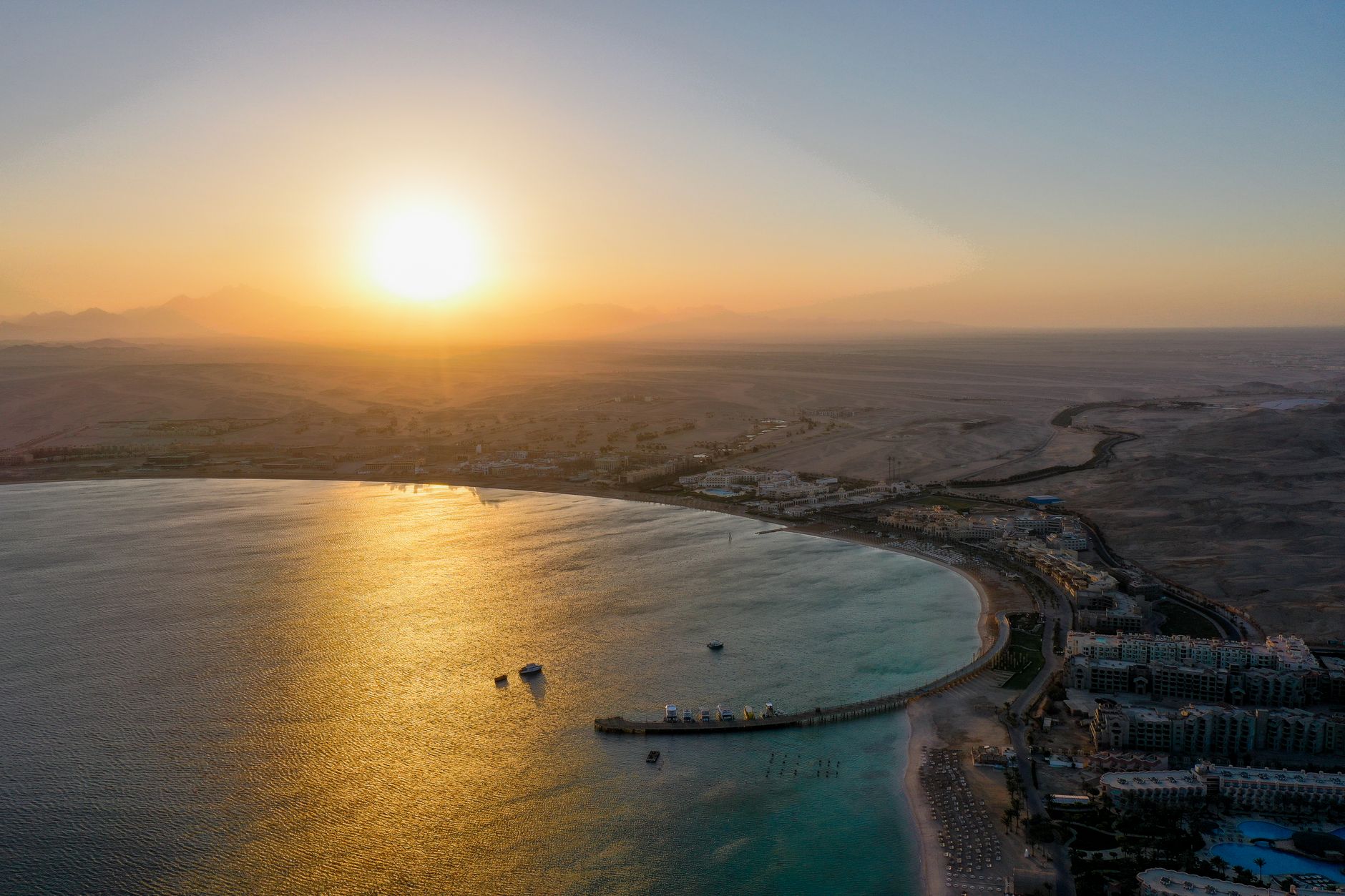 Photo: Mo Ismail / Pexels
- Attractions
- 10
- Trip length
- 3–5 days
- Best season
- October–April
Why Hurghada
Built from cited sources · see the method · How we make our guides →
Hurghada's real center of gravity sits offshore. Giftun Islands National Park lies about 17 kilometers from Hurghada Marina, where Orange Bay opens onto shallow lagoons just 0.5 to 2 meters deep, pale sand, wooden swings, and water clear enough to see the seabed from the boat.
The reefs give the city its particular scale. At Abu Ramada Piece, known as the Aquarium, coral gardens shelter turtles and dense schools of fish; Carless Reef is marked by pinnacles and giant moray eels, while visibility commonly exceeds 20 meters and water temperatures stay between 22°C and 28°C.
On land, Hurghada reveals a different rhythm around El Mina Mosque, the white-marble waterfront monument beside the fishing port and marina. Outside prayer hours, visitors in modest clothing can enter its courtyards, where carved domes, tall minarets, cold stone, and the sound of boats nearby make the city’s mixture of devotion, work, and tourism impossible to miss.
A living Red Sea aquarium
Abu Ramada Piece, known as “The Aquarium,” brings shallow coral gardens, sea turtles, and dense schools of fish within reach of snorkelers; Carless Reef is the place for coral pinnacles and giant moray eels. Visibility often exceeds 20 meters, with water temperatures between 22°C and 28°C through the year.Giftun’s white-sand islands
Giftun Islands National Park lies about 17 kilometers offshore, roughly 45 minutes by boat from Hurghada Marina. Orange Bay pairs a 1.5-kilometer beach with shallow turquoise lagoons, wooden swings, and hammocks over water; Mahmya keeps the mood quieter and puts reef protection at the center.Marble, minarets, and the harbor
El Mina Mosque rises beside the fishing port and Hurghada Marina, its white marble courtyards, carved domes, and tall minarets catching the hard Red Sea light. Visit outside prayer times, dress modestly, and linger near the waterfront as fishing boats return beside the pleasure craft.Desert nights beyond the resorts
Hurghada’s evening life extends from marina restaurants and hotel shows into the Eastern Desert, where excursion operators arrange Bedouin-style dinners, short camel rides, and stargazing far from the town’s lights. The contrast is the point: salt air at sunset, then a sky crowded with stars.
Places to Visit
Not every monument, just the ones we'd walk you past ourselves.
Neighborhoods
Where to wander, by quarter — each with its own rhythm.
El Dahar
El Dahar is Hurghada's older, more local-feeling district, with low-rise streets, produce stalls, bakeries, phone shops, and everyday Egyptian traffic rather than a continuous line of resort entrances. Visit in the morning, when bread comes warm from the oven and shopkeepers are setting out fruit; this is the side of Hurghada that gives the beach city a social life beyond hotel compounds.Sakkala and Sheraton Road
Sakkala is the central commercial strip, centered on Sheraton Road and packed with restaurants, pharmacies, souvenir shops, exchange offices, and late-night foot traffic. It can feel hectic, especially when taxis squeeze past pedestrians, but its convenience is hard to beat if you want dinner, groceries, or a quick walk from a central hotel.Hurghada Marina
Hurghada Marina is the city's polished waterfront, where yachts, excursion boats, cafes, and restaurants gather around a promenade with open views across the Red Sea. Come near sunset, when the metal rigging turns copper and the fishing port and El Mina Mosque nearby keep the scene from becoming just another resort mall.El Mamsha
El Mamsha is a long pedestrian promenade lined with hotels, cafes, souvenir stores, and restaurants, popular with visitors who want to walk without negotiating Sheraton Road traffic. Its appeal is practical rather than historic: evenings bring warm pavement, shisha smoke, families out for a stroll, and easy access to the main resort belt.Village Road
South of the central districts, Village Road is Hurghada's long resort corridor, dominated by large hotels, private beaches, pools, and organized water-sports desks. It suits travelers who want their room, breakfast, beach, and boat transfer arranged in one place; reaching El Dahar or the marina takes more planning than the map suggests.Al Ahyaa
North of central Hurghada, Al Ahyaa mixes newer apartment blocks, residential streets, smaller hotels, and stretches of open development. The area feels quieter and less tightly packaged than Sakkala or Village Road, though its distance from the marina and old center makes it better for a slower stay than for spontaneous evening wandering.
Plan your trip
Before you go
- Getting There
- Fly into Hurghada International Airport (HRG), about 5 kilometers from the city center; airport taxis and pre-booked hotel transfers cover the resort belt. Hurghada has no passenger railway station in 2026; the nearest useful mainline options are Qena Railway Station and Luxor Railway Station, reached by road, while Go Bus and other coaches use terminals around El Nasr Street. Road links include the Red Sea Coastal Road, the Cairo–Hurghada Road, and the Qena–Safaga Road toward Luxor, Qena, Safaga, and Marsa Alam.
- Getting Around
- Hurghada has no metro or subway system in 2026; shared microbuses run along Sheraton Road, El Nasr Street, and the Village Road resort strip, while taxis cover the same routes with fares usually agreed before departure. Uber and Careem may be available, though coverage and pickup reliability vary by neighborhood. No unified city tourist transit pass exists; island excursions commonly cost about €19–25 for a standard Orange Bay trip, around $40 by speedboat, and $100 or more for a private charter.
- Climate & Best Time
- Spring brings daytime temperatures of roughly 24–34°C, summer 34–39°C, autumn 27–35°C, and winter 21–24°C, with cooler nights especially from December through February. Rain is scarce—usually only a few millimeters in a month, with the small chance of showers concentrated between November and March. October through April is the busy period, while June through August is hotter and quieter; April–May and October–November offer the best balance of warm water, manageable heat, and fewer visitors.
- Language & Currency
- Arabic is Egypt’s official language, while English is widely used in hotels, dive centers, marinas, and excursion offices. Prices are in Egyptian pounds (EGP); resorts and larger restaurants accept cards, but small shops, microbuses, taxis, and market stalls often require cash and change.
- Safety
- For diving and snorkeling, use a licensed operator, check the boat’s safety equipment, wear a flotation vest when instructed, and never stand on coral; currents and sun exposure are more serious hazards than the shallow water suggests. Egypt’s emergency numbers are police 122, ambulance 123, fire 180, and tourist police 126; at El Mina Mosque, cover shoulders and knees and avoid prayer times.
Where to Eat
Where locals actually book dinner — not the tourist menus.
-
Red Sea seafood
Ask what arrived that morning, then choose grilled fish, calamari, prawns, or red mullet by weight. El Dahar and the fishing-port area are better hunting grounds than a hotel buffet, with smoke, lemon, garlic, and cumin doing most of the work.
-
Sayadeya
This coastal Egyptian dish pairs fried or baked fish with rice cooked in caramelized onions, tomato, and warm spices. The rice carries the deeper flavor, so order it when you want something more substantial than a plate of grilled fillets.
-
Samak mashwi
Whole fish grilled over charcoal arrives with lemon, tahini, salad, and flatbread, its skin crisp from the fire and its flesh still moist. It is a good test of a seafood kitchen: fresh fish needs very little decoration.
-
Koshari
Egypt’s beloved street bowl layers rice, lentils, macaroni, chickpeas, fried onions, and a sharp tomato-chili sauce. It is filling, inexpensive, and especially useful after a long boat day when the resort menu has begun to blur.
-
Ful medames and ta’ameya
Ful medames is slow-cooked fava beans seasoned with oil, lemon, and cumin; ta’ameya is Egypt’s fava-bean falafel, often greener and softer than its chickpea cousin. Eat both with bread, pickles, and chopped salad for a practical local breakfast.
-
Egyptian mezze
Begin with baba ghanoush, hummus, tahini, stuffed vine leaves, and baladi bread before ordering grilled chicken or kofta. The small plates suit groups, and the smoky eggplant and sesame-rich tahini stand up well beside seafood.
-
Bedouin dinner
Desert excursions often serve flatbread, rice, grilled meat, salads, and sweet tea in tented settings outside Hurghada. Quality varies by operator, but the meal becomes more memorable when the tea is poured under a dark sky rather than beside a hotel stage.
-
Umm Ali
This warm Egyptian dessert combines flaky pastry, milk, cream, nuts, raisins, and cinnamon, usually baked until the top browns. Order one to share after seafood or grilled meat; it is rich enough to make a small portion feel sensible.
Insider tips
Small things that change how the city treats you.
Match your reef
New to snorkeling? Ask for Shabrur Umm Qamar or Fanous Reef: both are described as shallow, sheltered sites suited to beginners.Price the boat
Standard Giftun or Orange Bay day trips run about €19–$25, speedboat transfers about $40, and private charters from $100. Compare what each fare includes before paying.Dress for El Mina
El Mina Mosque receives visitors outside prayer hours. Cover shoulders and knees, and expect to borrow or wear an abaya if staff require it.Choose cooler months
October–April usually brings gentler daytime heat than summer, while Red Sea temperatures remain about 22–28°C year-round. That combination suits reef days and town walks.Allow boat time
Orange Bay lies about 17 km from Hurghada Marina and takes roughly 45 minutes by boat. Build the crossing into your day if you have a fixed return transfer.Frame Orange Bay
Orange Bay's lagoons are only 0.5–2 metres deep and its beach runs for about 1.5 km. Take a waterproof phone pouch for the swings, hammocks, and shallow water.Check current advice
Read your government’s current Egypt travel advisory before booking, then keep your boat operator’s emergency contact with you on water days.
Gallery
The city, as it actually looks.


Watch
-
Yorkshire lad abroad Hurghada Food Tour: Fast Food & Restaurants (Crazy Cheap!)
-
Travel Navigator 10 THINGS TO KNOW BEFORE VISITING HURGHADA, EGYPT | HURGHADA TRAVEL TIPS
-
Trip Stamp TOP 10 Things To Do In HURGHADA 🤿 Hurghada Travel Guide
-
CurtisMeredithh Hurghada Marina: Food & Drink Prices Revealed! Is it Safe???
Frequently asked
Is Hurghada worth visiting?
Yes, especially if reefs and easy boat days matter more to you than old-city architecture. Giftun Island, Orange Bay, beginner-friendly reefs, and wild dolphin sightings give the coast its real character.
How many days should I spend in Hurghada?
Plan 3–5 days for a balanced visit. That leaves time for an island excursion, a reef or diving day, El Mina Mosque, and an unhurried afternoon around the marina.
How do I get to Orange Bay from Hurghada?
Take a boat from Hurghada Marina; Orange Bay is about 17 km offshore and the crossing takes roughly 45 minutes. Standard excursions cost about €19–$25, while speedboat transfers cost around $40.
Can I get around Hurghada without renting a car?
Yes—arrange hotel transfers or taxis for land trips, and book island excursions that clearly state their departure point. Hurghada Marina is the key reference for Orange Bay and other boat days, so confirm the pickup location before paying.
Is Hurghada safe for tourists right now?
Hurghada is generally visited safely by tourists, but current conditions can change. Check an official Egypt travel advisory before departure, use established excursion operators, and follow crew instructions around reefs and dolphins.
How much does a Hurghada island trip cost?
A standard Giftun or Orange Bay day trip costs roughly €19–$25. Speedboat transfers are about $40, while private charters start at around $100; inclusions such as food, transfers, and equipment vary.
What should I wear to El Mina Mosque in Hurghada?
Wear modest clothing that covers your shoulders and knees, and visit outside prayer hours. The mosque may provide or require an abaya, so a lightweight long layer is useful to carry.
All Places to Visit.
1 place to discover
Pick up where you left off
Saved and recently read places — kept on this device only.
Photo credits (4)
- Mo Ismail — Pexels License (https://www.pexels.com/license/) — Source: https://www.pexels.com/photo/22643843/
- 12.11.2015-19.11.2015 - panoramio (42) — edykbo — CC BY 3.0 (https://creativecommons.org/licenses/by/3.0/) — Source: https://commons.wikimedia.org/wiki/File:12.11.2015-19.11.2015_-_panoramio_(42).jpg
- 02010 05712 Mahmya Island — Silar — CC BY-SA 4.0 (https://creativecommons.org/licenses/by-sa/4.0/) — Source: https://commons.wikimedia.org/wiki/File:02010_05712_Mahmya_Island.jpg
- 20251008 Hurgada view from automobile 01 (10498) — Sergey A. Demidov — CC BY 4.0 (https://creativecommons.org/licenses/by/4.0/) — Source: https://commons.wikimedia.org/wiki/File:20251008_Hurgada_view_from_automobile_01_(10498).jpg
Photos may have been resized or cropped.