Introduction
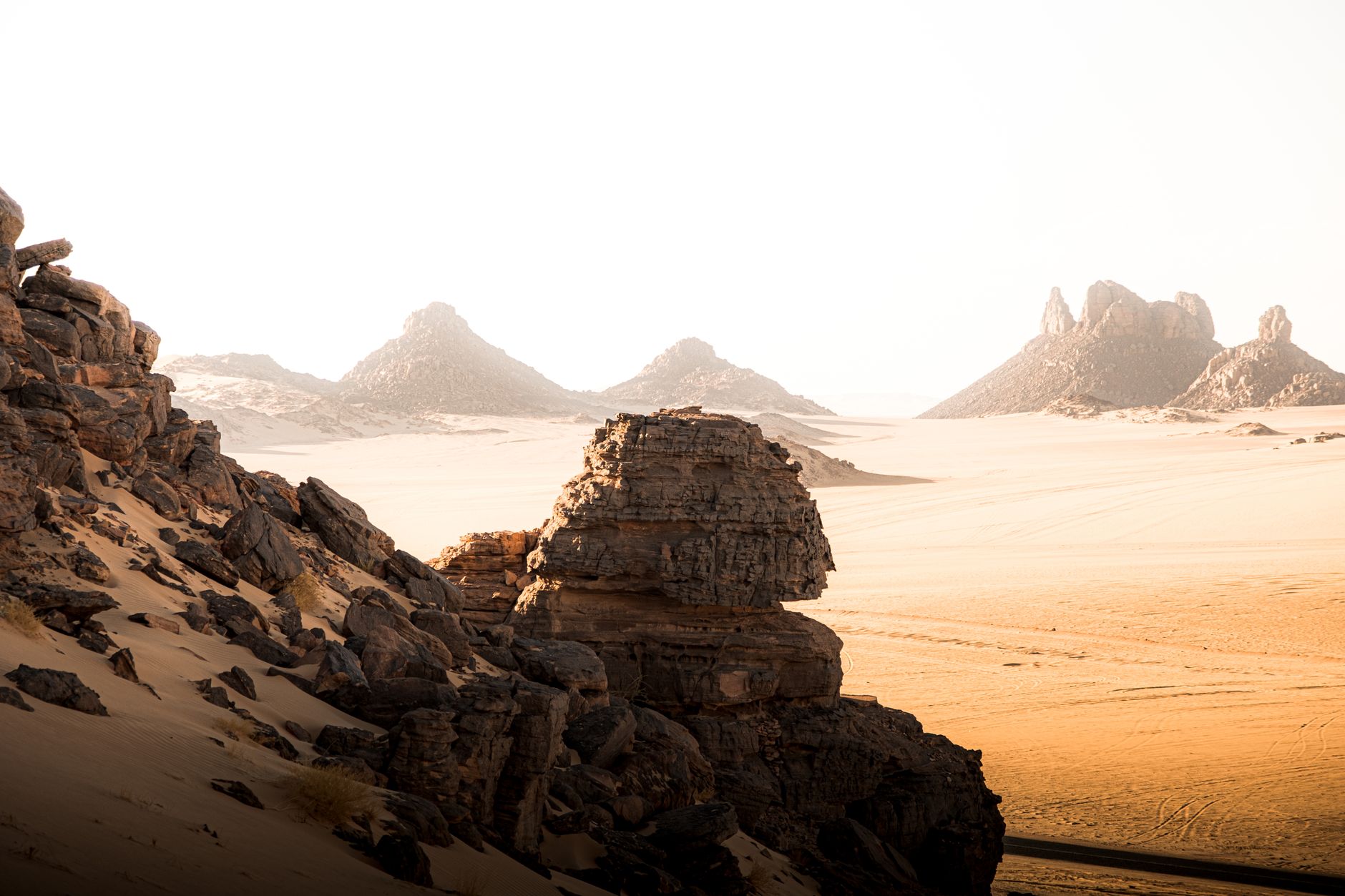
An Algeria travel guide starts with a correction: this is not just Sahara. It is Roman stone, Mediterranean harbors, mountain towns, and desert plateaus spread across 2,381,740 square kilometers.
Most travelers arrive expecting sand and silence, then meet a country split into sharp geographic bands. The coast runs on sea light, fish markets, and Ottoman street plans in Algiers, Oran, and Annaba. Inland, Constantine hangs over deep gorges with the swagger of a city that learned to live above a void. East and west, Roman archaeology still sits in plain sight: Timgad keeps its grid of streets, while Tipaza faces the Mediterranean with columns that look almost indecently well placed. Algeria is the largest country in Africa by land area, and more than 80 percent of it lies under desert conditions, but the north alone can fill a full trip without feeling rushed.
Then the country opens outward. Tlemcen carries Andalusi echoes in its architecture and music; Ghardaïa sits in the M'zab Valley with a form so exact it looks drawn with a compass; Béjaïa folds mountains and sea into the same frame. Go farther south and the scale changes completely. Tamanrasset and Djanet are not weekend add-ons but gateways to Saharan distances where flight times, fuel, and daylight matter more than map miles. That split is what makes Algeria interesting: one trip can move from a Mediterranean rail corridor to Roman ruins, then into desert geology and Tuareg country without ever feeling like the same place twice.
History here rarely behaves itself. Numidian kings fought Rome from cities that still exist on the map. Saint Augustine died in besieged Hippo, now Annaba. In the southeast, Tassili n'Ajjer preserves rock art from a Sahara that was once green enough for cattle and hippos. Food follows the same regional logic: couscous changes from city to city, chorba frik belongs to Ramadan evenings, and Constantine has its own sweet-savory habits. Use Algiers as a first landing, build north by train if time is short, or connect the coast to Ghardaïa, Djanet, and Tamanrasset if you want the country at full scale.
A History Told Through Its Eras
When the Sahara Was Green
Prehistoric Algeria, 10000-3000 BCE
A painted rock wall catches the morning light in the Tassili n'Ajjer near Djanet, and suddenly the oldest surprise in Algeria stands before you: hippos, cattle, dancers, hunters, all moving across stone where you expect only sand. Between 10,000 and 6,000 BCE, this was not a furnace of dunes but a watered world of lakes and grassland. The people who left those figures had no written names for us, yet they recorded a universe full of ritual, animals, and weather.
Ce que l'on ignore souvent, c'est that the Sahara did not become the Sahara all at once. It dried by degrees, and each lost river forced a decision. Stay and adapt, or move. The paintings from the so-called Round Head period, with their mask-like faces and immense haloed skulls, suggest a society thinking about trance, ceremony, perhaps the border between the human and the divine.
Across eastern Algeria, the Capsian communities left shell middens so large they still read like the remains of repeated feasts. Snails, microliths, careful tools, shared meals: this is not the image of desperate survival. It is a picture of people with habits, taste, memory. A country begins there too, in what it chooses to keep doing.
Then came the great drying around 3000 BCE, and the landscape changed the destiny of the people. Some groups moved north toward the Mediterranean, others south, and from those displacements grew the deep Amazigh inheritance that still runs through Algeria. The first chapter ends with migration, which is to say it opens every chapter that follows.
The unknown painters of Tassili left no kings' names, only dancers and herds, which is perhaps the more intimate form of immortality.
The prehistoric rock art in southeastern Algeria shows hippos and cattle in places now so dry that modern travelers carry extra fuel and water just to cross them.
Jugurtha, Rome, and the African Cities of Marble
Numidian and Roman Algeria, 600 BCE-430 CE
A prince from Numidia rides into history with one lesson already learned: Rome admired courage, but it could also be bought. Jugurtha, grandson of Massinissa, fought, schemed, bribed, and murdered his way into power after 118 BCE, turning a family succession into a Mediterranean scandal. Sallust preserves the line later attributed to him as he left Rome: "A city for sale." Few sentences have traveled so far.
His drama belongs to Algeria because the ground of that struggle still has names you can visit. Cirta, the city at the center of his war, is modern Constantine, hanging over its gorges with a taste for vertigo and memory. Ce que l'on ignore souvent, c'est that Jugurtha did not lose because Rome was morally offended. He lost because betrayal finally cost less than loyalty, and his father-in-law Bocchus handed him over.
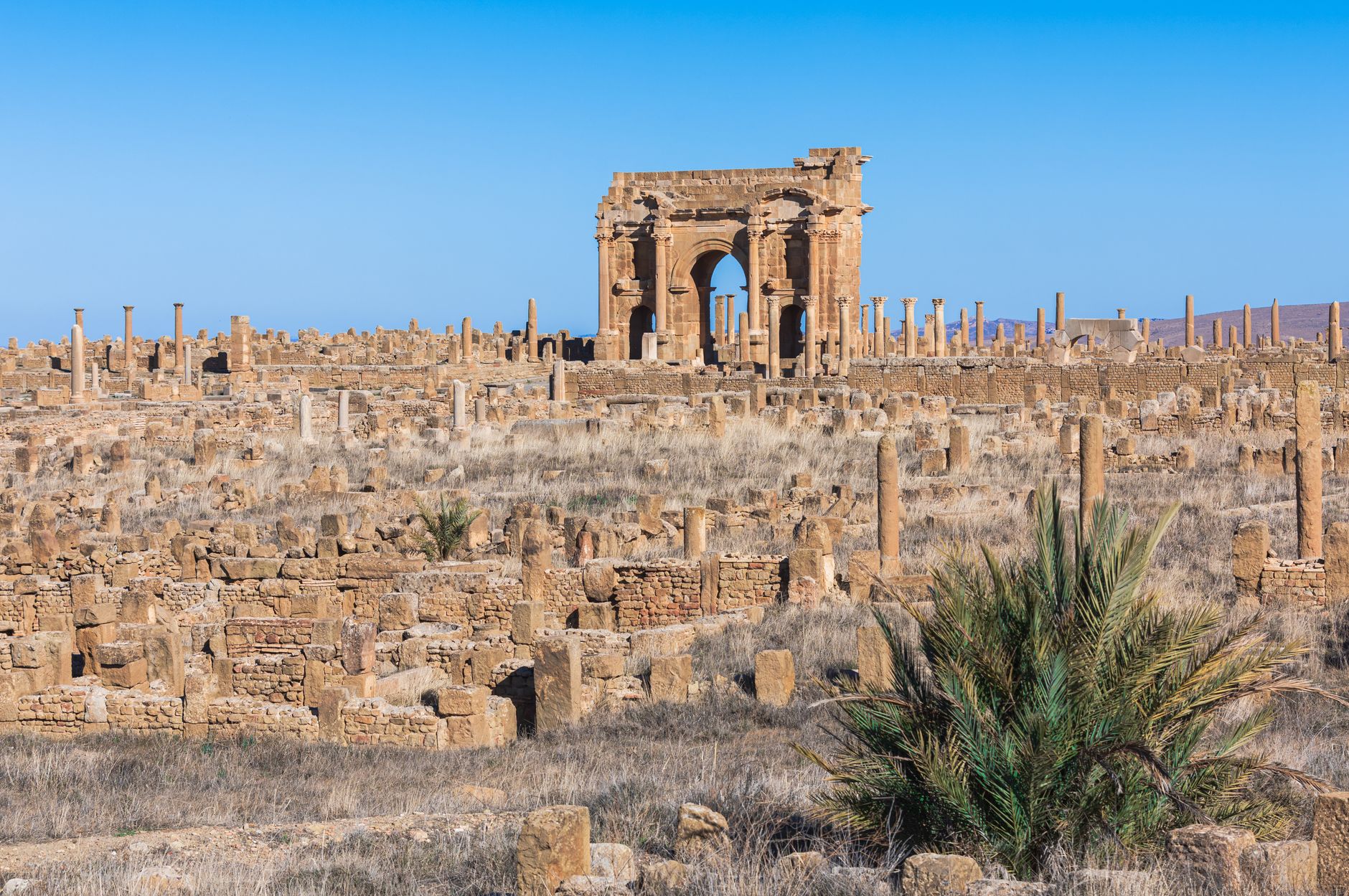
Rome stayed, and it built in stone with imperial certainty. At Timgad, founded under Trajan in 100 CE, the grid is still so clear you can read the logic of empire from the street plan alone. At Tipaza, the sea presses against ruins that once belonged to baths, basilicas, and villas, and the light does half the archaeology for you.
Yet Roman Algeria was not only a story of roads and columns. It also produced minds. Apuleius of Madauros defended himself in court against charges of witchcraft after marrying a rich widow, and Saint Augustine, born in Thagaste and bishop in Annaba, turned private guilt into literature that still unsettles readers. When he died in 430 during the Vandal siege of Hippo, the old Roman Africa was already slipping away, and a new religious and political world was approaching from the east.
Jugurtha was not a marble patriot in advance; he was a dazzling, dangerous prince whose ambition exposed Rome's own corruption.
Augustine is said to have had the Penitential Psalms hung on the walls of his room in Hippo so he could read them from his sickbed while the Vandals closed in.
The Queen of the Aures and the Cities of Faith
Berber Kingdoms, Arab Conquests, and Maghrebi Courts, 647-1516
A horsewoman in the Aures mountains, a line of orchards behind her, and an army advancing from the east: this is where one of Algeria's great heroines enters the record. Dihya, remembered in later chronicles as al-Kahina, rallied Berber tribes and defeated Hassan ibn al-Nu'man around 688, delaying the Arab advance into the central Maghreb. Legend wrapped her quickly, as it does with women who win battles, but the fact remains: resistance had a queen.
Ce que l'on ignore souvent, c'est how harsh her strategy became when the invaders returned. Arab sources accuse her of scorched earth, of burning fields and settlements so conquerors would inherit ash instead of wealth. Whether every detail is exact, the memory matters because it preserves a terrible political truth: rulers sometimes destroy what they love in order to keep it from an enemy.
After conquest came not silence but reinvention. Dynasties rose from the Maghreb itself, and Algeria became a place of courts, mosques, caravan roads, scholars, and rival capitals. Tlemcen flourished as one of the elegant cities of the western Islamic world, while in the M'zab, the communities of what is now Ghardaïa built fortified settlements where faith, architecture, and daily discipline were joined so tightly that one still explains the other.
This era is easy to flatten into dates and dynasties. Better to see the rooms: a jurist writing by lamplight, a merchant counting goods from across the Sahara, a ruler endowing a mosque because piety and prestige were rarely strangers. Those urban worlds made Algeria richer, more connected, and more desired, which is precisely why the next masters would come from the sea.
Dihya survives in memory not because she was gentle, but because she chose command in a century that preferred women to be symbols, not strategists.
The nickname al-Kahina means "the soothsayer" or "the prophetess," a label given by later chroniclers that tells you as much about their unease with a victorious woman as about the queen herself.
From Corsairs to Colonists, from Algiers to Revolution
Ottoman Regency, French Conquest, and the Fight for Independence, 1516-1962
In Algiers, power first arrived from the sea under Ottoman protection and local ambition. The regency that took shape after 1516 made the city a formidable Mediterranean capital, feared by some, courted by others, and enriched by trade, privateering, diplomacy, and captivity. The Casbah of Algiers still keeps the scale of that world: tight streets, hidden courtyards, a city built for intrigue as much as for shelter.
Then came 1830 and the French invasion, triggered by a diplomatic quarrel that sounds almost comic until one counts the dead. The famous fly-whisk incident between the dey and the French consul became the pretext; conquest became the reality. Ce que l'on ignore souvent, c'est how quickly military occupation turned into settler colonialism, with land seizures, legal inequality, and a deliberate remaking of society that reached from Algiers to Oran and Constantine.
Resistance found its first great modern face in Emir Abdelkader, scholar, horseman, strategist, and prisoner. He fought the French for fifteen years, signed treaties when he had to, broke them when France broke faith first, and after surrender built a second moral life in exile, saving Christians in Damascus in 1860. Algeria has a taste for figures like that: men and women who become larger after defeat because character remains when territory is gone.
The twentieth century sharpened every contradiction. Algerians fought in French wars, studied in French schools, and were denied equality in the very republic that spoke most loudly of rights. The war of independence from 1954 to 1962 was brutal even by the standards of empire, with torture, bombings, reprisals, and families split by loyalty, fear, or exhaustion. Independence on 5 July 1962 closed one chapter, but it did not erase what colonial rule had done to land, language, or memory. It left modern Algeria with both freedom and inheritance, which is a more difficult victory than slogans admit.
Emir Abdelkader managed the rare feat of being both a battlefield commander and a moral authority, which is why he remained dangerous even in captivity.
The French conquest of Algeria began after the so-called fly-whisk incident of 1827, when the dey of Algiers struck the French consul with a ceremonial fan during an argument over unpaid debts.
The Cultural Soul
A Mouth Full of Empires
Algeria speaks in layers, and the layers refuse obedience. In Algiers, a sentence can begin in Darija, bend toward French for the administrative noun, then land in Tamazight as if that were the word waiting at the bottom of the throat all along. You hear history not as a lecture but as table talk.
French lingers here with the complicated dignity of an ex-lover who still has a key. Arabic governs prayer, schoolbooks, television announcements. Tamazight carries mountain memory, family defiance, old names that survived because someone kept saying them. Darija does the real work. It jokes, bargains, flirts, curses, forgives.
This creates a rare pleasure for the visitor willing to listen before speaking. A greeting lasts longer than the transaction it precedes. A pharmacist in Oran may answer in French, a taxi driver in Constantine may begin in Arabic and end in a shrug that means maktoub, and a grandmother in Tlemcen may pronounce a proverb with such finality that every ministry in the country could close for the day. A country is a grammar of survival.
Certain words deserve respect because they are not portable. Baraka is not luck. Hchouma is not shame. Ya latif can mean horror, tenderness, disbelief, prayer, and sometimes all four in one breath. That is the luxury of a culture that has been invaded, instructed, renamed, and still kept its own music in the mouth.
Semolina, Fire, and Friday
The first thing to understand is that Algerian food does not perform for strangers. It feeds families, honors Fridays, repairs fasting bodies at sunset, and settles arguments without admitting it has done so. Couscous is not a symbol here. It is a method, a discipline, a weekly act of faith involving hands, steam, patience, and the refusal of shortcuts.
Regional pride enters the pot like a second spice. In Algiers, rechta arrives with chicken and a white sauce scented with cinnamon, which sounds improbable until you taste it and realize that improbability is one of the national arts. In Constantine, sweet and savory sit down together without embarrassment. In Ghardaia, bread and broth meet in a bowl and become chakhchoukha, a dish that understands silence better than conversation.
Ramadan sharpens everything. Late afternoon streets smell of chorba frik, fried bourek, sugar, oil, patience. Then the cannon or the call to prayer releases the city, and a bowl of soup becomes more dramatic than opera because hunger has made everyone exact. The spoon enters. The body returns.
And then the sweets. Tamina for a new mother. Baklawa cut into diamonds for visits that matter. Coffee dark enough to settle legal disputes. Algeria treats food as both etiquette and metaphysics. You eat, and a social order reveals itself.
The Violin, the Gas Station, the Wedding
Algerian music has the good manners to contradict itself. Andalusi music in Tlemcen moves with the courtly patience of something that survived libraries, dynasties, and dust. Then rai in Oran tears open the window, lights a cigarette, and says the body has its own opinions. Both are true. That is the national genius.
Rai matters because it made frankness danceable. Love, exile, desire, unemployment, parental authority, border fever: all of it entered the song. Cheikha Rimitti sang as if shame were a curtain made for setting on fire. Later voices polished the sound, electrified it, exported it, but the nerve remained. A woman or man sings in a voice close to speech, and suddenly the whole room knows which wound is being named.
Elsewhere, the old repertoires continue their quieter seduction. Malouf in Constantine keeps an inheritance from Al-Andalus alive not through nostalgia but through repetition so elegant it stops feeling like repetition at all. The violin enters. The oud answers. Time folds.
You do not need a concert hall to understand this country. You need a taxi radio outside Annaba, a wedding in a neighborhood no guidebook has bothered to love, or a roadside cafe where a song from 1987 causes three men to sing along without smiling. Serious emotion rarely smiles here. It sings.
The Ceremony Before the Question
In Algeria, directness without ceremony is a form of violence. You do not walk up to a person and ask for what you want as if human beings were vending machines. First come the greetings, then the inquiries about health, then the family, then perhaps the weather, then perhaps the real matter. By then, the real matter has become easier because it has been wrapped in regard.
This can bewilder visitors from efficient cultures, which is to say impatient ones. A shopkeeper may ask after your well-being with more seriousness than some people reserve for marriage proposals. Accept this gift. Return it. The conversation is not obstructing the exchange. It is the exchange.
Hospitality has both warmth and rules. Tea appears. Coffee appears. Refusing once may be politeness; refusing twice starts to look like judgment. Between men, affection can be physical and untroubled: clasped hands, cheeks, shoulders touched mid-sentence. Between unrelated men and women, the choreography changes completely. Space becomes grammar.
The finest lesson is simple. Never rush the threshold. Whether you are entering a home in Béjaïa or asking directions in Algiers, the first minute decides everything. Politeness here is not decoration. It is architecture.
White Walls, Roman Stones, Desert Geometry
Algeria builds like a civilization with too many memories to choose from. The Casbah of Algiers climbs and folds above the sea in white walls, narrow passages, hidden courtyards, Ottoman residue, and Mediterranean light so sharp it turns plaster into doctrine. You walk five minutes and understand that shade is one of the great inventions.
Then the country changes register. Timgad offers Rome with unnerving clarity: grid, forum, arch, the old imperial confidence written on stone in a place where the Sahara now watches from a distance. Tipaza does something even stranger. Roman ruins sit beside the sea as if empire had planned a final act of melancholy. It had not. History sometimes stages itself better than states do.
Further south, Ghardaia teaches a different intelligence. The M'zab towns do not flatter the eye at first. They instruct it. Geometry governs daily life: slope, wall, mosque, market, airflow, shadow, communal order. Beauty arrives not as ornament but as necessity refined until necessity becomes severe elegance.
This country distrusts uniformity, and its buildings prove the point. Phoenician traces, Roman ambition, Islamic scholarship, Ottoman domestic cunning, French colonial facades, Saharan pragmatism: none of them cancel the others. Algeria is what happens when stone remembers every ruler and obeys none of them completely.
What Stays in the Air
Religion in Algeria is public, private, inherited, argued with, and still very much alive. The call to prayer orders the day without requiring theatricality. A phrase like inshallah can be habit, conviction, tenderness, or a polite refusal to pretend that human planning has ultimate authority. Often it is all these things at once.
Islam shapes the visible frame: Friday meals, Ramadan rhythms, charity, greetings, cemetery visits, the moral weather of family life. Yet the country also carries older sediments. Sufi lineages remain in memory and practice. Saints' tombs, local baraka, acts of visitation, old formulas whispered over children or illness: these survive because doctrinal tidiness rarely defeats lived life.
What interests me most is the emotional precision. Religion here is not always loud, but it is exact. Someone says bismillah before beginning a task. Someone answers bad news with ya latif. Someone explains loss with maktoub, and the phrase is neither surrender nor philosophy seminar. It is a way to keep breathing.
Visitors should resist two temptations: exoticizing piety and ignoring it. Better to notice what the day does. Cafes thinning before sunset in Ramadan. Families accelerating home with bread. The first sip of water after the fast. Sacred life often reveals itself through logistics. God enters by timetable.
What Makes Algeria Unmissable
Roman Cities in Sunlight
Timgad and Tipaza are not fragments behind glass. They are open-air Roman cities where street grids, forums, arches, and sea-facing ruins still shape the landscape.
Cities With Nerve
Algiers, Constantine, Oran, and Tlemcen each carry a different temperament: Ottoman casbahs, suspension bridges, colonial facades, Andalusi courts. The country rewards city-hopping more than first-time visitors expect.
Sahara at Full Scale
Djanet and Tamanrasset lead into a southern Algeria of sandstone massifs, prehistoric rock art, and distances best measured in flight schedules and water planning. The desert here is not backdrop; it dictates the journey.
History That Stays Messy
Jugurtha, Augustine, Arab conquest, Ottoman rule, French colonization, and independence all left marks you can still read in street plans, ruins, language, and memorial culture. Algeria does not flatten its past for easy consumption.
Regional Food Logic
Couscous in Tlemcen is not couscous in Constantine, and chorba frik, bourek, rechta, and mechoui belong to specific meals, seasons, and family rituals. You eat the map here, one city at a time.
Cities
Cities in Algeria
Algiers
"A city that climbs from a Ottoman-era casbah of 122 hectares — a UNESCO World Heritage labyrinth of crumbling palaces and hammams — down to a French colonial boulevard that could be transplanted to Haussmann's Paris with"
Constantine
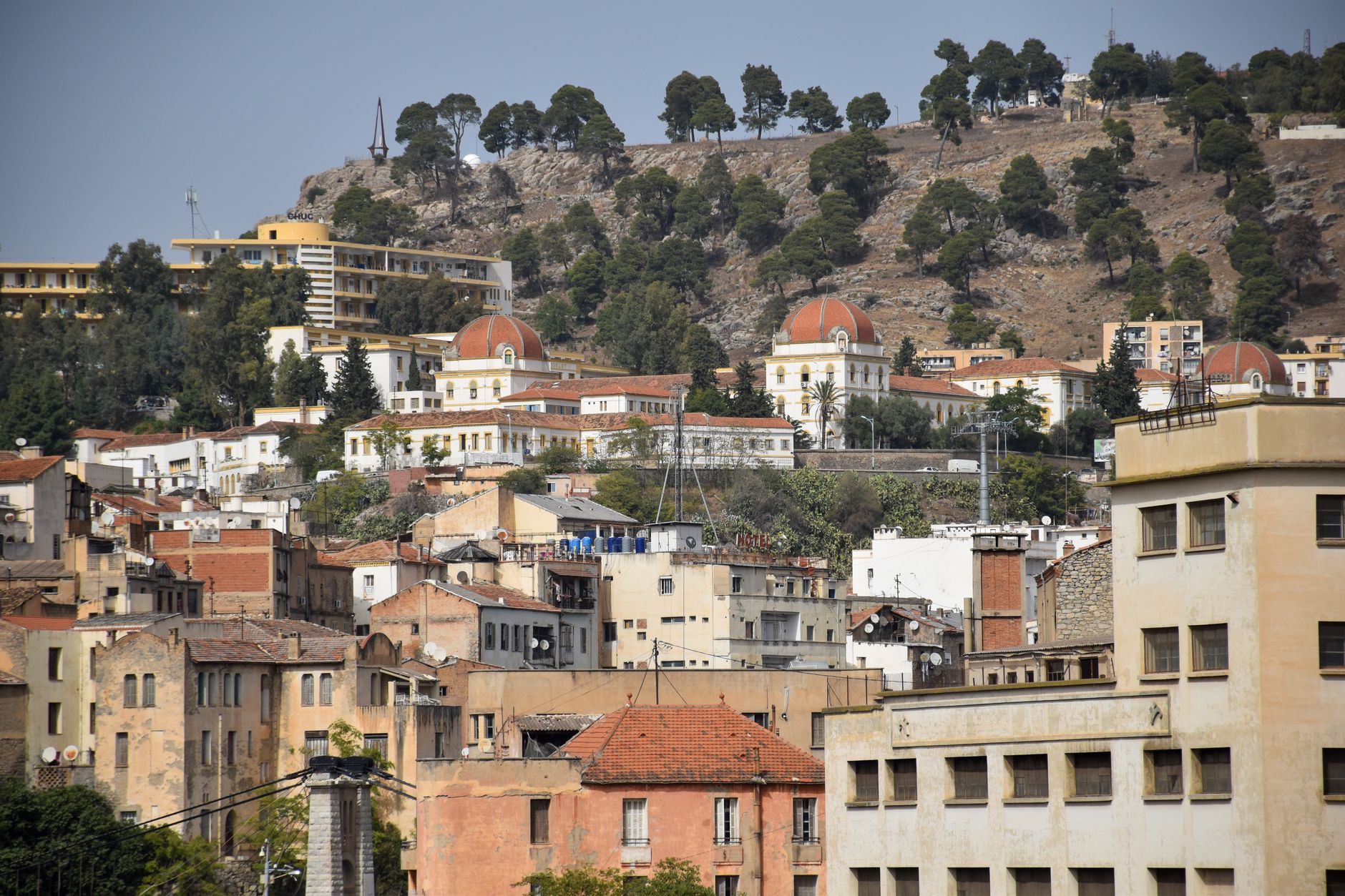
"Built on a rock plateau sliced by the 200-metre Rhumel Gorge, Constantine is held together by a necklace of suspension bridges, each one a different century's answer to the same vertiginous problem."
Oran
"The city that gave the world raï music — a genre born in the brothels and dockyards of the port quarter — still carries that friction between piety and pleasure in every evening promenade along the Boulevard Millénaire."
Tlemcen
"Medieval capital of the Zianid dynasty, where a 12th-century minaret rises inside the ruins of the Grand Mosque of Mansourah, which was never finished because the sultan who ordered it was assassinated before the roof we"
Ghardaïa
"Five fortified M'zab valley towns built by the Ibadi sect in the 11th century on a geometry so rational that Le Corbusier sketched them obsessively during his 1931 visit and lifted their proportions for his housing block"
Tamanrasset
"The staging post for the Hoggar massif, where volcanic spires called the Atakor rise to 2,918 metres above the Sahara and Tuareg silversmiths still work in the market quarter every Thursday morning."
Béjaïa
"A Kabyle port city where the numerals 0 through 9 — the Hindu-Arabic system that made modern mathematics possible — entered medieval Europe through the hands of Fibonacci, who studied here under Algerian scholars in the "
Timgad
"Trajan's legionary colony of 100 CE, abandoned after the Arab conquest and buried under Saharan sand for a thousand years, emerged so perfectly gridded that its original street plan can be read like a map of Roman urban "
Annaba
"Augustine of Hippo wrote 'The City of God' here while Vandals besieged the walls in 430 CE; the basilica built over his tomb still stands on a hill above a city that smells of iron ore from the Mittal steel complex on it"
Djanet
"The gateway to Tassili n'Ajjer, where 15,000 rock paintings made between 10,000 and 6,000 BCE show hippos, cattle herds, and dancing figures in a Sahara that was then a savanna — the most concentrated prehistoric art gal"
Tipaza
"A Roman and Phoenician ruin field on a Mediterranean headland where Albert Camus came to swim and think, and wrote that he learned 'in the middle of winter that there was in me an invincible summer' — the ruins are still"
Tindouf
"A red-dust garrison town in the far southwest that most Algerians have never visited, sitting at the edge of the Erg Chech sand sea where caravans once moved between sub-Saharan Africa and the Mediterranean, and where th"
Regions
Algiers
Central Coast
Algiers is where most trips begin, and rightly so. The Casbah climbs above the sea, French-era boulevards run along the lower city, and day trips to Tipaza add Roman columns and maritime light without asking for a full relocation. If you want Algeria in one glance, this is the closest thing to it.
Oran
Western Algeria
Oran has the swagger of a working port that never needed to pose for visitors. Tlemcen, farther inland, turns the volume down and trades sea wind for carved wood, tiled courtyards, and the memory of dynasties that looked toward al-Andalus as much as toward the coast. Together they make western Algeria feel self-contained and worth a week on its own.
Constantine
Eastern Highlands
Constantine is the city of suspension bridges, abrupt cliffs, and views that make every errand feel theatrical. Add Timgad and Annaba and the east becomes a tight triangle of Roman planning, Christian memory, and modern Algerian city life. This is the country's strongest region for travelers who like history with edges on it.
Béjaïa
Kabylia Coast
Béjaïa sits between mountain country and the Mediterranean, and that tension gives the city its character. The pace is less ceremonial than Algiers and less grand than Constantine, but the coastline, Amazigh presence, and sea-facing everyday life make it one of the most grounded stops in northern Algeria.
Ghardaïa
M'Zab Valley
Ghardaïa changes the geometry of the trip. The M'Zab settlements were built for climate, faith, and trade rather than spectacle, which is why they stay with you: whitewashed forms, narrow lanes, and a desert order that feels earned rather than designed. This is the threshold between northern Algeria and the Sahara proper.
Djanet
Deep Sahara
Djanet, Tamanrasset, and Tindouf belong to a different Algeria, measured in flights, fuel, and weather windows rather than in casual train hops. Djanet opens onto Tassili country, Tamanrasset faces the Hoggar, and Tindouf sits in the far southwest with a frontier feel that makes the map look suddenly very large. Travel here needs planning, current security checks, and local operators who know the terrain.
Suggested Itineraries
3 days
3 Days: Algiers and Tipaza
This is the shortest Algeria trip that still shows the country's split personality: Ottoman lanes and French facades in Algiers, then Roman ruins against the Mediterranean at Tipaza. You spend more time looking than moving, which is the whole point on a long-weekend route.
Best for: first-timers, city-break travelers, history lovers
7 days
7 Days: Oran to Tlemcen
Western Algeria travels on a different rhythm. Oran gives you the port city, music, and big boulevards; Tlemcen brings tiled courtyards, old mosques, and the long Andalusi afterlife that shaped this side of the country. The route is short on transit and strong on architecture, food, and evening atmosphere.
Best for: return visitors, architecture fans, travelers who prefer one region done properly
10 days
10 Days: Constantine, Timgad, and Annaba
The east is where Algeria feels most dramatic in stone. Constantine hangs over gorges and bridges, Timgad lays out Roman urban planning with almost rude clarity, and Annaba softens the trip with sea air and the long shadow of Hippo. Distances are manageable, but the historical density is not.
Best for: Roman history enthusiasts, photographers, travelers who like layered cities
14 days
14 Days: Ghardaïa to Tamanrasset to Djanet
This is the deep-south trip, and it only works if you treat it seriously. Start in Ghardaïa for the M'Zab valley's austere geometry, fly south to Tamanrasset for the Hoggar horizon, then continue to Djanet for Tassili landscapes and rock art country. It is a route for organized desert travel, not casual overland wandering.
Best for: desert travelers, repeat Maghreb visitors, people willing to book guides and flights in advance
Notable Figures
Jugurtha
c. 160-104 BCE · Numidian kingJugurtha turned a dynastic quarrel into an indictment of Rome itself. His siege of Cirta, now Constantine, and his talent for bribing senators made him the North African prince who taught the republic how corrupt it looked from the outside.
Massinissa
c. 238-148 BCE · King of NumidiaMassinissa began as Rome's ally against Carthage and ended as the architect of a durable North African kingdom. Later generations remembered him less for diplomacy than for having given Algeria's ancient past a crown, a cavalry, and political ambition.
Apuleius
c. 124-c. 170 · Writer and philosopherApuleius, born in Madauros, wrote with the confidence of a man who enjoyed intelligence as spectacle. When his in-laws accused him of seducing a wealthy widow through magic, he defended himself so brilliantly that the trial became part of his legend.
Augustine of Hippo
354-430 · Bishop and theologianAugustine's life is anchored in Algerian soil: childhood in Thagaste, episcopal authority in Hippo, death under siege in Annaba. He gave the Christian West some of its most intimate pages, but the emotional wound at the center of them is often his African family, especially his mother Monica and the unnamed woman he sent away.
Dihya
d. c. 703 · Berber queen and war leaderDihya appears in the sources with the blur that history often reserves for formidable women: queen, prophetess, warrior, menace. What survives clearly is this: she united tribes in the Aures and forced the Arab advance to reckon with a woman who knew the land better than any conqueror.
Emir Abdelkader
1808-1883 · Resistance leader, scholar, and statesmanAbdelkader fought the French with cavalry, diplomacy, and a scholar's sense of legitimacy. Later, in Damascus, he saved Christians from massacre, which gave his reputation an unusual shape: not only national hero, but a man whose enemies had to admit his honor.
Lalla Fatma N'Soumer
c. 1830-1863 · Kabyle resistance leaderLalla Fatma N'Soumer did not fit the script colonial officers preferred for Algerian women. From Kabylia she became a rallying figure in the 1850s, part mystic authority, part strategist, and entirely inconvenient to an empire that expected obedience.
Kateb Yacine
1929-1989 · Novelist and playwrightKateb Yacine turned language itself into a battlefield. In works shaped by the trauma of colonialism and the violence of 8 May 1945, he wrote Algeria as a place of broken memory, fierce love, and sentences that refused to march in straight lines.
Assia Djebar
1936-2015 · Writer and filmmakerAssia Djebar listened for the voices that official history had lowered or erased, especially those of Algerian women. Her work made private rooms, wartime silences, and inherited grief part of the national archive.
Photo Gallery
Explore Algeria in Pictures
A vibrant scene of Alger Centre featuring historic buildings and the Great Mosque under a clear sky.
Photo by Houssam benamara on Pexels · Pexels License
Explore the historical Roman ruins of Timgad with the iconic Arch of Trajan, Batna, Algeria.
Photo by Djamel Ramdani on Pexels · Pexels License
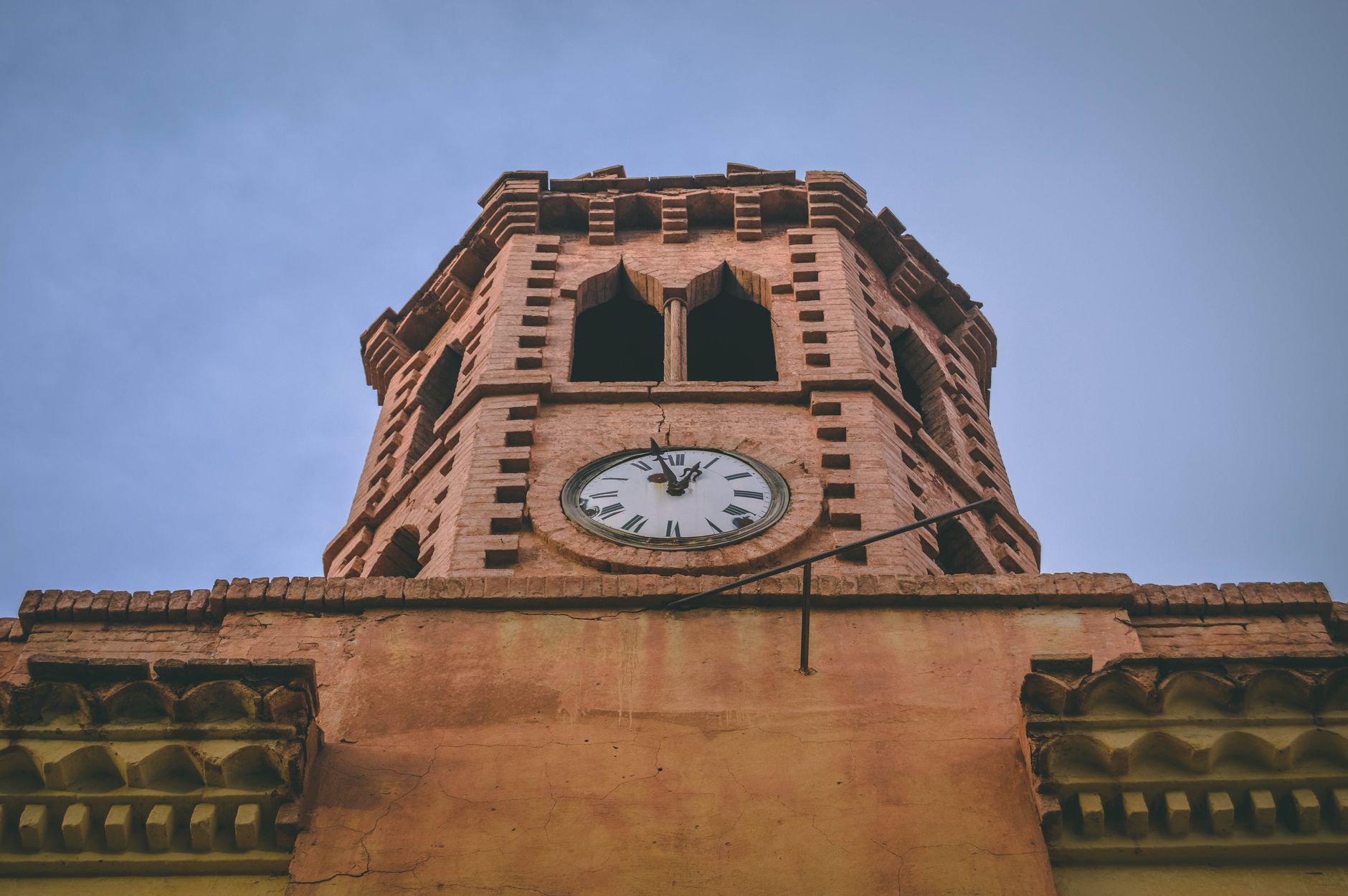
A captivating low-angle view of a historic clock tower in Laghouat, showcasing unique architecture.
Photo by saiid Belmecheri on Pexels · Pexels License
Explore the historic rooftops and architecture of Constantine, Algeria's captivating cityscape.
Photo by DigitalByNADAS Photography on Pexels · Pexels License
Aerial view of Algiers cityscape showcasing iconic architecture and Martyrs' Memorial.
Photo by Ayoub Ben on Pexels · Pexels License
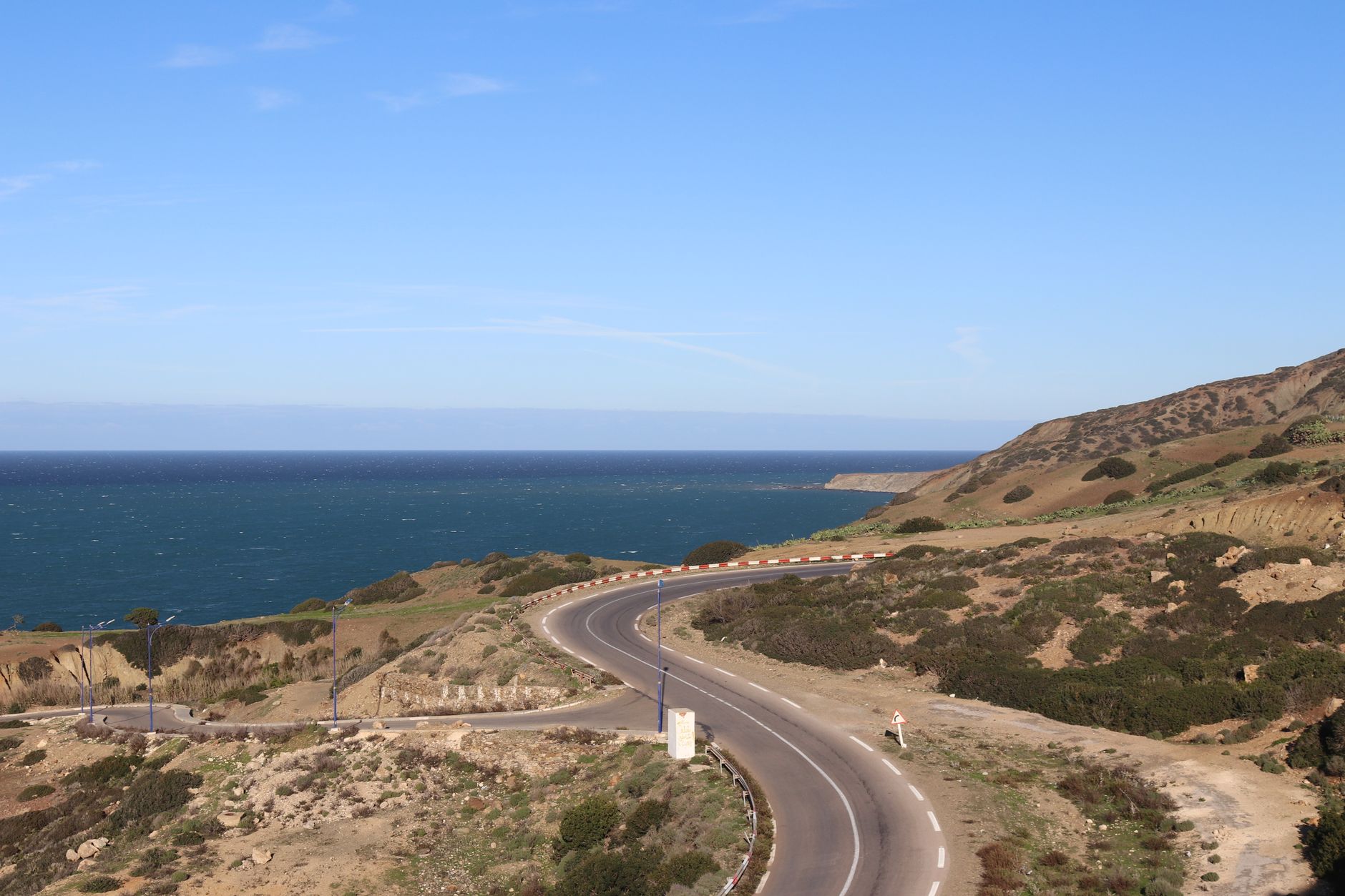
Explore the winding coastal road with ocean views in Mostaganem, Algeria.
Photo by Moussa Abdou on Pexels · Pexels License
Scenic view of rocky formations and sand dunes in Djanet, Algeria.
Photo by raouf bedrani on Pexels · Pexels License
Panoramic view of rocky formations in the Sahara desert under a clear blue sky.
Photo by Djamel Ramdani on Pexels · Pexels License
Joyful street festival in Cairo showcasing Algerian cultural dance and music.
Photo by Bishoy Milad on Pexels · Pexels License
Musicians performing traditional Algerian music in a tent in Algiers.
Photo by Bounoua ayoub Bounoua on Pexels · Pexels License
Explore a vibrant flat lay of traditional Tuva cuisine with various dishes and ingredients artistically arranged.
Photo by Alexander Nerozya on Pexels · Pexels License
Traditional Moroccan tagine with lemons and olives, served outdoors, showcasing vibrant colors and delicious aromas.
Photo by Zak Chapman on Pexels · Pexels License
Tasty traditional Brazilian farofa topped with fresh scrambled eggs and parsley.
Photo by Andiedson Lima on Pexels · Pexels License
A stunning architectural shot with glass reflections and elegant arches in Algeria.
Photo by Moussa Abdou on Pexels · Pexels License
Historic Casbah of Algiers with palm trees and colorful murals under a cloudy sky.
Photo by Miguel Cuenca on Pexels · Pexels License
Explore the charming old-world allure of an abandoned alleyway in Algiers' Casbah, capturing historical architecture.
Photo by khebab salaheddine on Pexels · Pexels License
Scenic view of Constantine, Algeria, with its distinct ravine and hillside buildings.
Photo by DigitalByNADAS Photography on Pexels · Pexels License
Explore ancient stone ruins under a clear sky in Düzce, Türkiye. Perfect for history enthusiasts.
Photo by Abdullah Öğük on Pexels · Pexels License
Top Monuments in Algeria
Bey'S Palace
Oran
Hamou Boutlelis Sports Palace
Oran
Santa Cruz Fort
Oran
Abdallah Ibn Salam Mosque
Oran
Stade Habib Bouakeul
Oran
Oran
Oran
Hassan Pasha Mosque
Oran
Stade Ahmed Zabana
Oran
University of Oran
Oran
Ravin Blanc Power Plant
Oran
University of Science and Technology of Oran - Mohamed-Boudiaf
Oran
Practical Information
Visa
Most travelers on US, UK, EU, Canadian, and Australian passports need a visa in advance for Algeria. Your passport should usually be valid for at least 6 months, and consulates typically ask for hotel bookings or a legalized host certificate, photos, insurance, and proof of onward travel. Visa on arrival is not the normal rule; the current exceptions are narrow and mainly cover organized south-Algeria trips or some cruise passengers.
Currency
Algeria uses the Algerian dinar, written DZD or DA, and daily travel still runs heavily on cash. Cards are accepted in better hotels and some larger businesses in Algiers, Oran, and Constantine, but you should expect cash for taxis, small restaurants, station snacks, and many routine purchases. Exchange money only through banks, hotels, or other authorized counters, and keep the receipts.
Getting There
The main international gateway is Algiers, with Oran, Constantine, and Annaba handling a smaller share of international traffic. Algiers is the easiest entry point for first trips because Houari Boumediene Airport has the country's most useful airport rail link, with SNTF trains running to Agha station in roughly 20 minutes. For a west-focused trip, Oran makes sense; for the east, Constantine or Annaba can save you a full day of backtracking.
Getting Around
For the northern belt, trains are the calmest way to move between major cities such as Algiers, Oran, Constantine, and Annaba. Buses are cheap but less predictable, while taxis and shared taxis remain common and usually work best when the fare is agreed before departure. For long southern jumps to places such as Djanet, Tamanrasset, or Tindouf, flying is the practical choice.
Climate
Algeria changes fast from north to south. The coast around Algiers, Oran, Béjaïa, and Annaba has a Mediterranean pattern with hot, dry summers and wetter winters, while the Sahara dominates most of the country's land and turns summer travel into a heat-management exercise. April to June and September to November are usually the easiest months for a mixed north-south trip.
Connectivity
Mobile coverage is solid in the main northern cities, and 4G is the normal baseline rather than a luxury. Once you leave the coast and head deep into the Sahara, coverage thins out fast and dead zones are part of the landscape, not a technical glitch. Buy a local SIM, keep offline maps on your phone, and do not assume your hotel Wi-Fi will rescue bad planning.
Safety
The current risk picture is uneven rather than uniform. Core urban trips focused on Algiers, Oran, Constantine, Annaba, Tlemcen, Béjaïa, and Tipaza are a different proposition from remote border regions and long overland desert drives, which several government advisories still treat with serious caution. Check the latest consular advice before travel, avoid border areas, and treat Sahara travel as a fly-in, agency-run plan rather than an improvisation.
Taste the Country
restaurantcouscous
Friday noon. Family table. Steam rises, broth pours, hands gather, bread waits.
restaurantchorba frik
Ramadan sunset. Bowl lifts first, dates follow, silence holds, spoons begin.
restaurantbourek
Street corner, wedding tray, iftar table. Fingers crack pastry, egg runs, parsley and meat disappear.
restaurantrechta
Algiers lunch, family visit, celebration day. Noodles steam, chicken rests, cinnamon drifts, guests lean in.
restaurantchakhchoukha
South and steppe. Bread tears, broth soaks, lamb settles, group eats slowly.
restaurantbaklawa
Engagement, Eid, formal visit. Tray arrives, coffee follows, almonds and orange blossom finish the sentence.
restauranttamina
Birth ritual, women's room, quiet hour. Semolina stirs with butter and honey, spoon passes, blessing circulates.
Tips for Visitors
Carry cash
Budget first, then nostalgia. Algeria is still a cash country, so break large notes early and keep a reserve for taxis, station food, and small hotels.
Use trains north
On the northern trunk, trains usually save more stress than they save minutes. Algiers, Oran, Constantine, and Annaba are the rail cities to build around.
Book south flights
Desert time is expensive. If your route includes Ghardaïa, Djanet, Tamanrasset, or Tindouf, price flights early because the practical alternative is often a punishing road plan.
Front-load paperwork
Your visa file needs to be tidy, not creative. Hotel confirmations, insurance, passport validity, and host paperwork matter more than last-minute optimism.
Greet properly
Do not launch straight into a request. A minute spent on greetings and basic pleasantries will smooth more transactions than any clever bargaining tactic.
Respect the calendar
Heat decides the south, and Ramadan changes the daily rhythm almost everywhere. Check dates before you book and expect shorter daytime eating options during the fasting month.
Download offline maps
Mobile data is fine in the big northern cities and much less trustworthy once the landscape opens up. Save maps, hotel addresses, and ticket screenshots before you leave Wi-Fi behind.
Explore Algeria with a personal guide in your pocket
Your Personal Curator, in Your Pocket.
Audio guides for 1,100+ cities across 96 countries. History, stories, and local insight — offline ready.
Audiala App
Available on iOS & Android
Join 50k+ Curators
Frequently Asked
Do I need a visa for Algeria as a US, UK, or EU traveler? add
Usually yes. Algeria generally requires a visa in advance for ordinary tourism, and the normal process runs through an Algerian embassy or consulate with passport, forms, photos, and supporting documents. Limited exceptions exist for some cruise passengers and certain organized trips in the south, but they are not the standard rule.
Is Algeria expensive for tourists? add
No, not by Mediterranean standards. Daily costs stay moderate if you use local transport and simple hotels, but prices rise quickly once you add better business hotels in Algiers or domestic flights and agency logistics for the Sahara.
Can you use credit cards in Algeria? add
Sometimes, but you should plan as if the answer is no. Higher-end hotels may take cards, yet many restaurants, taxis, stations, and small businesses still work on cash only.
What is the best way to travel between Algiers and Oran? add
The train is usually the best-balanced choice. It links two major cities directly, avoids road fatigue, and makes more sense than flying once airport time is counted.
Is Algeria safe for independent travel right now? add
In the main northern cities, many trips are manageable with normal caution and up-to-date planning. Remote border areas and long overland journeys in the Sahara are a different matter and still draw strong warnings from several government advisories.
Do I need a guide for the Sahara in Algeria? add
Practically, yes. Deep-south travel to places such as Djanet or Tamanrasset works best as a fly-in trip with a reputable local operator, current local knowledge, and a fixed plan.
When is the best time to visit Algeria? add
Spring and autumn are the easiest seasons for most travelers. The coast is more comfortable, inland cities are less punishing, and desert travel becomes much more realistic than it is in high summer.
Can I travel around Algeria by train? add
Yes, but mostly in the north. Algeria's rail network is useful for trunk routes linking cities such as Algiers, Oran, Constantine, and Annaba, while southern destinations rely far more on flights and road transport.
Is Algeria good for a first North Africa trip? add
Yes, if you like places that still feel lived in rather than packaged. Start with Algiers and Tipaza, or pair Oran with Tlemcen, and save the deep Sahara for a second trip with more planning.
Sources
- verified Algerian Ministry of Foreign Affairs — Official visa rules, required documents, and the 48-hour handling note for organized tourist groups.
- verified GOV.UK Algeria Travel Advice — Current entry requirements, border-area warnings, passport validity guidance, and practical safety notes.
- verified U.S. Department of State: Algeria International Travel Information — Current entry exceptions, cash-use guidance, and security advice for remote southern and border areas.
- verified SNTF — Official Algerian rail operator for airport rail service and intercity train planning on the northern network.
- verified Britannica: Algeria — Reliable country overview used for the north-south climate split and core geographic structure.
Last reviewed: