Place
印度 更新于 Mar 2026
Before most visitors are awake, Srinagar in India is already bargaining on water: at dawn, the floating vegetable market glides across Dal Lake in low wooden boats, with the smell of wet reeds, bread ovens, and charcoal smoke in the air. The surprise is how quickly the postcard beauty turns into lived texture, from lotus-choked channels to old-city alleys where carved balconies lean over the street. Come for the lake if you must, but stay for a city that still runs on ritual, memory, and appetite.
 图片: Farhaan Mushtaq Parimoo / Pexels
内容来自注明出处的资料 · 查看方法 · 我们如何制作导览 →
Spring makes Srinagar look almost theatrical, but locals treat it as a season of movement, not a backdrop. The Almond Blossom Festival opened at Badamwari on March 14, 2026; two days later, on March 16, the Tulip Garden reopened with about 1.8 million blooms and more than 70 varieties under the Zabarwan slopes. Those headline moments matter, yet the deeper pleasure is watching how the city keeps changing its center of gravity through the day: shrine courtyards in the morning, river promenades in late light, grill streets after dark.
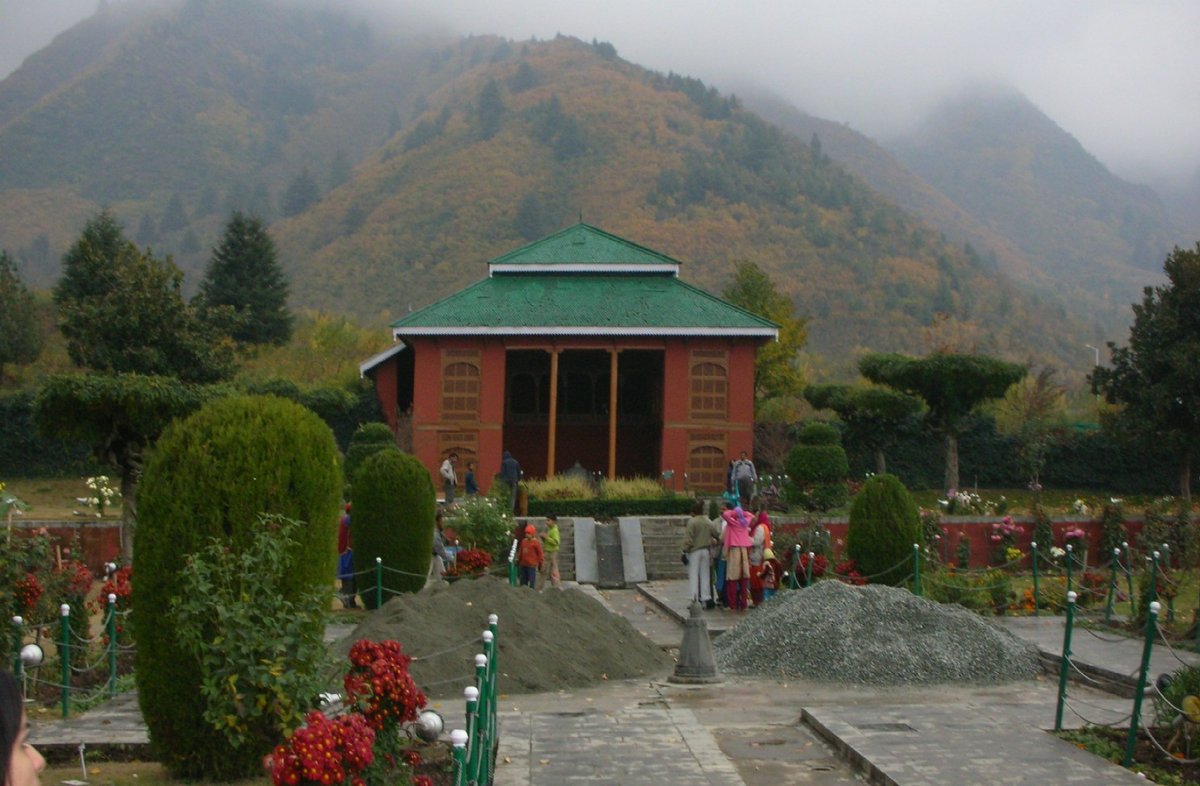
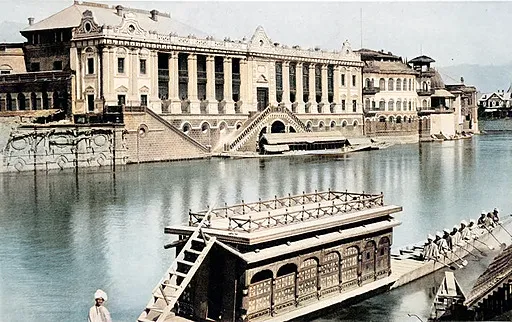
The city’s real drama sits along the Jhelum and inside Shehr-e-Khaas, where Jamia Masjid, Khanqah-e-Moula, Pathar Masjid, and old mercantile lanes like Maharaj Ganj tell a denser story than any single monument. Hari Parbat adds another layer, with the fort, Kathi Darwaza, shrine and temple sites, and Badamwari folded into one compact, multi-faith landscape. Even viewpoints come with rules and context: at Shankaracharya Temple, cameras and phones are restricted at the top, so you leave with memory instead of proof.
Food is the clearest way to understand Srinagar’s tempo. Dawn belongs to kandur breads and tea; winter mornings call for harissa; evenings pull crowds to Khayam Chowk for smoky seekh tujj wrapped in lavasa. Wazwan is less a casual meal than a social ceremony, while newer cafe pockets around Zero Bridge show a younger, softer nightlife built on conversation rather than club culture.
不是每一座古迹,只有那些我们会亲自带你路过的。


按区漫步——每个街区都有自己的节奏。
出发之前
From a chronicle-born capital to a modern city repeatedly remade by conquest, craft, faith, and flood
Kashmiri tradition places an early capital, Srinagari, in the age of Ashoka, when Buddhism was entering the valley. The story sits between myth and history, but it matters because Srinagar's identity begins with water reclaimed and a city imagined into being. Later rulers kept returning to this origin claim to legitimize power.
Tradition credits Pravarasena II with founding Pravarapura, the nucleus of present-day Srinagar. The move from older Srinagari near Pandrethan toward the Jhelum plain reset the city's geography. What followed was a river city shaped by bridges, embankments, and courtly neighborhoods.
When the monk Xuanzang passed through Kashmir, he described a learned Buddhist landscape with active monastic life. Later memory links his account to Srinagar's urban world, giving the city an early place in trans-Asian intellectual routes. His journey shows Srinagar was never isolated, even in antiquity.
In 1148, Kalhana composed the Rajatarangini, the chronicle that still frames Srinagar's early past. He wrote with names, reigns, betrayals, and floods, giving the city a narrative spine other medieval cities never got. Much of what Srinagar remembers about itself passes through his pen.
After the fall of Kota Rani, Shah Mir took power as Sultan Shams-ud-Din and inaugurated Muslim rule in Kashmir. Court language, patronage networks, and urban religious life changed direction from this point. Srinagar began a long Sultanate chapter that would last more than two centuries.
Mir Sayyid Ali Hamadani visited Kashmir repeatedly between 1365 and 1383, and his influence settled deeply in Srinagar. Alongside devotional teaching came craft lineages, especially textile and artisanal knowledge tied to Persianate worlds. The city's spiritual map and workshop economy both changed in his wake.
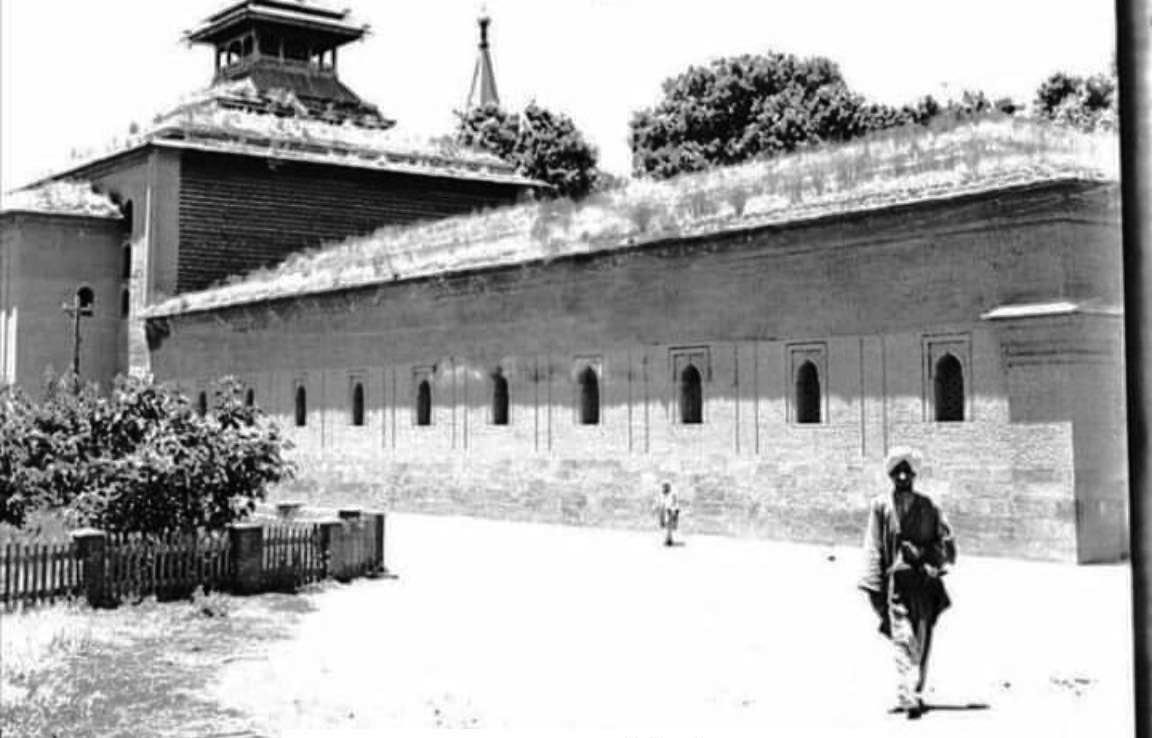
Sultan Sikandar commissioned Jamia Masjid in 1394, and the monumental mosque was completed in 1402. Its vast timber courtyard architecture gave Srinagar a congregational heart unlike stone mosques elsewhere in South Asia. Prayer, debate, and politics would all echo under its deodar columns.
Zain-ul-Abidin's reign is remembered as Srinagar's great Sultanate flowering. He backed Sanskrit and Persian learning, expanded civic works, and encouraged craftsmen whose descendants defined Kashmiri prestige goods. In memory and material culture alike, this is the city's most beloved medieval court.
A major fire damaged Jamia Masjid in 1479, and rebuilding stretched into the early 16th century. Srinagar learned an old lesson: wood gives warmth and beauty, but it also burns quickly. Rebuilding kept the mosque central, proving continuity could survive repeated disaster.
In 1561, Chak elites displaced the Shah Mir line, opening a tense transition period. Factional rivalry sharpened, and external pressure from the Mughals intensified. Srinagar's court became a contested stage rather than a settled center.
Mughal forces annexed Kashmir in 1586, bringing Srinagar into an imperial system centered in the plains. Administrative routines, elite culture, and urban prestige were now tied to imperial summer movement. The city became both frontier and pleasure capital at once.
Akbar's project at Hari Parbat fortified the hill and imagined a planned township around it. The walls and gates announced that Srinagar was not only scenic but strategic. Stone military geometry was laid over an older, water-led city.
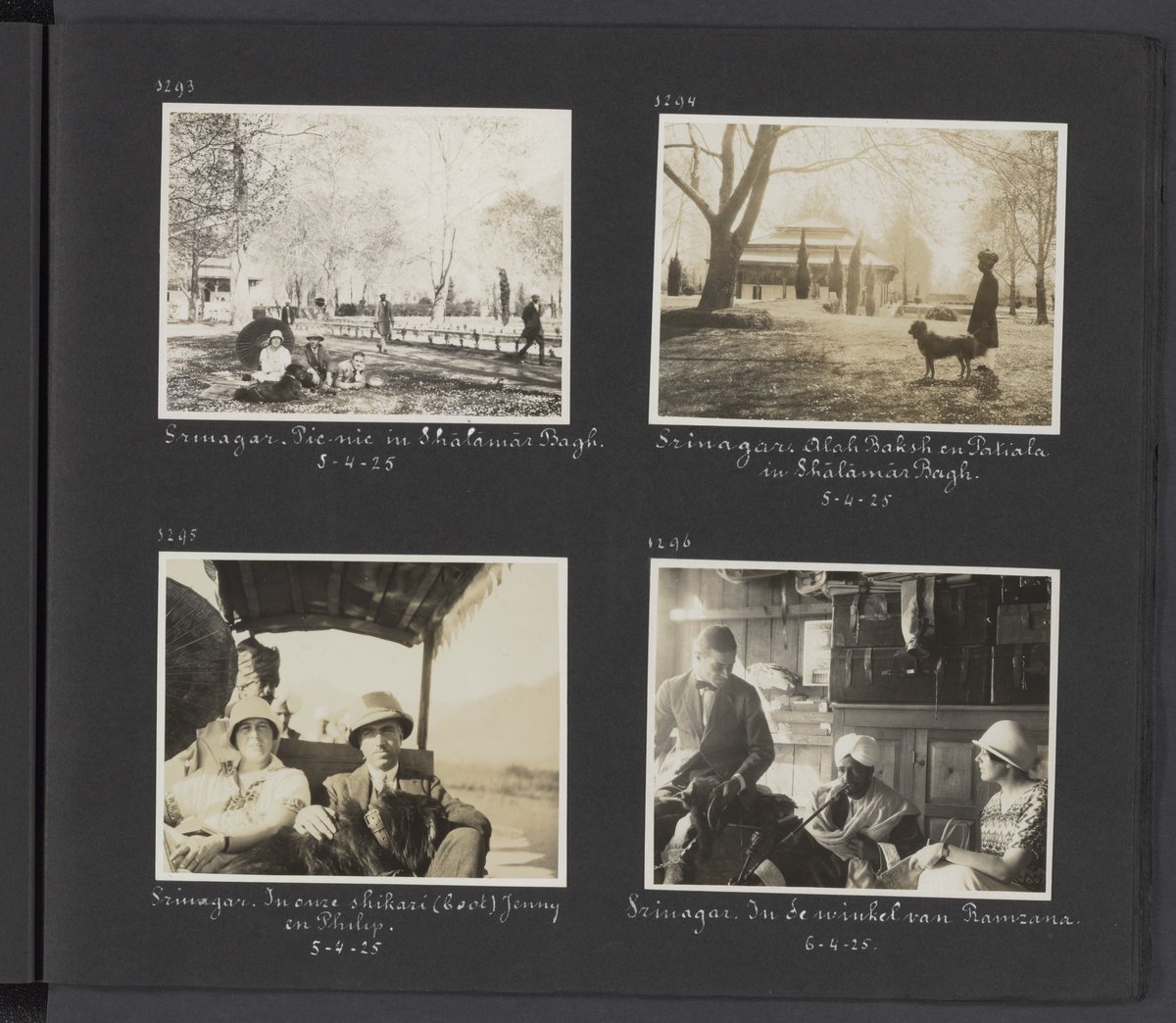
Jahangir built Shalimar Bagh in 1619 for Nur Jahan, terracing water into imperial choreography. Chinar shade, running channels, and pavilions turned landscape into political theater. In Srinagar, power learned to look like a garden.
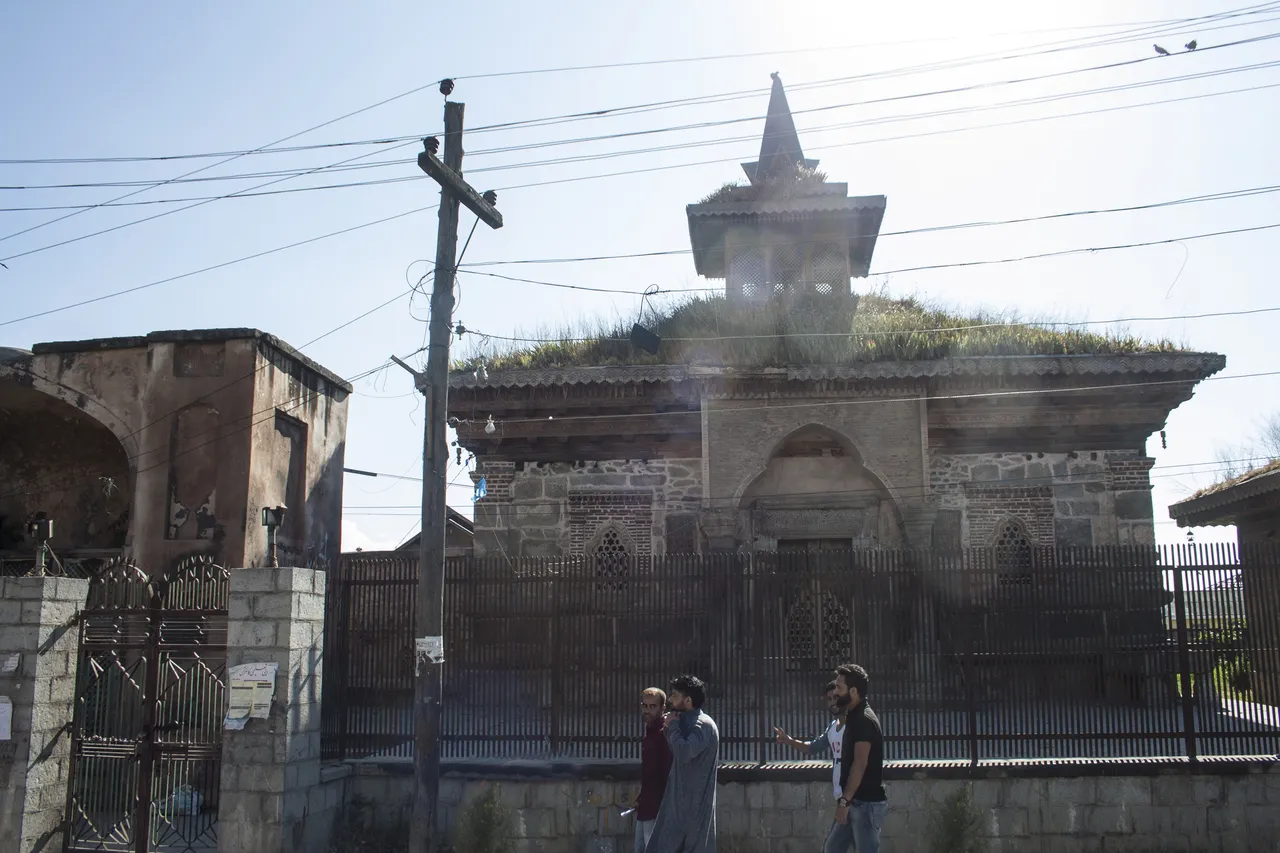
Nur Jahan commissioned Pathar Masjid in 1623 in old Srinagar, a notable break from the region's dominant timber idiom. The mosque's stone massing carries the empress's taste for controlled, unmistakable authority. Her patronage left a hard-edged Mughal signature in a city of wood and water.
By the early 1750s, Srinagar had passed into Afghan Durrani control. Accounts from the period repeatedly describe heavy exactions and social strain under governors. The city endured, but the tone of rule grew harsher and more militarized.
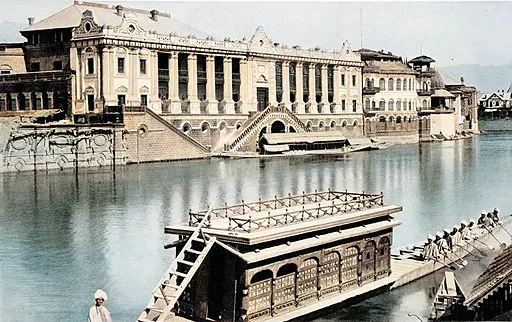
Afghan governor Amir Khan Jawansher began Sher Garhi Palace in 1772 on an older royal site by the Jhelum. The complex made the riverfront a seat of executive power again, with authority looking directly onto boat traffic and bazaars. Later regimes would keep reworking this same political address.
Ranjit Singh's Sikh Empire annexed Kashmir in 1819, ending Afghan rule. In Srinagar, religious and civic life was tightly regulated, and major institutions like Jamia Masjid faced prolonged restrictions. The city remained central, but political breathing space narrowed.
The Treaty of Amritsar transferred rule to Gulab Singh, inaugurating Dogra authority over Jammu and Kashmir. Srinagar became the princely state's summer seat, tying administration to seasonal movement and court ritual. A new dynasty took charge, but it inherited old urban vulnerabilities.
Ranbir Singh institutionalized the Darbar Move, shifting government between Jammu in winter and Srinagar in summer. Every transfer pulled files, clerks, guards, and families over mountain routes, turning climate into statecraft. Srinagar's political calendar began to follow snow lines.
The Kashmir earthquake, estimated around magnitude 6.3-6.8, struck on 30 May 1885 and killed thousands across the region. Roughly 2,000 deaths were reported in Srinagar alone, with widespread collapse of fragile housing. Dust, cracked embankments, and aftershocks remade the city in a day.
The Solina-Rajbagh silk filature opened in 1897, linking Srinagar's artisan economy to modern industrial production. Reel rooms, boilers, and wage labor introduced a different rhythm from household craft. Silk stayed local in skill, but increasingly global in market.
Born in Soura near Srinagar in 1905, Sheikh Abdullah emerged from the city's educational and political ferment. His later mass politics drew force from Srinagar's mosques, schools, and street gatherings, not abstract ideology alone. Few modern figures are so tightly braided with the city's voice.
Police firing outside Srinagar's Central Jail killed 22 protesters on 13 July 1931. The funerals and public mourning transformed grievance into organized mass politics. From this point, the city's streets became the decisive arena of Kashmiri political legitimacy.
After invasion pressures in October 1947, the Maharaja signed accession to India, and troops were airlifted into Srinagar on 27 October. The city's airfield became the hinge on which the first India-Pakistan war turned. Srinagar shifted overnight from princely capital to frontline political symbol.
The disappearance of the Moi-e-Muqqadas relic from Hazratbal in December 1963 triggered huge demonstrations in Srinagar. Its recovery in January 1964 calmed immediate panic but left deep political aftershocks across the region and beyond. Faith, rumor, and state authority collided in full public view.
By 1989, militancy and counterinsurgency had turned Srinagar into a central conflict zone. Checkpoints, crackdowns, assassinations, and fear altered how neighborhoods moved after dusk. The city also witnessed the traumatic departure of many Kashmiri Pandit families during this period.
Extreme rainfall in early September 2014 pushed the Jhelum over its banks and submerged large parts of Srinagar for weeks. In many localities, water rose to upper-story windows, and boats replaced cars in streets lined with shuttered shops. The disaster exposed how badly urban expansion had outpaced floodplain logic.
Constitutional changes in August 2019 took effect on 31 October, reorganizing Jammu and Kashmir from state to union territory. Srinagar remained the summer capital, but under a new constitutional frame and tighter central control. The legal map changed faster than the city's emotional one.
Srinagar hosted the G20 Tourism Working Group in May 2023, with heavy security and carefully curated diplomacy. For three days, the city functioned as an international broadcast set as much as a local place. The event signaled how global optics now shape its modern political life.
Assembly elections in 2024 ended a long stretch of direct rule and restored an electoral channel in Jammu and Kashmir. In Srinagar, campaign speech returned to neighborhoods long defined by security vocabulary. It did not resolve every constitutional dispute, but it changed the grammar of public politics again.
Mughal prince and scholar · 1615–1659
Built and studied at Pari Mahal in Srinagar
Dara Shikoh used Pari Mahal as a place of study, turning a Srinagar hillside into a center for ideas, not just pleasure architecture. Standing there today, you still get that quiet, contemplative vantage over Dal and the city. He would probably recognize Srinagar as a meeting point of beauty and thought.
Mughal emperor · 1569–1627
Commissioned Shalimar Bagh in Srinagar
When Jahangir commissioned Shalimar Bagh, he helped define Srinagar's garden grammar: terraces, water channels, and mountain-framed symmetry. The design still stages movement like a royal procession, even with modern crowds. He would likely notice that the choreography of water still outlives every political era around it.
一些小事,会改变这座城市待你的方式。
这座城市真实的模样。


Yes, especially if you want more than postcard lake views. Srinagar gives you Dal Lake and Mughal gardens, but the deeper layer is Shehr-e-Khaas, Jhelum riverfront walks, and living food culture from dawn bakeries to night grills. It feels like two cities in one trip.
Three to five days is the sweet spot. Use 2 days for the city itself (Dal/gardens plus Old City/Jhelum/Hari Parbat), then add 1-2 days for excursions like Dachigam, Doodhpathri, or Sonamarg. With only 2 days, prioritize Dal at dawn and one heritage-heavy Old City day.
Srinagar is visitable, but you should travel with active caution. Security conditions can change quickly, and the UK FCDO advisory was still marked current on March 14, 2026 for Jammu and Kashmir, including Srinagar. Use registered hotels and transport, avoid crowds/protests, and monitor updates daily.
The most reliable official option is the prepaid taxi counter outside arrivals. SXR is about 15 km from central Srinagar, and this is usually the most straightforward transfer for visitors with luggage. Public airport shuttle information is not clearly listed on official airport/district pages.
No, Srinagar currently has no official metro or tram network. The main formal public system is the Smart City e-bus network, with routes centered around Lal Chowk and timings varying by season. Many travelers still mix buses with cabs for flexibility.
For most travelers, April to June and September to October are best. Mid-March to April is ideal if tulips are your priority, while winter is beautiful but genuinely cold with possible snow and slower movement. IMD normals show the wettest period around spring and milder, drier conditions by early autumn.
It can be done on a moderate budget. There is no city tourist pass, so savings come from route planning, using e-buses where practical, and avoiding unnecessary cross-city taxi hops. Keep splurge moments selective, like one houseboat stay or one full wazwan meal.
Start with one proper wazwan meal, then balance it with everyday Kashmiri rhythms. Try kandur breads with kahwa or noon chai, and head to Khayam Chowk after dark for charcoal seekh tujj. In winter, go very early for harissa because it often sells out.
15 个值得探索的地方
已保存和最近阅读的地点,仅保存在本设备上。
图片可能经过缩放或裁剪。