Mumbai
印度 更新于 Mar 2026
Before you see the skyline, you smell Mumbai: salt off the Arabian Sea, frying chilies at a station stall, and diesel from trains that never quite stop. In Mumbai, India, Gothic spires and Art Deco curves share the same horizon, while ferries leave for a 1,500-year-old cave complex from beneath the Gateway of India. The surprise is not that the city is big; it is that so many different cities are running inside it at once.
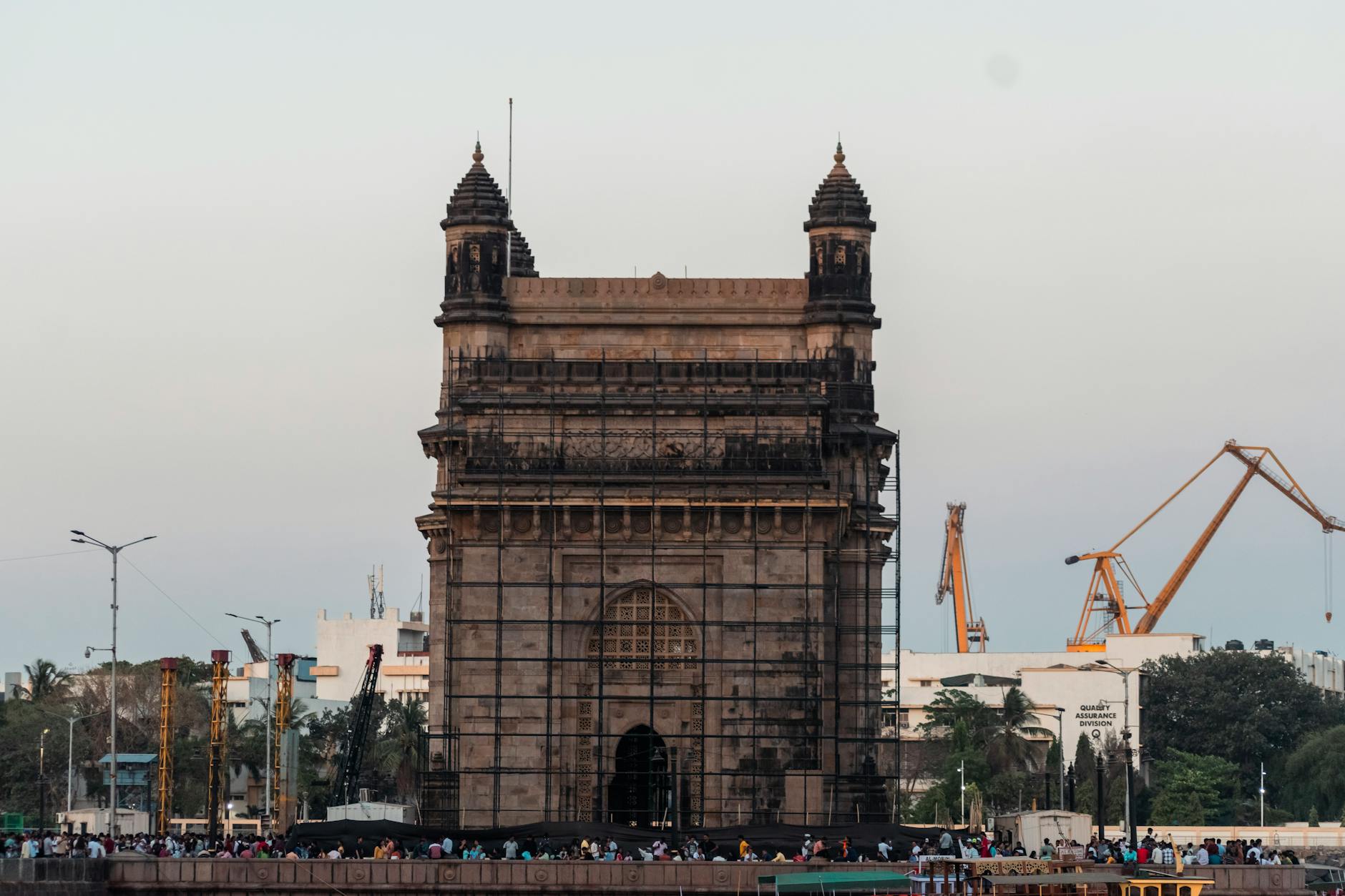 图片: Shivam / Pexels
- 个景点
- 20
- 音频
- 9 h
- 行程天数
- 3-5 days
- 最佳季节
- November-February
为何 Mumbai
内容来自注明出处的资料 · 查看方法 · 我们如何制作导览 →
Start in South Mumbai and the layers become obvious fast. Chhatrapati Shivaji Maharaj Terminus is a UNESCO monument and still a working rail vortex, all carved stone outside and human tide inside. Around Oval Maidan, Victorian Gothic institutions face the streamlined facades of Marine Drive’s Deco apartments; by dusk, the promenade turns into a public theatre of walkers, cricket games, courting couples, and office workers finally exhaling.
Mumbai makes most sense when you read it by neighborhood and hour, especially through food. Matunga belongs to early-morning filter coffee and dosas; Fort and Ballard Estate hold old Irani-Parsi lunch rooms; Bandra West takes over after dark with bars and live gigs; Mohammed Ali Road rewrites the night during Ramzan. Even etiquette tells a story of a city that negotiates everything in real time: informal, crowded, and sharply aware of value.
The cultural map is wider than the postcard circuit. Kala Ghoda can carry a full day between CSMVS, Jehangir, and nearby heritage libraries; evenings split between NCPA’s formal stages, Prithvi’s intimacy, or newer rooms at NMACC. By the time you add Banganga’s temple bells, Sassoon Docks at sunrise, and Kanheri’s rock-cut stillness inside Sanjay Gandhi National Park, Mumbai stops looking like a single metropolis and starts feeling like a living archive that keeps rewriting itself.
A Working City With A Pulse
Mumbai is India’s financial engine, film capital, and migrant city at once, and you feel that mix in every local train platform and Irani cafe. Dawn at Sassoon Docks, gallery afternoons in Kala Ghoda, and late-night sea air on Marine Drive all belong to the same day.UNESCO In Stereo
Few skylines stage such a sharp duet: Victorian Gothic spires around Oval Maidan facing Art Deco curves on Marine Drive. Add CSMT and Rajabai Clock Tower, and the city reads like architecture switching languages block by block.Caves, Forest, And Sea
Mumbai’s wild side is not far away: ferries from the Gateway of India reach Elephanta’s rock-cut shrines, while Sanjay Gandhi National Park holds Kanheri’s Buddhist caves inside urban forest. It is one of the rare megacities where monastic stone, mangroves, and traffic coexist.Stages After Sunset
The city’s evenings are built around performance, from NCPA’s packed calendar to Prithvi Theatre’s intimate black-box energy. Royal Opera House and NMACC add two very different versions of grandeur, one restored heritage and one contemporary spectacle.
街区
按区漫步——每个街区都有自己的节奏。
Colaba
Colaba is first-contact Mumbai: the Gateway of India, ferry departures to Elephanta, old hotels, art shops, and late-night food institutions packed into walkable streets. Come early for harbor light and again after dark, when the district shifts from camera-stop monumentality to noisy, lived-in energy.Fort & Kala Ghoda
This is the city’s best heritage-and-arts district, where Indo-Saracenic museums, Gothic civic buildings, and serious galleries sit within a few blocks. Give it daytime hours for CSMVS, Jehangir Art Gallery, David Sassoon Library, and café breaks between façades that reward anyone who looks up.Churchgate & Marine Drive
Churchgate and Marine Drive are Mumbai’s grand public edge: office crowds by day, sea breeze and skyline glow by evening. The UNESCO Gothic-Deco dialogue is clearest nearby, and the curve of the promenade earns its “Queen’s Necklace” nickname once the lights come on.Bhendi Bazaar & Mohammed Ali Road
Dense, aromatic, and most dramatic after sunset, this quarter is about working streets and food culture rather than polished storefronts. During Ramzan, kebabs, nihari, malpua, and phirni turn the area into one of Mumbai’s defining seasonal night walks.Malabar Hill & Walkeshwar
Up here, the city slows down without going quiet. Hanging Gardens, Banganga Tank, temple lanes, and old residential pockets offer a very different Mumbai from the business districts below, with sea views, ritual spaces, and a sense of older sacred geography still in use.Matunga
Matunga is breakfast territory, especially for South Indian institutions where queues form early and filter coffee arrives fast. It is less about spectacle and more about ritual: idli at opening hour, regulars at standing tables, and a neighborhood that runs on morning appetite.Bandra West
Bandra West carries contemporary Mumbai’s social pulse: specialty coffee, design-forward restaurants, independent music venues, and bars that fill late. It is the easiest place to understand the city’s creative present, especially from Carter Road through the backstreets after sunset.Lower Parel & Worli
Former mill lands turned into a high-gloss dining and nightlife zone, Lower Parel and Worli are where corporate Mumbai goes out. Expect polished cocktail rooms, destination restaurants, rooftops with dress codes, and a sharp contrast to the city’s older mercantile quarters.
规划行程
出发之前
- Getting There
- Mumbai’s main gateway is Chhatrapati Shivaji Maharaj International Airport (BOM), with Terminal 1 (domestic) and Terminal 2 (international + domestic). Key long-distance rail hubs are Chhatrapati Shivaji Maharaj Terminus (CSMT), Mumbai Central, Dadar, Bandra Terminus, and Lokmanya Tilak Terminus. Major road links include NH 48 (toward Ahmedabad/Delhi and Pune-Bengaluru corridor), NH 66 (Konkan coast toward Goa), and the Mumbai-Pune Expressway.
- Getting Around
- As of 2026, the practical metro network for visitors includes Lines 1, 2A, 7, and 3, with Line 3 linking airport stations (T1/T2 area) to South Mumbai nodes such as Churchgate, CST Metro, and Cuffe Parade. BEST buses and suburban rail remain the city’s backbone, with monorail in limited corridors, and the Mumbai ONE app integrates 11 operators with QR ticketing. There is no operating tram network; for buses, a Chalo Card is listed at Rs 70 and BEST’s co-branded NCMC card at Rs 150 (introductory Rs 100), while cycling lanes are still fragmented outside select promenades.
- Climate & Best Time
- Winter (Dec-Feb) is the easiest season for walking days, roughly 17-32°C, while pre-monsoon summer (Mar-May) rises to about 21-34°C with sticky humidity. Monsoon (Jun-Sep) is intense: July averages around 920 mm rain, and June-August are regularly waterlogged. Peak leisure season is November to February; off-peak is June to September, with October and early March as shoulder windows.
- Language & Currency
- English, Hindi, and Marathi are the practical trio, and Mumbai ONE transport interfaces are explicitly trilingual. Currency is Indian Rupee (INR/Rs); small notes still help in markets, taxis, and beach stalls. In 2026, UPI is dominant for everyday payments, and foreign visitors can use UPI ONE WORLD after passport-and-visa verification.
- Safety
- Use station and market awareness rather than paranoia: keep bags closed, phones discreet, and avoid isolated waterfront stretches late at night. Emergency numbers are 112 (national), 100 (Mumbai Police), 103 (women’s helpline), and 101 (fire). Current U.S. advisory level for India is Level 2 (exercise increased caution), with specific caution around transport hubs and crowded public places.
Tide, Stone, Cotton, Cinema: Mumbai Across Three Millennia
From Koli waters and cave sanctuaries to a 21st-century megacity stitched together by sea links.
- c. 1000 BCE
Sea Lanes Before the City
Long before "Mumbai" existed, these islands sat inside busy Arabian Sea trade circuits linking western India to Persia and Egypt. Salt air, fish markets, and tidal inlets made the coast valuable as a working maritime edge rather than a royal capital.
- 3rd century BCE
Ashoka's Western Littoral
The island zone fell within the Mauryan imperial world under Ashoka. That mattered less as palace spectacle and more as administrative reach, with coastal routes tied to inland power and Buddhist networks.
- c. 550 CE
Elephanta's Basalt Gods Emerge
Artisans cut the Elephanta cave temples into dark volcanic rock, including the colossal Trimurti in Cave 1. The chambers still hold cool air and echoing footsteps, proof that the islands were already a sacred landscape of regional importance.
- 1294
Mahikavati Rises at Mahim
The Yadavas established Mahikavati (Mahim), the first clearly documented political settlement in Mumbai's core islands. It marked a shift from scattered coastal communities to an organized urban center built for defense and control.
- 1348
Gujarat Sultanate Takes the Islands
Muslim forces absorbed the islands into the Gujarat political sphere, and Mahim became the key seat of authority. Power now moved through Indo-Islamic coastal networks, reshaping taxation, military priorities, and maritime governance.
- 1431
A Saint on the Tidal Causeway
Haji Ali Dargah was founded on an offshore islet, reached by a narrow path that disappears under high tide. The site fused faith, sea, and city rhythm, becoming one of Mumbai's oldest living spiritual landmarks.
查看完整时间线(30 个节点)
- 1534
Treaty of Bassein Changes Rule
By treaty, Sultan Bahadur Shah ceded the islands to Portugal, folding them into a wider Estado da India system. Churches, manor houses, and fortified posts followed, leaving a durable Catholic and Lusophone imprint on the region.
- 1661
Dowry Turns Islands into Prize
Bombay passed to Charles II in the marriage settlement with Catherine of Braganza. A peripheral Portuguese possession suddenly became a strategic English asset on the west coast.
- 1668
East India Company Takes Bombay
The English crown transferred Bombay to the East India Company, launching the city as a fortified corporate port-state. From this point, docks, fort walls, and mercantile law mattered as much as dynastic politics.
- 1689-1690
Sidi Fleet Besieges Bombay
Sidi Yakut Khan's forces pressed Bombay during the Anglo-Mughal conflict, exposing how fragile the young Company town still was. Scarcity, fear, and military strain hardened the colony's defensive mindset for decades.
- 1783
Jamsetjee Jeejeebhoy's Civic Legacy Begins
Born in 1783, Jamsetjee Jeejeebhoy would become the merchant-philanthropist who helped finance life-saving urban works in Bombay. His giving linked private wealth to public infrastructure in a city growing faster than its safety systems.
- 1784
Hornby Vellard Seals the Breach
Completion of the Hornby Vellard blocked the Worli creek breach and changed the physics of the islands. It was early large-scale reclamation: less romantic than a monument, but more consequential for the city's future map.
- 1825
Dadabhai Naoroji, Bombay's Conscience
Dadabhai Naoroji was born in Bombay and later taught at Elphinstone, where civic argument and anti-colonial economics sharpened. His public life tied Bombay's classrooms and debating halls to the making of modern Indian nationalism.
- 1845
Mahim Causeway Ends Deadly Crossings
The Mahim Causeway opened, financed by the Jeejeebhoy family after repeated monsoon ferry tragedies. What had been a risky water crossing became an all-weather link, tightening the city's everyday geography.
- 16 April 1853
First Passenger Train Leaves Bori Bunder
India's first passenger train ran from Bori Bunder to Thane, about 34 km, with 14 carriages carrying roughly 400 people. The shriek of steam announced a new Bombay: faster commutes, larger labor pools, bigger markets.
- 1854
Cotton Mills Rewrite the Waterfront
The Bombay Spinning and Weaving Company launched the mill era, with production beginning by 1856. Mill chimneys, humid weaving floors, and raw-cotton finance transformed Bombay into an industrial powerhouse.
- 1887
Victoria Terminus Crowns the City
The great terminus now called CSMT was completed after years of construction, combining high Victorian Gothic drama with Indian motifs. It was never just a station; it was an imperial statement in stone, clockwork, and crowd flow.
- 1896
Plague Empties the Crowded Core
Bubonic plague struck Bombay, killing thousands and driving fear through packed chawls and dockside neighborhoods. Public health crackdowns and later planning interventions changed how the city managed density, sanitation, and suburbs.
- 1903
Taj Mahal Palace Faces the Harbor
The Taj Mahal Palace Hotel opened at Apollo Bunder with electric lighting, grand staircases, and cosmopolitan ambition. It signaled Bombay's self-image as a global port city that could host empire, commerce, and culture on its own terms.
- 1913
Phalke Ignites Bombay's Film Future
With Raja Harishchandra, Dadasaheb Phalke helped trigger Bombay's rise as the center of Indian cinema. In studios and improvised sets, the city learned to convert light, music, and mass audiences into an industry.
- 4 December 1924
Gateway of India Opens
The basalt ceremonial arch at Apollo Bunder opened after years of reclamation and construction. It framed imperial arrivals in the 1920s, then later framed imperial departure, making it one of Mumbai's most ironic monuments.
- 1935
Husain Paints the Streets
M. F. Husain moved to Bombay and painted cinema hoardings before entering gallery circuits. The city gave him scale, speed, and visual noise; he gave it back a modernist language that traveled far beyond its neighborhoods.
- 8 August 1942
'Quit India' Roars from Bombay
At a Bombay session, Congress adopted the Quit India resolution and Gandhi delivered the "Do or Die" call. The city's meeting halls and streets became a pressure chamber for mass anti-colonial mobilization.
- 14 April 1944
Victoria Dock Explodes
A catastrophic explosion at Bombay docks killed at least 800 people, injured around 3,000, and left about 80,000 homeless. Fire, shrapnel, and shockwaves revealed the wartime city's vulnerability at the heart of its port economy.
- 1 May 1960
Bombay Becomes Maharashtra's Capital
After the Samyukta Maharashtra movement, the new state of Maharashtra was formed with Bombay as its capital. Linguistic politics, labor power, and metropolitan finance now had to coexist inside one contested civic identity.
- 1995
Bombay Officially Becomes Mumbai
The official renaming from Bombay to Mumbai restored a name rooted in Mumbadevi and local linguistic politics. It was more than signage: it marked a new battle over memory, belonging, and who gets to narrate the city.
- 26 July 2005
Monsoon Deluge, 942 Millimeters
Mumbai received 942 mm of rain in 24 hours, paralyzing roads, rails, and neighborhoods. The smell of diesel, sewage, and floodwater lingered for days, and climate risk stopped being an abstract forecast.
- 26-29 November 2008
26/11 Shatters the Night
Coordinated terror attacks across Mumbai killed 166 people and injured hundreds more. Train stations, hotels, and public spaces became trauma sites, permanently altering the city's security culture and civic memory.
- 30 June 2018
UNESCO Honors Mumbai's Skyline
UNESCO inscribed the Victorian Gothic and Art Deco Ensembles of Mumbai, recognizing an urban conversation across Oval Maidan and Marine Drive. Few cities stage such a sharp architectural duet: spires, curves, sea light, and civic ambition in one frame.
- January-March 2024
Atal Setu Rewires the Region
The Mumbai Trans Harbour Link opened to traffic in January, and the first phase of the Coastal Road opened in March. Together they signal the new Mumbai wager: build faster links over water and along reclaimed edges while the city races against congestion and climate pressure.
谁曾 在此生活
-
Freedom leader · 1869–1948
Mohandas Karamchand Gandhi
Lived and organized from Mani Bhavan, 1917–1934
Mani Bhavan was Gandhi’s Mumbai base during decisive years of India’s freedom movement, where campaigns were planned and ideas were sharpened. Standing there today, you can still feel the disciplined quiet behind public upheaval. He would likely recognize Mumbai’s crowds instantly, and ask what moral purpose now drives all that speed.
-
Architect · 1878–1926
George Wittet
Designed major Bombay-era public buildings, including the hall that now houses NGMA Mumbai
Wittet helped script the visual language of South Mumbai, where imperial ambition met local material and craft. The former Sir Cowasji Jehangir Public Hall, now NGMA Mumbai, carries that layered legacy. He would probably be astonished that his formal civic shell now hosts modern and contemporary art conversations.
-
Lawyer and civic leader · 1845–1915
Pherozeshah Mehta
Hanging Gardens is officially Pherozeshah Mehta Garden
Mehta shaped municipal Bombay politics, and his name on Malabar Hill’s gardens is a reminder that city design is political history made visible. The site itself, built above a reservoir, shows how infrastructure and public life intertwine in Mumbai. He might see today’s city as larger and louder, but still defined by civic negotiation.
-
Merchant-philanthropist · 1792–1864
David Sassoon
Legacy institution in Kala Ghoda: David Sassoon Library & Reading Room
Sassoon’s philanthropic footprint survives in one of Mumbai’s most atmospheric reading rooms, where Venetian Gothic detail meets the working rhythm of the Fort district. The library is not just heritage decor; it is a living civic room. He would likely recognize the old mercantile energy, even as the surrounding city became vertical and global.
-
Actor and theatre pioneer · 1906–1972
Prithviraj Kapoor
Prithvi Theatre in Juhu was established in his memory
Prithvi Theatre keeps Kapoor’s stage-first ethos alive in a city better known globally for film scale and glamour. Its intimate auditorium rewards close listening, not spectacle, and anchors Mumbai’s contemporary theatre culture. He would probably approve that in a city of constant noise, actors still command silence in a small room.
美食推荐
本地人真正会去订位的地方——而非游客菜单。
内行 贴士
一些小事,会改变这座城市待你的方式。
Airport to South
For Fort, CSMT, Churchgate, or Colaba stays, use Metro Line 3 from the airport area (T1/T2 stations on the route). It is usually faster and calmer than road traffic after a long flight.Use Mumbai ONE
Download Mumbai ONE for QR tickets and route planning across metro, BEST buses, suburban rail, and monorail. Pair it with a Chalo Card on BEST buses to keep daily transport costs low.Check the Bill
Service charge in restaurants is voluntary, and the January 10, 2026 government notice reiterated it cannot be forced by default. Read your bill carefully, then tip as a choice, not an obligation.Time the Weather
Plan core sightseeing for November to February; it is the easiest season for long walks. July is the rain peak in IMD normals, so in monsoon keep museum backups and extra transit time.Crowd-Smart Safety
Use extra caution in crowded hubs, markets, and major religious sites, especially after dark. Save emergency numbers 112 and 100, and prefer official airport transport, metered autos, or major app cabs.Eat by Time
Start early in Matunga for South Indian breakfast, then shift to Bandra/Lower Parel for later dinners where prime tables fill after 8:30 pm. For street food, pick stalls with fast turnover and active queues.
图集
这座城市真实的模样。



观看
-
Bon Appétit Exploring Mumbai's Busiest Street Food Market | Street Eats | Bon Appétit
-
The Chui Show KINAMAY Indian Street Food Tour in MUMBAI! 10 Must Try Kinamay Mumbai Food 🇮🇳
-
Explore India Financial Capital 2024 - Synthwave | Mumbai city 4K
-
Grishma Udayawar Ultimate Travel Guide for Mumbai - Tourist Places, food, travel, budget & all details


常见问题
Is mumbai worth visiting?
Yes, especially if you like cities with texture instead of postcard calm. Mumbai layers UNESCO Gothic-Deco architecture, cave temples, museums, and one of India’s deepest food cultures into one coastline. It is intense, but that intensity is exactly the draw.
How many days in mumbai?
Three to five days is the sweet spot. In 3 days you can cover South Mumbai heritage, Elephanta, and key food neighborhoods; with 5 days you can add SGNP/Kanheri, performance venues, and one day trip such as Vasai or Matheran.
How do I get from Mumbai airport to Colaba or Fort?
Use Metro Line 3 or a licensed/app taxi. Line 3 connects the airport corridor to central and south-city stations including Mumbai Central, CST Metro, and Cuffe Parade, which is often more predictable than road traffic. Autos from the airport are for suburban zones, not South Mumbai.
Is Mumbai safe for tourists?
Mumbai is manageable for visitors, but vigilance matters. The U.S. advisory for India is Level 2 (exercise increased caution), with specific concern for crowded public places and transport hubs. Keep bags close in stations/markets, avoid isolated waterfront stretches late at night, and use trusted transport.
What is the cheapest way to get around Mumbai?
BEST buses plus metro are usually the cheapest practical combination. Use Mumbai ONE for multimodal planning and digital tickets, and add a Chalo Card for bus rides. This setup saves money compared with relying on taxis for every trip.
When is the best time to visit Mumbai?
November to February is best for comfort and walkability. March to May is hotter and more humid, while June to September is monsoon season with very heavy rain, especially in July. October is a useful shoulder month but can still feel sticky.
Do tourists need cash in Mumbai, or can I use cards and UPI?
Carry some cash, but digital payment is central to daily life. Big venues usually take cards, while small vendors often prefer UPI or cash. International visitors can use UPI ONE WORLD after passport/visa verification and INR loading.
Can I explore Mumbai without taxis?
Yes, for many routes you can rely on metro, suburban rail, monorail, and BEST buses. South Mumbai areas like Colaba, Fort, Kala Ghoda, and Marine Drive are also walkable in segments. Use taxis mainly for late-night returns or cross-city hops.
从上次的地方继续
已保存和最近阅读的地点,仅保存在本设备上。
图片来源 (13)
- Shivam — Pexels License (https://www.pexels.com/license/) — 来源: https://www.pexels.com/photo/21319632/
- Mumbai Skyview near Airport 173829 — Rameshng — CC BY-SA 3.0 (https://creativecommons.org/licenses/by-sa/3.0/) — 来源: https://commons.wikimedia.org/wiki/File:Mumbai_Skyview_near_Airport_173829.jpg
- Rajkumarrr comics — Pexels License (https://www.pexels.com/license/) — 来源: https://www.pexels.com/photo/34480721/
- Saloni Panchal — Pexels License (https://www.pexels.com/license/) — 来源: https://www.pexels.com/photo/35709783/
- Mumbai, India (5460922649) — SEDACMaps — CC BY 2.0 (https://creativecommons.org/licenses/by/2.0/) — 来源: https://commons.wikimedia.org/wiki/File:Mumbai,_India_(5460922649).jpg
- Rajkumarrr comics — Pexels License (https://www.pexels.com/license/) — 来源: https://www.pexels.com/photo/34480699/
- Shivam Maurya — Pexels License (https://www.pexels.com/license/) — 来源: https://www.pexels.com/photo/13143010/
- Marine Lines Mumbai 2021 — Dr Vikramjit Kakati — CC BY-SA 4.0 (https://creativecommons.org/licenses/by-sa/4.0/) — 来源: https://commons.wikimedia.org/wiki/File:Marine_Lines_Mumbai_2021.jpg
- Rajkumarrr comics — Pexels License (https://www.pexels.com/license/) — 来源: https://www.pexels.com/photo/34480697/
- Panoramic view of Taj Palace Hotel and Taj Tower with the iconic Gateway of India in the background (cropped) — iMahesh — CC BY-SA 4.0 (https://creativecommons.org/licenses/by-sa/4.0/) — 来源: https://commons.wikimedia.org/wiki/File:Panoramic_view_of_Taj_Palace_Hotel_and_Taj_Tower_with_the_iconic_Gateway_of_India_in_the_background_(cropped).jpg
- Roman Saienko — Pexels License (https://www.pexels.com/license/) — 来源: https://www.pexels.com/photo/28867943/
- Shubam Bhasin — Pexels License (https://www.pexels.com/license/) — 来源: https://www.pexels.com/photo/6522114/
- Abhishek Mishra — Pexels License (https://www.pexels.com/license/) — 来源: https://www.pexels.com/photo/28684077/
图片可能经过缩放或裁剪。