简介
圣安托万代香普(Saint-Antoine-des-Champs)位于巴黎历史悠久的第十二区,坐落在充满活力的圣安托万区(Faubourg Saint-Antoine)内,这里是这座城市宗教、王室、手工艺和革命时期历史的交汇点。该修道院始建于1198年,最初是为边缘化女性提供庇护的场所,后来发展成为一所皇家机构,对当地社区产生了深远影响,塑造了该地区的艺术和社交身份(paris-atlas-historique.fr)。如今,尽管最初的修道院建筑大部分已消失,但该遗址的遗产在巴黎的城市景观中得以延续,尤其体现在庭院、工匠通道和呼应其辉煌历史的文化地标中(France Today)。
本指南将探讨圣安托万代香普的历史意义、文化影响以及实用的游客信息——包括参观时间、票务、无障碍设施和当地建议。无论您是被革命精神、艺术遗产还是巴黎街区的鲜活传统所吸引,本文都将为您提供信心和好奇心,助您体验圣安托万代香普(france-voyage.com)。
图片库
图览Saint-Antoine-Des-Champs
This 19th-century pencil and paper drawing by Alfred Bonnardot depicts an aerial view of the Abbaye Saint-Antoine in the 11th-12th arrondissement of Paris circa 1481. The artwork shows the abbey's enclosure, church, various buildings, fields, a pond, and a farm. A stone cross commemorating a 15th-ce
Detailed representation of Abbaye Saint-Antoine-des-Champs shown on the historic Turgot map of Paris, highlighting architectural and urban features.
Detailed photograph of the foundation stone of the former abbey in the vestibule of the old building at Saint-Antoine Hospital, located at 184 rue du Faubourg-Saint-Antoine, 12th arrondissement, Paris, captured on 19 February 1921 by photographer Charles Joseph Antoine Lansiaux.
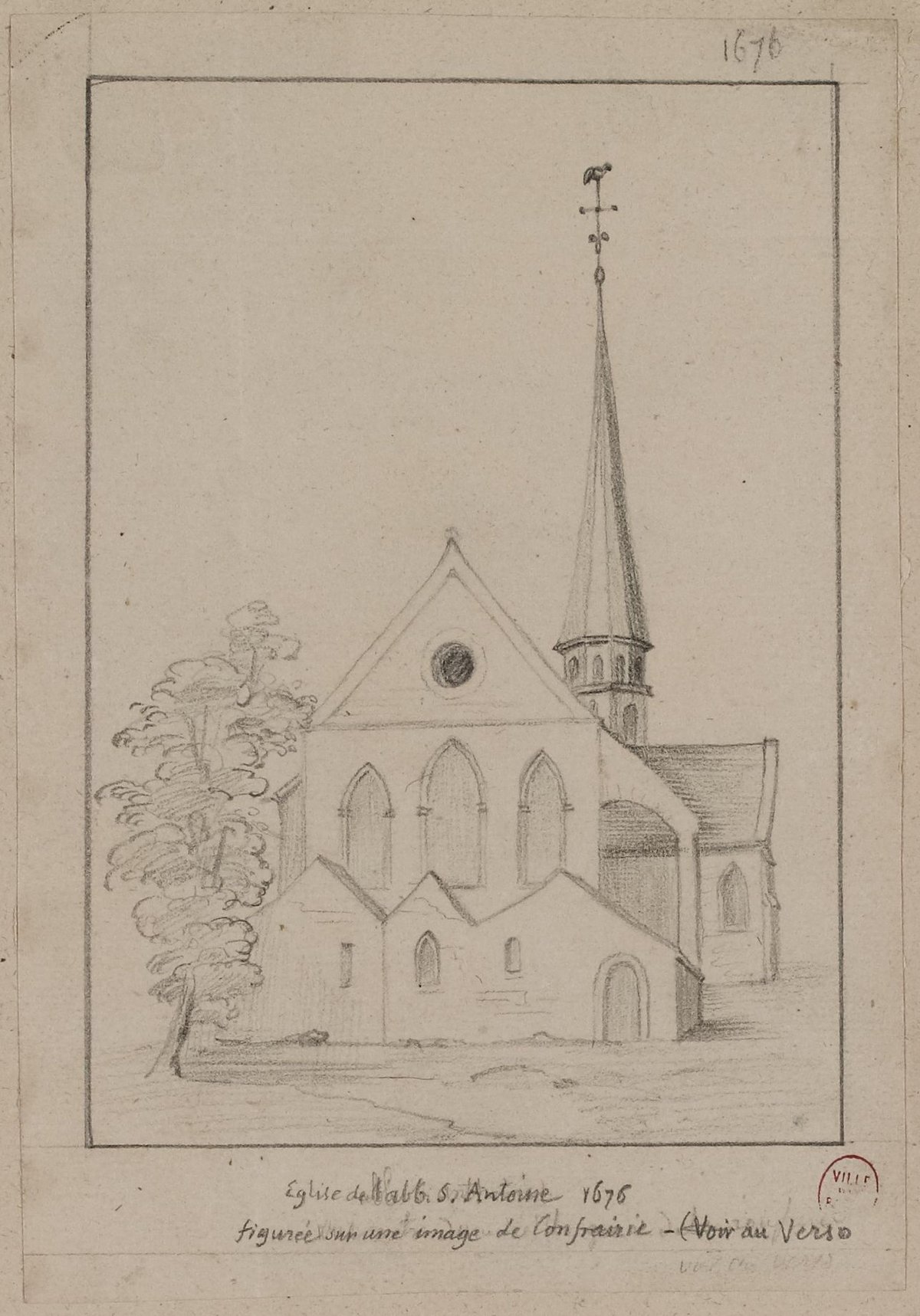
Graphite pencil drawing from circa 1676 depicting the Abbey of Saint Antoine and Rue du Faubourg Saint-Antoine, mounted on cardboard, from the collection of Musée Carnavalet, Histoire de Paris
Photomechanical print by J. Sulpis and Emile Hochereau depicting plan, section, and elevation views of Rue du Faubourg Saint-Antoine and the Royal Abbey of Saint-Antoine des Champs, mounted in passe-partout, from Musée Carnavalet's collection.
A photomechanical print engraved by J. Sulpis and drawn by Emile Hochereau, depicting Rue du Faubourg Saint-Antoine, the Abbaye Royale de Saint-Antoine des Champs, and related hospitals with plan, section, and elevation views. Mounted on passe-partout. Held at Musée Carnavalet, Paris.
Historic Abbaye Saint-Antoine des Champs, a former abbey located in Paris, France, showcasing traditional architecture and heritage.
19th century lithograph by Fourquemin and Edouard Auguste Nousveaux depicting Rue du Faubourg Saint-Antoine, Abbey Saint-Antoine, and various hospitals in Paris. Housed at the Musée Carnavalet, the artwork measures 32.6 by 43.9 cm and is mounted on cardboard.
Detailed historical plan of the former Abbey of Saint Antoine des Champs around the year 1800, showcasing architectural layout and design.
Detailed 1793 drawing of Saint-Antoine Abbey by Henri Menou using plume, black and red ink, and wash; dimensions 25.3x30.6 cm, housed at Musée Carnavalet, Paris
Detailed heliogravure print by Paul Dujardin depicting Rue du Faubourg Saint-Antoine, Prison de Mazas, Gare de Lyon, and Quai de la Rapée in Paris during the 15th century, held at Musée Carnavalet.
A 1892 pencil and ink drawing by Alcide Loron depicting the tomb of Jeanne de France and Bonne de France located at Église Saint-Antoine-des-Champs. The artwork features intricate details using pencil, plume, black ink, and wash on tracing paper, with dimensions of 33 cm by 24.1 cm, housed at Musée
历史概述
起源与建立
圣安托万代香普于1198年由马恩河畔讷伊(Neuilly-sur-Marne)的教区长 Foulques 创立,最初是作为巴黎东部当时还是乡村地带的“悔改的妓女”的避难所。修道院于1204年迅速采纳了西多会规章,并在皇家赞助——特别是国王路易八世及其子圣路易——的帮助下,作为皇家修道院声名鹊起(paris-libris.com)。
中世纪的增长与城市影响
到了中世纪晚期,坚固的城墙、护城河和广阔的花园构成了修道院的疆域。修道院的存在促进了圣安托万区(Faubourg Saint-Antoine)的兴起,这是一个繁荣的手工艺者聚居区,他们的作坊后来成为巴黎精湛工艺的代名词(leftinparis.org)。
经济特权与社会角色
圣安托万代香普拥有司法自主权,并自1471年起,其工匠享有免于巴黎行会限制的自由,吸引了熟练工人,促进了该地区的经济活力(leftinparis.org)。
建筑与政治演变
修道院的建筑在17世纪和18世纪不断扩建,最终在法国大革命前进行了宏伟的重建(paris-libris.com)。其靠近巴士底狱的战略位置使其成为政治阴谋的中心,曾举办皇家会议、庆典,并最终成为革命热情的高潮。
废除与现代遗产
法国大革命导致修道院被废除,并改建为圣安托万医院(Hôpital Saint-Antoine)。修道院的花园让位于新的巴黎街道,如今,只有钟楼(Pavillon de l’Horloge)——修道院回廊的遗迹——仍保留在医院建筑群内(paris-libris.com)。
文化与艺术遗产
革命身份
圣安托万代香普所在的圣安托万区(Faubourg Saint-Antoine)以其作为革命行动的熔炉而闻名。其迷宫般的街道和紧密的工匠社区在法国大革命、巴黎公社和其他重大起义中发挥了关键作用(France Today)。特别是1789年的勒韦昂(Réveillon)暴动,成为法国大革命的导火索。
艺术传统
该区成为细木家具(ébénisterie)和装饰艺术的代名词,吸引了大师级工匠,并促进了影响欧洲品味的创新。皇家特许使当地工匠免受行会限制,让创造力得以蓬勃发展(France Today)。如今,Dissidi 和 Ebénisterie Straure 等工坊延续着这一鲜活传统,欢迎对精美木工艺术感兴趣的游客。
文学描绘
维克多·雨果(Victor Hugo)的《悲惨世界》(Les Misérables)将该区永载史册,将其作为坚韧和革命潜力的象征,而雅克·希雷(Jacques Hillairet)等作家则赞扬了该区对新材料和新思想的开放态度。
城市特色
该区域狭窄的街道、隐藏的庭院和通道——如 Cour Damoye 和 Passage du Chantier——继续唤起人们对工人阶级巴黎的记忆,如今这里因其真实性和历史价值而备受珍视(France Today)。
实用游客信息
地点与交通
- 地址:184 Rue du Faubourg Saint-Antoine, 75012 Paris, France
- 地铁:Ledru-Rollin (8号线) 和 Faidherbe-Chaligny (8号线) 是最近的车站(paris-promeneurs.com)。
- 街区:圣安托万区(Faubourg Saint-Antoine)从巴士底广场(Place de la Bastille)延伸至国家广场(Place de la Nation),拥有充满活力的街道、工匠工作室和历史通道(france-voyage.com)。
参观时间
- 修道院场地:圣安托万医院(Hôpital Saint-Antoine)坐落在原修道院旧址;公众进入受到严格限制。钟楼(Pavillon de l’Horloge)可从公共区域看到。
- 工匠庭院与通道:大部分开放时间为上午9点至晚上7点;私人庭院在这些时间之外可能受到限制(France Voyage)。
- 市场:Aligre 市场(Marché d’Aligre)除周一外每日开放,通常上午9点至下午1点半和下午4点至晚上7点(Secrets of Paris)。
门票与导览
- 无常规门票:街区可自由探索;医院场地偶尔在遗产活动期间提供导览,需提前预订(paris-promeneurs.com)。
- 导览徒步:多家机构提供侧重历史、建筑和工匠文化的导览。请查看列表了解日程和预订(Paris Capitale Historique)。
无障碍设施
- 通用:主街道和医院通常可通行,但一些历史庭院有鹅卵石或台阶。
- 提示:如果您有特殊的行动需求,请与导览组织者确认无障碍情况(paris-promeneurs.com)。
便利设施与当地提示
- 餐饮:该地区有各种小酒馆、咖啡馆和市场。晚餐服务通常在晚上7点半开始(travelswithelle.com)。
- 饮用水:使用“Eau de Paris”应用程序查找免费公共饮水点(xplrverse.com)。
- 洗手间:公园和大型咖啡馆内有洗手间;大多数需要消费。
- 安全:第十二区是安全的;在繁忙地区注意防范扒窃(xplrverse.com)。
亮点与附近景点
- Passage du Chantier:以其木工店和保存完好的工匠氛围而闻名。
- Cour de l’Étoile-d’Or:风景如画的庭院,拥有历史氛围。
- Place de la Bastille:法国大革命的发源地,距离10分钟步行路程。
- Marché d’Aligre:熙熙攘攘的市场,出售食品和古董。
- Square Trousseau:当地公园,提供绿色休憩空间。
- Rue de Lappe:充满活力的夜生活,历史悠久的酒吧和音乐场所。
常见问题 (FAQ)
问:我能参观原来的修道院建筑吗? 答:只有钟楼(Pavillon de l’Horloge)仍然存在,可以在圣安托万医院的公共区域看到。
问:有导览吗? 答:是的,但仅在特殊场合提供,且需提前预订。请咨询当地遗产团体了解详情。
问:什么时候是最佳参观时间? 答:春季、初夏(尤其是在国庆节前)和初秋是人群较少且天气宜人的理想时间(worldinparis.com)。
问:该地区适合家庭吗? 答:是的,但建议在狭窄或拥挤的街道上注意看管。
问:我可以在这里购买手工家具吗? 答:是的,许多工作室出售原创作品和复制品(France Today)。
在应用中收听完整故事
Audiala App
支持 iOS 和 Android
加入50,000+策展人
资料来源
- verified
- verified
- verified
- verified
- verified
- verified
最后审核: