
League Park Cincinnati Visiting Hours Tickets and Historical Sites Guide
Date: 14/06/2025
Introduction: League Park Cincinnati’s Legacy
League Park Cincinnati, once a vibrant hub for Major League Baseball, stands as a foundational landmark in the sporting and cultural history of both the city and America. Though the original structures are gone, its legacy endures, woven into the narrative of the Cincinnati Reds, the development of modern ballparks, and the evolution of baseball from a local pastime to a national phenomenon. This guide offers a detailed overview of League Park’s history, key architectural milestones, visitor information, and tips for those seeking to experience Cincinnati’s unique baseball heritage firsthand. (MLB.com)
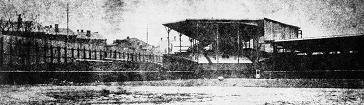
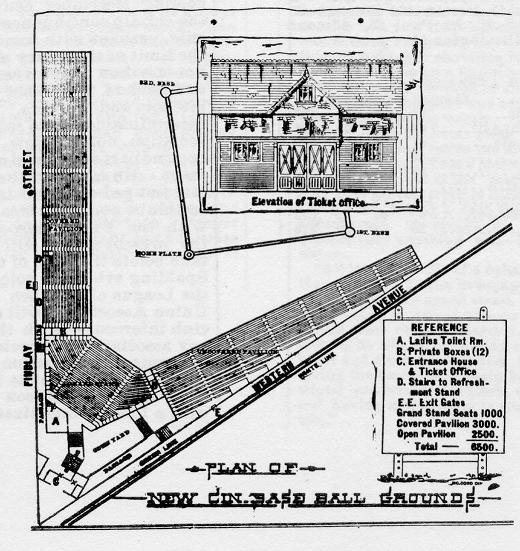
Table of Contents
- Introduction
- Early Baseball in Cincinnati and the Origins of League Park
- Architectural Features and Evolution of League Park Cincinnati
- Transition to Redland Field and Crosley Field
- Historical Significance and Notable Events at League Park Cincinnati
- Visiting League Park Cincinnati Today: What You Need to Know
- Replicas, Memorials, and Museums Honoring League Park and Crosley Field
- Practical Visitor Tips for League Park Cincinnati
- Frequently Asked Questions (FAQ)
- Conclusion
Early Baseball in Cincinnati and the Origins of League Park
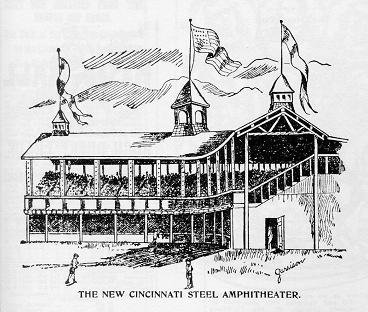
Cincinnati’s baseball roots date back to the late 19th century, famously as the home of America’s first professional baseball team—the Cincinnati Red Stockings, established in 1869. Before League Park Cincinnati was established, the Reds played at venues like Union Grounds (1867–1870), Avenue Grounds (1876–1880), and Bank Street Grounds (1882–1883). In 1884, the team settled at a former brickyard located at Western Avenue and Findlay Street, marking the birth of League Park (Cincinnati Magazine).
Originally called American Park to reflect Cincinnati’s membership in the American Association, the stadium was renamed League Park in 1890 after the Reds joined the National League (MLB.com). This location became synonymous with Cincinnati baseball for nearly a century.
Architectural Features and Evolution of League Park Cincinnati
League Park was notable for its covered grandstand with leather-cushioned seats—considered a luxury at the time—and open seating along the first- and third-base lines. This design reflected the late 19th-century focus on spectator comfort and safety (MLB.com).
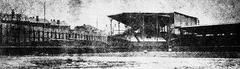
A devastating fire in 1901 destroyed much of the original structure. The Reds responded by rebuilding the grandstand in 1902, creating the architecturally ambitious “Palace of the Fans.” This facility featured hand-carved pillars, 19 “fashion boxes” reminiscent of opera boxes, and affordable field-level seating. The Palace of the Fans was an iconic but short-lived chapter lasting until 1911 (MLB.com).
Transition to Redland Field and Crosley Field
In 1912, League Park and the Palace of the Fans were demolished to make way for Redland Field, a modern steel-and-concrete stadium reflecting a new era in ballpark design, similar to stadiums in Chicago and Boston (Wikipedia: Crosley Field). Redland Field featured a distinctive double-decked grandstand and “V”-shaped seating behind home plate, earning the nickname “The Old Boomerang.”
In 1934, local businessman Powel Crosley Jr. purchased the Reds, and at the urging of team president Larry MacPhail, the park was renamed Crosley Field. Crosley’s ownership brought major renovations, most notably the installation of lights for night games. On May 24, 1935, Crosley Field hosted Major League Baseball’s first-ever night game, a milestone that revolutionized the sport and made it more accessible to working-class fans (Wikipedia: Crosley Field).
Historical Significance and Notable Events at League Park Cincinnati
The League Park site and its successors were stages for numerous historic moments. The Reds won their first National League pennant in 1919 and captured their first World Series title that year, a championship later overshadowed by the Black Sox Scandal (Wikipedia: Crosley Field). The park hosted Cincinnati’s early championship teams and served as a central gathering place for baseball fans.
Crosley Field’s legacy includes pioneering night baseball, unique architectural features, and serving as home to the original Cincinnati Bengals football team in the late 1930s and early 1940s, making it a notable multi-sport venue (Wikipedia: Crosley Field).
Visiting League Park Cincinnati Today: What You Need to Know
While League Park itself no longer exists, visitors can explore several nearby sites and memorials that celebrate its legacy and that of Crosley Field.
Location and Access
The original League Park and Crosley Field sites are located near the intersection of Western Avenue and Findlay Street in Cincinnati’s West End neighborhood. Today, the area consists of modern buildings and streets, but the location of home plate is marked by a plaque in an alley, and the famous sloped left field terrace remains visible as a parking lot.
Visiting Hours and Accessibility
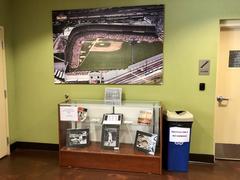
These outdoor commemorative sites are accessible year-round at no cost. Visitors interested in a deeper dive into Cincinnati baseball history can visit the Cincinnati Reds Hall of Fame and Museum located inside the Great American Ball Park downtown. The museum is open Tuesday through Sunday, with ticket prices typically ranging from $10 to $15 for adults. It is fully accessible and offers guided tours on request. For updated visiting hours and ticket information, check the Cincinnati Reds official website.
Nearby Attractions
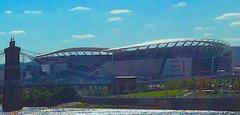
- Great American Ball Park: The Reds’ current stadium, featuring architectural nods to League Park and Crosley Field.
- Crosley Terrace: The main entrance to the ballpark, adorned with statues and mosaics celebrating Reds legends.
- Union Terminal: Cincinnati’s iconic Art Deco train station, which houses exhibits related to the city’s sports history.
Replicas, Memorials, and Museums Honoring League Park and Crosley Field
The enduring memory of League Park and Crosley Field has inspired replicas and commemorative efforts:
- A 1974 replica of Crosley Field was built in Union, Kentucky, using salvaged seats and memorabilia, though it was eventually dismantled.
- A community sports complex in Blue Ash, Ohio, established in 1988, features memorabilia, a replica scoreboard, and plaques honoring Reds greats from the Crosley era (Wikipedia: Crosley Field).
These sites offer fans a chance to connect with Cincinnati’s baseball past beyond the original locations.
Practical Visitor Tips for League Park Cincinnati
- Location Focus: While the original ballpark is gone, the intersection of Findlay Street and Western Avenue marks the historic home plate location, with a commemorative plaque.
- Best Time to Visit: Daytime visits are recommended for safety and a better appreciation of the urban surroundings.
- Combine with Nearby Attractions: Visit the Cincinnati Reds Hall of Fame and Museum, Findlay Market, and the historic Over-the-Rhine neighborhood for a fuller Cincinnati experience.
- Accessibility: The site is accessible via sidewalks and local streets. Nearby attractions offer more comprehensive accessible facilities.
- Resources: Utilize online historical maps and information to envision the ballpark’s scale and significance.
Frequently Asked Questions (FAQ)
Q: Can I visit League Park Cincinnati today? A: The original League Park no longer exists, but the site is marked with plaques and memorials. Nearby, the Cincinnati Reds Hall of Fame and Museum offers rich historical exhibits.
Q: Where was Crosley Field located? A: Crosley Field was located at Western Avenue and Findlay Street in Cincinnati’s West End. The site is now a parking lot with commemorative markers.
Q: Are there guided tours of Cincinnati’s baseball history sites? A: Guided tours are available at the Cincinnati Reds Hall of Fame and Museum. Additionally, some local tour companies offer walking tours of Cincinnati’s baseball landmarks.
Q: How can I get Crosley Field tickets? A: Since Crosley Field was demolished in 1972, tickets are no longer available. For current Reds games, visit the official Cincinnati Reds website.
Conclusion
League Park Cincinnati and its successors like Crosley Field played a central role in shaping baseball history and Cincinnati’s sports culture. While the original stadium no longer stands, the site remains a significant Cincinnati historical site for baseball lovers and cultural tourists. With free access, no ticketing, and proximity to vibrant neighborhoods and attractions, League Park Cincinnati offers a unique glimpse into the city’s rich sporting past. Whether exploring on your own or joining a guided tour, this historic location paired with nearby baseball heritage sites makes for an enriching visit.
For more detailed guides on Cincinnati’s history and attractions, check out our related articles: Exploring Cincinnati’s Historic Neighborhoods and Top Baseball Destinations in Ohio.
Call to Action
Make your visit even better with the Audiala mobile app—download it today for audio-guided tours and up-to-date visitor information. Follow us on social media for more stories and updates about Cincinnati’s historical sites.