
1. Historical Background and Origins
Bab Agnaou stands as one of Marrakesh’s most historically significant gates, dating back to the 12th century during the Almohad dynasty. Its construction is attributed to Caliph Abu Yusuf Ya’qub al-Mansur, with completion around 1188–1190 CE (Daily Sabah). The Almohads, a powerful Berber dynasty, made Marrakesh the capital of their empire, which extended from Cordoba in Andalusia to Tripoli in North Africa (Al Ksar). Bab Agnaou served as a monumental entrance to the Kasbah, the citadel housing the caliphal palace and administrative complex, rather than as the city’s main defensive gate.
The gate was originally built from blue-grey sandstone quarried in the Gueliz district. Over time, desert winds and sand have given the stone a reddish hue that blends with Marrakesh’s famous red ramparts (Al Ksar). Bab Agnaou is one of 19 gates punctuating the city’s walls, which began construction in 1122 CE as a fortification effort (Al Ksar).
2. Architectural Features and Symbolism
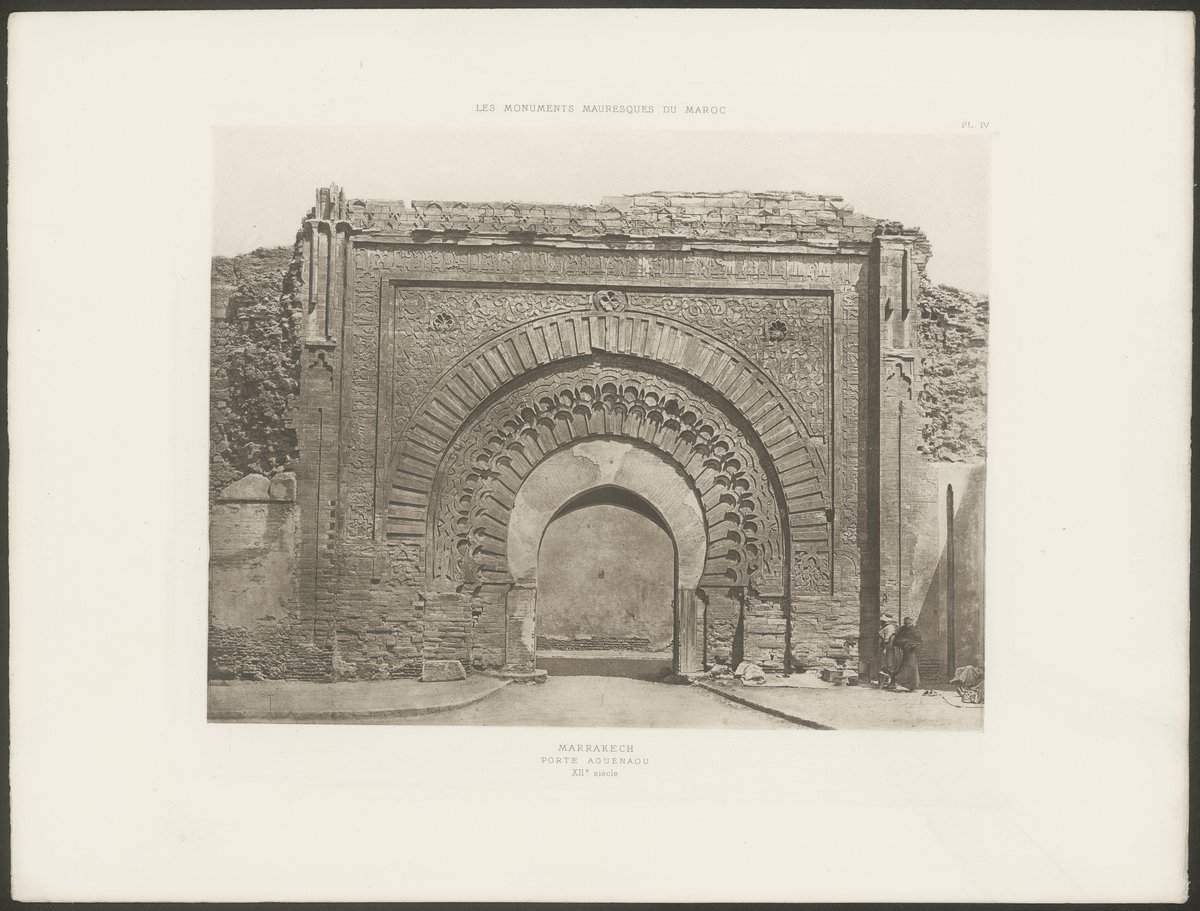
Bab Agnaou exemplifies Almohad artistry and symbolizes royal power. Its monumental horseshoe arch is framed by four concentric semi-circular arches that create depth and grandeur (Al Ksar). The facade features intricate geometric and floral motifs, typical of Almohad and Islamic art, with spandrels and corners adorned by floral patterns surrounding a central shell motif.
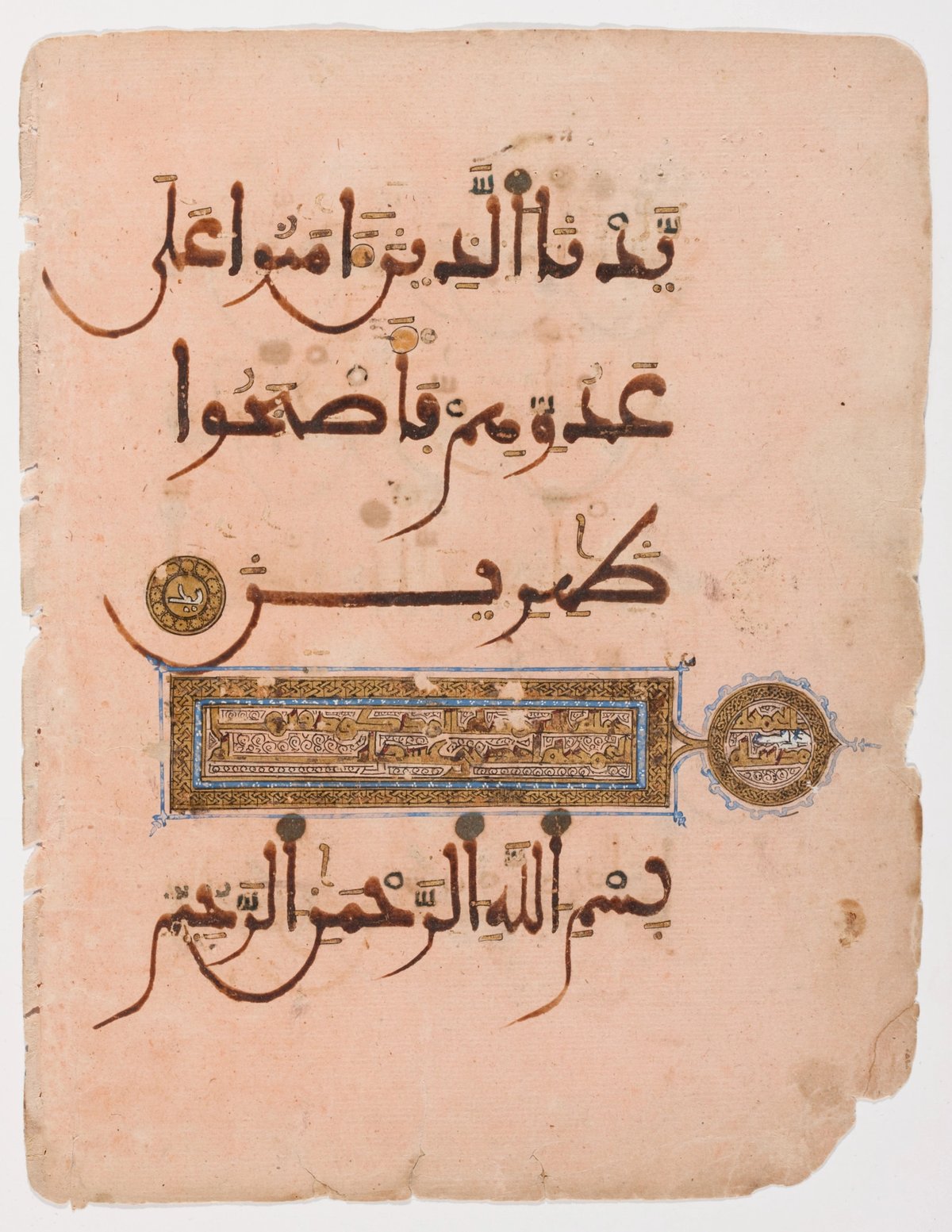
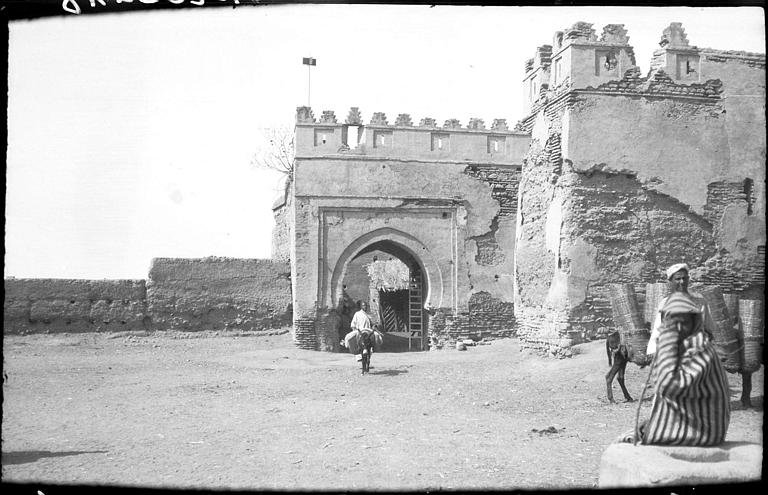
A distinctive band of Kufic calligraphy frames the arch, inscribed with Quranic verses, reinforcing religious and political legitimacy (Moroccan Vacations). Originally, two bastion towers crowned with merlons flanked the gate, emphasizing its ceremonial and defensive roles, though these no longer survive (Daily Sabah). The gate’s passage is a sloping, chicane-style entrance designed to slow entrants and enhance security (Al Ksar).
Construction and Materials
Bab Agnaou is primarily built from blue-grey sandstone sourced from the Gueliz region, contrasting with the red clay and brick commonly seen in Marrakech’s walls and gates (Al Ksar). This durable stone allowed for intricate carvings and detailed ornamentation characteristic of Almohad craftsmanship (Atlas Obscura).
Facade and Ornamentation
The gate’s most notable features are the four concentric, semi-circular horseshoe arches layered visually to draw attention to the entrance (Al Ksar). Each arch showcases alternating decorative bands, including sunburst patterns and geometric motifs, exemplifying Almohad architectural style (Atlas Obscura). The facade is richly adorned with carved geometric and floral patterns, common in Islamic art, symbolizing unity and infinity (Al Ksar).
Kufic Calligraphy
A frieze with angular Kufic script runs across the upper part of the gate, featuring Quranic verses such as “Enter with blessing, serene people,” greeting visitors entering the royal precinct (Atlas Obscura).
Defensive and Ceremonial Roles
Though not the principal military gate (which was Bab Er Robb), Bab Agnaou incorporated defensive elements including thick walls and heavy wooden doors with iron fittings (Al Ksar). Its primary role was ceremonial, intended to impress visitors and assert Almohad authority (Egypt Tours Plus).
3. Role in Marrakesh’s Urban and Royal Life
The Kasbah quarter, accessed through Bab Agnaou, houses the caliphal palace, El Badi Palace, Saadian Tombs, and Kasbah Mosque (Al Ksar). Bab Agnaou’s location on the southern edge of the medina marked the transition from the public city to the private royal enclave (Orana Travel). The Kasbah quarter remains a focal point for visitors exploring Marrakesh’s imperial past, with its layered defenses and monumental gates reflecting the city’s historic importance as a center of trade, culture, and governance (Daily Sabah). Bab Agnaou also played a role in public proclamations and state ceremonies, forming a vital part of Marrakesh’s historical landscape.
4. Conservation and Modern Context
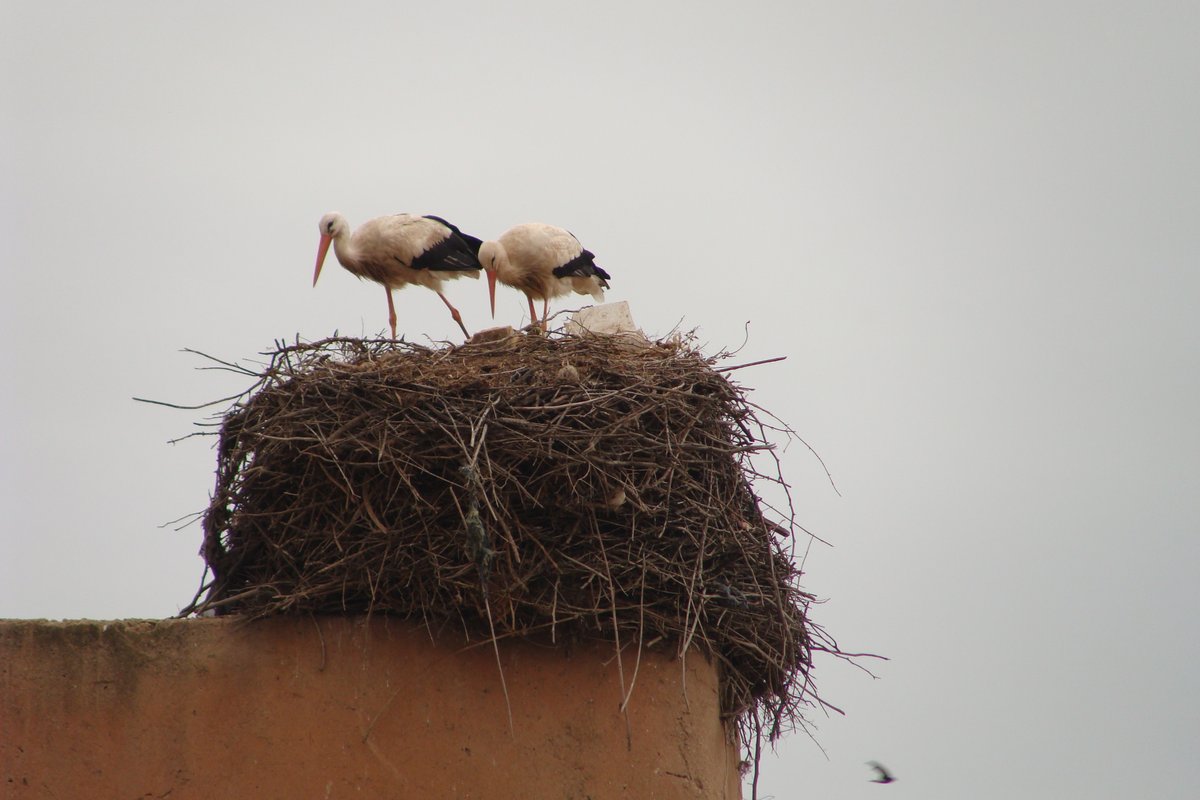
Bab Agnaou has undergone several restorations to preserve its delicate stonework from weathering and pollution (Atlas Obscura). The calcareous mudstone used in Bab Agnaou’s construction is susceptible to weathering and water infiltration, causing gradual façade degradation (Springer Link). Conservation efforts focus on mitigating damage while preserving the gate’s authentic artistry. Today, it remains a living monument, often topped by stork nests and flanked by symbolic cannons. Its grandeur continues to inspire visitors, scholars, and photographers alike.
5. Visiting Bab Agnaou: Hours, Tickets, and Accessibility
- Visiting Hours Bab Agnaou is an open-air monument with 24/7 public access. There are no restricted hours, but visiting during daylight (morning or late afternoon) is ideal for viewing details and photography.
- Entry Fee There is no entrance fee or ticket required to visit Bab Agnaou. It is freely accessible to all.
- Accessibility The immediate area is flat and accessible on foot, though the surrounding medina features cobblestone streets which may be challenging for wheelchair users. Some nearby attractions offer limited accessibility.
- Location Situated in the southern medina, Bab Agnaou is a 15-minute walk from Djemaa el Fna and close to the city’s main transport connections (Orana Travel).
6. Practical Travel Tips
- Best Time to Visit Early mornings and late afternoons provide optimal lighting and fewer crowds. Spring (March–May) and autumn (September–November) offer the most comfortable weather.
- Dress Code Modest clothing is recommended out of respect for local customs.
- Photography The gate is a renowned photography spot. Tripods are generally permitted, but be mindful of pedestrian traffic.
- Safety The area is safe and well-patrolled, though visitors should remain cautious of pickpockets in crowded places.
- Amenities No dedicated restrooms or ticket offices are available at the site, but cafés, restaurants, and shops are nearby.
7. Nearby Attractions
Bab Agnaou serves as a gateway to Marrakesh’s royal quarter, with several must-visit sites within walking distance:
- Saadian Tombs Ornate royal burial grounds from the 16th century.
- El Badi Palace Ruins of a grand 16th-century palace, open with an entry fee.
- Kasbah Mosque Known for its minaret; not open to non-Muslims.
- Royal Palace Impressive from outside, though not open to the public. (Orana Travel; Wikipedia)
8. Cultural Experiences and Guided Tours
Guided tours of the medina frequently include Bab Agnaou, providing historical context and architectural insights. Local guides can be booked through hotels or reputable operators.
The gate and its surrounding Kasbah sometimes host cultural events and festivals—check local event listings or tourist information centers for details.
9. Frequently Asked Questions (FAQ)
Q: What are Bab Agnaou’s opening hours? A: Bab Agnaou is open 24/7, with no restricted visiting hours.
Q: Is there an entrance fee? A: No, the gate is free to visit.
Q: Are guided tours available? A: Yes, many local tour operators include Bab Agnaou in their itineraries.
Q: Is Bab Agnaou wheelchair accessible? A: The immediate area is accessible, but cobblestone streets nearby may pose challenges.
Q: Can I take photos at Bab Agnaou? A: Yes, photography is allowed and encouraged.
11. Additional Resources and Related Guides
For further exploration, check out:
For up-to-date travel tips and guided tours, download the Audiala app and follow us on social media for the latest updates.
12. Summary and Final Recommendations
Bab Agnaou remains a majestic testament to the Almohad era, combining monumental architecture, intricate artistry, and enduring cultural significance. Its open access and proximity to Marrakesh’s top historical sites make it a must-visit landmark for travelers seeking to immerse themselves in the city’s imperial heritage. For an optimal experience, time your visit during cooler hours, explore nearby attractions, and consider joining a guided tour to gain a deeper appreciation of Marrakesh’s rich past.