Table of Contents
- Origins and Historical Background
- Social and Cultural Significance
- Architectural Features
- Visiting Monte di Pietà: Hours Tickets & Access
- Location and Getting There
- Visitor Experience and Tips
- Nearby Valletta Historical Sites
- Practical Information
- Frequently Asked Questions (FAQs)
- Summary and Key Takeaways
- References
Origins and Historical Background
The Monte di Pietà, originally named Monte di Sant’Anna, was established in 1598 by the Order of St. John as part of a pan-European movement to combat usury and support the needy through charitable pawn-broking services. Modelled after Italian institutions, it provided modest loans against pawned valuables at low interest, safeguarding borrowers from exploitation. The institution’s founding reflected the Order’s commitment to social justice, with its initial capital sourced from donations by knights, local nobility, and the community. Its records, carefully maintained, ensured transparency and trust—a tradition that has endured across centuries.
Adaptation Through the Ages
Throughout turbulent periods—French occupation, British colonial rule, and Malta’s independence—the Monte di Pietà persisted as a vital public service. During the British era, it was rebranded as the "Public Pawn-Brokery" but retained its founding mission. In 1977, the institution was integrated into the Maltese government, now operating under the Inland Revenue Department.
Social and Cultural Significance
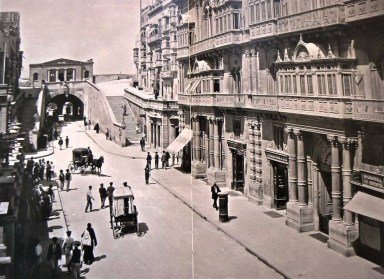
The Monte di Pietà became a cornerstone of Valletta’s social fabric, helping generations avoid predatory lending and financial ruin. Its influence is reflected even in the local language—the city’s outdoor market, once held in front of the building, was colloquially called "il-Monti". Located on Merchants Street amidst key landmarks like St. John’s Co-Cathedral and the Grandmaster’s Palace, the Monte di Pietà enriches Valletta’s urban landscape, serving as a living monument to the city’s values of charity, resilience, and solidarity.
Architectural Features
Façade and Structure
The Monte di Pietà is housed in a Grade 1 scheduled Baroque limestone building at No. 46, Merchants Street. The robust, symmetrical façade features ornate cornices and a prominent coat of arms above the entrance, exemplifying the Maltese Baroque style. The building’s history is multilayered: it originally served as the Banca Giuratale (the city’s municipal seat) before being remodeled for the Monte di Pietà in 1773, possibly by architect Francesco Buonamici.
Interior
While the interior is rarely open to the public, it retains original features such as vaulted transaction halls, timber beams, and period stonework. The restrained Baroque detailing reflects the building’s dual aim: dignity and accessibility.
Visiting Monte di Pietà: Hours, Tickets & Access
Exterior Viewing
- Public Access The exterior façade can be admired at any time and is a highlight of many guided walking tours.
- Photography The building is particularly photogenic in natural daylight, with the honey-colored limestone glowing in morning or late afternoon sun.
Interior Access
- Regular Hours The Monte di Pietà functions as a government office. There are no regular public visiting hours or tickets for tourists.
- Special Events Interior access may be granted during heritage open days, festivals, or by arrangement with cultural organizations.
- Admission No fee to view the exterior. Guided tours or special events may incur a nominal charge.
Accessibility
- The building is in a flat, pedestrian-friendly area. Some interior areas may have limited accessibility due to historic architecture, but improvements and staff assistance are available on request.
Location and Getting There
- Address 46, Merchants Street, Valletta, Malta.
- Transport Valletta is best reached by public transport; the main bus terminal is at City Gate, a 5–10 minute walk from Monte di Pietà.
- Nearby Parking Vehicle access to Valletta is limited. Use public transport or taxis for ease.
Visitor Experience and Tips
- Guided Tours Many Valletta walking tours include a stop at Monte di Pietà, offering expert context and historical anecdotes.
- Self-Guided Visits Explore Merchants Street and read informational plaques or scan QR codes for insights.
- Facilities As the building is not a tourist attraction, there are no dedicated visitor amenities. Public toilets, cafés, and shops are nearby.
- Accessibility Streets are paved with limestone and may be uneven; Merchants Street is relatively level and accessible.
Nearby Valletta Historical Sites
Monte di Pietà’s central location makes it an ideal starting point for exploring Valletta’s rich heritage:
- St. John’s Co-Cathedral
- Grandmaster’s Palace
- National Museum of Archaeology
- Upper and Lower Barrakka Gardens (panoramic harbor views)
- Merchants Street Market (local crafts on market days)
Practical Information
- Language Maltese and English are official; signage is in English.
- Currency Euro (€); cards widely accepted.
- Safety Valletta is safe and tourist-friendly.
- Weather in June Warm (24–30°C), sunny—wear light clothing and sun protection.
- Events Check for cultural festivals or heritage open days for special interior access.
Frequently Asked Questions (FAQs)
Q: What are the Monte di Pietà visiting hours? A: There are no set tourist hours. The exterior can be viewed anytime; interior access is limited to special events or by arrangement.
Q: Is there an entry fee? A: No fee to view the exterior; guided tours or special events may have a charge.
Q: Can I go inside the Monte di Pietà? A: Interior access is rare and usually tied to cultural events or official business.
Q: Is the building accessible for those with mobility challenges? A: Merchants Street is accessible; some interior areas may be difficult to navigate.
Q: What are other must-see Valletta historical sites nearby? A: St. John’s Co-Cathedral, Grandmaster’s Palace, National Museum of Archaeology, Barrakka Gardens, and Merchants Street Market.
Summary and Key Takeaways
The Monte di Pietà is a cornerstone of Malta’s heritage, embodying centuries of charitable action, enduring architecture, and urban significance. While interior access is limited, its Baroque façade and central location make it a highlight of Valletta’s historic core. Combine a visit to Monte di Pietà with other nearby landmarks for a rich and immersive experience. For interior tours or event access, regularly consult Heritage Malta, Valletta Local Council, and VisitMalta.
To enrich your exploration, download the Audiala app for self-guided tours and follow Maltese heritage channels for updates.
References
- The Monte di Pietà in Hospitaller Malta – Academia.edu
- Monte di Pietà (Malta) – Wikipedia
- Some curiosities about six of Valletta’s landmarks – The Malta Independent
- Valletta Local Council
- Heritage Malta
- Malta Uncovered – Points of Interest in Valletta
- CFR Malta – Property Share Transfers Office
- LoveMalta – Valletta: A Timeline of Its History
- VisitMalta – Official Tourism Website
- Malta Info Guide – Activities in Malta June
- Near Place