
Historical Context: Ottoman Belgrade and Independence
In the mid-1800s, Belgrade was a city segmented by Ottoman military control and the Serbian-administered Principality. Tensions between the two groups were high, punctuated by frequent disputes and a growing Serbian desire for national independence. The events at Čukur Fountain in June 1862 proved to be a significant catalyst for change, accelerating Belgrade’s and Serbia’s journey toward sovereignty (Wikipedia; Atlas Obscura).
The Čukur Fountain Incident: A Defining Moment
Setting the Scene
On June 15, 1862, a hot summer day in the Dorćol district, the fountain served as a crucial water source for the local populace. Sava (Savo) Petković, a young Serbian apprentice, waited his turn for water alongside both local residents and Ottoman soldiers (Atlas Obscura; Eyes on Belgrade).
The Altercation
When Ottoman soldiers attempted to bypass the queue, Petković objected. The situation rapidly deteriorated when one of the soldiers struck Petković on the head with his own water jug, causing a fatal injury. His death immediately ignited public outrage and led to a confrontation between locals and Ottoman soldiers (Eyes on Belgrade).
Wider Unrest
The incident triggered further clashes, culminating in the Ottoman bombardment of Belgrade from Kalemegdan Fortress. It marked a significant turning point, widely regarded as a precursor to the eventual expulsion of Ottoman forces and a milestone on Serbia’s path to independence (belgrade.tips).
The Monument: Artistic and Symbolic Elements
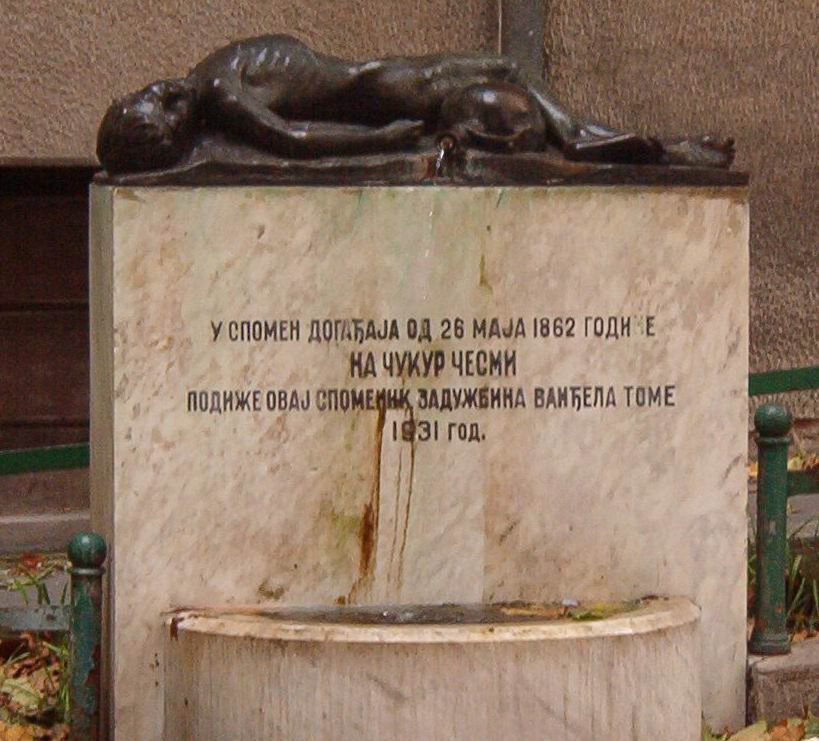
Unveiled in 1931, the current Čukur Fountain monument was designed by the esteemed Serbian sculptor Simeon Roksandić (Serbia.com; Beograd.rs). It features a bronze sculpture of a barefoot boy holding a broken pitcher, poignantly symbolizing lost innocence and disrupted peace. The white marble base bears inscriptions honoring the victims, and water continues to flow from the pitcher into a semicircular basin.
The modest setting, at the intersection of Dobračina and Gospodar Jevremova streets, allows the monument to stand out against Dorćol’s historic streetscape (Belgrade Heritage). Benches and shade trees offer a contemplative space for visitors.
Visiting Čukur Fountain: Practical Information
Location and Accessibility
- Address Dobračina 36, Dorćol, Stari Grad (Old Town), Belgrade.
- Getting There Easily reachable on foot from Knez Mihailova Street, Kalemegdan Fortress, and Skadarlija. Tram and bus lines serve the area; the nearest stop is Dobračina (Evendo; Mauka Travels).
- Parking Street parking is limited; public parking facilities are available nearby.
Visiting Hours
- Available 24/7 As an outdoor public monument, the fountain can be accessed at any time. Visits during daylight hours (8:00 AM–8:00 PM) are recommended for optimal viewing and safety.
Tickets and Admission
- Free Entry The site is free to visit, with no tickets or reservations required (Evendo).
Accessibility
- Wheelchair Access The immediate area is accessible, though some nearby streets feature uneven cobblestones (HikersBay).
Guided Tours and Special Events
- Guided Tours Čukur Fountain is featured in many walking tours of Belgrade’s historical center, offering rich context about the incident and monument.
- Special Events Commemorative ceremonies are held annually in June, including wreath-laying and historical recitations (belgrade.tips).
Nearby Attractions
Čukur Fountain’s central location makes it easy to explore other iconic sites:
- Knez Mihailova Street A lively pedestrian street brimming with shops and cafes.
- Skadarlija The bohemian quarter, known for its traditional Serbian cuisine and nightlife.
- Kalemegdan Fortress A historic fortress and park offering panoramic views (Forever Out Of Office).
- Museums and Galleries Including the National Museum, Museum of Contemporary Art, and others within proximity (Mauka Travels).
Travel Tips
- Best Time to Visit May, June, September, and October offer pleasant weather. The monument is particularly atmospheric when illuminated at night (Forever Out Of Office).
- Photography The fountain is especially photogenic in natural daylight and evening light.
- Safety The area is generally safe, but remain aware of your belongings.
- Language Serbian is the official language; English is commonly spoken in tourist areas.
- Payments It’s advisable to carry some Serbian dinars (RSD) for small purchases.
Conservation and Community Engagement
- Conservation The City of Belgrade maintains Čukur Fountain, with significant restoration work completed in 2012 (Belgrade Heritage).
- Community Involvement Local residents and cultural organizations participate in clean-up and educational activities, ensuring the monument’s continued relevance.
Cultural Importance in Contemporary Belgrade
- Remembrance The fountain serves as an educational site, frequently visited by school groups and history enthusiasts.
- Artistic Legacy Roksandić’s sculpture is celebrated in art and literature as a symbol of Belgrade’s resilience (Culture Trip).
- Commemorations Annual public ceremonies highlight the site’s enduring significance.
Visitor FAQ
Q: What are the visiting hours for Čukur Fountain? A: The fountain is accessible 24/7 as an outdoor public monument.
Q: Is there an admission fee or ticket required? A: No, the site is free and open to all.
Q: Is the location accessible for people with disabilities? A: The area is generally accessible, though nearby cobblestones may require caution.
Q: Are guided tours available? A: Yes, many Belgrade city tours include Čukur Fountain.
Q: What other attractions are nearby? A: Knez Mihailova Street, Skadarlija, Kalemegdan Fortress, and several museums are within walking distance.
Useful Resources
- Atlas Obscura
- Beograd.rs
- Serbia.com
- Eyes on Belgrade
- Belgrade.tips
- Evendo
- Forever Out Of Office
- Mauka Travels
- Culture Trip
- HikersBay
Conclusion
The Čukur Fountain is more than a historical monument; it is a living testament to Belgrade’s complex past and enduring cultural vitality. Freely accessible and centrally located, it invites visitors to reflect on the city’s journey to sovereignty, appreciate its artistic legacy, and enjoy the vibrant atmosphere of the Dorćol district.
Whether your interests lie in history, art, or urban culture, the Čukur Fountain is an essential stop on any Belgrade itinerary. Plan your visit during daylight hours, explore nearby attractions, and consider a guided tour for deeper insights. For more information and personalized audio guides, download the Audiala app and follow us on social media for updates on Belgrade’s cultural landmarks.