
Table of Contents
- Origins and Construction of Ponte Sant’Angelo
- Medieval and Papal Transformations
- Renaissance Enhancements and the Angels of Bernini
- Pilgrimage, Rituals, and Public Life
- Architectural Evolution and Preservation
- Symbolic and Cultural Significance
- Artistic and Architectural Highlights
- Visiting Ponte Sant’Angelo: Hours, Tickets, Accessibility
- Nearby Attractions and Amenities
- Frequently Asked Questions (FAQ)
- Practical Tips for Visitors
- References
Origins and Construction of Ponte Sant’Angelo
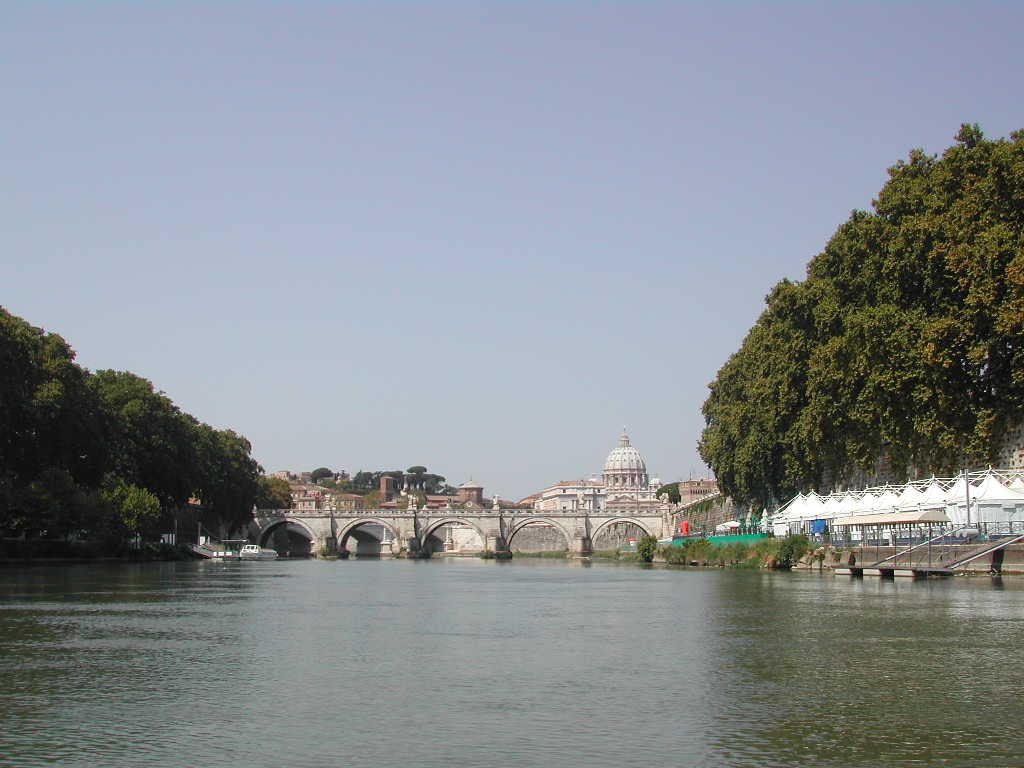
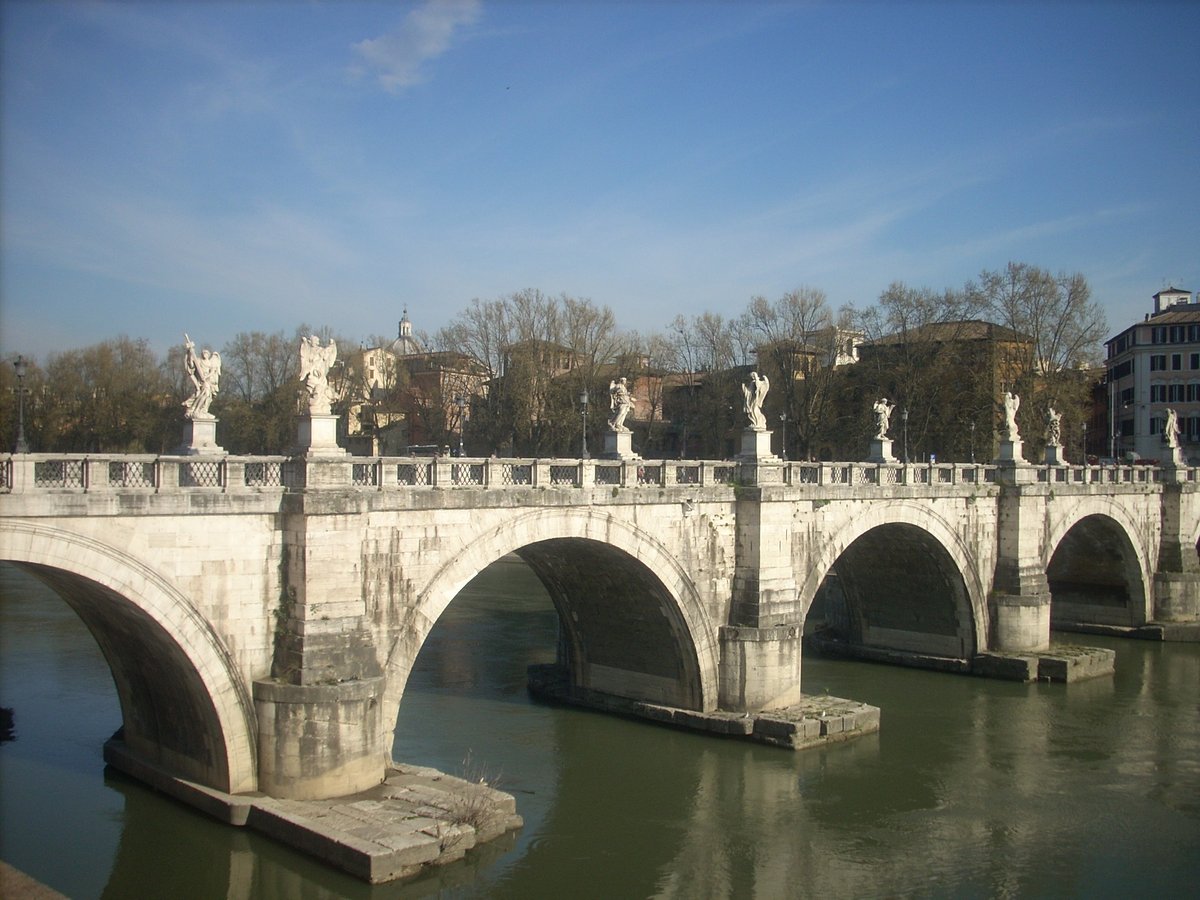
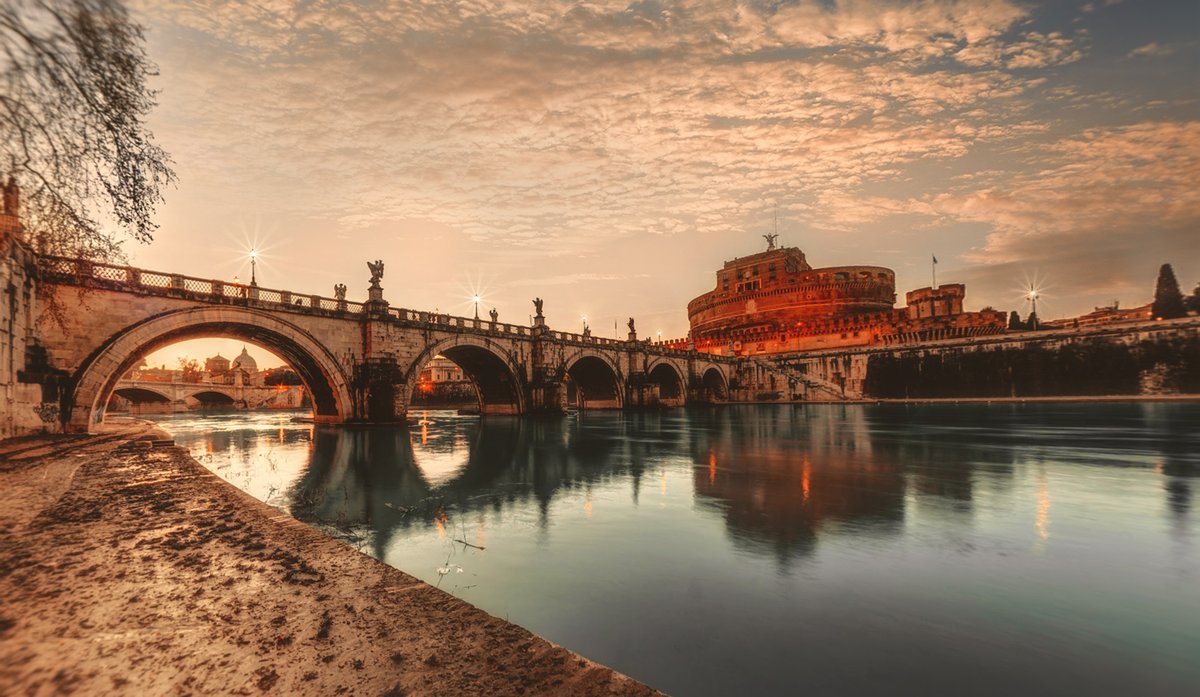
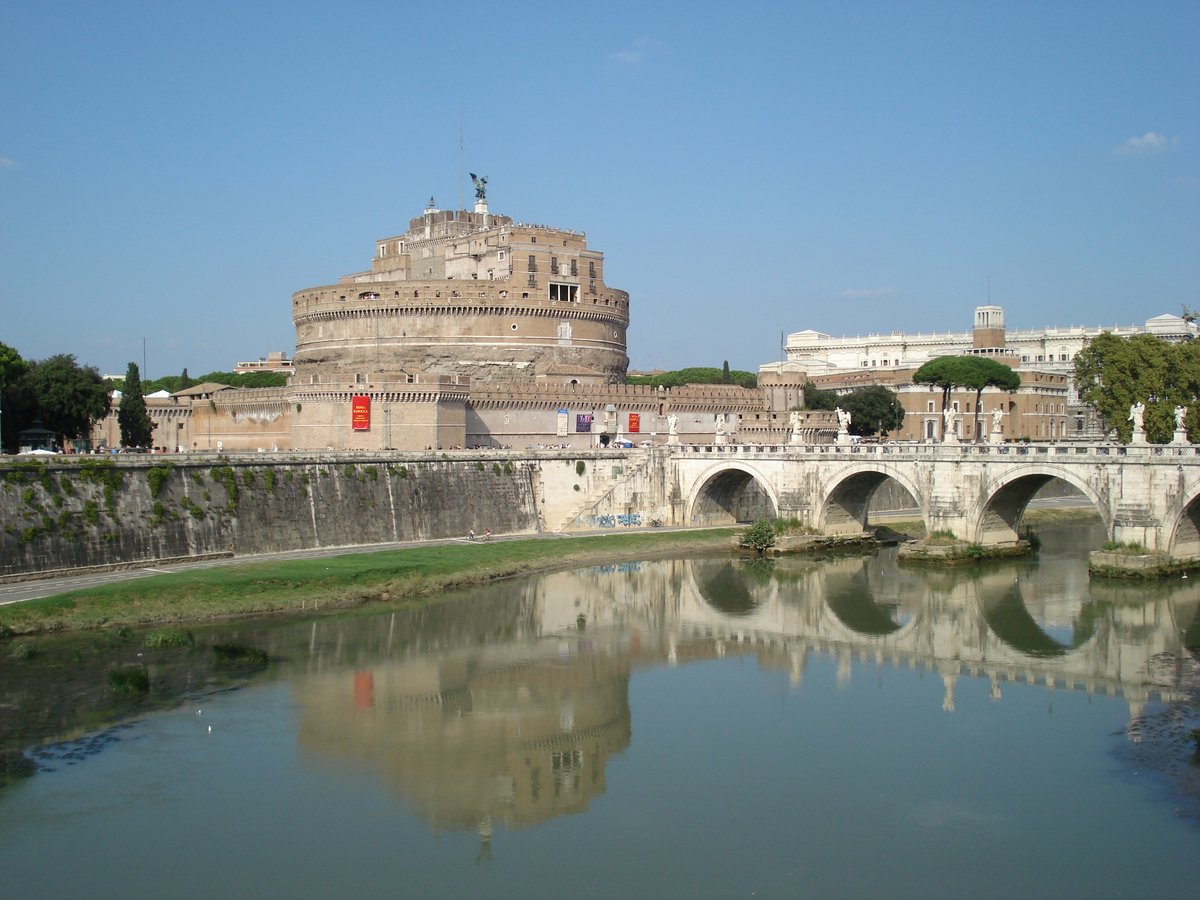
Ponte Sant’Angelo, originally known as Pons Aelius, was commissioned by Emperor Hadrian in 134 AD. Its purpose was to provide a direct route from Rome’s city center across the Tiber River to his mausoleum, now Castel Sant’Angelo (castelsantangelorome.com). The bridge was constructed from travertine marble and tuff, materials favored for their durability and visual appeal. Its five large stone arches—three of which are original Roman work—span approximately 135 meters in length and 10 meters in width, demonstrating both elegance and engineering prowess (italy-sights.info).
Medieval and Papal Transformations
During the Middle Ages, Ponte Sant’Angelo became an essential artery for pilgrims journeying to St. Peter’s Basilica, especially during Holy Years. Its strategic location elevated its role in both religious and civic life. In the 6th century, the bridge and the adjacent mausoleum were repurposed as a fortress and a papal refuge during times of crisis. The 13th century saw the construction of the Passetto di Borgo—a fortified corridor linking the Vatican to Castel Sant’Angelo, providing popes with a secure escape route in times of unrest (castelsantangelorome.com).
Renaissance Enhancements and the Angels of Bernini
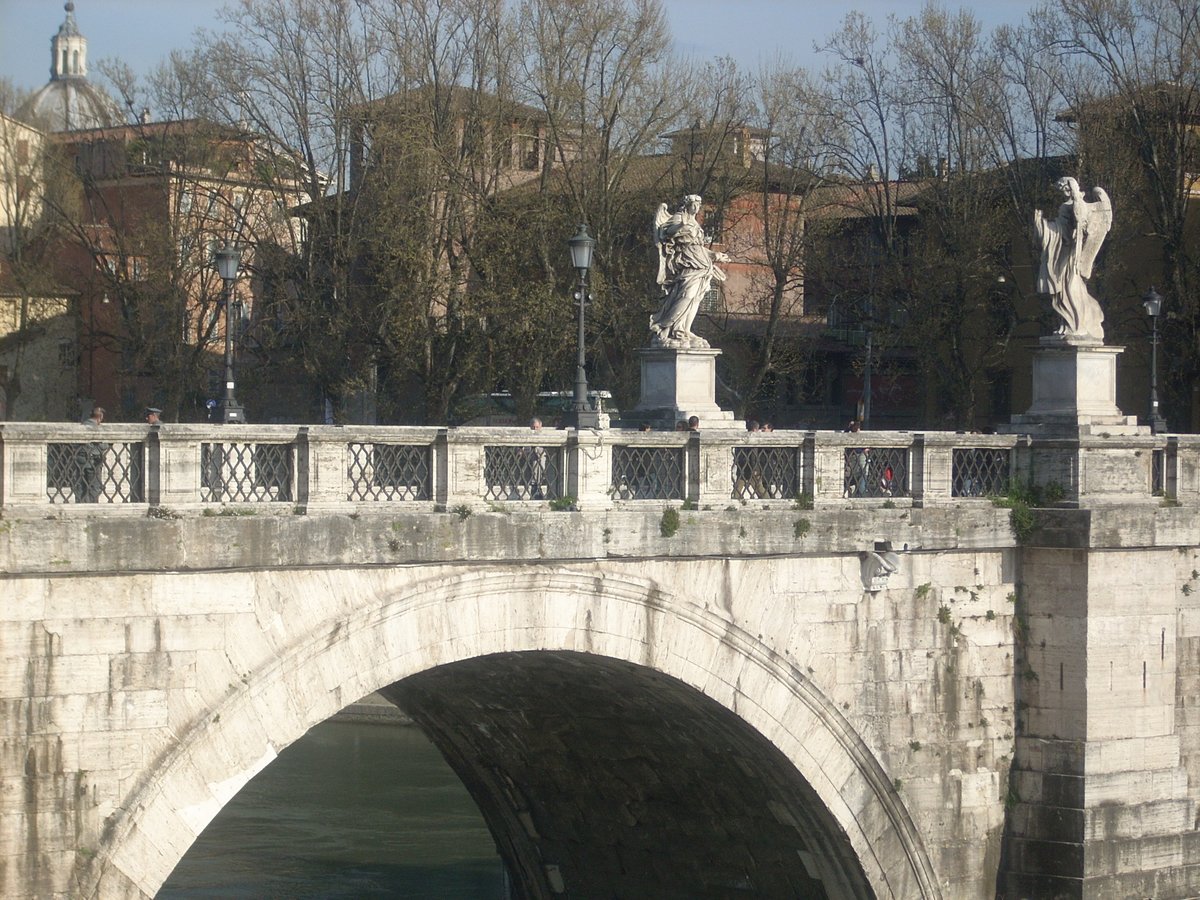
The Renaissance brought new artistic embellishments. In 1535, statues of St. Peter and St. Paul were placed at the bridge’s entrance, reinforcing its spiritual symbolism. The most significant transformation came in 1669 under Pope Clement IX, who commissioned Gian Lorenzo Bernini to design ten angel statues, each holding an instrument of Christ’s Passion. While Bernini sculpted two angels himself (now preserved in Sant’Andrea delle Fratte), his pupils executed the rest. These Carrara marble angels, lining the bridge, have become some of Rome’s most photographed artworks (castelsantangelorome.com, A View On Cities).
Pilgrimage, Rituals, and Public Life
Ponte Sant’Angelo was the final approach for countless pilgrims entering Rome, especially during Jubilees. The bridge’s proximity to the Vatican made it a focal point for religious processions and ceremonies. Notably, in 1450, a tragic disaster occurred when overcrowding led to the collapse of the balustrade, resulting in over 170 deaths. Chapels were erected to commemorate the victims, later replaced by statues of Saints Peter and Paul (A View On Cities).
The bridge also served as a site for public spectacles, including the display of executed criminals’ heads as a warning—a practice that persisted into the 19th century (italy-sights.info).
Architectural Evolution and Preservation
Through the centuries, the bridge has undergone several restorations due to floods, wars, and urban development. In the 19th century, its approaches were modified for traffic, removing two original Roman ramps. Despite changes, the core structure and central arches remain intact, a testament to Roman engineering. Ponte Sant’Angelo is now closed to vehicular traffic, prioritizing pedestrian enjoyment and preservation (castelsantangelorome.com). Recent restorations have focused on cleaning the statues, reinforcing the structure, and installing tasteful nighttime illumination.
Symbolic and Cultural Significance
Ponte Sant’Angelo’s enduring presence has made it a powerful symbol of Rome’s religious and civic identity. It physically and symbolically connects the secular city to the sacred Vatican. The angel statues, with their serene expressions and flowing robes, evoke themes of protection, guidance, and redemption. The bridge has inspired countless artists and writers and features prominently in annual celebrations, such as the Girandola fireworks display on June 29, the feast of Saints Peter and Paul (castelsantangelorome.com).
Artistic and Architectural Highlights
The Angels of Bernini
Each of the ten angels holds a symbol of Christ’s Passion, creating a spiritual narrative:
- Angel with the Column (Antonio Raggi): Symbolizes the flagellation of Christ.
- Angel with the Whips (Lazzaro Morelli): Refers to the scourging.
- Angel with the Crown of Thorns (Paolo Naldini): Represents the crowning.
- Angel with Veronica’s Veil (Cosimo Fancelli): The cloth bearing Christ’s face.
- Angel with the Garment and Dice (Paolo Naldini): Soldiers casting lots.
- Angel with the Nails (Girolamo Lucenti): Nails from the Crucifixion.
- Angel with the Cross (Ercole Ferrata): The cross itself.
- Angel with the Superscription (Giulio Cartari): The “INRI” plaque.
- Angel with the Sponge (Antonio Giorgetti): The vinegar-soaked sponge.
- Angel with the Lance (Domenico Guidi): The lance that pierced Christ’s side.
Bernini’s originals for the angels with the Crown of Thorns and the Superscription are preserved in Sant’Andrea delle Fratte.
Baroque Integration
The angels’ dynamic poses and expressive details exemplify Baroque artistry. The bridge’s alignment creates a visual axis connecting Rome’s center, Castel Sant’Angelo, and St. Peter’s Basilica, enhancing the pilgrimage experience (Ostrich Trails).
Visiting Ponte Sant’Angelo: Hours, Tickets, Accessibility
Visiting Hours
- Ponte Sant’Angelo Open 24/7 to pedestrians, free of charge.
- Castel Sant’Angelo Typically open daily from 9:00 AM to 7:30 PM (last entry 6:30 PM; seasonal variations possible).
- Passetto di Borgo Accessible only by guided tours, schedules vary.
Tickets
- Ponte Sant’Angelo No ticket required.
- Castel Sant’Angelo Tickets (~€15 for adults, discounts for EU citizens 18–25, free for under 18s). Advance online booking is recommended to skip queues (castelsantangelorome.com).
- Guided Tours Additional fees apply for tours including the Passetto di Borgo.
Accessibility
- Bridge Fully accessible to wheelchairs with smooth, gently sloping pathways.
- Castel Sant’Angelo Equipped with ramps and elevators, though some historic areas may be less accessible.
- Surface Some cobblestones; caution advised for those with mobility challenges.
Getting There
- Public Transport Bus lines 23, 34, 40, 62, and 280 stop nearby. The closest metro station is Lepanto (Line A), a 10–15 minute walk.
- By Foot Easy walk from Vatican City, Piazza Navona, or central Rome.
Nearby Attractions and Amenities
- Castel Sant’Angelo Museums, panoramic terraces, and the Passetto di Borgo.
- St. Peter’s Basilica A 10-minute stroll across the bridge.
- Piazza Navona 15 minutes on foot.
- Sant’Andrea delle Fratte Home to Bernini’s original angel sculptures.
- Dining Borgo and Prati neighborhoods offer diverse restaurants and cafes.
- Facilities Public restrooms at Castel Sant’Angelo and local cafes.
Frequently Asked Questions (FAQ)
Q: What are Ponte Sant’Angelo’s opening hours? A: Open 24/7 for pedestrians with free access.
Q: Is there a ticket or entrance fee to cross the bridge? A: No ticket is required for the bridge itself.
Q: Is Ponte Sant’Angelo wheelchair accessible? A: Yes, but some areas near the statues have steps.
Q: Where can I see Bernini’s original angel statues? A: In the church of Sant’Andrea delle Fratte.
Q: Are guided tours available? A: Yes, many guided walking tours include the bridge and nearby attractions.
Q: What are the best times to visit for photos or fewer crowds? A: Early mornings and evenings offer optimal lighting and fewer visitors.
Practical Tips for Visitors
- Timing Visit early in the morning or at sunset for a quieter experience and beautiful lighting.
- Footwear Wear comfortable shoes; surfaces can be uneven.
- Safety The area is generally safe, but keep an eye on personal belongings.
- Weather The bridge is exposed; bring sun protection or an umbrella as needed.
- Respect Do not climb statues or balustrades; maintain a respectful atmosphere during religious events.
- Events Check listings for festivals like the Infiorata or major religious celebrations.
References
- Castel Sant’Angelo Official Site
- Ostrich Trails Guide to Castel Sant’Angelo
- A View On Cities: Ponte Sant’Angelo
- Italy Sights: Castel Sant’Angelo
- Official Rome Tourism Site
- Castel Sant’Angelo Official Website
- Vatican Museums
Conclusion
Ponte Sant’Angelo is a living testament to Rome’s rich history, artistry, and spirituality. Whether you’re drawn by its Roman engineering, Bernini’s Baroque sculptures, or as a gateway to the Vatican, the bridge offers a memorable and accessible experience. Plan your visit with the information above, consider a guided tour for deeper insight, and take in the breathtaking views over the Tiber River and the Eternal City.
For more travel tips, personalized itineraries, and audio guides, download the Audiala app. Explore our related guides on Rome’s historic sites and join us on social media for updates and inspiration.
Sources:
- Ponte Sant’Angelo Visiting Hours, Tickets, and Historical Guide to Rome’s Iconic Bridge, 2024, Castel Sant’Angelo Official Site (castelsantangelorome.com)
- Ponte Sant’Angelo Visiting Guide: History, Architecture, Tickets & Tips for Rome Historical Sites, 2024, Ostrich Trails (Ostrich Trails)
- Ponte Sant’Angelo: Visiting Hours, Tickets, and History of Rome’s Iconic Bridge, 2024, A View On Cities (A View On Cities)
- Ponte Sant’Angelo Visiting Hours, Tickets, and Guide to Rome’s Historic Bridge, 2024, Italy Sights (italy-sights.info)