Table of Contents
- Introduction
- Historical Overview
- Visiting the Bargello Museum
- Visiting Palazzo Bargellini
- Practical Tips for Visitors
- Frequently Asked Questions (FAQ)
- Visuals and Media
- Conclusion and Call to Action
- References
Historical Overview
Origins and Medieval Role
The Bargello Museum, originally Palazzo del Podestà, was constructed in 1255 as the seat of Florence’s chief magistrate during the city’s communal era. Its fortress-like design—with a crenellated tower and thick stone walls—echoes the turbulence and civic pride of medieval Florence, where political and social unrest were common (bargellomusei.it; florenceartmuseums.com). The building later served as a courthouse and prison, bearing witness to pivotal moments such as the aftermath of the Pazzi Conspiracy and the city’s ever-shifting power dynamics.
Renaissance Transformation
In the 16th century, the palace became the residence of the Bargello (chief of police), cementing its reputation as a center of law enforcement and public order. Its austere interior and lingering traces of its penal past are felt throughout the building, providing a uniquely atmospheric museum experience (thebettervacation.com).
From Prison to National Museum
The Bargello’s most dramatic transformation came in 1865, when it was converted into Italy’s first national museum dedicated to sculpture and the decorative arts. This shift reflected new ideals that valued craftsmanship and the “minor arts” alongside painting and architecture. The museum’s collections grew rapidly, and today it is celebrated for its works by Donatello, Michelangelo, Cellini, Della Robbia, and more (bargellomusei.it; florenceartmuseums.com).
Architectural Features
The Bargello’s medieval architecture—including its imposing bell tower, grand courtyard, and frescoed chapel—tells the story of Florence’s civic and artistic journey. Notably, the chapel features Giotto’s workshop frescoes and the oldest known portrait of Dante Alighieri, deepening its literary and historic resonance (bargellomusei.it).
The Bargello Museums Network
The Bargello now anchors a network of five museums, collectively known as the Bargello Museums:
- National Bargello Museum Core sculpture and decorative arts.
- Medici Chapels Medici family tombs and Michelangelo’s New Sacristy.
- Orsanmichele Former church and grain market with monumental statues.
- Palazzo Davanzati A window into Florentine domestic life.
- Casa Martelli Noble family collections and interiors. (bargellomusei.it)
Cultural Impact and Preservation
The Bargello has been a silent witness to Florence’s major historical events and continues to play a dynamic role in cultural preservation, education, and research. Its transformation into a museum marked a turning point in how Italian art and heritage are celebrated and shared with the world (thebettervacation.com).
Visiting the Bargello Museum
Hours, Tickets, Admission
- Open Tuesday to Sunday, 8:15 AM – 1:50 PM
- Closed Mondays and major holidays (January 1, May 1, December 25)
- Admission
- General: €8
- Reduced: €4 (EU citizens 18–25)
- Free: Under 18, EU residents over 65, teachers, Florence residents, first Sunday of each month
- Booking Online purchase recommended (Official Bargello Museum Tickets)
Accessibility
The museum is partially accessible, with ramps and elevators in some areas, but historic design imposes limitations. Contact the museum ahead of your visit for specific needs (Sage Traveling).
Guided Tours and Events
- Guided tours available in multiple languages.
- Free thematic tours and presentations offered by museum staff.
- Special exhibitions, workshops, and educational programs run throughout the year (Bargello Museums Guided Tours).
Getting There
- Address Via del Proconsolo, 4, Florence, Italy
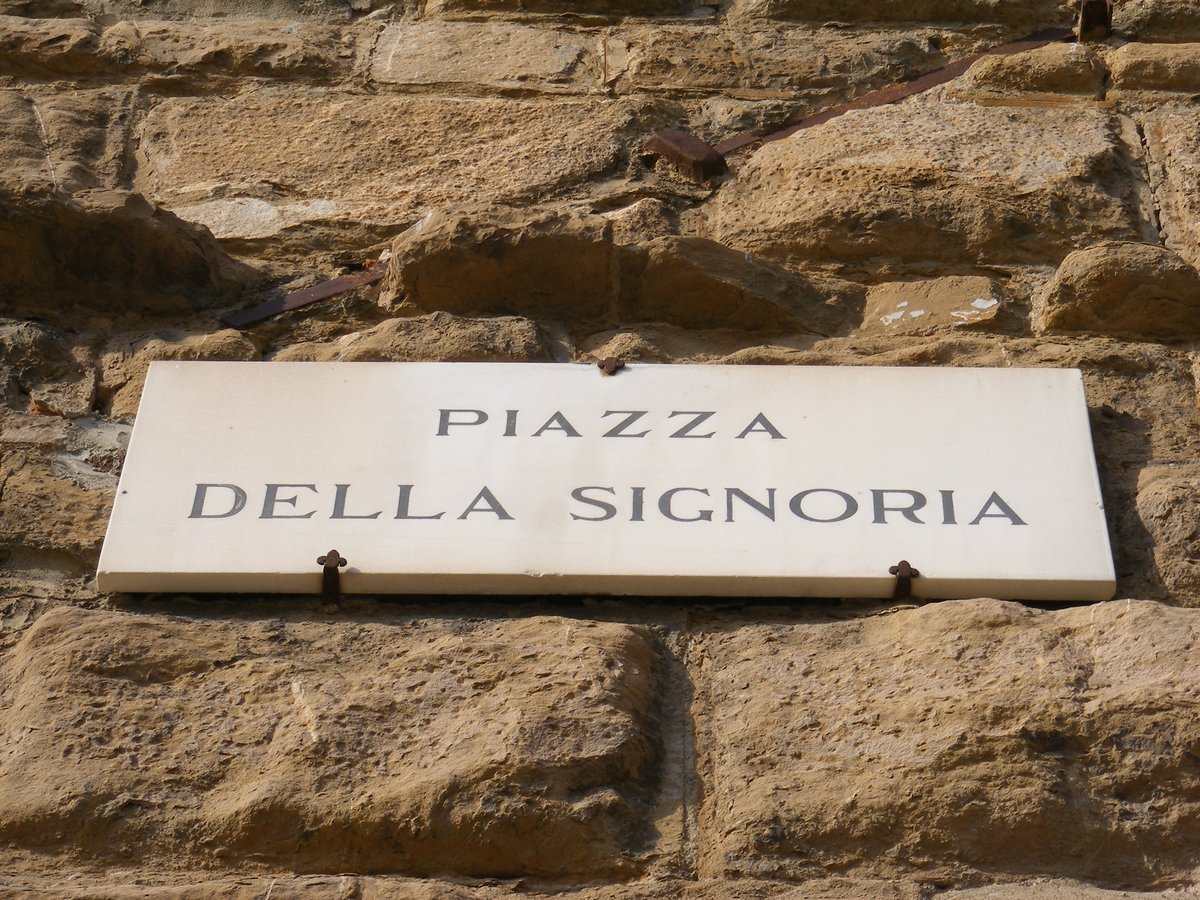
- On foot Near Piazza della Signoria, Palazzo Vecchio, and Santa Maria Novella station.
- By bus Lines 6, 11, 14, 23.
- Parking Very limited; use public garages in the city center.
Nearby Attractions
- Piazza della Signoria
- Palazzo Vecchio
- Uffizi Gallery
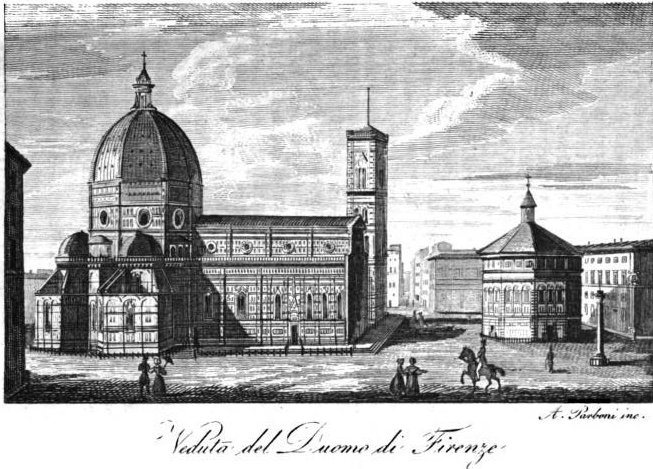
- Florence Cathedral (Duomo)
Visiting Palazzo Bargellini
Introduction
Palazzo Bargellini, located directly across from the patron entrance of the Basilica of Santa Croce in Florence, is a stunning example of Renaissance architecture and a living symbol of the city’s rich cultural heritage. Though primarily a private residence, the palazzo occasionally opens its doors for special cultural events and private tours, offering visitors a rare glimpse into Florence’s layered history and artistic traditions.
Visiting Information
Visiting Hours: Palazzo Bargellini is not regularly open to the public due to its status as a private home. However, special guided tours and cultural events are held throughout the year, often by invitation or arrangement through cultural organizations.
Tickets and Tours: Tickets for these limited visits can sometimes be booked in advance through Florence cultural associations or via the official website of Palazzo Bargellini (please check availability beforehand). Guided tours provide an in-depth exploration of the palazzo’s architecture, gardens, and art collections.
Accessibility: Due to the historic nature of the palazzo, accessibility may be limited. Visitors with mobility issues are advised to contact the organizers in advance to discuss accommodations.
How to Arrange a Visit: Interested visitors should reach out via the palazzo’s official contact points or cultural partner organizations for the latest information on public access and events.
Historical Background
Built in the early 16th century and associated with prominent Florentine families like the Da Verrazzano and Antinori, Palazzo Bargellini showcases the transition from late medieval to Renaissance architectural styles. Its imposing façade, elegant arches, and central garden reflect the aspirations of Florence’s patrician class. The palazzo’s slightly elevated stature and harmonious internal courtyard make it a remarkable example of Florentine palatial design.
Cultural Significance
Palazzo Bargellini has played a vital role beyond being a private residence. It was closely linked to Piero Bargellini, mayor of Florence during the devastating 1966 flood, symbolizing both the city’s resilience and cultural stewardship. Today, the palazzo continues to serve as a hub for artistic and intellectual gatherings, thanks to Gregorio Nardi, a renowned pianist and descendant of the Bargellini family, who hosts concerts, lectures, and private tours.
Nearby Attractions
Visitors to Palazzo Bargellini can easily explore nearby Florence historical sites such as:
- Basilica of Santa Croce
- Piazza Santa Croce
- Museo dell'Opera di Santa Croce
- Historic palaces like Palazzo Vecchio and Palazzo Pitti (a short walk away)
This makes the palazzo a great stop for those interested in Florence’s architectural and cultural heritage.
Visitor Tips
- Best Time to Visit Check for special events or concerts, often held in spring and autumn.
- Photography While exterior photography is allowed, interior photos may be restricted during private tours.
- Dress Code As with most historic sites in Florence, comfortable walking shoes are recommended.
- Booking Due to limited public access, booking tours well in advance is advised.
Practical Tips for Visitors
- Book tickets in advance to avoid queues, especially in peak season.
- Visit early or late in the day to avoid crowds.
- Dress in layers for varying Florence weather; summers are hot, winters can be chilly inside stone buildings.
- Travel light as large bags must be checked.
- Support local artisans by shopping at museum or neighborhood craft stores.
- Check for special events or concerts, especially at Palazzo Bargellini, which often hosts cultural gatherings in spring and autumn.
Frequently Asked Questions (FAQ)
Q: What are the opening hours of the Bargello Museum and Palazzo Bargellini? A: Bargello Museum: Tues–Sun, 8:15 AM–1:50 PM; Palazzo Bargellini: By appointment for special events (check ahead for current arrangements).
Q: How can I purchase tickets? A: Tickets for the Bargello Museum can be booked online via official websites or purchased at the ticket office. Visits to Palazzo Bargellini require prior reservation through the palazzo or event organizers.
Q: Are guided tours available? A: Yes, both museums offer guided tours in multiple languages.
Q: Is accessibility available for visitors with disabilities? A: Partial accessibility at the Bargello Museum; limited at Palazzo Bargellini. Contact venues for specific needs.
Q: Can I take photographs inside? A: Photography is allowed without flash; tripods and selfie sticks are not permitted.
Q: Are there special events or free entry days? A: State museums (including Bargello) offer free entry on the first Sunday of each month, but expect crowds. Palazzo Bargellini hosts special events like concerts.
Visuals and Media
Conclusion and Call to Action
Palazzo Bargellini and the Bargello Museum together offer a comprehensive, immersive journey through Florence’s cultural and artistic legacy. Whether admiring Renaissance sculpture, exploring aristocratic salons, or attending a private concert, these sites connect visitors to the city’s storied past and vibrant present. For the best experience, plan your visit with current hours and ticket information, explore guided tours, and leverage digital resources like the Audiala app for audio guides and insider tips.
Start planning your Florence adventure today to uncover the living history and beauty of Palazzo Bargellini and the Bargello Museum!
References
- Bargello Museum Overview (Bargello Museums Official Website)
- The Better Vacation – Bargello Museum
- Florence Art Museums – Bargello Palace
- The Florentine – Gregorio Nardi, Pianist
- GuideMeFlorence – Palazzo Bargellini
- FlorenceWise – Bargello Museum
- Rick Steves – Florence Itinerary
- Firenze Made in Tuscany – Historic Palaces
- The Florence Insider – Tips for Visiting Florence
- Tickets Florence – Travel Tips
- Visit Florence