Table of Contents
- Introduction
- Origins and Transformation
- Architectural and Urban Significance
- Institutional Mandate and Milestones
- Visiting Information: Hours, Tickets, and Accessibility
- Exhibitions and Programming Highlights
- Community Engagement and Accessibility
- Indigenous Land Acknowledgement
- Recent Developments and Future Plans
- Visitor Experience: Tips and Nearby Attractions
- Frequently Asked Questions (FAQ)
- Summary and Key Visiting Tips
- References
Origins and Transformation
Originally constructed in 1926 as a heating and power plant for Toronto's waterfront, the building’s iconic smokestack remains a visible reminder of its industrial past (Toronto For You). The shift toward cultural use began in 1976 with the Art Gallery at Harbourfront. The pivotal transformation came in 1987, when The Power Plant Contemporary Art Gallery opened as part of Toronto’s waterfront revitalization, blending historical preservation with creative renewal (wikipedia.org; thepowerplant.org).
Architectural and Urban Significance
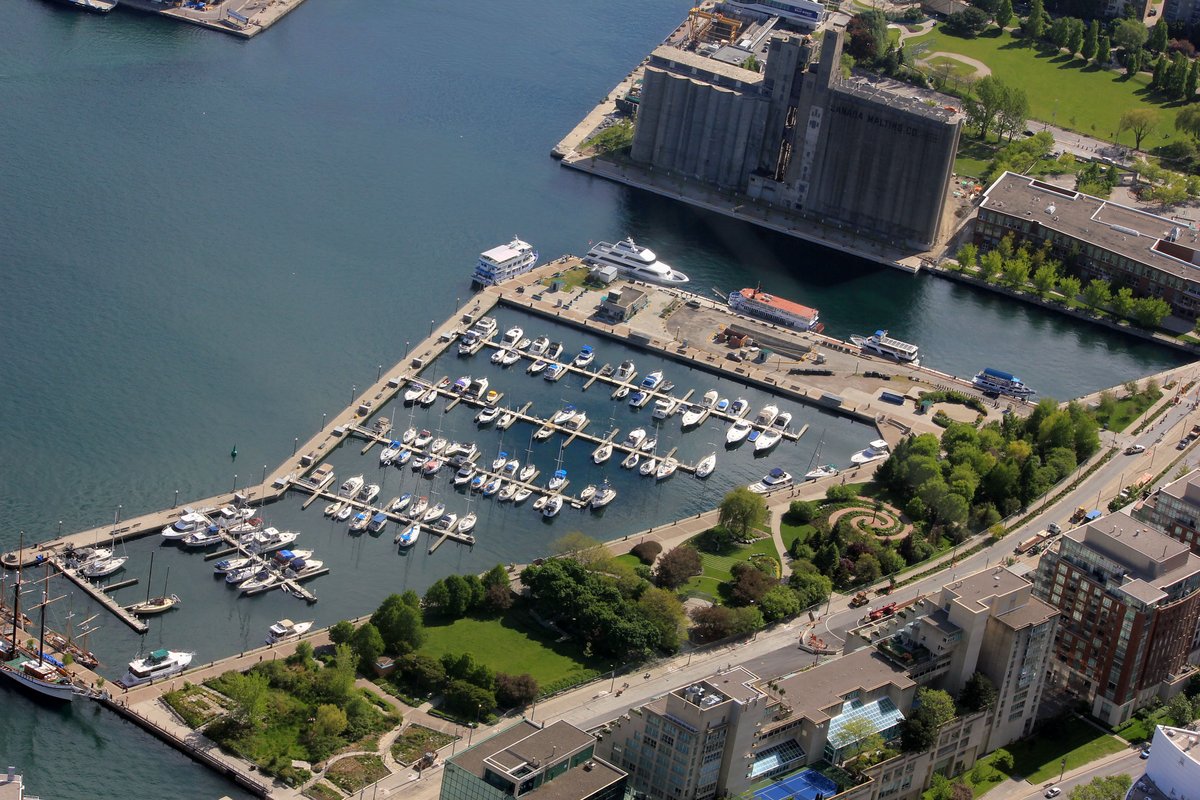
The Power Plant’s architecture is a fusion of industrial heritage and contemporary design. While the exterior preserves the original brickwork and smokestack, the interior has been adapted to offer flexible exhibition spaces and a welcoming public environment with views over Lake Ontario (Toronto For You). Its location within Harbourfront Centre places it at the heart of Toronto’s cultural hub.
Institutional Mandate and Milestones
As a non-collecting gallery, The Power Plant focuses on presenting new and recent works by living artists, supporting experimental and boundary-pushing practices (wikipedia.org). It operates as a registered Canadian charity, governed by an independent board and supported through public and private funding (whichmuseum.com).
Notable milestones include:
- 1987 Official opening of The Power Plant Contemporary Art Gallery (thepowerplant.org)
- 2012 Launch of “All Year, All Free” free admission policy (Toronto For You)
- 2023 Over 140 art publications produced, contributing to contemporary art scholarship (wikipedia.org)
Visiting Information: Hours, Tickets, and Accessibility
Regular Hours:
- Tuesday–Sunday 12:00 pm – 6:00 pm
- Thursday Extended hours until 8:00 pm
- Monday Closed
Admission: Free for all visitors, year-round. No tickets required; advance booking only for special events or group tours (thepowerplant.org).
Accessibility: Fully wheelchair accessible with elevators and accessible washrooms. Service animals are welcome. Assistive listening devices are available for events, and staff are trained to support diverse needs.
Getting There:
- Public Transit TTC streetcars 509/510 to Harbourfront Centre; Union Station is a 15-minute walk away.
- Parking Paid lots nearby (Harbourfront Centre and Queens Quay).
- Cycling Bike-share stations and scenic waterfront trails close by.
For detailed accessibility info, consult the official website.
Exhibitions and Programming Highlights
The Power Plant is internationally recognized for its ambitious exhibitions, presenting a dynamic range of contemporary art forms:
-
Current Major Exhibitions (2025)
- Emmanuel Osahor: To dream of other places (April 11 – September 14, 2025): Immersive environments exploring utopia, displacement, and longing.
- Shelagh Keeley: Film Notebooks 1985–2017 (April 11 – September 14, 2025): Visual diaries documenting urban and industrial landscapes.
-
Special Programs
- Durational Dance Performance: Lin Snelling (July 6, 2025)
- Power Kids: Seed and Sow (July 20, 2025)
- Power Kids Workshops Hands-on art workshops for families and children.
- Group Tours & School Visits Bookable in advance.
-
Thematic Initiatives
- Nordic Lights Public light art installations transforming the waterfront.
- Design Matters Exploring intersections of art, design, and everyday life.
-
Notable Past Exhibitions Works by June Clark, Shelagh Keeley, Rafael Lozano-Hemmer, Miriam Cahn, Robert Young, and more.
For current and upcoming exhibitions, visit the Power Plant’s exhibitions page.
Community Engagement and Accessibility
The “All Year, All Free” policy ensures that contemporary art is accessible to all, regardless of background or income (thepowerplant.org). The gallery offers free public programs—artist talks, panel discussions, educational workshops, family activities, and more—to foster critical thinking and arts education (Toronto For You).
Indigenous Land Acknowledgement
The Power Plant is located on the traditional territory of the Anishinabeg, Haudenosaunee, and Wendat peoples, under Treaty 13 with the Mississaugas of the Credit (thepowerplant.org). The gallery honors Indigenous contributions and integrates land recognition into its programming and outreach.
Recent Developments and Future Plans
The Power Plant continues to innovate with new exhibitions, immersive installations, and expanded educational programs. It remains at the forefront of supporting emerging artists, interdisciplinary practices, and inclusion, reflecting Toronto’s evolution as a global arts city (akimbo.ca; CultureNet).
Visitor Experience: Tips and Nearby Attractions
Planning Your Visit:
- Check the official website for current exhibitions and event schedules.
- Weekdays and early afternoons are quieter; Thursday evenings offer extended hours.
- Combine your visit with nearby attractions:
- Harbourfront Centre Year-round festivals and cultural programming
- CN Tower 0.4 miles away
- Ripley’s Aquarium of Canada
- Toronto Music Garden
On-site Amenities:
- Gallery Shop Art books and unique gifts
- Restrooms Accessible facilities
- Seating Benches throughout the gallery
Photography: Allowed unless otherwise indicated; always check staff guidance.
Frequently Asked Questions (FAQ)
Q: What are the gallery’s visiting hours? A: Tuesday–Sunday, 12:00 pm – 6:00 pm; Thursdays until 8:00 pm; closed Mondays.
Q: Is admission free? A: Yes, admission is free for all.
Q: Is The Power Plant accessible? A: Fully accessible, with elevators and accessible restrooms.
Q: Are guided tours available? A: Yes, advance booking is recommended for group or school tours.
Q: Can I take photographs inside the gallery? A: Generally yes, but some exhibitions may have restrictions.
Q: Are there places to eat nearby? A: Yes, Harbourfront Centre offers several dining options.
Summary and Key Visiting Tips
The Power Plant Contemporary Art Gallery is a cornerstone of Toronto’s cultural life, bridging the city’s industrial past with innovative, forward-thinking art. Its free admission, accessible facilities, and robust programming make it a must-visit for art lovers, families, and anyone exploring Toronto’s waterfront. Plan your visit via the official website, use the Audiala app for enhanced experiences, and discover more about Toronto’s thriving contemporary art scene (torontoforyou.com; CultureNet).
References
- Toronto For You – Explore The Power Plant
- CultureNet – Power Plant Gallery
- The Power Plant Contemporary Art Gallery – Official Site
- Lonely Planet – Power Plant Contemporary Art Gallery
- Plan and Tour – The Power Plant
- Akimbo – The Power Plant Venue
- Wikipedia – The Power Plant
- Which Museum – The Power Plant
- Nomadic Matt – Toronto Travel Guide
All information is current as of July 2025.