
Table of Contents
- Early Origins & Geographical Context
- Multicultural Identity & Demographic Diversity
- 19th-Century Industrialization
- Social and Cultural Developments
- Jewish Heritage & Wartime Tragedies
- Soviet Transformations
- Contemporary Revitalization
- Visiting Pidzamche: Landmarks, Hours, and Tickets
- Accessibility & Practical Travel Tips
- Nearby Attractions
- Frequently Asked Questions (FAQ)
- Visuals and Media
- Conclusion & Recommendations
- References
Early Origins & Geographical Context
Pidzamche’s history is deeply intertwined with its location at the base of High Castle Hill, the original defensive and administrative heart of medieval Lviv. Until the late 18th century, Pidzamche existed as a suburb located outside Lviv’s fortified city walls. Its development was primarily shaped by its proximity to key trade routes and its role as a lower-lying area where the city’s poorer populations and religious minorities often resided. This geographical setting influenced its early growth and distinct character separate from the main urban center (itcluster.lviv.ua).
Multicultural Identity & Demographic Diversity
From the 17th century onwards, Pidzamche became a vibrant melting pot of various communities, including Ukrainians, Poles, Jews, Armenians, and Germans. This rich ethnic and religious diversity is visibly reflected in the district’s architectural heritage, which features a unique concentration of Orthodox churches, Armenian cathedral remnants, synagogues, and other religious buildings (lviv.travel). This historical coexistence significantly contributed to the neighborhood’s distinct cultural identity, setting it apart from the more predominantly Catholic center of Lviv.
19th-Century Industrialization
The arrival of the Lviv–Brody railway and the establishment of the Pidzamche railway station in the 1860s marked a period of rapid industrial expansion for the district. The area became a hub for factories, workshops, and housing for the working class. This industrial transformation also cemented Pidzamche's reputation as a center for labor activism and social housing projects. Landmarks like the Palace of Culture named after Hnat Khotkevych and the surrounding neoclassical housing developments stand today as testaments to the district’s strong working-class roots (lia.lvivcenter.org).
Social and Cultural Developments
The early 20th century saw Pidzamche flourish as a crucial center for social and cultural life within Lviv. The district fostered numerous community institutions, robust labor unions, and active cultural houses, all of which nurtured a strong sense of solidarity and collective creativity among its residents. The unique industrial backdrop and multicultural environment of Pidzamche provided inspiration for many generations of artists, writers, and social activists (lviv.travel), embedding its influence in Lviv’s cultural narrative.
Jewish Heritage & Wartime Tragedies
Prior to World War II, Pidzamche was recognized as the location of Lviv’s largest Jewish community, boasting a significant number of synagogues, educational institutions, and social organizations. The Holocaust inflicted immense devastation upon this community, with the Pidzamche railway station tragically serving as a departure point for numerous deportations. Today, memorials and informative plaques mark these significant sites, serving as solemn reminders of the past and the immense loss endured (lia.lvivcenter.org; lvivcenter.org).
Soviet Transformations
Following World War II, Soviet policies continued to drive industrialization in Pidzamche, leading to the construction of new factories and the repurposing of existing historical structures. This era also brought significant demographic shifts to the district. While some religious and cultural landmarks faced alteration or loss, Pidzamche managed to retain its distinct community spirit and cultural identity despite these changes (balbek.com).
Contemporary Revitalization
Since the 1990s, Pidzamche has navigated a path of both decline and significant rebirth. The closure of many of its traditional factories created opportunities for creative entrepreneurs and local community activists to transform abandoned industrial spaces into dynamic cultural hubs. Prominent examples of this revitalization include the Jam Factory Art Center and the Fest Republic complex, which now host a variety of exhibitions, performances, and community events. Initiatives such as “Pidzamche. Narешті!” are actively promoting sustainable urban development and the preservation of the district’s unique heritage (balbek.com; lviv.travel).
Visiting Pidzamche: Landmarks, Hours, and Tickets
High Castle (Vysokyi Zamok) & High Castle Park
- Hours Daily, 7:00 AM–9:00 PM
- Tickets Free entry
- Highlights Remnants of 13th-century fortifications, panoramic city views (UNESCO; adventurebackpack.com)
Church of St. Nicholas
- Hours Daily, 9:00 AM–6:00 PM
- Tickets Free admission
- Features Example of early Ruthenian architecture, occasional guided tours (UNESCO)
Armenian Church Complex
- Hours Tue–Sun, 10:00 AM–5:00 PM
- Tickets ~30 UAH (discounts for students/seniors)
- Details Blend of Gothic, Renaissance, and Armenian styles; museum exhibits (xn--h1aekdejci.kiev.ua)
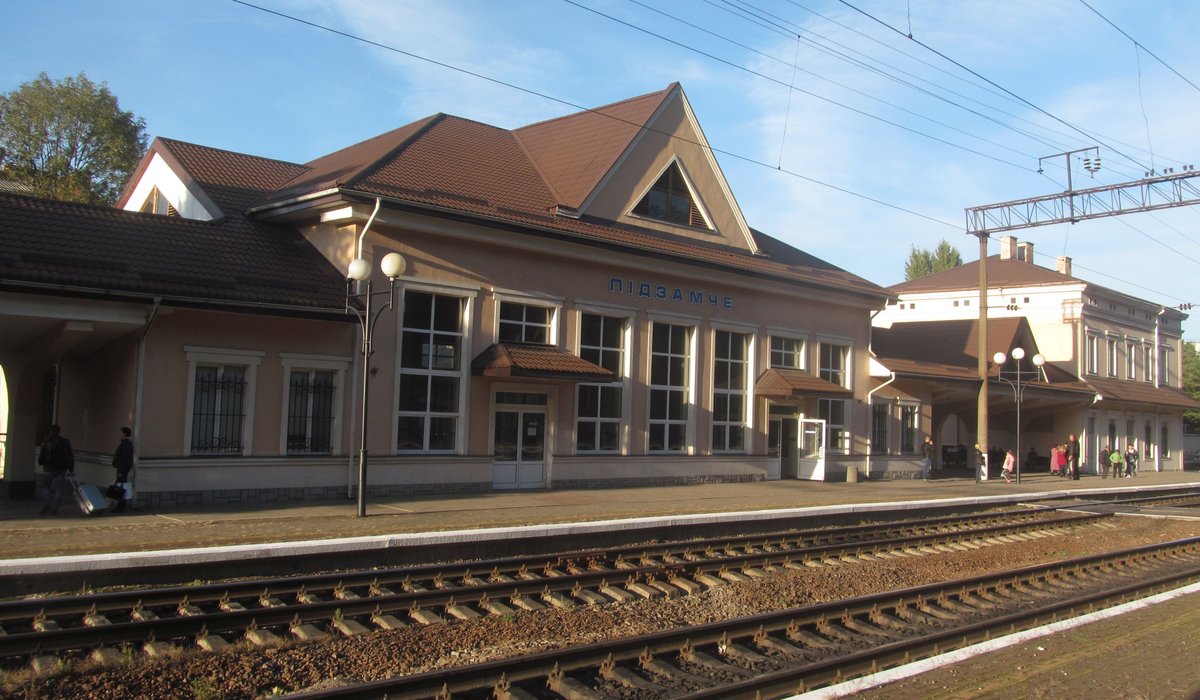
Pidzamche Railway Station
- Hours Daily, 6:00 AM–10:00 PM
- Tickets Free to explore public areas
- Significance Austro-Hungarian architecture, historical transport hub (lviv.travel)
Jam Factory Art Center
- Hours Tue–Sun, 11:00 AM–7:00 PM
- Tickets Vary by event/exhibition; some free
- Focus Contemporary art, community events, accessible for visitors with disabilities (balbek.com)
Local Museums
- Hours Most 10:00 AM–6:00 PM
- Tickets 20–50 UAH
- Themes Industrial heritage, multicultural history (secretattractions.com)
Markets & Artisan Spaces
- Hours Markets on weekends, 10:00 AM–6:00 PM
- Tickets Free entry
- What to Expect Local crafts, fresh produce, lively atmosphere (xn--h1aekdejci.kiev.ua)
Accessibility & Practical Travel Tips
- Transport Reach Pidzamche by tram (routes 6 and 7), bus, taxi, or a 20–30 minute walk from Market Square. Railway station connects to regional trains.
- Navigation Cobblestones and uneven sidewalks—wear sturdy shoes.
- Language Ukrainian is primary; many locals in cafés and cultural venues speak basic English.
- Currency Ukrainian Hryvnia (UAH). Carry cash for markets; cards widely accepted elsewhere.
- Safety Lviv is considered safe, but standard travel precautions apply. Consult current advisories due to ongoing regional conflict (visitukraine.today).
Accessibility: Many new venues (Jam Factory, Palace of Culture) are accessible for visitors with disabilities, though some historic areas may be challenging. Contact venues ahead for specific accommodations.
Dress Code: Modest attire recommended for religious sites; women may need a scarf for head coverings.
Best Time to Visit: Spring and autumn offer comfortable weather and fewer crowds.
Nearby Attractions
- High Castle Park Panoramic views, walking trails.
- Lviv Old Town UNESCO-listed historic center, easily reached by tram or on foot.
- Fest Republic Creative events and festivals in a repurposed glass factory.
- Local Cafés Sample Lviv’s famed coffee and pastries.
Frequently Asked Questions (FAQ)
Q: What are the main visiting hours for Pidzamche’s sites? A: Most sites are open between 9:00 AM and 7:00 PM; specific museums and churches may differ. Always check official listings.
Q: Are there entrance fees? A: Many churches and outdoor sites are free; museums and art centers typically charge 20–50 UAH.
Q: How do I get to Pidzamche from Lviv city center? A: Tram routes 6 and 7, buses, taxis, or a 20–30 minute walk.
Q: Are guided tours available? A: Yes—book through local agencies or tourist centers for thematic walking tours.
Q: Is Pidzamche safe for tourists? A: Yes, with standard travel precautions.
Conclusion & Recommendations
Pidzamche is a living testament to Lviv’s history, resilience, and creative renewal. Its blend of medieval origins, industrial heritage, and modern cultural energy offers a rich, multifaceted experience for every visitor. From panoramic vistas atop High Castle Park to the innovative spaces of the Jam Factory, every corner of Pidzamche invites exploration and engagement.
To get the most out of your visit:
- Use the Audiala app for audio tours and up-to-date info.
- Support local businesses and respect the neighborhood’s heritage.
- Check Lviv.travel, UNESCO, and Balbek Bureau for current events and resources.
Travel responsibly, embrace the multicultural spirit, and discover why Pidzamche is the beating heart of Lviv’s past and future.
References
- Pidzamche in Lviv: Visiting Hours, Tickets, and Historical Sites Guide, 2025, ItCluster Lviv
- Pidzamche historical and cultural overview, 2025, Lviv Travel
- Modernization of Pidzamche, 2025, Lviv Center
- Lviv and its Pidzamche, 2025, Lviv Center
- Pidzamche revitalization and cultural projects, 2025, Balbek Bureau
- Sustainable Urban Rehabilitation of the Area of Pidzamche in Lviv, 2025, Slideserve
- Lviv UNESCO World Heritage Listing, 2025, UNESCO
- A History of Lviv, 2025, American in Ukraine
- Lviv Landmarks Guide, 2025, Adventure Backpack
- Lviv Guide to History and Culture, 2025
- Unexplored Neighborhoods of Lviv, 2025, Secret Attractions
- Things to Do in Lviv, 2025, My Wanderlust
- Lviv Travel Safety Guide, 2025, Visit Ukraine Today