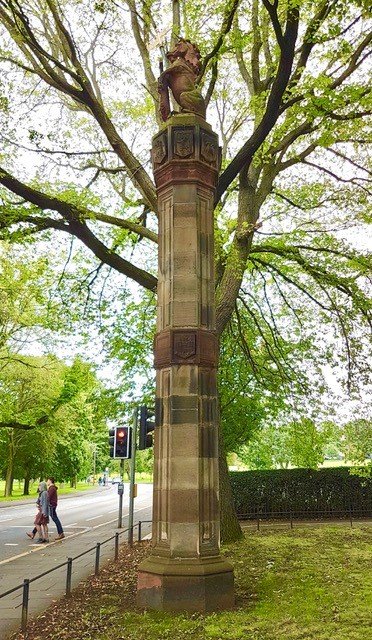
メイソンズ・ピラーズ、ザ・メドウズ(西)、エジンバラを計画して、聴く Audialaで。
ポケットに音声ガイド、ブラウザに旅程。あなたの本当の歩き方に合わせて作りました。
Introduction
Mason’s Pillars are a prominent historical landmark at the west end of The Meadows, one of Edinburgh’s most beloved urban parks. Erected in 1886, these monumental stone columns are striking examples of Victorian civic pride, celebrating the artistry of Edinburgh’s masons and the city’s rich association with Freemasonry. Today, the pillars are freely accessible to all, serving as both a ceremonial gateway and a living symbol of community identity, craftsmanship, and the philanthropic traditions that shaped modern Edinburgh.
This in-depth guide explores the history, architectural features, cultural significance, and practical visitor information for Mason’s Pillars. Whether you are a local history enthusiast, a curious traveler, or simply looking for a unique spot to enjoy in Edinburgh, this article provides everything you need to plan a rewarding visit.
For further resources, visit VisitScotland, Edinburgh Council, and Edinburgh Outdoors.

Contents
- Overview: Mason’s Pillars at a Glance
- Origins and Construction
- Architectural Features and Symbolism
- Historical and Cultural Significance
- Visitor Information: Hours, Tickets, Accessibility
- Location and Getting There
- What to Expect: On-Site Features
- Practical Tips and Safety
- Nearby Attractions
- Local Culture and Customs
- Frequently Asked Questions
- Summary and Recommendations
- Sources and Further Reading
Overview: Mason’s Pillars at a Glance
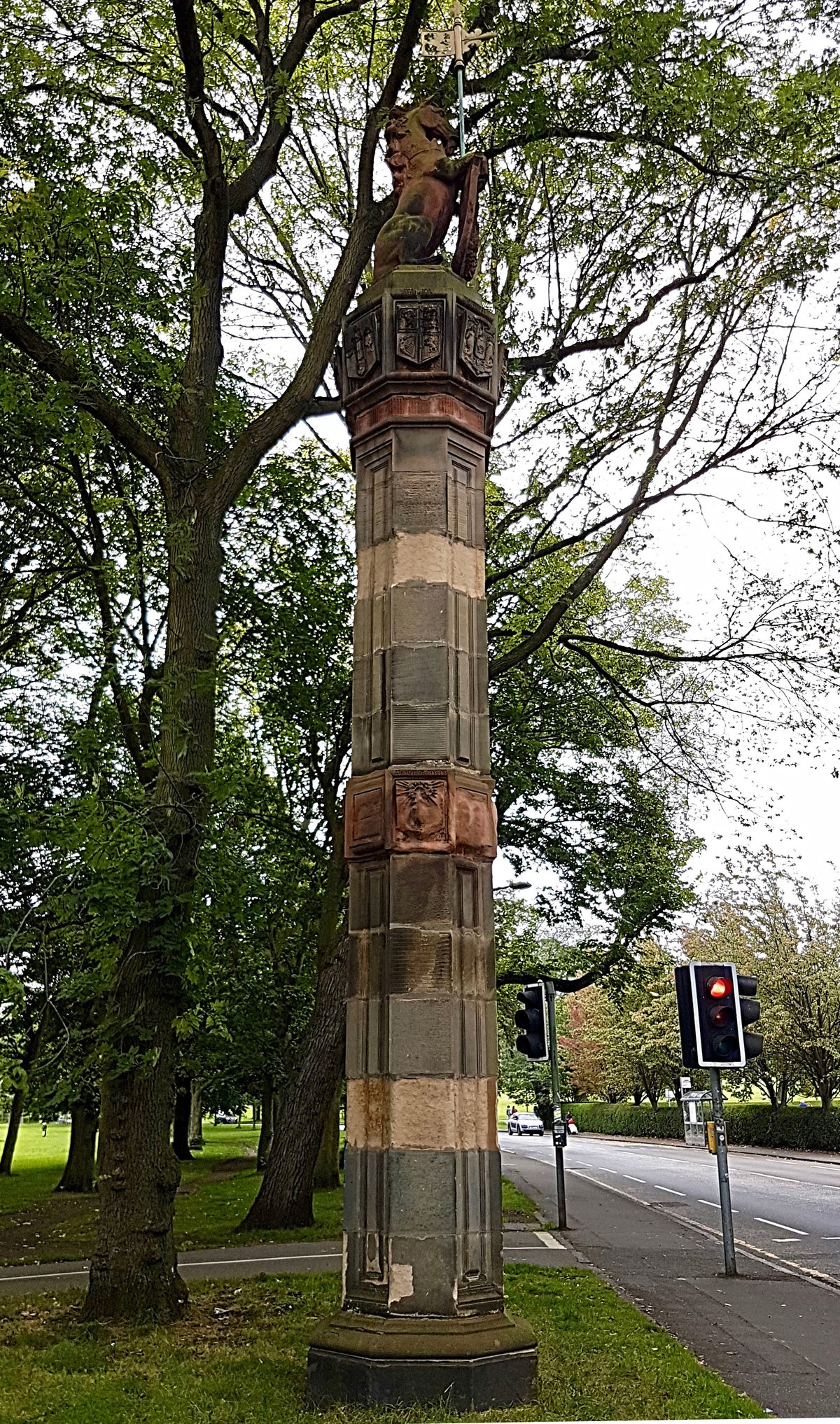
Mason’s Pillars stand as twin octagonal columns of stone, each topped with a unicorn sculpture—the national animal of Scotland. Located on either side of Melville Drive at The Meadows’ western entrance, they serve as both landmark and monument, commemorating the skills and contributions of Edinburgh’s stonemasons and marking a threshold between cityscape and green space.
Origins and Construction
The pillars were commissioned by the Incorporation of Masons of Edinburgh and erected in 1886 to mark the city’s International Exhibition. Their construction was a collaborative effort involving master builders and operative masons, with each stone block sourced from a different Scottish quarry. This not only highlights the diversity of local geology but also honors the city’s trade guild heritage (Curious Edinburgh).
The Meadows, once the site of the ‘burgh loch’ drained in the 18th century, has long served as a communal green space. The placement of the pillars underscores their role as both a celebration of local industry and a public monument accessible to all (City Explorers Tours).
Architectural Features and Symbolism
Pillar Design and Materials
- Form: Each pillar is octagonal, standing approximately 26 feet (8 meters) tall.
- Material: Constructed from specimen stones from numerous Scottish quarries, with each block inscribed with its quarry name—creating a visible geological archive (edinburghoutdoors.org.uk).
- Toppers: Each pillar is crowned with a 7-foot (2.1 meters) unicorn sculpture, referencing Scotland’s heraldic tradition (edinburgh.org).
Symbolic Elements
- Unicorns: Represent purity, strength, and Scottish national identity.
- Masonic Emblems: The pillars are adorned with Masonic symbols such as compasses and squares, reflecting the city’s historic connection to Freemasonry and the philanthropic spirit of the Victorian era (VisitScotland).
- Inscriptions: Many original stone inscriptions remain legible, honoring the masons and quarry workers whose efforts built Edinburgh.
Historical and Cultural Significance
Civic and Community Importance
- Gateway Function: The pillars mark a ceremonial entrance to The Meadows, transitioning from the urban environment to public parkland (MyPacer).
- Freemasonry Influence: Commissioned by Masonic lodges, the pillars stand as physical reminders of Freemasonry’s influence on 19th-century Edinburgh, particularly in civic and charitable works (Edinburgh News).
- Active Landmark: The site continues to host festivals, rallies, community gatherings, and heritage walks.
Conservation
Protected within The Meadows conservation area and maintained by the City of Edinburgh Council, the pillars are featured in heritage trails and educational initiatives (Edinburgh Outdoors).
Visitor Information: Hours, Tickets, Accessibility
- Opening Hours: The Meadows is open 24/7. The pillars are always accessible, though daylight hours are recommended for safety and photography.
- Admission: Free public access. No tickets or booking required (atlasobscura.com).
- Accessibility: Flat, paved paths make the area suitable for wheelchairs, strollers, and visitors with mobility needs (edinburgh.org).
- Guided Tours: While dedicated tours for the pillars are rare, many walking tours of The Meadows and South Side include them as a highlight (fullsuitcase.com).
Location and Getting There
- Address: Melville Drive, west end of The Meadows, near the intersection with Brougham Place and close to Bruntsfield Links (edinburghguide.com).
- Transport: Reachable on foot from the city center (just south of George Square and the University of Edinburgh). Served by multiple Lothian Buses, cycle paths, and pedestrian walkways. Limited on-street parking is available in nearby neighborhoods (edinburgh.org).
- Map Resource: Edinburgh Outdoors Map
What to Expect: On-Site Features
- Pillars: Two octagonal stone columns, each topped with a unicorn sculpture and inscribed stone blocks.
- Surroundings: Open grassland, tree-lined paths, views across The Meadows, and proximity to cricket pitches, play areas, and tennis courts.
- Nearby Amenities: Public restrooms, benches, and easy access to cafés, bakeries, and restaurants in Bruntsfield, Marchmont, and Tollcross (edinburghguide.com).
Practical Tips and Safety
- Best Time to Visit: Late spring and summer (May–August) for lush scenery and events like the Meadows Festival (whatsoninedinburgh.co.uk). Early mornings and late afternoons offer the best photography conditions.
- Weather: Edinburgh’s weather is variable—bring a jacket and umbrella even in summer (edinburghtourist.co.uk).
- Safety: The park is generally safe, but remain aware of your surroundings, especially after dark.
- Etiquette: Do not climb or touch the unicorn sculptures. Respect the monument and park environment by disposing of litter responsibly.
Nearby Attractions
- Other Meadows Monuments: Lion & Unicorn Pillars, Middle Meadow Walk gatepiers, and the historic Jawbone Arch (edinburghoutdoors.org.uk).
- Bruntsfield Links: One of the world’s oldest public golf courses, adjacent to The Meadows (edinburghguide.com).
- University of Edinburgh: Main campus buildings and museums nearby.
- Seasonal Events: Meadows Festival in June, sports tournaments, and community fairs (whatsoninedinburgh.co.uk).
Local Culture and Customs
- Unicorn Symbolism: The unicorn, Scotland’s national animal, represents purity and strength, echoing both national pride and the mythological heritage celebrated at the 1886 International Exhibition (edinburgh.org).
- Community Use: The Meadows is a popular spot for sports, festivals, and relaxation. Visitors are welcomed but asked to share the space respectfully (e.g., keep dogs on leads in busy areas).
Frequently Asked Questions
What are Mason’s Pillars? Two octagonal stone columns with unicorn sculptures, erected in 1886 as part of the Edinburgh International Exhibition.
Are there admission fees? No, access is free and open to the public at all times.
What are the visiting hours? The site is accessible 24/7, though daylight visits are recommended.
Is the site accessible for those with limited mobility? Yes, the area features flat, paved paths suitable for wheelchairs and strollers.
Are guided tours available? General walking tours of The Meadows often include the pillars as a point of interest.
Where are nearby amenities? Public restrooms, benches, and a variety of cafés and shops are within easy walking distance.
Summary and Recommendations
Mason’s Pillars are enduring symbols of Edinburgh’s Victorian architectural excellence, skilled craftsmanship, and the philanthropic ethos of its trade guilds and Freemasons. Serving as a gateway to The Meadows, the pillars invite visitors to explore both the park and the broader historical landscape of Scotland’s capital. Their free, year-round accessibility and central location make them an ideal destination for tourists and locals alike.
For the richest experience, visit during local festivals or join a heritage walk that highlights the pillars’ story. Stay informed and deepen your visit by exploring resources like Curious Edinburgh and Edinburgh.org.
Sources and Further Reading
- VisitScotland
- LocalEdinburgh Visitor’s Guide
- Edinburgh.org: What to Know Before Your Visit
- Curious Edinburgh: Commemorative Pillars in The Meadows
- Edinburgh News: How The Meadows Has Changed
- MyPacer: The Meadows
- Edinburgh.org: Unicorns in Edinburgh
- Edinburgh Outdoors: Monuments of The Meadows
- What’s On in Edinburgh: Meadows Festival
Enjoyed this guide? Download the Audiala app for offline access to Edinburgh’s historical sites and personalized tips. Explore more articles on Edinburgh Historical Sites and The Meadows Park History and Attractions.
アプリで完全なストーリーを聴く
メイソンズ・ピラーズ、ザ・メドウズ(西)、エジンバラのすべてを、
語る。
96か国1,100以上の都市に対応したオーディオガイド。歴史、物語、現地の知識をオフラインでお楽しみいただけます。
確かめて、お見せする。
歴史的記録、建築アーカイブ、そして地元の知見をもとに、Audiala編集チームが調査・執筆しました。
Wikidata・Wikipedia・公式情報をもとに調査 · 事実確認済み · 私たちのガイドづくり →