
Stadtmauer Frauentormauer 25, Nuremberg: Visiting Hours, Tickets, and Historical Guide
Date: 14/06/2025
Introduction
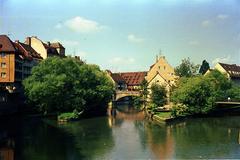
Nuremberg’s city walls are among the most impressive and best-preserved medieval fortifications in Europe. Within this formidable ring, the Frauentormauer—specifically at address 25—stands out as a section rich in history, architectural intrigue, and cultural transformation. For travelers seeking to understand Nuremberg’s layered past and vibrant present, a visit to the Frauentormauer offers a unique window into the city’s evolution from a medieval powerhouse to a modern urban center where history and contemporary life intersect.
Table of Contents
- Medieval Origins and Early Development
- Architectural Features & Defensive Role
- Urban and Social Transformations
- 19th–21st Century Adaptations & Preservation
- Visitor Information: Hours, Tickets, Accessibility
- Cultural and Historical Significance
- Travel Tips and Nearby Attractions
- Frequently Asked Questions (FAQ)
- Conclusion
- Sources
Medieval Origins and Early Development
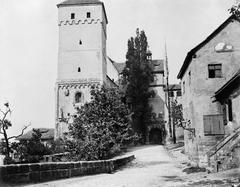
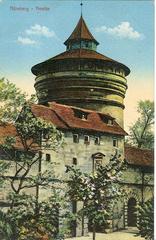
The origins of Nuremberg’s city walls date back to the 11th and 12th centuries, coinciding with the city’s rise as a significant center of trade and power within the Holy Roman Empire. As the city expanded, so too did its fortifications, reaching their greatest extent in the 16th century. At their peak, the walls stretched over five kilometers, punctuated by numerous towers and gates that protected the city and regulated the flow of people and goods. The Frauentormauer, named after the nearby Frauentor (Women’s Gate), was a crucial segment in the city’s southern defenses. The earliest documented mention of the Frauentor dates to 1386, indicating its completion by that time. The gate itself was named after the adjacent Klarissenkloster St. Klara, a convent that played a significant role in the area’s identity. In 1498, the original inner Frauentor was demolished to make way for the Mauthalle (customs house), reflecting the city’s shifting priorities from pure defense to economic regulation. The current round form of the Frauentor dates to a major renovation in 1558, which also added a side gate for improved access. The Frauentor was one of four main gates in the city wall, serving as a vital entry and exit point for people and goods. Its strategic location made it a focal point for both defense and commerce.
Architectural Features & Defensive Role
Military Engineering and Design
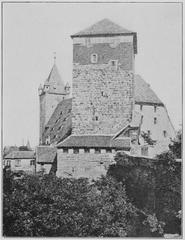
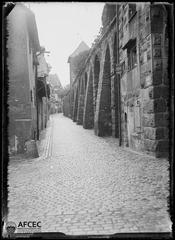
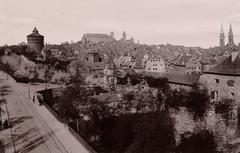
The Frauentormauer is a robust, stone-built section of the city wall, characterized by its imposing height, battlements, and integration with towers and gates. Of the original five kilometers of wall, approximately 3.8 kilometers remain today, making Nuremberg’s fortifications among the most extensive surviving examples in Europe. Key features include battlements and walkways, the Frauentor itself (a round tower remodeled in the 16th century), and other towers like the Spittlertor. A wide, deep ditch, the Stadtgraben, runs parallel to the wall, historically serving as an additional defensive barrier. Today, much of the moat is preserved as gardens and public spaces. The Frauentormauer was a critical component of Nuremberg’s defensive strategy. Its robust construction and strategic placement made it a formidable obstacle to would-be attackers. The wall was designed to be defended from above via bastions and battlements, as well as from below at moat level through secret passages and gun ports. The area between the main wall and the outer wall, known as the Zwinger, was especially fortified near gates and river crossings. The Frauentorzwinger, adjacent to the Frauentor, was one such heavily defended section, designed to trap and expose attackers to crossfire.
Urban and Social Transformations
Beyond its military function, the city wall—and the Frauentormauer in particular—became a symbol of Nuremberg’s wealth, status, and autonomy. The walls not only protected the city but also demarcated its identity, separating the privileged urban center from the surrounding countryside. As Nuremberg grew, the area around the Frauentormauer underwent significant urban development. By the late Middle Ages and early modern period, the district adjacent to the wall became known as the Jakober Viertel. This area, situated between the Jakobskirche and the Plärrer, evolved from a sparsely settled zone into a vibrant urban quarter. From as early as 1381, records indicate the presence of Frauenhäuser (brothels) in this district. The proximity to the city wall and the Plärrer—a market for unlicensed traders outside the walls—made the Frauentormauer area a hub for commerce and social interaction. Over time, the area along the Frauentormauer became established as Nuremberg’s red-light district, a function it retains to this day, albeit under strict regulation. A distinctive aspect of the Frauentormauer’s modern identity is its association with Nuremberg’s red-light district. Historical records indicate that prostitution was practiced in the area as early as 1381, often under the guise of wine taverns in the 19th century. Today, the area between the Spittlertor and Färbertor, just west of the Frauentormauer, is home to legal and regulated brothels—a fact that often surprises visitors. This juxtaposition of medieval heritage and contemporary social realities exemplifies Nuremberg’s ability to integrate its past with the present.
19th–21st Century Adaptations & Preservation
As the military importance of the walls waned in the 19th century, their cultural and historical value grew. The Frauentormauer, in particular, underwent a unique transformation. With the construction of new gates such as the Königstor in 1849, the Frauentor was repurposed for outgoing traffic and eventually became a pedestrian zone. Today, it houses the Nürnberger Handwerkerhof, a crafts market that celebrates the city’s artisanal heritage. By the 19th century, the area “Hinter der Mauer” (behind the wall) was known for its wine taverns, where sexual services were discreetly offered. The Frauentormauer’s urban context shifted as the city modernized, but the wall itself remained a prominent landmark. In the aftermath of World War II, Nuremberg’s city walls, including the Frauentormauer, survived significant destruction, although some sections required restoration. During the 20th century, the city authorities recognized the historical and architectural value of the Stadtmauer. Preservation efforts intensified, and the Frauentormauer was officially protected as a cultural monument. Today, the Frauentormauer stands as a testament to Nuremberg’s layered history. Of the original five kilometers of the outer city wall, approximately 2.7 kilometers remain, making it one of the most extensive and best-preserved urban fortifications in Europe. The wall’s preservation is a priority for the city, with ongoing restoration projects addressing damage from modern stresses such as traffic, frost, and pollution. Nuremberg has made significant efforts to preserve and integrate the city walls into modern urban life. The city successfully bid to host the Landesgartenschau (State Garden Show) in 2030, with plans to further enhance the moat and wall areas as green spaces and cultural venues.
Visitor Information: Hours, Tickets, Accessibility
Visiting Hours
As an open-air monument, the Frauentormauer itself is accessible 24/7 free of charge. However, specific nearby attractions such as the Handwerkerhof (Craftsmen’s Courtyard) have set opening hours, generally from 10:00 to 18:00, with seasonal variations. For guided tours that explore bastions, secret passages, and the moat, hours may vary, so it is recommended to check with the Nuremberg Tourist Information Center or the specific tour provider for current schedules.
Tickets
While there is no general admission ticket required to walk along the Frauentormauer, guided tours that explore bastions, secret passages, and the moat do require tickets. These can be purchased online, at the Historic Art Bunker, or at the Albrecht Dürer House museum shop. Prices vary depending on the tour and language, so it is best to check in advance. The NÜRNBERG CARD + FÜRTH is highly recommended for visitors interested in multiple museums and attractions. It offers free entry to over 30 sites and unlimited public transport for 48 hours.
Accessibility
The Frauentormauer area is largely accessible for visitors with mobility impairments, featuring paved walkways and ramps in most sections. Tourist information points, including those at the Handwerkerhof, are wheelchair accessible and provide assistance for visitors with special needs. However, some historic tower interiors or specific parts of guided tours may have limited accessibility due to stairs and uneven flooring; it is advisable to inquire beforehand if accessibility is a priority.
Cultural and Historical Significance
The Frauentormauer is more than a defensive structure; it is a living monument that encapsulates centuries of Nuremberg’s history. Its walls have witnessed the city’s transformation from a medieval trading hub to a modern metropolis. The integration of the wall into the urban fabric, especially its association with the Jakober Viertel and the red-light district, reflects the complex interplay between defense, commerce, and social life in Nuremberg. For visitors, the Frauentormauer offers a tangible connection to the past. Walking along its parapets or through the adjacent Stadtgraben gardens provides a unique perspective on the city’s evolution. The wall’s enduring presence, coupled with ongoing conservation, ensures that it remains a central feature of Nuremberg’s historical and cultural heritage. The Handwerkerhof adjacent to the wall is a lively cultural center showcasing traditional crafts, local cuisine, and seasonal markets, including the famous Nuremberg Christkindlesmarkt. The moat has been transformed into green spaces with pedestrian paths, and ongoing projects aim to enhance recreational and ecological value. Nuremberg prioritizes the preservation and adaptive reuse of historic structures. The Frauentormauer and its towers have been restored post-war and now house cultural organizations, artists, and businesses that blend heritage with modern use. The wall’s integration with city transport and pedestrian networks makes it a vital link between the old and new city.
Travel Tips and Nearby Attractions
- Best Time to Visit: Spring and autumn offer pleasant weather and fewer crowds. The wall is most photogenic in the early morning or late afternoon. The Christmas season is especially magical due to the nearby Christkindlesmarkt.
- Walking Routes: Self-guided tours cover significant portions of the wall, highlighting key spots like Henkersteg, Weißer Turm, and Tiergärtnertor.
- Dining and Shopping: The Handwerkerhof is perfect for tasting local dishes and buying handmade souvenirs; the Old Town offers a variety of dining and shopping options.
- Photography: Excellent photo opportunities abound, particularly at sunrise and sunset.
- Respect Local Customs: The red-light district is a legal part of the city; visitors should be respectful and avoid intrusive photography.
- Nearby Attractions: Explore the Henkersteg, Hauptmarkt, Tiergärtnertor, Fembohaus (City Museum), and the magnificent Kaiserburg (Imperial Castle).
Frequently Asked Questions (FAQ)
Q: What are the Frauentormauer visiting hours? A: The wall itself is accessible 24/7 free of charge. Adjacent attractions like the Handwerkerhof are typically open from 10:00 to 18:00, varying seasonally. Guided tours have specific hours—check official sites.
Q: Are there tickets required for visiting the Frauentormauer? A: No ticket is needed to visit the wall itself. Tickets are required for guided tours exploring bastions and secret passages, or for museum entries.
Q: Is the Frauentormauer wheelchair accessible? A: Yes, most outdoor areas around the Frauentormauer have paved walkways and ramps suitable for wheelchair users. However, some tower interiors may have limited accessibility.
Q: How can I purchase tickets for guided tours? A: Tickets can be bought online, at the Historic Art Bunker, or at local tourist centers.
Q: Are guided tours available in multiple languages? A: Yes, tours are offered in several languages, and private group bookings are possible.
Conclusion
The Stadtmauer Frauentormauer 25 is more than a relic of Nuremberg’s medieval past; it is a dynamic symbol of the city’s resilience, adaptability, and layered identity. Its robust architecture, storied history, and evolving social context make it a must-visit for anyone seeking to understand Nuremberg beyond the surface. Whether exploring the battlements, shopping at the Handwerkerhof, or reflecting on the wall’s role in shaping the city, visitors will find the Frauentormauer a compelling testament to the enduring spirit of Nuremberg. To stay updated on events and visitor tips, be sure to download the Audiala app and follow us on social media for the latest news and exclusive content. Explore the Frauentormauer and discover the unique story it tells about Nuremberg’s past and present.
Sources
- Komoot
- Unterwelten Nürnberg
- Wikipedia
- The Crazy Tourist
- Marktspiegel
- Nürnberger Blatt
- GPSmyCity
- nuernberg.de
- life-globe.com
- tourismus.nuernberg.de
- petraschuster.de
- HolidayCheck
- Süddeutsche Zeitung