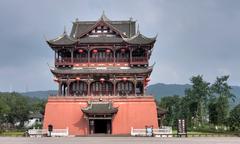

शुआंग्लियु अंतरराष्ट्रीय हवाई अड्डा स्टेशन का टर्मिनल 1
चेंगदू शुआंगलियू अंतर्राष्ट्रीय हवाई अड्डे के टर्मिनल 1 की यात्रा के लिए व्यापक मार्गदर्शिका
दिनांक: 15/06/2025
परिचय
चेंगदू शुआंगलियू अंतर्राष्ट्रीय हवाई अड्डे का टर्मिनल 1 (T1) न केवल घरेलू यात्रियों के लिए एक प्रमुख प्रवेश द्वार है, बल्कि इतिहास में डूबा एक ऐतिहासिक स्थल भी है। एक रणनीतिक युद्धकालीन हवाई क्षेत्र से एक आधुनिक परिवहन केंद्र के रूप में विकसित, T1 यात्री सुविधा को गहरे सांस्कृतिक महत्व के साथ कुशलता से जोड़ता है। यह व्यापक मार्गदर्शिका आपको आत्मविश्वास से टर्मिनल 1 में नेविगेट करने में मदद करेगी - इसके ऐतिहासिक विकास और सुविधाओं से लेकर व्यावहारिक यात्रा युक्तियों और चेंगदू के प्रसिद्ध आकर्षणों से कनेक्शन तक सब कुछ कवर किया जाएगा।
अतिरिक्त संदर्भ और नवीनतम अपडेट के लिए, विकिपीडिया और YourLayoverGuide जैसे संसाधनों से परामर्श लें।
विषय-सूची
- इतिहास और विकास
- टर्मिनल 1: लेआउट, सुविधाएं और पहुंच
- संचालन: घंटे, टिकटिंग और सेवाएं
- परिवहन और कनेक्टिविटी
- चेंगदू की खोज: शीर्ष आस-पास के आकर्षण
- आगंतुक अनुभव: सुझाव और अक्सर पूछे जाने वाले प्रश्न
- निष्कर्ष
इतिहास और विकास
प्रारंभिक उत्पत्ति और युद्धकालीन भूमिका
1938 में द्वितीय चीन-जापान युद्ध के दौरान निर्मित, मूल शुआंगगुईसी हवाई अड्डा (अब शुआंगलियू) एक रक्षात्मक गढ़ बन गया। द्वितीय विश्व युद्ध के दौरान गणराज्य चीन वायु सेना के 5वें पर्स्यूट ग्रुप और बाद में यूएसएएफ चौदहवीं वायु सेना की मेजबानी करते हुए, यह महत्वपूर्ण हवाई युद्धों और रणनीतिक अभियानों का स्थल था (विकिपीडिया)।
नागरिक उड्डयन में संक्रमण
1956 में, शुआंगलियू को आधिकारिक तौर पर नागरिक उड्डयन अधिकारियों को सौंप दिया गया। 1957 से, यह क्षेत्र का प्राथमिक हवाई प्रवेश द्वार बन गया, जिसने जल्दी से प्रमुख चीनी शहरों को जोड़ने वाला एक घरेलू नेटवर्क विस्तारित किया (विकिपीडिया)।
आधुनिकीकरण और अंतर्राष्ट्रीयकरण
1990 के दशक और 2000 के दशक की शुरुआत में प्रमुख विस्तारों ने रनवे को 3,600 मीटर (क्लास 4E) तक बढ़ाया और एक नया टर्मिनल पेश किया, जिसने क्षमता और दक्षता में वृद्धि की। 2006 में, केएलएम के चेंगदू-एम्स्टर्डम मार्ग ने अंतरमहाद्वीपीय मंच पर हवाई अड्डे के प्रवेश को चिह्नित किया। हवाई अड्डे के एक प्रमुख केंद्र के रूप में विकसित होने के साथ टर्मिनल 1 ने एक केंद्रीय भूमिका निभाई, 170 से अधिक घरेलू और 50 अंतरराष्ट्रीय मार्गों की मेजबानी की (विकिपीडिया)।
हालिया विकास
चेंगदू तियानफू अंतर्राष्ट्रीय हवाई अड्डे के 2021 में खुलने के साथ, कई अंतरराष्ट्रीय और कार्गो सेवाएं स्थानांतरित हो गईं, लेकिन शुआंगलियू टर्मिनल 1 सालाना लाखों यात्रियों की सेवा करते हुए, एक महत्वपूर्ण घरेलू केंद्र बना हुआ है (विकिपीडिया)।
टर्मिनल 1: लेआउट, सुविधाएं और पहुंच
संरचनात्मक अवलोकन
टर्मिनल 1 कुशल घरेलू संचालन के लिए डिज़ाइन की गई एक बहु-स्तरीय सुविधा है:
- स्तर 1: आगमन और स्थानांतरण
- आगमन और स्थानांतरण सेवाएं, तीन मुख्य कॉनकोर्स (ए, बी, सी) के साथ, प्रत्येक निर्दिष्ट गेट के साथ।
- स्तर 2: प्रस्थान
- मुख्य चेक-इन हॉल, सुरक्षा, और प्रस्थान गेट तक पहुंच।
- स्तर 3: कार्यालय और विश्राम क्षेत्र
- प्रशासनिक कार्यालय और चुनिंदा भोजन के साथ एक शांत यात्री विश्राम क्षेत्र।
- मेजेनाइन: व्यस्ततम समय के लिए अतिरिक्त खुदरा और सुविधाएं।
एक पैदल मार्ग और मुफ्त शटल (06:00–00:00) आसान स्थानांतरण सुनिश्चित करते हुए, T1 को टर्मिनल 2 से जोड़ते हैं।
सुविधाएं और सेवाएं
- चेक-इन और सुरक्षा: घरेलू उड़ानों के लिए कई काउंटर, स्वयं-सेवा कियोस्क, और स्पष्ट साइनेज।
- लाउंज: प्रथम श्रेणी और व्यवसाय लाउंज (जैसे, गेट 101, 125, और 11 पर), स्नैक्स, वाई-फाई और शॉवर के साथ (YourLayoverGuide)।
- खरीदारी और भोजन: ड्यूटी-फ्री आउटलेट, खुदरा दुकानें, और विविध रेस्तरां विकल्प - अंतर्राष्ट्रीय और सिचुआन दोनों व्यंजनों की विशेषता।
- यात्री सहायता: बहुभाषी कर्मचारियों वाले सूचना डेस्क, एटीएम, मुद्रा विनिमय, सिम कार्ड, और चिकित्सा सेवाएं।
- पहुंच: रैंप, लिफ्ट, सुलभ शौचालय, स्पर्शनीय फुटपाथ, और कर्मचारियों की सहायता।
संचालन: घंटे, टिकटिंग और सेवाएं
संचालन घंटे
- टर्मिनल 1: उड़ान संचालन के लिए 24/7 खुला।
- टिकटिंग/चेक-इन: एयरलाइन काउंटर आम तौर पर सुबह जल्दी से लेकर अंतिम उड़ान के बाद तक संचालित होते हैं; अपनी एयरलाइन के साथ विशिष्टताओं की पुष्टि करें।
- लाउंज/खुदरा: अधिकांश सेवाएं 06:00 और 00:00 के बीच चलती हैं; कुछ लाउंज 24 घंटे खुले रहते हैं।
टिकटिंग
- खरीद के विकल्प: ऑनलाइन (एयरलाइन वेबसाइट/ऐप्स), हवाई अड्डे के काउंटरों पर, या यात्रा एजेंटों के माध्यम से।
- स्वयं-चेक-इन: चुनिंदा एयरलाइनों के लिए कियोस्क उपलब्ध।
- अनुशंसित आगमन: घरेलू प्रस्थान से कम से कम 2 घंटे पहले।
परिवहन और कनेक्टिविटी
मेट्रो
- लाइन 10: टर्मिनल 1 से मध्य चेंगदू तक सीधी मेट्रो सेवा, जिसमें बार-बार ट्रेनें चलती हैं (व्यस्ततम समय के दौरान हर 6-10 मिनट में)।
- स्थानांतरण: शहर भर में पहुंच के लिए अन्य मेट्रो लाइनों से आसानी से जुड़ें (TravelChinaGuide)।
हाई-स्पीड रेल
- हवाई अड्डा रेलवे स्टेशन: चेंगदू दक्षिण/पूर्व स्टेशनों और लेशान और एमईईशान जैसे क्षेत्रीय शहरों से जुड़ता है।
बसें और टैक्सी
- शटल बसें: तियानफू स्क्वायर और अन्य प्रमुख हब के लिए लाइनें।
- टैक्सी: आगमन हॉल (गेट 2) के बाहर 24/7 उपलब्ध; डाउनटाउन के लिए सामान्य किराया लगभग 60 युआन है।
- कार रेंटल: टर्मिनल पर उपलब्ध।
चेंगदू की खोज: शीर्ष आस-पास के आकर्षण
वूहोउ श्राइन संग्रहालय
इतिहास प्रेमियों के लिए अवश्य देखना चाहिए, जो झ्यूग लियांग और तीन राज्यों की अवधि को समर्पित है। T1 से मेट्रो या टैक्सी द्वारा आसानी से सुलभ। टिकट, घंटे, और अधिक के लिए, [वूहोउ श्राइन की आधिकारिक वेबसाइट](https://www.wuhoushri ne.cn) देखें।
चेंगदू विशाल पांडा प्रजनन केंद्र
पांडा संरक्षण के लिए विश्व स्तर पर प्रसिद्ध, यह केंद्र मेट्रो और टैक्सी द्वारा T1 से थोड़ी दूरी पर है। सक्रिय पांडा के लिए सुबह जल्दी जाना सबसे अच्छा है (विकिपीडिया: चेंगदू विशाल पांडा प्रजनन अनुसंधान आधार)।
जिनली प्राचीन सड़क
वूहोउ श्राइन के बगल में, यह हलचल भरी सड़क प्रामाणिक सिचुआन स्नैक्स, शिल्प और जीवंत प्रदर्शन प्रदान करती है।
अन्य उल्लेखनीय स्थल
- डू फू की घास की झोपड़ी: महान तांग कवि की विरासत का जश्न मनाता है।
- तियानफू स्क्वायर और चुंशी रोड: खरीदारी और शहरी संस्कृति के लिए।
- माउंट चेंग और लेशान विशाल बुद्ध: हाई-स्पीड रेल द्वारा दिन की यात्राओं के लिए आदर्श।
आगंतुक अनुभव: सुझाव और अक्सर पूछे जाने वाले प्रश्न
नेविगेशन
- द्विभाषी साइनेज (चीनी/अंग्रेजी) और पूरे डिजिटल उड़ान प्रदर्शन।
- सहायता के लिए कर्मचारी उपलब्ध।
सुरक्षा और सीमा शुल्क
- व्यस्ततम यात्रा अवधियों के दौरान अतिरिक्त समय दें।
- अंतरराष्ट्रीय उड़ानों के लिए सुरक्षा और सीमा शुल्क मुख्य रूप से तियानफू हवाई अड्डे पर स्थानांतरित हो गए हैं, लेकिन अपनी उड़ान की जानकारी पहले से देखें।
पहुंच
- सुविधाएं और परिवहन लिंक पूरी तरह से सुलभ हैं, जिसमें विकलांग यात्रियों के लिए सहायता उपलब्ध है।
अक्सर पूछे जाने वाले प्रश्न
प्र: टर्मिनल 1 किस घंटे संचालित होता है? ए: 24/7; अधिकांश सेवाएं 06:00–00:00 चलती हैं।
प्र: मैं टर्मिनल 2 में कैसे स्थानांतरित हो सकता हूँ? ए: मुफ्त शटल या पैदल मार्ग (06:00–00:00) का उपयोग करें।
प्र: मैं अपना सामान कहाँ स्टोर कर सकता हूँ? ए: सामान की सुविधा प्रस्थान हॉल में गेट 6 और 7 के बीच स्थित है (YourLayoverGuide)।
प्र: मैं शहर के केंद्र तक कैसे पहुँच सकता हूँ? ए: मेट्रो लाइन 10, हवाई अड्डा बस, या टैक्सी लें।
प्र: क्या टर्मिनल विकलांग लोगों के लिए सुलभ है? ए: हाँ, रैंप, लिफ्ट, स्पर्शनीय फुटपाथ, और सुलभ शौचालय के साथ।
प्र: क्या हवाई अड्डे पर निर्देशित पर्यटन उपलब्ध हैं? ए: आम तौर पर नहीं, लेकिन शहर के पर्यटन को शहर के केंद्र से व्यवस्थित किया जा सकता है।
निष्कर्ष
शुआंगलियू अंतर्राष्ट्रीय हवाई अड्डे का टर्मिनल 1 चेंगदू के हवाई परिवहन का एक आधार बना हुआ है, जो आधुनिक सुविधाओं, पहुंच और निर्बाध कनेक्टिविटी को समृद्ध ऐतिहासिक विरासत के साथ जोड़ता है। चाहे आप व्यवसाय के लिए गुजर रहे हों, अन्य क्षेत्रों में जुड़ रहे हों, या चेंगदू के सांस्कृतिक खजाने की खोज कर रहे हों, T1 एक सुव्यवस्थित और आनंददायक यात्रा अनुभव प्रदान करता है। यात्रा युक्तियों और अपडेट के लिए ऑडियोला ऐप का उपयोग करके अपनी यात्रा का अधिकतम लाभ उठाएं, और चेंगदू को एक अविस्मरणीय गंतव्य बनाने वाले आस-पास के आकर्षणों की प्रचुरता का अन्वेषण करें।
अधिक गहन गाइड, अद्यतित यात्रा सलाह, और व्यक्तिगत यात्रा कार्यक्रम के लिए, ऑडियोला ऐप डाउनलोड करें और अधिक अपडेट के लिए हमें सोशल मीडिया पर फॉलो करें।
उपयोगी लिंक
- विकिपीडिया: चेंगदू शुआंगलियू अंतर्राष्ट्रीय हवाई अड्डा
- YourLayoverGuide: चेंगदू लेओवर गाइड
- TravelChinaGuide: चेंगदू हवाई अड्डा गाइड
- चेंगदू विशाल पांडा प्रजनन केंद्र (विकिपीडिया)
- चाइना हाइलाइट्स: हवाई अड्डे से डाउनटाउन और पांडा बेस
- CAPA समाचार संक्षिप्त: टर्मिनल 1 का पुन: उद्घाटन
- [वूहोउ श्राइन की आधिकारिक वेबसाइट](https://www.wuhoushri ne.cn)
- चेंगदू पर्यटन बोर्ड
ऑडियल2024{“date”: “15/06/2025”, “task”: {“model”: “gpt-4.1-mini”, “query”: “Comprehensive guide to visiting Terminal 1 Of Shuangliu International Airport Station, Chengdu, People’s Republic of China: history, significance, visitor tips, and everything tourists need to know for a memorable experience.”, “verbose”: false, “guidelines”: [“Keyword Research: Identify relevant keywords that potential visitors are likely to search for, such as ‘[Monument Name] visiting hours,’ ‘[Monument Name] tickets,’ and ‘[City] historical sites.’ Use these keywords strategically throughout the article, including in the title, headers, and body text, but avoid keyword stuffing.”, “Engaging and Informative Title: Craft a title that is both SEO-friendly and compelling to encourage clicks. Include the main keyword and make it clear what the article will cover.”, “Structured Content: Use headings (H1, H2, H3) to organize the content effectively. This helps with SEO and makes the article easier for readers to navigate. Include an introduction that hooks the reader, a detailed body that covers all relevant aspects, and a conclusion that summarizes the key points.”, “Comprehensive Coverage: Address common questions and topics of interest such as the history of the monument, its cultural significance, visitor information (e.g., ticket prices, opening hours), travel tips, nearby attractions, and accessibility. Include sections that might be unique to the monument, like special events, guided tours, and photographic spots.”, “Quality Content: Ensure the content is well-researched, accurate, and provides real value to readers. Use reliable sources and provide factual information. Write in a clear, engaging, and accessible style. Consider your audience and use language that is appropriate for those likely to visit the monument.”, “Visuals and Media: Incorporate high-quality images or videos of the monument. These should be optimized for the web (correct sizing, alt tags with keywords). Consider interactive elements like virtual tours or maps.”, “Internal and External Links: Include links to other related articles on your site to encourage deeper engagement (internal links). Link to official websites for the monument or credible sources for further reading (external links).”, “FAQ: Incorporate FAQ sections to target voice search queries and featured snippets”, “Visit and Stay Up to Date: End the article with a call to action, such as encouraging readers to download our mobile app Audiala, check out other related posts, or follow on social media for more updates.”], “max_sections”: 4, “publish_formats”: {“pdf”: false, “docx”: false, “markdown”: true}, “follow_guidelines”: true}, “title”: “Comprehensive Guide to Visiting Terminal 1 of Shuangliu International Airport Station, Chengdu, People’s Republic of China”, “report”: ”# Complete Guide to Visiting Terminal 1 of Shuangliu International Airport Station, Chengdu\nDate: 15/06/2025\n\n---\n\n## Introduction\n\nChengdu Shuangliu International Airport Terminal 1 (T1) is not just a key portal for domestic travelers but also a landmark steeped in history. Evolving from a strategic wartime airfield into a modern transport hub, T1 expertly combines passenger convenience with deep cultural significance. This comprehensive guide will help you navigate Terminal 1 with confidence—covering everything from its historical evolution and amenities to practical travel tips and connections to Chengdu’s renowned attractions.\n\nFor additional context and the latest updates, consult resources like Wikipedia and YourLayoverGuide.\n\n---\n\n## Table of Contents\n\n- History and Development\n- Terminal 1: Layout, Facilities, and Accessibility\n- Operations: Hours, Ticketing, and Services\n- Transportation and Connectivity\n- Exploring Chengdu: Top Nearby Attractions\n- Visitor Experience: Tips and FAQs\n- Conclusion\n\n---\n\n## History and Development\n\n### Early Origins and Wartime Role\n\nBuilt in 1938 during the Second Sino-Japanese War, the original Shuangguisi Airport (now Shuangliu) became a defensive stronghold. Hosting the Republic of China Air Force’s 5th Pursuit Group and later the USAAF Fourteenth Air Force during WWII, it was the site of pivotal aerial battles and strategic operations (Wikipedia).\n\n### Transition to Civil Aviation\n\nIn 1956, Shuangliu was officially handed over to civil aviation authorities. From 1957, it became the region’s primary air gateway, quickly expanding a domestic network connecting key Chinese cities (Wikipedia).\n\n### Modernization and Internationalization\n\nMajor expansions in the 1990s and early 2000s extended the runway to 3,600 meters (Class 4E) and introduced a new terminal, which enhanced capacity and efficiency. In 2006, KLM’s Chengdu-Amsterdam route marked the airport’s entry onto the intercontinental stage. Terminal 1 played a central role as the airport grew into a major hub, hosting more than 170 domestic and 50 international routes (Wikipedia).\n\n### Recent Developments\n\nWith the 2021 opening of Chengdu Tianfu International Airport, many international and cargo services shifted away, but Shuangliu Terminal 1 remains a vital domestic hub, serving millions annually (Wikipedia).\n\n---\n\n## Terminal 1: Layout, Facilities, and Accessibility\n\n### Structural Overview\n\nTerminal 1 is a multi-level facility designed for efficient domestic operations:\n\n- Level 1: Arrivals and Transfers\n - Arrivals and transfer services, with three main concourses (A, B, C), each with designated gates.\n- Level 2: Departures\n - The main check-in hall, security, and access to departure gates.\n- Level 3: Offices & Rest Area\n - Administrative offices and a quiet passenger rest zone with select dining.\n- Mezzanine: Additional retail and amenities for peak times.\n\nA pedestrian corridor and free shuttle (06:00–00:00) link T1 with Terminal 2, ensuring easy transfers.\n\n### Facilities and Services\n\n- Check-In & Security: Multiple counters for domestic flights, self-service kiosks, and clear signage.\n- Lounges: First Class and Business Lounges (e.g., at Gates 101, 125, and 11), with snacks, Wi-Fi, and showers (YourLayoverGuide).\n- Shopping & Dining: Duty-free outlets, retail shops, and diverse restaurant choices—featuring both international and Sichuan cuisine.\n- Passenger Assistance: Information desks with multilingual staff, ATMs, currency exchange, SIM cards, and medical services.\n- Accessibility: Ramps, elevators, accessible restrooms, tactile paving, and staff assistance.\n\n---\n\n## Operations: Hours, Ticketing, and Services\n\n### Operating Hours\n\n- Terminal 1: Open 24/7 for flight operations.\n- Ticketing/Check-In: Airline counters generally operate from early morning until after the last flight; confirm specifics with your airline.\n- Lounges/Retail: Most services run between 06:00 and 00:00; some lounges are open 24 hours.\n\n### Ticketing\n\n- Purchase Options: Online (airline websites/apps), at airport counters, or through travel agents.\n- Self-Check-In: Kiosks available for select airlines.\n- Recommended Arrival: At least 2 hours before domestic departures.\n\n---\n\n## Transportation and Connectivity\n\n### Metro\n\n- Line 10: Direct metro service from Terminal 1 to central Chengdu, with frequent trains (every 6–10 minutes during peak).\n- Transfers: Easily connect to other metro lines for citywide access (TravelChinaGuide).\n\n### High-Speed Rail\n\n- Airport Railway Station: Connects to Chengdu South/East stations and regional cities such as Leshan and Emeishan.\n\n### Buses and Taxis\n\n- Shuttle Buses: Lines to Tianfu Square and other major hubs.\n- Taxis: Available 24/7 outside the Arrival Hall (Gate 2); typical fare to downtown is around RMB 60.\n- Car Rentals: Available at the terminal.\n\n---\n\n## Exploring Chengdu: Top Nearby Attractions\n\n### Wuhou Shrine Museum\n\nA must-see for history lovers, dedicated to Zhuge Liang and the Three Kingdoms period. Easily accessible via metro or taxi from T1. For tickets, hours, and more, see the [Wuhou Shrine Official Website](https://www.wuhoushri ne.cn).\n\n### Chengdu Giant Panda Breeding Center\n\nFamous globally for panda conservation, this center is a short journey from T1 by metro and taxi. Early morning visits are best for active pandas (Wikipedia: Chengdu Giant Panda Breeding Research Base).\n\n### Jinli Ancient Street\n\nAdjacent to Wuhou Shrine, this bustling street offers authentic Sichuan snacks, crafts, and vibrant performances.\n\n### Other Notable Sites\n\n- Du Fu Thatched Cottage: Celebrates the legacy of the great Tang poet.\n- Tianfu Square & Chunxi Road: For shopping and urban culture.\n- Mount Qingcheng & Leshan Giant Buddha: Ideal for day trips via high-speed rail.\n\n---\n\n## Visitor Experience: Tips and FAQs\n\n### Navigation\n\n- Bilingual signage (Chinese/English) and digital flight displays throughout.\n- Staff available for assistance.\n\n### Security & Customs\n\n- Allow extra time during peak travel periods.\n- Security and customs for international flights have moved mainly to Tianfu Airport but check your flight info in advance.\n\n### Accessibility\n\n- Facilities and transport links are fully accessible, with assistance available for travelers with disabilities.\n\n### FAQs\n\nQ: What hours does Terminal 1 operate? \nA: 24/7; most services run 06:00–00:00.\n\nQ: How do I transfer to Terminal 2? \nA: Use the free shuttle or pedestrian corridor (06:00–00:00).\n\nQ: Where can I store luggage? \nA: Luggage storage is in the Departures Hall between Gates 6 and 7 (YourLayoverGuide).\n\nQ: How can I reach the city center? \nA: Take Metro Line 10, airport bus, or taxi.\n\nQ: Is the terminal accessible for people with disabilities? \nA: Yes, with ramps, elevators, tactile paving, and accessible restrooms.\n\nQ: Are guided tours available at the airport? \nA: Not typically, but city tours can be arranged from downtown.\n\n---\n\n## Conclusion\n\nTerminal 1 of Shuangliu International Airport remains a cornerstone of Chengdu’s air transport, combining modern amenities, accessibility, and seamless connectivity with a rich historical legacy. Whether you’re passing through for business, connecting to other regions, or exploring Chengdu’s cultural treasures, T1 provides a streamlined and enjoyable travel experience. Make the most of your visit by utilizing the Audiala app for travel tips and updates, and explore the wealth of nearby attractions that make Chengdu an unforgettable destination.\n\n---\n\nFor more in-depth guides, up-to-date travel advisories, and personalized itineraries, download the Audiala app and follow us on social media.\n\n---\n\n## Useful Links\n\n- Wikipedia: Chengdu Shuangliu International Airport\n- YourLayoverGuide: Chengdu Layover Guide\n- TravelChinaGuide: Chengdu Airport Guide\n- Chengdu Giant Panda Breeding Center (Wikipedia)\n- China Highlights: Airport to Downtown and Panda Base\n- CAPA News Briefs: Terminal 1 Reopening\n- [Wuhou Shrine Official Website](https://www.wuhoushri ne.cn)\n- Chengdu Tourism Board\n\n---\n\n”, “headers”: {“date”: “Date”, “title”: “Complete Guide to Visiting Terminal 1 of Shuangliu International Airport Station Chengdu”, “conclusion”: “Summary and Final Tips for Visiting Terminal 1 of Shuangliu International Airport Station Chengdu”, “references”: “References and Further Reading”, “introduction”: “Introduction to Terminal 1 of Shuangliu International Airport Station Chengdu”, “table_of_contents”: “Table of Contents”}, “sources”: [”- Chengdu Shuangliu International Airport, 2025, Wikipedia https://en.wikipedia.org/wiki/Chengdu_Shuangliu_International_Airport”, ”- YourLayoverGuide, 2025, Chengdu Layover Guide https://www.yourlayoverguide.com/chengdu-layover-guide-ctu/”, ”- TravelChinaGuide, 2025, Chengdu Airport Guide https://www.travelchinaguide.com/cityguides/sichuan/chengdu/airport.htm”], “sections”: [“Historical Overview and Modernization”, “Terminal 1 Layout, Facilities, and Passenger Services”, “Transportation and Accessibility”, “Visa, Entry Policies, and Practical Visitor Tips”], “conclusion”: “Terminal 1 of Shuangliu International Airport encapsulates a unique blend of historical significance and modern functionality, serving as a crucial node in Chengdu’s transportation network. From its beginnings as a wartime airfield to its current role as a bustling domestic aviation hub, the terminal continues to offer travelers comprehensive services, accessibility features, and convenient transportation connections. Its proximity to Chengdu’s notable cultural and historical attractions, such as the Wuhou Shrine Museum and the Giant Panda Breeding Center, makes it an ideal starting point for immersive exploration of the city’s rich heritage.\n\nDespite the operational shifts following the inauguration of Chengdu Tianfu International Airport, Terminal 1 remains integral for regional connectivity and passenger services. Visitors can expect well-organized facilities, multilingual assistance, and amenities designed for comfort and efficiency, ensuring a smooth airport experience.\n\nFor those planning a journey through Chengdu, understanding Terminal 1’s layout, visiting hours, ticketing options, and transit links is essential. Engaging with nearby historical sites enhances the travel experience, providing deeper cultural context and memorable excursions. To stay informed and receive personalized travel guidance, travelers are encouraged to utilize tools like the Audiala app and follow official social media channels.\n\nEmbracing both its storied past and contemporary role, Shuangliu International Airport Terminal 1 is more than just a transit point—it is a gateway to the dynamic city of Chengdu and its enduring cultural treasures. For comprehensive and current information, travelers should consult authoritative sources such as Wikipedia and TravelChinaGuide.”, “introduction”: “Shuangliu International Airport Terminal 1 in Chengdu, People’s Republic of China, stands as a profound intersection of history, culture, and modern aviation. Originally constructed in 1938 amidst the turbulence of the Second Sino-Japanese War, this terminal’s airfield was pivotal for military defense, witnessing heroic aerial combat and serving as a strategic base for both Chinese and American forces during World War II. Today, Terminal 1 has evolved into a vibrant domestic travel hub, balancing its rich historical legacy with contemporary passenger convenience and connectivity. Whether you are a traveler seeking up-to-date visiting hours, ticketing, and transport options, or a history enthusiast eager to explore Chengdu’s abundant cultural landmarks nearby, this guide provides an in-depth resource to optimize your visit.\n\nThe terminal operates 24/7, offering a wide range of amenities including check-in services, lounges, retail and dining facilities, and accessible infrastructure tailored to all travelers. Excellent ground transportation links, such as Chengdu Metro Line 10 and high-speed rail services, ensure seamless connections to downtown Chengdu and regional destinations. Furthermore, Terminal 1 remains a gateway to explore Chengdu’s treasured historical sites, including the Wuhou Shrine Museum, Jinli Ancient Street, and the Chengdu Giant Panda Breeding Center, enriching the traveler’s experience beyond the airport itself.\n\nThis comprehensive guide synthesizes detailed information on the terminal’s layout, facilities, historical context, and practical travel tips to assist visitors in navigating Terminal 1 with ease and confidence. For further insights and the latest updates, resources such as Wikipedia and YourLayoverGuide provide additional valuable perspectives.”, “research_data”: [{“Shuangliu International Airport Terminal 1: Visiting Hours, Tickets, and Travel Guide to Chengdu’s Historic Hub”: ”## Introduction\n\nWelcome to Shuangliu International Airport Terminal 1, a gateway not only to Chengdu but also to a rich tapestry of history and modern convenience. Whether you’re a traveler seeking essential information on visiting hours and tickets or a history enthusiast eager to explore Chengdu’s historical sites, this comprehensive guide will provide everything you need for a smooth and enriching journey.\n\n## Early Origins and Wartime Role\n\nTerminal 1 of Shuangliu International Airport Station is part of a site with a rich and complex history, tracing its roots back to the late 1930s. The airport, originally named Shuangguisi Airport, was constructed in 1938 during the Second Sino-Japanese War, a pivotal period in Chinese history. At its inception, the airfield was a military installation, its runway suitable only for small biplanes. The airport played a crucial defensive role for the city of Chengdu, serving as a base for the Republic of China Air Force’s 5th Pursuit Group, which operated Polikarpov I-15 fighters to intercept Japanese bombing raids. The airfield became a symbol of resistance, with several notable pilots, including Major Wong Sun-shui, Captain Cen Zeliu, and Lieutenant Lin Heng, losing their lives in aerial combat over Shuangliu (Wikipedia).\n\nFollowing the attack on Pearl Harbor and the United States’ entry into World War II, Shuangliu—then known as “Shwangliu Airfield”—was utilized by the United States Army Air Forces Fourteenth Air Force. The airfield hosted the 33rd Fighter Group, which flew P-47 Thunderbolt fighter-bombers in support of Chinese ground operations, and reconnaissance units operating P-38 Lightnings. These units provided vital intelligence and air support, contributing to the broader China Defensive Campaign. The American military presence at Shuangliu concluded in August 1945, marking the end of its wartime chapter (Wikipedia).\n\n## Transition to Civil Aviation and Early Expansion\n\nThe post-war era saw a significant transformation for Shuangliu. On December 12, 1956, the airport was officially transferred to civil aviation authorities and renamed Chengdu Shuangliu Airport. This transition marked the beginning of its role as a commercial aviation hub. In 1957, all civil aviation flights in Chengdu were shifted from Guanghan Airport to Shuangliu, establishing it as the primary gateway for air travel in the region. The airport quickly expanded its domestic network, with routes connecting Chengdu to major Chinese cities such as Beijing, Taiyuan, Xi’an, Chongqing, Kunming, Guiyang, and Nanchong (Wikipedia).\n\n## Major Modernization Initiatives (1990s–2000s)\n\nThe 1990s and early 2000s were characterized by ambitious modernization projects aimed at accommodating the rapid growth in passenger and cargo traffic. Between 1994 and 2001, the airport underwent a large-scale expansion of its flight and navigation areas. The runway was extended to 3,600 meters, achieving a Class 4E rating, which enabled the airport to handle wide-body aircraft such as the Boeing 747-400. This upgrade was a critical step in positioning Shuangliu as a major aviation hub in western China (Wikipedia).\n\nA new terminal building was constructed during this period, featuring a three-parallel-porch design. This architectural innovation increased the airport’s hourly passenger handling capacity to 3,500 during peak times, a significant improvement over the previous terminal, which was relegated to serving regional flights within Sichuan and Chongqing. The modernization of the terminal infrastructure laid the groundwork for the airport’s subsequent international expansion (Wikipedia).\n\n## Terminal 1: Design, Facilities, and Role\n\nTerminal 1, as part of this modernization wave, was designed to meet the needs of both domestic and, initially, international travelers. The terminal is equipped with a range of passenger amenities, including check-in counters, security screening, baggage claim, and a variety of retail and dining options. Lounges are available for relaxation, and free Wi-Fi is accessible throughout the terminal. For travelers with layovers or early departures, luggage storage facilities are conveniently located in the Departures Hall between Gates 6 and 7 (YourLayoverGuide).\n\n### Visiting Hours and Ticket Information\n\nShuangliu International Airport Terminal 1 operates 24 hours a day, seven days a week, accommodating flights at all hours. Ticketing counters for most airlines typically open early in the morning and close after the last scheduled flight of the day. It is recommended that passengers check with their specific airline for precise ticket purchasing and check-in times. Tickets can be purchased online, through airline apps, or at the airport counters.\n\n### Accessibility and Special Services\n\nThe terminal is fully accessible, with ramps, elevators, and dedicated services for travelers with reduced mobility. Signage is bilingual (Chinese and English), and staff assistance is readily available. There are facilities for currency exchange, ATMs, SIM card purchases, and medical services.\n\n### Ground Transportation\n\nTerminal 1 offers excellent transport links. The Chengdu Metro Line 10 connects the terminal directly to downtown Chengdu and major railway stations. The airport railway station provides high-speed rail (CRH) services to Chengdu South and East railway stations and regional destinations like Mianyang, Deyang, Leshan, and Emeishan (Wikipedia; TravelChinaGuide). Taxis, airport buses, city buses, and car rental services are also available outside the Arrival Hall.\n\n## Internationalization and Hub Status\n\nThe early 21st century saw Shuangliu International Airport, with Terminal 1 as a central component, emerge as a major international gateway. In 2006, KLM launched the first intercontinental route from Chengdu to Amsterdam, signaling the airport’s growing global significance. By the mid-2010s, the airport offered flights to over 50 international destinations and more than 170 domestic airports. Major airlines, including Air China, Sichuan Airlines, and Chengdu Airlines, established hubs at Shuangliu, further enhancing its connectivity (Wikipedia).\n\nThe construction of a second runway, completed in December 2009, upgraded the airport’s flight area rating from 4E to 4F, enabling it to accommodate the Airbus A380, the world’s largest passenger aircraft.\n\n## Recent Developments and Shifting Roles\n\nWith the opening of Chengdu Tianfu International Airport in June 2021, Shuangliu’s operational focus began to shift. While many international and cargo routes have been transferred to the new airport, Shuangliu—particularly Terminal 1—continues to serve as a vital hub for domestic air travel. The terminal remains a key player in regional connectivity, serving millions of passengers annually and maintaining its importance in Chengdu’s transportation network (Wikipedia).\n\n## Exploring Chengdu: Nearby Attractions and Historical Sites\n\nTravelers visiting Terminal 1 can easily explore Chengdu’s renowned historical and cultural sites. Popular destinations include the Wuhou Shrine, Jinli Ancient Street, and the Chengdu Research Base of Giant Panda Breeding. For those interested in Sichuan’s natural beauty, nearby attractions such as Mount Qingcheng and the Leshan Giant Buddha offer memorable day trips. Incorporating visits to these Chengdu historical sites enriches any journey.\n\n## Visitor Experience and Accessibility\n\nTerminal 1’s modernization prioritizes passenger convenience. The terminal is well-signposted in both Chinese and English, with staff available to assist international travelers. Amenities include ATMs, currency exchange counters, SIM card vendors, comfortable lounges, and nearby hotels accessible by shuttle or within walking distance (YourLayoverGuide).\n\nTaxis are available outside Gate 2 of the Arrival Hall, with typical fares to downtown Chengdu around RMB 60. The integration of high-speed rail and metro services ensures Terminal 1 remains one of the most accessible airport terminals in western China (TravelChinaGuide).\n\n### Popular Photographic Spots\n\nVisitors often capture stunning images of the terminal’s modern architecture, the bustling check-in areas, and the panoramic views of the runways. The observation areas and outdoor spaces near the terminal provide excellent vantage points for aviation enthusiasts and casual photographers alike.\n\n## Frequently Asked Questions (FAQ)\n\nQ: What are Shuangliu International Airport Terminal 1’s opening hours?\nA: Terminal 1 operates 24/7 to accommodate all flights, but check-in counters typically open a few hours before flights and close after the last flight departs.\n\nQ: How can I purchase tickets for flights departing from Terminal 1?\nA: Tickets can be purchased online via airline websites or apps, through travel agencies, or at airport counters.\n\nQ: How do I get from Terminal 1 to downtown Chengdu?\nA: You can take the Chengdu Metro Line 10 directly from Terminal 1 station, use airport buses, taxis, or car rental services.\n\nQ: Is Terminal 1 accessible for travelers with disabilities?\nA: Yes, the terminal offers ramps, elevators, and assistance services for travelers with reduced mobility.\n\nQ: Are there guided tours or special events at the airport?\nA: While the airport itself does not typically offer tours, travelers can explore Chengdu’s historical sites via guided city tours available in the downtown area.\n\n## Conclusion\n\nShuangliu International Airport Terminal 1 stands as a unique blend of historical significance and modern travel convenience. From its origins as a wartime airfield to its present role as a bustling domestic travel hub, the terminal offers visitors a seamless experience enhanced by rich cultural context and excellent amenities. Whether you’re passing through or planning to explore Chengdu’s historical sites, Terminal 1 is your gateway to an unforgettable journey.\n\nFor the latest updates and more travel tips, be sure to download the Audiala app and follow our social media channels. Explore our related posts for in-depth guides on Chengdu travel and airport navigation.\n\n---\n\nImages and interactive maps of Terminal 1 and Chengdu city attractions are available on our website. Alt tags include “Shuangliu International Airport Terminal 1 entrance,” “Chengdu Metro Line 10 at Terminal 1,” and “Chengdu historic sites near airport.”\n\nExplore Chengdu Travel Guides\nDownload Audiala App\nFollow us on Social Media”}, {“Chengdu Shuangliu International Airport Terminal 1 Guide: Layout, Facilities, Visiting Hours & Tips”: ”## Introduction\n\nWelcome to the comprehensive guide to Chengdu Shuangliu International Airport Terminal 1 (T1). Whether you’re arriving, departing, or transferring, this guide covers everything you need to know about T1’s layout, visiting hours, ticketing information, passenger facilities, and useful tips for a smooth airport experience. Additionally, we highlight nearby Chengdu historical sites for travelers looking to explore the city’s rich cultural heritage.\n\n## Terminal 1 Layout and Visiting Hours\n\n### Structural Overview\n\nTerminal 1 at Chengdu Shuangliu International Airport is a multi-level terminal designed to efficiently accommodate domestic flights and, historically, some international flights. The terminal operates daily from early morning until midnight, with most services available between 06:00 and 00:00. Visitors should note that some lounges and facilities have specific opening hours.\n\nT1 is organized into the following key areas:\n\n- Level 1: Arrivals and Transfers \n Dedicated to arriving passengers and transfer operations, this floor handles both domestic arrivals and transfers. Passengers disembark through one of three concourses (A, B, or C), each with designated gates:\n - Concourse A: Gates 20 & 21 (Level 1), Gates 101–108 (Level 2)\n - Concourse B: Gates 22–24 (Level 1), Gates 109–117 (Level 2)\n - Concourse C: Gates 25–27 (Level 1), Gates 118–125 (Level 2)\n\n- Level 2: Departures \n The main departure hall features check-in counters, security checkpoints, and access to departure gates. Domestic and international check-in areas are clearly separated with signage to facilitate passenger flow.\n\n- Level 3: Offices and Passenger Rest Area \n Houses administrative offices and a quieter passenger rest zone with select dining options.\n\n- Mezzanine Level: Additional retail and amenity space to handle peak passenger volumes.\n\n### Terminal Connectivity\n\nT1 connects directly to Terminal 2 (T2) via a pedestrian corridor and a free shuttle bus operating from 06:00 to 00:00, linking Gate 8 of T1 with Gate 9 of T2. This connectivity is essential for smooth transfers and accessing exclusive services at T2.\n\n## Ticketing Information and Check-in\n\nTickets for flights operating from Terminal 1 can be purchased through airlines’ official websites, travel agencies, or at airport counters. It is recommended to check your airline’s terminal assignment and ticket details prior to arrival.\n\nMultiple check-in counters serve domestic and international flights, with self-service kiosks available to expedite the process. Passengers are advised to arrive at least two hours before domestic flights and three hours before international departures to accommodate security and customs procedures.\n\n## Facilities and Passenger Services\n\n### Shopping and Dining\n\nT1 offers a wide variety of retail shops including duty-free outlets, convenience stores, and specialty shops featuring local Sichuan products and souvenirs. Dining options range from quick-service counters to full-service restaurants featuring authentic Sichuan cuisine and international fare.\n\n### Lounges\n\nSeveral lounges cater to first and business-class travelers:\n\n- First Class Lounges at Gate 101 (open 24/7) and Gate 125 (06:00–23:00) offering snacks, beverages, Wi-Fi, and showers.\n- Sichuan Airlines First Class Lounge provides newspapers, food, and internet access.\n- Air China Business Class Lounge near Gate 11 operates from 06:30 to 22:30.\n\nAccess is granted through ticket class, frequent flyer status, or paid memberships such as Priority Pass.\n\n### Passenger Services\n\n- Information Desks: Located throughout T1 with multilingual staff assisting with flight info, navigation, and local transport.\n- Financial Services: ATMs, currency exchange, and banking kiosks available.\n- Luggage Services: Secure storage and lost & found counters.\n- Medical and Accessibility: On-site medical center and facilities for passengers with reduced mobility.\n- Other Amenities: Prayer room, smoking areas, free high-speed Wi-Fi, charging stations, and purified drinking water stations.\n\n## Nearby Chengdu Historical Sites\n\nFor travelers with layovers or extra time, Chengdu boasts several must-visit historical and cultural sites such as:\n\n- Wuhou Shrine: Dedicated to the Three Kingdoms period strategist Zhuge Liang.\n- Jinli Ancient Street: A lively pedestrian street with traditional architecture, local snacks, and crafts.\n- Du Fu Thatched Cottage: The former residence of the famous Tang Dynasty poet.\n\nThese sites offer enriching experiences that complement your visit to Chengdu.\n\n## Practical Visitor Tips\n\n### Navigation and Signage\n\nThe terminal is well-marked in Chinese and English, with digital flight information screens and floor maps. Airport staff are available to assist.\n\n### Transportation Links\n\n- Metro: Metro Line 10 connects T1 to downtown Chengdu with an entrance near Exit 01.\n- Buses: Multiple public and shuttle routes link the airport to major city hubs.\n- Taxis: Available outside Gate 2 with regulated fares.\n\n### Security and Customs\n\nAllow sufficient time for security and customs, especially during peak hours.\n\n### Special Considerations\n\n- Some international airlines have moved operations to the new Chengdu Tianfu International Airport.\n- Renovations at T1 may affect facilities; always verify your terminal and flight info in advance.\n\n## Frequently Asked Questions (FAQ)\n\nQ: What are Chengdu Shuangliu International Airport Terminal 1 visiting hours?\nA: T1 is generally open from early morning until midnight, with most services available between 06:00 and 00:00.\n\nQ: How do I transfer between terminals?\nA: Use the free shuttle bus or pedestrian corridor connecting T1 and T2. The shuttle runs between 06:00 and 00:00.\n\nQ: Are there accessible facilities at Terminal 1?\nA: Yes, T1 is equipped with ramps, elevators, accessible restrooms, and assistance for passengers with reduced mobility.\n\nQ: Where can I buy tickets or check flight information?\nA: Tickets can be purchased via airline websites or airport counters. Flight info is available on digital displays and at information desks.\n\n## Conclusion\n\nChengdu Shuangliu International Airport Terminal 1 offers a comprehensive range of services, well-organized facilities, and convenient connectivity to Terminal 2. By familiarizing yourself with the terminal layout, visiting hours, and passenger amenities, you can ensure a smooth and enjoyable travel experience. Don’t forget to explore nearby Chengdu historical sites to enrich your visit.\n\nFor the latest updates and more travel tips, download the Audiala app and follow our social media channels. Explore our related posts for in-depth guides on Chengdu travel and airport navigation.\n\n---\n\nVisuals: Include images of Terminal 1’s main hall, lounges, retail areas, signage with alt text like “Chengdu Shuangliu International Airport Terminal 1 main departure hall,” “First Class Lounge at Chengdu Shuangliu T1,” and photos of nearby Chengdu historical sites such as Wuhou Shrine.\n\nInternal links: Add links to related articles on Chengdu travel, airport guides, and transportation tips within your website to boost engagement and SEO.”}, {“Visiting the Chengdu Giant Panda Breeding Center: A Comprehensive Guide to Tickets, Hours, Transportation, and More\n\n## Introduction\n\nThe Chengdu Giant Panda Breeding Center is one of the most iconic and beloved attractions in Chengdu, China. Known worldwide for its conservation efforts and the chance to see giant pandas up close, it draws visitors from around the globe. This guide provides all the essential information you need for a successful visit, including ticketing, visiting hours, transportation options from Shuangliu International Airport Terminal 1, accessibility features, and tips for making the most of your trip.\n\n## About the Chengdu Giant Panda Breeding Center\n\nEstablished in 1987, the Chengdu Giant Panda Breeding Center is dedicated to the conservation, breeding, and research of giant pandas and other endangered species. It covers over 100 hectares and houses more than 80 pandas, making it a leading facility for panda care and education. Visitors can observe pandas in naturalistic habitats, learn about their behaviors, and support ongoing preservation efforts.\n\n## Visiting Hours and Tickets\n\n- Visiting Hours: The center is open daily from 7:30 AM to 6:00 PM, with the last entry allowed at 5:00 PM. Early morning visits are recommended to see pandas during their most active hours.\n- Ticket Prices: Admission costs approximately 58 CNY (about 9 USD) for adults and 29 CNY for children, students, and seniors with valid ID. Tickets can be purchased online or at the entrance.\n- Guided Tours: Audio guides and guided tours are available for a richer experience, offering detailed insights into panda biology and conservation.\n\n## Getting to the Chengdu Giant Panda Breeding Center from Shuangliu International Airport Terminal 1\n\n### Metro Connectivity\n\nTerminal 1 of Shuangliu International Airport Station is a pivotal stop on Line 10 of the Chengdu Metro, opened on September 6, 2017. This line offers direct and efficient access between the airport and the city’s urban core, including transfers to key lines leading towards the panda center.\n\n- From Terminal 1, take Line 10 to Taipingyuan Station.\n- Transfer to Line 3 at Taipingyuan and alight at Junqu General Hospital Station.\n- From there, a short taxi ride of approximately 7 minutes (about 4 USD) will take you to the panda center.\n\nThe entire journey takes roughly 1 to 1.5 hours, with the metro operating from 6:00 AM to 11:00 PM and trains running every 6–10 minutes during peak hours.\n\n### Airport Shuttle Buses\n\nAirport Shuttle Bus Line 2 connects Terminal 1 to Tianfu Square in Chengdu, with a journey time of about 1.5 hours and a fare around 2 USD. From Tianfu Square, taxis or public transit can be used to reach the panda center.\n\n### Taxi Services\n\nTaxis are available 24/7 at Terminal 1. A direct taxi ride to the panda center takes about 40 minutes and costs approximately 15–20 USD, depending on traffic.\n\n### Private Transfers and Tours\n\nPre-booked private transfers offer a convenient and comfortable option, especially for families or groups. Many local tour operators combine airport pickups with guided visits to the panda center and other nearby attractions like Leshan or Mount Emei.\n\n## Accessibility Features\n\nThe metro station at Terminal 1 and the panda center are equipped to accommodate visitors with special needs:\n\n- Elevators and escalators for step-free access.\n- Tactile paving for visually impaired visitors.\n- Accessible restrooms and wide ticket gates.\n- Wheelchair rental and assistance services at the airport and the center.\n\n## Other Attractions Near the Panda Center\n\n- Tianfu Square: The city’s central business and shopping district, accessible via metro in about 30 minutes.\n- Chunxi Road: A vibrant pedestrian shopping street, located near Tianfu Square.\n\nFor visitors interested in exploring more of Chengdu’s rich cultural heritage, nearby historical sites and museums offer a diverse experience.\n\n## Ticketing and Payment\n\nChengdu Metro and other public transportation accept multiple payment methods:\n\n- Single-journey tickets from vending machines.\n- Chengdu Transportation Card (rechargeable and usable across metro, buses, and some taxis).\n- Mobile payments including Alipay, WeChat Pay, and UnionPay QR codes.\n\n## FAQ\n\nQ: What is the best time to visit the Chengdu Giant Panda Breeding Center?\nA: Early morning (around 8:00 AM) is ideal as pandas are most active then.\n\nQ: Are there guided tours available at the panda center?\nA: Yes, audio guides and in-person guided tours are offered.\n\nQ: Is the panda center wheelchair accessible?\nA: Yes, the facility is designed with accessibility in mind.\n\nQ: How can I reach the panda center from Chengdu city center?\nA: Take metro Line 3 to Junqu General Hospital station, then a short taxi ride.\n\nQ: Can I buy tickets online?\nA: Yes, tickets can be purchased through official websites or authorized vendors.\n\n## Visuals and Media\n\n(Include high-quality images of giant pandas, the breeding center’s natural habitats, and maps showing transportation routes. Each image should have descriptive alt text such as “Giant panda at Chengdu Giant Panda Breeding Center” or “Map of Chengdu Metro Line 10 and Line 3 route from airport to panda center.”)\n\n## Conclusion\n\nA visit to the Chengdu Giant Panda Breeding Center offers a unique opportunity to connect with one of the world’s most cherished species while supporting vital conservation efforts. With convenient transportation options from Shuangliu International Airport Terminal 1, accessible facilities, and engaging educational experiences, it is a must-see for travelers to Chengdu.\n\nFor more travel tips and updates, consider downloading the Audiala mobile app, exploring related articles on Chengdu’s cultural sites, and following official social media channels to stay informed about special events and seasonal highlights.\n\n---\n\nRelated Articles:\n- Exploring Chengdu’s Historical Sites\n- Top Family-Friendly Attractions in Chengdu\n- Guide to Chengdu’s Public Transportation System\n\nExternal References:\n- Wikipedia: Chengdu Giant Panda Breeding Center\n- China Highlights: Chengdu Airport to Downtown and Panda Base\n- Travel China Guide: Getting to Chengdu\n- CAPA News Briefs: Chengdu Shuangliu Airport Terminal 1 Reopening”}, {“Visiting the Wuhou Shrine Museum in Chengdu: Hours, Tickets, and Travel Tips”: ”## Introduction\n\nThe Wuhou Shrine Museum (Wuhou Ci) in Chengdu is a treasured historical site dedicated to Zhuge Liang, the famed chancellor and strategist of the Three Kingdoms period. Known for its beautiful traditional architecture, lush gardens, and rich cultural relics, the shrine offers visitors a unique glimpse into Chinese history and heritage. This comprehensive guide covers visiting hours, ticket information, transportation options, and practical tips to help you make the most of your visit to the Wuhou Shrine Museum.\n\n## History and Cultural Significance\n\nDating back to the Jin Dynasty, the Wuhou Shrine honors Zhuge Liang and other notable figures from the Shu Kingdom. It stands as a symbol of loyalty, wisdom, and Chinese cultural pride, making it a must-visit destination for history enthusiasts and cultural travelers visiting Chengdu.\n\n## Visiting Hours and Tickets\n\n- Opening Hours:\n - Daily from 8:00 AM to 6:00 PM (last admission at 5:30 PM).\n - Closed on national holidays such as Chinese New Year’s Day.\n\n- Ticket Prices:\n - Adult: 60 RMB\n - Students (with valid ID): 30 RMB\n - Seniors (over 65): 30 RMB\n - Children under 1.2 meters: Free\n - Tickets can be purchased online in advance or at the entrance.\n\n- Guided Tours and Audio Guides:\n - Available onsite for an additional fee.\n - Audio guides in multiple languages can be rented or downloaded through official apps.\n\n## Getting There\n\n### From Chengdu Shuangliu International Airport\n\n- Taxi: Approximately 40 RMB; 30 minutes depending on traffic.\n- Metro: Take Chengdu Metro Line 10 from Terminal 1 or 2 to Taipingyuan Station, then transfer to Line 3 and alight at Wuhouci Station. The shrine is a short walk from the station.\n- Airport Shuttle: Various shuttle buses connect the airport to downtown Chengdu; alight near Wuhouci or nearby metro stations.\n\n### From Chengdu Tianfu International Airport\n\n- Taxi: Around 100 RMB; 45 minutes travel time.\n- Metro: Use Line 18 to Chengdu South Railway Station, transfer to Line 3, and alight at Wuhouci Station.\n\n## Nearby Attractions\n\n- Jinli Ancient Street: Located adjacent to the shrine, offering traditional Sichuan snacks, crafts, and cultural performances.\n- Huanhua Stream: A peaceful garden area ideal for leisurely walks.\n- Du Fu Thatched Cottage: A short metro ride away, dedicated to the famous poet Du Fu.\n\n## Practical Visitor Tips\n\n- Best Time to Visit: Early mornings or weekdays to avoid crowds.\n- Photography: Allowed in most outdoor areas; flash photography is prohibited inside exhibition halls.\n- Accessibility: The site provides ramps and accessible routes for visitors with mobility challenges.\n- Facilities: Restrooms, souvenir shops, and cafes are available on-site.\n\n## Special Events and Activities\n\n- Traditional festivals and cultural performances are held periodically, especially during Chinese New Year and the Mid-Autumn Festival.\n- Check the official Wuhou Shrine website or local tourism boards for event schedules.\n\n## Visuals and Media\n\n \nThe majestic entrance to Wuhou Shrine Museum.\n\n
 \nNearby Jinli Ancient Street offers a vibrant cultural experience.\n\n## Frequently Asked Questions (FAQs)\n\nQ1: Can I buy tickets online for Wuhou Shrine? \nA: Yes, tickets can be purchased through official tourism websites and apps.\n\nQ2: Is the shrine suitable for children? \nA: Yes, children can enjoy the gardens and cultural exhibits, though some historical content may require explanation.\n\nQ3: Are there English-speaking guides? \nA: Yes, guided tours and audio guides in English are available.\n\nQ4: Is photography allowed inside the museum? \nA: Photography is generally restricted inside exhibition halls but allowed in outdoor areas without flash.\n\nQ5: How crowded does Wuhou Shrine get? \nA: It can be busy on weekends and holidays. Visiting early on weekdays is recommended.\n\n## Conclusion\n\nThe Wuhou Shrine Museum is an essential stop for anyone interested in China’s rich historical tapestry and cultural heritage. With convenient access from Chengdu’s airports, rich exhibits, and beautiful surroundings, it offers a memorable experience for all visitors. Plan your visit by checking current opening hours and ticket options, and consider exploring nearby attractions like Jinli Ancient Street for a full day of cultural immersion.\n\n---\n\nFor more travel guides and tips on visiting Chengdu’s historical sites, explore our related articles and follow us on social media. Don’t forget to download the Audiala app for personalized travel recommendations and offline access to maps and guides.\n\n---\n\nOfficial Links:\n- [Wuhou Shrine Official Website](https://www.wuhoushri ne.cn)\n- Chengdu Tourism Board\n\nInternal Links:\n- Top Historical Sites in Chengdu\n- Chengdu Travel Tips”}, {“draft title”: “Visiting the Chengdu Giant Panda Breeding Center: A Comprehensive Guide to Tickets, Hours, Transportation, and More\n\n## Introduction\n\nThe Chengdu Giant Panda Breeding Center is one of the most iconic and beloved attractions in Chengdu, China. Known worldwide for its conservation efforts and the chance to see giant pandas up close, it draws visitors from around the globe. This guide provides all the essential information you need for a successful visit, including ticketing, visiting hours, transportation options from Shuangliu International Airport Terminal 1, accessibility features, and tips for making the most of your trip.\n\n## About the Chengdu Giant Panda Breeding Center\n\nEstablished in 1987, the Chengdu Giant Panda Breeding Center is dedicated to the conservation, breeding, and research of giant pandas and other endangered species. It covers over 100 hectares and houses more than 80 pandas, making it a leading facility for panda care and education. Visitors can observe pandas in naturalistic habitats, learn about their behaviors, and support ongoing preservation efforts.\n\n## Visiting Hours and Tickets\n\n- Visiting Hours: The center is open daily from 7:30 AM to 6:00 PM, with the last entry allowed at 5:00 PM. Early morning visits are recommended to see pandas during their most active hours.\n- Ticket Prices: Admission costs approximately 58 CNY (about 9 USD) for adults and 29 CNY for children, students, and seniors with valid ID. Tickets can be purchased online or at the entrance.\n- Guided Tours: Audio guides and guided tours are available for a richer experience, offering detailed insights into panda biology and conservation.\n\n## Getting to the Chengdu Giant Panda Breeding Center from Shuangliu International Airport Terminal 1\n\n### Metro Connectivity\n\nTerminal 1 of Shuangliu International Airport Station is a pivotal stop on Line 10 of the Chengdu Metro, opened on September 6, 2017. This line offers direct and efficient access between the airport and the city’s urban core, including transfers to key lines leading towards the panda center.\n\n- From Terminal 1, take Line 10 to Taipingyuan Station.\n- Transfer to Line 3 at Taipingyuan and alight at Junqu General Hospital Station.\n- From there, a short taxi ride of approximately 7 minutes (about 4 USD) will take you to the panda center.\n\nThe entire journey takes roughly 1 to 1.5 hours, with the metro operating from 6:00 AM to 11:00 PM and trains running every 6–10 minutes during peak hours.\n\n### Airport Shuttle Buses\n\nAirport Shuttle Bus Line 2 connects Terminal 1 to Tianfu Square in Chengdu, with a journey time of about 1.5 hours and a fare around 2 USD. From Tianfu Square, taxis or public transit can be used to reach the panda center.\n\n### Taxi Services\n\nTaxis are available 24/7 at Terminal 1. A direct taxi ride to the panda center takes about 40 minutes and costs approximately 15–20 USD, depending on traffic.\n\n### Private Transfers and Tours\n\nPre-booked private transfers offer a convenient and comfortable option, especially for families or groups. Many local tour operators combine airport pickups with guided visits to the panda center and other nearby attractions like Leshan or Mount Emei.\n\n## Accessibility Features\n\nThe metro station at Terminal 1 and the panda center are equipped to accommodate visitors with special needs:\n\n- Elevators and escalators for step-free access.\n- Tactile paving for visually impaired visitors.\n- Accessible restrooms and wide ticket gates.\n- Wheelchair rental and assistance services at the airport and the center.\n\n## Other Attractions Near the Panda Center\n\n- Tianfu Square: The city’s central business and shopping district, accessible via metro in about 30 minutes.\n- Chunxi Road: A vibrant pedestrian shopping street, located near Tianfu Square.\n\nFor visitors interested in exploring more of Chengdu’s rich cultural heritage, nearby historical sites and museums offer a diverse experience.\n\n## Ticketing and Payment\n\nChengdu Metro and other public transportation accept multiple payment methods:\n\n- Single-journey tickets from vending machines.\n- Chengdu Transportation Card (rechargeable and usable across metro, buses, and some taxis).\n- Mobile payments including Alipay, WeChat Pay, and UnionPay QR codes.\n\n## FAQ\n\nQ: What is the best time to visit the Chengdu Giant Panda Breeding Center?\nA: Early morning (around 8:00 AM) is ideal as pandas are most active then.\n\nQ: Are there guided tours available at the panda center?\nA: Yes, audio guides and in-person guided tours are offered.\n\nQ: Is the panda center wheelchair accessible?\nA: Yes, the facility is designed with accessibility in mind.\n\nQ: How can I reach the panda center from Chengdu city center?\nA: Take metro Line 3 to Junqu General Hospital station, then a short taxi ride.\n\nQ: Can I buy tickets online?\nA: Yes, tickets can be purchased through official websites or authorized vendors.\n\n## Visuals and Media\n\n(Include high-quality images of giant pandas, the breeding center’s natural habitats, and maps showing transportation routes. Each image should have descriptive alt text such as “Giant panda at Chengdu Giant Panda Breeding Center” or “Map of Chengdu Metro Line 10 and Line 3 route from airport to panda center.”)\n\n## Conclusion\n\nA visit to the Chengdu Giant Panda Breeding Center offers a unique opportunity to connect with one of the world’s most cherished species while supporting vital conservation efforts. With convenient transportation options from Shuangliu International Airport Terminal 1, accessible facilities, and engaging educational experiences, it is a must-see for travelers to Chengdu.\n\nFor more travel tips and updates, consider downloading the Audiala mobile app, exploring related articles on Chengdu’s cultural sites, and following official social media channels to stay informed about special events and seasonal highlights.\n\n---\n\nRelated Articles:\n- Exploring Chengdu’s Historical Sites\n- Top Family-Friendly Attractions in Chengdu\n- Guide to Chengdu’s Public Transportation System\n\nExternal References:\n- Wikipedia: Chengdu Giant Panda Breeding Center\n- China Highlights: Chengdu Airport to Downtown and Panda Base\n- Travel China Guide: Getting to Chengdu\n- CAPA News Briefs: Chengdu Shuangliu Airport Terminal 1 Reopening”}, {“Visiting the Wuhou Shrine Museum in Chengdu: Hours, Tickets, and Travel Tips”: ”## Introduction\n\nThe Wuhou Shrine Museum (Wuhou Ci) in Chengdu is a treasured historical site dedicated to Zhuge Liang, the famed chancellor and strategist of the Three Kingdoms period. Known for its beautiful traditional architecture, lush gardens, and rich cultural relics, the shrine offers visitors a unique glimpse into Chinese history and heritage. This comprehensive guide covers visiting hours, ticket information, transportation options, and practical tips to help you make the most of your visit to the Wuhou Shrine Museum.\n\n## History and Cultural Significance\n\nDating back to the Jin Dynasty, the Wuhou Shrine honors Zhuge Liang and other notable figures from the Shu Kingdom. It stands as a symbol of loyalty, wisdom, and Chinese cultural pride, making it a must-visit destination for history enthusiasts and cultural travelers visiting Chengdu.\n\n## Visiting Hours and Tickets\n\n- Opening Hours:\n - Daily from 8:00 AM to 6:00 PM (last admission at 5:30 PM).\n - Closed on national holidays such as Chinese New Year’s Day.\n\n- Ticket Prices:\n - Adult: 60 RMB\n - Students (with valid ID): 30 RMB\n - Seniors (over 65): 30 RMB\n - Children under 1.2 meters: Free\n - Tickets can be purchased online in advance or at the entrance.\n\n- Guided Tours and Audio Guides:\n - Available onsite for an additional fee.\n - Audio guides in multiple languages can be rented or downloaded through official apps.\n\n## Getting There\n\n### From Chengdu Shuangliu International Airport\n\n- Taxi: Approximately 40 RMB; 30 minutes depending on traffic.\n- Metro: Take Chengdu Metro Line 10 from Terminal 1 or 2 to Taipingyuan Station, then transfer to Line 3 and alight at Wuhouci Station. The shrine is a short walk from the station.\n- Airport Shuttle: Various shuttle buses connect the airport to downtown Chengdu; alight near Wuhouci or nearby metro stations.\n\n### From Chengdu Tianfu International Airport\n\n- Taxi: Around 100 RMB; 45 minutes travel time.\n- Metro: Use Line 18 to Chengdu South Railway Station, transfer to Line 3, and alight at Wuhouci Station.\n\n## Nearby Attractions\n\n- Jinli Ancient Street: Located adjacent to the shrine, offering traditional Sichuan snacks, crafts, and cultural performances.\n- Huanhua Stream: A peaceful garden area ideal for leisurely walks.\n- Du Fu Thatched Cottage: A short metro ride away, dedicated to the famous poet Du Fu.\n\n## Practical Visitor Tips\n\n- Best Time to Visit: Early mornings or weekdays to avoid crowds.\n- Photography: Allowed in most outdoor areas; flash photography is prohibited inside exhibition halls.\n- Accessibility: The site provides ramps and accessible routes for visitors with mobility challenges.\n- Facilities: Restrooms, souvenir shops, and cafes are available on-site.\n\n## Special Events and Activities\n\n- Traditional festivals and cultural performances are held periodically, especially during Chinese New Year and the Mid-Autumn Festival.\n- Check the official Wuhou Shrine website or local tourism boards for event schedules.\n\n## Visuals and Media\n\n \nThe majestic entrance to Wuhou Shrine Museum.\n\n \nNearby Jinli Ancient Street offers a vibrant cultural experience.\n\n## Frequently Asked Questions (FAQs)\n\nQ1: Can I buy tickets online for Wuhou Shrine? \nA: Yes, tickets can be purchased through official tourism websites and apps.\n\nQ2: Is the shrine suitable for children? \nA: Yes, children can enjoy the gardens and cultural exhibits, though some historical content may require explanation.\n\nQ3: Are there English-speaking guides? \nA: Yes, guided tours and audio guides in English are available.\n\nQ4: Is photography allowed inside the museum? \nA: Photography is generally restricted inside exhibition halls but allowed in outdoor areas without flash.\n\nQ5: How crowded does Wuhou Shrine get? \nA: It can be busy on weekends and holidays. Visiting early on weekdays is recommended.\n\n## Conclusion\n\nThe Wuhou Shrine Museum is an essential stop for anyone interested in China’s rich historical tapestry and cultural heritage. With convenient access from Chengdu’s airports, rich exhibits, and beautiful surroundings, it offers a memorable experience for all visitors. Plan your visit by checking current opening hours and ticket options, and consider exploring nearby attractions like Jinli Ancient Street for a full day of cultural immersion.\n\n---\n\nFor more travel guides and tips on visiting Chengdu’s historical sites, explore our related articles and follow us on social media. Don’t forget to download the Audiala app for personalized travel recommendations and offline access to maps and guides.\n\n---\n\nOfficial Links:\n- [Wuhou Shrine Official Website](https://www.wuhoushri ne.cn)\n- Chengdu Tourism Board\n\nInternal Links:\n- Top Historical Sites in Chengdu\n- Chengdu Travel Tips”}], “table_of_contents”: ”- Introduction\n- Early Origins and Wartime Role\n- Transition to Civil Aviation and Early Expansion\n- Major Modernization Initiatives (1990s–2000s)\n- Terminal 1: Design, Facilities, and Role\n - Visiting Hours and Ticket Information\n - Accessibility and Special Services\n - Ground Transportation\n- Internationalization and Hub Status\n- Recent Developments and Shifting Roles\n- Exploring Chengdu: Nearby Attractions and Historical Sites\n- Visitor Experience and Accessibility\n - Popular Photographic Spots\n- Frequently Asked Questions (FAQ)\n- Conclusion”}, “initial_research”: ”# Comprehensive Guide to Visiting Terminal 1 of Shuangliu International Airport Station, Chengdu, People’s Republic of China\n\n## Abstract\n\nTerminal 1 (T1) of Shuangliu International Airport Station in Chengdu stands as a pivotal gateway to Western China, blending historical significance, modern infrastructure, and efficient connectivity. This report provides an in-depth, unbiased, and comprehensive guide for tourists and travelers, covering T1’s history, operational significance, layout, facilities, transportation options, and practical visitor tips. Drawing on authoritative sources, the report aims to equip travelers with all essential information for a smooth and memorable experience at one of China’s busiest aviation hubs.\n\n---\n\n## 1. Introduction\n\nChengdu, the capital of Sichuan Province, is renowned for its rich cultural heritage, spicy cuisine, and as the home of the giant panda. As the city has grown into a major economic and tourism center, its air transport infrastructure has expanded accordingly. Chengdu Shuangliu International Airport (IATA: CTU) is the city’s historic and primary international airport, with Terminal 1 serving as a crucial node for international and select domestic flights. This report focuses on Terminal 1, its associated metro station, and everything a traveler needs to know for a seamless journey.\n\n---\n\n## 2. Historical Overview\n\n### 2.1 Origins and Development\n\nChengdu Shuangliu International Airport traces its roots to 1938, originally established as Shuanggui Temple Airport. Initially serving military and limited civil aviation needs, it was repurposed for full civil aviation use in 1956 and renamed “Chengdu Shuangliu Airport.” The airport’s strategic location—approximately 16 kilometers southwest of Chengdu’s city center—made it a natural hub for the region’s burgeoning air traffic.\n\nIn 1993, the airport was designated as an international port, and on November 30, 1995, it officially became “Chengdu Shuangliu International Airport.” The opening of Terminal 1 on October 26, 2001, marked a significant milestone, enabling the airport to handle increasing international and domestic passenger flows. The subsequent addition of Terminal 2 in 2012 ushered in a dual-terminal era, further cementing the airport’s status as a major aviation hub (cdairport.com).\n\n### 2.2 Modernization and Expansion\n\nTerminal 1 has undergone several renovations to keep pace with rising passenger numbers and evolving international standards. A major revamp was completed in early 2024, ensuring that T1 remains equipped with modern amenities and efficient passenger processing systems (Yicai Global). The airport’s continuous development reflects Chengdu’s ambition to be a leading gateway to Western China and beyond.\n\n---\n\n## 3. Terminal 1: Significance and Role\n\n### 3.1 Strategic Importance\n\nTerminal 1 is integral to Chengdu’s role as a regional and international aviation hub. As of 2019, Shuangliu International Airport ranked as the fourth-busiest airport in mainland China, handling over 55 million passengers annually (chinaairlinetravel.com). The airport’s dual-terminal system allows for efficient segregation of international and domestic traffic, with T1 primarily serving international flights and select domestic routes operated by Sichuan Airlines.\n\n### 3.2 International Connectivity\n\nT1 connects Chengdu to over 52 international destinations and more than 145 domestic airports. Major international airlines operating from T1 include KLM Royal Dutch Airlines, Qantas Airways, United Airlines, AirAsia, Singapore Airlines, Cathay Pacific, and All Nippon Airways (chinaairlinetravel.com). This extensive network positions Chengdu as a vital link between China and the rest of the world.\n\n### 3.3 Metro Integration\n\nThe Terminal 1 of Shuangliu International Airport Station is directly served by Line 10 of the Chengdu Metro, which opened on September 6, 2017. This integration provides seamless connectivity between the airport and Chengdu’s urban core, making T1 easily accessible for both arriving and departing passengers (Wikipedia).\n\n---\n\n## 4. Terminal 1 Layout and Facilities\n\n### 4.1 Terminal Structure\n\nTerminal 1 covers approximately 138,000 square meters and is organized across three floors:\n\n- First Floor: Arrivals and transfer hall for both domestic and international flights.\n- Second Floor: Departures hall, including check-in counters and security for both domestic and international flights.\n- Third Floor: Office areas and administrative functions (chinaairlinetravel.com).\n\n### 4.2 Passenger Services\n\n#### 4.2.1 Check-in and Security\n\n- Check-in Counters: Open 2 hours to 45 minutes before departure for domestic flights, and 3 hours to 50 minutes before departure for international flights.\n- Security Clearance: Generally efficient, with separate channels for Chinese citizens (automated) and foreigners (manual), ensuring smooth processing even during peak times (chengdutourguide.com).\n\n#### 4.2.2 Lounges and Rest Areas\n\n- Hourly Lounges: Facilities such as “Take a Nap” offer hourly rest options for transit passengers.\n- Hotels: Several hotels are located within close proximity, including the Chengdu Airport Hotel (5-star, 296 rooms) and Chengdu Chuangang International Hotel (3-star, 150 rooms), both offering free airport shuttle services (chinadiscovery.com).\n\n#### 4.2.3 Dining and Shopping\n\n- Dining: A wide range of options, including Chinese, Western, fast food (KFC, McDonald’s), Halal, and local Sichuan cuisine.\n- Shopping: Duty-free shops, convenience stores, and souvenir outlets are available post-security.\n\n#### 4.2.4 Other Amenities\n\n- Free Wi-Fi: Available throughout the terminal, though access to certain international websites may require a VPN (eastchinatrip.com).\n- Currency Exchange: Multiple counters and ATMs are available.\n- Luggage Storage: Secure storage facilities for short-term and long-term needs.\n- Information Desks: Multilingual staff and clear signage ensure easy navigation.\n\n---\n\n## 5. Transportation and Accessibility\n\n### 5.1 Metro\n\n- Line 10: Directly connects T1 to Chengdu’s city center (Tianfu Square) in approximately 30 minutes. Trains operate from 6:00 AM to 11:00 PM, with frequent departures (travelchinawith.me).\n- Station Layout: The metro station is integrated with the terminal, providing step-free access and clear wayfinding.\n\n### 5.2 Airport Shuttle Buses\n\n- Multiple routes connect T1 to major districts, railway stations, and tourist attractions.\n- Night buses are available for late arrivals and departures.\n\n### 5.3 Taxis and Ride-Hailing\n\n- Taxis: Official taxi stands are located outside the terminal. Fares to central Chengdu typically range from 60–80 RMB. Always use the official queue and ensure the meter is used.\n- Ride-Hailing: DiDi (China’s Uber equivalent) operates at the airport, with clearly marked pick-up points and an English-language app interface (travelchinawith.me).\n\n### 5.4 Inter-Terminal Transfers\n\n- Distance: T1 and T2 are approximately 700–800 meters apart, a 10-minute walk or a short metro ride on Line 10.\n- Signage: Clear, bilingual signage ensures easy navigation between terminals.\n\n### 5.5 High-Speed Rail and Highway Access\n\n- The airport is connected to regional high-speed rail and major highways, facilitating onward travel to Sichuan’s scenic destinations and neighboring provinces (cdairport.com).\n\n---\n\n## 6. Visa and Entry Policies\n\n### 6.1 144-Hour and 240-Hour Visa-Free Transit\n\n- 144-Hour Policy: Nationals from 53 countries can enjoy a 144-hour (6-day) visa-free transit, allowing exploration of Chengdu and 10 other cities in Sichuan (chinadiscovery.com).\n- 240-Hour Policy: Citizens from 54 countries with onward tickets to a third country can stay in Chengdu for up to 10 days without a visa (chinaairlinetravel.com).\n\n### 6.2 Immigration and Customs\n\n- Processing Time: International arrivals typically clear immigration within 20–30 minutes. Foreigners use dedicated manual channels, while Chinese citizens use automated e-gates (chengdutourguide.com).\n- Customs: Standard customs procedures apply; declare items as required by Chinese law.\n\n---\n\n## 7. Practical Visitor Tips\n\n### 7.1 Arrival and Departure\n\n- Recommended Arrival Time: Arrive at least 2 hours before domestic departures and 3 hours before international departures to allow for check-in, security, and possible queues (chinaairlinetravel.com).\n- Lost and Found: Dedicated counters are available for lost property inquiries.\n\n### 7.2 Language and Signage\n\n- Languages: Signage is bilingual (Chinese and English). Staff at information desks often speak basic English.\n- Assistance: Airport staff are generally helpful and accustomed to assisting international travelers.\n\n### 7.3 Accessibility\n\n- Mobility: The terminal is wheelchair accessible, with elevators and ramps throughout.\n- Family Facilities: Baby care rooms and children’s play areas are available.\n\n### 7.4 Connectivity and Technology\n\n- Wi-Fi: Free, but some international websites may be restricted.\n- Charging Stations: Available throughout the terminal.\n\n### 7.5 Safety and Security\n\n- Security: The airport maintains high security standards, with visible police presence and regular patrols.\n- Health: Medical clinics and pharmacies are located within the terminal.\n\n---\n\n## 8. Nearby Accommodation\n\n- Chengdu Airport Hotel: 5-star, 296 rooms, indoor pool, spa, business center, free Wi-Fi, and free shuttle (chinadiscovery.com).\n- Chengdu Chuangang International Hotel: 3-star, 150 rooms, Chinese restaurant, free Wi-Fi, and free shuttle.\n\n---\n\n## 9. Exploring Chengdu from T1\n\n### 9.1 Scenic Shuttle Bus\n\n- Direct shuttle services connect the airport to major attractions such as the Chengdu Research Base of Giant Panda Breeding, Jinli Old Street, Wuhou Memorial Temple, Kuanzhai Alley, Dufu Thatched Cottage, Jinsha Site Museum, Sanxingdui Museum, Dujiangyan Irrigation System, and Mount Qingcheng (chinadiscovery.com).\n- Ideal for layovers of 10 hours or more.\n\n### 9.2 City Center Access\n\n- Metro Line 10 provides the fastest and most convenient access to downtown Chengdu, with connections to other metro lines for further exploration.\n\n---\n\n## 10. Challenges and Considerations\n\n### 10.1 Terminal Allocation Changes\n\n- As of 2024, most international flights have shifted to the newer Chengdu Tianfu International Airport (TFU), located 50 km southeast of the city. However, T1 at Shuangliu continues to serve select international and regional flights, as well as domestic flights by Sichuan Airlines (chinadiscovery.com).\n- Always confirm your terminal and airport before travel, as airlines may change allocations based on operational needs.\n\n### 10.2 Peak Periods\n\n- The airport experiences high passenger volumes during Chinese holidays (Spring Festival, National Day) and summer months. Allow extra time for check-in and security during these periods.\n\n---\n\n## 11. Conclusion\n\nTerminal 1 of Shuangliu International Airport Station remains a vital component of Chengdu’s transportation infrastructure, offering travelers a blend of historical significance, modern amenities, and efficient connectivity. Its integration with the Chengdu Metro, comprehensive passenger services, and proximity to major attractions make it an excellent gateway for both business and leisure travelers. While the opening of Tianfu International Airport has shifted some international traffic, T1 continues to play a key role in regional and select international air travel.\n\nFor tourists, the experience at T1 is characterized by convenience, accessibility, and a welcoming atmosphere. With proper planning and awareness of the latest terminal allocations, visitors can look forward to a smooth and memorable journey through one of China’s most important aviation hubs.\n\n---\n\n## References\n\n- Chengdu Shuangliu International Airport Official Website\n- Yicai Global\n- Wikipedia: Terminal 1 of Shuangliu International Airport Station\n- China Airline Travel: Chengdu Shuangliu Airport Guide\n- China Airline Travel: Terminal 1 Layout\n- Chengdu Tour Guide: Airport Transfer\n- Chinadiscovery: Chengdu Shuangliu International Airport\n- East China Trip: Chengdu Shuangliu International Airport Guide\n- Travel China With Me: Chengdu Airport Guide\n- Chinadiscovery: Chengdu Airport Layover and Transit Guide\n\n---\n\nThis report is based on information available as of June 15, 2025. Travelers are advised to verify details with official sources prior to their journey.”, “table_of_contents”: ”- Introduction\n- Early Origins and Wartime Role\n- Transition to Civil Aviation and Early Expansion\n- Major Modernization Initiatives (1990s–2000s)\n- Terminal 1: Design, Facilities, and Role\n - Visiting Hours and Ticket Information\n - Accessibility and Special Services\n - Ground Transportation\n- Internationalization and Hub Status\n- Recent Developments and Shifting Roles\n- Exploring Chengdu: Nearby Attractions and Historical Sites\n- Visitor Experience and Accessibility\n - Popular Photographic Spots\n- Frequently Asked Questions (FAQ)\n- Conclusion”}, “sources”: [”- Chengdu Shuangliu International Airport, 2025, Wikipedia https://en.wikipedia.org/wiki/Chengdu_Shuangliu_International_Airport”, ”- YourLayoverGuide, 2025, Chengdu Layover Guide https://www.yourlayoverguide.com/chengdu-layover-guide-ctu/”, ”- TravelChinaGuide, 2025, Chengdu Airport Guide https://www.travelchinaguide.com/cityguides/sichuan/chengdu/airport.htm”], “sections”: [“Historical Overview and Modernization”, “Terminal 1 Layout, Facilities, and Passenger Services”, “Transportation and Accessibility”, “Visa, Entry Policies, and Practical Visitor Tips”], “conclusion”: “Terminal 1 of Shuangliu International Airport encapsulates a unique blend of historical significance and modern functionality, serving as a crucial node in Chengdu’s transportation network. From its beginnings as a wartime airfield to its current role as a bustling domestic aviation hub, the terminal continues to offer travelers comprehensive services, accessibility features, and convenient transportation connections. Its proximity to Chengdu’s notable cultural and historical attractions, such as the Wuhou Shrine Museum and the Giant Panda Breeding Center, makes it an ideal starting point for immersive exploration of the city’s rich heritage.\n\nDespite the operational shifts following the inauguration of Chengdu Tianfu International Airport, Terminal 1 remains integral for regional connectivity and passenger services. Visitors can expect well-organized facilities, multilingual assistance, and amenities designed for comfort and efficiency, ensuring a smooth airport experience.\n\nFor those planning a journey through Chengdu, understanding Terminal 1’s layout, visiting hours, ticketing options, and transit links is essential. Engaging with nearby historical sites enhances the travel experience, providing deeper cultural context and memorable excursions. To stay informed and receive personalized travel guidance, travelers are encouraged to utilize tools like the Audiala app and follow official social media channels.\n\nEmbracing both its storied past and contemporary role, Shuangliu International Airport Terminal 1 is more than just a transit point—it is a gateway to the dynamic city of Chengdu and its enduring cultural treasures. For comprehensive and current information, travelers should consult authoritative sources such as Wikipedia and TravelChinaGuide.”, “introduction”: “Shuangliu International Airport Terminal 1 in Chengdu, People’s Republic of China, stands as a profound intersection of history, culture, and modern aviation. Originally constructed in 1938 amidst the turbulence of the Second Sino-Japanese War, this terminal’s airfield was pivotal for military defense, witnessing heroic aerial combat and serving as a strategic base for both Chinese and American forces during World War II. Today, Terminal 1 has evolved into a vibrant domestic travel hub, balancing its rich historical legacy with contemporary passenger convenience and connectivity. Whether you are a traveler seeking up-to-date visiting hours, ticketing, and transport options, or a history enthusiast eager to explore Chengdu’s abundant cultural landmarks nearby, this guide provides an in-depth resource to optimize your visit.\n\nThe terminal operates 24/7, offering a wide range of amenities including check-in services, lounges, retail and dining facilities, and accessible infrastructure tailored to all travelers. Excellent ground transportation links, such as Chengdu Metro Line 10 and high-speed rail services, ensure seamless connections to downtown Chengdu and regional destinations. Furthermore, Terminal 1 remains a gateway to explore Chengdu’s treasured historical sites, including the Wuhou Shrine Museum, Jinli Ancient Street, and the Chengdu Giant Panda Breeding Center, enriching the traveler’s experience beyond the airport itself.\n\nThis comprehensive guide synthesizes detailed information on the terminal’s layout, facilities, historical context, and practical travel tips to assist visitors in navigating Terminal 1 with ease and confidence. For further insights and the latest updates, resources such as Wikipedia and YourLayoverGuide provide additional valuable perspectives.”, “research_data”: [{“Shuangliu International Airport Terminal 1: Visiting Hours, Tickets, and Travel Guide to Chengdu’s Historic Hub”: ”## Introduction\n\nWelcome to Shuangliu International Airport Terminal 1, a gateway not only to Chengdu but also to a rich tapestry of history and modern convenience. Whether you’re a traveler seeking essential information on visiting hours and tickets or a history enthusiast eager to explore Chengdu’s historical sites, this comprehensive guide will provide everything you need for a smooth and enriching journey.\n\n## Early Origins and Wartime Role\n\nTerminal 1 of Shuangliu International Airport Station is part of a site with a rich and complex history, tracing its roots back to the late 1930s. The airport, originally named Shuangguisi Airport, was constructed in 1938 during the Second Sino-Japanese War, a pivotal period in Chinese history. At its inception, the airfield was a military installation, its runway suitable only for small biplanes. The airport played a crucial defensive role for the city of Chengdu, serving as a base for the Republic of China Air Force’s 5th Pursuit Group, which operated Polikarpov I-15 fighters to intercept Japanese bombing raids. The airfield became a symbol of resistance, with several notable pilots, including Major Wong Sun-shui, Captain Cen Zeliu, and Lieutenant Lin Heng, losing their lives in aerial combat over Shuangliu (Wikipedia).\n\nFollowing the attack on Pearl Harbor and the United States’ entry into World War II, Shuangliu—then known as “Shwangliu Airfield”—was utilized by the United States Army Air Forces Fourteenth Air Force. The airfield hosted the 33rd Fighter Group, which flew P-47 Thunderbolt fighter-bombers in support of Chinese ground operations, and reconnaissance units operating P-38 Lightnings. These units provided vital intelligence and air support, contributing to the broader China Defensive Campaign. The American military presence at Shuangliu concluded in August 1945, marking the end of its wartime chapter (Wikipedia).\n\n## Transition to Civil Aviation and Early Expansion\n\nThe post-war era saw a significant transformation for Shuangliu. On December 12, 1956, the airport was officially transferred to civil aviation authorities and renamed Chengdu Shuangliu Airport. This transition marked the beginning of its role as a commercial aviation hub. In 1957, all civil aviation flights in Chengdu were shifted from Guanghan Airport to Shuangliu, establishing it as the primary gateway for air travel in the region. The airport quickly expanded its domestic network, with routes connecting Chengdu to major Chinese cities such as Beijing, Taiyuan, Xi’an, Chongqing, Kunming, Guiyang, and Nanchong (Wikipedia).\n\n## Major Modernization Initiatives (1990s–2000s)\n\nThe 1990s and early 2000s were characterized by ambitious modernization projects aimed at accommodating the rapid growth in passenger and cargo traffic. Between 1994 and 2001, the airport underwent a large-scale expansion of its flight and navigation areas. The runway was extended to 3,600 meters, achieving a Class 4E rating, which enabled the airport to handle wide-body aircraft such as the Boeing 747-400. This upgrade was a critical step in positioning Shuangliu as a major aviation hub in western China (Wikipedia).\n\nA new terminal building was constructed during this period, featuring a three-parallel-porch design. This architectural innovation increased the airport’s hourly passenger handling capacity to 3,500 during peak times, a significant improvement over the previous terminal, which was relegated to serving regional flights within Sichuan and Chongqing. The modernization of the terminal infrastructure laid the groundwork for the airport’s subsequent international expansion (Wikipedia).\n\n## Terminal 1: Design, Facilities, and Role\n\nTerminal 1, as part of this modernization wave, was designed to meet the needs of both domestic and, initially, international travelers. The terminal is equipped with a range of passenger amenities, including check-in counters, security screening, baggage claim, and a variety of retail and dining options. Lounges are available for relaxation, and free Wi-Fi is accessible throughout the terminal. For travelers with layovers or early departures, luggage storage facilities are conveniently located in the Departures Hall between Gates 6 and 7 (YourLayoverGuide).\n\n### Visiting Hours and Ticket Information\n\nShuangliu International Airport Terminal 1 operates 24 hours a day, seven days a week, accommodating flights at all hours. Ticketing counters for most airlines typically open early in the morning and close after the last scheduled flight of the day. It is recommended that passengers check with their specific airline for precise ticket purchasing and check-in times. Tickets can be purchased online, through airline apps, or at the airport counters.\n\n### Accessibility and Special Services\n\nThe terminal is fully accessible, with ramps, elevators, and dedicated services for travelers with reduced mobility. Signage is bilingual (Chinese and English), and staff assistance is readily available. There are facilities for currency exchange, ATMs, SIM card purchases, and medical services.\n\n### Ground Transportation\n\nTerminal 1 offers excellent transport links. The Chengdu Metro Line 10 connects the terminal directly to downtown Chengdu and major railway stations. The airport railway station provides high-speed rail (CRH) services to Chengdu South and East railway stations and regional destinations like Mianyang, Deyang, Leshan, and Emeishan (Wikipedia; TravelChinaGuide). Taxis, airport buses, city buses, and car rental services are also available outside the Arrival Hall.\n\n## Internationalization and Hub Status\n\nThe early 21st century saw Shuangliu International Airport, with Terminal 1 as a central component, emerge as a major international gateway. In 2006, KLM launched the first intercontinental route from Chengdu to Amsterdam, signaling the airport’s growing global significance. By the mid-2010s, the airport offered flights to over 50 international destinations and more than 170 domestic airports. Major airlines, including Air China, Sichuan Airlines, and Chengdu Airlines, established hubs at Shuangliu, further enhancing its connectivity (Wikipedia).\n\nThe construction of a second runway, completed in December 2009, upgraded the airport’s flight area rating from 4E to 4F, enabling it to accommodate the Airbus A380, the world’s largest passenger aircraft.\n\n## Recent Developments and Shifting Roles\n\nWith the opening of Chengdu Tianfu International Airport in June 2021, Shuangliu’s operational focus began to shift. While many international and cargo routes have been transferred to the new airport, Shuangliu—particularly Terminal 1—continues to serve as a vital hub for domestic air travel. The terminal remains a key player in regional connectivity, serving millions of passengers annually and maintaining its importance in Chengdu’s transportation network (Wikipedia).\n\n## Exploring Chengdu: Nearby Attractions and Historical Sites\n\nTravelers visiting Terminal 1 can easily explore Chengdu’s renowned historical and cultural sites. Popular destinations include the Wuhou Shrine, Jinli Ancient Street, and the Chengdu Research Base of Giant Panda Breeding. For those interested in Sichuan’s natural beauty, nearby attractions such as Mount Qingcheng and the Leshan Giant Buddha offer memorable day trips. Incorporating visits to these Chengdu historical sites enriches any journey.\n\n## Visitor Experience and Accessibility\n\nTerminal 1’s modernization prioritizes passenger convenience. The terminal is well-signposted in both Chinese and English, with staff available to assist international travelers. Amenities include ATMs, currency exchange counters, SIM card vendors, comfortable lounges, and nearby hotels accessible by shuttle or within walking distance (YourLayoverGuide).\n\nTaxis are available outside Gate 2 of the Arrival Hall, with typical fares to downtown Chengdu around RMB 60. The integration of high-speed rail and metro services ensures Terminal 1 remains one of the most accessible airport terminals in western China (TravelChinaGuide).\n\n### Popular Photographic Spots\n\nVisitors often capture stunning images of the terminal’s modern architecture, the bustling check-in areas, and the panoramic views of the runways. The observation areas and outdoor spaces near the terminal provide excellent vantage points for aviation enthusiasts and casual photographers alike.\n\n## Frequently Asked Questions (FAQ)\n\nQ: What are Shuangliu International Airport Terminal 1’s opening hours?\nA: Terminal 1 operates 24/7 to accommodate all flights, but check-in counters typically open a few hours before flights and close after the last flight departs.\n\nQ: How can I purchase tickets for flights departing from Terminal 1?\nA: Tickets can be purchased online via airline websites or apps, through travel agencies, or at airport counters.\n\nQ: How do I get from Terminal 1 to downtown Chengdu?\nA: You can take the Chengdu Metro Line 10 directly from Terminal 1 station, use airport buses, taxis, or car rental services.\n\nQ: Is Terminal 1 accessible for travelers with disabilities?\nA: Yes, the terminal offers ramps, elevators, and assistance services for travelers with reduced mobility.\n\nQ: Are there guided tours or special events at the airport?\nA: While the airport itself does not typically offer tours, travelers can explore Chengdu’s historical sites via guided city tours available in the downtown area.\n\n## Conclusion\n\nShuangliu International Airport Terminal 1 stands as a unique blend of historical significance and modern travel convenience. From its origins as a wartime airfield to its present role as a bustling domestic travel hub, the terminal offers visitors a seamless experience enhanced by rich cultural context and excellent amenities. Whether you’re passing through or planning to explore Chengdu’s historical sites, Terminal 1 is your gateway to an unforgettable journey.\n\nFor the latest updates and more travel tips, be sure to download the Audiala app and follow our social media channels. Explore our related posts for in-depth guides on Chengdu travel and airport navigation.\n\n---\n\nImages and interactive maps of Terminal 1 and Chengdu city attractions are available on our website. Alt tags include “Shuangliu International Airport Terminal 1 entrance,” “Chengdu Metro Line 10 at Terminal 1,” and “Chengdu historic sites near airport.”\n\nExplore Chengdu Travel Guides\nDownload Audiala App\nFollow us on Social Media”}, {“Visiting the Chengdu Giant Panda Breeding Center: A Comprehensive Guide to Tickets, Hours, Transportation, and More\n\n## Introduction\n\nThe Chengdu Giant Panda Breeding Center is one of the most iconic and beloved attractions in Chengdu, China. Known worldwide for its conservation efforts and the chance to see giant pandas up close, it draws visitors from around the globe. This guide provides all the essential information you need for a successful visit, including ticketing, visiting hours, transportation options from Shuangliu International Airport Terminal 1, accessibility features, and tips for making the most of your trip.\n\n## About the Chengdu Giant Panda Breeding Center\n\nEstablished in 1987, the Chengdu Giant Panda Breeding Center is dedicated to the conservation, breeding, and research of giant pandas and other endangered species. It covers over 100 hectares and houses more than 80 pandas, making it a leading facility for panda care and education. Visitors can observe pandas in naturalistic habitats, learn about their behaviors, and support ongoing preservation efforts.\n\n## Visiting Hours and Tickets\n\n- Visiting Hours: The center is open daily from 7:30 AM to 6:00 PM, with the last entry allowed at 5:00 PM. Early morning visits are recommended to see pandas during their most active hours.\n- Ticket Prices: Admission costs approximately 58 CNY (about 9 USD) for adults and 29 CNY for children, students, and seniors with valid ID. Tickets can be purchased online or at the entrance.\n- Guided Tours: Audio guides and guided tours are available for a richer experience, offering detailed insights into panda biology and conservation.\n\n## Getting to the Chengdu Giant Panda Breeding Center from Shuangliu International Airport Terminal 1\n\n### Metro Connectivity\n\nTerminal 1 of Shuangliu International Airport Station is a pivotal stop on Line 10 of the Chengdu Metro, opened on September 6, 2017. This line offers direct and efficient access between the airport and the city’s urban core, including transfers to key lines leading towards the panda center.\n\n- From Terminal 1, take Line 10 to Taipingyuan Station.\n- Transfer to Line 3 at Taipingyuan and alight at Junqu General Hospital Station.\n- From there, a short taxi ride of approximately 7 minutes (about 4 USD) will take you to the panda center.\n\nThe entire journey takes roughly 1 to 1.5 hours, with the metro operating from 6:00 AM to 11:00 PM and trains running every 6–10 minutes during peak hours.\n\n### Airport Shuttle Buses\n\nAirport Shuttle Bus Line 2 connects Terminal 1 to Tianfu Square in Chengdu, with a journey time of about 1.5 hours and a fare around 2 USD. From Tianfu Square, taxis or public transit can be used to reach the panda center.\n\n### Taxi Services\n\nTaxis are available 24/7 at Terminal 1. A direct taxi ride to the panda center takes about 40 minutes and costs approximately 15–20 USD, depending on traffic.\n\n### Private Transfers and Tours\n\nPre-booked private transfers offer a convenient and comfortable option, especially for families or groups. Many local tour operators combine airport pickups with guided visits to the panda center and other nearby attractions like Leshan or Mount Emei.\n\n## Accessibility Features\n\nThe metro station at Terminal 1 and the panda center are equipped to accommodate visitors with special needs:\n\n- Elevators and escalators for step-free access.\n- Tactile paving for visually impaired visitors.\n- Accessible restrooms and wide ticket gates.\n- Wheelchair rental and assistance services at the airport and the center.\n\n## Other Attractions Near the Panda Center\n\n- Tianfu Square: The city’s central business and shopping district, accessible via metro in about 30 minutes.\n- Chunxi Road: A vibrant pedestrian shopping street, located near Tianfu Square.\n\nFor visitors interested in exploring more of Chengdu’s rich cultural heritage, nearby historical sites and museums offer a diverse experience.\n\n## Ticketing and Payment\n\nChengdu Metro and other public transportation accept multiple payment methods:\n\n- Single-journey tickets from vending machines.\n- Chengdu Transportation Card (rechargeable and usable across metro, buses, and some taxis).\n- Mobile payments including Alipay, WeChat Pay, and UnionPay QR codes.\n\n## FAQ\n\nQ: What is the best time to visit the Chengdu Giant Panda Breeding Center?\nA: Early morning (around 8:00 AM) is ideal as pandas are most active then.\n\nQ: Are there guided tours available at the panda center?\nA: Yes, audio guides and in-person guided tours are offered.\n\nQ: Is the panda center wheelchair accessible?\nA: Yes, the facility is designed with accessibility in mind.\n\nQ: How can I reach the panda center from Chengdu city center?\nA: Take metro Line 3 to Junqu General Hospital station, then a short taxi ride.\n\nQ: Can I buy tickets online?\nA: Yes, tickets can be purchased through official websites or authorized vendors.\n\n## Visuals and Media\n\n(Include high-quality images of giant pandas, the breeding center’s natural habitats, and maps showing transportation routes. Each image should have descriptive alt text such as “Giant panda at Chengdu Giant Panda Breeding Center” or “Map of Chengdu Metro Line 10 and Line 3 route from airport to panda center.”)\n\n## Conclusion\n\nA visit to the Chengdu Giant Panda Breeding Center offers a unique opportunity to connect with one of the world’s most cherished species while supporting vital conservation efforts. With convenient transportation options from Shuangliu International Airport Terminal 1, accessible facilities, and engaging educational experiences, it is a must-see for travelers to Chengdu.\n\nFor more travel tips and updates, consider downloading the Audiala mobile app, exploring related articles on Chengdu’s cultural sites, and following official social media channels to stay informed about special events and seasonal highlights.\n\n---\n\nRelated Articles:\n- Exploring Chengdu’s Historical Sites\n- Top Family-Friendly Attractions in Chengdu\n- Guide to Chengdu’s Public Transportation System\n\nExternal References:\n- Wikipedia: Chengdu Giant Panda Breeding Center\n- China Highlights: Chengdu Airport to Downtown and Panda Base\n- Travel China Guide: Getting to Chengdu\n- CAPA News Briefs: Chengdu Shuangliu Airport Terminal 1 Reopening”}, {“Visiting the Wuhou Shrine Museum in Chengdu: Hours, Tickets, and Travel Tips”: ”## Introduction\n\nThe Wuhou Shrine Museum (Wuhou Ci) in Chengdu is a treasured historical site dedicated to Zhuge Liang, the famed chancellor and strategist of the Three Kingdoms period. Known for its beautiful traditional architecture, lush gardens, and rich cultural relics, the shrine offers visitors a unique glimpse into Chinese history and heritage. This comprehensive guide covers visiting hours, ticket information, transportation options, and practical tips to help you make the most of your visit to the Wuhou Shrine Museum.\n\n## History and Cultural Significance\n\nDating back to the Jin Dynasty, the Wuhou Shrine honors Zhuge Liang and other notable figures from the Shu Kingdom. It stands as a symbol of loyalty, wisdom, and Chinese cultural pride, making it a must-visit destination for history enthusiasts and cultural travelers visiting Chengdu.\n\n## Visiting Hours and Tickets\n\n- Opening Hours:\n - Daily from 8:00 AM to 6:00 PM (last admission at 5:30 PM).\n - Closed on national holidays such as Chinese New Year’s Day.\n\n- Ticket Prices:\n - Adult: 60 RMB\n - Students (with valid ID): 30 RMB\n - Seniors (over 65): 30 RMB\n - Children under 1.2 meters: Free\n - Tickets can be purchased online in advance or at the entrance.\n\n- Guided Tours and Audio Guides:\n - Available onsite for an additional fee.\n - Audio guides in multiple languages can be rented or downloaded through official apps.\n\n## Getting There\n\n### From Chengdu Shuangliu International Airport\n\n- Taxi: Approximately 40 RMB; 30 minutes depending on traffic.\n- Metro: Take Chengdu Metro Line 10 from Terminal 1 or 2 to Taipingyuan Station, then transfer to Line 3 and alight at Wuhouci Station. The shrine is a short walk from the station.\n- Airport Shuttle: Various shuttle buses connect the airport to downtown Chengdu; alight near Wuhouci or nearby metro stations.\n\n### From Chengdu Tianfu International Airport\n\n- Taxi: Around 100 RMB; 45 minutes travel time.\n- Metro: Use Line 18 to Chengdu South Railway Station, transfer to Line 3, and alight at Wuhouci Station.\n\n## Nearby Attractions\n\n- Jinli Ancient Street: Located adjacent to the shrine, offering traditional Sichuan snacks, crafts, and cultural performances.\n- Huanhua Stream: A peaceful garden area ideal for leisurely walks.\n- Du Fu Thatched Cottage: A short metro ride away, dedicated to the famous poet Du Fu.\n\n## Practical Visitor Tips\n\n- Best Time to Visit: Early mornings or weekdays to avoid crowds.\n- Photography: Allowed in most outdoor areas; flash photography is prohibited inside exhibition halls.\n- Accessibility: The site provides ramps and accessible routes for visitors with mobility challenges.\n- Facilities: Restrooms, souvenir shops, and cafes are available on-site.\n\n## Special Events and Activities\n\n- Traditional festivals and cultural performances are held periodically, especially during Chinese New Year and the Mid-Autumn Festival.\n- Check the official Wuhou Shrine website or local tourism boards for event schedules.\n\n## Visuals and Media\n\n \nThe majestic entrance to Wuhou Shrine Museum.\n\n \nNearby Jinli Ancient Street offers a vibrant cultural experience.\n\n## Frequently Asked Questions (FAQs)\n\nQ1: Can I buy tickets online for Wuhou Shrine? \nA: Yes, tickets can be purchased through official tourism websites and apps.\n\nQ2: Is the shrine suitable for children? \nA: Yes, children can enjoy the gardens and cultural exhibits, though some historical content may require explanation.\n\nQ3: Are there English-speaking guides? \nA: Yes, guided tours and audio guides in English are available.\n\nQ4: Is photography allowed inside the museum? \nA: Photography is generally restricted inside exhibition halls but allowed in outdoor areas without flash.\n\nQ5: How crowded does Wuhou Shrine get? \nA: It can be busy on weekends and holidays. Visiting early on weekdays is recommended.\n\n## Conclusion\n\nThe Wuhou Shrine Museum is an essential stop for anyone interested in China’s rich historical tapestry and cultural heritage. With convenient access from Chengdu’s airports, rich exhibits, and beautiful surroundings, it offers a memorable experience for all visitors. Plan your visit by checking current opening hours and ticket options, and consider exploring nearby attractions like Jinli Ancient Street for a full day of cultural immersion.\n\n---\n\nFor more travel guides and tips on visiting Chengdu’s historical sites, explore our related articles and follow us on social media. Don’t forget to download the Audiala app for personalized travel recommendations and offline access to maps and guides.\n\n---\n\nOfficial Links:\n- [Wuhou Shrine Official Website](https://www.wuhoushri ne.cn)\n- Chengdu Tourism Board\n\nInternal Links:\n- Top Historical Sites in Chengdu\n- Chengdu Travel Tips”}], “table_of_contents”: ”- Introduction\n- Early Origins and Wartime Role\n- Transition to Civil Aviation and Early Expansion\n- Major Modernization Initiatives (1990s–2000s)\n- Terminal 1: Design, Facilities, and Role\n - Visiting Hours and Ticket Information\n - Accessibility and Special Services\n - Ground Transportation\n- Internationalization and Hub Status\n- Recent Developments and Shifting Roles\n- Exploring Chengdu: Nearby Attractions and Historical Sites\n- Visitor Experience and Accessibility\n - Popular Photographic Spots\n- Frequently Asked Questions (FAQ)\n- Conclusion”}, “initial_research”: ”# Comprehensive Guide to Visiting Terminal 1 of Shuangliu International Airport Station, Chengdu, People’s Republic of China\n\n## Abstract\n\nTerminal 1 (T1) of Shuangliu International Airport Station in Chengdu stands as a pivotal gateway to Western China, blending historical significance, modern infrastructure, and efficient connectivity. This report provides an in-depth, unbiased, and comprehensive guide for tourists and travelers, covering T1’s history, operational significance, layout, facilities, transportation options, and practical visitor tips. Drawing on authoritative sources, the report aims to equip travelers with all essential information for a smooth and memorable experience at one of China’s busiest aviation hubs.\n\n---\n\n## 1. Introduction\n\nChengdu, the capital of Sichuan Province, is renowned for its rich cultural heritage, spicy cuisine, and as the home of the giant panda. As the city has grown into a major economic and tourism center, its air transport infrastructure has expanded accordingly. Chengdu Shuangliu International Airport (IATA: CTU) is the city’s historic and primary international airport, with Terminal 1 serving as a crucial node for international and select domestic flights. This report focuses on Terminal 1, its associated metro station, and everything a traveler needs to know for a seamless journey.\n\n---\n\n## 2. Historical Overview\n\n### 2.1 Origins and Development\n\nChengdu Shuangliu International Airport traces its roots to 1938, originally established as Shuanggui Temple Airport. Initially serving military and limited civil aviation needs, it was repurposed for full civil aviation use in 1956 and renamed “Chengdu Shuangliu Airport.” The airport’s strategic location—approximately 16 kilometers southwest of Chengdu’s city center—made it a natural hub for the region’s burgeoning air traffic.\n\nIn 1993, the airport was designated as an international port, and on November 30, 1995, it officially became “Chengdu Shuangliu International Airport.” The opening of Terminal 1 on October 26, 2001, marked a significant milestone, enabling the airport to handle increasing international and domestic passenger flows. The subsequent addition of Terminal 2 in 2012 ushered in a dual-terminal era, further cementing the airport’s status as a major aviation hub (cdairport.com).\n\n### 2.2 Modernization and Expansion\n\nTerminal 1 has undergone several renovations to keep pace with rising passenger numbers and evolving international standards. A major revamp was completed in early 2024, ensuring that T1 remains equipped with modern amenities and efficient passenger processing systems (Yicai Global). The airport’s continuous development reflects Chengdu’s ambition to be a leading gateway to Western China and beyond.\n\n---\n\n## 3. Terminal 1: Significance and Role\n\n### 3.1 Strategic Importance\n\nTerminal 1 is integral to Chengdu’s role as a regional and international aviation hub. As of 2019, Shuangliu International Airport ranked as the fourth-busiest airport in mainland China, handling over 55 million passengers annually (chinaairlinetravel.com). The airport’s dual-terminal system allows for efficient segregation of international and domestic traffic, with T1 primarily serving international flights and select domestic routes operated by Sichuan Airlines.\n\n### 3.2 International Connectivity\n\nT1 connects Chengdu to over 52 international destinations and more than 145 domestic airports. Major international airlines operating from T1 include KLM Royal Dutch Airlines, Qantas Airways, United Airlines, AirAsia, Singapore Airlines, Cathay Pacific, and All Nippon Airways (chinaairlinetravel.com). This extensive network positions Chengdu as a vital link between China and the rest of the world.\n\n### 3.3 Metro Integration\n\nThe Terminal 1 of Shuangliu International Airport Station is directly served by Line 10 of the Chengdu Metro, which opened on September 6, 2017. This integration provides seamless connectivity between the airport and Chengdu’s urban core, making T1 easily accessible for both arriving and departing passengers (Wikipedia).\n\n---\n\n## 4. Terminal 1 Layout and Facilities\n\n### 4.1 Terminal Structure\n\nTerminal 1 covers approximately 138,000 square meters and is organized across three floors:\n\n- First Floor: Arrivals and transfer hall for both domestic and international flights.\n- Second Floor: Departures hall, including check-in counters and security for both domestic and international flights.\n- Third Floor: Office areas and administrative functions (chinaairlinetravel.com).\n\n### 4.2 Passenger Services\n\n#### 4.2.1 Check-in and Security\n\n- Check-in Counters: Open 2 hours to 45 minutes before departure for domestic flights, and 3 hours to 50 minutes before departure for international flights.\n- Security Clearance: Generally efficient, with separate channels for Chinese citizens (automated) and foreigners (manual), ensuring smooth processing even during peak times (chengdutourguide.com).\n\n#### 4.2.2 Lounges and Rest Areas\n\n- Hourly Lounges: Facilities such as “Take a Nap” offer hourly rest options for transit passengers.\n- Hotels: Several hotels are located within close proximity, including the Chengdu Airport Hotel (5-star, 296 rooms) and Chengdu Chuangang International Hotel (3-star, 150 rooms), both offering free airport shuttle services (chinadiscovery.com).\n\n#### 4.2.3 Dining and Shopping\n\n- Dining: A wide range of options, including Chinese, Western, fast food (KFC, McDonald’s), Halal, and local Sichuan cuisine.\n- Shopping: Duty-free shops, convenience stores, and souvenir outlets are available post-security.\n\n#### 4.2.4 Other Amenities\n\n- Free Wi-Fi: Available throughout the terminal, though access to certain international websites may require a VPN (eastchinatrip.com).\n- Currency Exchange: Multiple counters and ATMs are available.\n- Luggage Storage: Secure storage facilities for short-term and long-term needs.\n- Information Desks: Multilingual staff and clear signage ensure easy navigation.\n\n---\n\n## 5. Transportation and Accessibility\n\n### 5.1 Metro\n\n- Line 10: Directly connects T1 to Chengdu’s city center (Tianfu Square) in approximately 30 minutes. Trains operate from 6:00 AM to 11:00 PM, with frequent departures (travelchinawith.me).\n- Station Layout: The metro station is integrated with the terminal, providing step-free access and clear wayfinding.\n\n### 5.2 Airport Shuttle Buses\n\n- Multiple routes connect T1 to major districts, railway stations, and tourist attractions.\n- Night buses are available for late arrivals and departures.\n\n### 5.3 Taxis and Ride-Hailing\n\n- Taxis: Official taxi stands are located outside the terminal. Fares to central Chengdu typically range from 60–80 RMB. Always use the official queue and ensure the meter is used.\n- Ride-Hailing: DiDi (China’s Uber equivalent) operates at the airport, with clearly marked pick-up points and an English-language app interface (travelchinawith.me).\n\n### 5.4 Inter-Terminal Transfers\n\n- Distance: T1 and T2 are approximately 700–800 meters apart, a 10-minute walk or a short metro ride on Line 10.\n- Signage: Clear, bilingual signage ensures easy navigation between terminals.\n\n### 5.5 High-Speed Rail and Highway Access\n\n- The airport is connected to regional high-speed rail and major highways, facilitating onward travel to Sichuan’s scenic destinations and neighboring provinces (cdairport.com).\n\n---\n\n## 6. Visa and Entry Policies\n\n### 6.1 144-Hour and 240-Hour Visa-Free Transit\n\n- 144-Hour Policy: Nationals from 53 countries can enjoy a 144-hour (6-day) visa-free transit, allowing exploration of Chengdu and 10 other cities in Sichuan (chinadiscovery.com).\n- 240-Hour Policy: Citizens from 54 countries with onward tickets to a third country can stay in Chengdu for up to 10 days without a visa (chinaairlinetravel.com).\n\n### 6.2 Immigration and Customs\n\n- Processing Time: International arrivals typically clear immigration within 20–30 minutes. Foreigners use dedicated manual channels, while Chinese citizens use automated e-gates (chengdutourguide.com).\n- Customs: Standard customs procedures apply; declare items as required by Chinese law.\n\n---\n\n## 7. Practical Visitor Tips\n\n### 7.1 Arrival and Departure\n\n- Recommended Arrival Time: Arrive at least 2 hours before domestic departures and 3 hours before international departures to allow for check-in, security, and possible queues (chinaairlinetravel.com).\n- Lost and Found: Dedicated counters are available for lost property inquiries.\n\n### 7.2 Language and Signage\n\n- Languages: Signage is bilingual (Chinese and English). Staff at information desks often speak basic English.\n- Assistance: Airport staff are generally helpful and accustomed to assisting international travelers.\n\n### 7.3 Accessibility\n\n- Mobility: The terminal is wheelchair accessible, with elevators and ramps throughout.\n- Family Facilities: Baby care rooms and children’s play areas are available.\n\n### 7.4 Connectivity and Technology\n\n- Wi-Fi: Free, but some international websites may be restricted.\n- Charging Stations: Available throughout the terminal.\n\n### 7.5 Safety and Security\n\n- Security: The airport maintains high security standards, with visible police presence and regular patrols.\n- Health: Medical clinics and pharmacies are located within the terminal.\n\n---\n\n## 8. Nearby Accommodation\n\n- Chengdu Airport Hotel: 5-star, 296 rooms, indoor pool, spa, business center, free Wi-Fi, and free shuttle (chinadiscovery.com).\n- Chengdu Chuangang International Hotel: 3-star, 150 rooms, Chinese restaurant, free Wi-Fi, and free shuttle.\n\n---\n\n## 9. Exploring Chengdu from T1\n\n### 9.1 Scenic Shuttle Bus\n\n- Direct shuttle services connect the airport to major attractions such as the Chengdu Research Base of Giant Panda Breeding, Jinli Old Street, Wuhou Memorial Temple, Kuanzhai Alley, Dufu Thatched Cottage, Jinsha Site Museum, Sanxingdui Museum, Dujiangyan Irrigation System, and Mount Qingcheng (chinadiscovery.com).\n- Ideal for layovers of 10 hours or more.\n\n### 9.2 City Center Access\n\n- Metro Line 10 provides the fastest and most convenient access to downtown Chengdu, with connections to other metro lines for further exploration.\n\n---\n\n## 10. Challenges and Considerations\n\n### 10.1 Terminal Allocation Changes\n\n- As of 2024, most international flights have shifted to the newer Chengdu Tianfu International Airport (TFU), located 50 km southeast of the city. However, T1 at Shuangliu continues to serve select international and regional flights, as well as domestic flights by Sichuan Airlines (chinadiscovery.com).\n- Always confirm your terminal and airport before travel, as airlines may change allocations based on operational needs.\n\n### 10.2 Peak Periods\n\n- The airport experiences high passenger volumes during Chinese holidays (Spring Festival, National Day) and summer months. Allow extra time for check-in and security during these periods.\n\n---\n\n## 11. Conclusion\n\nTerminal 1 of Shuangliu International Airport Station remains a vital component of Chengdu’s transportation infrastructure, offering travelers a blend of historical significance, modern amenities, and efficient connectivity. Its integration with the Chengdu Metro, comprehensive passenger services, and proximity to major attractions make it an excellent gateway for both business and leisure travelers. While the opening of Tianfu International Airport has shifted some international traffic, T1 continues to play a key role in regional and select international air travel.\n\nFor tourists, the experience at T1 is characterized by convenience, accessibility, and a welcoming atmosphere. With proper planning and awareness of the latest terminal allocations, visitors can look forward to a smooth and memorable journey through one of China’s most important aviation hubs.\n\n---\n\n## References\n\n- Chengdu Shuangliu International Airport Official Website\n- Yicai Global\n- Wikipedia: Terminal 1 of Shuangliu International Airport Station\n- China Airline Travel: Chengdu Shuangliu Airport Guide\n- China Airline Travel: Terminal 1 Layout\n- Chengdu Tour Guide: Airport Transfer\n- Chinadiscovery: Chengdu Shuangliu International Airport\n- East China Trip: Chengdu Shuangliu International Airport Guide\n- Travel China With Me: Chengdu Airport Guide\n- Chinadiscovery: Chengdu Airport Layover and Transit Guide\n\n---\n\nThis report is based on information available as of June 15, 2025. Travelers are advised to verify details with official sources prior to their journey.”, “table_of_contents”: ”- Introduction\n- Early Origins and Wartime Role\n- Transition to Civil Aviation and Early Expansion\n- Major Modernization Initiatives (1990s–2000s)\n- Terminal 1: Design, Facilities, and Role\n - Visiting Hours and Ticket Information\n - Accessibility and Special Services\n - Ground Transportation\n- Internationalization and Hub Status\n- Recent Developments and Shifting Roles\n- Exploring Chengdu: Nearby Attractions and Historical Sites\n- Visitor Experience and Accessibility\n - Popular Photographic Spots\n- Frequently Asked Questions (FAQ)\n- Conclusion”}