
Table of Contents
- Origins and Evolution of the Archives
- Lyon's Historical Significance
- The Archives as a Cultural and Research Resource
- Visiting the Archives: Practical Information
- Highlights from the Collections
- Exhibitions, Educational Programs, and Public Engagement
- Nearby Attractions and Amenities
- FAQ: Your Questions Answered
- Visitor Tips and Recommendations
- Contact Information and Online Resources
- Conclusion: Plan Your Visit
- References and Further Reading
Origins and Evolution of the Archives
The Archives of Lyon were established in 1790 as part of sweeping revolutionary reforms aimed at democratizing public knowledge and preserving records previously held by the monarchy, church, and local authorities (World City History). Over the centuries, the archives have grown into a central institution for the Rhône department, amassing a vast array of materials documenting the political, social, and cultural transformations of the region.
Lyon's Historical Significance
From Roman Roots to Renaissance Glory
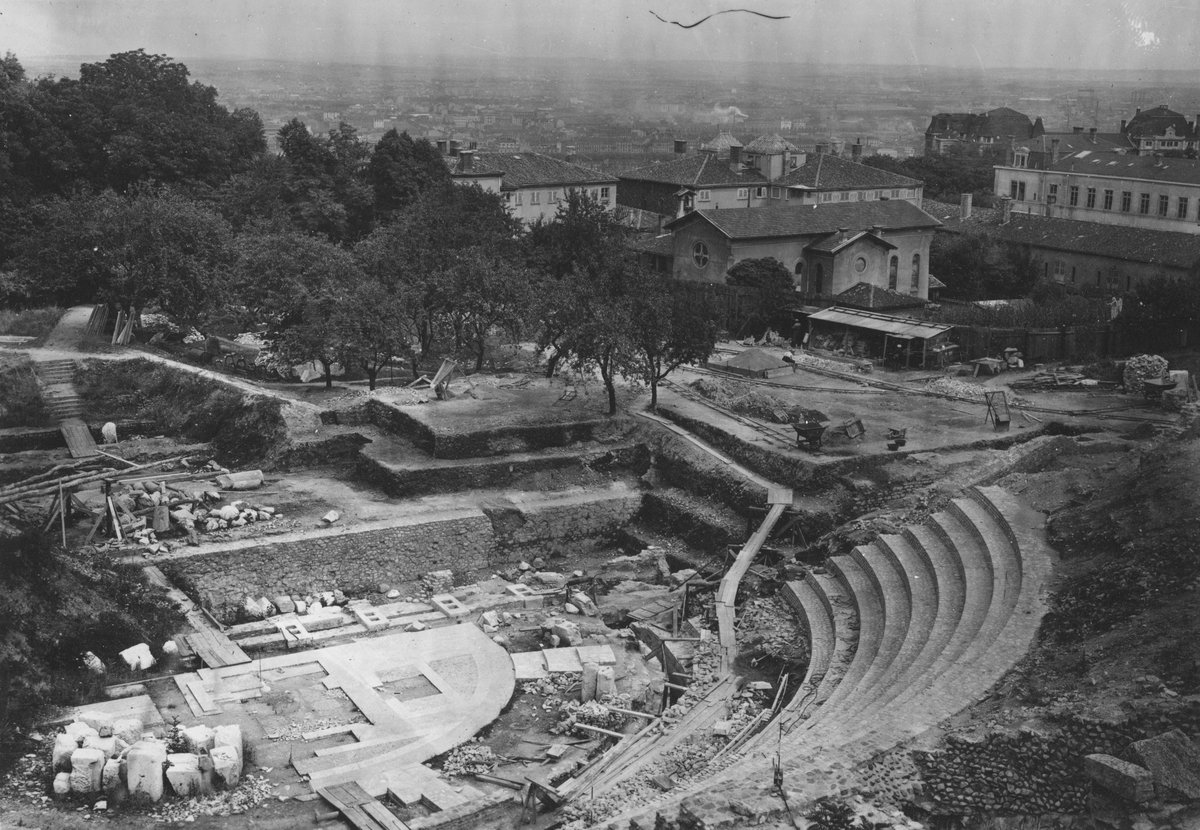
Lyon, founded as Lugdunum in 43 BCE, served as the capital of Roman Gaul. The archives preserve invaluable archaeological reports and documents related to Roman sites such as the Theatre of Fourvière and the Odeon. Medieval holdings reveal Lyon’s significance as a religious center, including records from the Council of Lyon and ecclesiastical correspondence (French Moments).
Revolution, Industry, and Modernization
The archives document the city’s turbulent experience during the French Revolution, with revolutionary decrees and trial records providing insight into the siege of Lyon. The 19th century brought industrialization, especially in textiles and engineering, which is reflected in factory archives and urban development plans, illustrating Lyon’s growth into a modern metropolis (World City History).
The Archives as a Cultural and Research Resource
Collections Overview
The archives house approximately 45 linear kilometers of documents, spanning from 861 AD to the present. Key holdings include:
- Civil and Parish Registers Essential for genealogical research.
- Notarial Records Wills, contracts, and property documents.
- Administrative and Judicial Records Minutes, decrees, and court proceedings.
- Maps and Urban Plans Tracing Lyon’s urban and demographic development.
- Private Collections Family, business, and association archives.
- Ecclesiastical Documents Church records and religious correspondence.
- Iconographic and Audiovisual Materials Photographs, posters, and videos.
Many of these are digitized and available online, significantly expanding access for researchers worldwide (archives.rhone.fr).
Preservation and Accessibility
The archives’ modern facility features advanced climate control, conservation labs, and digital catalogues. The institution prioritizes both preserving fragile materials and making them accessible to the public, either on-site or online (Alliance Française de Lyon).
Visiting the Archives: Practical Information
Location and Access
Main Address: 34 rue Général Mouton-Duvernet, 69003 Lyon (francearchives.gouv.fr)
Getting There:
- Metro Line B (Gare Part-Dieu) and Line D (Sans Souci)
- Tram T4 (Archives départementales stop)
- Bus Several lines serve the area
- By Foot 15 minutes from Lyon Part-Dieu train station
- Parking Public car parks nearby; public transport is recommended
Visiting Hours and Closures
- Tuesday, Wednesday, Friday 8:30 am – 5:00 pm
- Thursday 8:30 am – 6:00 pm
- Closed Mondays, weekends, and public holidays
- Annual Closures First half of August and the week between Christmas and New Year (francearchives.gouv.fr)
Always consult the official website for updates and exceptional closures.
Admission and Registration
- Admission Free for all visitors; no tickets required.
- Registration Required to access reading rooms. Bring a valid ID to receive a reader’s card (renewable annually) (portal.ehri-project.eu).
- Guided Tours Offered occasionally, especially during exhibitions or cultural events. Check the official website for upcoming programs.
Facilities and Accessibility
- Wheelchair Accessible Elevators, adapted restrooms, and accessible reading rooms (portal.ehri-project.eu)
- Reading Rooms Quiet, equipped with digital terminals and Wi-Fi
- Lockers and Cloakrooms Available for visitor use
- No On-site Café Numerous restaurants and cafés nearby in La Part-Dieu
Reproduction and Photography
- Personal Photography Permitted without flash, upon request; tripods available.
- Scanning and Microfilm Free scanner and microfilm reader/reproducer (bring a USB key or purchase one on-site).
- Digital Copies Existing digital reproductions can be sent electronically free of charge.
- For Publication Seek authorization from staff for reproductions intended for publication or exhibition (portal.ehri-project.eu).
Highlights from the Collections
The archives’ holdings include:
- Roman and Medieval Documents Archaeological reports, guild records, ecclesiastical correspondence.
- Revolutionary and Industrial Era Records Proclamations, trial records, factory archives, photographs.
- Modern Holdings Urban renewal plans, WWII resistance files, documents on Lyon’s neighborhoods.
- Special Collections Montluc Prison records, silk industry archives, and Holocaust-related material (with copies at the Mémorial de la Shoah and the US Holocaust Memorial Museum).
Exhibitions, Educational Programs, and Public Engagement
The archives regularly present thematic exhibitions, public lectures, and workshops on archival research, paleography, and Lyon’s history. These events cater to a broad audience, including students and international researchers. Check the official website for current exhibition schedules and educational offerings.
Nearby Attractions and Amenities
Enhance your visit by exploring nearby sites:
- Vieux Lyon (Old Lyon) UNESCO World Heritage, Renaissance architecture
- Basilica of Notre-Dame de Fourvière Iconic hilltop church with panoramic views
- Musée des Beaux-Arts de Lyon Major museum in the city center
- La Part-Dieu Shopping Centre One of Europe’s largest urban malls
- Opéra de Lyon, Rhône River Banks, and Local Cafés All within easy reach
For more cultural options, see the Lyon tourism portal.
FAQ: Your Questions Answered
Q: What are the opening hours? A: Tuesday, Wednesday, Friday: 8:30 am–5:00 pm; Thursday: 8:30 am–6:00 pm; closed Mondays, weekends, and public holidays.
Q: Is admission free? A: Yes, entry is free for all visitors.
Q: Is registration required? A: Yes, bring valid ID to register for access to the reading rooms.
Q: Are guided tours available? A: Occasionally, especially during exhibitions and events. Check the website for schedules.
Q: Is the building accessible? A: Fully accessible to visitors with reduced mobility.
Q: Are photographs allowed? A: Yes, personal photography is permitted upon request (no flash).
Q: Can I access documents online? A: Many records are digitized and available at archives.rhone.fr.
Q: Are there nearby amenities? A: Yes. The La Part-Dieu district offers restaurants, shopping, and public transport.
Visitor Tips and Recommendations
- Plan ahead Consult online inventories to identify relevant materials before visiting.
- Bring ID Required for registration.
- Pack light Only essential materials allowed in reading rooms; use provided lockers.
- Check event schedules For exhibitions, tours, and workshops.
- Use public transport Convenient and sustainable.
- Respect the environment Maintain silence in reading rooms.
Contact Information and Online Resources
- Address 34 rue Général Mouton-Duvernet, 69003 Lyon, France
- Phone +33 (0)4 72 35 35 00
- Email [email protected]
- Website archives.rhone.fr
- Social Media Twitter, Facebook, Blog, RSS (francearchives.gouv.fr)
For the most up-to-date information, always consult the official website.
Conclusion: Plan Your Visit
The Archives of the Département of the Rhône and the City of Lyon are indispensable for anyone interested in Lyon’s past or undertaking research in French history. With extensive collections, modern facilities, and a commitment to accessibility and public engagement, the archives are both a scholarly resource and a vibrant cultural destination. Make the most of your visit by preparing in advance, exploring digital resources, and integrating your archival research with the wealth of historical attractions in Lyon.
For additional insights and guided experiences, download the Audiala app and follow the archives’ social media channels.
References and Further Reading
- Discovering the Archives of Lyon: Hours, Tickets, and Historical Insights, 2025, World City History (World City History)
- Visiting the Archives of the Rhône in Lyon: Hours, Tickets & Visitor Guide, 2025, Rhône Département Official Site (Rhône Département Official Site)
- Visiting the Archives of Rhône and Lyon: Hours, Collections, and Historical Insights, 2025, Archives Rhône Official Website (Archives Rhône Official Website)
- Visiting the Archives of the Département of the Rhône in Lyon: Hours, Tickets, and Visitor Guide, 2025, France Archives Portal (francearchives.gouv.fr)
- A Historical and Cultural City, Alliance Française de Lyon (Alliance Française de Lyon)
- Lyon History, French Moments (French Moments)