
Table of Contents
- Avenida 9 de Julio: History and Urban Impact
- Visitor Information: Hours, Tickets, and Accessibility
- Guided Tours and Nearby Attractions
- Social, Cultural, and Artistic Life
- Modernization and Sustainable Urban Development
- Transportation and Accessibility
- Safety and Practical Tips
- Frequently Asked Questions (FAQ)
- Plan Your Visit
- Summary and Visitor Recommendations
- Sources
Avenida 9 de Julio: History and Urban Impact
Origins and Planning
The vision for Avenida 9 de Julio dates back to the late 19th century, conceived as a grand north-south axis unifying Buenos Aires. Named for Argentina’s Independence Day, its construction was delayed for decades by bureaucratic and financial challenges before breaking ground in 1937 (Wikipedia). The avenue was modeled on European boulevards, particularly the Champs-Élysées, but with a scale and ambition unique to Buenos Aires (BBC Travel).
Construction and Transformation
Building Avenida 9 de Julio required the demolition of historic neighborhoods and the displacement of thousands of residents. Despite resistance, the avenue was gradually completed—its central section inaugurated in the 1930s, with the full extension finished in 1980 (Discover Walks). Today, it remains the world’s widest avenue, with up to 14 lanes of traffic and landscaped medians.
Urban Significance
Avenida 9 de Julio reshaped Buenos Aires, facilitating connectivity but also dividing neighborhoods. It rapidly became a stage for public celebrations, protests, and cultural events—the Obelisco, erected in 1936, serving as its symbolic centerpiece (Buenos Aires Tourism). Architecturally, the avenue is lined with landmarks reflecting the city’s European heritage, including the French Embassy, Teatro Colón, and Constitución train station.
Visitor Information: Hours, Tickets, and Accessibility
Visiting Hours
- Avenida 9 de Julio Open 24/7 as a public space.
- Best Time to Visit Daylight hours (9 a.m.–6 p.m.) for safety, vibrant atmosphere, and optimal photography.
Tickets
- Avenida 9 de Julio & Obelisco No tickets required.
- Teatro Colón Guided tours require tickets (purchase online or at the venue; check Teatro Colón Official Website for current prices and schedules).
- Museo de la Ciudad Nearby, open Tuesday–Sunday, ticketed entry.
Accessibility
Avenida 9 de Julio is highly accessible:
- Wide sidewalks, ramps, and tactile paving for the visually impaired.
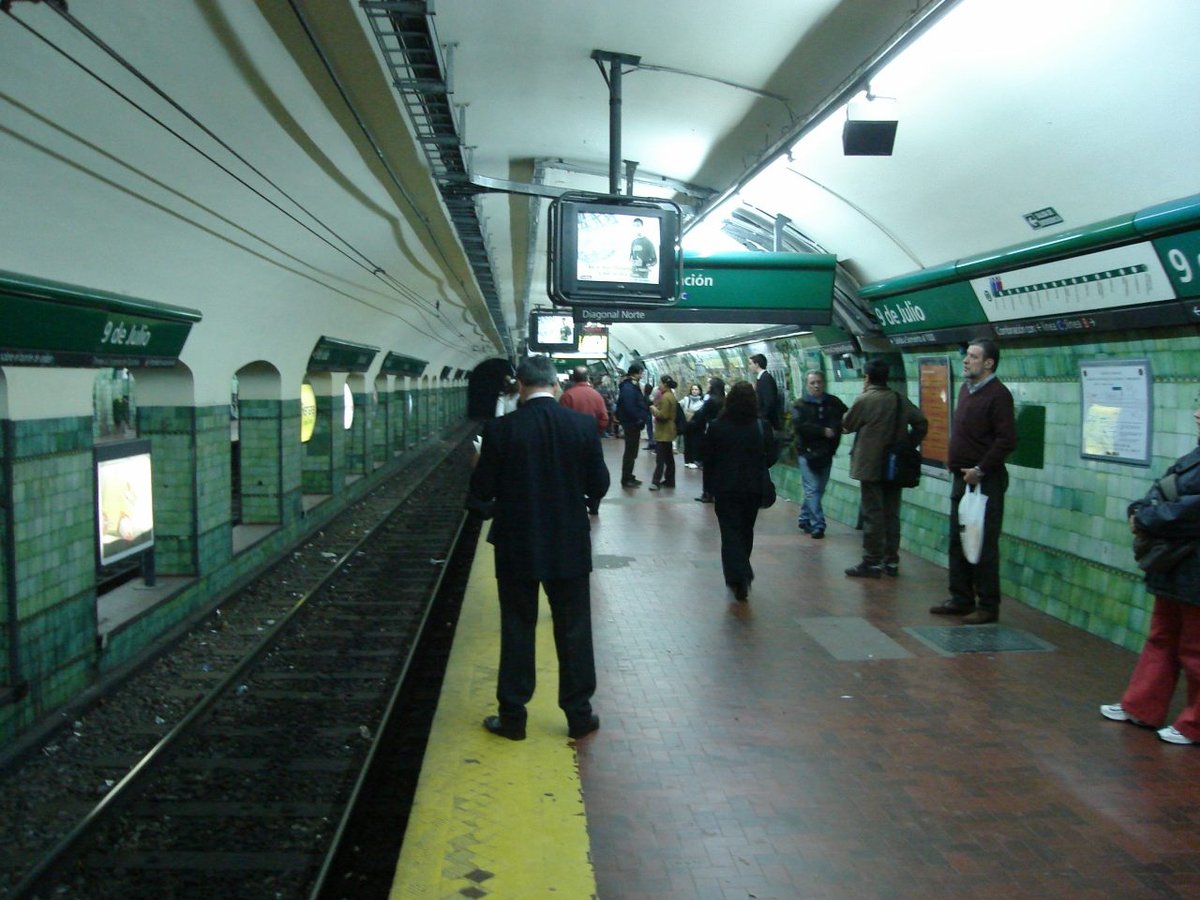
- Elevators and accessible entrances at key subway stations (e.g., Diagonal Norte).
- Metrobus BRT features elevated platforms for step-free boarding (ICLEI; ITDP).
Guided tours are available and can be tailored for visitors with mobility needs.
Guided Tours and Nearby Attractions
Tours
- Walking, bike, and bus tours are available and recommended for deeper historical and architectural insights. Book via official tourism websites or local operators (Buenos Aires Tourism).
- Teatro Colón Offers daily guided tours; advance booking is advised.
Top Nearby Attractions
- Obelisco Buenos Aires’ emblematic monument and meeting point.
- Teatro Colón World-renowned opera house.
- Plaza de la República Central plaza with panoramic views.
- Avenida Corrientes Theaters, bookstores, and vibrant nightlife.
- Café Tortoni Historic coffeehouse nearby.
Social, Cultural, and Artistic Life
Avenida 9 de Julio is a stage for city life:
- Festivals Tango BA Festival, La Noche de los Museos, Buenos Aires Marathon, Open House Buenos Aires (turismo.buenosaires.gob.ar).
- Public Gatherings Celebrations, protests, and spontaneous events, especially at the Obelisco and Plaza de la República (Dayhist).
- Art & Architecture Public sculptures, the Ministry of Health building with Eva Perón murals, and Belle Époque and modernist buildings (reporteasia.com).
Green medians and plazas offer respite and community gathering spaces.
Modernization and Sustainable Urban Development
Avenida 9 de Julio is central to Buenos Aires’ modernization:
- Sustainable Mobility Plan Focuses on pedestrianization, cycling infrastructure, and the Metrobus BRT (ITDP).
- Metrobus 9 de Julio Rapid, accessible bus service reducing travel times by 50% and serving over 200,000 daily riders (ICLEI).
- Green Initiatives Expanded pedestrian areas, tree-lined medians, and public art enhance urban life.
Transportation and Accessibility
Public Transit
- Metrobus 9 de Julio Bus Rapid Transit with dedicated lanes and accessible stations.
- Subte (Subway) Multiple lines (C, D, B) intersect or run parallel to the avenue.
- Ecobici Public bike-sharing with extensive, safe bike lanes.
Taxis & Rideshares
- Taxis Easily available, metered, and can be hailed or booked via apps.
- Rideshares Uber, Cabify, and others operate reliably.
Pedestrian Access
- Wide sidewalks and well-marked crossings make the avenue walkable, though allow extra time for crossing its broad expanse.
Accessibility
- Step-free access, tactile paving, and elevators at major stations.
- Accessible taxis available with advance booking.
Safety and Practical Tips
- Petty Crime Remain vigilant against pickpocketing, especially in crowds or on public transport (Secrets of Buenos Aires).
- Protests & Traffic Demonstrations are common but peaceful; check news for updates on closures.
- Nighttime Area is well-lit, but stick to populated areas after dark.
- Transport Use Metrobus or subway to avoid congestion.
- Currency Use official exchange houses or ATMs, not street changers.
Health & Emergencies
- Tap water is safe.
- Emergency number: 911.
Frequently Asked Questions (FAQ)
Q: What are the visiting hours for Avenida 9 de Julio? A: The avenue is open 24 hours, but daylight hours are safest and most lively.
Q: Are there any entrance fees? A: No fee for the avenue or Obelisco. Tickets required for attractions like Teatro Colón.
Q: How do I get to Avenida 9 de Julio? A: Use Metrobus, subway lines (C, D, B), taxis, or rideshares.
Q: Is the area accessible for people with disabilities? A: Yes, with accessible sidewalks, stations, and dedicated transit facilities.
Q: Are guided tours available? A: Yes, including walking, bike, and theater tours—book via official sites.
Q: Is the avenue safe at night? A: Generally yes, but exercise standard precautions and avoid isolated areas.
Plan Your Visit
Enhance your experience by:
- Booking guided tours for in-depth history and architecture.
- Checking event calendars for festivals and street closures.
- Downloading the Audiala app for curated tours, maps, and real-time updates.
- Exploring related articles on Buenos Aires historical sites and public transport.
Summary and Visitor Recommendations
Avenida 9 de Julio is a living testament to Buenos Aires’ history, architectural splendor, and vibrant social life. From its monumental scale and iconic landmarks to its role in sustainable urban development and cultural events, the avenue encapsulates the spirit of Argentina’s capital.
- Visit during daylight for safety and the best experience.
- Use public transport for convenience.
- Take advantage of guided tours for historical depth.
- Explore medians and plazas for relaxation and people-watching.
- Use tools like the Audiala app for real-time info and tips.
Plan your Buenos Aires adventure with confidence, and immerse yourself in the city’s living history along Avenida 9 de Julio.
Sources
- Wikipedia
- Guide to Argentina
- BBC Travel
- Buenos Aires Tourism Official Site
- Teatro Colón Official Website
- Discover Walks
- ICLEI
- ITDP
- Dayhist
- Secrets of Buenos Aires