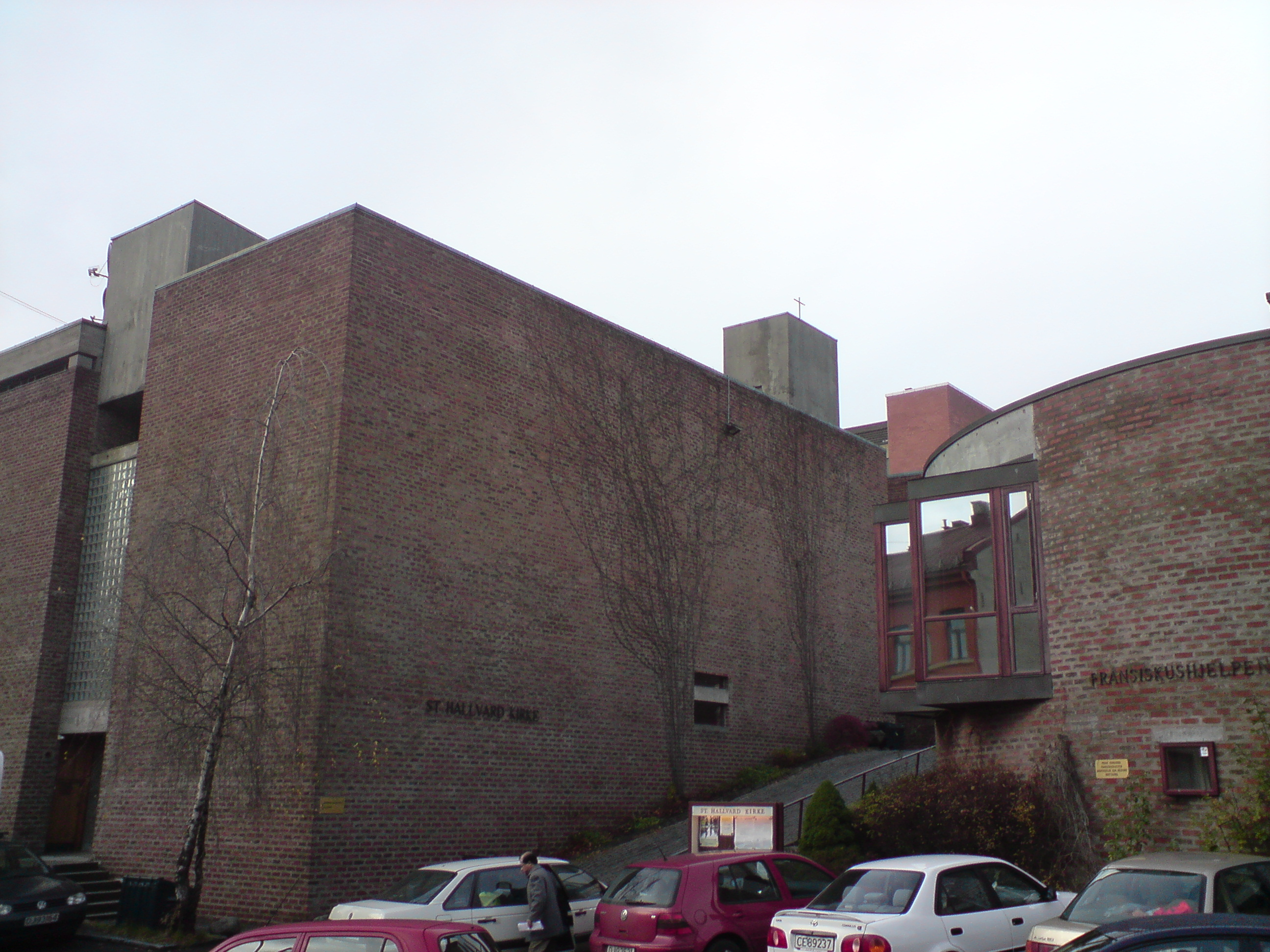
सेंट हाल्वार्ड का चर्च और मठ की योजना बनाएँ और सुनें Audiala के साथ।
जेब में ऑडियो गाइड, ब्राउज़र में यात्रा-योजना। ठीक उसी तरह बना है जैसे आप असल में घूमते हैं।
परिचय
ओस्लो के ऐतिहासिक एनरहाउगन जिले में स्थित, सेंट. हॉलवर्ड का चर्च और मठ नॉर्वे की कैथोलिक विरासत का एक प्रतिष्ठित प्रतीक है। मध्ययुगीन जड़ों को प्रशंसित आधुनिकतावादी वास्तुकला के साथ जोड़ते हुए, यह स्थल ओस्लो के सबसे बड़े रोमन कैथोलिक पैरिश के लिए एक जीवंत केंद्र के रूप में कार्य करता है, जो 140 से अधिक राष्ट्रीयताओं के उपासकों का स्वागत करता है। ओस्लो के संरक्षक संत, सेंट. हॉलवर्ड के नाम पर, चर्च सदियों से चली आ रही आस्था, सांस्कृतिक विविधता और वास्तुशिल्प नवाचार का प्रमाण है। यह व्यापक गाइड इसके इतिहास, डिजाइन और सांस्कृतिक महत्व में विस्तृत जानकारी प्रदान करता है, साथ ही आगंतुकों के लिए घंटे, पहुंच और आस-पास के आकर्षणों सहित व्यावहारिक जानकारी भी प्रदान करता है।
सेंट. हॉलवर्ड की विरासत
सेंट. हॉलवर्ड, ओस्लो के संरक्षक संत, 12वीं सदी की शुरुआत में एक निर्दोष महिला का बचाव करते हुए शहीद हुए एक रईस थे। न्याय और करुणा की उनकी अटूट भावना ने उन्हें संतत्व और शहर के कोट ऑफ आर्म्स और पूजा संबंधी समारोहों में शाश्वत स्मृति दिलाई (सेंट. हॉलवर्ड पैरिश ब्रोशर, 2019)।
मध्ययुगीन पूर्ववर्ती: सेंट. हॉलवर्ड कैथेड्रल
स्थल की आध्यात्मिक वंशावली मूल सेंट. हॉलवर्ड कैथेड्रल से जुड़ी है, जो 12वीं सदी में निर्मित ओस्लो का पहला कैथेड्रल था। यह 17वीं सदी में शहर के स्थानांतरित होने तक मध्ययुगीन ओस्लो का धार्मिक और प्रशासनिक केंद्र था। आज, कैथेड्रल के ज्वलंत अवशेष ऐतिहासिक परिदृश्य का एक अभिन्न अंग हैं, जो ओस्लो के मध्ययुगीन अतीत से एक सीधा संबंध प्रदान करते हैं (यूरोप के लिए गाइड; तीन चर्च, एक इतिहास)।
सुधार के बाद कैथोलिक धर्म और आधुनिक चर्च
प्रोटेस्टेंट सुधार के बाद, नॉर्वे में कैथोलिक धर्म 19वीं और 20वीं शताब्दी तक दबा दिया गया था, जब धार्मिक स्वतंत्रता और आप्रवासन ने कैथोलिक समुदाय को पुनर्जीवित किया। पूर्वी ओस्लो में एक नए चर्च की आवश्यकता 1966 में सेंट. हॉलवर्ड चर्च के अभिषेक में परिणत हुई, जिसे तेजी से बढ़ते और विविध पैरिश की सेवा के लिए डिज़ाइन किया गया था (विकिपीडिया)।
वास्तुशिल्प हाइलाइट्स
सेंट. हॉलवर्ड का चर्च और मठ नॉर्वेजियन वास्तुकारों केजेल लुंड और निल्स स्लाट्टो द्वारा डिजाइन किया गया था, जो आधुनिकतावादी सिद्धांतों और पारंपरिक नॉर्वेजियन रूपों के एक बोल्ड संश्लेषण को दर्शाता है। यह परिसर तीन मुख्य खंडों से बना है: चर्च, मठ और पैरिश कार्यालय, जो एक गोलाकार नाव के चारों ओर एकीकृत हैं। कच्ची ईंट, कंक्रीट और कांच के परस्पर क्रिया से बाहरी हिस्से और शांत, प्रकाश से भरे पूजा स्थल के बीच गतिशील विपरीतताएँ बनती हैं (अर्केलो; निल्स स्लाट्टो - विकिपीडिया)।
चर्च की सबसे विशिष्ट विशेषता इसका उलटा गुंबद है, जो केंद्रीय नाव के ऊपर उतरता है - मानव जाति की ओर दिव्य करुणा की एक वास्तुशिल्प रूपक। धीरे-धीरे चढ़ता हुआ फर्श और सूक्ष्म रूप से बाहर की ओर ढलान वाली दीवारें दोनों ध्वनिकी और चढ़ाई के आध्यात्मिक प्रतीकवाद को बढ़ाती हैं। फ्रिंसिकन मूल्यों के अनुरूप आंतरिक भाग जानबूझकर सरल है, और इसमें 300-350 लोग बैठ सकते हैं, जिसमें चैपल में अतिरिक्त जगह भी शामिल है (नॉर्वे में चर्च)।
सेंट. हॉलवर्ड चर्च ने अपनी अभिनव डिजाइन और नॉर्वेजियन वास्तुकला में योगदान के लिए प्रतिष्ठित हौन फाउंडेशन पुरस्कार सहित प्रतिष्ठित पुरस्कार जीते हैं (निल्स स्लाट्टो - विकिपीडिया)।
पैरिश जीवन और समुदाय
चार दशकों से अधिक समय तक, सेंट. हॉलवर्ड का प्रशासन फ्रिंसिकन आदेश द्वारा किया जाता था, जिसका प्रभाव मठ के सरल रहने की जगह और समुदाय-केंद्रित सुविधाओं में परिलक्षित होता है। आज, मठ में पुजारी रहते हैं और फ्रान्सिस्कुशेलपेन, एक कैथोलिक धर्मार्थ संगठन सहित विभिन्न पैरिश गतिविधियों का समर्थन करता है (विकिपीडिया)।
यह पैरिश अपनी बहुसांस्कृतिक मंडली के लिए प्रसिद्ध है, जिसमें ओस्लो की विविध कैथोलिक आबादी की सेवा के लिए कई भाषाओं में मास मनाया जाता है। चर्च पूजा, धार्मिक शिक्षा, युवा कार्यक्रमों और अंतरसांस्कृतिक संवाद का केंद्र है, जो स्थानीय लोगों और नए लोगों दोनों का समर्थन करता है।
कलात्मक और पूजा संबंधी विशेषताएं
चर्च के कलात्मक कार्यक्रम की जड़ें सरलता और आध्यात्मिक गहराई में हैं। मुख्य विशेषताओं में शामिल हैं:
- वेदी के पीछे एक बीजान्टिन-शैली का क्रूस, जिसे ऐनी लिसे-क्नॉफ और छात्रों द्वारा चित्रित किया गया है, जो अस्सिसी के सैन डमियानो क्रॉस की गूंज है।
- पोलिश कलाकार क्रिस्तोफ़ पियोट्रोव्स्की द्वारा सेंट. हॉलवर्ड की कांस्य प्रतिमा।
- राघनिलड बुटेंसचोन द्वारा सेंट. फ्रांसिस की लकड़ी की मूर्ति।
- सेंट. एलिजाबेथ की बहनों से एक मैडोना प्रतिमा।
- हरमन बोंगाड द्वारा 15 क्रॉस स्टेशन।
- डच फ्रिंसिकन रेनॉल्ड रेट्स द्वारा कंक्रीट में बपतिस्मा संबंधी राहतें (सेंट. हॉलवर्ड पैरिश ब्रोशर, 2019)।
आगंतुक जानकारी
आगंतुक घंटे और टिकट
- चर्च: सोमवार-शुक्रवार, सुबह 9:00 बजे - शाम 6:00 बजे; सप्ताहांत, सुबह 10:00 बजे - शाम 4:00 बजे तक खुला रहता है। प्रमुख पूजा आयोजनों के दौरान, कुछ क्षेत्र आरक्षित किए जा सकते हैं।
- खंडहर (पुरातत्व पार्क): मई-सितंबर, सुबह 8:00 बजे - रात 8:00 बजे; अक्टूबर-अप्रैल, सुबह 9:00 बजे - शाम 5:00 बजे तक खुला रहता है।
- प्रवेश: प्रवेश निःशुल्क है; दान की सराहना की जाती है।
पहुंच
सेंट. हॉलवर्ड का चर्च व्हीलचेयर से सुलभ है, जिसमें रैंप और सुलभ शौचालय हैं। खंडहरों के आसपास कुछ असमान भूभाग मौजूद है, इसलिए सावधानी बरतने की सलाह दी जाती है। विशेष सहायता के लिए, अग्रिम रूप से पैरिश कार्यालय से संपर्क करें।
गाइडेड टूर और कार्यक्रम
चर्च के वास्तुकला, इतिहास और कला की गहन खोज प्रदान करने वाले गाइडेड टूर नियुक्तियों द्वारा उपलब्ध हैं। टूर नॉर्वेजियन और अंग्रेजी में पेश किए जाते हैं; समूह बुकिंग का स्वागत है, खासकर गर्मियों के दौरान। चर्च साल भर संगीत कार्यक्रम, सांस्कृतिक कार्यक्रम और धार्मिक त्योहारों की भी मेजबानी करता है (एटलस ऑब्स्कुरा)।
वहाँ कैसे पहुँचें
- सार्वजनिक परिवहन: "सेंट. हल्वर्ड्स प्लास" के लिए ट्राम लाइन 18 और 19; "ओस्लो अस्पताल" के लिए बस लाइन 32 और 34।
- पैदल: ऐतिहासिक जिलों से ओस्लो सेंट्रल स्टेशन से लगभग 20 मिनट की पैदल दूरी पर।
- साइकिल: ओस्लो सिटी बाइक स्टेशन पास में स्थित हैं।
आस-पास के आकर्षण
- सेंट. हॉलवर्ड कैथेड्रल के खंडहर: चर्च से थोड़ी पैदल दूरी पर, ये मध्ययुगीन अवशेष ऐतिहासिक संदर्भ और शांत वातावरण प्रदान करते हैं।
- ओस्लो लाडेगार्ड: पूर्व बिशप का निवास, अब एक संग्रहालय।
- पवित्र क्रॉस चर्च के खंडहर: आगे मध्ययुगीन अन्वेषण के लिए पास का स्थल।
- अकरशस किला: ट्राम द्वारा पहुँचा जा सकता है, जो मनोरम दृश्य और संग्रहालय प्रदान करता है।
फोटोग्राफी दिशानिर्देश
सेवा के घंटों के दौरान फोटोग्राफी की अनुमति है; फ्लैश से बचें और उपासकों के प्रति सचेत रहें। कुछ क्षेत्रों, विशेष रूप से मठ के भीतर, प्रतिबंध हो सकते हैं।
अक्सर पूछे जाने वाले प्रश्न (FAQs)
आगंतुक घंटे क्या हैं? चर्च: सोम-शुक्र 9:00-18:00, सप्ताहांत 10:00-16:00। खंडहर: गर्मी 8:00-20:00; सर्दी 9:00-17:00।
क्या प्रवेश शुल्क है? नहीं; प्रवेश निःशुल्क है। दान का स्वागत है।
क्या गाइडेड टूर उपलब्ध हैं? हाँ, पैरिश कार्यालय या वेबसाइट के माध्यम से नियुक्तियों द्वारा।
क्या चर्च विकलांग आगंतुकों के लिए सुलभ है? हाँ, रैंप और सुविधाओं के साथ; खंडहरों के आसपास सावधानी बरतने की आवश्यकता है।
क्या मैं तस्वीरें ले सकता हूँ? हाँ, सेवाओं के दौरान और प्रतिबंधित क्षेत्रों को छोड़कर।
क्या शौचालय की सुविधाएँ हैं? चर्च में सुलभ शौचालय उपलब्ध हैं; गामलेबायेन में पास में सार्वजनिक सुविधाएं हैं।
अतिरिक्त संसाधन
- सेंट. हॉलवर्ड पैरिश वेबसाइट
- विजिट ओस्लो: सेंट. हॉलवर्ड चर्च
- एटलस ऑब्स्कुरा: सेंट. हॉलवर्ड चर्च और मठ
- तीन चर्च, एक इतिहास
St. Hallvard’s Church Oslo: Visiting Hours, Tickets, History, and Cultural Significance
The Role of St. Hallvard’s Church and Monastery in Oslo’s Catholic Community
St. Hallvard’s Church and Monastery stands as the spiritual heart of Norway’s largest Roman Catholic parish, serving a diverse and vibrant congregation in Oslo. The church is named after St. Hallvard, the patron saint and guardian of Oslo, whose legacy is deeply woven into the city’s religious and cultural identity. As the principal Catholic church in a predominantly Lutheran country, St. Hallvard’s plays a crucial role in providing a place of worship, community, and cultural continuity for Catholics from Norway and around the world (Atlas Obscura).
The church’s congregation reflects Oslo’s multicultural character, with services often held in multiple languages to accommodate the city’s international Catholic population. This inclusivity fosters a sense of belonging and spiritual support for immigrants, expatriates, and locals alike, making St. Hallvard’s not only a religious center but also a hub for cultural exchange and integration.
Symbolism and Religious Significance of the Architecture
St. Hallvard’s Church is renowned for its distinctive Brutalist architecture, designed by the acclaimed Norwegian architects Lund & Slaatto and completed in 1966. The building’s exterior, a blend of burnt brick and concrete with sharp edges and minimal windows, may appear austere, but its design is rich in religious symbolism (Atlas Obscura).
The most striking feature is the inverted dome that swoops down over the central sacred space. Unlike traditional church domes that rise toward the heavens, this dome descends, symbolizing God bending down toward His creation. This architectural choice reflects a theological emphasis on divine immanence—God’s closeness and compassion for humanity—rather than transcendence alone. The downward curve creates an intimate, contemplative atmosphere, inviting worshippers to experience a sense of divine presence enveloping the congregation.
The church’s minimalist design, with its subdued lighting and lack of ornate decoration, encourages focus on the liturgy and spiritual reflection. The use of natural materials and the interplay of light and shadow within the sanctuary further enhance the contemplative environment, aligning with modern Catholic liturgical principles that prioritize communal worship and active participation.
St. Hallvard: Oslo’s Patron Saint and His Enduring Legacy
St. Hallvard Vebjørnsson, after whom the church is named, is a central figure in Oslo’s spiritual and cultural history. According to legend, Hallvard was a nobleman who was martyred in the 11th century while defending an innocent woman accused of theft. His courage and sense of justice made him a symbol of protection and mercy, and he was later canonized as the patron saint of Oslo.
The church’s dedication to St. Hallvard serves as a living tribute to these values, inspiring the community to uphold principles of justice, compassion, and inclusivity. The story of St. Hallvard is commemorated in the church’s liturgical calendar and is often referenced in sermons and community events, reinforcing his role as a moral exemplar for both Catholics and the wider Oslo community.
Cultural Importance in the Context of Oslo’s Urban Landscape
St. Hallvard’s Church and Monastery occupies a unique position within Oslo’s urban fabric. Located on Enerhaugen hill, the church stands on the site where the last of the neighborhood’s wooden working-class houses once stood. These historic houses were relocated to the Norwegian Folk Museum, and the church now sits amidst five large residential high-rises, somewhat hidden from the city’s main thoroughfares (Atlas Obscura).
This setting underscores the church’s role as a sanctuary and gathering place for the local community, particularly for those living in the surrounding residential blocks. Despite its somewhat secluded location, St. Hallvard’s remains a focal point for religious and cultural activities, hosting regular Masses, community events, and charitable initiatives.
The church’s presence in Enerhaugen also symbolizes the continuity of faith and tradition in a rapidly changing urban environment. As Oslo has modernized and diversified, St. Hallvard’s has adapted to serve the evolving needs of its parishioners, offering support and outreach to marginalized groups, recent immigrants, and those seeking spiritual guidance.
Liturgical Life and Community Activities
St. Hallvard’s is renowned for its active liturgical life, with Sunday Masses drawing large congregations from across Oslo and beyond. The church offers services in Norwegian and other languages, reflecting the diversity of its parishioners. Major Catholic feast days, such as Easter, Christmas, and the feast of St. Hallvard, are celebrated with special liturgies, processions, and community gatherings.
Beyond worship, the church and monastery serve as centers for religious education, catechism classes, and youth activities. The parish organizes cultural events, concerts, and lectures that promote interfaith dialogue and foster a sense of community among Oslo’s Catholics and the broader public.
The monastery, adjacent to the church, is home to a community of clergy and religious who provide pastoral care, spiritual direction, and support for the parish’s various ministries. Their presence ensures that the church remains a place of prayer, hospitality, and service throughout the week.
Intercultural and Interfaith Engagement
In a city as diverse as Oslo, St. Hallvard’s Church and Monastery plays a vital role in promoting intercultural understanding and interfaith cooperation. The parish regularly collaborates with other Christian denominations and faith communities on social justice initiatives, charitable projects, and educational programs.
These efforts are particularly important in Norway, where Catholics constitute a minority. By fostering dialogue and mutual respect, St. Hallvard’s helps bridge cultural and religious divides, contributing to Oslo’s reputation as an inclusive and tolerant city.
Pilgrimage and Heritage Value
While not as widely visited as some of Oslo’s more prominent tourist attractions, St. Hallvard’s Church and Monastery holds significant heritage value for both locals and visitors interested in religious history and architecture. The church’s unique design and its association with Oslo’s patron saint make it a meaningful destination for pilgrims, architecture enthusiasts, and those seeking a deeper understanding of Norway’s Catholic heritage.
The church’s relatively hidden location adds to its appeal as a place of quiet reflection and discovery, away from the city’s busier tourist sites. Visitors are encouraged to attend Mass or simply spend time in the sanctuary, experiencing firsthand the spiritual and cultural richness that St. Hallvard’s offers (Atlas Obscura).
Visitor Information: Visiting Hours, Tickets, and Travel Tips
Visiting Hours
St. Hallvard’s Church is generally open to visitors Monday through Saturday from 9:00 AM to 6:00 PM, and on Sundays from 7:30 AM to 8:00 PM to accommodate Mass times and other liturgical events. It is advisable to check the official parish website or contact the church directly for any changes due to special events or holidays.
Tickets and Entrance Fee
Admission to St. Hallvard’s Church and Monastery is free of charge. Donations are welcome and support the maintenance of the church and its community activities.
Guided Tours
Guided tours may be available upon request, offering visitors detailed insights into the church’s architecture, history, and religious significance. Visitors are encouraged to contact the parish office ahead of their visit to arrange a tour.
Photography
Photography is permitted in most areas of the church outside of active liturgical services. Visitors should be respectful and avoid using flash during services. Some areas, especially within the monastery, may have restrictions.
Getting There
The church is accessible via public transport. The easiest route is taking bus 37 to Politihuset, followed by a short uphill walk. Due to its location somewhat removed from Oslo’s main tourist routes, the church offers a peaceful atmosphere for contemplation.
Additional Visitor Resources
For more information, visitors can consult the official St. Hallvard’s Church website and the Oslo tourism portal. Maps and virtual tours may also be available online for those planning their visit in advance.
FAQ: Frequently Asked Questions
Q: What are St. Hallvard’s Church visiting hours? A: Typically Monday to Saturday from 9:00 AM to 6:00 PM, and Sundays from 7:30 AM to 8:00 PM. Check ahead for variations.
Q: Is there an entrance fee or tickets required? A: No entrance fee is required; the church welcomes donations.
Q: Are guided tours available? A: Yes, guided tours can be arranged through the parish office upon request.
Q: What is the best time to visit? A: Weekdays during the morning or early afternoon offer a quieter experience; attending a Mass can provide a meaningful cultural experience.
Q: Is photography allowed inside the church? A: Photography is allowed outside of services, but visitors should be respectful and avoid flash.
Conclusion
St. Hallvard’s Church and Monastery is not only a place of worship but also a vibrant cultural and historical landmark in Oslo. From its striking architecture and rich religious symbolism to its active community life and role in fostering intercultural dialogue, the church offers a unique experience for both locals and visitors. Whether you are interested in history, architecture, spirituality, or Oslo’s multicultural fabric, a visit to St. Hallvard’s is a rewarding journey.
Plan your visit by checking the latest visiting hours and consider joining a guided tour to fully appreciate this hidden gem of Oslo.
Additional Resources and Links
- Official St. Hallvard’s Church Website (for current schedules and visitor information)
- Visit Oslo: St. Hallvard’s Church
- Atlas Obscura: St. Hallvard’s Church and Monastery
Call to Action:
Discover more about Oslo’s historical sites and cultural treasures by downloading the Audiala app for guided audio tours and updates. Follow us on social media for the latest articles and visitor tips about St. Hallvard’s Church and other notable Oslo landmarks.
Visiting St. Hallvard’s Church and Monastery: Hours, Tickets, and Oslo Historical Sites Guide
Location and Setting
St. Hallvard’s Church and Monastery is situated in the historic heart of Oslo, Norway, in the Gamlebyen (Old Town) district. The site is easily accessible via public transportation, with nearby tram and bus stops connecting visitors to the rest of the city. The church and monastery complex is nestled among remnants of medieval Oslo, offering a tranquil atmosphere that contrasts with the urban bustle of modern Oslo. The area is pedestrian-friendly, with clear signage and pathways leading to the site, making it suitable for visitors of all ages and mobility levels.
Historical Context and Significance
St. Hallvard’s Church, also known as St. Hallvard’s Cathedral, was Oslo’s first cathedral and served as the city’s religious and administrative center for nearly five centuries. Construction began in the early 12th century under King Sigurd Magnusson the Crusader, and the church was dedicated to Oslo’s patron saint, Hallvard Vebjørnsson (Three Churches, One History). The cathedral played a pivotal role in the spiritual and civic life of medieval Oslo, hosting coronations, royal ceremonies, and serving as the bishop’s seat.
The church’s prominence waned after the city was relocated westward in 1624 by King Christian IV, following repeated fires and sieges. The cathedral gradually fell into ruin, with only its foundations remaining visible today. The site is now an evocative archaeological park, offering a tangible connection to Oslo’s medieval past.
St. Hallvard’s Church Visiting Hours and Tickets
The archaeological park at St. Hallvard’s Church and Monastery is open year-round, with visiting hours from 8:00 AM to 8:00 PM during the summer months (May–September) and from 9:00 AM to 5:00 PM during the winter months (October–April). There is no admission fee to visit the ruins, making it an accessible and budget-friendly attraction. Tickets or reservations are not required for self-guided visits.
Visitor Experience: What to Expect
Exploring the Ruins
Visitors can explore the exposed foundations and remnants of the original cathedral at their own pace. Informational plaques in both Norwegian and English provide historical context, architectural details, and insights into the daily life of the medieval clergy and townspeople. The layout of the ruins is clearly marked, with pathways guiding visitors through the nave, choir, and surrounding monastic buildings.
The archaeological park is well-maintained, with benches and shaded areas for rest. The peaceful setting, surrounded by greenery and mature trees, invites reflection and offers a unique perspective on Oslo’s layered history.

Guided Tours and Educational Programs
Guided tours are available during the summer months, led by knowledgeable local historians and archaeologists. These tours delve into the site’s history, the significance of St. Hallvard as Oslo’s patron saint, and the broader context of medieval Norwegian society. Tours typically last 45–60 minutes and are available in both Norwegian and English. Group tours can be arranged in advance for schools, universities, and special interest groups.
Educational programs for children and families are occasionally offered, featuring interactive activities such as medieval crafts, storytelling, and archaeological workshops. These programs engage younger visitors and foster an appreciation for Oslo’s heritage.
Accessibility and Facilities
The site is largely accessible to visitors with mobility challenges, featuring paved paths and ramps where necessary. However, some uneven terrain around the ruins may require caution. There are no on-site restrooms, but public facilities are available nearby in the Gamlebyen district.
Photography and Visitor Etiquette
Photography is permitted throughout the site, and visitors are encouraged to capture the atmospheric ruins and surrounding landscape. As the site is of significant historical and cultural importance, visitors are asked to respect the ruins by not climbing on the stonework or disturbing archaeological features.
Quiet reflection is encouraged, as the site is both a historical monument and a place of remembrance. Occasional religious or commemorative ceremonies may take place, during which certain areas may be temporarily restricted.
Nearby Attractions and Complementary Experiences
St. Hallvard’s Church and Monastery is located within walking distance of several other notable historical sites in Oslo’s Old Town, including:
- Oslo Ladegård: The former bishop’s residence, now a museum and cultural venue, offering exhibitions on Oslo’s medieval history.
- Ruins of the Holy Cross Church: Another medieval church site, providing further insight into the city’s ecclesiastical heritage.
- Akershus Fortress: A short tram ride away, this imposing medieval fortress offers panoramic views of Oslo and houses several museums.
Combining a visit to St. Hallvard’s with these nearby Oslo historical sites provides a comprehensive understanding of Oslo’s transformation from a medieval town to a modern capital.
Practical Tips for Visitors
Best Time to Visit
The best time to visit St. Hallvard’s Church and Monastery is from late spring to early autumn (May–September), when the weather is mild and the grounds are lush. Guided tours and educational programs are most frequently offered during the summer months.
Getting There
- Public Transport: Take tram lines 18 or 19 to the “St. Halvards plass” stop, or bus lines 32 and 34 to “Oslo Hospital.” The site is a short walk from either stop.
- On Foot: The ruins are approximately a 20-minute walk from Oslo Central Station, following well-marked pedestrian routes through the city’s historic districts.
- By Bicycle: Oslo’s city bike scheme offers convenient access, with docking stations near the site.
Visitor Services
While there is no dedicated visitor center at the ruins, the nearby Oslo Ladegård provides information, maps, and occasional exhibitions related to St. Hallvard’s and medieval Oslo. Souvenirs, books, and refreshments can be found in the Gamlebyen neighborhood.
Safety and Preservation
Visitors should be mindful of uneven surfaces and weather conditions, especially in winter when paths may be icy. Dogs are permitted on leashes, but owners are asked to clean up after their pets.
To help preserve the site for future generations, visitors are encouraged to stay on marked paths and avoid touching or removing any stones or artifacts.
Cultural Insights and Local Traditions
St. Hallvard remains a central figure in Oslo’s identity. His image appears on the city’s seal and coat of arms, and his feast day (May 15) is marked by local celebrations and commemorative events. The ruins of his cathedral serve as a focal point for these traditions, with annual ceremonies honoring his legacy and the city’s medieval heritage.
The site also hosts occasional concerts, art installations, and cultural events, blending Oslo’s ancient past with its vibrant contemporary culture. These events are typically advertised through local tourism websites and community boards.
Frequently Asked Questions (FAQ)
What are St. Hallvard’s Church visiting hours? The site is open year-round. Hours are 8:00 AM to 8:00 PM from May to September and 9:00 AM to 5:00 PM from October to April.
Is there an admission fee or ticket required? No, admission is free and no tickets or reservations are required.
Are guided tours available? Yes, guided tours are offered during summer months in both Norwegian and English. Group tours can be arranged in advance.
Is the site accessible for visitors with mobility challenges? Largely yes, with paved paths and ramps, though some uneven terrain requires caution.
Are there restroom facilities onsite? No, but public restrooms are available nearby in the Gamlebyen district.
Can I take photographs at St. Hallvard’s Church? Yes, photography is permitted, but climbing on ruins or disturbing archaeological features is prohibited.
Additional Resources
For more information on visiting St. Hallvard’s Church and Monastery, including up-to-date event listings and tour schedules, consult the official Oslo Cathedral website. Local tourism offices and the Oslo Ladegård museum also provide maps and visitor guides.
Call to Action
Plan your visit to St. Hallvard’s Church and Monastery today to explore one of Oslo’s most significant historical sites. Download the Audiala app for audio guides and interactive maps, check out our related posts on Oslo historical sites, and follow us on social media for the latest updates and cultural events.
ऐप में पूरी कहानी सुनें
पूरा सेंट हाल्वार्ड का चर्च और मठ,
बखूबी सुनाया गया।
96 देशों के 1,100+ शहरों के लिए ऑडियो गाइड। इतिहास, कहानियाँ और स्थानीय जानकारी — ऑफलाइन उपलब्ध।

सत्यापित, और दिखाया गया।
Audiala संपादकीय टीम द्वारा ऐतिहासिक अभिलेखों, स्थापत्य अभिलेखागारों और स्थानीय विशेषज्ञता से शोधित और लिखित।
Hallvard’s Church and Monastery, 2019, St. Hallvard Parish Brochure
Hallvard's Church and Monastery - Wikipedia
Hallvard Church and Monastery - Archello
Hallvard's Kirke
Hallvard’s Church and Monastery
Hallvard’s Church
अंतिम समीक्षा:
Wikidata, विकिपीडिया और आधिकारिक स्रोतों से शोधित · तथ्य-जाँच पूर्ण · हम अपनी गाइड कैसे बनाते हैं →


