
Origines architecturales et conception
L'Hôtel de Ville de Manchester est largement considéré comme l'un des plus beaux exemples d'architecture néo-gothique victorienne du Royaume-Uni. Le projet lauréat d'Alfred Waterhouse, choisi lors d'un concours qui a rassemblé 137 propositions, allie grandeur et fonctionnalité. Il a été achevé en 1877 pour un coût de près d'un million de livres sterling (plus de 100 millions de livres sterling aujourd'hui) (inostalgia.co.uk; manchestermagazine.co.uk).
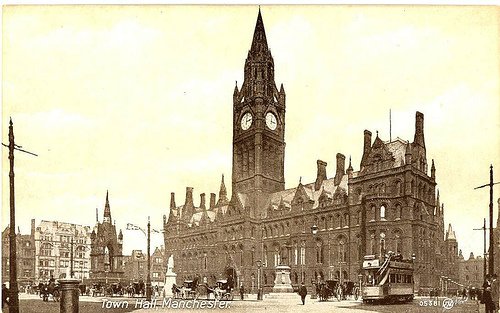
L'extérieur du bâtiment, construit en grès de Spinkwell, présente des sculptures ornementales, des gargouilles et une tour horloge de 85 mètres. La tour horloge centrale, abritant la cloche Great Abel, domine l'horizon de Manchester et reste un point focal pour la vie civique et la photographie (wikipedia.org). Les points forts de l'intérieur comprennent :
- Le Great Hall Réputé pour ses plafonds voûtés, ses sols en mosaïque et ses douze peintures murales de Ford Madox Brown dépeignant des moments clés de l'histoire de Manchester (inostalgia.co.uk).
- Vitraux Conçus par Heaton, Butler & Bayne, mettant en vedette des motifs symboliques tels que l'abeille de Manchester, représentant l'esprit d'industrie et de communauté.
- Structure innovante L'utilisation précoce d'une ossature en acier a permis de créer de vastes espaces intérieurs, tandis que les systèmes de chauffage, de ventilation et de protection incendie avancés reflétaient les progrès technologiques de l'époque (manchestermagazine.co.uk).
Importance historique et rôle civique
Depuis son inauguration, l'Hôtel de Ville de Manchester a servi de cœur administratif de la ville, abritant le Conseil Municipal et accueillant d'innombrables événements civiques, visites royales et célébrations publiques (Manchester News). Les peintures murales du Great Hall retracent l'évolution de Manchester, de poste romaine à titan industriel, soulignant le rôle transformateur de la ville dans l'histoire britannique et mondiale.
Le statut du bâtiment, classé Grade I, souligne son importance nationale, tant sur le plan architectural qu'historique (Secret Manchester). Ses espaces civiques ont été le théâtre d'événements politiques majeurs et ont servi de plateforme pour la réforme sociale, le militantisme et les rassemblements communautaires.
Efforts de restauration et de préservation
Au début du 21e siècle, l'Hôtel de Ville de Manchester nécessitait une restauration urgente en raison de problèmes structurels et de sécurité. Le projet "Our Town Hall", lancé en 2018, représente un investissement de 429,8 millions de livres sterling pour assurer l'avenir du bâtiment (Business Live). La restauration comprend :
- Réparations structurelles Plus de 500 fenêtres en bois restaurées, réparation de la pierre et de la toiture, et remplacement des infrastructures obsolètes.
- Modernisation Mise à niveau des systèmes de chauffage, électriques et de sécurité incendie.
- Amélioration de l'accessibilité Ajout de rampes, d'ascenseurs et de toilettes accessibles.
- Engagement public Création d'une nouvelle expérience visiteur gratuite pour interpréter l'histoire et l'importance du bâtiment (Secret Manchester; manchester.gov.uk).
Le projet a également permis d'agrandir Albert Square, en le piétonnisant et en restaurant le monument commémoratif d'Albert, classé Grade II, améliorant ainsi l'espace civique pour tous.
Impact social et culturel
L'Hôtel de Ville de Manchester a longtemps été un symbole de la résilience et de l'esprit communautaire de la ville. Le projet de restauration a été un catalyseur pour le développement des compétences locales, 45 % de la main-d'œuvre étant issue de la région du Grand Manchester et des centaines de nouveaux emplois créés (I Love Manchester). Les collections de l'Hôtel de Ville—sculptures, peintures, cadeaux civiques et artefacts—reflètent les liens mondiaux de Manchester et ses diverses communautés (Manchester City Council).
Informations essentielles pour les visiteurs
Horaires de visite et billets
- Statut actuel L'Hôtel de Ville de Manchester reste fermé pour restauration, avec une réouverture prévue pour l'été 2026.
- Horaires prévus Lundi–Samedi, 10h00–17h00 (à confirmer).
- Billets L'accès aux espaces publics et à la nouvelle expérience visiteur sera gratuit. Certains événements spéciaux ou visites guidées peuvent nécessiter une réservation à l'avance et un droit d'entrée modique (manchester.gov.uk).
Accès et visualisation actuels
Bien que l'accès intérieur soit actuellement indisponible, les visiteurs peuvent admirer l'extérieur de l'Hôtel de Ville depuis Albert Square. Au fur et à mesure que la restauration progresse, une plus grande partie de la place rouvrira, offrant d'excellentes opportunités de photos (Manchester Pocket Guide). Les visites guidées à pied incluent souvent l'Hôtel de Ville comme point culminant, fournissant un contexte historique et architectural.
Accessibilité
Lors de sa réouverture, l'Hôtel de Ville de Manchester offrira un accès sans marche, des ascenseurs, des toilettes accessibles et des services dédiés aux visiteurs handicapés. Pour des besoins spécifiques, veuillez contacter l'équipe des services aux visiteurs à l'avance.
Services aux visiteurs et conseils pratiques
- Emplacement Albert Square, centre de Manchester—facilement accessible en tram (Metrolink), en bus ou à pied.
- Attractions à proximité Bibliothèque centrale de Manchester, bibliothèque John Rylands, hôtel Midland et le quartier animé de Northern Quarter (PlanetWare).
- Événements Albert Square accueille régulièrement des festivals, des marchés et des événements publics, offrant des raisons supplémentaires de visiter.
L'Hôtel de Ville de Manchester dans la culture populaire
La grandeur néo-gothique de l'Hôtel de Ville en a fait un lieu de tournage prisé, servant souvent de substitut au Palais de Westminster et à d'autres monuments historiques dans :
- Films Sherlock Holmes (2009, 2011), La Dame de fer (2011), Victor Frankenstein (2015), et plus encore (Study Abroad Foundation; Manchester Evening News).
- Télévision A Very English Scandal (2018), Peaky Blinders, et Last Tango in Halifax (Visit Manchester; Secret Manchester).
Son héritage cinématographique renforce son attrait pour les amateurs d'histoire et de cinéma.
Recommandations visuelles et médiatiques
- Opportunités de photos Albert Square et la tour horloge ; le Great Hall (lorsqu'il est accessible) ; escaliers ornés et vitraux.
- Visites virtuelles Une fois rouvertes, les sites officiels proposeront des visites virtuelles et des cartes interactives.
- Texte alternatif pour les images Utilisez des mots-clés tels que "horaires de visite Hôtel de Ville de Manchester", "architecture victorienne" et "peintures du Great Hall" pour améliorer le référencement.
Foire Aux Questions (FAQ)
Q : Quand l'Hôtel de Ville de Manchester rouvrira-t-il ? R : Le bâtiment devrait rouvrir à l'été 2026 après sa restauration (Business Live).
Q : Faut-il des billets ? R : L'accès aux espaces publics et aux expositions sera gratuit ; certaines visites guidées ou événements peuvent nécessiter une réservation à l'avance.
Q : L'Hôtel de Ville est-il accessible aux utilisateurs de fauteuils roulants ? R : Oui, avec un accès sans marche, des ascenseurs et des installations accessibles prévus dans le cadre de la restauration.
Q : Puis-je photographier à l'intérieur de l'Hôtel de Ville ? R : La photographie sera autorisée dans la plupart des espaces publics ; certaines restrictions peuvent s'appliquer lors d'événements spéciaux.
Q : Comment puis-je m'y rendre ? R : Situé centralement sur Albert Square, l'Hôtel de Ville est facilement accessible en tram Metrolink, en bus ou depuis les gares voisines.
Historical Background and Civic Importance
Completed in 1877, Manchester Town Hall stands as a testament to the city’s rapid growth during the Industrial Revolution and its emergence as a global industrial powerhouse. Designed by Alfred Waterhouse, the building was commissioned to accommodate the expanding administrative needs of Manchester, the world’s first industrial city. It has served as the seat of the Manchester City Council (formerly The Corporation), playing a pivotal role in shaping the city’s political, economic, and cultural trajectory (Manchester City Council).
Beyond its administrative function, the Town Hall has hosted major civic events, international delegations, and celebrations such as the 2002 Commonwealth Games, which contributed civic gifts now housed in the Town Hall Collection. These artifacts highlight Manchester’s international ties and its diverse communities (Manchester City Council).
Architectural Significance
Regarded as one of the UK's finest examples of Victorian neo-Gothic architecture, Manchester Town Hall features a striking brown sandstone façade, an 87-meter (285-foot) clock tower, and intricately carved stonework. Its exterior dominates Albert Square, a popular location for public gatherings and photography (PlanetWare).
Inside, the Great Hall dazzles visitors with Ford Madox Brown’s murals depicting Manchester’s history from Roman times to the Industrial Revolution. The ornate Council Chamber, with its woodwork and stained glass, reflects Victorian civic pride and ambition. Original furniture and decorative items, designed or approved by Waterhouse, complement the building’s architecture, showcasing Manchester’s 19th-century prominence (Manchester City Council).
The Town Hall Collection: Art, Sculpture, and Civic Gifts
Housing over 3,000 items including sculptures, paintings, furniture, silverware, ceramics, and textiles, the Town Hall Collection largely dates back to its 1877 opening and continues to grow (Manchester City Council).
Sculpture Collection
This world-renowned civic sculpture collection commemorates Manchester’s political, religious, economic, and cultural milestones, featuring notable individuals and events from the city’s history.
Paintings and Photographs
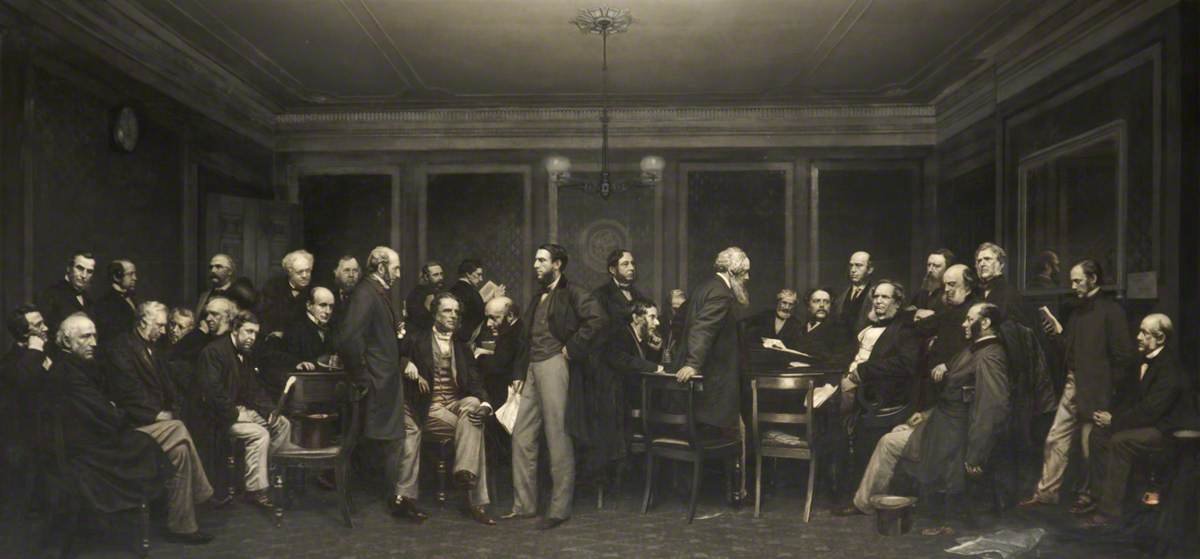
Portraits of prominent councillors and municipal figures dominate this collection, offering a visual political history of Manchester. Many images are available online via Art UK and a dedicated Flickr album.
Civic Gifts
Civic gifts, including those from the 2002 Commonwealth Games, demonstrate Manchester’s international ties and the stories of its diverse communities (Manchester City Council).
Visiting Manchester Town Hall: Hours, Tickets & Accessibility
Location and Accessibility
Centrally located in Albert Square, Manchester Town Hall is easily accessible from major attractions like St. Peter’s Square, the John Rylands Library, and Castlefield. The area is well served by trams, buses, and is within walking distance of shopping and cultural districts (PlanetWare). The building and surrounding square offer good accessibility for visitors with mobility needs, though some historic areas may have restricted access, especially during renovations.
Visiting Hours and Ticket Information
As of June 2024, Manchester Town Hall is undergoing major interior and exterior renovations expected to complete by late 2024 or early 2025. During this period, public interior access is limited or unavailable.
- Current Visiting Hours Subject to renovation status; please check the official Manchester City Council website for the latest updates.
- Tickets Entry to the Town Hall is generally free. However, some guided tours or special exhibitions may require tickets. When tours resume post-renovation, tickets can be purchased online or at authorized tour providers.
Guided Tours
Guided tours are highly recommended to gain deeper insights into the building’s history, architecture, and art collections. Local agencies like Jonathan Schofield Tours offer private and themed tours typically lasting 30–60 minutes, with possible access to the Great Hall, Council Chamber, and clock tower (subject to restoration status).
Visitor Tips
- Best Time to Visit Year-round, with the Christmas season offering festive markets in Albert Square (TripHobo).
- Photography The clock tower and Albert Square provide excellent photo opportunities.
- Duration Expect around 30 minutes for a casual visit; guided tours and exhibitions may extend this.
- Nearby Attractions Consider combining your visit with Castlefield, John Rylands Library, and St. Peter’s Square.
Facilities and Amenities
Albert Square offers a variety of shops, cafés, and restaurants for refreshments. The Town Hall and its surroundings often host events, festivals, and markets, enriching the visitor experience (PlanetWare).
Frequently Asked Questions (FAQ)
Q: What are the opening hours of Manchester Town Hall? A: Opening hours vary due to ongoing renovations. Please check the official website for current information.
Q: Are guided tours available? A: Guided tours are offered by local agencies and are expected to resume after renovations. Booking in advance is recommended.
Q: Is Manchester Town Hall wheelchair accessible? A: The building and Albert Square are generally accessible, though some historic areas may have limited access during renovations.
Q: Are tickets required for entry? A: Entry to the Town Hall is usually free. Some tours or special exhibitions may require tickets.
Q: Can I photograph inside Manchester Town Hall? A: Photography is allowed in certain areas; please check guidelines during your visit.
Cultural Insights and Local Significance
Manchester Town Hall is more than a landmark; it embodies the city’s identity, resilience, and civic pride. Its art and collections reflect Victorian ambitions and Manchester’s continuing influence in culture, politics, and industry. Serving as a gathering place for locals and visitors alike, the Town Hall remains central to Manchester’s urban life (Manchester City Council).
Plan Your Visit Today
Explore one of Manchester’s most iconic historical sites by planning your visit to Manchester Town Hall. Stay updated on visiting hours and tours via the official Manchester City Council website.
Don't forget to download the Audiala app for guided audio tours and access to exclusive content about Manchester’s top historical sites. Follow us on social media and explore related posts on Manchester's rich heritage to enrich your cultural journey.
Internal links:
- Discover other Manchester historical sites
- Explore more about Victorian architecture in the UK
- Visit John Rylands Library, another key Manchester attraction
External links:
- Manchester City Council – Town Hall Heritage
- Jonathan Schofield Tours
- Art UK
- TripHobo – Manchester Town Hall
- PlanetWare – Manchester Tourist Attractions
Audiala2025## Manchester Town Hall: Visiting Hours, Tickets, and Historical Sites Guide
Manchester Town Hall is not only an architectural marvel but also a vibrant symbol of the city’s rich history and civic pride. This comprehensive guide covers everything visitors need to know about Manchester Town Hall, including its historical significance, restoration efforts, and practical visitor information such as visiting hours, ticketing details, and accessibility. Whether you are a history enthusiast or planning your visit to one of Manchester’s most iconic historical sites, this article will provide valuable insights to enhance your experience.
Architectural Origins and Design
Design Origins and Historical Context
Manchester Town Hall’s architectural significance is rooted in its origins during the height of the Industrial Revolution, a period when Manchester was rapidly transforming into a global industrial powerhouse. The city’s leaders sought a new municipal building that would reflect Manchester’s burgeoning prosperity, civic pride, and ambition. In 1863, a design competition was launched, attracting 137 entries—a testament to the project’s importance. The winning design, by Alfred Waterhouse, was selected for its superior architectural quality and functionality, even though it was initially ranked fourth in aesthetics (inostalgia.co.uk).
Completed in 1877, the Town Hall was intended as a symbol of Manchester’s status and aspirations. Its construction cost approximately £1 million (equivalent to over £100 million today), underscoring the city’s commitment to creating a civic landmark (manchestermagazine.co.uk). The building’s opening was a major event, and it has since remained the centerpiece of Manchester’s civic life.
Neo-Gothic Style and Exterior Features
Manchester Town Hall is widely regarded as one of the finest examples of Victorian Neo-Gothic architecture in the world (wikipedia.org). Waterhouse’s design drew inspiration from the Gothic Revival movement, characterized by pointed arches, ribbed vaults, and flying buttresses, but adapted these elements for a secular, civic context.
The exterior is constructed primarily from Spinkwell stone, a durable sandstone, and features a striking combination of red brick and terracotta embellishments. The façade is adorned with ornate carvings, gargoyles, pinnacles, and decorative stonework, all contributing to the building’s dramatic silhouette. The central clock tower, rising to 280 feet (85 meters), dominates the Manchester skyline and is visible from across the city. The tower houses the Great Abel bell, weighing over 8 tons, and is a focal point for both the building and Albert Square (manchestermagazine.co.uk).
Interior Spaces and Artistic Detailing
The interior of Manchester Town Hall is equally impressive, reflecting the Victorian era’s emphasis on craftsmanship and detail. The building’s layout is organized around a central courtyard, with corridors radiating outward to various municipal offices and chambers.
The Great Hall
The heart of the Town Hall is the Great Hall, a vast ceremonial space renowned for its vaulted ceilings, intricate mosaic floors, and stained glass windows. The hall’s most celebrated feature is the series of twelve murals by Ford Madox Brown, completed between 1879 and 1893. These murals depict key moments in Manchester’s history, from Roman times to the Industrial Revolution, and are considered masterpieces of Victorian narrative painting (inostalgia.co.uk).
Stained Glass and Decorative Arts
Throughout the building, visitors will find an abundance of stained glass, much of it designed by Heaton, Butler & Bayne. The windows incorporate symbolic motifs, including the Manchester bee—a symbol of industry and community spirit—alongside representations of science, art, and commerce. Decorative tiling, elaborate woodwork, and wrought ironwork further enhance the interiors, showcasing the skills of local artisans and the city’s investment in public art (manchestermagazine.co.uk).
Structural Innovations and Functionality
Waterhouse’s design was not only aesthetically ambitious but also highly functional. The building was constructed with a steel frame—an innovative feature for its time—allowing for larger, more open interior spaces. The layout was carefully planned to accommodate the needs of a growing municipal government, with offices, council chambers, and public meeting rooms arranged for efficiency and accessibility.
The Town Hall’s heating and ventilation systems were advanced for the era, incorporating air ducts and radiators to ensure comfort in Manchester’s often damp climate. The building also included state-of-the-art fireproofing measures, reflecting the lessons learned from earlier municipal fires in other cities (wikipedia.org).
Reception and Legacy
Manchester Town Hall has been celebrated by architectural historians and the public alike. It is a Grade I listed building—one of only fifteen in Manchester—signifying its national importance (wikipedia.org). F. A. Bruton described it as best viewed when Albert Square is empty and silent, allowing its grandeur to be fully appreciated. James Stevens Curl called it “a High-Victorian Gothic secular masterpiece that combines eclectic elements to form a style that can only be Victorian.”
In 2012, it was voted Greater Manchester’s favorite building by readers of the Manchester Evening News and was featured in a series of Royal Mail stamps commemorating British landmarks (wikipedia.org).
Recent Restoration and Future Access
By the early 21st century, the Town Hall was in urgent need of repair and modernization. In 2018, it closed to the public for a comprehensive £330 million restoration project, the largest in its history. The refurbishment includes the restoration of over 500 timber windows, replacement of heating and electrical systems, and repair of stonework and roofing. The project aims to safeguard the building for future generations while improving public access and creating a new free visitor attraction that will showcase the Town Hall’s history and artefacts (manchester.gov.uk).
The building is scheduled to reopen in summer 2026, with celebrations planned through September 2027 to mark its 150th anniversary. Upon reopening, visitors will be able to explore restored interiors, learn about the building’s history, and experience its architectural splendor firsthand (manchester.gov.uk).
Symbolism and Civic Identity
Beyond its architectural features, Manchester Town Hall stands as a powerful symbol of the city’s civic identity. Its design and decoration celebrate Manchester’s industrial achievements, democratic traditions, and cultural diversity. The building has hosted royal visits, political milestones, and public celebrations, reinforcing its role as the heart of Manchester’s civic life (inostalgia.co.uk).
The Manchester bee motif, found throughout the building, has become an enduring emblem of the city’s resilience and community spirit—a legacy that continues to inspire residents and visitors alike (manchestermagazine.co.uk).
Visiting Manchester Town Hall
Visiting Hours and Tickets
Currently, Manchester Town Hall is closed for restoration. It is scheduled to reopen in summer 2026. Once reopened, visiting hours are expected to be Monday through Saturday, 10:00 AM to 5:00 PM. Entry to the Town Hall’s public areas and exhibitions will be free, with some special events possibly requiring tickets. For the latest updates on Manchester Town Hall visiting hours and ticket information, visitors should check the official Manchester City Council website (manchester.gov.uk) or dedicated visitor pages.
Guided Tours and Special Events
Guided tours are planned to resume after reopening, offering in-depth insights into the Town Hall’s architecture, history, and art. Special events, including lectures, exhibitions, and community celebrations, will also be hosted throughout the year. Visitors interested in photography will find numerous picturesque spots inside the Great Hall and outside in Albert Square, making it a favorite location for capturing Manchester’s iconic skyline.
Accessibility
Manchester Town Hall is committed to providing accessible facilities for all visitors. The restored building will feature step-free access, accessible restrooms, and assistance services for visitors with disabilities. For specific accessibility needs and assistance, visitors are encouraged to contact the Town Hall’s visitor services in advance.
Travel Tips and Nearby Attractions
The Town Hall is centrally located in Albert Square, easily accessible by public transport including Manchester’s Metrolink tram system and numerous bus routes. Nearby attractions include the Manchester Central Library, the John Rylands Library, and the Northern Quarter, offering dining and shopping options.
Visuals and Media
Visitors and readers are encouraged to explore official virtual tours and photo galleries available on the Manchester City Council website. High-quality images showcasing the Town Hall’s exterior clock tower, intricate stonework, the Great Hall murals, and stained glass windows enhance appreciation of this architectural jewel.
Frequently Asked Questions (FAQ)
Q: When does Manchester Town Hall reopen to visitors? A: The Town Hall is scheduled to reopen in summer 2026 after restoration.
Q: Are there any ticket fees to visit Manchester Town Hall? A: Entry to public areas and exhibitions will be free, though some special events may require tickets.
Q: Is Manchester Town Hall wheelchair accessible? A: Yes, the restored building will include accessible entrances and facilities.
Q: Can I take photographs inside Manchester Town Hall? A: Photography is allowed in most public areas; however, flash photography or tripods may be restricted during special events.
Q: Where can I find guided tours of Manchester Town Hall? A: Guided tours will resume post-restoration; check the official website for schedules and booking.