Cape Town
South Africa Actualizado Mar 2026
The first surprise is how Cape Town, South Africa, smells at the edge of evening: kelp from the Atlantic, charcoal smoke from a braai, and cardamom drifting out of Bo-Kaap kitchens while the mountain turns pink. Few cities put this much drama in a single glance, with sheer cliffs behind downtown and working harbours in front. Come for the scenery, yes, but stay because the place keeps changing shape the closer you look.
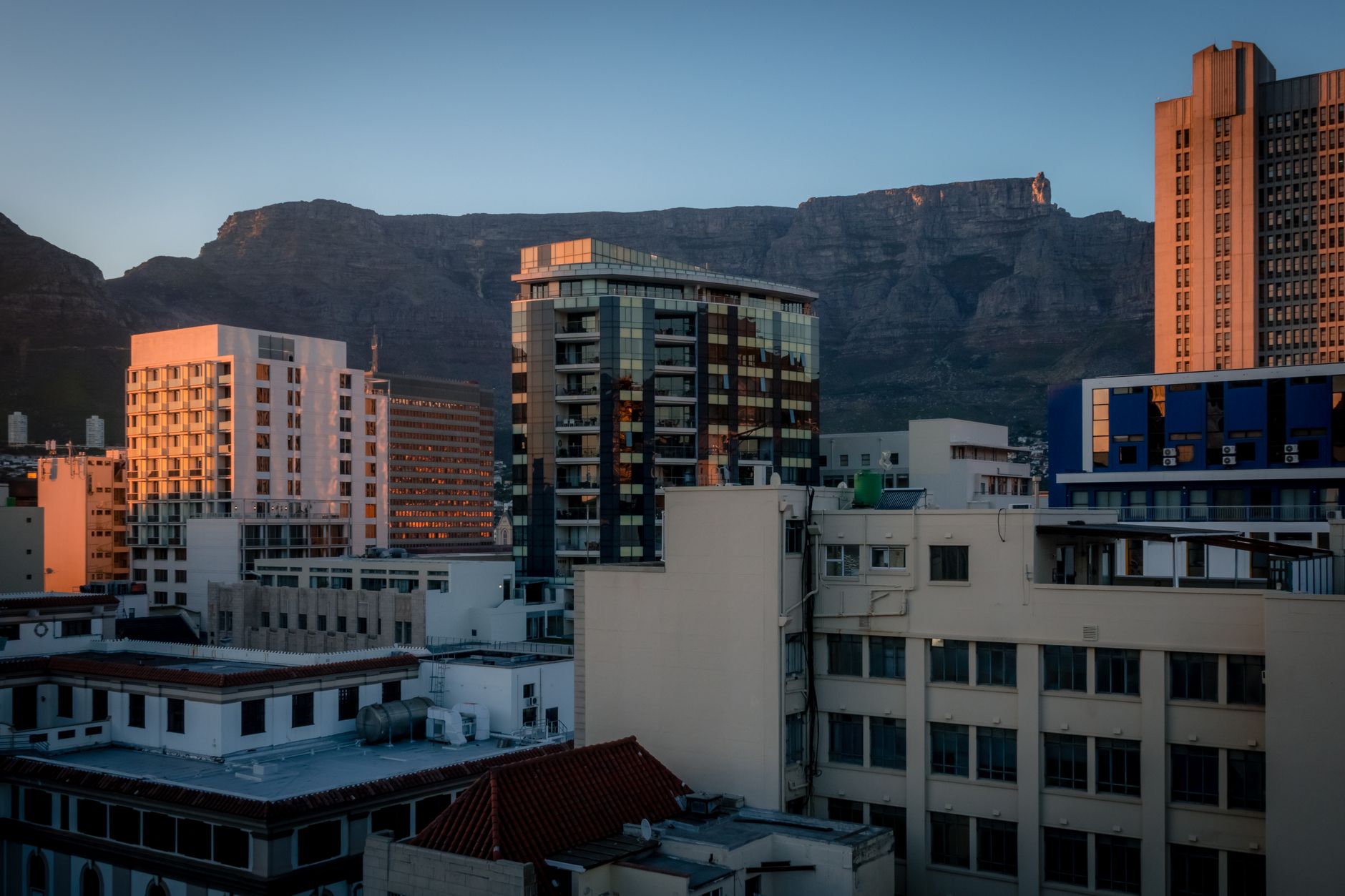 Foto: Andrew Harvard / Pexels
- Atracciones
- 30
- Audio
- 4 h
- Duración del viaje
- 4-5 days
- Mejor temporada
- Shoulder seasons (March-April and October-November)
Por qué Cape Town
Creado a partir de fuentes citadas · consulta el método · Cómo hacemos nuestras guías →
Cape Town runs on contrast, and locals treat that as normal. One morning can start with a weather-check for the Table Mountain cableway, then shift to a Lion’s Head hike or a slow walk through Company’s Garden under old oaks and parliamentary facades. The light here is hard to forget: sharp on the Atlantic side, softer and warmer once you swing toward False Bay.
History is not tucked away behind glass. Robben Island trips still leave from the Nelson Mandela Gateway and take roughly 3.5 to 4 hours, a crossing that reframes the skyline you just admired. Back in town, District Six Museum, the Slave Lodge, and City Hall’s balcony where Mandela addressed crowds on 11 February 1990 make the city’s beauty feel earned rather than easy.
What wins people over is the lived-in rhythm: First Thursdays gallery openings from about 5pm to 8pm, late jazz in intimate rooms, and meals that jump from a formal tasting menu to a shared Gatsby sandwich. Cape Malay cooking in Bo-Kaap, fish-and-chips by Kalk Bay harbour, and coffee culture in De Waterkant or Loop Street tell you more than any checklist can. Cape Town doesn’t ask for one version of you; it gives you several ways to belong for a few days.
Mountain-to-Ocean Drama
Cape Town feels vertical: cable up Table Mountain, then watch the city spill from sandstone cliffs to cold Atlantic water. Add Lion’s Head at dawn or Signal Hill at sunset and you get that sharp, salt-lit skyline locals plan their week around.A City That Remembers
Robben Island and the District Six Museum turn abstract history into names, streets, and voices you can still hear in the room. In Bo-Kaap, bright facades and the call to prayer remind you this is a living neighborhood, not a film set.Silos, Domes, and Civic Stones
Zeitz MOCAA’s carved grain-silo atrium is one of the continent’s great adaptive-reuse spaces, while the Iziko cluster around Company’s Garden layers art, science, and slavery history within a short walk. City Hall and the Castle of Good Hope add the older architectural grammar that still frames the center.Neighbourhood Rhythm
The V&A Waterfront gives you polished harbor energy, then Woodstock, Kalk Bay, and Sea Point shift the tempo to murals, fishing boats, promenade runners, and late dinners. Cape Town’s real charm is this constant change of texture within a single afternoon.
Barrios
Por dónde pasear, barrio a barrio — cada uno con su propio ritmo.
Bo-Kaap
Steep cobbled streets, brightly painted homes, and the call to prayer set the tone in this historic Muslim quarter. Come for Cape Malay food like bobotie and koesisters, visit the Bo-Kaap Museum, and treat it as a living neighborhood, not a photo set.City Bowl (Bree, Kloof, Long, East City)
This is the city’s social engine: galleries and design shops by day, then wine bars, cocktail rooms, jazz, and late kitchens after dark. Bree Street feels polished, Kloof is looser, Long Street is rowdier, and East City/Harrington skews later and louder.V&A Waterfront
Harbour cranes, promenades, museums, markets, and ferry departures all cluster in one walkable district. Use it for logistics and culture, including Robben Island departures, Zeitz MOCAA, and easy food stops, then branch out to other neighborhoods for a fuller picture of the city.Woodstock
Old industrial blocks now hold studios, roasteries, breweries, and mural-lined side streets. Saturdays bring Neighbourgoods Market crowds, and guided street-art walks add context to the area’s rapid change and ongoing debates about who gets to stay.Sea Point, Green Point, and De Waterkant
The promenade, urban park, and café circuit make this the easiest part of Cape Town for everyday living. You’ll find runners at sunrise, families in Green Point Urban Park, strong coffee culture, and a relaxed neighborhood pace between city center intensity and beach glamour.Kalk Bay
A working fishing harbour, salty air, old bookstores, and low-key seafood spots give Kalk Bay its pull. It’s where visitors trade city noise for village tempo, with cliffside rail views and a direct line into False Bay’s softer, local beach culture.Muizenberg and St James
False Bay shifts the mood from dramatic Atlantic surf to gentler water, tidal pools, and colorful beach huts. Muizenberg’s surf schools and St James’s tidal pool scenes show a more everyday Cape Town, especially on warm weekends.Constantia
A short drive from downtown, Constantia blends old wine-estate history with contemporary dining rooms and mountain-framed gardens. It works well for a half-day reset when you want slower roads, cellar tastings, and reservation-led lunches instead of urban bar-hopping.
Planifica tu viaje
Antes de ir
- Getting There
- Cape Town International Airport (CPT) is the main gateway, about 20 km from the CBD. As of 2026, airport access is road-based (Uber, Bolt, authorized airport taxis, and pre-booked shuttles), and the MyCiTi airport bus remains discontinued. Rail arrivals center on Cape Town Station and Bellville Station, while road access is strongest via the N1, N2, and M3 corridors.
- Getting Around
- Cape Town has no metro/subway system in 2026 (0 lines), so visitors mostly combine MyCiTi buses, Metrorail, and ride-hailing. MyCiTi is cashless and practical for key visitor corridors (Waterfront, Sea Point, Camps Bay, Hout Bay) using routes like 104/113, 105, 106/107, and 108/109. Each rider needs a myconnect card (R40), with 1-, 3-, and 7-day passes at R90, R210, and R300; the updated card system has been in use since 14 February 2026.
- Climate & Best Time
- Cape Town runs on a Mediterranean cycle: summer (Dec-Feb) is warm and dry around 17-28°C, while winter (Jun-Aug) is cooler and wetter around 7-20°C with the highest rainfall. Peak demand is January-February; prices and crowds usually ease in winter. The best balance is often March-April or October-November, when skies are clearer than winter and the city moves at a less frantic pace.
- Language & Currency
- South Africa has 12 official languages; in Cape Town you will commonly hear English, Afrikaans, and isiXhosa, and English is enough for nearly all visitor logistics. The currency is the South African rand (ZAR), and card acceptance is widespread across hotels, restaurants, and major attractions. For 2026 budgeting, use VAT at 15% (SARS), not older 14% references still seen on some legacy pages.
- Safety
- Current U.S. guidance lists South Africa at Level 2 (issued May 27, 2025): exercise increased caution, especially in downtown areas after dark. In Cape Town, favor busy routes, accredited transport, and daylight for remote viewpoints or beaches; on hikes, go in groups and stay on marked trails. Township visits are best done with reputable guided operators and clear daytime plans.
Where Mountain, Harbour, and Memory Collide
From ancient cave hearths to a legislature rebuilding after fire
- c. 10,000 BCE
Footsteps in Peers Cave
In caves above present-day Fish Hoek, Late Stone Age communities left hearth ash, tools, and human remains dated to roughly 12,000 years ago. Finds associated with "Fish Hoek Man" place Cape Town's history deep in prehistory, long before forts, docks, or mapped streets.
- 1 March 1510
Battle at Salt River
Near today's Observatory and Salt River, Khoikhoi fighters defeated a Portuguese force led by Francisco de Almeida. It was one of the earliest recorded armed clashes between Europeans and indigenous people in what became South Africa, and it warned passing empires that Table Bay was not an empty shore.
- c. 1600
Camissa Becomes a Trading Shore
Table Bay's freshwater streams, known as Camissa, drew pastoralists, traders, and ship crews into seasonal exchange networks. By the early 1600s, the bay was already a working contact zone, and by about 1630 Autshumao was mediating commerce with growing authority.
- c. 1643
Krotoa, Voice Between Worlds
Krotoa grew up in the Table Bay world and later became interpreter and cultural broker at the Dutch fort. Her fluency made diplomacy possible in tense, unequal encounters over land, cattle, and survival. Her life traces the human cost of colonial contact in Cape Town's first generation.
- 6 April 1652
Jan van Riebeeck Lands
Jan van Riebeeck came ashore for the VOC to build a permanent refreshment station at Table Bay. Gardens, storehouses, and a fort quickly followed, turning a maritime stop into the nucleus of colonial Cape Town. This date remains the conventional founding point of the colonial city.
- 28 March 1658
Amersfoort Brings Enslaved Angolans
The ship Amersfoort arrived carrying 174 enslaved Angolans, marking the start of large-scale slavery at the Cape. Their forced labor built households, fields, and public works, while their descendants helped shape Cape language, food, music, and faith.
Ver la cronología completa (30 momentos)
- 2 January 1666
Castle of Good Hope Rises
The first cornerstone of the Castle of Good Hope was laid as the VOC replaced an earlier vulnerable fort. Its bastions and thick walls signaled military permanence on the shore. The building still stands as South Africa's oldest surviving colonial structure.
- 1713
Smallpox Tears Through the Cape
A devastating smallpox epidemic moved through ships, farms, and settlements across the peninsula. Khoisan communities were hit especially hard, with demographic collapse that accelerated dispossession and labor coercion. Disease became an invisible ally of conquest.
- 1794
Tuan Guru Founds Auwal Masjid
Imam Abdullah Kadi Abdus Salaam, known as Tuan Guru, helped establish Auwal Masjid in the Bo-Kaap, the oldest mosque tradition in South Africa. From this hill neighborhood, Cape Muslim religious life gained durable institutions, schools, and a public voice that still shapes the city.
- 7 August 1795
Muizenberg Opens British Rule
At Muizenberg, British forces attacked Dutch defenses in smoke and sea wind, beginning the first British occupation. By 16 September 1795, control had shifted. Cape Town was now tied to imperial routes from London to India.
- 8 January 1806
Blaauwberg Ends Dutch Return
The Battle of Blaauwberg sealed Britain's second occupation after a brief Batavian interlude. Governor Janssens capitulated on 18 January. British rule then lasted until Union in 1910, reshaping law, trade, and urban institutions.
- 1 December 1834
Legal Slavery Is Abolished
Slavery ended in law at the Cape, but a four-year "apprenticeship" system prolonged coercion until 1838. Emancipation redrew work and family life while leaving wealth and land concentrated. Freedom arrived unevenly, neighborhood by neighborhood.
- 17 September 1860
Harbour Breakwater Begins
Prince Alfred tipped the first stone for the new breakwater after storms in 1858 had wrecked more than 30 vessels in Table Bay. Decades of construction on the Alfred and Victoria basins followed. Cape Town shifted from exposed anchorage to engineered global port.
- 1867
District Six Gets Its Name
A municipal reorganization divided central Cape Town into numbered districts, and District Six entered the record. It became a dense, polyglot quarter of workers, musicians, tailors, churches, mosques, and corner cafés. The label later turned into one of South Africa's deepest symbols of loss.
- 1901
Plague and Forced Removal
When bubonic plague appeared, authorities used public-health panic to justify segregated removals, including the relocation of Black residents to Ndabeni. Quarantine fences and police power became urban planning tools. The episode prefigured apartheid geography decades before apartheid was formal policy.
- 1910
Legislative Capital of Union
With the Union of South Africa, Cape Town became the country's legislative capital. Parliament's chambers gained national weight, and decisions made in this city reached every province. Cape Town's political centrality was now constitutional, not just commercial.
- 4 October 1929
Cableway Lifts the City Up
The Table Mountain Aerial Cableway opened, carrying passengers from steep slope to summit in minutes. Steel cables hummed over fynbos and sandstone while the city spread out below in hard midday light. A mountain once reached mainly by boot leather became a shared urban viewpoint.
- 1938
Foreshore Reclaims the Sea
Beginning in 1938, major land reclamation pushed Cape Town's shoreline outward by about 230 hectares. Dredgers, fill, and concrete created space for roads, offices, and port-linked industry, though World War II slowed progress. The map of the central city was physically redrawn.
- 1948
Apartheid Becomes State Doctrine
After the National Party victory, segregation hardened into a full legal architecture of apartheid. In Cape Town, zoning, pass controls, and policing turned race into the organizing rule of urban space. The city entered decades of planned rupture.
- March 1960
Langa Marches Against Pass Laws
On 21 March, police violence in Langa killed 3 people and injured 26 during anti-pass protests after Sharpeville. On 30 March, Philip Kgosana led roughly 30,000-50,000 marchers from Langa and Nyanga toward Caledon Square. Cape Town's streets became a national stage of resistance.
- 11 February 1966
District Six Declared White
The Group Areas proclamation declared District Six a "White area." Over the next 15 years, more than 60,000 residents were forced to the Cape Flats as homes were demolished. What survived was memory, music, and maps carried in people rather than streets.
- 3 December 1967
Barnard's Night at Groote Schuur
At Groote Schuur Hospital, Christiaan Barnard led the world's first human-to-human heart transplant. Under bright theatre lamps and strict timing, Cape Town entered global medical history in a single night. The achievement tied the city to high-risk surgical innovation.
- 20 August 1983
UDF Launches in Mitchells Plain
The United Democratic Front was launched in Rocklands, Mitchells Plain, binding civic groups, churches, students, and unions into a mass movement. Cape Town became one of its key organizing engines. Local halls and church spaces turned into strategy rooms for national change.
- 1986
Desmond Tutu's Cathedral Pulpit
As Archbishop of Cape Town, Desmond Tutu made St George's Cathedral a moral command post against apartheid. Sermons, vigils, and marches spilled onto the cathedral steps, where prayer and protest often ran together. The building earned its reputation as "the people's cathedral."
- 11 February 1990
Mandela Speaks from City Hall
Hours after his release from prison, Nelson Mandela addressed a huge crowd from Cape Town City Hall balcony. The speech linked the silence of Robben Island cells to a public politics of negotiation and mass expectation. Grand Parade became a hinge point between eras.
- 1994
Democracy Rewrites the Chamber
South Africa's democratic transition made Parliament in Cape Town the legislature of a new constitutional order. The same precinct now hosted representatives elected by universal franchise. The city's political role stayed central, but its mandate changed fundamentally.
- 1999
Robben Island Gains UNESCO Status
UNESCO listed Robben Island as a World Heritage Site, recognizing it as a global symbol of imprisonment and human dignity. Ferries from the Waterfront now carry visitors to a place once designed to erase voices. The crossing itself became a lesson in memory.
- 22 September 2017
Zeitz MOCAA Opens the Silo
A disused grain silo at the V&A Waterfront reopened as Zeitz MOCAA, a major museum for contemporary art from Africa and its diaspora. Carved concrete cylinders create a dramatic central atrium that feels both industrial and cathedral-like. The conversion marked a new chapter in Cape Town's cultural self-definition.
- 2 January 2022
Parliament Burns for Three Days
A fire tore through the parliamentary precinct and burned for more than 70 hours. More than 300 firefighters and over 60 appliances fought the blaze as key chambers were damaged. National ceremonies, including the State of the Nation Address, shifted to City Hall while rebuilding plans advanced.
- 6 February 2026
Nieuwmeester Dome Takes the Floor
Parliament formally received the refurbished Nieuwmeester Dome as a temporary National Assembly venue. On 12 February 2026, the State of the Nation Address was again delivered at City Hall, underscoring how governance and urban space remain tightly intertwined. Full restoration of the damaged precinct is targeted for December 2026.
Quién vivió aquí
-
Statesman · 1918-2013
Nelson Mandela
Imprisoned on Robben Island; spoke from Cape Town City Hall in 1990
From this city's harbor, ferries still cross to Robben Island where Mandela spent key prison years. On 11 February 1990, he addressed crowds from City Hall's balcony, turning Cape Town's civic center into a global stage for democratic transition.
-
Cleric and Nobel Peace Prize laureate · 1931-2021
Desmond Tutu
Archbishop of Cape Town
As Archbishop, Tutu made St George's Cathedral a moral nerve center during apartheid and beyond. In today's Cape Town, his voice still echoes in civic debates about dignity, inequality, and what reconciliation should look like in daily life.
-
Cardiac surgeon · 1922-2001
Christiaan Barnard
Performed the first human heart transplant in Cape Town
At Groote Schuur Hospital in 1967, Barnard's team carried out the first human-to-human heart transplant, a moment that put Cape Town in medical history. The city he worked in still carries that mix of experimental ambition and stark social contrast.
-
Jazz pianist and composer · born 1934
Abdullah Ibrahim
Born in Cape Town
Ibrahim's sound was shaped by Cape Town's mosque calls, church harmonies, and street rhythms, especially from District Six-era memory. Listening to him after walking those neighborhoods makes the city feel less like scenery and more like syncopation.
-
Colonial administrator · 1619-1677
Jan van Riebeeck
Established VOC refreshment station at Table Bay in 1652
Van Riebeeck's 1652 landing at Table Bay set in motion the colonial project that would become Cape Town. If he returned now, he would still recognize the mountain and harbor, but not the city's ongoing argument over whose histories get centered.
Dónde comer
Donde los locales reservan cena de verdad — no los menús para turistas.
-
Cape Malay Curry (Bo-Kaap)
Fragrant with turmeric, cinnamon, and cardamom, this is one of the city’s signature flavor maps in a bowl. Eat it in or near Bo-Kaap, where the food and neighborhood history are inseparable.
-
Gatsby Sandwich
A giant Cape Town street-food legend: loaded bread, hot chips, sauces, and spiced fillings built for sharing. It is messy, salty, and exactly right after a long day on the peninsula.
-
Line Fish and Snoek
On the False Bay side, especially around Kalk Bay, seafood arrives with a real harbor smell still in the air. Look for simply grilled catch or smoked snoek to taste the working-coast side of the city.
-
Braai Culture
Braai is not just grilled meat; it is social architecture, with smoke, stories, and long pauses between bites. If you are invited to one, say yes, because it explains local life faster than any museum label.
-
Oranjezicht City Farm Market
This is weekend Cape Town in edible form: small producers, fresh bakes, local cheese, and breakfast lines by the waterfront. Go hungry and do a slow lap before committing to one stall.
-
Neighbourgoods Market / Old Biscuit Mill
Woodstock’s market scene blends design energy, coffee culture, and global plates in a converted industrial setting. It works best when paired with a street-art walk so the food and neighborhood context connect.
-
Cape Malay Koesisters and Milk Tart
For sweets, try syrupy, spice-heavy Cape Malay koesisters and a slice of chilled milk tart with cinnamon on top. They carry the city’s layered Dutch, Southeast Asian, and local kitchen traditions in two very different textures.
-
Constantia and Peninsula Wine Tables
Cape Town’s food identity includes nearby vineyards as much as urban restaurants, especially in Constantia’s historic estates. Pair cool-climate whites with seafood for a combination that makes immediate geographic sense.
Consejos de quien la conoce
Pequeñas cosas que cambian cómo te trata la ciudad.
Airport Transfer Reality
Use Uber, Bolt, an authorized airport taxi, or a pre-booked shuttle from CPT. The MyCiTi airport bus has been discontinued since 1 December 2022, so do not plan around it unless the official page changes.Use MyCiTi Smartly
For city trips, MyCiTi is the easiest public option and it is cashless. Buy a myconnect card (R40) and consider unlimited passes: R90 (1 day), R210 (3 days), or R300 (7 days).Night Safety Rules
After dark, avoid deserted streets, isolated viewpoints, and empty beaches, especially outside busy zones. In the CBD, use ride-hailing door to door and keep phones and jewelry out of sight.Hike In Groups
On Lion's Head, Table Mountain trails, or Cape Point paths, go with others and stay on marked routes. Carry water, sunblock, and a charged phone, and avoid remote trail starts late in the day.Pick Your Season
For beach weather, target January-February; for better value and fewer crowds, March-April and October-November are the sweet spots. June-August is cooler and rainier but usually cheaper.Eat Beyond Waterfront
The V&A is convenient, but your best food memories often come from Bo-Kaap, Woodstock, Athlone, and Kalk Bay. Try Cape Malay dishes and split a Gatsby sandwich at least once.Pay And Tip Right
Cards are widely accepted, but keep some rand for small purchases and tips. In restaurants, tipping 10% is standard; for VAT refunds at the airport, keep original tax invoices for qualifying purchases over R250.
Galería
La ciudad, tal y como es de verdad.



Preguntas frecuentes
Is cape town worth visiting?
Yes, especially if you want big nature and layered history in one trip. You can do Table Mountain, Robben Island, Bo-Kaap, and world-class art institutions within short travel times. It is one of the rare cities where penguin beaches, wine valleys, and a dense urban food scene all fit into the same itinerary.
How many days in cape town?
Plan 4-5 days for a strong first visit. That gives you two city days, one peninsula day (Cape Point plus Boulders), and one flexible day for museums, beaches, or Winelands. If you add Hermanus or Cederberg, stretch to 6-7 days.
How do I get from Cape Town airport to the city center?
Use Uber, Bolt, an authorized airport taxi, pre-booked shuttle, or rental car. The airport's official transport page lists authorized operators and warns against unsolicited drivers. The MyCiTi airport service is currently discontinued.
Does Cape Town have a metro or subway for tourists?
No, not a metro/subway system in the way visitors expect. The practical network is MyCiTi buses, Golden Arrow buses, Metrorail suburban rail, and ride-hailing. For most travelers, MyCiTi plus Uber/Bolt is the simplest combination.
Is Cape Town safe for tourists in 2026?
It can be, if you use city habits consistently. Stick to active areas, avoid isolated places at night, use accredited transport, and do not flash valuables. For hikes and remote viewpoints, go in groups and start early.
Is Cape Town expensive for visitors?
It can be done on a moderate budget, with premium options available. You can save with MyCiTi passes, markets, and local food spots while reserving budget for headline experiences like Robben Island and cableway tickets. Dining spans from inexpensive street-food halls to top-tier fine dining.
What is the best time to visit Cape Town?
March-April and October-November are usually the best balance of weather, price, and crowd levels. January-February is hottest and driest but also peak season. June-August is cooler and wetter, but often better for lower rates.
Can I rely on cards, and how much should I tip in Cape Town?
Yes, cards are accepted in most hotels, restaurants, and attractions. Keep some cash for smaller transactions and informal tipping situations. In restaurants and bars, 10% is customary, with higher tips for excellent service.
Sigue donde lo dejaste
Lugares guardados y leídos recientemente; solo en este dispositivo.
Créditos de las fotos (12)
- Andrew Harvard — Pexels License (https://www.pexels.com/license/) — Fuente: https://www.pexels.com/photo/34862401/
- Scott Webb — Pexels License (https://www.pexels.com/license/) — Fuente: https://www.pexels.com/photo/136721/
- Zak H — Pexels License (https://www.pexels.com/license/) — Fuente: https://www.pexels.com/photo/33641495/
- Taryn Elliott — Pexels License (https://www.pexels.com/license/) — Fuente: https://www.pexels.com/photo/4873264/
- Kelly — Pexels License (https://www.pexels.com/license/) — Fuente: https://www.pexels.com/photo/33622084/
- Kelly — Pexels License (https://www.pexels.com/license/) — Fuente: https://www.pexels.com/photo/33622083/
- Niklas Eichler — Pexels License (https://www.pexels.com/license/) — Fuente: https://www.pexels.com/photo/3770287/
- Kelly — Pexels License (https://www.pexels.com/license/) — Fuente: https://www.pexels.com/photo/33621969/
- Andrew Harvard — Pexels License (https://www.pexels.com/license/) — Fuente: https://www.pexels.com/photo/34783056/
- Taryn Elliott — Pexels License (https://www.pexels.com/license/) — Fuente: https://www.pexels.com/photo/6624561/
- Kelly — Pexels License (https://www.pexels.com/license/) — Fuente: https://www.pexels.com/photo/33622075/
- Kelly — Pexels License (https://www.pexels.com/license/) — Fuente: https://www.pexels.com/photo/33622104/
Las fotos pueden haber sido redimensionadas o recortadas.