

Section Guide
- Introduction
- Historical and Cultural Significance
- Geological & Ecological Features
- Must-See Attractions
- Practical Visitor Information
- Local Life, Culture, and Festivals
- Getting There & Accommodation
- Nearby Attractions in Ninh Bình
- FAQs
- Conclusion
- Sources and Further Reading
Historical and Cultural Significance
UNESCO Recognition and History
Tam Cốc–Bích Động forms a key part of the UNESCO-listed Tràng An Scenic Landscape Complex, recognized for its unique blend of geological, ecological, and cultural value. Its karst landscape, sculpted over millions of years, has been both a natural fortress and a cradle of civilization. Archaeological relics, ancient temples, and cave sanctuaries point to its strategic and spiritual importance for dynasties such as the Dinh, Le, and Tran (north-vietnam.com).
Etymology: Tam Cốc and Bích Động
- Tam Cốc means “Three Caves”: Hang Cả, Hang Hai, and Hang Ba, carved by the Ngô Đồng River, symbolizing the harmony of humans and nature (hanoiexploretravel.com).
- Bích Động translates to “Jade Grotto,” a poetic moniker given in 1773 by Nguyen Nghiem, father of poet Nguyen Du, inspired by the area’s jade-green hues (culturephamtravel.com).
Spiritual Heritage: Bích Động Pagoda & More
The Bích Động Pagoda complex, carved into a mountainside, is a serene Buddhist sanctuary divided into three levels—Ha (Lower), Trung (Middle), and Thuong (Upper) Pagodas. These structures, dating to the 15th century, blend seamlessly with the limestone cliffs, displaying ancient statues and relics. The site remains a spiritual retreat for monks and pilgrims (vietnamtravel.com).
Nearby, Thien Huong Cave hosts a shrine to Lady Tran Thi Dung, revered for teaching embroidery to locals—a tradition that survives in Van Lam village (svietnamtravel.com).
Dynastic Sites: Thai Vi Temple & Traditional Houses
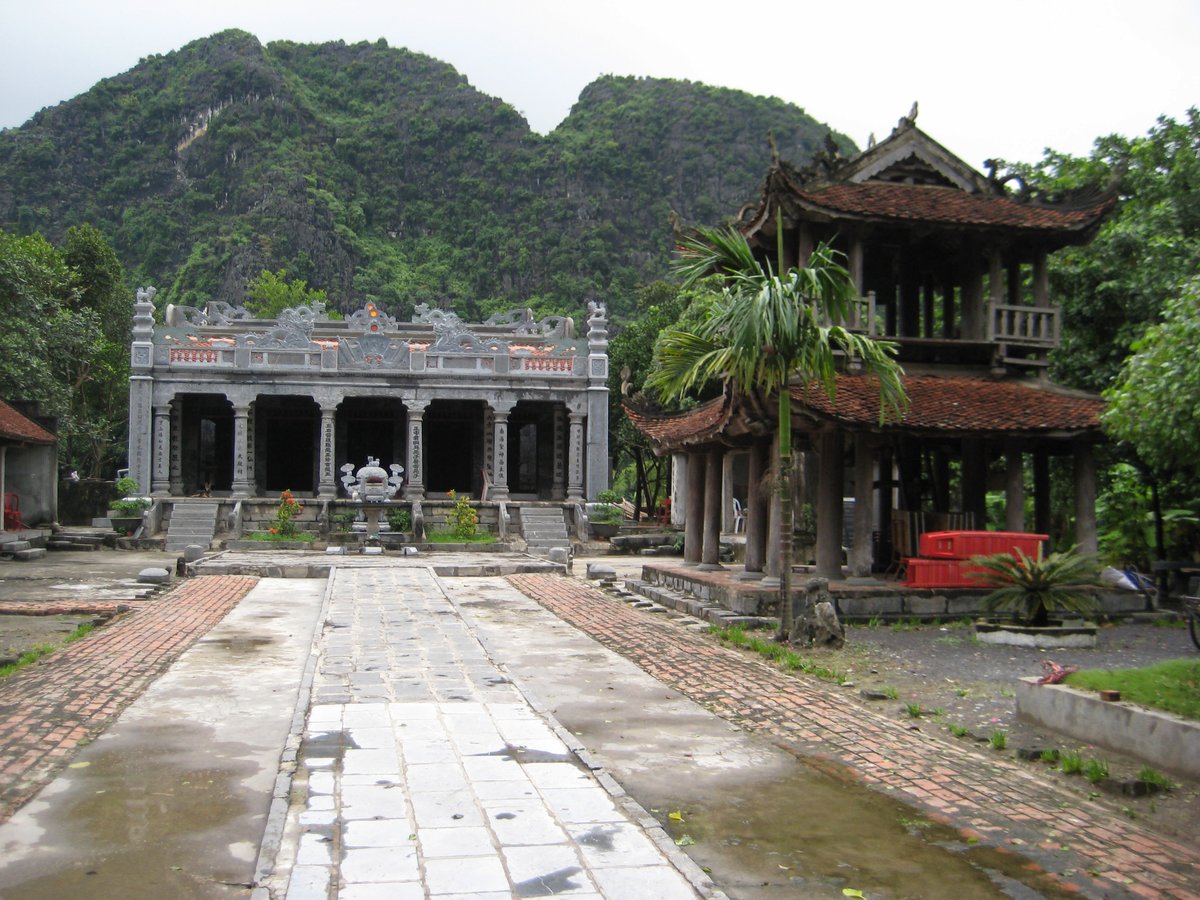
- Thai Vi Temple Built on the site of the Tran Dynasty’s former palace, this temple honors emperors and generals who defended Vietnam against Mongol invasions. Rituals and festivals here are part of Vietnam’s intangible cultural heritage (svietnamtravel.com).
- Co Vien Lau A collection of preserved Nguyen-era houses, offering a glimpse into rural life and vernacular architecture (vietnamparadisetravel.com).
Geological and Ecological Features
Karst Landscape & Caves
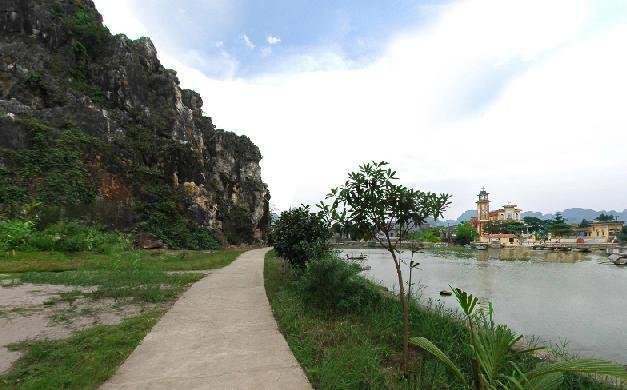
Tam Cốc–Bích Động is defined by its spectacular karst towers rising abruptly from rice paddies—part of a 350-hectare landscape formed by limestone dissolution over millennia. The three main river caves—Hang Cả, Hang Hai, and Hang Ba—are the star attractions, with Hang Cả stretching over 127 meters (UNESCO).
Ngô Đồng River & Biodiversity
The winding Ngô Đồng River nurtures rice fields and supports a rich ecosystem of fish, aquatic plants, and birds. The cliffs and caves shelter unique flora like orchids and ferns, and rare fauna, including bats and cave insects.
Seasonal Phenomena
- May–June The rice fields turn golden, creating a breathtaking landscape for boat trips and photography.
- Rest of the Year The paddies shift from tender green to harvest gold, while lotus blooms appear in June (svietnamtravel.com).
Must-See Attractions
Tam Cốc Boat Ride
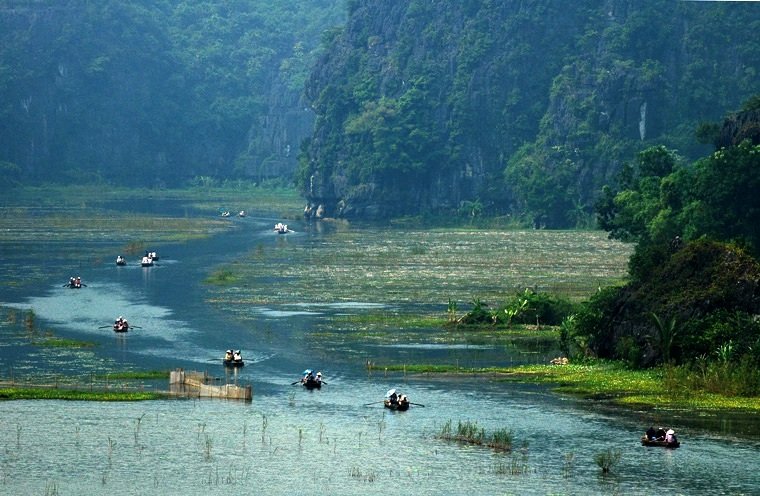
- The Experience Board a traditional sampan rowed by local women (often by foot!) and glide through three limestone caves, surrounded by rice paddies and karst peaks.
- Route 3 km (1–1.5 hours), passing Hang Cả, Hang Hai, Hang Ba.
- Best Time May–July for golden fields and lotus flowers.
- Tickets & Hours 7:00 AM–5:00 PM; ~150,000 VND per adult, plus 150,000 VND per two-seat boat (hanoivoyage.com).
Bích Động Pagoda
- Structure Three-tiered complex built into Ngu Nhạc Sơn mountain.
- Highlights Panoramic views, ancient stone pillars, serene atmosphere.
- Hours & Fees 7:00 AM–5:00 PM, free entry. Beware of unofficial ticket sellers (gretastravels.com).
Múa Cave & Viewpoint
- Activity Climb 486 steps to Lying Dragon Mountain for panoramic views over Tam Cốc valley and rice fields.
- Hours & Fee 7:00 AM–6:00 PM, 100,000 VND entry (abackpackersworld.com).
Thai Vi Temple
- Significance Honors Tran Dynasty kings; set amid rice paddies and limestone.
- Hours 7:00 AM–5:00 PM, free entry.
Van Lam Embroidery Village
- What to See Artisans hand-stitch intricate textiles; shop for souvenirs; cycle through scenic countryside.
- Access 6 km from Tam Cốc, easy by bike or motorbike.
Đồng Tiên Grotto
- Features Quiet cave with striking karst formations and resident bats/birds.
- Hours & Fee Open daily, ~50,000 VND entry.
Traditional Craft Village Exhibition
- What’s On Live workshops, craft displays, and opportunities to make or buy local products.
- Hours 8:00 AM–5:00 PM (during tourism weeks and festivals).
Practical Visitor Information
Visiting Hours & Tickets
- Tam Cốc 7:00 AM–5:00 PM daily.
- Boat Ride ~150,000–200,000 VND per person, tickets at wharf or official counters.
- Pagodas/Temples Free or small donation.
- Bích Động Pagoda Free entry.
- Múa Cave 100,000 VND.
Travel Tips
- Transport 7 km from Ninh Bình city. Reachable by taxi, motorbike, bicycle, or organized tour.
- Dress Code Modest attire for religious sites.
- Accessibility Boat rides are accessible; expect stairs and uneven paths at viewpoints and pagodas.
- Best Times Early morning/late afternoon for cooler weather and fewer crowds; May–June for golden rice fields.
- Tipping Customary to tip boat rowers (20,000–50,000 VND).
Local Life, Culture, and Festivals
Wet Rice Cultivation & Riverine Traditions
The region’s lush paddies are cultivated using centuries-old methods. Visitors in May–June may witness (or join) harvest activities, while traditional boatmanship and fishing endure along the Ngô Đồng River.
Festivals & Rituals
Spring (January–April) hosts vibrant festivals, such as the Bai Dinh Pagoda Festival and rituals at Thai Vi Temple, including the “hau dong” spirit invocation. These events are immersive cultural experiences (vietnamtour.in).
Getting There & Accommodation
Transportation from Hanoi
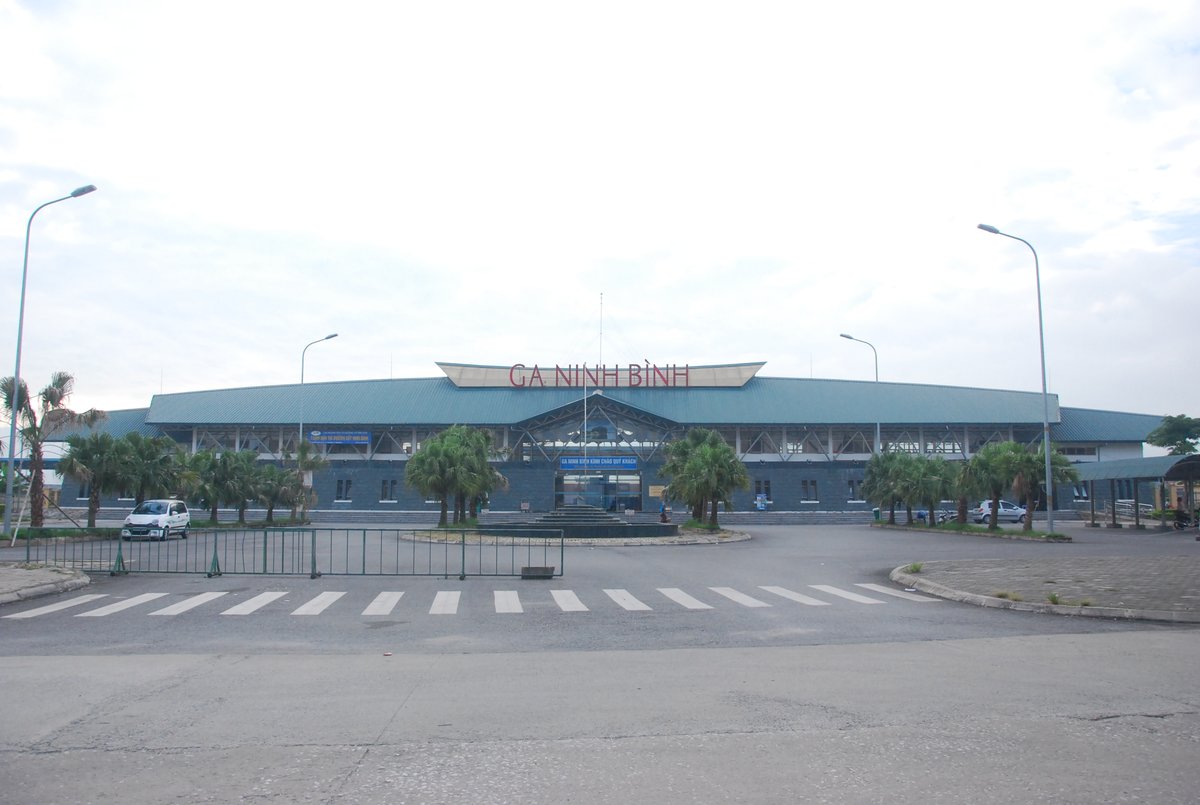
- Train Hanoi to Ninh Bình, 2.5–3 hours, from 80,000 VND; taxi to Tam Cốc (~100,000 VND) (gretastravels.com).
- Bus/Limousine Giap Bat/My Dinh to Ninh Bình, $3–$10 USD; direct tourist buses available (hanoivoyage.com).
- Private Car 2 hours, flexible schedule.
- Motorbike For adventurers; watch for traffic (authentiktravel.com).
Local Transport
- Bicycle Ideal for exploring flat terrain and villages; often provided by homestays.
- Scooter For broader range; ~5–6 euros/day.
- Taxi/Grab Convenient for groups.
Accommodation
- Homestays Authentic experiences; often include breakfast and bike rental.
- Hotels/Resorts Ranging from budget to luxury (e.g., Aravinda Resort, Hidden Charm).
- Location Most near Tam Cốc Wharf and on the Bích Động road (vietnamtravel.com).
Nearby Attractions in Ninh Bình
- Trang An Scenic Landscape Complex UNESCO site with stunning boat tours.
- Hoa Lư Ancient Capital Historical relics of Vietnam’s first capital.
- Bai Dinh Pagoda Vietnam’s largest Buddhist complex.
- Cuc Phuong National Park For hiking and wildlife.
- Mua Cave For panoramic views (localvietnam.com).
Frequently Asked Questions (FAQ)
Q: What are the Tam Cốc–Bích Động visiting hours?
A: 7:00 AM–5:00 PM daily.
Q: How much are Tam Cốc boat tickets?
A: 150,000–200,000 VND per adult, plus boat rental.
Q: Can I buy tickets online?
A: Yes, through authorized operators or at the site.
Q: Is Tam Cốc–Bích Động accessible from Hanoi?
A: Yes, by train, bus, car, or motorbike (2–3 hours).
Q: When are the rice fields golden?
A: Late May to early June.
Q: Are guided tours available?
A: Yes, for deeper insight into history and culture.
Q: Is the area suitable for children/elderly?
A: Boat rides are suitable; some sites have stairs/uneven paths.