Plan and listen to Từ Hiếu Pogoda with Audiala.
Audio guide in your pocket, itinerary in your browser. Built for the way you actually visit.
Introduction
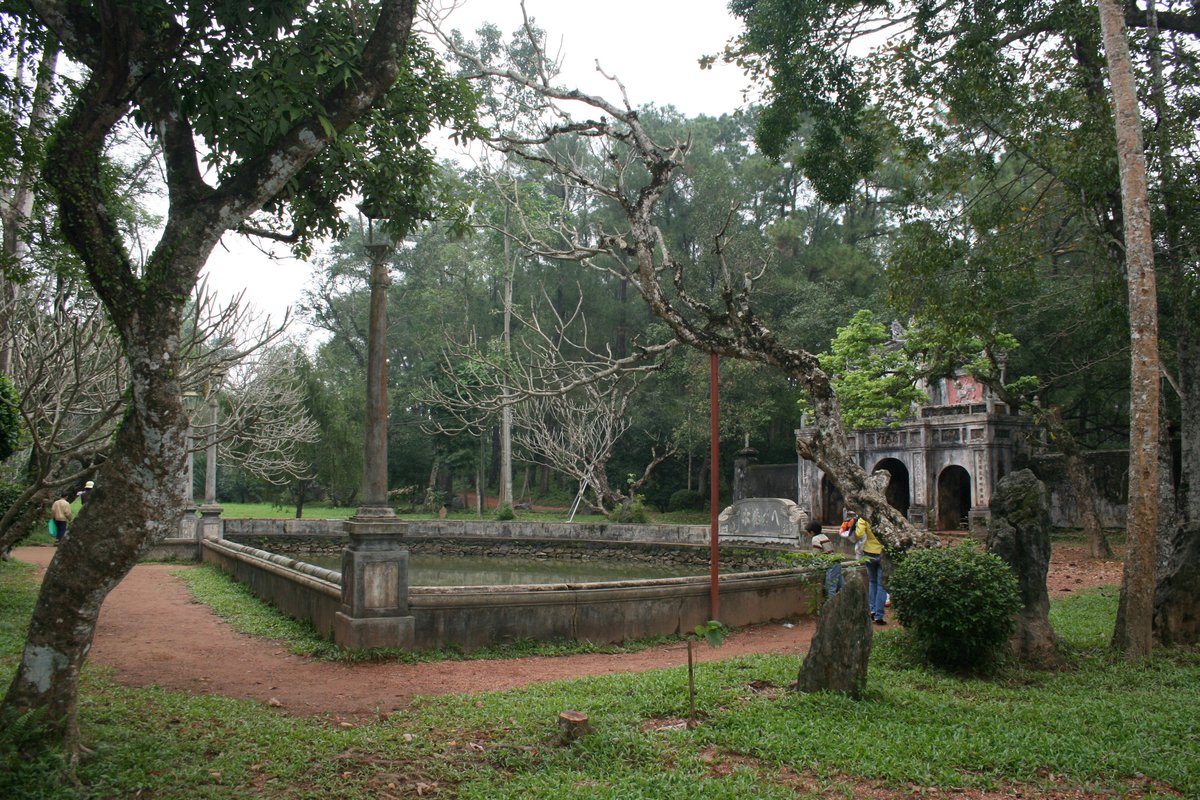
Nestled in the serene pine forests of Thủy Xuân Commune, Huế, Từ Hiếu Pagoda is a beacon of historical, cultural, and spiritual significance. Established in 1843 by Monk Nhat Dinh, the pagoda originally served as a simple retreat for the monk and his elderly mother. Its name, Từ Hiếu, translating to 'Filial Piety,' is rooted in the touching story of Nhat Dinh's devotion to his mother, an act that caught the attention of King Tự Đức (Origin Vietnam). Over the years, the pagoda expanded significantly, reflecting the architectural style of the ancient capital of Huế. It served as a sanctuary for royal eunuchs during the Nguyễn Dynasty, adding to its historical importance (Lonely Planet). Today, Từ Hiếu Pagoda is not only a monument of historical and architectural beauty but also a center for Buddhist learning and meditation, deeply connected to the teachings of Zen Master Thích Nhất Hạnh (Hue Day Tour).

History of Từ Hiếu Pagoda
Founding and Early History
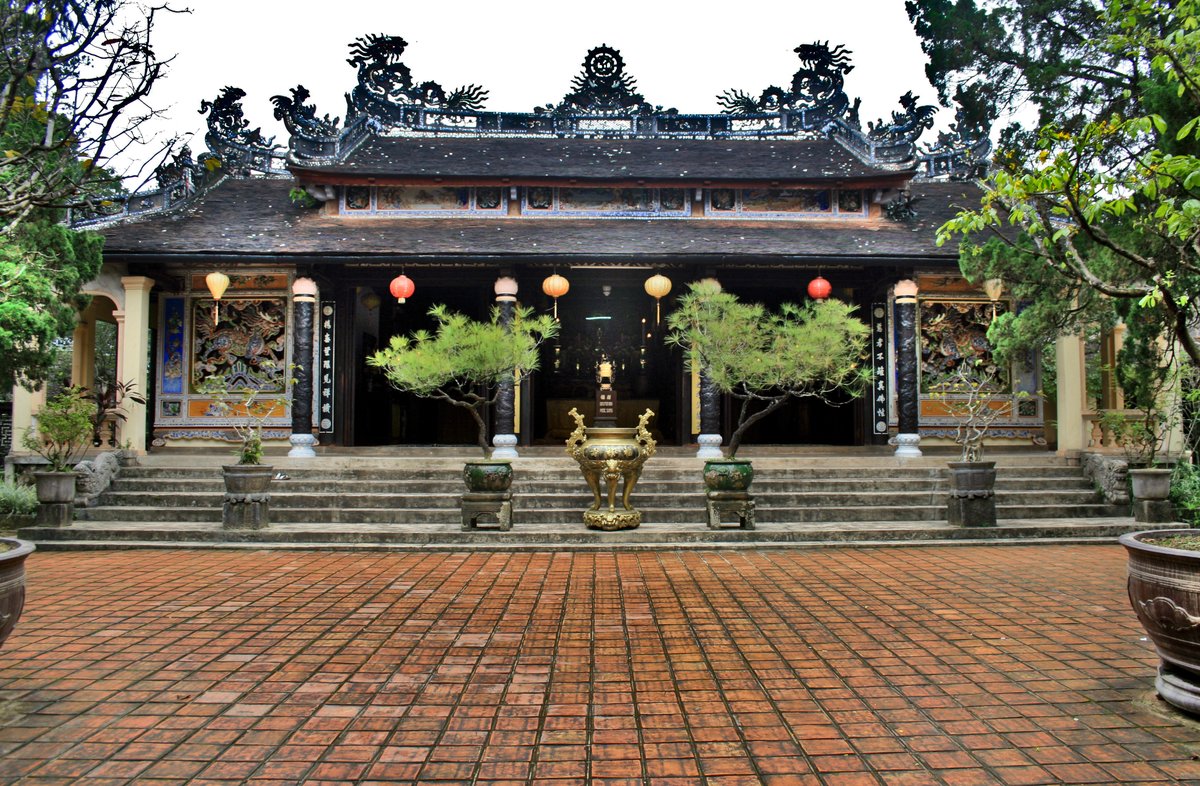
Từ Hiếu Pagoda, also known as the Root Temple (Chùa Từ Hiếu or Tổ Đình Từ Hiếu), was established in 1843 by Monk Nhat Dinh. The monk initially built a small pagoda to train himself and care for his elderly mother. The pagoda's name, Từ Hiếu, which translates to 'Filial Piety,' is deeply rooted in a touching story about Monk Nhat Dinh's devotion to his mother. Despite being a strict vegetarian, he bought meat and fish to nourish his ailing mother, an act that moved King Tự Đức, leading to the pagoda's current name (Origin Vietnam).
Architectural Evolution
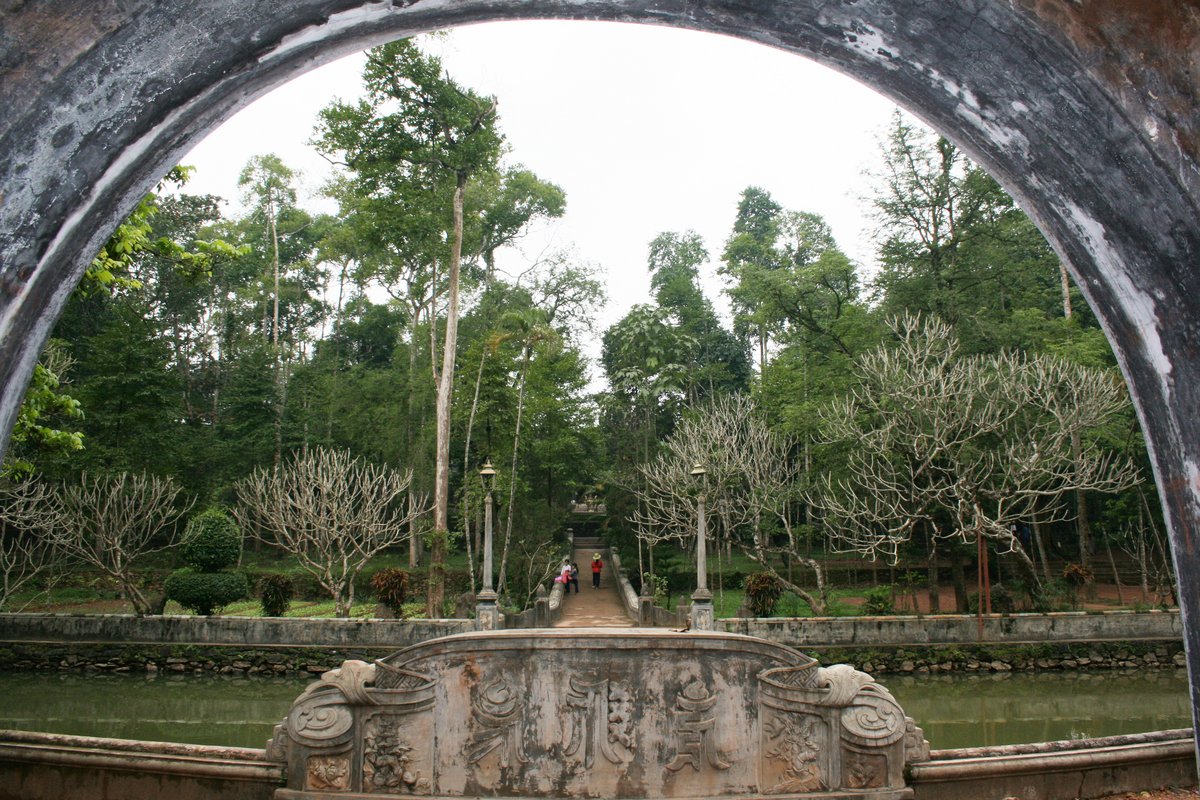
The pagoda's architecture reflects the typical style of the ancient capital of Huế. Initially, it was a modest structure, but over time, it expanded significantly. The pagoda is built in the style of three houses and two wings, including the main area worshiping Buddha, Quang Hiếu Đường behind it, and the rear area dedicated to Left Governor Lê Văn Duyệt. The pagoda's campus spans approximately 8 acres, featuring well-maintained gardens, ponds, and traditional Vietnamese architecture (Hue Day Tour).
Historical Significance
Từ Hiếu Pagoda holds a significant place in Vietnamese history and culture. It served as a sanctuary for royal eunuchs during the Nguyễn Dynasty, who spent their old age here and took care of future worship. The pagoda is also the resting place for 24 eunuchs of the Nguyễn Dynasty, making it a site of historical importance (Lonely Planet).
Visitor Information
Accessibility
Từ Hiếu Pagoda is located in Duong Xuan Thuong III village, Thuy Xuan ward, Huế city, Thua Thien Huế province, Vietnam. It is about 5 km southwest of Huế city center, making it easily accessible by motorbike, personal car, or taxi. The journey from Huế city center involves a straightforward route, starting at Dong Khoi Street and turning left onto Le Loi Street, followed by a series of turns leading to the pagoda (Origin Vietnam).
Visiting Hours and Tickets
Từ Hiếu Pagoda is open daily from 6:00 AM to 6:00 PM. There is no entrance fee, but donations are welcome to help with the maintenance of the pagoda. Visitors are encouraged to dress modestly and respect the tranquility of the site.
Cultural Significance
Connection to Zen Master Thích Nhất Hạnh
One of the most notable aspects of Từ Hiếu Pagoda is its connection to Zen Master Thích Nhất Hạnh. Born in 1926, Thích Nhất Hạnh became a novice monk at Từ Hiếu Pagoda in the 1940s. He later became an influential Buddhist monk, peace activist, and author, known for his teachings on mindfulness and peace. Thích Nhất Hạnh spent his early years meditating and studying at Từ Hiếu Pagoda before living in exile for over 40 years. He was only permitted to return to Vietnam in 2005 and passed away at the pagoda in 2022 (Hue Day Tour).
Modern-Day Relevance
Today, Từ Hiếu Pagoda continues to be a significant cultural and historical site in Huế. It is a popular destination for both local and international tourists who are interested in exploring Vietnam's rich history and culture. The pagoda's serene atmosphere and beautiful surroundings make it an ideal place for meditation and reflection. The pagoda's connection to Thích Nhất Hạnh also adds to its spiritual significance, attracting followers of his teachings from around the world (Hue Day Tour).
Frequently Asked Questions (FAQ)
What are the visiting hours for Từ Hiếu Pagoda? Từ Hiếu Pagoda is open daily from 6:00 AM to 6:00 PM.
How much are tickets to Từ Hiếu Pagoda? There is no entrance fee, but donations are welcome to help with the maintenance of the pagoda.
What is the best time to visit Từ Hiếu Pagoda? The best time to visit is early in the morning or late in the afternoon to avoid the heat and enjoy the tranquil atmosphere.
Listen to the full story in the app
The whole Từ Hiếu Pogoda,
told well.
Audio guides for 1,100+ cities across 96 countries. History, stories, and local insight — offline ready.
Verified, and shown.
Researched and written by the Audiala editorial team from historical records, architectural archives, and local expertise.
Researched from Wikidata, Wikipedia & official sources · fact-checked · How we make our guides →