Plan and listen to Tomb Of Minh Mang with Audiala.
Audio guide in your pocket, itinerary in your browser. Built for the way you actually visit.
Introduction: The Tomb of Minh Mang and Its Historical Importance
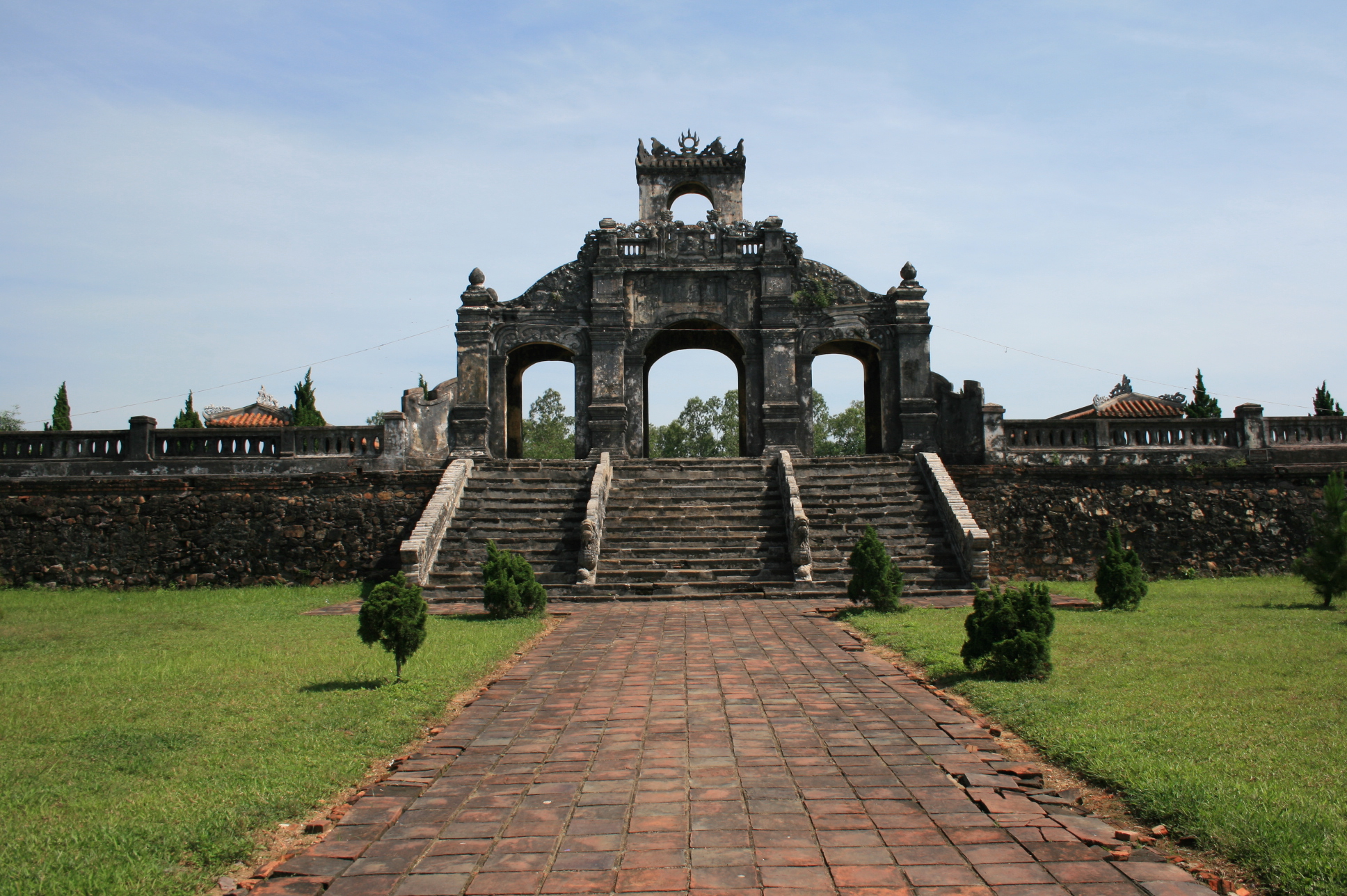
Set amidst the tranquil landscapes of Huế, Vietnam, the Tomb of Emperor Minh Mang is a masterpiece of imperial architecture and a profound symbol of the Nguyen Dynasty’s legacy. Celebrated for its harmonious design, philosophical symbolism, and rich historical resonance, the tomb provides insight into 19th-century Vietnamese ideals and the remarkable reign of Emperor Minh Mang. Ruling from 1820 to 1841, Minh Mang was instrumental in shaping Vietnam’s territorial, cultural, and political landscape, leaving behind a site that encapsulates both the grandeur and the philosophy of his era (Vietnam Discovery; joysdiary.com).
Built between 1840 and 1843, the tomb is a testament to meticulous planning and respect for nature, with its layout reflecting Confucian order and cosmic balance. Spanning approximately 18 hectares and featuring over 40 structures—gates, temples, pavilions, and lakes—it invites visitors to experience a symbolic transition from the earthly to the spiritual, deeply rooted in both feng shui and imperial values (vietnamvacation.com.vn; vietnamonline.com).
This guide is designed to provide visitors with detailed historical context, practical information on tickets and accessibility, tips for a fulfilling visit, and recommendations for nearby attractions, ensuring a comprehensive and enriching experience at one of Vietnam’s most significant heritage sites (Central Vietnam Guide; Vietnam Vacation Travel).
- Historical Background and Legacy of Emperor Minh Mang
- Construction and Symbolism of Minh Mang’s Tomb
- Architectural Features and Artistic Values
- Visitor Information
- Nearby Attractions and Travel Tips
- Frequently Asked Questions (FAQ)
- Key Facts and Figures
- Conclusion and Recommendations
- References
Historical Background and Legacy of Emperor Minh Mang
Early Life and Ascension
Born Nguyen Phuc Dam in 1791, Minh Mang was the fourth son of Emperor Gia Long, the Nguyen Dynasty’s founder. Renowned for his intelligence and devotion to Confucian learning, he was chosen to succeed his father in 1820 due to his capability and alignment with the dynasty’s vision (Premium Travel Vietnam).
Reign and Reforms
Minh Mang’s rule marked a transformative era characterized by:
- Administrative Reform: The country was reorganized into provinces led by loyal officials, diminishing the power of local lords (Central Vietnam Guide).
- Confucian Governance: Laws were codified and Confucian education became central, fostering a meritocratic bureaucracy.
- Cultural Flourishing: Minh Mang was a patron of the arts, supporting Vietnamese literature and the compilation of historical records.
- Territorial Expansion: Under his leadership, Vietnam reached its greatest territorial extent, assimilating diverse regions through the promotion of Vietnamese customs (World Mate Travel).
- Isolationist Foreign Policy: Determined to preserve national sovereignty and Confucian values, he limited Western influence and missionary activity (Vietnam Original Travel).
Legacy
Emperor Minh Mang is remembered for unifying and strengthening Vietnam, but his conservative policies contributed to future challenges with Western colonial powers (Expatolife).
Construction and Symbolism of Minh Mang’s Tomb
Site Selection and Planning
Minh Mang personally chose the site after a 14-year search, settling on Cam Khe Mountain at the confluence of the Huu Trach and Ta Trach streams—believed to possess auspicious feng shui (Central Vietnam Guide). Construction began in 1840 and was completed by his son, Emperor Thieu Tri, in 1843.
Symbolism
- Confucian and Feng Shui Principles: The complex’s symmetry and orientation symbolize harmony, order, and the unity of man with nature.
- Cosmic Journey: The 700-meter central axis represents the emperor’s transition from the earthly realm to the spiritual world (Vietnam Discovery).
Architectural Features and Artistic Values
Overall Layout
Covering 18 hectares, the tomb’s 40+ structures are arranged along a central axis, with lakes, hills, and pavilions forming a landscape that mirrors a reclining figure—Kim Phung Mountain as the head, lakes as arms, and the river as feet (joysdiary.com; vietnamonline.com).
Key Structures
- Dai Hong Mon (Grand Red Gate): Main entrance, opened only once for the emperor’s funeral (samtourvietnam.com.vn).
- Honor Courtyard: Stone statues of mandarins, elephants, and horses line the approach.
- Stele Pavilion (Bi Dinh): Houses a commemorative stele inscribed by Emperor Thieu Tri (vietnamvacation.com.vn).
- Sung An Temple: Central shrine dedicated to Minh Mang and his queen.
- Minh Lau Pavilion: Octagonal, two-story structure symbolizing enlightenment (samtourvietnam.com.vn).
- Tan Nguyet Lake: Crescent-shaped lake representing yin, embracing the yang of the burial mound (vietnamvacation.com.vn).
- Buu Thanh: The emperor’s final resting place, encircled by a lotus-domed wall in a tranquil pine forest (samtourvietnam.com.vn).
Artistic Details
- Motifs: Dragons, phoenixes, lotuses, and clouds symbolize power, purity, and the cosmic order.
- Materials: Glazed tiles, intricate woodwork, and stone carvings enhance the tomb’s visual harmony.
Visitor Information
Visiting Hours
- Opening Hours: Daily, typically from 6:30 or 7:00 AM to 5:30 PM (ticket sales from 7:00 AM to 5:00 PM).
Tickets
- Prices (2025):
- Adults: 150,000 VND (~$6.50 USD)
- Children (7–12 years): 30,000 VND
- Children under 6: Free
- Discounts for students/seniors with valid ID
- Combo Tickets: Available for multiple tombs and the Imperial City, valid for 2 days.
Accessibility
- Paved paths cover most of the site, but some areas have steps and uneven terrain. Basic wheelchair access is available; assistance is advisable for those with mobility challenges.
Guided Tours
- Local guides and audioguides are available on-site and through travel agencies, providing valuable historical and cultural context.
Facilities
- Restrooms and shaded benches are available.
- Small stalls near the entrance offer drinks and snacks.
Photography and Etiquette
- Photography is allowed in most outdoor areas but restricted inside specific temples.
- Dress modestly, especially when visiting shrines.
- Maintain respectful behavior and avoid touching statues or climbing on structures.
Nearby Attractions and Travel Tips
- Tomb of Khai Dinh: Noted for its blend of Eastern and Western architectural styles.
- Tomb of Tu Duc: Celebrated for its gardens and poetic ambiance.
- Imperial City of Hue: The heart of royal heritage.
- Thien Mu Pagoda: A historic riverside pagoda nearby.
Travel Tips:
- Visit early morning or late afternoon to avoid crowds and heat.
- Wear comfortable footwear and bring water.
- Plan to spend 1.5–2 hours at the tomb and combine visits with other sites using combo tickets for convenience.
Frequently Asked Questions (FAQ)
Q: What are the Tomb’s visiting hours?
A: Daily, from 6:30 or 7:00 AM to 5:30 PM.
Q: How much do tickets cost?
A: Adult tickets are 150,000 VND; discounts for children and seniors.
Q: Is the tomb wheelchair accessible?
A: Main paths are accessible, but some areas have steps and uneven ground.
Q: Are guided tours available?
A: Yes, local guides and audioguides are available.
Q: Can I photograph inside the tomb?
A: Photography is permitted outdoors; check for restrictions inside temples.
Key Facts and Figures
- Construction: 1840–1843
- Area: 18 hectares
- Structures: Over 40
- Central Axis: 700 meters
- Emperor’s Reign: 1820–1841
- Number of Children: 143
- UNESCO World Heritage: Part of the Complex of Hue Monuments
Listen to the full story in the app
The whole Tomb Of Minh Mang,
told well.
Audio guides for 1,100+ cities across 96 countries. History, stories, and local insight — offline ready.

Verified, and shown.
Researched and written by the Audiala editorial team from historical records, architectural archives, and local expertise.
Last reviewed