Plan and listen to Ho Chi Minh City Hall with Audiala.
Audio guide in your pocket, itinerary in your browser. Built for the way you actually visit.
Introduction
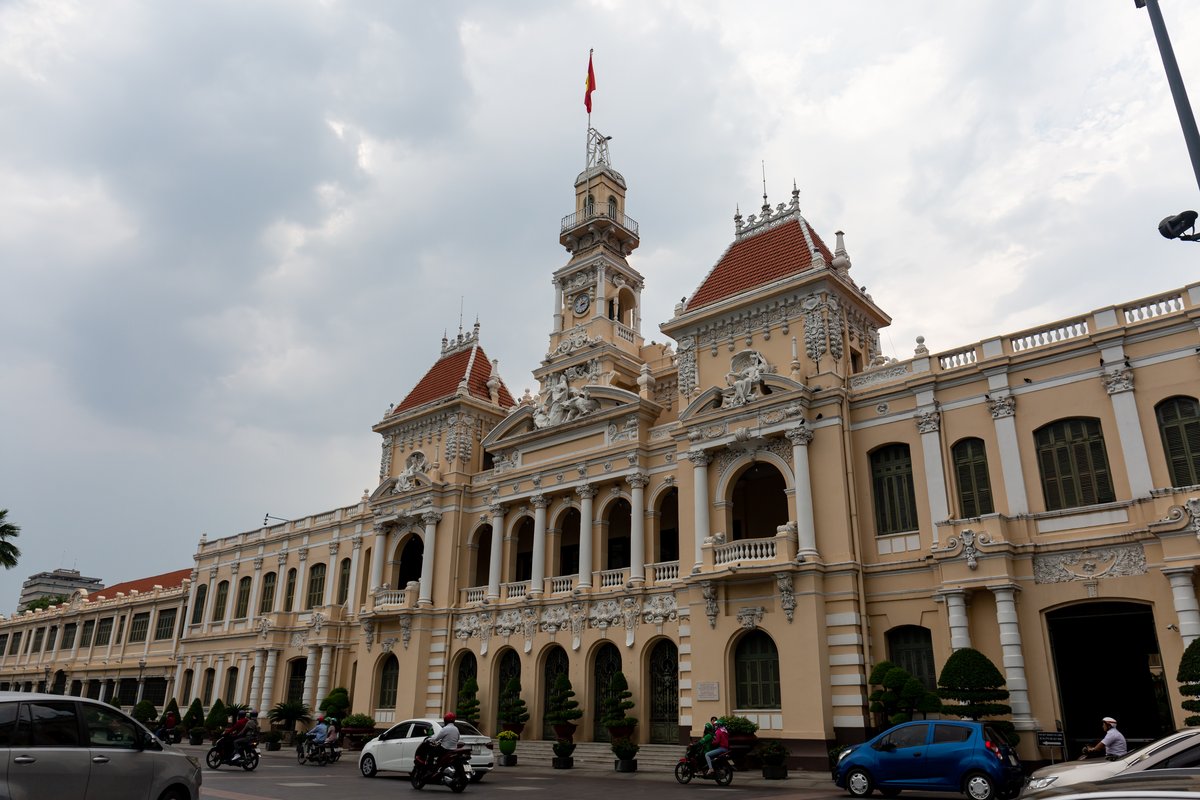
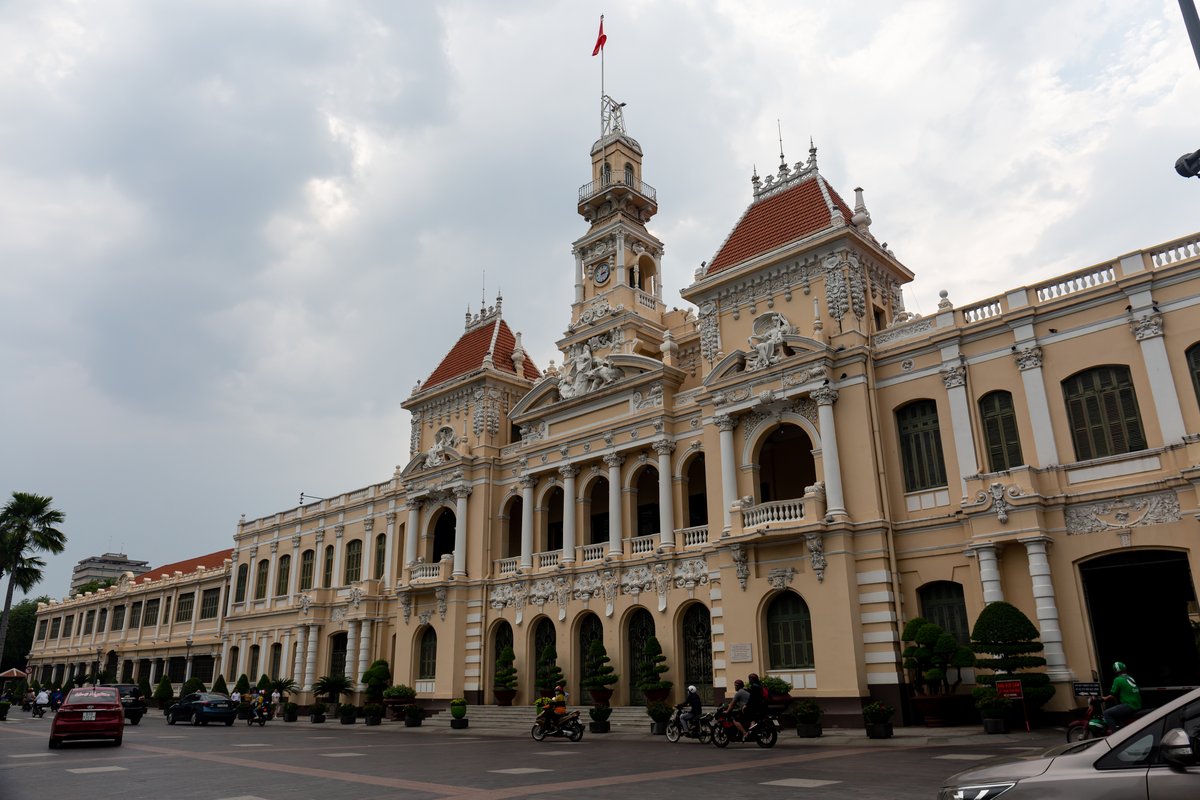
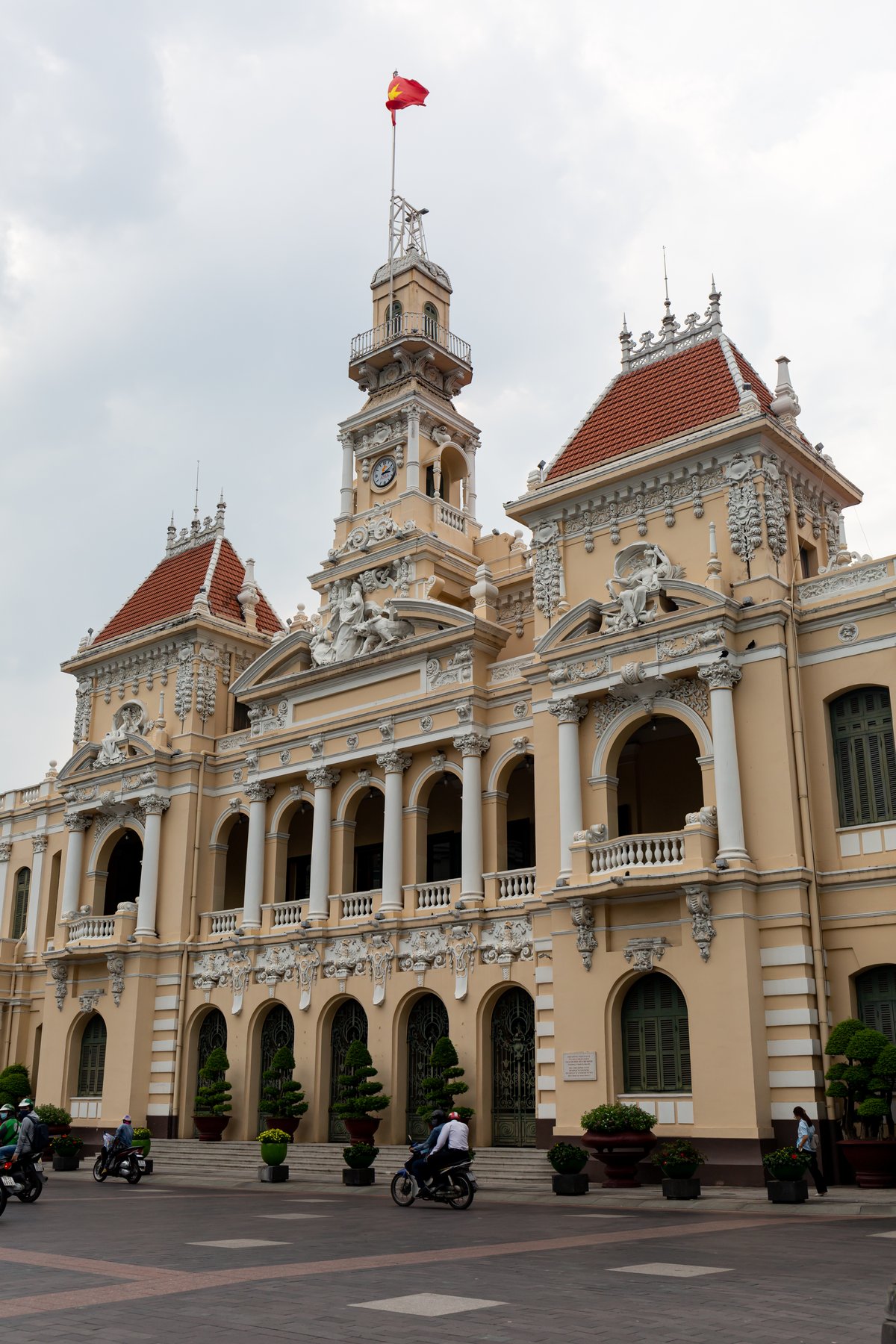
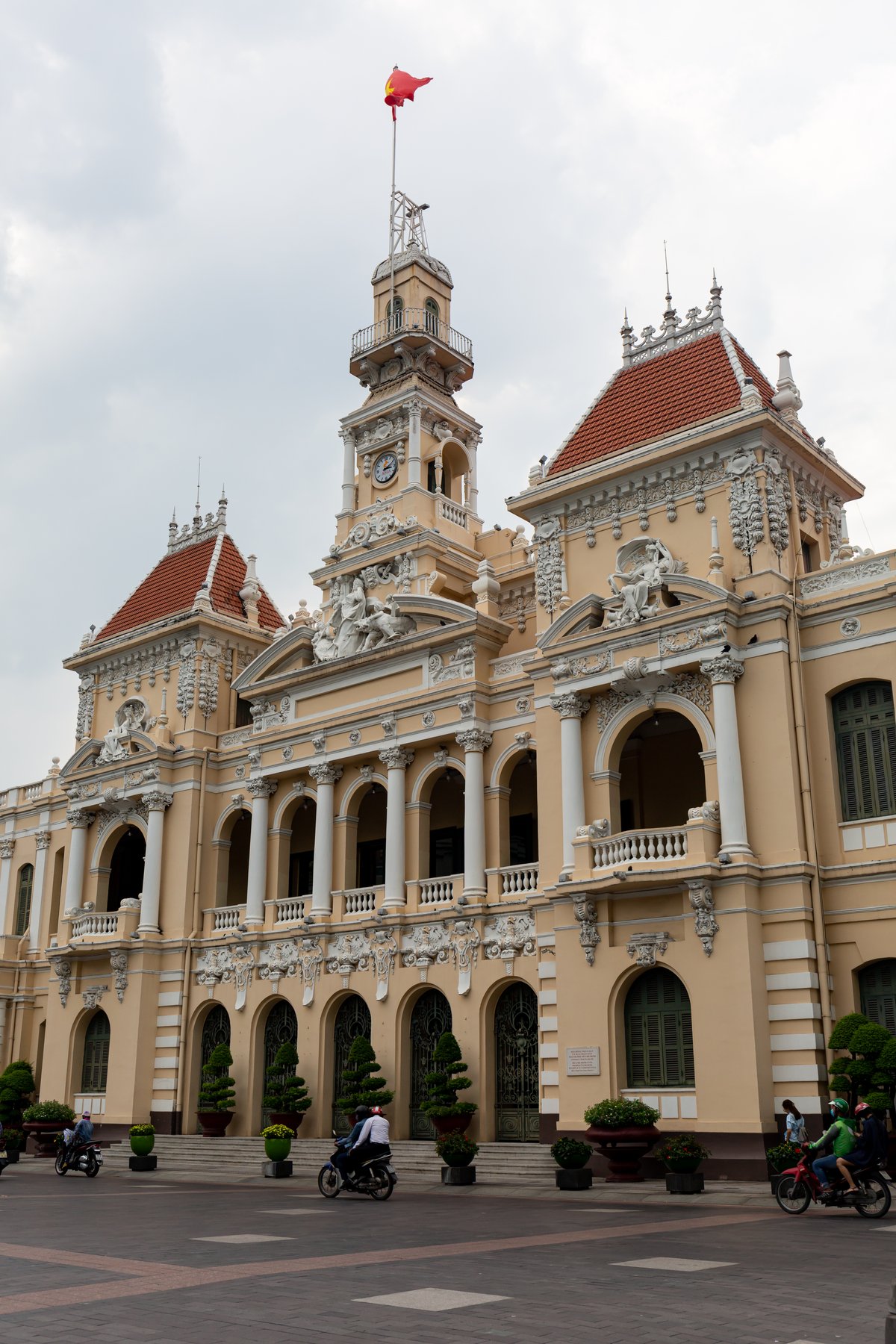
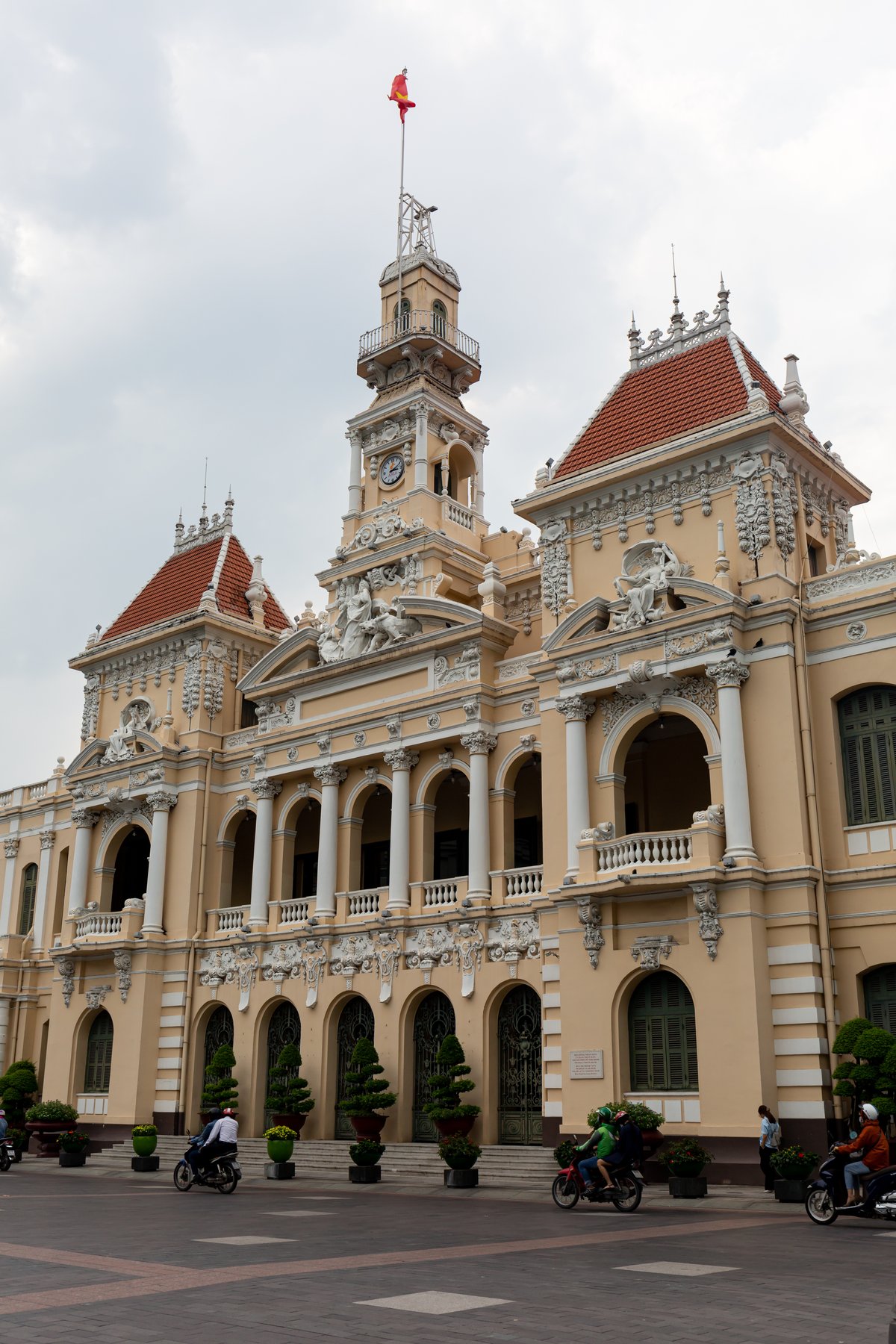
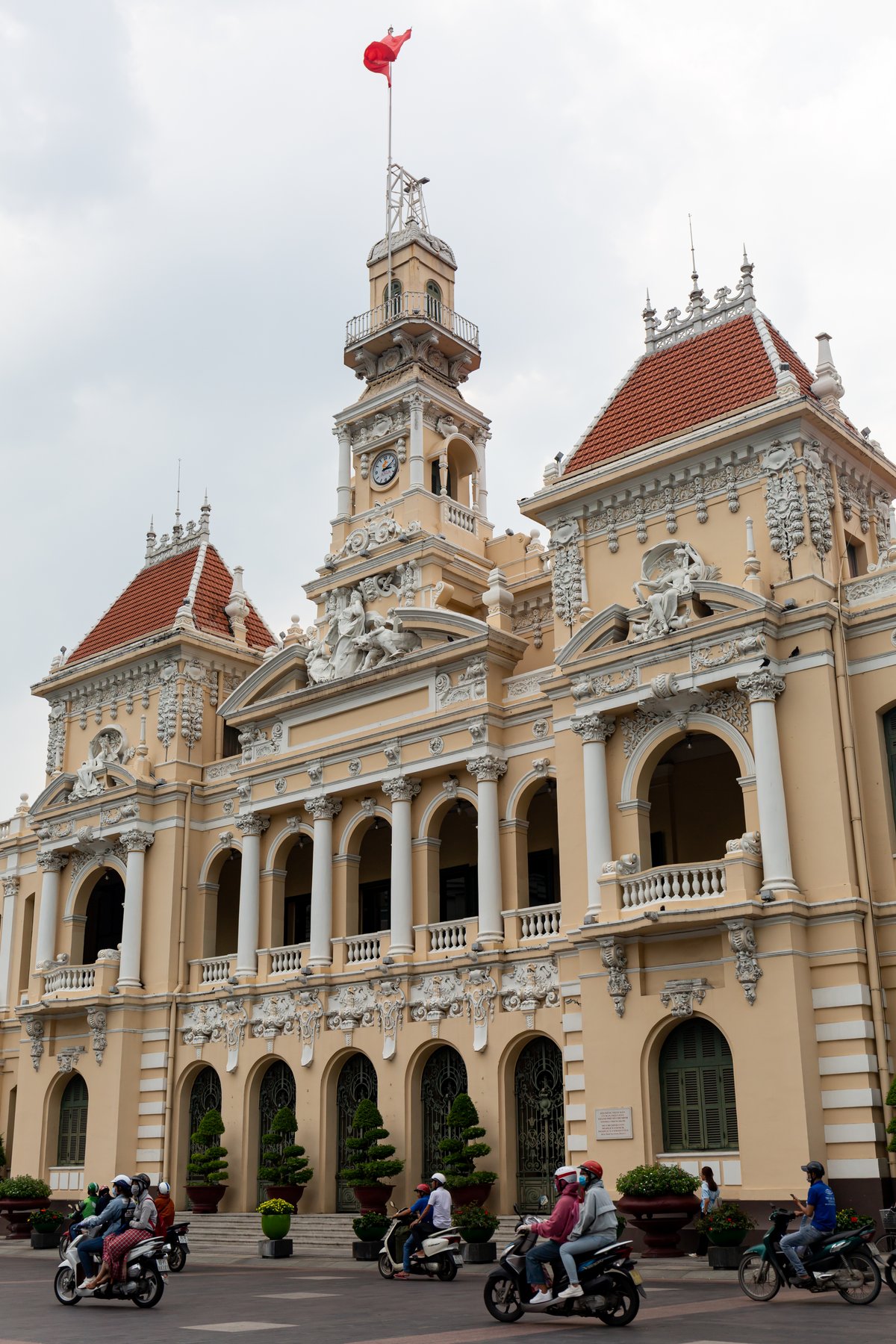
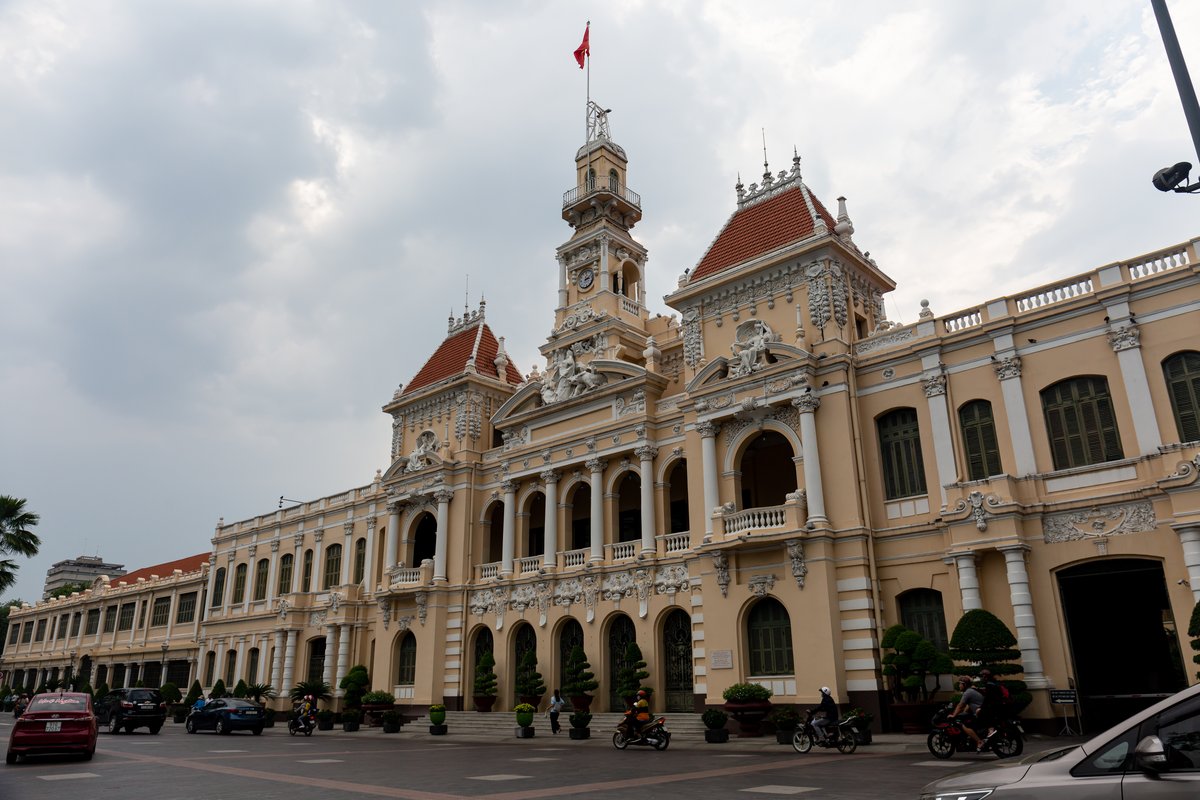
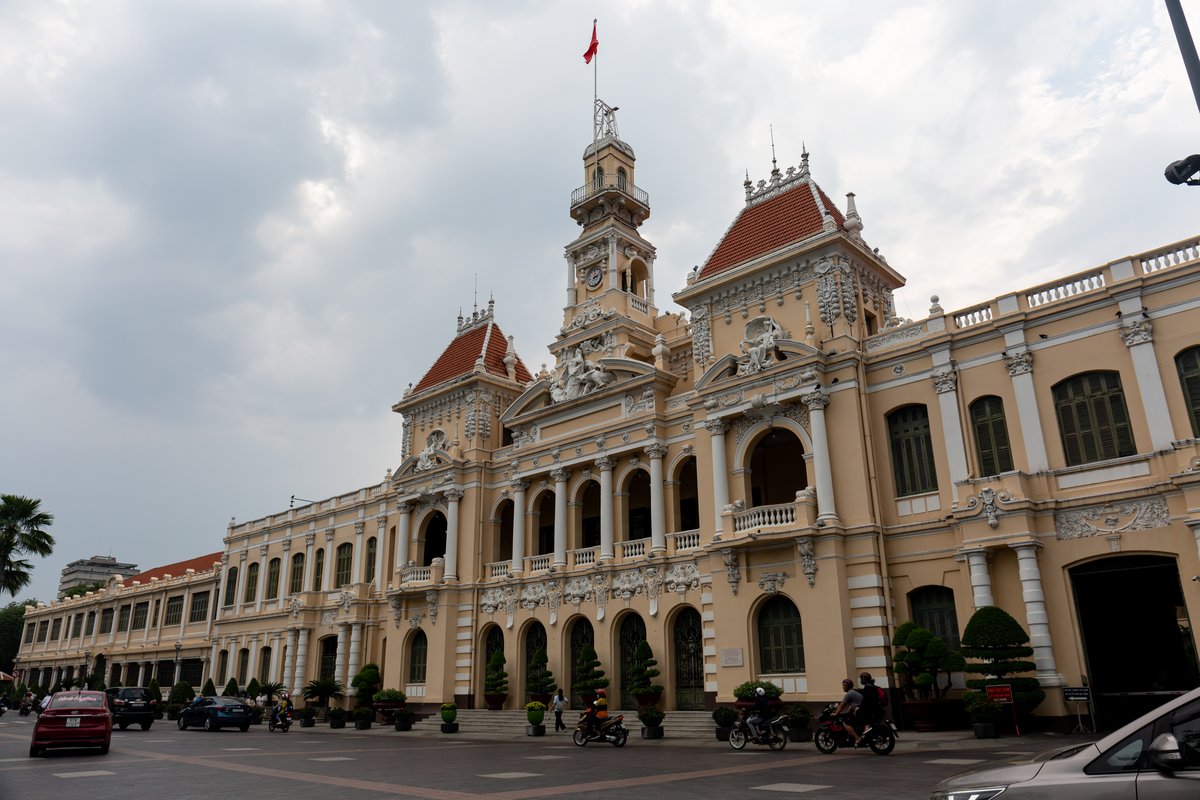
Ho Chi Minh City Hall, officially known as the Ho Chi Minh City People’s Committee Head Office (Vietnamese: Trụ sở Hội đồng Nhân dân và Ủy ban Nhân dân Thành phố Hồ Chí Minh), stands as a prominent symbol of Vietnam’s historical evolution and architectural splendor. Located at the northern end of Nguyen Hue Boulevard in District 1, this French colonial masterpiece not only functions as the administrative headquarters of the city but also captivates visitors with its ornate façade, well-preserved heritage, and the evocative story it tells—from colonial rule to Vietnamese sovereignty (vietnamretreat.com; vietnamtravel.com).
This comprehensive guide details the City Hall’s historical significance, architectural highlights, visiting hours, ticketing, accessibility, and practical tips—ensuring a rewarding experience for architecture enthusiasts, history lovers, and travelers alike.

Origins and Colonial Era
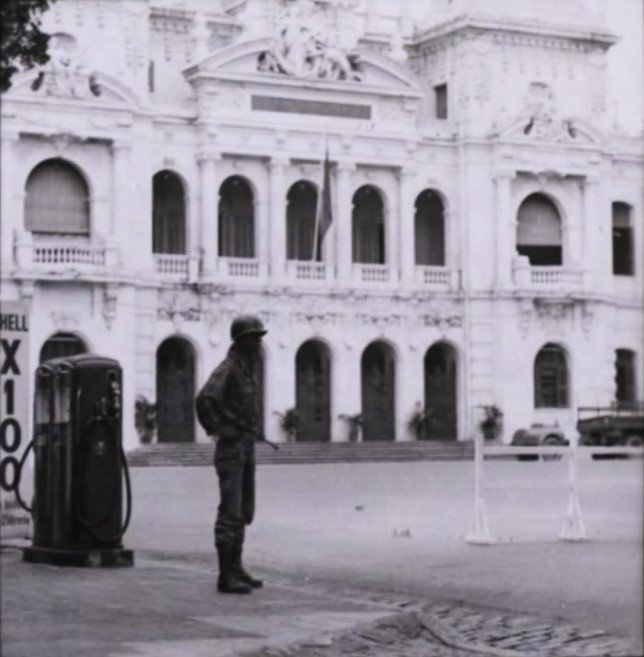
Commissioned during the height of French colonial influence in Indochina, Ho Chi Minh City Hall—originally called Hôtel de Ville de Saigon—was constructed between 1898 and 1908. The building was designed by French architect Fernand Gardès, who modeled it after Paris’s Hôtel de Ville, fusing Beaux-Arts principles with local adaptations (augustusinsaigon.uni-trier.de). It served as the administrative hub for the French colonial government, hosting official events and symbolizing the colonial power’s aspirations to remake Saigon in the image of a European capital (vietnamretreat.com).
Post-Colonial Transformation
Following the end of French rule, the building became the City Hall of Saigon and continued as the seat of governance for South Vietnam until 1975. After the reunification of Vietnam, it was renamed the Ho Chi Minh City People’s Committee Head Office, reflecting both its continuity and transformation as a symbol of Vietnamese sovereignty (travelsaigon.org).
Preservation and Heritage Status
Recognized as a national heritage site in 2020, the building has undergone careful restorations to maintain its integrity and grandeur. It remains a living monument to Saigon’s layered history and the city’s ongoing evolution (augustusinsaigon.uni-trier.de).
Architectural Features and Symbolism
Design and Influences
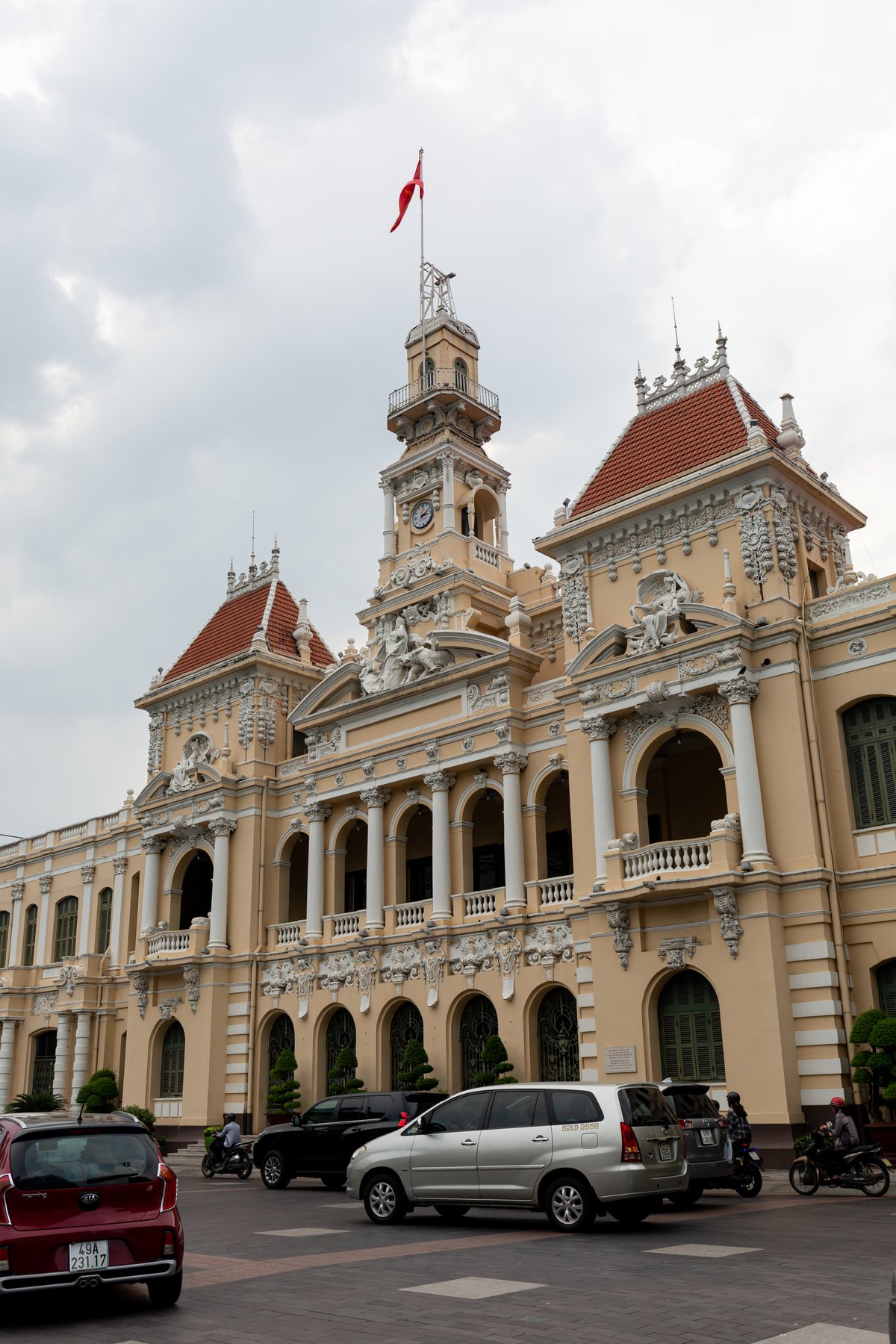
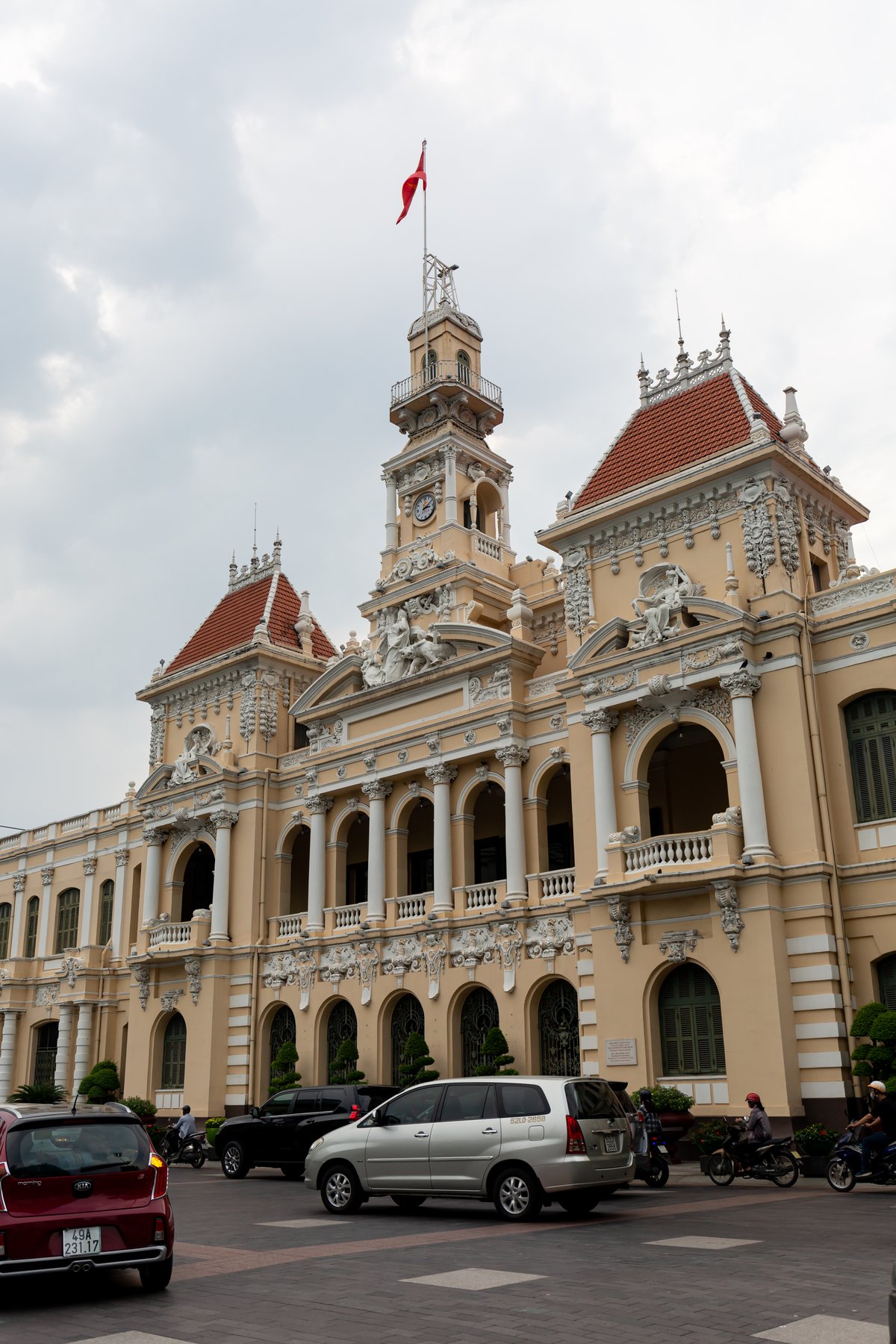
Ho Chi Minh City Hall is a striking example of French Renaissance and Beaux-Arts architecture. Notable features include:
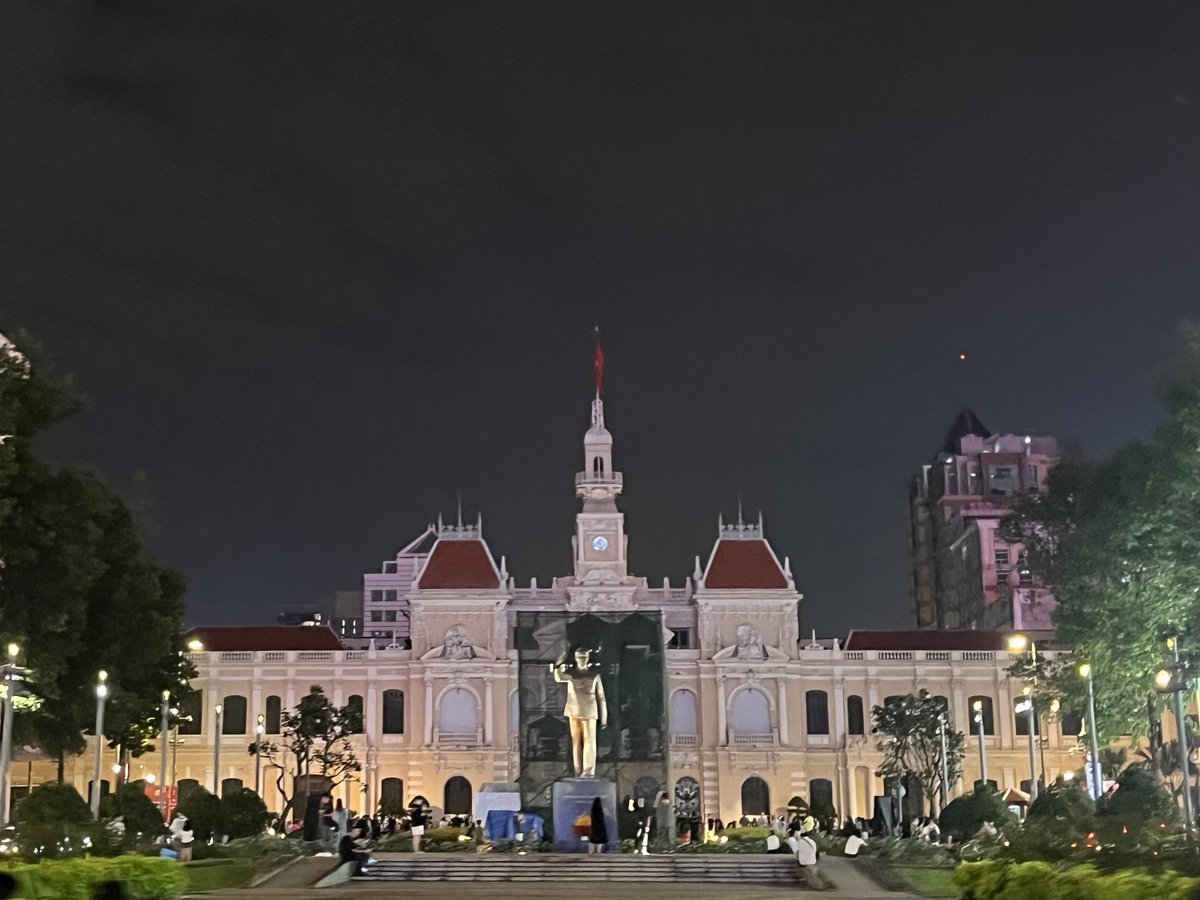
- Symmetrical Façade: The building’s balanced proportions and ornate detailing exemplify the Beaux-Arts tradition (vietnamtravel.com).
- Central Clock Tower: A visual anchor topped with the Vietnamese flag, originally a symbol of colonial authority, now representing national pride.
- Decorative Reliefs and Statues: The façade is adorned with bas-reliefs and statuary, including figures symbolizing civic virtue and protection (latelier-anphu.com).
- Imported Materials: Many construction materials, including roof tiles and decorative elements, were imported from France, emphasizing the building’s colonial pedigree (mazevietnam.com).
Vietnamese Motifs and Modern Identity
Subtle Vietnamese influences appear in the landscaping, with lotus and frangipani—symbols of purity and resilience—integrated into the grounds. The statue of Ho Chi Minh, installed in 2015, bridges the gap between the city’s colonial legacy and its contemporary national identity (vietnamtravel.com).
Nighttime Illumination
A sophisticated LED lighting system, donated by the city of Lyon, France, highlights the building’s architectural features each evening, transforming the City Hall into a luminous focal point and popular photography subject (latelier-anphu.com).
Visiting Ho Chi Minh City Hall
Visiting Hours
- Exterior Viewing: The building’s exterior and the adjacent gardens can be admired at any time, day or night.
- Interior Access: The City Hall is generally closed to the public. However, free guided tours of the interior are offered on the last Saturday and Sunday of each month. These tours provide rare access to the grand main hall, reception rooms, and historical exhibits. Advance registration is required due to limited capacity (gtrip.vn).
Tickets
- Exterior: Free; no ticket required.
- Guided Interior Tours: Free, but registration is mandatory via the city’s Department of Tourism or authorized partners.
Location and Accessibility
- Address: 86 Le Thanh Ton Street, Ben Nghe Ward, District 1, Ho Chi Minh City.
- Getting There: Easily accessible by taxi, ride-hailing services (e.g., Grab), or on foot from other central attractions.
- Accessibility: The public areas and gardens are wheelchair accessible. Ramps and smooth pavements are available along Nguyen Hue Boulevard. For special assistance or guided access, contact the Department of Tourism in advance.
Guided Tours and Photography
- Guided Tours: Offered on the last weekend of each month; registration required.
- Photography: The exterior is a favorite spot for photography, especially in the evening when illuminated. Tripods are permitted in public areas, but drone usage requires prior authorization.
Special Events
- The City Hall and Nguyen Hue Boulevard serve as backdrops for major cultural events and festivals, including Reunification Day and Tet (Lunar New Year), when the area is adorned with floral displays and special lighting.
Nearby Attractions
Take advantage of City Hall’s central location to visit:
- Saigon Central Post Office
- Notre-Dame Cathedral Basilica of Saigon
- Saigon Opera House
- Ben Thanh Market
- War Remnants Museum
All are within walking distance, making it easy to create a comprehensive architectural or historical tour (mazevietnam.com).
Practical Visitor Information
- Best Time for Photos: Early morning for soft natural light; evening for dramatic illumination.
- Weather Tips: Bring an umbrella or raincoat during the rainy season (June–October).
- Safety: Watch your belongings, especially in crowded or festive periods.
- Etiquette: Respect the building’s status as an active government site—avoid obstructing entrances and keep noise to a minimum.
Frequently Asked Questions (FAQ)
Q: Can I enter Ho Chi Minh City Hall?
A: The interior is closed except for free guided tours on the last Saturday and Sunday of each month, with advance registration.
Q: Is there a ticket fee for visiting or tours?
A: Viewing the exterior is always free; interior tours are free but require registration.
Q: Is the area wheelchair accessible?
A: Yes, the surrounding public spaces and Nguyen Hue Boulevard are accessible.
Q: When is the best time for photography?
A: Early morning and evening, especially when the building is illuminated.
Q: Are guided tours available year-round?
A: Guided tours are currently offered monthly on the last weekend. Check the official tourism website for updates.
Listen to the full story in the app
The whole Ho Chi Minh City Hall,
told well.
Listen to sourced travel stories with local history and practical context — ready offline.
Verified, and shown.
Researched and written by the Audiala editorial team from historical records, architectural archives, and local expertise.
Built from cited sources · see the method · How we make our guides →