Plan and listen to Presidential Palace Of Vietnam with Audiala.
Audio guide in your pocket, itinerary in your browser. Built for the way you actually visit.
Introduction
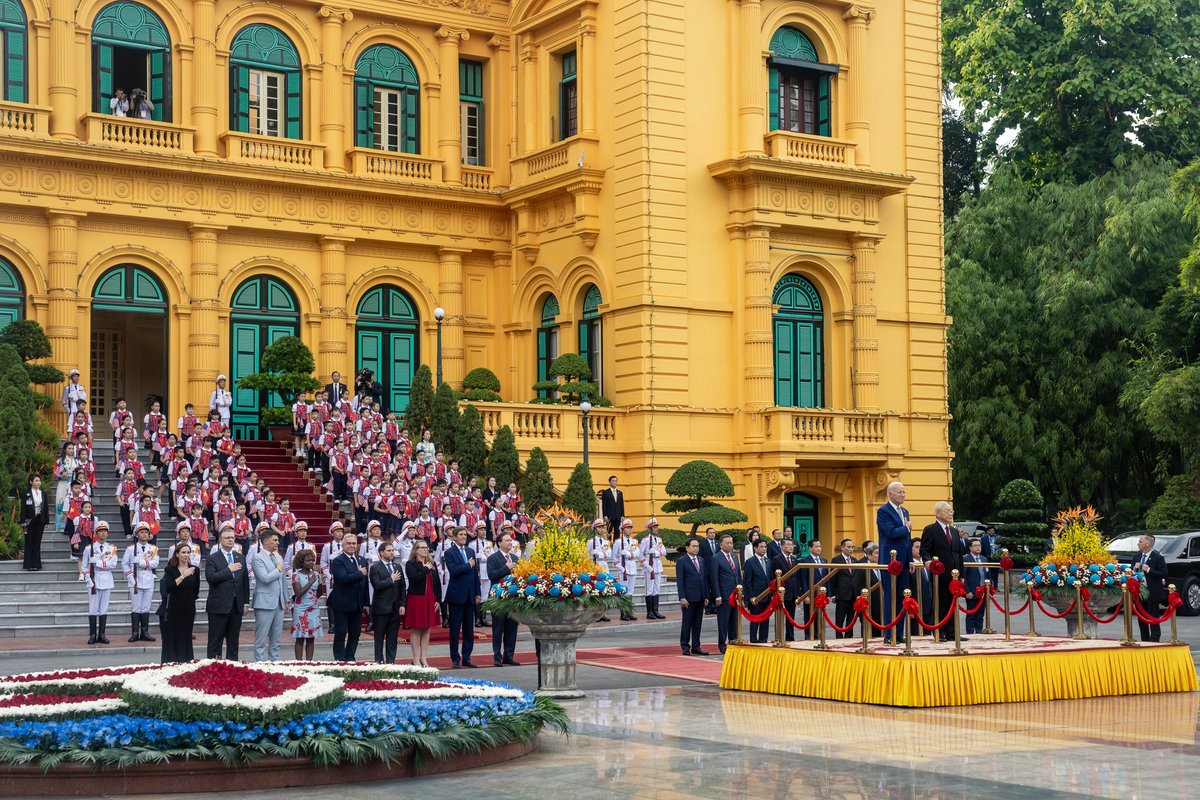
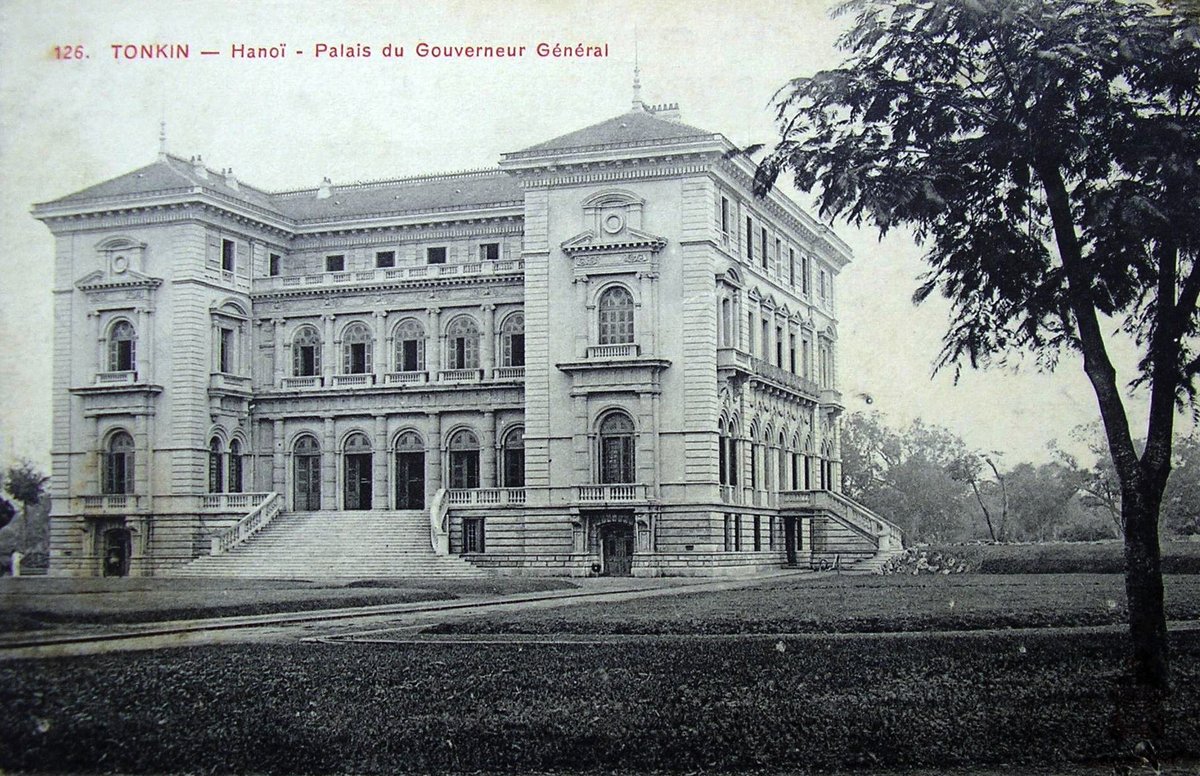
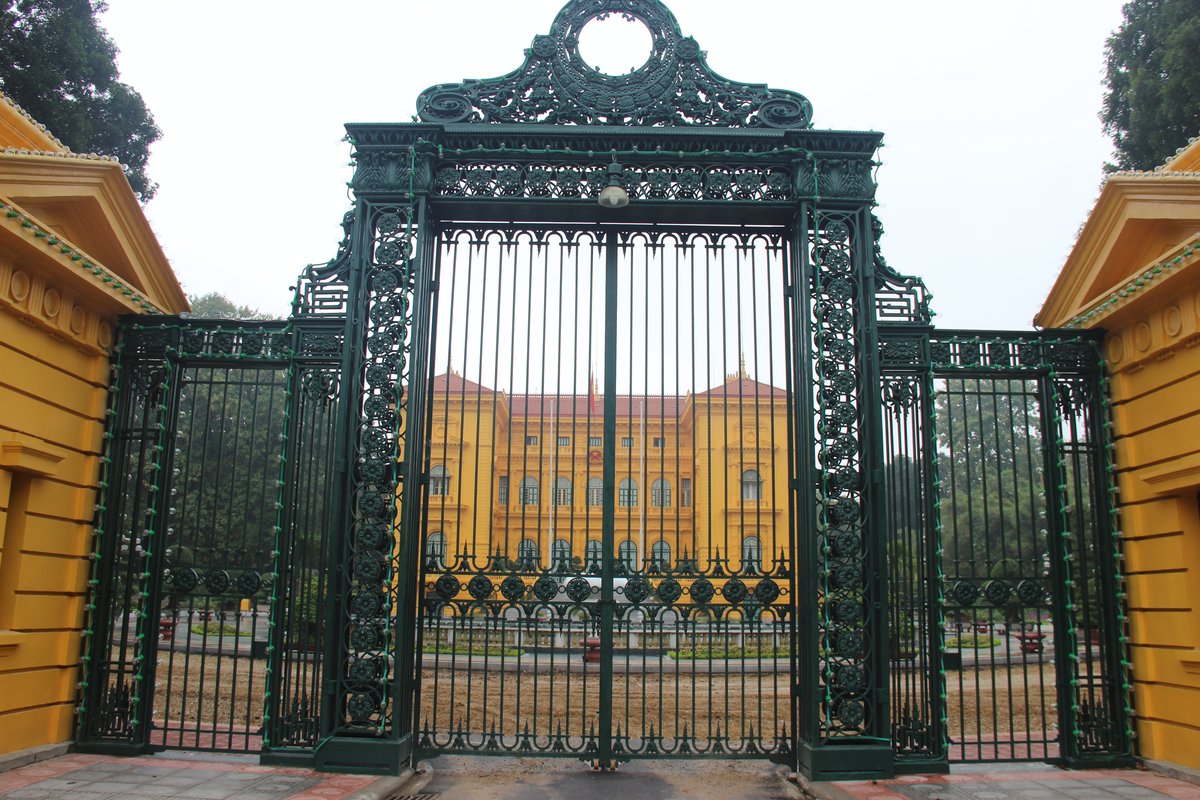
Nestled in Hanoi’s historic Ba Dinh District, the Presidential Palace is a monumental symbol of Vietnam’s complex history, blending colonial grandeur with revolutionary spirit. Originally constructed between 1900 and 1906 as the residence of the French Governor-General of Indochina, it showcases stunning French neoclassical and Beaux-Arts architecture, characterized by its mustard-yellow façade, grand columns, and symmetrical layout (Vietnam Reviewer; Vietnam Discovery). Beyond its architectural splendor, the site is deeply intertwined with Vietnam’s journey from colonial rule to independence, serving as the official seat of government post-1954.
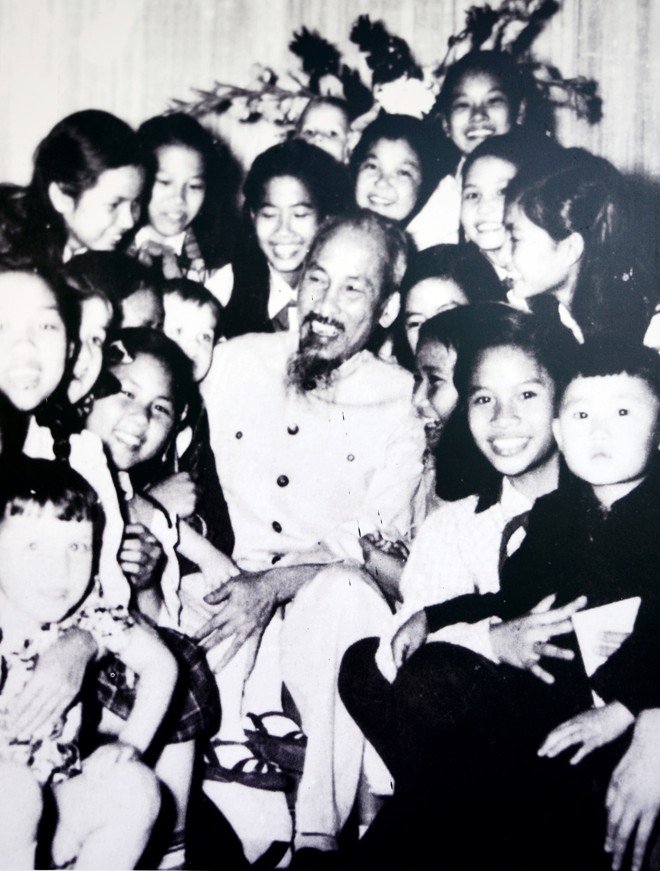
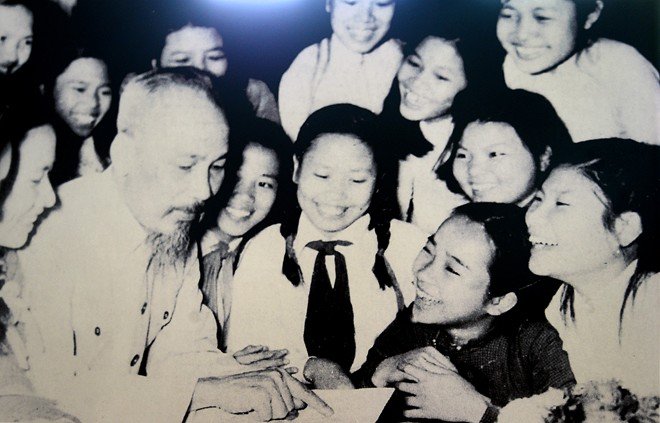
Visitors to the Presidential Palace gain more than a visual treat—they access a living narrative of national identity. President Ho Chi Minh, the nation’s revered leader, famously declined to live in the lavish main building, opting instead for a humble stilt house within the palace grounds—a lasting symbol of simplicity and dedication (Go Viet Trip; IDC Travel). The complex, with its carefully preserved gardens, auxiliary structures, and historical residences, invites exploration into Vietnam’s political heritage and cultural evolution.
This comprehensive guide covers the palace’s history, architectural highlights, visiting hours, ticketing, accessibility, travel tips, and suggested nearby attractions such as the Ho Chi Minh Mausoleum and One Pillar Pagoda. Whether you're a history enthusiast, architecture lover, or cultural traveler, this article will help you unlock the stories and significance embedded within this iconic Vietnamese landmark (Impress Travel).

Colonial Origins and Architectural Highlights
Construction and Style
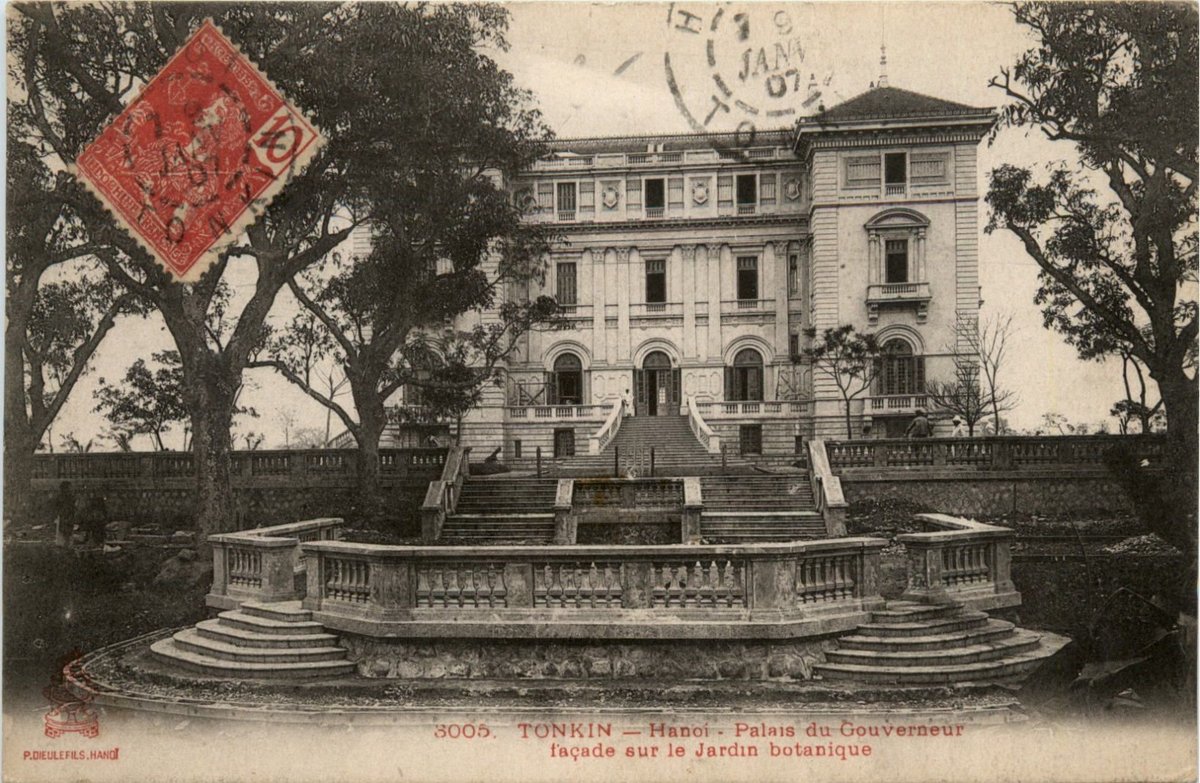
The Presidential Palace was built from 1900 to 1906, designed by French architect Auguste Henri Vildieu to serve as the residence of the Governor-General of Indochina (Vietnam Discovery; VinWonders). Its classical European style—with little to no Asian motifs—was a deliberate statement of colonial authority. The structure’s symmetrical façade, ornate balustrades, and grand staircases are emblematic of the neoclassical and Beaux-Arts movements. The palace is painted a distinctive mustard yellow, a hallmark of French colonial architecture in Vietnam (VNITourist).
Layout and Interior
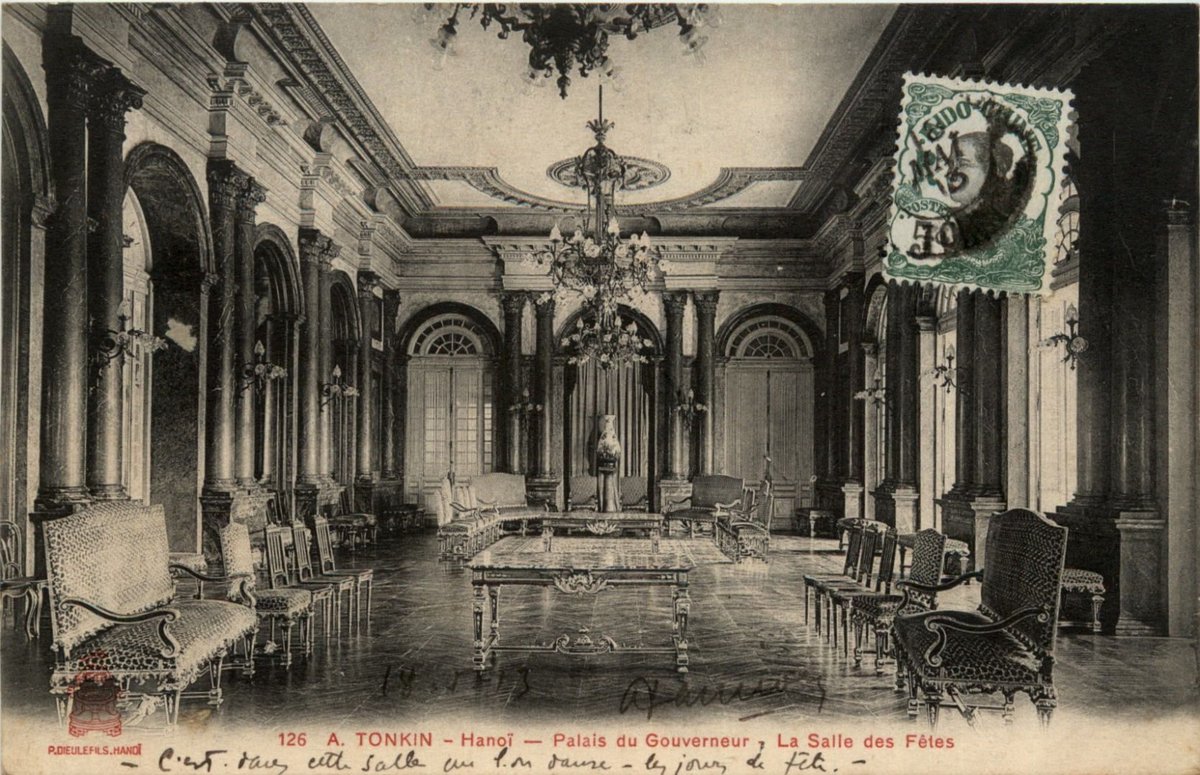
The palace is a three-story (some sources note four, including basement or attic) building covering approximately 1,300 square meters and comprising around 30 rooms, each uniquely decorated (VinWonders; Vietnam Jack). The first floor houses service rooms, the second floor features reception and banquet halls, and the third floor was originally reserved for the Governor-General’s private quarters. Interiors—off-limits to the public—are described as lavish, with imported European furnishings, high ceilings, and intricate decor (Vietnam Jack).
Transition to Vietnamese Sovereignty & Ho Chi Minh’s Legacy
From Colonial Residence to Presidential Landmark
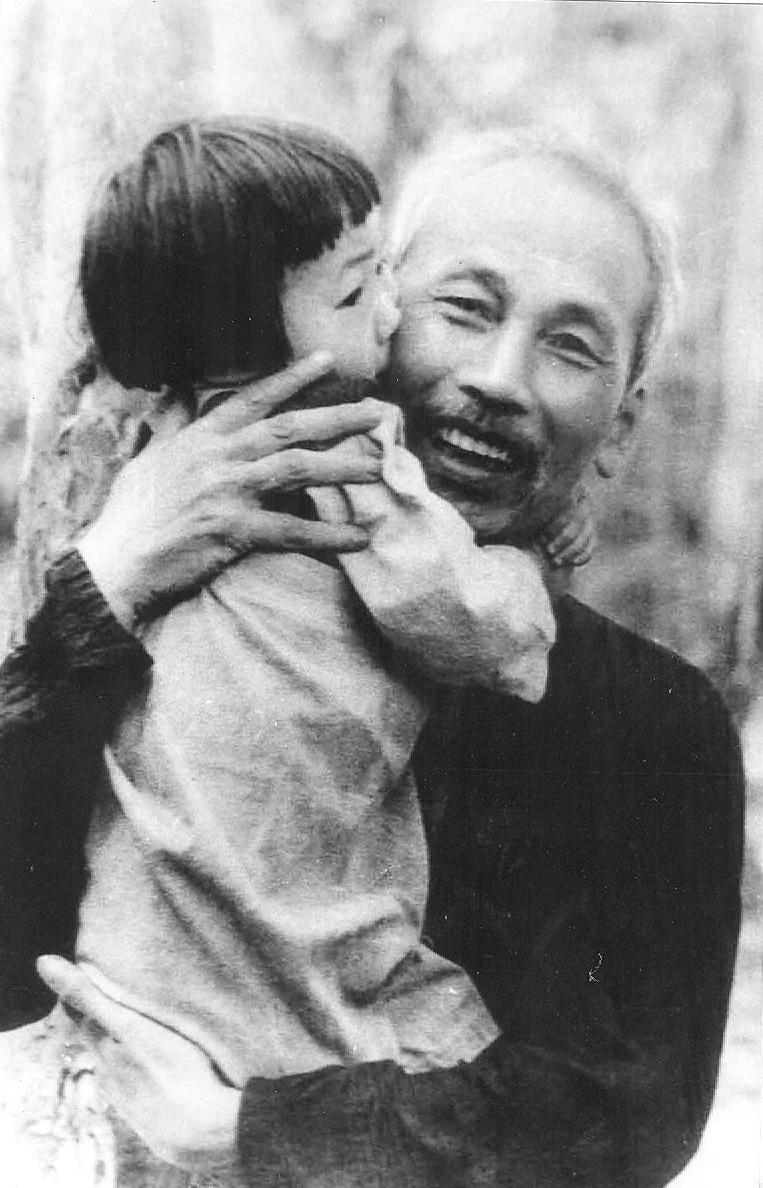
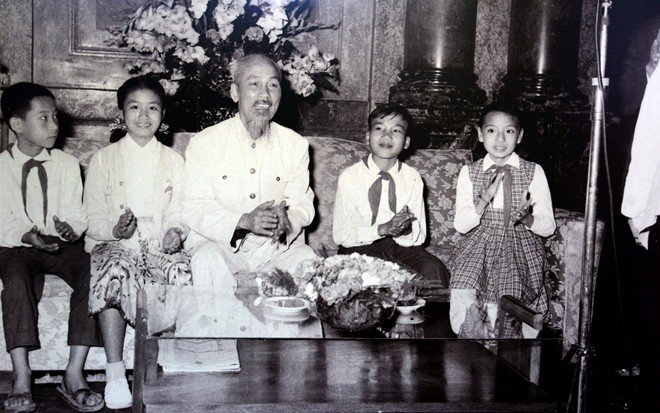
After Vietnamese independence in 1954, the palace became the official seat of government. However, Ho Chi Minh, the nation’s founding father, refused to live in the opulent residence, instead choosing a modest stilt house within the grounds, now preserved for public viewing (Go Viet Trip; Local Vietnam). This decision, rooted in his values of simplicity and humility, transformed the palace into a symbol of national unity and egalitarianism.
The Ho Chi Minh Era: Historic Residences
- House No. 54: Originally the palace electrician’s residence, this three-room home was Ho Chi Minh’s base from 1954 to 1958.
- Stilt House: Built in 1958, modeled after ethnic minority houses in northern Vietnam, the stilt house is a symbol of Ho Chi Minh’s lifestyle and remains a poignant site for visitors (Wikipedia).
- House No. 67: Constructed in 1967 as a wartime shelter and meeting space, it is where Ho Chi Minh spent his final days.
The tranquil fish pond and gardens surrounding these residences are an integral part of the site, reflecting Ho Chi Minh’s preference for nature and simplicity (VNITourist).
The Palace During Wartime and Modern Role
Wartime Preservation
During the Vietnam War, the palace complex was not only a seat of government but also a site carefully protected from air raids. Artifacts were evacuated as needed, and the grounds hosted crucial political events, including meetings and receptions (Wikipedia).
Modern Use and National Memory
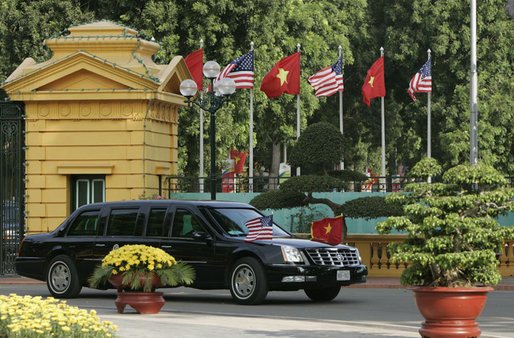
Today, the palace continues to serve as a venue for official government receptions and diplomatic events (IDC Travel). While the main building is closed to the public, the surrounding grounds, stilt house, and House No. 67 are open as part of the Ho Chi Minh Mausoleum Complex. The site contains over 1,400 preserved objects, including presidential carriages and trees planted by dignitaries, and is recognized as a national special relic (VinWonders).
Visiting Information
Hours & Ticketing
- Visiting Hours: The gardens, stilt house, and accessible grounds are open Tuesday to Sunday, from 8:00 AM–11:00 AM and 2:00 PM–4:00 PM. Closed Mondays and during major holidays (Vietnam Reviewer).
- Tickets: Entrance to the gardens, stilt house, and grounds is free, but visitor tickets must be obtained at the entrance for crowd management. Special guided tours with access to select interior rooms may be available during official events and require advance booking (Impress Travel).
Accessibility & Practical Tips
- Accessibility: Gardens and main pathways are wheelchair accessible, but some historic structures (like the stilt house) have steps and narrow entrances.
- Best Time to Visit: Early morning or late afternoon for pleasant weather and fewer crowds, especially in spring and autumn.
- Guided Tours: Available via local agencies and recommended for deeper historical context.
- Dress Code: Modest attire is required; shoulders and knees should be covered.
- Photography: Permitted in gardens and exterior areas; restricted inside certain buildings (Impress Travel).
Exploring the Palace Grounds and Gardens
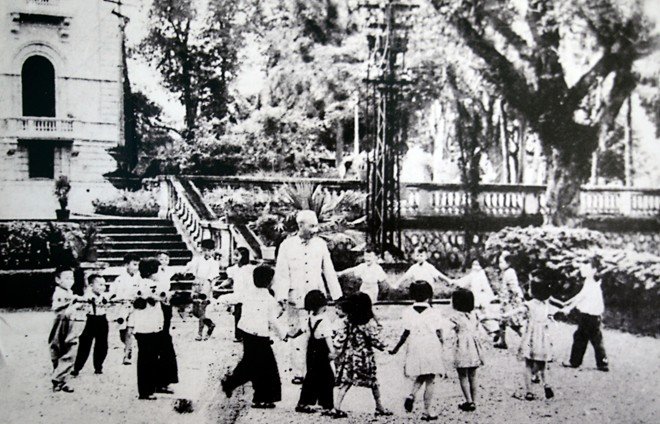
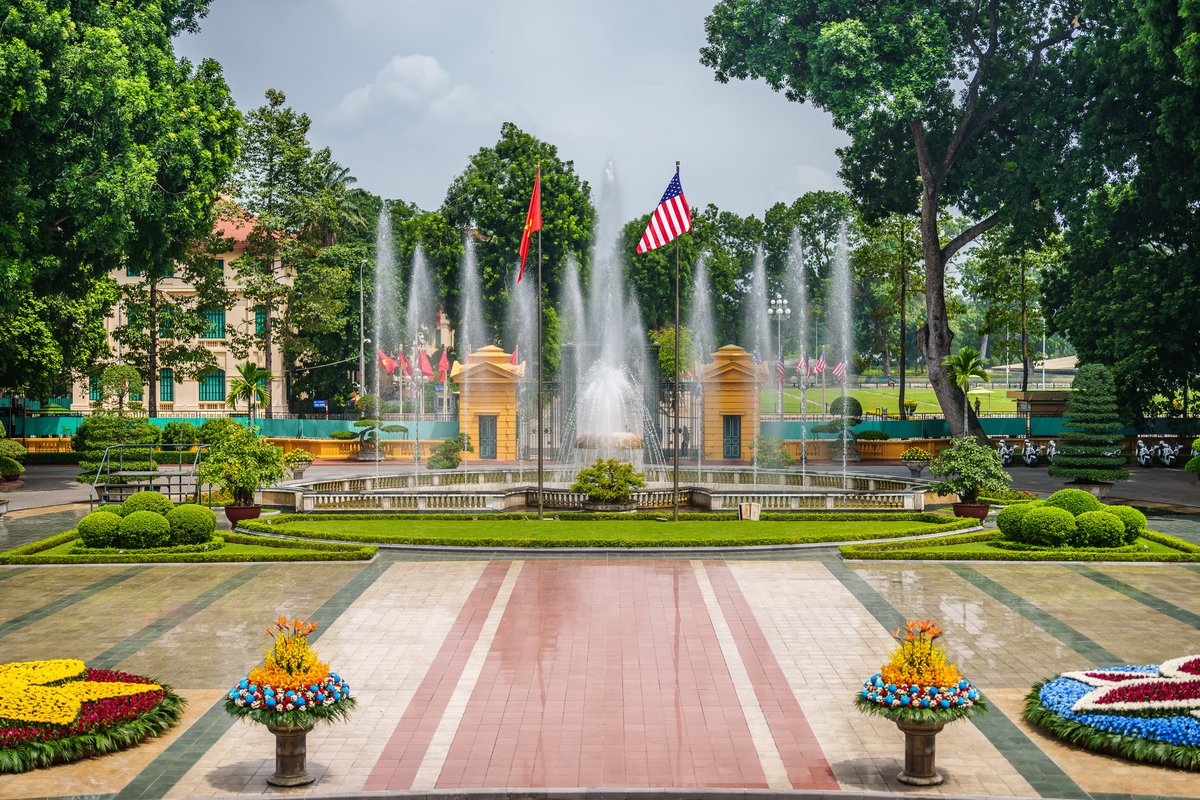
Covering over 10 hectares, the palace grounds feature manicured gardens, Mango Alley, a fish pond, and a diverse collection of over 1,200 plant species (Impress Travel). The tranquil environment, home to peacocks and native flora, offers a peaceful retreat from the city’s bustle. Mango Alley leads directly to the iconic stilt house, while the fish pond—where Ho Chi Minh often relaxed—remains a favorite spot for visitors.
Throughout the year, the site hosts official commemorative events, particularly on national holidays and Ho Chi Minh’s birthday, providing visitors with unique cultural experiences.
Nearby Attractions & Suggested Itineraries
Combine your visit with the following Hanoi historical sites:
- Ho Chi Minh Mausoleum: Final resting place of the revolutionary leader.
- One Pillar Pagoda: Iconic Buddhist temple nearby.
- Ba Dinh Square: Historic venue for Vietnam’s independence declaration.
- Vietnam Military History Museum: Offers insights into the nation’s military past.
- Hanoi Botanical Gardens: Adjacent green space ideal for relaxation.
Suggested Itinerary:
Morning at the Presidential Palace and gardens, visit Ho Chi Minh Mausoleum, explore the museum, and unwind in the botanical gardens.
Frequently Asked Questions (FAQ)
Q: What are the visiting hours for the Presidential Palace Hanoi?
A: Tuesday–Sunday, 8:00 AM–11:00 AM and 2:00 PM–4:00 PM. Closed Mondays and major holidays.
Q: Is the palace interior open to visitors?
A: No, the interior is closed except for rare guided tours during special events.
Q: Are tickets required?
A: Yes, free tickets are issued at the entrance for visitor management.
Q: Is the site accessible for people with disabilities?
A: Main gardens and pathways are accessible, but some historic structures have limited accessibility.
Q: Can I take photographs?
A: Yes, in gardens and exterior areas; not inside certain buildings.
Q: Are guided tours available?
A: Yes, bookable through local agencies or official sites.
Listen to the full story in the app
The whole Presidential Palace Of Vietnam,
told well.
Audio guides for 1,100+ cities across 96 countries. History, stories, and local insight — offline ready.
Verified, and shown.
Researched and written by the Audiala editorial team from historical records, architectural archives, and local expertise.
Researched from Wikidata, Wikipedia & official sources · fact-checked · How we make our guides →