Introduction
At 5:13 a.m. the river is still black coffee, then a pineapple boat switches on a single fluorescent tube and the whole Mekong flares green. That one bulb is enough to reveal Can Tho, Vietnam—Delta capital, floating-market nerve center, and the rare Vietnamese city where the waterfront still belongs to work boats, not wedding-cake hotels.
The surprise is how quickly the postcard dissolves. One minute you're gliding past boats advertising sweet potatoes on bamboo flagpoles; the next you're back on shore, trapped in a traffic jam of Honda Waves beneath a 7.2-metre bronze Uncle Ho who points at a KFC. Can Tho keeps both scenes running simultaneously—orchard islets reachable by hand-crank ferry and a downtown that just got its first bubble-tea robot kiosk.
Stay long enough and the city rearranges your sense of scale. A 150-year-old house that starred in Duras’ The Lover sits six kilometres from a night market where teenagers livestream durian tastings for Chinese TikTok. Monks at Truc Lam Phuong Nam ring a 1.2-tonne bell that competes with the bass line drifting from a rooftop K-pop bar. The Mekong doesn't just water these contradictions—it ferries them past each other every dawn, selling dragon fruit while the rest of the country is still asleep.
Places to Visit
The Most Interesting Places in Can Tho
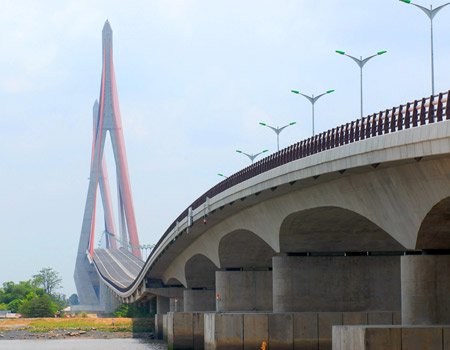
Cần Thơ Bridge
Situated over the majestic Hậu River in Vietnam’s Mekong Delta, the Cần Thơ Bridge stands as a testament to modern engineering prowess and a vital artery for…
Ninh Kiều
Nestled in the heart of the Mekong Delta, Ninh Kiều is the vibrant central urban district of Cần Thơ, Vietnam's largest city in this agriculturally rich and…
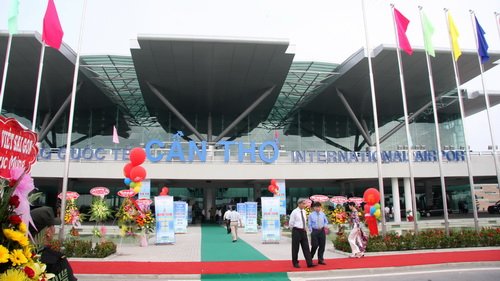
Can Tho International Airport
Can Tho International Airport stands as a vital gateway to Vietnam’s Mekong Delta, a region renowned for its cultural richness, vibrant waterways, and…
Cần Thơ Stadium
Nestled in the vibrant heart of Vietnam’s Mekong Delta, Cần Thơ Stadium (Sân vận động Cần Thơ) stands as a monumental symbol of regional pride, cultural…
What Makes This City Special
Floating Markets at Dawn
Cai Rang’s wholesale armada still assembles from 5 a.m., boats advertising pineapples or yam stacks on bamboo poles called cây bẹo. Arrive by 5:30 and you’ll share the channel with melon traders who have never seen a tripod; stay past 7 and the tour buses turn the river into a parade.
Binh Thuy’s Film-Set House
The 1870 Duong mansion is half-French façade, half-Vietnamese courtyard, chosen for the 1992 film of Duras’ L’Amant. Eight generations still lock the carved jack-wood doors at night; the guide will open them if you ask before 11 a.m.
A Freshwater Beach on the Mekong
Can Tho Beach isn’t sand imported from Nha Trang—it’s muddy riverbank fenced off for safe swimming in the Hau River. Locals rent tubes at dusk for 20 000 VND while freighters slide past the sunset.
Orchards You Can Row To
Son Islet is a five-minute ferry but a world away: rambutan branches scrape the roof of your boat, farmers hand you scissors and let you cut the stems that will drip sap on your shoes.
Historical Timeline
Where the River Writes the City
From Khmer fishing grounds to Mekong metropolis in 300 years
Khmer Fish Traps
Khmer boatmen call the broad bend in the Hau Giang "Kìn Tho" after the silver fish that flash like coins through black water. No temples, no markets, just bamboo weirs and the smell of smoked trey lin. The delta is still Cambodia's southern pantry.
A Chinese Warlord Swears Loyalty
Mac Cuu, Cantonese exile turned delta warlord, kneels on the deck of his war junk and accepts a Nguyen lord's seal. Ha Tien becomes Vietnam's southern bolt, and the Mekong's western door swings open for Vietnamese settlers. Can Tho's future site is still marsh.
Tran Giang Fort Rises
Mac Thien Tich piles laterite blocks on the west bank where the Can Tho River narrows. The fort's cannons point toward Siam, not the sea. Inside the stockade: rice warehouses, a thatch-roofed court, and the first Chinese pawnshop. The settlement is named Tran Giang, but boatmen already shorten it to "Can Tho."
Mandarin on a Warpath
Nguyen Cu Trinh arrives with 200 soldiers and a sheaf of imperial edicts. He meets Mac Thien Tich under a tamarind tree still standing today. Together they sketch a grid of canals that will turn mangrove into rice paddies. The blueprint smells of wet earth and ambition.
Siamese Boats Burn the Outposts
Refugees from Ha Tien flood Tran Giang's fort, their boats blackened with soot. Siamese war galleys hover downstream. For three weeks the river is a mirror of fire. Mac Thien Tich, defeated but alive, relocates his headquarters here. Can Tho becomes the delta's last redoubt.
Birth of the Delta's Shakespeare
Bui Huu Nghia is born beside Binh Thuy's canals. He will grow up to write "Kim Thach Ky Duyen," the first southern play in Nom script, filling bamboo theatres with the click of wooden clappers and the smell of coconut oil lamps. His verses still echo during Tet festivals.
French Gunboats Enter the Mekong
The steamer Forfait tows two flat-bottomed lighters past Tran Giang. Soldiers in blue coats sketch the riverbanks. Within a decade the Nguyen seal is replaced by a tricolor. The fort's cannons are spiked; customs duties are paid in piastres.
A Merchant Builds His Dream House
Duong Chan Ky tiles his new villa with French terracotta but keeps the ancestral altar facing east. The house at Binh Thuy sits above flood level on 6,000 hardwood piles. Curved joists meet Corinthian columns; outside, frangipani drops white petals onto imported floor tiles. Film crews will later chase its shadows.
Can Tho Province is Born
Governor Le Myre de Vilers signs the decree in Saigon. Tran Giang county disappears; Can Tho province appears on maps drawn in Paris. A brick courthouse goes up beside the river, complete with wrought-iron balconies for watching steamer traffic. Tax collectors now speak French.
Ong Pagoda's Roof Takes Flight
Cantonese carpenters work by lantern light, fitting ceramic dragons into the sweeping eaves. The scent of sandalwood mingles with river fog. When the gong first sounds, Chinese merchants crowd the courtyard to burn gold paper for sea gods. The tiles still glint green at sunrise.
A Boy Who Will Hear Anthems
Luu Huu Phuoc is born in O Mon, four kilometers from the new railway spur. He will write melodies on the back of rice sacks, later composing "Tien Quan Ca" that students will hum during demonstrations. His music drifts back to the delta on Radio Saigon broadcasts.
Viet Minh Seize the Post Office
Teenagers in khaki shorts storm the yellow courthouse, tear down the tricolor, and raise a red flag stitched from theater curtains. For two weeks Can Tho answers to Hanoi. Then French paratroopers drop onto the racetrack. The delta becomes a chessboard of jungle camps and canal checkpoints.
New Flag, Same River
Geneva's ink dries; the 17th parallel slices Vietnam. Can Tho becomes capital of IV Corps, its airfield humming with American C-47s. Rice convoys escorted by armored boats push up the Hau Giang. The floating market moves downstream every night to dodge curfew.
Campus of Hope Amid War
On a former pineapple plantation, the first four buildings of Can Tho University open their doors. Professors lecture to classrooms where half the seats are empty—students have joined the front. Lecture notes flutter beside sandbagged windows. The library smells of damp paper and tear gas.
Fighting in the Cathedral
Viet Cong sappers blow the prison gates at 3 a.m. Gunfire echoes between the cathedral's neo-Gothic arches. By dawn the market is ash; barges burn at the wharf. ARVN troops retake the post office after a two-day siege, stepping over broken typewriters and lotus tiles.
Tanks Reach the River
North Vietnamese T-54s roll down Nguyen Trai Street as the last helicopter lifts from Binh Thuy airbase. The IV Corps commander retreats to a villa across the river; by evening the red flag flies over the naval headquarters. Prison gates swing open; vendors reclaim the water.
The Chinese Exodus
Brown water drifts past Ong Pagoda, its gates padlocked. Three centuries of Cantonese commerce ends in a flurry of exit papers. Families sell mahogany wardrobes for a seat on a fishing trawler. The floating market shrinks; the smell of joss sticks lingers like an unfinished sentence.
Rice Becomes Cash Again
Doi Moi whispers reach the delta. Collective warehouses unlock; private boats return to the river at dawn. The first billboard for Coca-Cola appears beside the old French customs house. By 1989 the floating market is louder than the church bells.
City Breaks Free of Province
At midnight the sign on the People's Committee is unscrewed and replaced. Can Tho becomes Vietnam's fourth centrally governed city, equal to Hanoi and Saigon. Budgets double; cranes arrive like migrating birds. The riverfront promenade gets its first taste of neon.
A Bridge Too Long to Ignore
The cable-stayed span finally opens, 2.75 km of concrete arcing above the Hau Giang. Cyclists no longer queue for ferries that smelled of diesel and durian. The first convoy of trucks rolls south to Ca Mau, headlights flickering like fireflies. Distance shrinks; prices fall.
Metro Dreams on Delta Water
Construction fences wrap the old port. Plans call for river buses, pedestrian cable cars, a smart-ticket pier. The floating market moves upstream to make room. At dawn the river still smells of coffee and diesel, but now there's free Wi-Fi on the promenade.
Notable Figures
Bùi Hữu Nghĩa
1807–1872 · Poet & MandarinHe wrote the Mekong’s first great play in Nôm script on rice paper that probably sailed past the spot where boats now sell pineapples. His childhood home still stands three streets back from the river—quiet, wooden, unaware that the street outside bears his name.
Lưu Hữu Phước
1921–1988 · ComposerThe anthem he penned for southern students in 1939 still drifts from waterfront cafés, played on single-stringed đàn bầu. He’d smile at the irony: a song calling youth to arms now sound-tracking latte art and sunset selfies.
Châu Văn Liêm
1902–1930 · RevolutionaryCaptured by the French for plotting an uprising he never saw, he was hauled across the same river commuters now cross for 2,000 đồng. Today a high school named after him faces the water; students rush past his bust clutching bubble tea, late for chemistry.
Photo Gallery
Explore Can Tho in Pictures
A peaceful afternoon view of a street in Can Tho, Vietnam, showcasing the local urban landscape under a vibrant, cloudy sky.
Giangphan15052004 · cc by-sa 4.0
A peaceful scene in Can Tho, Vietnam, featuring a traditional wooden boat docked along a canal lined with vibrant architecture and blooming yellow flowers.
huynhloc · public domain
The interior of a vibrant temple in Can Tho, Vietnam, is filled with hanging spiral incense coils and intricate, traditional wooden architecture.
Isabell Schulz · cc by-sa 2.0
The city of Can Tho, Vietnam, glows at twilight as lights illuminate the bridges and buildings along the winding river.
huynhloc · public domain
The historic temple in Can Tho, Vietnam, stands out with its intricate roof and red brick facade amidst a bustling street filled with parked motorbikes.
rhjpage · cc by 2.0
A vibrant street market in Can Tho, Vietnam, where locals browse for bright yellow flowers under the warm morning sun.
huynhloc · public domain
A weathered wooden boat in Can Tho, Vietnam, displays hand-painted advertisements for mobile phone services on its side.
vi:User:Nguyễn Thanh Huấn · public domain
Traditional spiral incense coils hang from the ceiling of a temple in Can Tho, Vietnam, creating a serene and spiritual atmosphere.
Isabell Schulz · cc by-sa 2.0
The tranquil waters of the Hau River in Can Tho, Vietnam, reflect the soft afternoon light as boats navigate past the riverside cityscape.
Isabell Schulz · cc by-sa 2.0
The main entrance gate of Tay Do University located in the Ninh Kieu district of Can Tho, Vietnam.
vi:User:Nguyễn Thanh Huấn · public domain
A picturesque canal scene in Can Tho, Vietnam, where traditional wooden boats float past urban architecture and festive yellow floral displays.
huynhloc · public domain
The vibrant night scene at Ninh Kieu Wharf in Can Tho, Vietnam, where illuminated boats and city lights create a stunning reflection on the Hau River.
huynhloc · public domain
Practical Information
Getting There
Can Tho International Airport (VCA) lands A320s from Hanoi, Da Nang and seasonal Siem Reap charters. From VCA, a GrabCar to Ninh Kieu Wharf costs 120 000 VND and takes 20 min; metered taxi counters inside the terminal top out at 200 000 VND. Highway QL1A links the city to Ho Chi Minh City (3.5 hr by FUTA limousine, 100 000 VND).
Getting Around
There is no metro, tram or BRT. GrabBike starts at 15 000 VND for inner-city hops; GrabCar averages 70 000 VND across the centre. White-and-green city buses exist but run every 30–40 min, signage is Vietnamese-only, and none reach the floating-market piers. Rent a bicycle from your guesthouse (50 000 VND/day) for the flat orchard lanes of Phong Dien.
Climate & Best Time
Cool-dry window is December–February: 30 °C days, 10 mm rain, peak market traffic after harvest. March–April climbs to 36 °C but stays dry; May brings monsoon downpours that last until October (250 mm monthly). September floods canal hamlets—photogenic, but boat schedules shrink.
Language & Currency
Vietnamese is spoken with a fast Delta drawl; English is limited outside hotels. Download the Vietnamese pack in Google Translate—boat operators hold your phone to the engine to speak. Cash is king: floating vendors won’t break a 100 000 VND note; ATMs cluster on Hai Ba Trung Street and dispense up to 5 million per withdrawal.
Where to Eat
Don't Leave Without Trying
Coco Mangrove Brunch - Tapas & Bar
fine diningOrder: The brunch tapas platter with Mekong Delta ingredients is a must-try, especially the grilled snakehead fish skewers.
This riverside spot blends Spanish tapas with local Mekong flavors, offering a unique fusion experience in a rustic setting.
Cari Capy - Drinks and Cakes
cafeOrder: The durian custard cake is legendary here, a perfect blend of rich flavors with a hint of local tropical fruits.
This bakery is a hidden gem for those who love unique Vietnamese-inspired desserts and artisanal coffee.
Nhấp Môi Speakeasy (Floor 2 Cantho Rustic Coffee)
local favoriteOrder: Try the 'Mekong Sunset' cocktail, a signature drink made with local herbs and fruits.
This speakeasy offers a cozy, intimate atmosphere with creative cocktails that highlight the flavors of the Mekong Delta.
rễ tranh Bến Ninh Kiều
cafeOrder: The iced coffee with condensed milk is a local favorite, served with a side of homemade coconut cookies.
This riverside café is perfect for a relaxing afternoon, offering views of the river and a laid-back atmosphere.
Xôi lá dứa
quick biteOrder: The sticky rice wrapped in pineapple leaves is a must-try, especially for breakfast.
This small bakery is a local institution, serving traditional sticky rice dishes that are a staple in Can Tho.
Tiệm Bánh Tét Vân
quick biteOrder: The traditional Tet cakes are a must-try, especially during the Lunar New Year season.
This bakery is famous for its authentic Tet cakes, made with traditional recipes passed down through generations.
Sữa Đậu Nành Tây Đô 24:30
local favoriteOrder: The soya milk with crushed peanuts and condensed milk is a local favorite, perfect for a late-night snack.
This bar offers a unique late-night dining experience, serving local delicacies in a cozy setting.
Cà phê Trà sữa Cô Ba Co Tư
cafeOrder: The iced coffee with condensed milk is a local favorite, served with a side of homemade pastries.
This cozy café is a popular spot for locals, offering a relaxed atmosphere and traditional Vietnamese coffee.
Dining Tips
- check Go to Cai Rang Floating Market before 8 AM for the best experience.
- check Try the local specialty dishes like Bánh Xèo and Lẩu Mắm for an authentic taste of Can Tho.
- check Many street food stalls operate seasonally, so check for availability.
- check Local markets are great for fresh produce and unique snacks.
- check Cash is king in many local eateries, especially at street stalls.
- check Breakfast is the best time to enjoy local dishes like Bún Cá.
- check Floating markets are best visited in the early morning mist.
- check Ask locals for recommendations on the best snail spots in town.
Restaurant data powered by Google
Tips for Visitors
Beat the boats
Book your Cai Rang boat the night before and leave at 4:45 a.m.; you’ll reach the market before the tour buses and see wholesalers hoisting pineapples up 3-m bamboo poles instead of selfie sticks.
Carry small dong
Floating vendors and riverside cafés rarely break 100,000 VND; keep a wad of 10k–20k notes in a zip-bag so you’re not fumbling with wet cash as the boat rocks.
Bridge after dark
The Ninh Kieu pedestrian bridge switches on colour LEDs at 19:00 sharp—set up on the west bank for a neon reflection shot of the 200-m span and the twin dragons of the wharf roof.
Share, don’t charter
A private Cai Rang boat costs 600k VND; the 6-seat group boat from Ninh Kieu is 150k per person and leaves as soon as seats fill—usually within 10 min at 5 a.m.
Dry-season fruit run
December–March air is below 32°C and orchard gates in Phong Dien stay open all day—rent a bicycle for 50k VND and hop between rambutan farms without the April furnace.
Bag-away side
Mekong motorbikes love a grab-and-go; sling your tote over the river-side shoulder when walking Hai Ba Trung so the traffic lane hand stays empty.
Explore the city with a personal guide in your pocket
Your Personal Curator, in Your Pocket.
Audio guides for 1,100+ cities across 96 countries. History, stories, and local insight — offline ready.
Audiala App
Available on iOS & Android
Join 50k+ Curators
Frequently Asked
Is Can Tho worth visiting if I’ve already seen the Mekong Delta? add
Yes—Can Tho is the only delta town where you can sleep in a proper hotel, walk to a 5 a.m. boat, and be back for espresso by 9. The floating market is wholesale-scale, and the 19th-century Binh Thuy house gives you French-colonial-Vietnamese fusion without the Saigon crowds.
How many days should I spend in Can Tho? add
Two full days cover the essentials: sunrise at Cai Rang, afternoon at Binh Thuy Ancient House, sunset on the pedestrian bridge, and a next-day cycle through Phong Dien orchards. Add a third day if you want birdwatching at Bang Lang stork sanctuary or a cooking class on Son Islet.
Can I fly straight to Can Tho from Hanoi? add
Yes—Can Tho International Airport (VCA) has daily 2-hour flights on Vietnam Airlines and VietJet. A GrabCar to the riverfront runs 150k VND and takes 20 min, half the time of the bus from Ho Chi Minh City.
Do the floating markets operate every day? add
Cai Rang runs 365 days a year, rain or Tet, but volume drops after 9 a.m. Phong Dien is smaller and winds down by 8 a.m.; if you want both, start at Phong Dien at 5 a.m. and boat the 6 km canal link to Cai Rang for second breakfast.
Is Can Tho safe to walk at night? add
The Ninh Kieu promenade is busy until 23:00 with families and night-market lights; violent crime is rare. Stick to lit sections, keep your phone in a pocket when motorbikes buzz past, and you’re safer here than in most delta hamlets where streetlights end at 21:00.
How much does a riverboat trip cost? add
Group boats to Cai Rang are 150k VND (≈ $6) return; private sampans start at 600k but let you loiter for photos. Always agree the route—some captains tack on a 100k ‘market entrance fee’ that doesn’t exist.
Sources
- verified Vietnam National Administration of Tourism – Can Tho — Official visitor site with floating-market logistics, orchard seasons and bridge opening details.
- verified Can Tho Portal – City Government Travel Guide — Administrative history, 1739 founding date and 2004 municipality upgrade confirmed.
- verified International Conference on Business, Policy & Social Sciences 2023 – Can Tho Proceedings — Academic paper with exact bridge dimensions, stork-sanctuary bird counts and temple interior layouts.
Last reviewed: