Caracas
Venezuela Updated Apr 2026
Blue-and-yellow macaws cut across the morning traffic in Caracas, Venezuela, screaming over concrete towers while El Ávila rises behind them like a wall someone forgot to finish. That contrast hits first: mountain air and exhaust, colonial courtyards and 1950s ambition, a capital that can feel improvised and monumental in the same breath. Caracas rewards visitors who like cities with edges.
 Photo: Olga Berrios · CC BY 2.0
- Attractions
- 15
- Trip length
- 2-3 days
- Best season
- January-March
Why Caracas
Built from cited sources · see the method · How we make our guides →
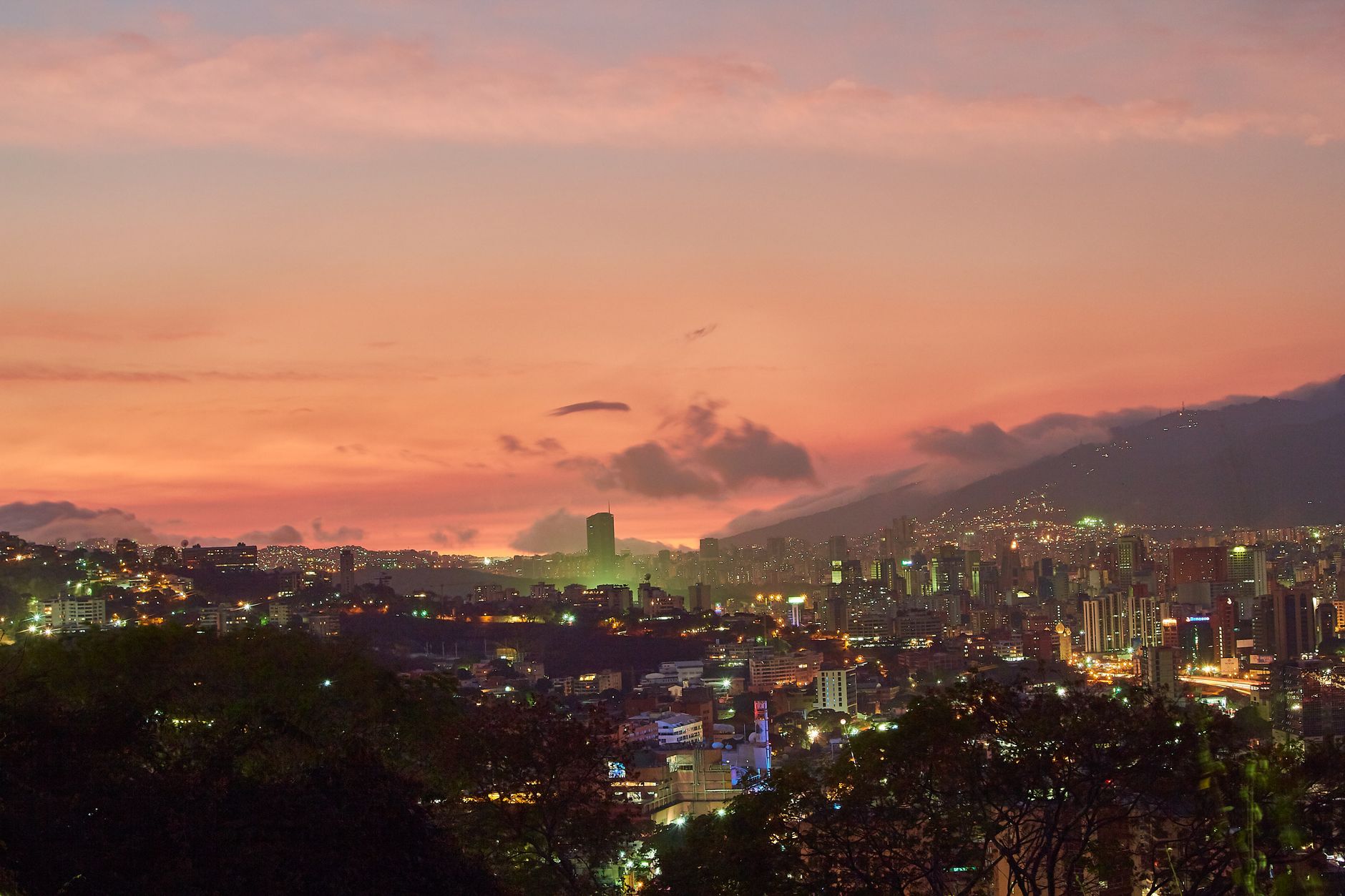
The mountain sets the terms here. Waraira Repano, still called El Ávila by half the city, stands between Caracas and the Caribbean coast, so the valley feels enclosed until you ride the teleférico up through the haze and realize the sea is just beyond the ridge. At roughly 900 meters above sea level, the climate stays milder than the country's image might suggest. Hence the old nickname.
Caracas makes more sense when you stop expecting a polished historic capital and start reading it as a city of episodes. Simón Bolívar was born here, and the old center still carries that weight in plazas, churches, and the Panteón Nacional; then the mood flips, suddenly, into Carlos Raúl Villanueva's Ciudad Universitaria, where modern architecture, public art, and tropical light were made to work together instead of fighting each other.
Culture in Caracas lives in clusters. One day can run from the museum belt around Los Caobos to a concert at El Sistema, then finish with arepas, pizza, or late-night hot dogs in the east; another can start with specialty coffee in Chacao and end under mango trees at Los Galpones. The city has been battered by politics and economics, and you can see that. You can see, too, how much life remains in the cracks.
Modernism With Teeth
Caracas makes more sense when you read it as a modernist capital, not a colonial postcard. Ciudad Universitaria de Caracas, designed by Carlos Raúl Villanueva and listed by UNESCO, folds lecture halls, gardens, Calder's floating "Clouds," and public art into one of Latin America's sharpest 20th-century ensembles.A Mountain At The Door
Waraira Repano rises behind the city like a green wall, steep enough to feel theatrical. One cable-car ride from Mariperez lifts you from traffic and concrete into cold air, pine scent, and ridge views that catch both the valley of Caracas and, on clear days, the Caribbean beyond.Bolivar's City
Caracas still carries Simon Bolivar in its bones. His birthplace, the Museo Bolivariano, Plaza Bolivar, and the Panteon Nacional sit close enough to turn the historic center into a walk through independence mythology, state memory, and the quieter colonial streets that survived around them.Culture That Locals Actually Use
The city isn't only about grand monuments. Los Caobos, the Museo de Arte Contemporaneo, Teresa Carreno, Los Galpones, Hacienda La Trinidad, and El Sistema's concert complex show a Caracas that still argues, performs, paints, and drinks coffee under mango trees while scarlet-and-blue macaws cut across the skyline.
Neighborhoods
Where to wander, by quarter — each with its own rhythm.
La Candelaria
La Candelaria carries a large piece of Caracas's memory in its dining rooms and bakery counters. Spanish migration shaped the area, and lunch here still leans toward taverns, seafood, jamón, and long conversations rather than quick bites; come for old-school city rhythm, then walk toward the historic center while the church bells and traffic start arguing with each other.Historic Center
Around Plaza Bolívar, the capital turns dense with symbolism. Casa Natal de Simón Bolívar, the Museo Bolivariano, the cathedral, the Museo Sacro, and the Panteón Nacional sit close enough to build a serious half-day on foot, and the streets give you colonial facades, government buildings, and a running lesson in how Venezuela stages its own history.Bellas Artes and Los Caobos
This is the cultural belt that makes the strongest case for Caracas as a museum city. Parque Los Caobos opens into the Museo de Bellas Artes, the Museo de Ciencias, the Galería de Arte Nacional, Parque Central, and the brutalist mass of Teatro Teresa Carreño, so you can spend hours here moving between trees, concrete, rehearsal halls, and exhibition rooms without ever feeling far from the city's harder pulse.Chacao
Chacao feels practical, alert, and lived in. Mercado de Chacao gives you produce, cheeses, and ordinary city commerce without any stage set around it, while specialty coffee shops and easy street walking make the district a good base if you want Caracas at human scale rather than from the back seat of a car.Los Palos Grandes
Los Palos Grandes is where many visitors end up lingering longer than planned. The streets are greener, the pace softens, and the appeal lies less in monuments than in café culture, bookstores, dinners that stretch late, and the simple pleasure of sitting outside while the mountain darkens above the avenue grid.La Castellana
La Castellana leans polished without becoming sterile. Good restaurants, cultural venues such as CCAM, and easy access to Chacao make it useful for evenings when you want a concert, a film screening, or a serious dinner instead of a checklist of sights; it is one of the better districts for seeing how contemporary Caracas dresses itself.Las Mercedes
Las Mercedes comes alive after dark. Restaurant-bars, newer dining rooms, late-night street food, and a definite going-out mood make it the city's clearest night district, though the real local move is sequence rather than spectacle: dinner first, drinks after, then a hot dog eaten standing up on Avenida Orinoco when dignity has become optional.El Hatillo
On the southeastern edge of greater Caracas, El Hatillo offers a low-rise counterpoint to the valley's concrete drama. The old core, cultural programming, coffee shops, and slower evening pace make it a good choice when you want tiled roofs, small plazas, and a break from central Caracas without pretending you have left the city behind.
Plan your trip
Before you go
- Getting There
- Caracas is served by Simon Bolivar International Airport (CCS) in Maiquetia, about 25 to 30 km northwest of central Caracas in La Guaira; in 2026, the drive usually takes 30 to 60 minutes depending on traffic. The practical arrival options are an authorized airport taxi or a pre-arranged hotel transfer. By road, the city connects to the coast through the Caracas-La Guaira highway and to inland Venezuela via the Regional del Centro corridor.
- Getting Around
- The backbone is the Metro de Caracas: 4 main metro lines, with MetroCable in San Agustin, Cabletren in Petare, MetroBus feeders, and BusCaracas adding reach in 2026. The integrated payment card is SUVE; prices shift, so buy and top up at station booths rather than trusting old fare charts. Boulevard de Sabana Grande works well on foot, but between districts most visitors should stick to the metro by day or a trusted car.
- Climate & Best Time
- Caracas stays mild because the valley sits around 900 meters above sea level: expect roughly 21 to 24 C for much of the year, with the driest stretch from January to March and the wettest months from June to November. December is usually manageable. For easier sightseeing, clearer mountain views, and fewer rain interruptions, January through March is the window to aim for.
- Language & Currency
- Spanish runs the city. English appears in some international hotels and higher-end restaurants, but not reliably enough to coast on it, so keep addresses saved offline and basic Spanish handy. Venezuela's official currency is the bolivar, yet in 2026 many businesses in Caracas still accept U.S. dollars; small, clean bills matter because card acceptance and ATM access remain uneven.
- Safety
- Caracas rewards planning and punishes improvisation. In 2026, the safer base areas for most visitors are Altamira, Los Palos Grandes, La Castellana, Chacao, and Las Mercedes, while unregulated airport taxis, street-hailed cabs, and casual wandering after dark are bad ideas. Keep your phone low-key, arrange rides before leaving dinner, and treat Petare and much of the west side as places to enter only with a clear purpose and local guidance.
A Valley City Built by Earthquakes, Ambition, and Argument
From indigenous strongholds beneath El Ávila to a capital of music, protest, and modernist concrete
- c. 1500
Peoples of the Caracas Valley
Long before any Spanish grid was scratched into the valley floor, the Caracas, Teques, Toromaimas, and Mariches lived between rivers, slopes, and cloud-shadow from the mountain now called Waraira Repano. The place already had names, paths, and political rivalries. Caracas did not begin in 1567; that date marks a conquest, not a birth.
- c. 1530
Guaicaipuro Unites Resistance
Guaicaipuro, later remembered as the valley's fiercest resistance leader, emerged from a world already under violent pressure from Spanish raiders, miners, and settlers. He helped knit together a confederation strong enough to make conquest slow, bloody, and uncertain. That matters. Caracas was fought over before it was founded.
- 1567
Santiago de León Founded
On 25 July 1567, Diego de Losada formally founded Santiago de León de Caracas after earlier settlements had failed. The name fused saint, governor, and the Caracas people themselves, which tells you plenty about colonial habits of possession. Within a decade, the city had a plaza and a 24-block grid, neat on paper and violent in origin.
- 1577
Capital of the Province
Caracas became the capital of the Province of Venezuela in 1577, overtaking rougher coastal settlements as the political center inland. The valley's altitude helped: cooler air, fewer pirate cannons, better control over surrounding farmland. Power settled here early, and then stayed.
- 1595
English Raiders Sack Caracas
English privateers Amyas Preston and George Somers stormed and sacked Caracas in 1595 after forcing the route inland from La Guaira. Imagine the shock: a young colonial capital, still finding its footing, suddenly filled with smoke, looted houses, and the hard lesson that mountains did not guarantee safety. Caracas learned early to live with rupture.
- 1641
The San Bernabé Earthquake
On 11 June 1641, an earthquake wrecked Caracas and destroyed La Guaira. Walls split, roofs dropped, churches broke open, and the city council seriously considered abandoning the site for the savanna of Chacao. The governor blocked the move, so Caracas stayed where it was and rebuilt on shaken ground, which became a recurring habit.
Show the full timeline (31 moments)
- 1666
Cathedral Rises Again
Construction of the present Caracas Cathedral began in 1666 after the earlier church had fallen in the 1641 earthquake. Its later facade, completed in 1771, still carries the quiet insistence of a city that kept rebuilding its sacred core after each collapse. Stone was theology here. It was politics too.
- 1721
A University for the Colony
The Royal and Pontifical University of Caracas was created by royal decree on 22 December 1721 and confirmed by papal bull the next year. Lecture halls in the colonial capital began training clerics, lawyers, and administrators who would later argue their way toward independence. You can hear the future in that. Latin first, rebellion later.
- 1777
Capital of a Captaincy
When the Captaincy General of Venezuela was created in 1777, Caracas became the administrative center of a much more coherent political unit. Bureaucracy rarely inspires poetry, yet this one changed everything: more decisions, more money, more prestige, all routed through the valley. The city stopped being one provincial capital among others and became the capital.
- 1781
Andrés Bello Is Born
Andrés Bello was born in Caracas in 1781, and the city shaped the cast of his mind before Chile claimed his mature fame. He studied at the colonial university, moved through Caracas's clerical and intellectual circles, and even taught the young Simón Bolívar. Few cities get to say they produced both a liberator and the writer who taught him to think in sentences.
- 1783
Simón Bolívar's Birth
Simón Bolívar was born in Caracas on 24 July 1783, in a house near Plaza San Jacinto that still sits inside the old city. The mantuano world of family wealth, enslaved labor, church ritual, and political hierarchy formed him before he spent years trying to blow that world apart. Caracas gave Bolívar his first language of power. He returned it as revolution.
- 1810
The Cabildo Breaks with Spain
On 19 April 1810, Caracas's municipal elite pushed Captain General Vicente Emparan aside and formed a junta. The scene has become patriotic theater, but in the moment it was tense, improvised, and full of competing calculations. One city square tilted, and the Spanish empire in Venezuela began to crack.
- 1811
Independence Declared
On 5 July 1811, Venezuela declared independence with Caracas as the capital of the First Republic. The gesture was bold and fragile at once, made by men in frock coats while war closed in from every direction. Paper came first. Armies followed.
- 1812
Maundy Thursday Disaster
The earthquake of 26 March 1812 struck during Maundy Thursday services and killed roughly 15,000 to 20,000 people in Caracas and nearby towns. Churches collapsed onto worshippers, dust blackened the air, and royalist clergy called the destruction divine punishment for rebellion. The republic never recovered its footing. Nature had entered the war.
- 1813
Bolívar Returns as Liberator
In August 1813, Bolívar entered Caracas during the Admirable Campaign, and the city granted him the title El Libertador in the Iglesia de San Francisco. That church had already seen sermons, funerals, and colonial ceremony; now it became a stage for political myth. Caracas knew how to turn a room into a republic.
- 1814
The Exodus East
Royalist advances under José Tomás Boves triggered the Exodus of Caracas in July 1814, sending large numbers of republicans fleeing east. Families left with carts, papers, saints, and whatever else they could drag over bad roads. Cities remember victories in stone. They remember evacuations in the body.
- 1830
Capital of a New Republic
When Venezuela separated from Gran Colombia in 1830, Caracas remained the national capital. That decision fixed the city's political gravity for the next two centuries, for better and often for worse. Ministries, ambitions, conspiracies, newspapers, mourning rituals: they kept coming back to the same valley.
- 1853
Teresa Carreño Begins Here
Teresa Carreño was born in Caracas in 1853 and trained there as a child before becoming one of the 19th century's great pianists. The city still claims her through the theater that bears her name, but the deeper link is older: Caracas gave her first audiences, first lessons, and the charged air of a republic trying to sound cultured. She took that sound to the world.
- 1874
The Pantheon of Heroes
On 27 March 1874, the church of the Santísima Trinidad became the National Pantheon of Venezuela. That conversion tells you exactly how the republic wanted to be seen: half civic temple, half mausoleum, with Bolívar at the glowing center. Caracas turned memory into architecture, then made schoolchildren march through it.
- 1883
Railway to La Guaira
The Caracas-La Guaira Railway opened in 1883, linking the capital to its port over the mountain barrier that had long slowed everything. Freight, passengers, gossip, imported goods, and political news now crossed the slope with new speed. El Ávila still dominated the horizon. It no longer isolated the city in quite the same way.
- 1900
Villanueva's Caracas Starts
Carlos Raúl Villanueva was born in 1900, and his later work would give Caracas its most persuasive modern face. He understood something rare: concrete does not have to feel dead, and tropical light can be treated as a building material in its own right. The city eventually became his drawing board, plaza, and argument.
- 1939
Modern Planning Takes Hold
The El Silencio redevelopment and the Regulating Plan for Caracas, both tied to 1939, marked the start of large-scale modern urban planning in the capital. Oil money was beginning to redraw the city, replacing colonial intimacy with avenues, housing blocks, and a more managed idea of urban order. The plan looked rational from above. The hillsides had other ideas.
- 1940
University City Takes Shape
Between 1940 and 1960, Villanueva built the Ciudad Universitaria de Caracas, now a UNESCO World Heritage Site and one of Latin America's defining modernist ensembles. The Covered Plaza, the Olympic Stadium, the Botanical Garden, and the Aula Magna were designed as a total work where art and architecture speak to each other across open air. On campus, concrete feels almost musical.
- 1955
Cable Car to the Mountain
The Caracas cable car to El Ávila entered service in the mid-1950s, paired with the Humboldt Hotel high above the city. Pérez Jiménez wanted spectacle, and he got it: a machine that lifts you from traffic fumes to cold mountain air in minutes. Few capitals stage their geography so theatrically.
- 1967
Another City-Shaking Quake
The earthquake of 29 July 1967 killed roughly 225 to 300 people and damaged districts such as Altamira and Los Palos Grandes. Mid-century towers cracked, facades dropped, and the city was reminded that modern engineering had not repealed geology. Caracas builds upward with confidence. The ground keeps answering back.
- 1975
El Sistema Starts Playing
José Antonio Abreu launched El Sistema in Caracas in 1975, beginning with youth orchestras that treated music as discipline, education, and social architecture all at once. Rehearsal rooms across the capital filled with scales, brass, scraped chairs, and children learning to hold time together. Caracas had long produced rhetoric. Here it produced orchestras.
- 1983
Metro and Teresa Carreño
The Caracas Metro opened on 2 January 1983, and the Teresa Carreño Cultural Complex was inaugurated that same year on 19 April. One project moved bodies; the other staged sound and national prestige in concrete and velvet. The pairing feels right. Caracas has always wanted transit and theater in the same breath.
- 1989
The Caracazo Erupts
Between 27 February and 5 March 1989, protests over fare increases and austerity measures exploded into riots, looting, and military repression. Official deaths stood at 277, while many estimates run far higher, into the thousands. Modern Venezuelan politics broke open in those days. Caracas was no longer just the capital; it was the wound.
- 2000
UNESCO Honors the Campus
UNESCO inscribed the Ciudad Universitaria de Caracas in 2000, recognizing Villanueva's campus as a masterpiece of modern architecture and urban design. The designation matters because it protects more than buildings: it protects a vision of public culture made of murals, shade, wind, and shared space. Caracas does not often get international praise without an asterisk. This one earned it.
- 2013
Chávez Dies in Caracas
Hugo Chávez died in Caracas on 5 March 2013 at the Military Hospital Dr. Carlos Arvelo, and the city entered another phase of mourning, succession struggle, and symbolic overload. Streets filled with grief, slogans, military ritual, and television images designed to harden memory into doctrine. Caracas has always been political. Under Chávez and after him, it became political theater at full volume.
- 2023
A UNESCO City of Music
UNESCO named Caracas a Creative City of Music in 2023, recognizing a tradition that runs from conservatories and salsa bands to youth orchestras and neighborhood rehearsal rooms. The honor lands with a touch of irony in a city under strain, where power cuts and economic hardship coexist with relentless musical training. Yet the designation rings true. Caracas still sounds like itself.
Who lived here
-
Military and political leader · 1783–1830
Simón Bolívar
Born here
Bolívar was born in Caracas, and the city still stages that fact with unusual intensity: his birthplace, museum collections, plaza, and tomb form an almost continuous civic script. He left to remake a continent, yet Caracas keeps pulling him back into view. He would recognize the rhetoric at once, then probably argue with the traffic.
-
Revolutionary and precursor of independence · 1750–1816
Francisco de Miranda
Born here
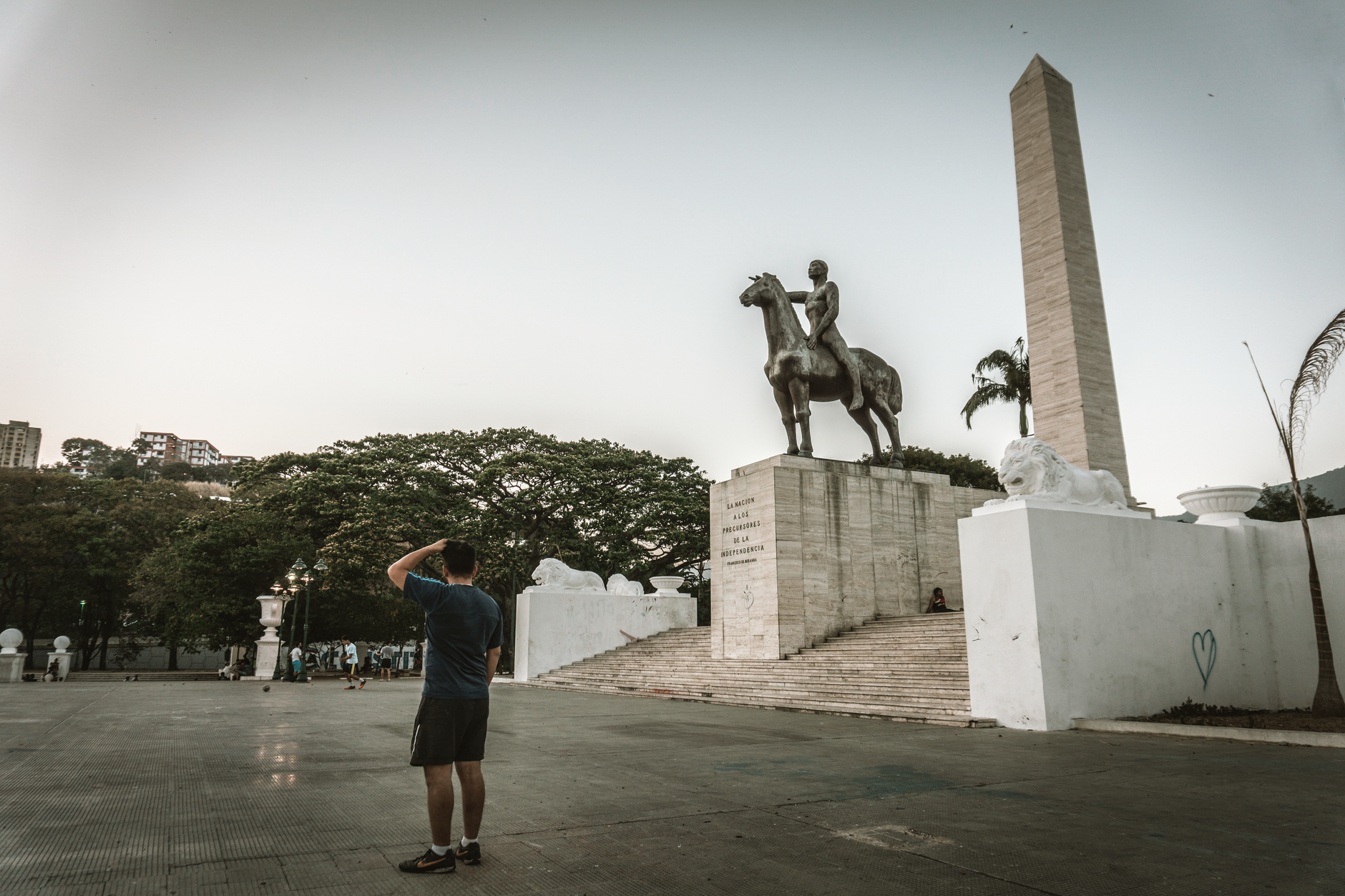
Miranda was born in Caracas long before independence had a clear shape, then spent much of his life chasing it across Europe and the Americas. The city now carries his name in one of its great parks, which feels right: he was always larger than one street or one office. Caracas still uses him as a reminder that big political ideas often start in provincial rooms.
-
Humanist, writer, and jurist · 1781–1865
Andrés Bello
Born here
Bello came from Caracas and helped give Spanish America a language for thinking about itself after empire. He wrote with the patience of a builder, shaping grammar, law, and education rather than armies. In a city so often reduced to noise, he stands for the quieter kind of founding.
-
Pianist and composer · 1853–1917
Teresa Carreño
Born here
Carreño was born in Caracas and became one of the 19th century's touring piano stars, playing with the kind of authority that made whole rooms lean forward. Her name now sits on the city's great theater complex, a heavy concrete monument to someone whose art lived in touch and air. She might have laughed at the scale of the building, then filled it.
-
Architect · 1900–1975
Carlos Raúl Villanueva
Worked here
Villanueva gave Caracas one of its clearest acts of self-invention through the Ciudad Universitaria, where buildings, gardens, ramps, and art lock together with rare confidence. His campus still feels like a proposal for the city rather than a retreat from it. Few architects have argued so persuasively that modernism could be generous.
-
Artist · 1923–2019
Carlos Cruz-Diez
Born here
Cruz-Diez was born in Caracas and spent a lifetime proving that color can behave like an event instead of a surface. His work appears in the city's cultural institutions and feels perfectly suited to a place where light shifts fast between valley haze and mountain clarity. Caracas taught him that color never sits still.
Insider tips
Small things that change how the city treats you.
Book Cars Ahead
Use hotel-arranged cars, radio-dispatched taxis, or an official airport taxi desk at CCS. U.S. travel guidance specifically warns against unregulated taxis from Maiquetía and against hailing cars on the street.Metro Over Buses
The Caracas Metro is the easiest system for visitors to understand, with official operating hours posted as 05:30 to 23:00. Buy a SUVE card at a station booth and confirm the current fare there, because prices and card rules have changed.Aim For Dry Months
January to March are the driest months for city sightseeing, with lower rainfall than the June to November wet stretch. October is usually the soggiest month, so mountain views can disappear fast.Ride Early Uphill
Take the teleférico or start Sabas Nieves early, before clouds build over El Ávila and before the afternoon heat settles in the valley. Bring a light layer; the ridge feels much cooler than central Caracas.Carry Small Dollars
Small, clean U.S. bills are useful because dollars are widely accepted, while foreign cards and ATMs can be unreliable. Check your bill before tipping; a 10% service charge may already appear and extra tip is optional.Go Offline First
Save your hotel address, route, and key landmarks before landing, and download offline maps. Mobile data can be patchy around the airport, and having an address ready makes transfers much easier.Eat In The East
For a lower-friction first night, stick to Chacao, Los Palos Grandes, La Castellana, Altamira, or Las Mercedes. Those districts come up repeatedly in current local and expat guidance as the easiest areas for visitors.
Gallery
The city, as it actually looks.



Frequently asked
Is Caracas worth visiting?
Yes, if you want a capital with real architectural bite and you're prepared to plan carefully. Caracas gives you a UNESCO modernist campus, Bolívar's birthplace, big museum clusters, and that strange vertical drama of valley, mountain ridge, then sea beyond. Safety and transport need more forethought here than in easier Latin American capitals.
How many days in Caracas?
Two to three days is a sensible first visit. That gives you time for the historic center, Ciudad Universitaria and the museum belt, plus one mountain or local-culture day for the teleférico, Los Galpones, or Hacienda La Trinidad. Stretch to four days if you want Galipán or El Hatillo.
Is Caracas safe for tourists in 2026?
Caracas can be visited, but it is not a city for improvising. The U.S. State Department kept Venezuela at Level 3 on March 19, 2026, citing crime, kidnapping, terrorism, and weak health infrastructure, and specifically warns against street-hailed taxis and unregulated airport cars. Stay purposeful, move in daylight when possible, and base yourself in the better-known eastern districts.
How do you get from Caracas airport to the city?
The safest practical options are an official airport taxi or a pre-arranged hotel transfer from Simón Bolívar International Airport in Maiquetía. The drive is usually 30 to 60 minutes to central Caracas, depending on traffic. Public buses exist, but they are a poor first choice if you're arriving with luggage or after dark.
Can tourists use the Caracas Metro?
Yes, tourists can use the Metro, and it is the clearest public transport option in the city. Official channel indexing shows service from 05:30 to 23:00, and the system connects many of the districts visitors actually use. Even so, some official foreign travel advice still discourages public transport, so this comes down to your own risk tolerance.
What is the best area to stay in Caracas?
Chacao, Altamira, Los Palos Grandes, La Castellana, and Las Mercedes are the most practical bases for many visitors. They have more hotels, dining, and easier day-to-day movement than much of the city. Petare is the district most consistently flagged as one tourists should not enter casually.
What is the best time of year to visit Caracas?
January to March is the easiest window for sightseeing because those months are the driest in the available climate normals. December can work well too. June through November is wetter, and October tends to be the rainiest month.
Is Caracas expensive for travelers?
Caracas is mixed rather than uniformly cheap. Big-ticket items like private transfers and imported goods can feel pricey, while museums, parks, and some local food remain reasonable. You'll save money by grouping sights by district and carrying small USD bills to avoid awkward change problems.
What should I not miss in Caracas?
Start with Ciudad Universitaria de Caracas, because few capitals have a UNESCO-listed campus where Calder mobiles hang inside an auditorium designed by Carlos Raúl Villanueva. Then add the Bolívar core around Plaza Bolívar and Casa Natal, followed by the teleférico up Waraira Repano. That trio explains the city better than any slogan could.
Pick up where you left off
Saved and recently read places — kept on this device only.
Photo credits (13)
- Caracas desde el ávila — Olga Berrios — CC BY 2.0 (https://creativecommons.org/licenses/by/2.0/) — Source: https://commons.wikimedia.org/wiki/File:Caracas_desde_el_ávila.jpg
- Jorge Soto Farias — Pexels License (https://www.pexels.com/license/) — Source: https://www.pexels.com/photo/4103096/
- Malcoln Oliveira — Pexels License (https://www.pexels.com/license/) — Source: https://www.pexels.com/photo/34398494/
- Wal Couyi — Pexels License (https://www.pexels.com/license/) — Source: https://www.pexels.com/photo/4148187/
- Arturo Añez. — Pexels License (https://www.pexels.com/license/) — Source: https://www.pexels.com/photo/16100273/
- Wal Couyi — Pexels License (https://www.pexels.com/license/) — Source: https://www.pexels.com/photo/4148192/
- Arturo Añez. — Pexels License (https://www.pexels.com/license/) — Source: https://www.pexels.com/photo/13513664/
- Javier Renteria — Pexels License (https://www.pexels.com/license/) — Source: https://www.pexels.com/photo/344412/
- Arturo Añez. — Pexels License (https://www.pexels.com/license/) — Source: https://www.pexels.com/photo/14093750/
- Kevin Durango — Pexels License (https://www.pexels.com/license/) — Source: https://www.pexels.com/photo/7251996/
- Arturo Añez. — Pexels License (https://www.pexels.com/license/) — Source: https://www.pexels.com/photo/14092767/
- Su Velaides — Pexels License (https://www.pexels.com/license/) — Source: https://www.pexels.com/photo/14377784/
- Leon Huang — Pexels License (https://www.pexels.com/license/) — Source: https://www.pexels.com/photo/7494175/
Photos may have been resized or cropped.